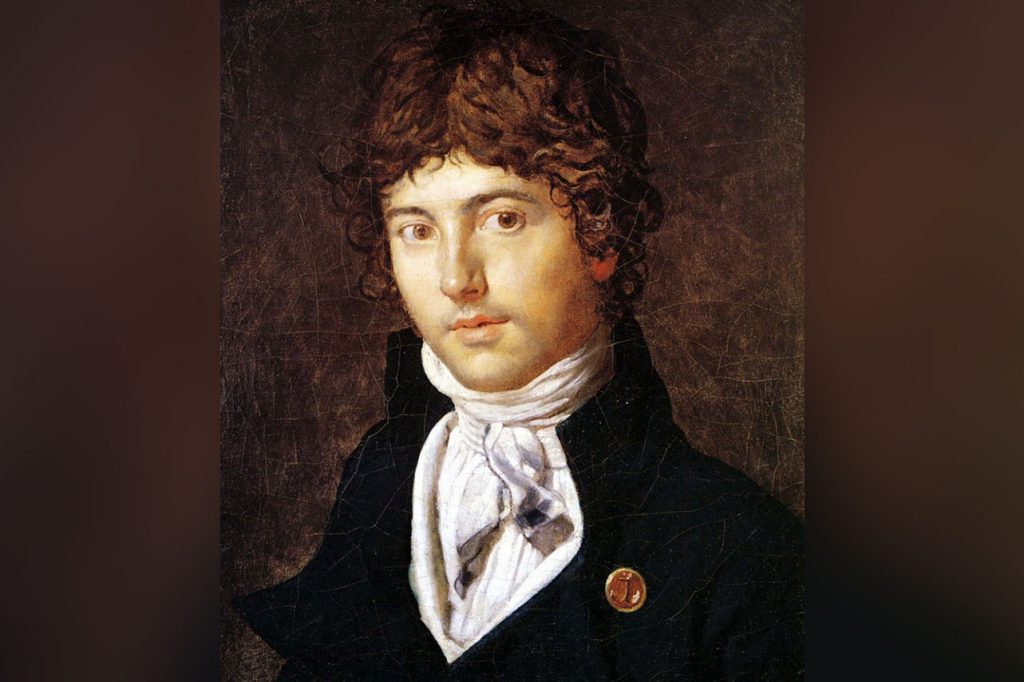
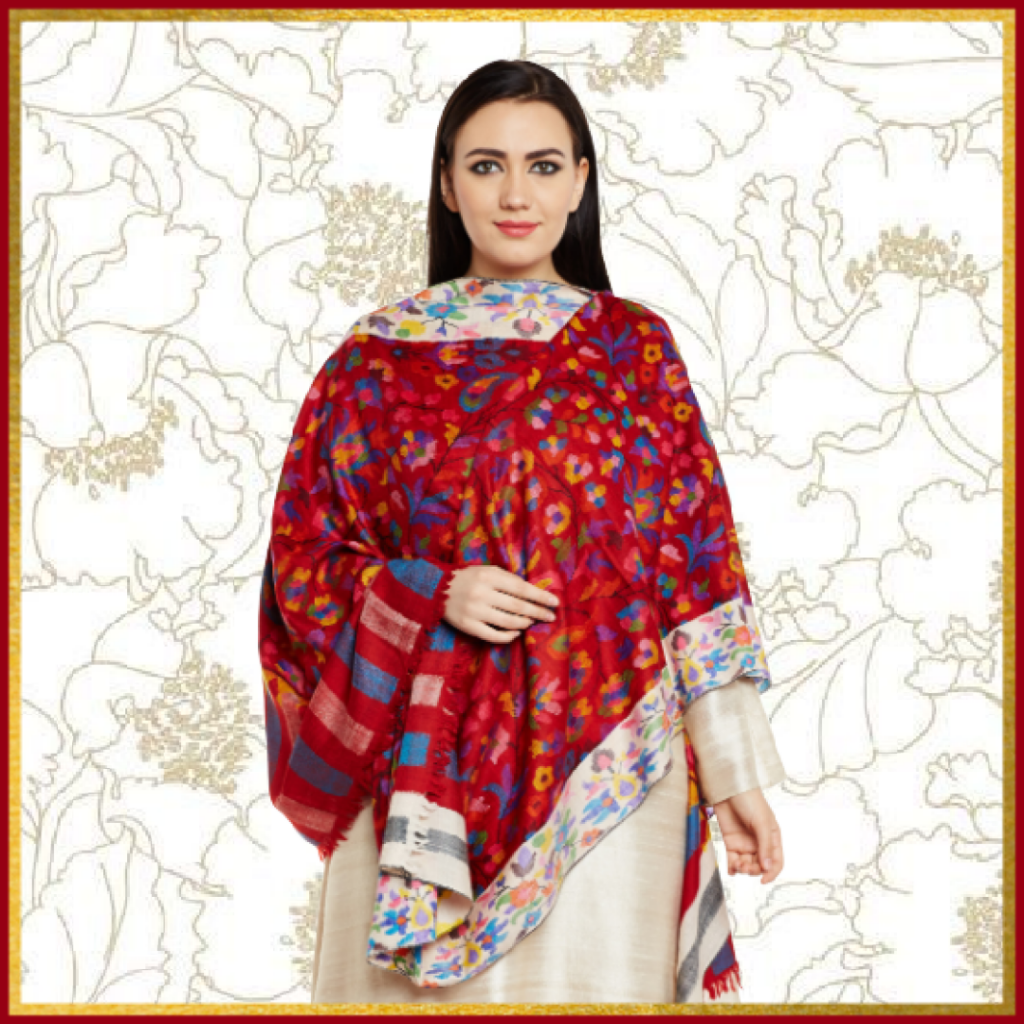
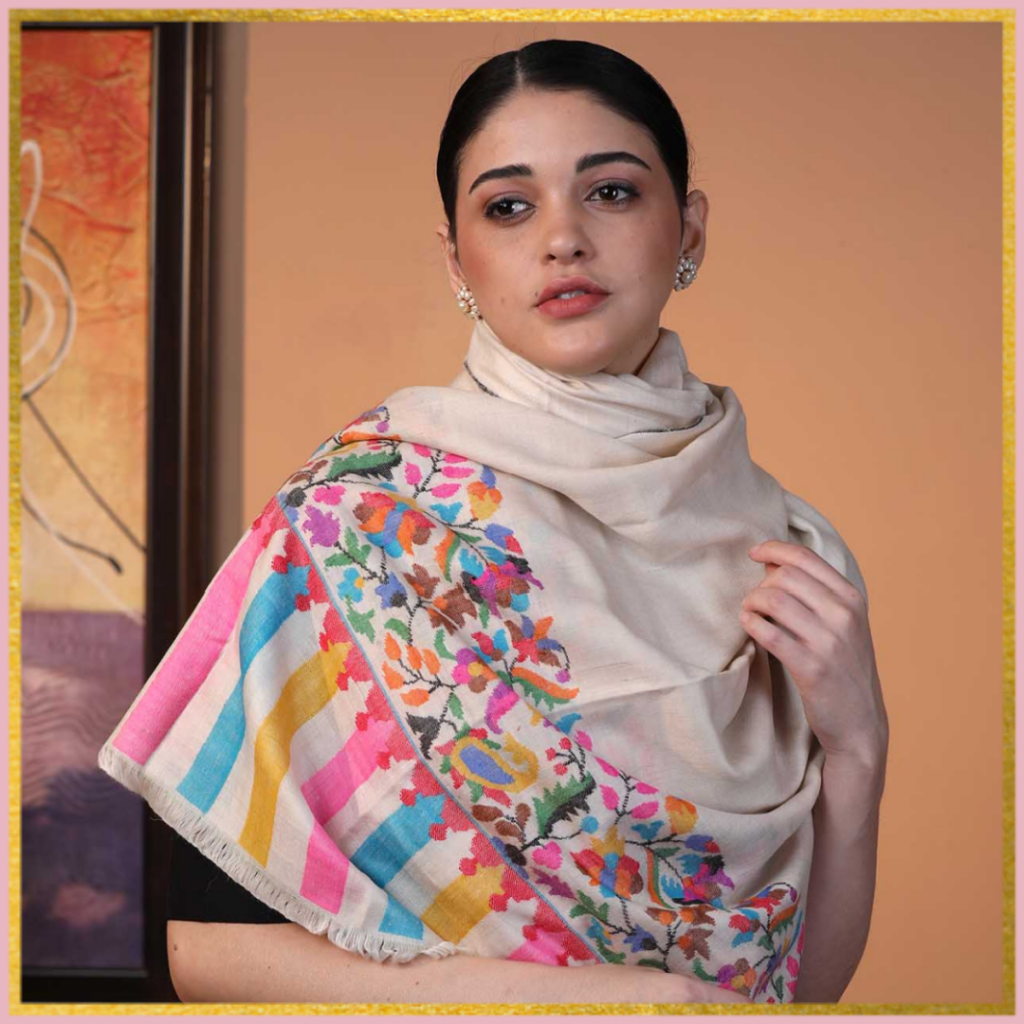
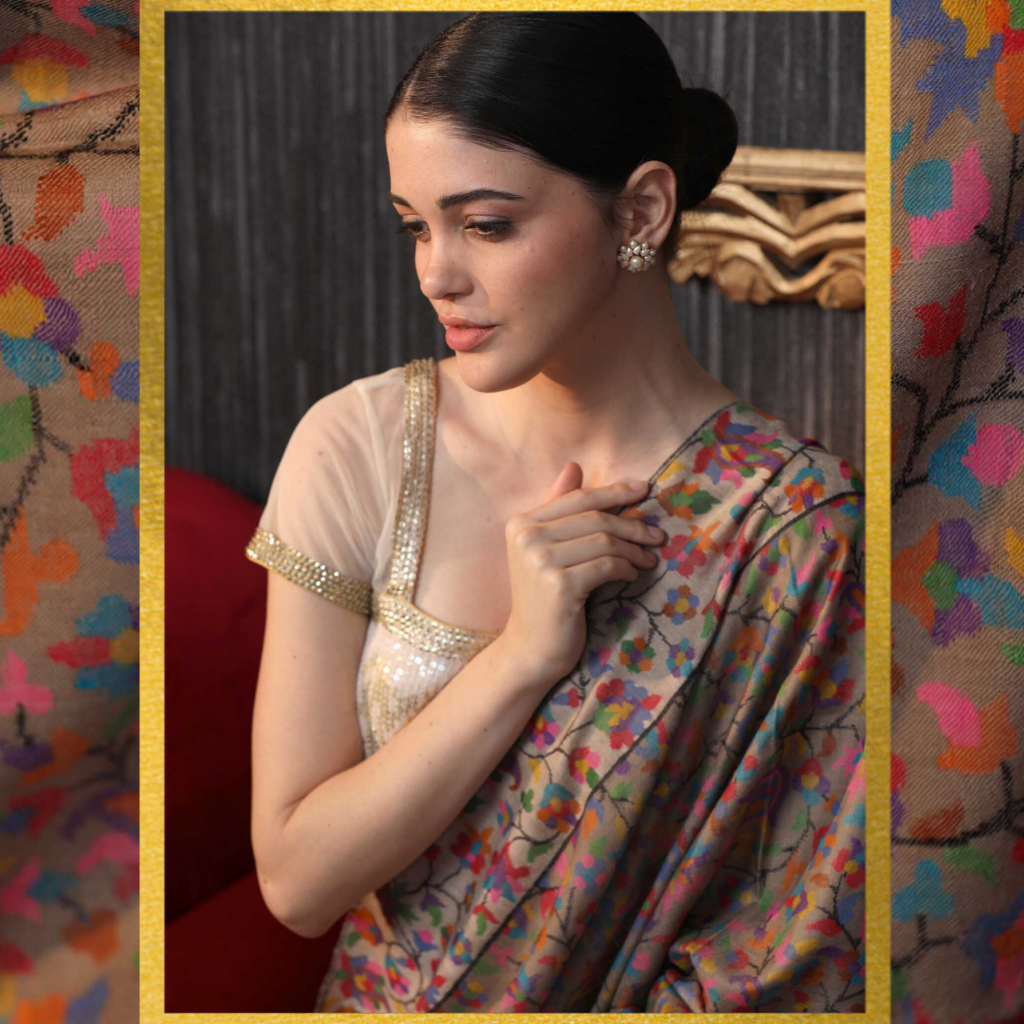
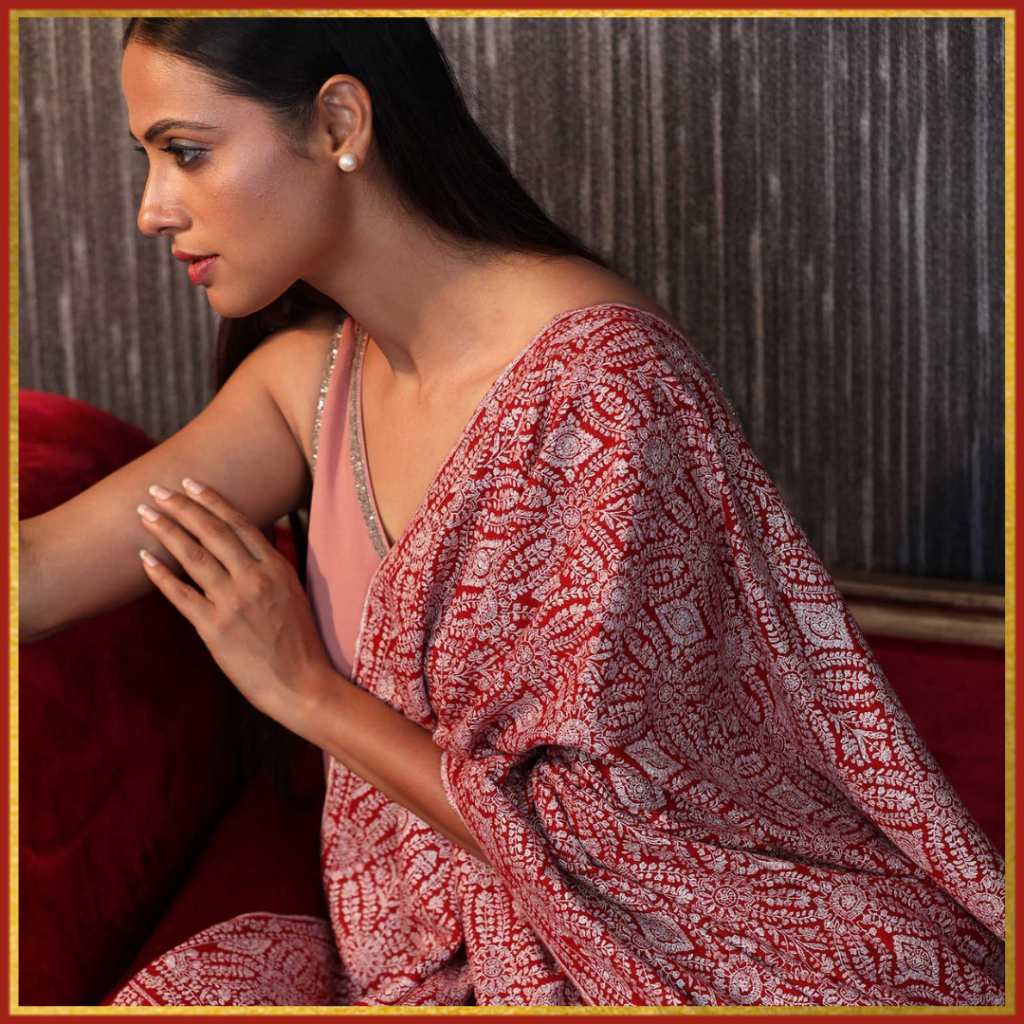
Since time immemorial, Kashmir has been referred to as the cradle of several crafts. According to Kashmir ruler, Mirza Haider Dughlat, “in Kashmir, one meets with all those arts and crafts which are in most cities uncommon.” French physician & traveller, Francis Bernier, who visited Kashmir in 1665, believed that “it is due to special properties of water available there.”
Francis Bernier, who came to Kashmir in 1665
The Dogra period (1846-1885) witnessed the sharp rise of certain crafts that reached their climax. In the words of H.W.Bellew who visited Kashmir sometime in 1873, praised the artisans of Kashmir, their Kashmiri shawls and embroideries. Also, silver work, paper mache paintings, stone engraving & wood carving all exhibited work of wonderful delicacy & minute details. In fact, this was reiterated by Lawrence, a settlement officer in Kashmir in 1889. He said, “Every Kashmiri is a weaver and the home spun cloth woven by the villagers was highly appreciated by many Europeans.” It was actually during this period that the Kashmiri shawl making employed a large number of people, which in turn generated revenue for the state.
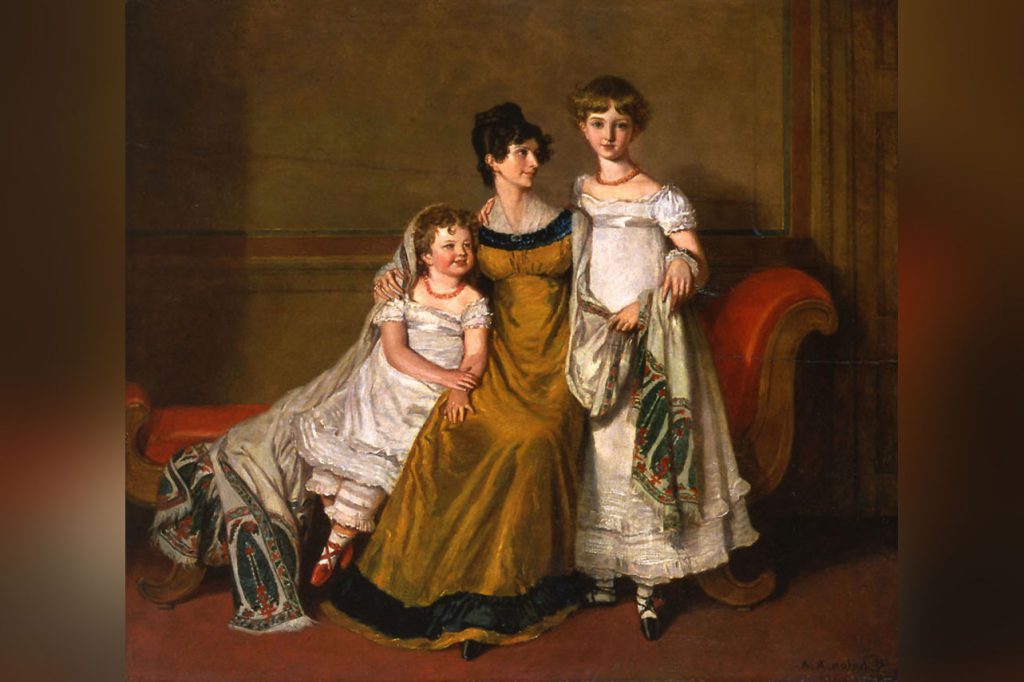
Kashmiri shawl manufacturing has its roots in the picturesque state of Jammu and Kashmir. Here the air is crisp and art runs in the veins of its people. In the 1800's, the Kashmiri shawl was considered a symbol of imperial prestige. Infact no fashionable woman’s wardrobe was complete without this luxurious piece. It enjoyed name and fame across the world, owing to its softness, warmth, brilliance of colours and sublime fineness.
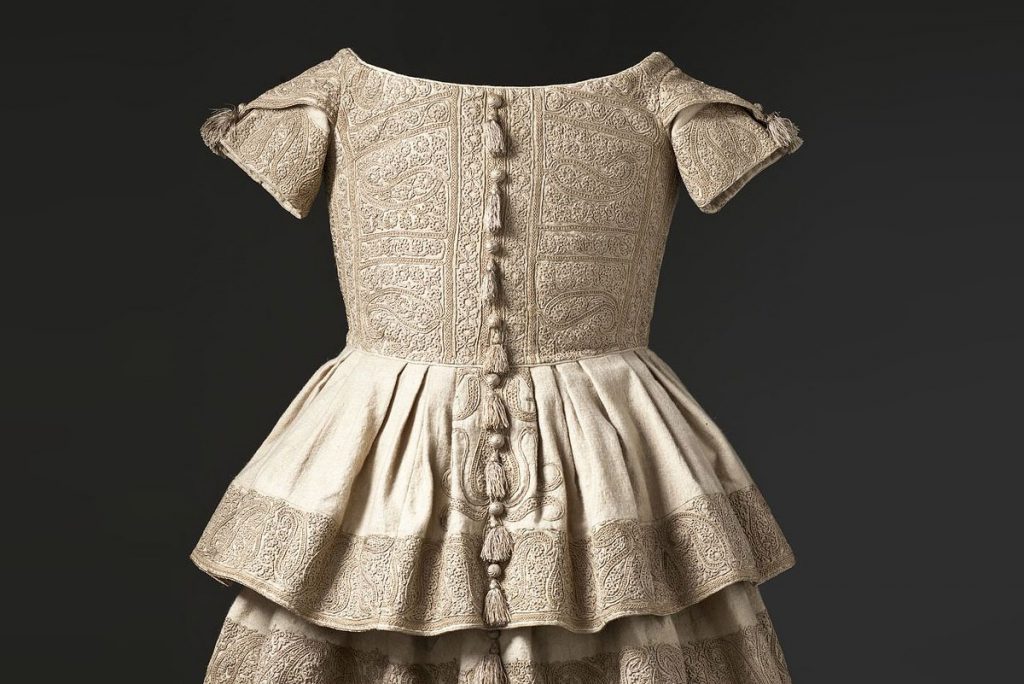
Mother and Two Children by A E Chalon, c. 1812. (courtesey of the Geffrye Museum)
Under the Mughals, shawl making made several strides, with karkhanas creating new social groups among its craftsmen. In the text Tuzk-i-Jahangiri, Emperor Jahangir expresses fondness for Pashmina shawl and calls it one of his “favourite items.” It was considered a status symbol in the Empire and was gifted as part of imperial festivals.
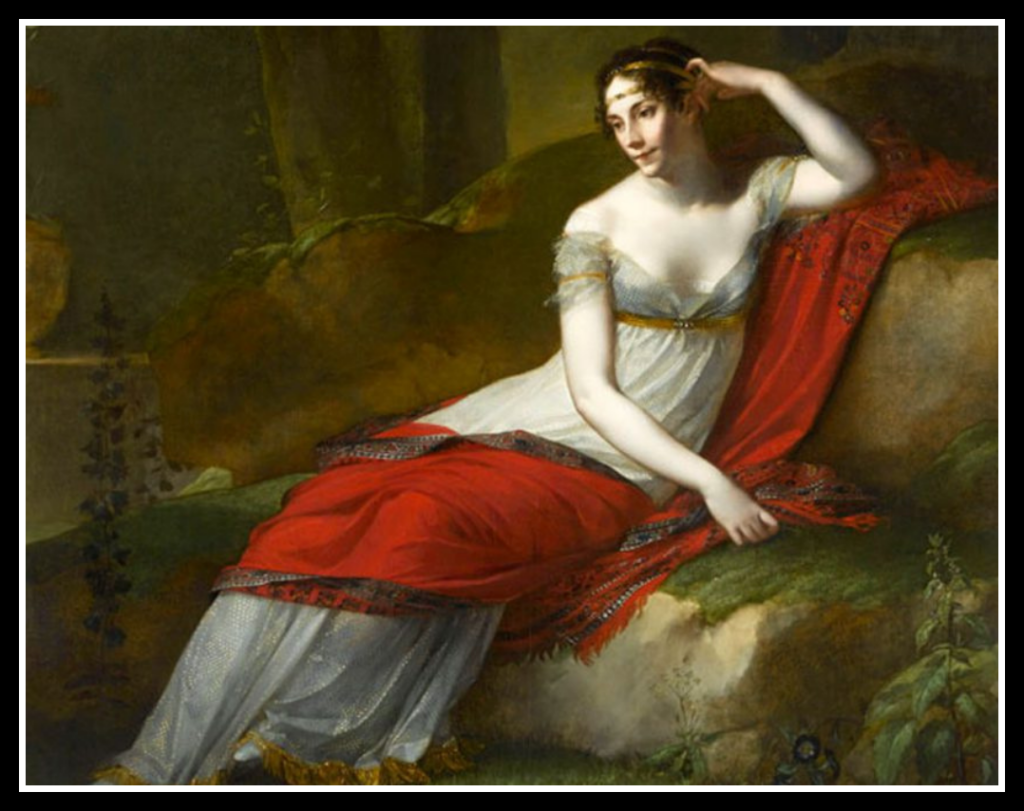
In the Afghan period, shawl making grew further and in 1796, these Kashmiri shawls were sent to Europe. These objects of desire reached Napolean during the Egyptian campaign, who then gifted it to his wife Empress Josephine. At that time, many French soldiers returned with plundered Pashmina shawls worn as belts over their uniforms. It became severely popular in Europe and as the demand rose, merchants traveled all the way to Kashmir to purchase them.
During the Sikh period, shawl making continued to receive consistent patronage. Now it became fashionable even in Punjab and also popular in Lahore. During the reign of the last two Sikh rulers, the Kashmiri shawl manufacturing witnessed a decline from 1841-45. This was also due to some political disturbances in the region.
When Gulab Singh became the Maharaja of Kashmir, the shawl trade began to revive. In 1846, the total number of looms reached 7,000 with 17,000 weavers working at that time. The same year, there were 3,500 karkhandars in the Valley. However, in 1847, several shawl weavers migrated to Punjab and the number of looms reduced.
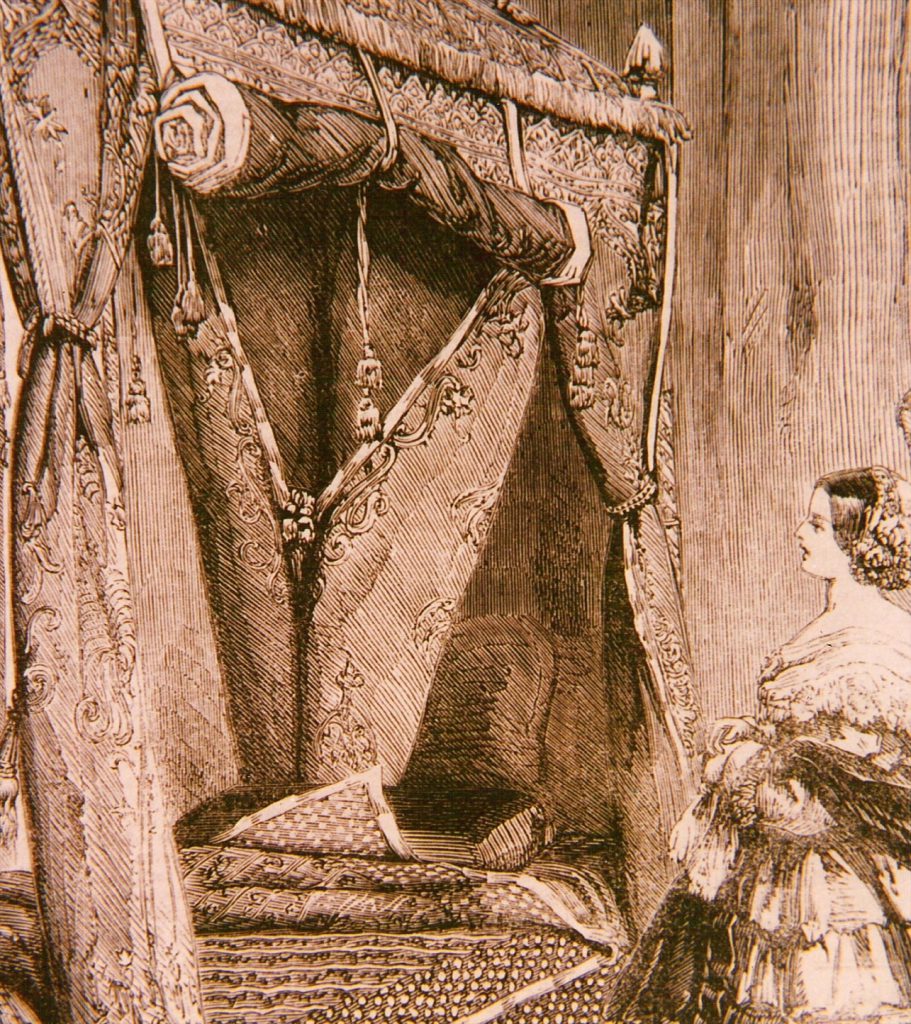
Queen Victoria with the gold and Pashmina/kani bedspread presented by Maharaja Gulab Singh
Compensation to Weavers
In early 1847, the weavers put out certain demands. These were early enumeration of workers, reduction of nazarana , fixing length of a work day, & framing proper regulations for their welfare. More than 4,000 weavers migrated to Lahore and this worried Gulab Singh. He announced the following regulations:
The salary was fixed at four annas
Taxes were reduced
The weaver was allowed to change his master and was no longer restricted to work under one
The tax would be levied on woven shawls as per the market price
Weavers would be paid on the basis of actual work on the loom
Though these regulations pacified the weavers, but only for a short while.
Later, in the 1950s, French agents came all the way to Kashmir to deal with the manufacturers. This way, Kashmiri shawls became more popular in Europe and trade flourished. According to a Frenchman Larouosse, “In spite of heavy duty levied by the French government, whatever its value, the trade flourished.”
Flourishing of Kashmiri Shawl in Europe & Invention of Do Rukha
In 1850, the annual shawl production reached Rs 40 to 50 lakhs and there were about 40,000 to 50,000 workers engaged in the manufacturing. During the second half of the 19th-century, it became a coveted fashion item in England, France and America. It was during this time that Kashmiri shawls became prestigious and the favourite of elites and nobles.
In the concluding year of Maharaja Gulab Singh’s reign, there were about 8,000 shops of shawl weavers in Kashmir. Post his reign, Maharaja Ranbir Singh tried to bring about reforms to further provide an impetus to the manufactory. During this juncture, a new type of shawl called dorukha was manufactured in the Valley. They were excellent in texture, soft, colourful and were most celebrated. Among countries across the world, it was France that shared 80% of shawl trade between Kashmir and Europe.
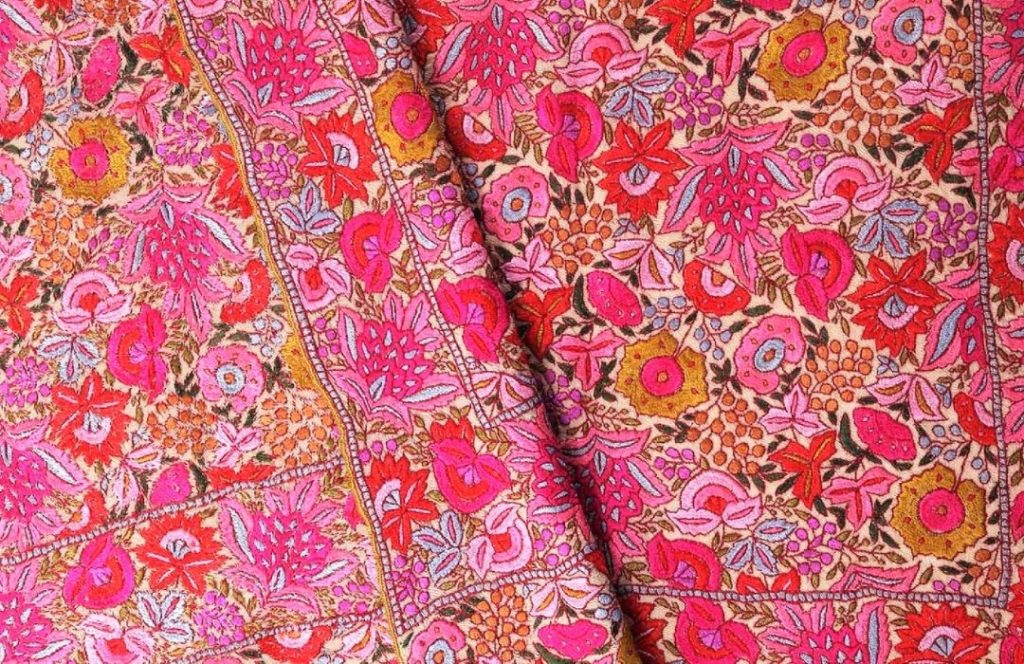
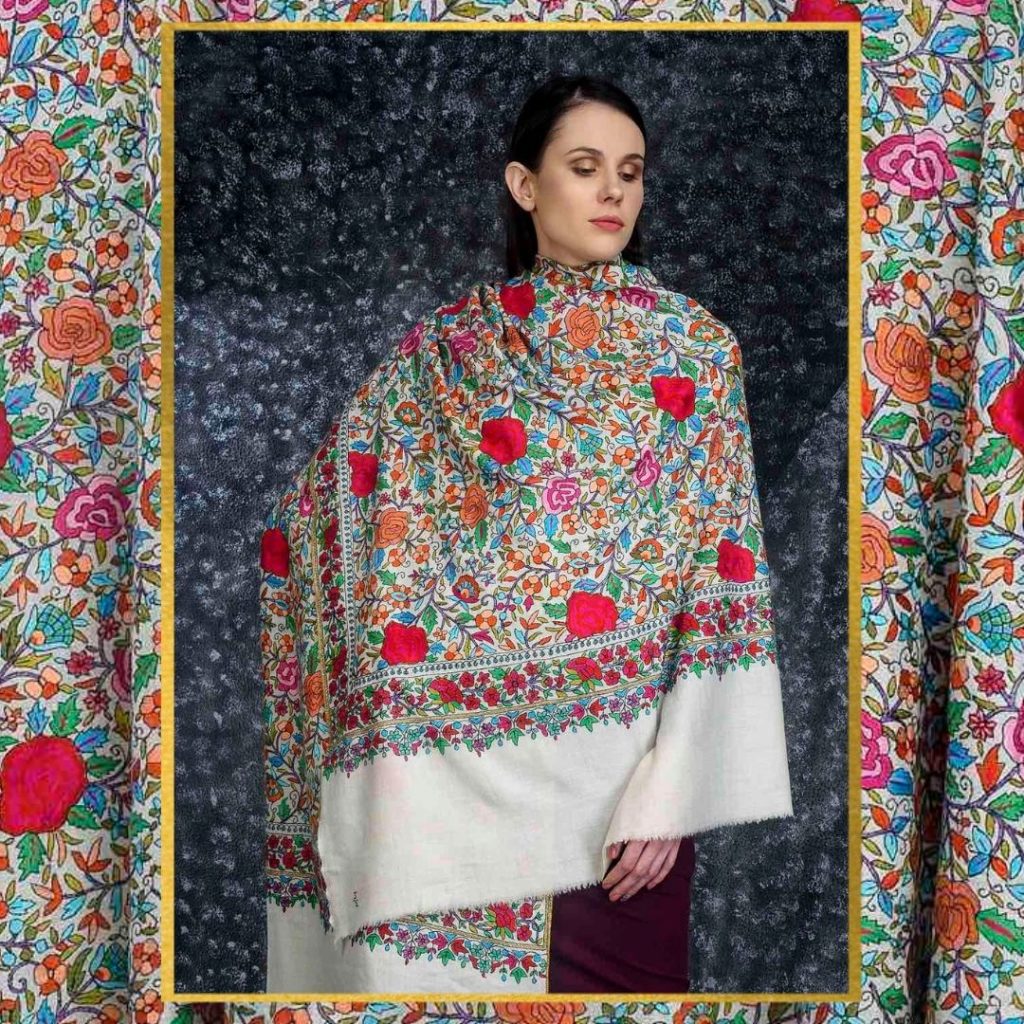
Do-Rukha Embroidered Pashmina Shawl has earned global acclaim for its fine Cashmere base and magically profuse embroidery that makes it a symbol of superior craftsmanship and a piece of art
What are Kashmiri Shawls made of?
The manufacturing of the shawl happens from what is called pashm. It was obtained from a goat found in western Tibet, Baltistan and Ladakh. It was brought to Kashmir via Ladakh. The pashm fibre is first removed by combing. During winter, it is a protective layer of soft fleece that provides insulation to the goats in the biting cold. The Changpas say that only when the winter comes to an end and the goat eats the first new grass that the pashm rises above the surface of the goat’s body. It can then be combed out.
The pashm that is combed out is not really clean and has dirt and bodily secretions. The women who sift through this raw mixture say that only 35% of this pure fibre can be used. Once the hair is combed, the animal’s shaggy coat is then cut with metal shears. A few goats are combed at the same time, generally before they head out to their pasture lands. They may be again combed in the evening, only if there’s adequate light by the time they return after grazing.
This is a painstaking process. Starting from sourcing the fleece to crafting products from Himalayan cashmere is a long tough journey. It takes months and years for the gifted artisans of Kashmir to create the masterpiece Pashmina shawls. It is a sorry state of affairs when imitation pieces flood the market. This dilutes the labour of these weavers, who shed all their blood, sweat and tears to this "Art of the Royals”.
Pashmina.com and Pashmina Shawls
We are Pashmina.com, the largest curator of pure and handcrafted Pashmina products in the online space. We are on a mission to revive this dying art of Pashmina by spreading our wings throughout the world through our online platform. Our website serves as a window to our range of Pashmina shawls and Cashmere wraps and scarves that are luxurious and have the highest quality. We offer the widest range, certified quality of Pashmina with luxurious packaging and free shipping to over 250 countries. Explore our range now!
Cashmere, as the word suggests, evokes a sense of sheer luxury, be it through images of its softness, warmth and toastiness. It is a rage in high fashion circles and owning a piece of this luxurious fabric is a mandate, if you are conscious of the way you dress. Unlike how we revamp our wardrobes every few months, since our clothes wear out, once you own a Cashmere product, it will keep rewarding you. But there’s a condition here as well – it will stay in mint condition only if you invest in a pure, hand-crafted piece instead of falling for the budget ones available at most apparel stores.
Why do babies love Cashmere blankets?
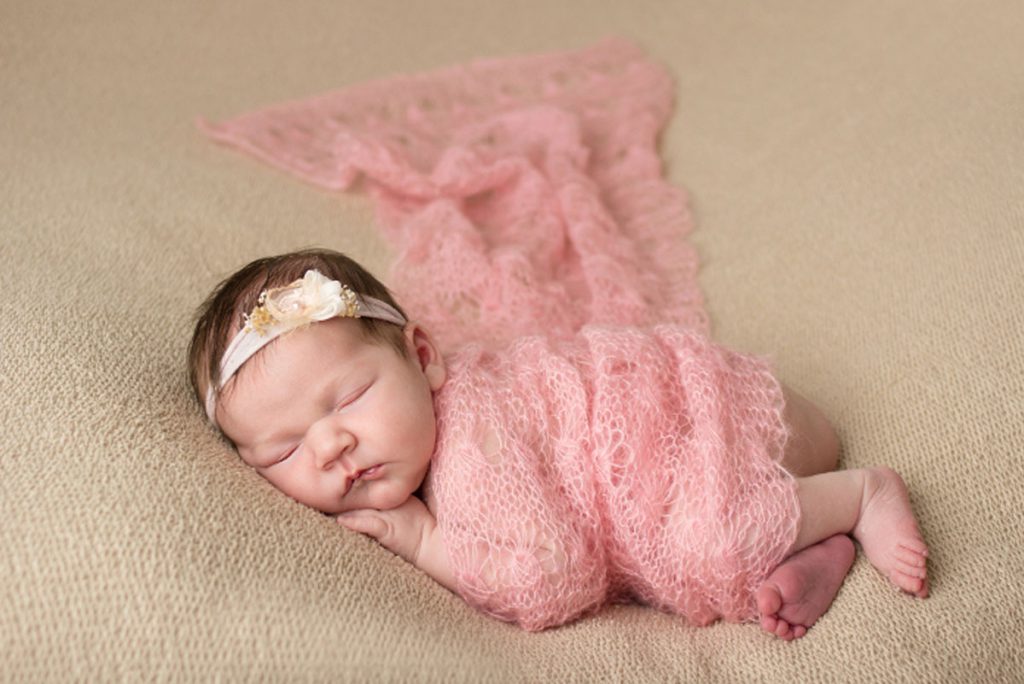
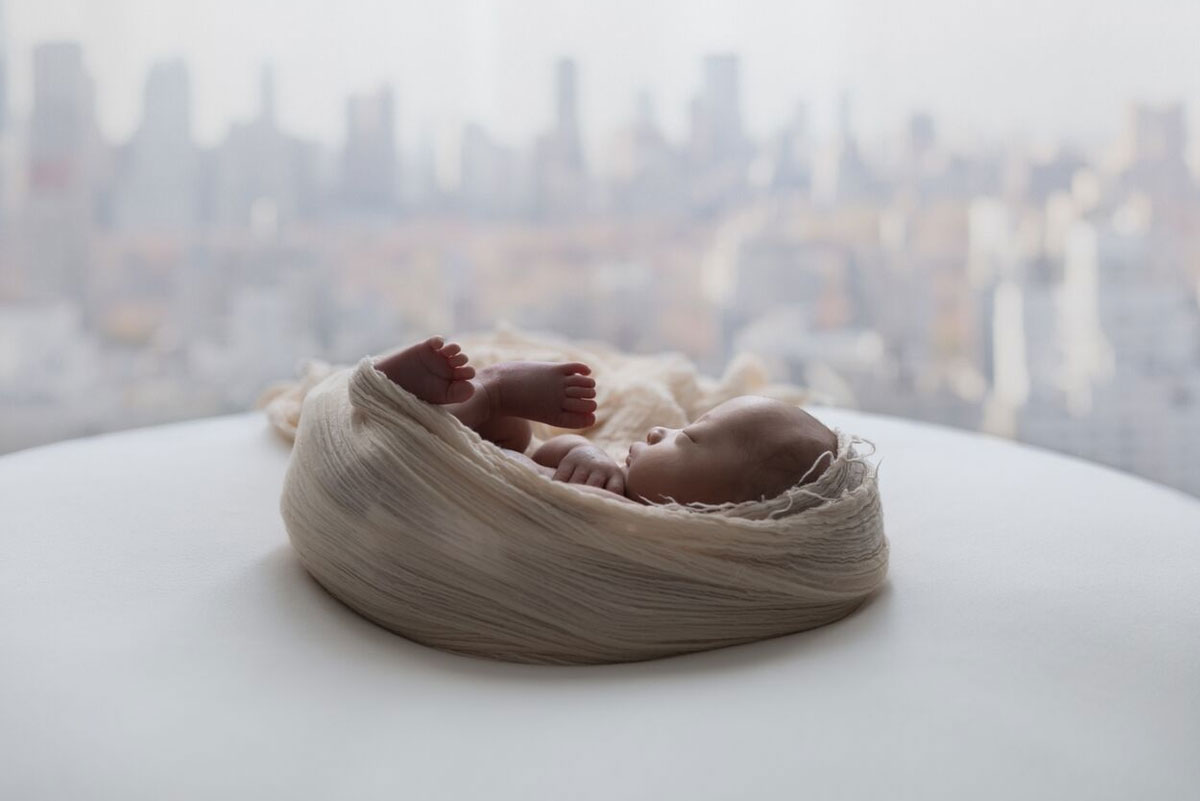
As we are so particular about comfort, class and the feel of the fabric, so are babies. In fact, babies are even more sensitive and delicate, since the womb is their shelter for nine months and they crave that comfort once they come into this world. This is the reason why Cashmere blankets top the list for baby accessories, since they are reminiscent of the mother’s womb, thanks to its several desirable qualities.
You can checkout variety of Monogrammed Cashmere Throws for your baby.
Since Cashmere is exceptionally soft, lightweight, breathable and warm, it is ideal for all climates, without making your baby uncomfortable.
Here’s why Cashmere blankets are the best choice for your little bundle of joy
If your newborn is feeling a little under the weather, there’s no better cure than a Cashmere baby blanket. It soothes and comforts him/her and reduces stress and restless movement, putting the child at rest and calming him down.
Researchers have found that when babies lay directly on cashmere, their rate of activity is significantly reduced and leads to more deep and restful sleep. Some also say that it promotes growth, but this is yet to be proven.
Cashmere, as most of us know, is the perfect insulator, which means it keeps you warm in winter and cool in summer and is also lighter than wool. It lets the baby’s skin breathe and regulates the temperature to stay comfortable in all seasons.
Cashmere is water-resistant and can absorb excess moisture, among all other fibres. Interestingly, it can take in up to 35% of its weight in water without feeling messy or wet to touch. It then releases this moisture into the atmosphere to keep the wearer warm and dry. This way, the baby’s skin stays dry and regulates the temperature.
Another property of Cashmere that sets it apart from the rest is its odour-resistant characteristic. This fibre can repel the bacteria that lead to odour, which means your baby will keep feeling fresh and not sweaty.
Lastly, this fibre does not cause any allergy or itchiness, making it soft on the skin. This is the biggest concern for most parents, which is taken care of by Cashmere. Generally, most fabrics irritate the baby’s skin and cause rashes or any such infection.
With such qualities, there’s no doubt why Cashmere baby blankets are the preferred choice for newborns. Though these products stand you in good stead, you need to make sure you take all the care you can to keep these in great condition. They are generally durable but can last you even longer if you make a little effort.
TLC for Cashmere Baby Blankets
Like all products, your Cashmere baby blanket requires some Tender Love and Care to protect your child in all seasons. When you wash the blanket, make sure you wash it by hand, unless you have a hand-wash setting on your washing machine. Use lukewarm water and a small amount of mild detergent or baby shampoo to clean it. There are some who say even hair conditioner works wonders to make Cashmere super soft!
The next step is to ensure you don’t rub, wring or twist the fabric while washing. Instead, gently squeeze the water through the fibre. Lastly, use lukewarm water again to rinse your product. The temperature is of high significance here!
It’s the same in the case of drying, one needs to be gentle and tumble drying is a big no-no. Make sure there’s no wringing or twisting of Cashmere to remove excess water. Instead, it’s best to layout your product on a towel, gently roll it up, and lightly press. Later, you can un-roll and re-shape it.
Dry your Cashmere blanket in a flat manner. If you hang it, the weight of the water will stretch it out of shape. You must keep it away from heat sources like radiators, hairdryers, or even sunlight since it needs to air-dry naturally.
With the right approach, your baby blanket will last you for a long time. Give it some love and it will you lots back in return!
We, at Pashmina.com, are one of the world’s largest curators of pure and handcrafted Himalayan cashmere products. Each of our pieces epitomizes the highest levels of quality and royalty and will make you feel no less than nobility yourself. Our range of shawls, stoles, scarves, and hijabs will enrapture the world with its beauty and sublime softness. It’s not just the beauty and exquisiteness that we are concerned about; credibility is what sets us apart from the rest. Our pieces are first painstakingly handcrafted with the finest designs and reflect the highest quality of craftsmanship. Once this labour of love the light of the day, it is sent for quality assurance to the Crafts Development Institute, Ministry of Textiles as part of the Govt of India that certifies each product. After all, you deserve a product that’s as warm and real as you!
Step into our world and explore the entire range HERE
The very touch of Cashmere on your skin feels so luxurious. Its velvety soft and like a wisp of fresh air. It evokes poetry in all our minds; it’s a warm, comforting hug in the biting cold. Yes, it’s exactly that. No wonder, its warm and luxe nature has been patronized since time immemorial by nobility and the upper social strata. Cashmere is like wine, it gets better with age and intoxicates you with its sublime softness and dreaminess.
What is Cashmere?
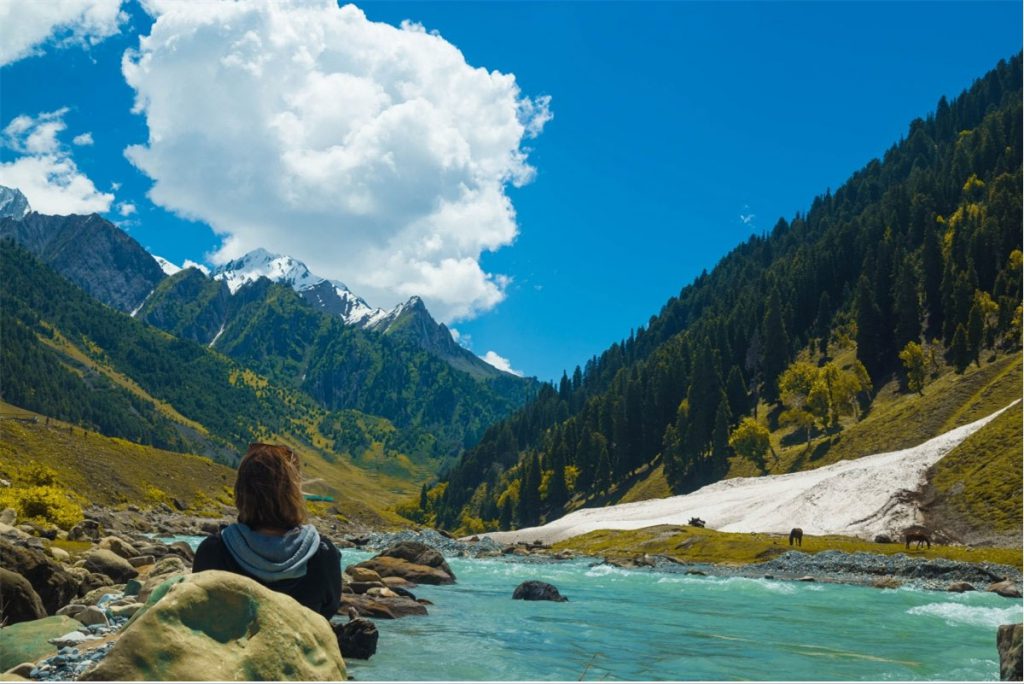
Cashmere is something we would love to define. Its beauty and grace are far from defining in words. Yet it needs to be elucidated to the common man, who is unaware of this treasure around him. Cashmere is the fine and soft down fibre of a rare species of goat which is found in the Ladakh area of Jammu and Kashmir. It is found at a place called Changthang, which lies in the Himalayan mountain ranges. This place lies at an altitude of over 15000 feet above sea level.
The place offers the harshest conditions because of its distance from the main city. Also, the freezing temperature it witnesses in winters. The herders somehow manage their survival in this area, but the goats would not have if nature wouldn't have blessed them with Cashmere. It is this warm and exceptionally comfortable wool that protects their bodies from the temperature of -40 degrees.
Processing Cashmere in Kashmir
Seeing the softness and luxurious demeanour of Cashmere, in the 16th century, Shah E Hamdan ordered socks to be made for the then king of Kashmir. The king was highly impressed by the gift. He immediately ordered manufacturing and processing units to be set up in the valley. It is from that time that Cashmere wool was transported from Ladakh to Kashmir, where skillful hands awaited. Kashmiri artisans had been trained by Persian craftsmen in various crafts, including Pashmina shawl making. Pashmina is the art of transforming raw Cashmere wool into luxury shawls and scarves. Ladakh lacked resources and labour. Hence Kashmir took the responsibility to own the processing and honour of producing opulent Pashmina shawls till now.
The Glory
As soon as the news spread all over the world, Europeans visited Kashmir in groups to have a look at this newly discovered wool type and fell in love instantly with its fine texture, lightweight and immense warmth. They took some pieces to their own countries and soon Pashmina shawls became world-famous. In the beginning, Pashmina shawls could only be afforded by kings, nobles, and the royal members of the courts. Affluent individuals as well as the ardent patrons of art too invested in at least one Pashmina shawl, and its fame rose to an all-time high when Napoleon gifted his wife a Kani Pashmina shawl, and she wore and owned a few hundred, setting it to a timeless fashion. The entire world was swooned by Pashmina art, and everyone wanted to see if not own one.
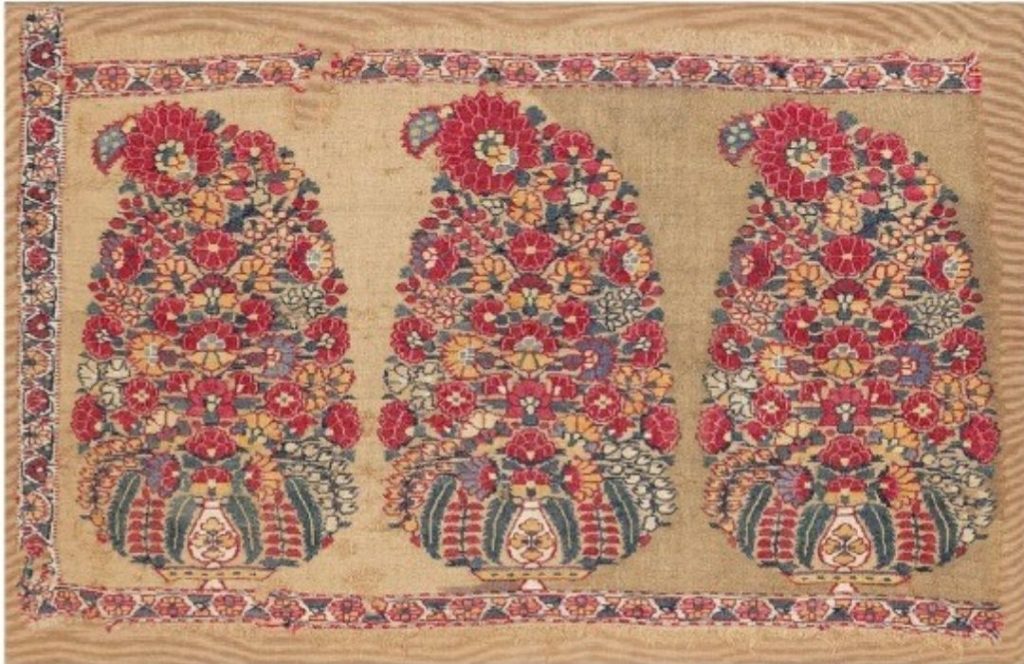
Fragment of a Kashmiri Shawl from the late 18th century on display at Ashmolean Museum, University of Oxford
Seeing the entire world fascinated by its glory made some traders use deceptive techniques to make money. They made Pashmina shawls over machines which included mixing Cashmere fibre with strengthening nylons and sold the same as pure Pashmina shawls. Besides these shawls were cheaper and featured an artificial shine, which they claimed is because of the finest quality of the shawl. Customers fell for this trick, but reality hit them hard when these shawls weathered within a year. As a result, customers believed that it is the art that has lost its grace and hence never purchased Pashmina shawls again. The art lost relevance, and cheaper alternatives took over.
Where to buy pure Pashmina from
However, there still are a number of Pashmina promoters who manufacture pure Pashmina and sell the same at comparatively high prices. And its true admirers do invest in the same. But customers are in a dilemma. Should they buy Pashmina? Should they invest in this long forgotten traditional asset? Why is so special about Cashmere fibre?Some believe that Cashmere isn’t expensive and can be bought off the shelves of fashion brands that are selling it at economical prices. If you’re one of those who’ve been lured by this practice, there’s a bubble about to be burst. You do own a Cashmere wrap, but not a genuine one.
Let’s get this straight. Cashmere is expensive and rightly so. It is a work of art through and through and nothing less than a labour of love. It ticks all the right boxes when it comes to sustainability and unlike a lot of other apparel won’t wear out for a lifetime if you take good care of it.
Here are five reasons why Cashmere is genuinely expensive
1. The King of Fibres
Cashmere has been called the ‘king of fibres’ for a reason, since it is the most luxurious and treasured of all yarns. The journey of Cashmere begins in the highlands of Kashmir, where indigenous capra hircus goats reside. The sub-zero temperatures, soaring altitudes, and harsh winds trigger the growth of the diamond fibre, which comes from the downy undercoat of these rare species of goats.
The name cashmere comes from the old spelling of Kashmir, which is the source of origin for this luxurious yarn. According to the historian Michelle Maskiell, who is also the author of “Consuming Kashmir: Shawls and Empires, 1500-2000,” describes that from the 1500s to as late as the early 1900s, Iranian and Indian emperors used Kashmiri shawls in political and religious settings. For instance, in a Mughal Indian court, presenting a Cashmere shawl represented a hierarchy.
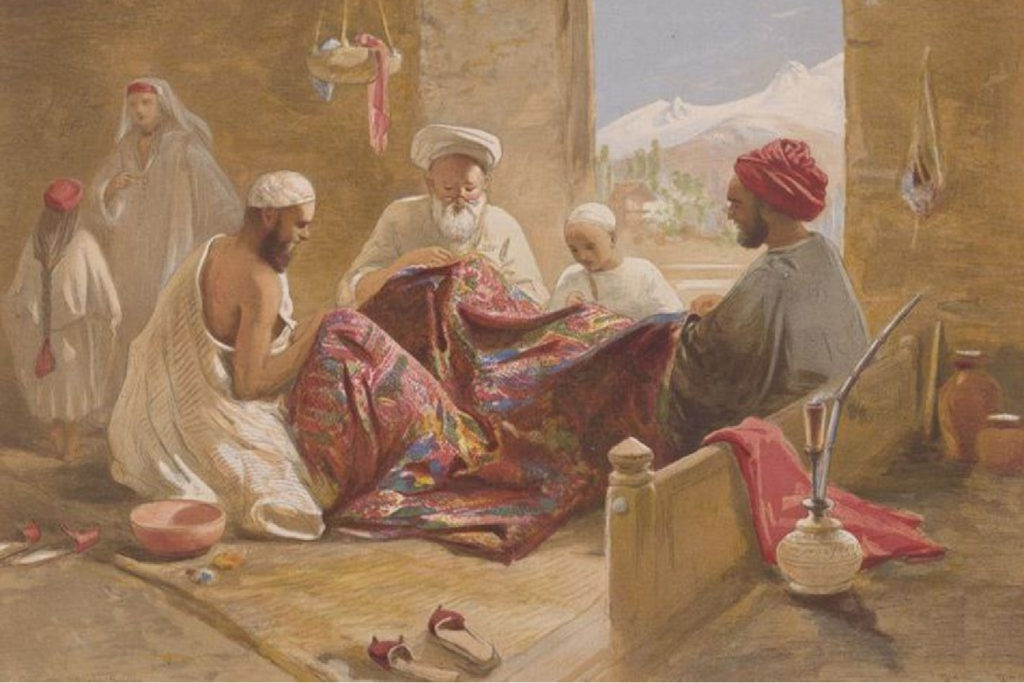
A Muslim shawl-making family shown in Cashmere shawl manufactory, 1867, chromolith., William Simpson.
2. The prized capra hircus goats
As we already know these goats are rare and found in the higher climes, but what’s even more rare is the limited quantity of the fleece it produces. A single cashmere goat does not produce this sheer fibre in bulk. You can get anywhere between six and eight ounces from a cashmere goat initially, but once the fibre is processed, you are not likely to get more than four ounces back. It takes 3-4 goats to produce wool enough to make one shawl. The goat grows this precious fleece after 6 months of harsh winter.
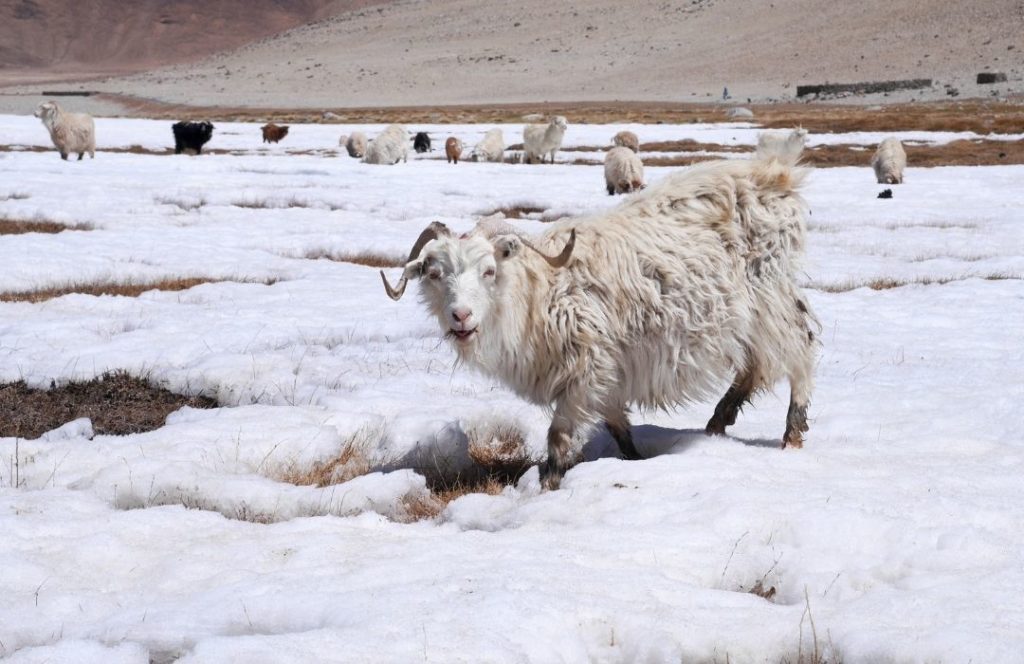
The Capra Hircus goat or the Cashmere goat as commonly known
In comparison to yearly production of sheep wool, which is over 2,000,000 metric tons, the production of Cashmere in a year is about 6,500 metric tons annually.
Rarity a big reason why this fibre is so expensive!
3. Blood, sweat, toil
Cashmere fibres are manually sorted, cleaned and hand spun before the weaving process begins. The undercoat of these coats that is sheared or collected is a greasy mess and has dandruff and other impurities. To clean it and sort out these unwanted elements, it takes longer than you can imagine. The local herders carefully comb the hair to harvest the undercoat and then the good fibre is separated from the bad, which then completes the sorting procedure.
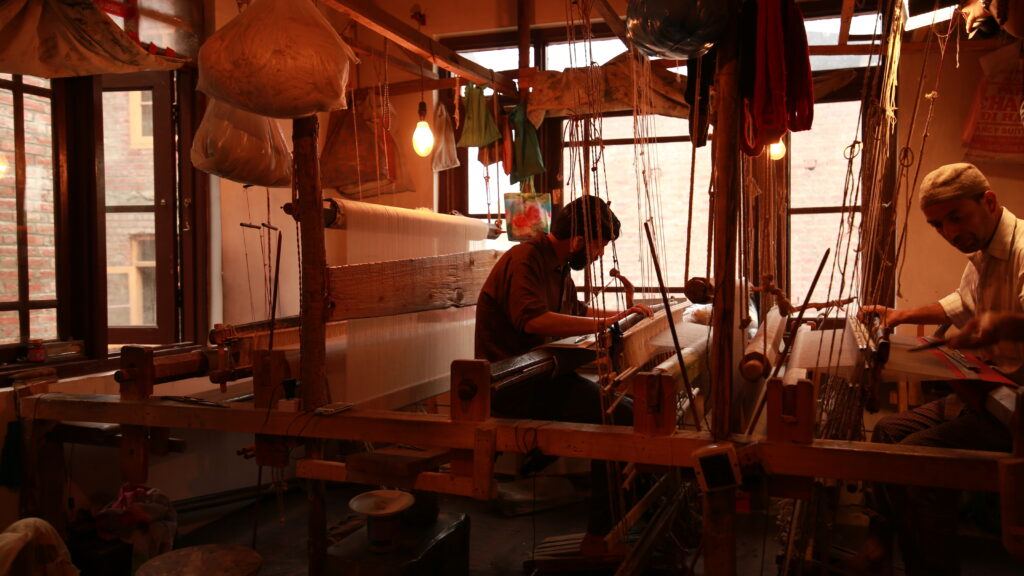
It is only then that the weaving begins, which is equally demanding and painstaking. It takes several months to a year for these gifted artisans to work their magic on wooden looms and weave a masterpiece.
4. Superb quality and exceptional warmth that’ll win you over
Now that you already know its origin and how labour-intensive the process is, you can assume the quality of this fibre. Did you know? A cashmere fibre is less than 15 microns in diameter. Yes, you heard it right. Let’s put things into perspective now; the human hair is about 80 microns, so cashmere is five times finer than human hair. Besides, the fiber isn’t straight, so when it’s woven, it doesn’t itch. This is the reason why it is also preferred as a baby blanket, who feel comfortable in its warmth and softness.
Oh, and there’s another interesting fact! Cashmere is up to 8 times warmer than clothes made from sheep wool. We did know it’s a natural insulator, but this does come as a surprise. What’s best is that it’s much lighter than wool!
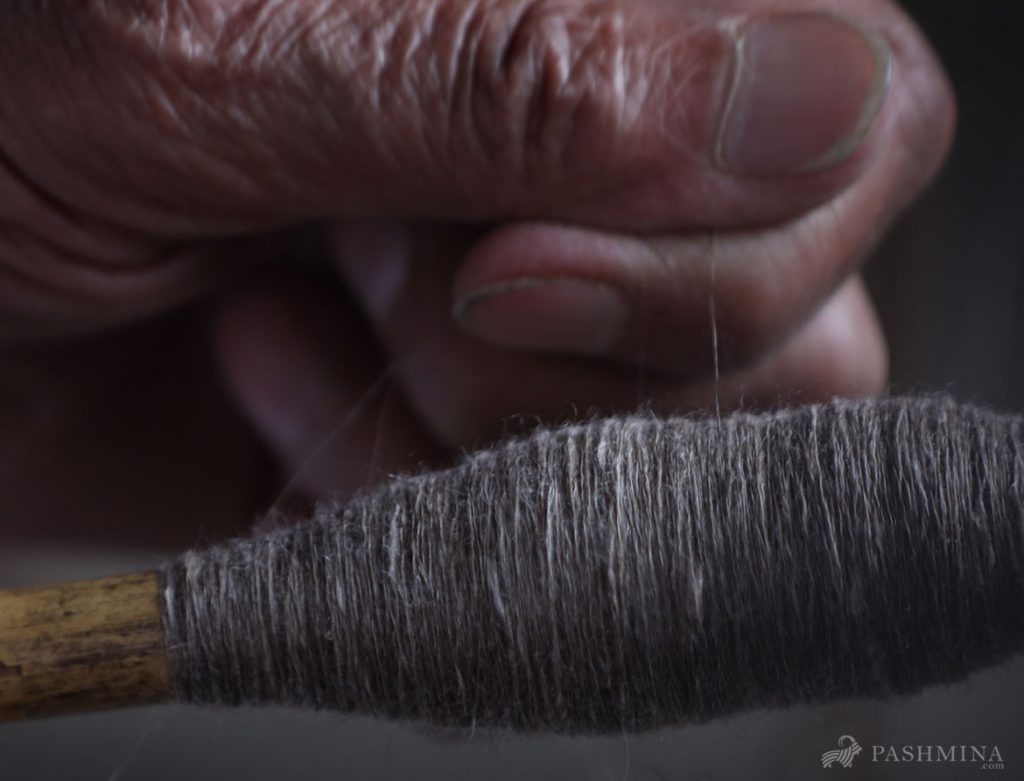
Pashmina is spun by womenfolk of Kashmir
5. As timeless as ever
When you buy a Cashmere wrap, you know you are buying it for a lifetime. It’s a timeless fashion choice and will never get old, since it exudes elegance and class like no other. It’s the epitome of sustainable fashion, so you know your money is going in the right place, since it’s the blood, sweat, tears of the artisans that has gone into making your product. And like we earlier said, it’s like wine. Why? Because it gets softer with each wash, just like wine gets better with age. Isn’t that a valid comparison?
Shop a Cashmere wrap and reap rewards for life. After all, as John Varvatos, an American contemporary designer puts it, ‘style is timeless. It transcends generations - it's enduring. If you're thinking about fashion, it's of the moment. And that doesn't mean that it's not important at times to embrace trends and that type of thing, but style is less about trends than it is about how you carry yourself’.
Limited Production
The Pashmina goat wool is acquired in Spring and summer season and the sale has to start in winter. As the moulting is season specific, manufacturers have to wait for an entire year to receive the raw material. Hence its limited production makes it more valuable.
This delay is carried forward to customers, as they too have to wait for their custom made shawls to reach them. Sometimes elaborate embroidery shawls are completed in a few years. As soon as such pieces reach the market, they sell at a gallop. Hence customers have to be really quick to buy, or else it would take a few more years to manufacture certain heritage pieces. Kani shawls, Embroidered Jamawar shawls, and Tilla dozi pieces are a few examples of unique, and exclusively made shawls.
Beware of Fake Cashmere
More than pure Cashmere, fake Cashmere has been doing rounds amongst sellers and customers. But the audience has to remain alert and amass as much knowledge as is possible.
If you already own a Pashmina, get it checked, there are several tests which can be done at home.
If you are buying a new wrap, ask the seller for is certification or look fir the GI mark on the shawl.
We, at Pashmina.com, are one of the world’s largest curators of pure and handcrafted Himalayan cashmere wraps. Each of our pieces epitomizes the highest levels of quality and royalty and will make you feel no less than nobility yourself. Our range of Cashmere shawls, stoles, scarves, and wraps will enrapture the world with its beauty and softness. It’s not just the beauty and exquisiteness that we are concerned about; credibility is what sets us apart from the rest. Our pieces are first painstakingly handcrafted with the finest designs and reflect the highest quality of craftsmanship. After this meticulous craftsmanship sees the light of the day, it is sent for quality assurance to the Crafts Development Institute, Ministry of Textiles as part of Govt of India that certifies each product. After all, you deserve a product that’s as warm and real as you!
If historians were to single out the most standard form of Kashmiri shawl, it would be the Kani shawl.
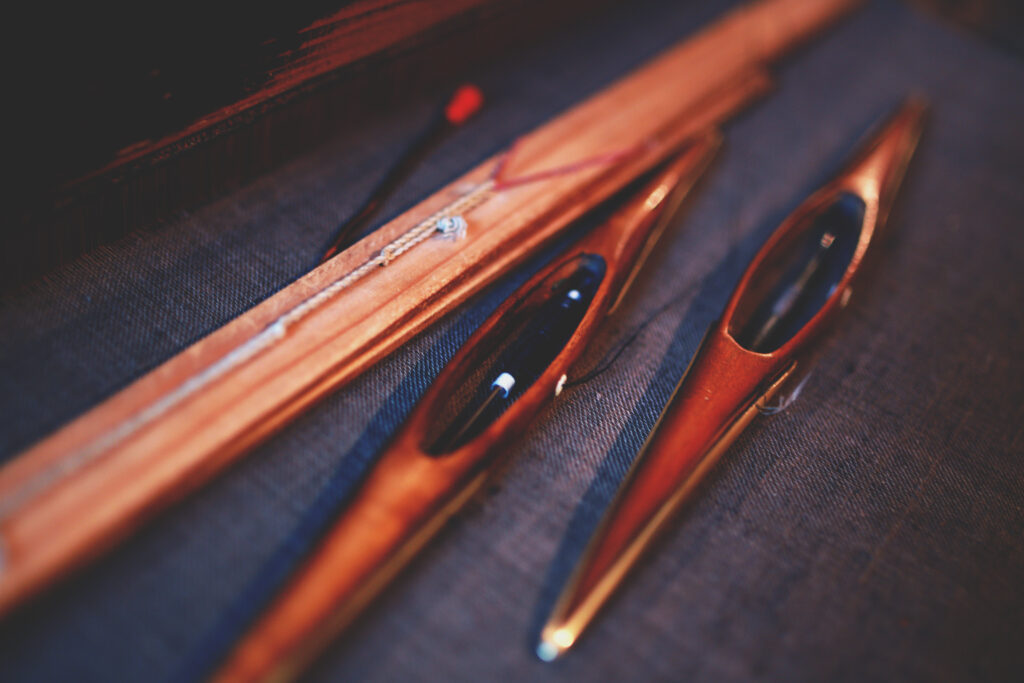
The remarkable kani pashmina shawl is the best of pashmina that you can ever buy. Made from wooden needles on a traditional handloom, it has a distinguishable, Mughal pattern that is woven into the fabric. Every shawl has knots. Artisans craft them as per a set design. Note that only the trained craftsmen are knowledgeable enough to do it the right way. For this reason, Kani shawl got registration under GI (Geographical Indication) by The Craft Development Institute.
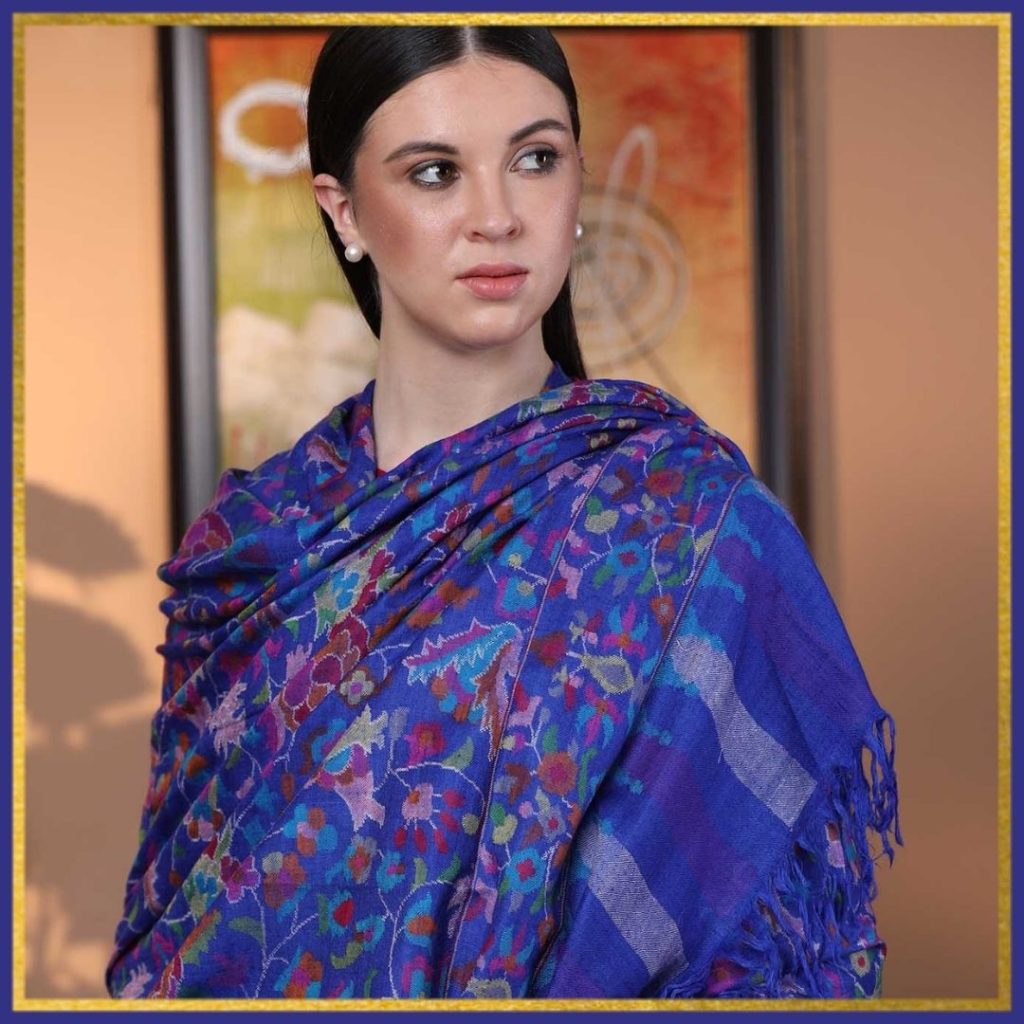
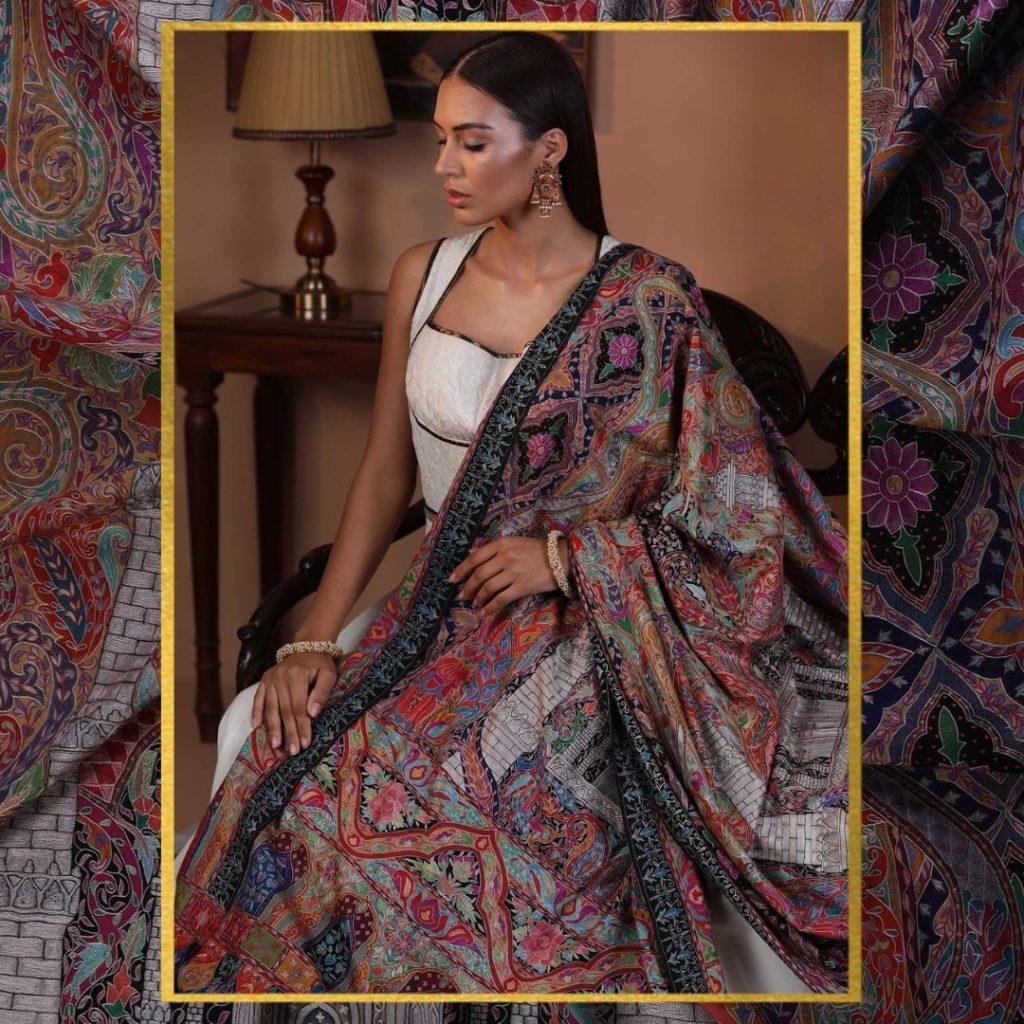
A pure Kashmiri Kani Pashmina Shawl handwoven with motifs from heaven
A Kani shawl has a unique demeanor. It has proved itself to be an ethereal treat for the aesthetic craft admirers. The intricate pattern of weaving, the eclectic colours, and the overall graceful mien has art patrons smitten to the core, across the globe.
Kani Shawls - The Finest of Pashmina
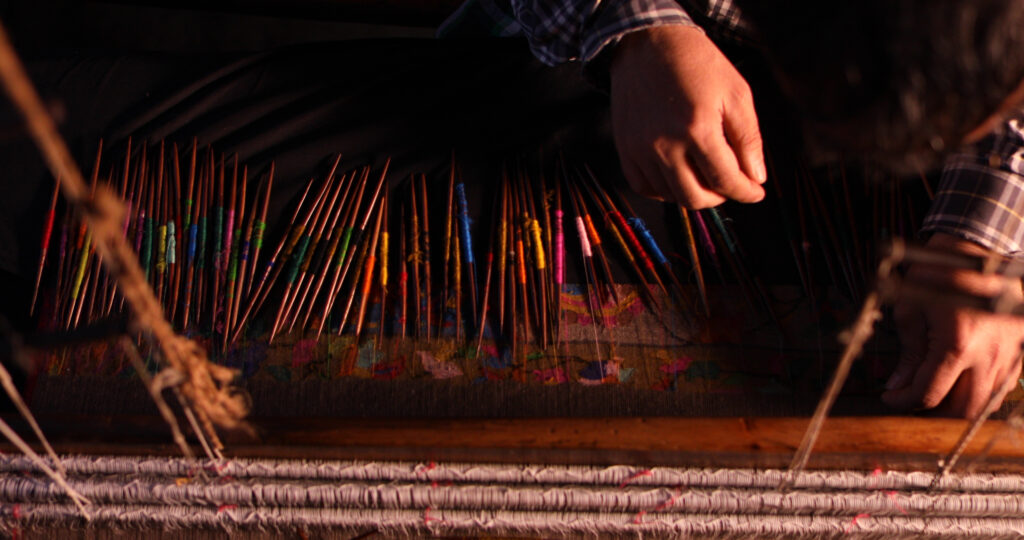
Kani shawl comes from Kanihama, a small village 20 kilometres away from the main city. Kanihama once had a monopoly over Kani shawls. It was later that artisans from other villages learnt making Kani shawls. Kanihama comes from two words, ‘Kani’ meaning wooden sticks, and ‘Hama’ meaning village. The craft of Kani weaving uses small sticks of wood called ‘Kanis’. Around Kanis, artisans wind colourful weft thread to create magical patterns over a shawl. Kanis are made of a type of forest wood called ‘poos tul’
Patrons believe that Kani shawl weaving of Kashmir originates from Persia. In the Mughal period, more than 15000 Kani looms were functional in the valley. It was during the rule of Zain ul Abideen (Budshah).
The Musée du Louvre in Paris has portraits of the French empress Joséphine wearing a Kani shawl which till today is considered as a token of love from her husband.
But with time, Kani shawl faced some major setbacks and moved into a tragic and dark age. This period saw major blows to many handloom crafts in Kashmir. Kani shawl weaving would have totally disappeared had not a family saved this craft even during the craft impediment. This family is the ‘Wani family of Kanihama’. And since the late 1700s, they have held onto this technique and did revive it later on.
Technique of Weaving
Kani shawl is an extraordinary expression of art. It is handwoven using a number of eyeless wood sticks called Kanis or Tujis. These shawls feature intricate weft weaving in their making. As such, these hold a high value in the eyes of craft patrons.
These shawls look more ethereal when made in pure Cashmere. Even though 80% of Kani shawls are made in Cashmere itself, some designs use silk and other fine wool for more strength and sheen.
Kani Artisans are the most skillful ones with great patience. The degree of concentration that these artisans put into this painstaking work is just unbelievable. An artisan is capable of weaving one inch a day at the most. But it depends on the complexity and labyrinth patterns of the design that artisans have to weave. Some Kani shawls take anywhere between 3 to 36 months to complete.
The Weavers of Kani Pashmina Shawl
Kani weaving is a centuries-old craft practiced by skilled craftsmen who have learned it from their forefathers.
These families have been working patiently with talent and devotion. As such, their work has captivated admirers all around the globe. Working between 5 - 7 hours a day, in between tending to their smallholdings, they lovingly create these masterpieces.
Process of Making
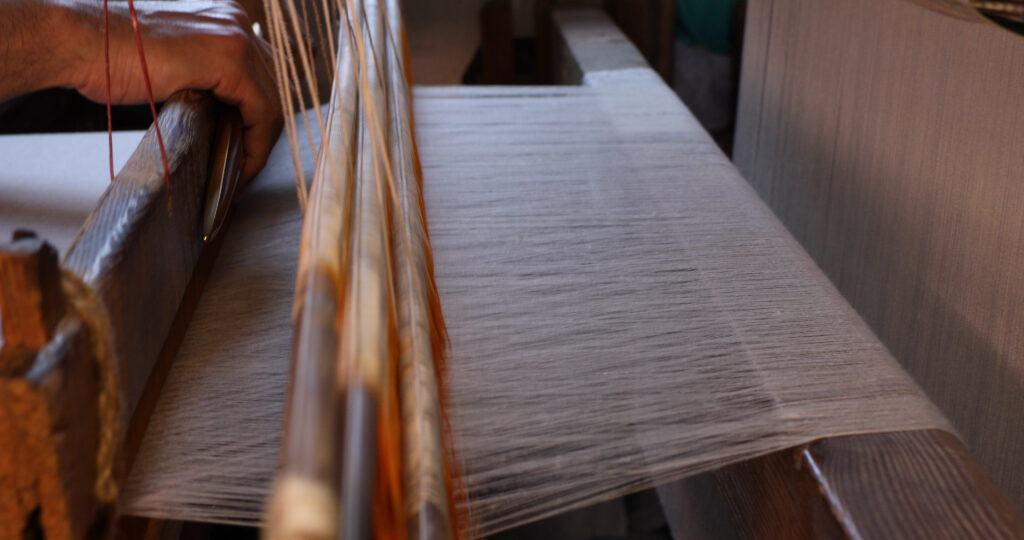
Artisans weave a Kani shawl like a carpet. A veil of warp threads in front of the weaver has to be intruded with wefts. These wefts are colourful threads that weavers wind around bobbins. Around 75 to 100 bobbins are in use at a time to weave a Kani shawl with an overall design.
The Design
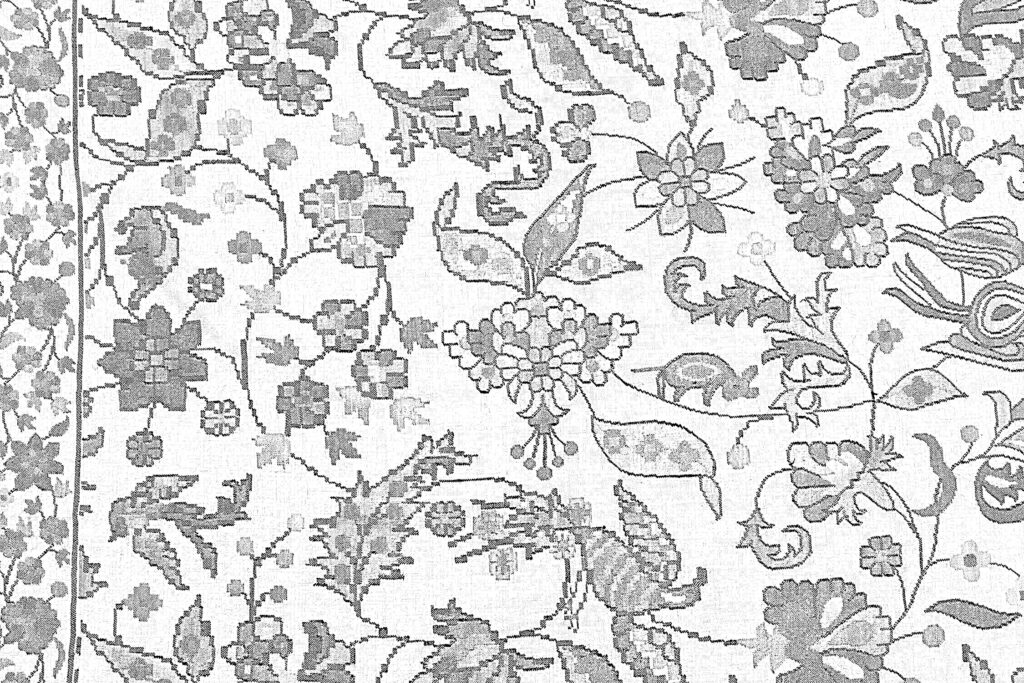
Kani shawl making process is quite complicated. Artisans start with the design. But unlike other shawls where design is imprinted or stamped over the shawl itself, here the design is written in a code, called ‘Talim’, on a graph paper.
The Pattern
A Talimguru prepares the coded pattern. He is an expert in converting the design to codes, easily understood by weavers.
The Warp
Next process is the making of warp by a warp maker.
The Weaving
A number of colourful bobbins are arranged as per the design requirement. Weaving starts with the help of talim. As soon as a different colour is required in the design, two bobbins are joined together and the process is continued till the shawl is complete
Types of Kani Shawls
Since Kani shawls are woven and not embroidered, these are lightweight and exceptionally beautiful. A few types of based on designs are:
Kani jamawar/Pur Mattan shawl
A Jamawar shawl takes around two years to complete. This is because the Kani patterns are spanning all over the base with eclectic patterns and motifs
Kani Shawl is handwoven together with colourful threads of small bobbins (kanis) which vivify a plain piece
Palladaar Kani Pashmina
Featuring the Kani weave only on its borders or Pallas, a Palladaar shawl takes a few months to be completed.
A Palladar Kani Pashmina Wrap where art mixes with nature
Chand-daar or Moon shawl
This unique variety features a central full medallion design and small four medallions on four corners.
GI Protection
Kashmiri Kani Shawl has been given the honor of the Geographical Indication (GI) status. This status prohibits people from selling a shawl made at other places under the same name. In an attempt to protect its originality, the government of Jammu and Kashmir has registered it under the GI Act. Now, no other country can produce or copy such shawls.
Specifications which led to the GI protection
Kashmiri Kani shawl has a long and documented history of more than 300 years dating back to the Mughal era
Pashmina wool is used as the base fabric which has a unique fineness and comes from the Changthangi goat found in a specific climate and geographical conditions.
Kani shawl of Kashmir has a distinctive process of manufacturing with the help of Talim or code
A local terminology of its weaving and processes
The GI registration of Kashmiri Kani shawl is the first milestone to start with the international branding of the Kashmiri handicrafts. It also ensures genuine and superior quality of craft for a customer. This much-needed breakthrough will make sure that the high-quality standard of these handicrafts would enhance their prominence in local as well as international market
Mute Grey Kani Pashmina Shawl - motifs of bliss in a time tested fabric
Kani shawl is a magical creation of the most skillful and experienced Kashmiri artisans. No doubt these shawls created a furor and incitement in ancient Europe. As a matter of fact, the shawl has found a special place in some world-renowned places. Victoria and Albert Museum in London, the department of Islamic art at the Metropolitan Museum of Art, New York, and the Musée des Arts Décoratifs in Paris showcasing the charm of Kashmiri craftsmanship.
Soft to touch, and exceptionally graceful to wear, Kashmiri shawls convey the finest skills of Kashmiri artisans as well as display the sophisticated aesthetic of their wearer. It is said about the Kashmiri shawls that none excels in colour, design, beauty, hand embroideries, and texture as the famous Kashmiri shawls do.
Types of Kashmiri Shawls
The base fabric of Kashmiri shawls is of three types - Shahtoosh, Pashmina and Raffal.
Shahtoosh (Tibetan Antelope Wool)
Shahtoosh is called the king of wool. It is often known by the name “ring Shawl” because it is so fine that it can pass through a ring. Shahtoosh wool comes from the Tibetan antelope Chiru, which is found over 14000 feet in the wilds of the Himalayas.
Making of Shahtoosh
Shahtoosh is the finest wool of all types there are. It is often called the king of wool because of its exclusivity and the challenging ways of acquiring it. The wool grows on the body of the Tibetan Antelope, which is found roaming in the high plateaus of Himalayan ranges. The antelope is a wild animal, and often a herd of these gathers at one place to feed themselves or drink water near a water body. As soon as this time occurs, hunters wait their turns to hunt them.
Soon after the Antelopes are killed, the hunters take their bodies in possession and acquire the fine shahtoosh wool growing over it. This acquisition is cruel, but the wool growing over the bodies is pricey and high in demand. It is sent to Kashmir for processing. Processing of Shahtoosh is an exceptionally challenging task, as the fibre width is an unparalleled low. The chunks of wool are hand spun and the fibre threads thus formed are just 8 to 10 microns in diameter. Further processing these threads is equally difficult.
Weavers weave the fine threads into luxury shawls, and these are the world famous Shahtoosh shawls. These are at times filled with Kashmir embroidery to make them even more luxurious. Shahtoosh shawls have been banned in the 90’s on account of animal cruelty. This is after there was a huge decline in the number of Tibetan antelopes that the local government decided to have a complete ban on the trade of Shahtoosh shawls. Soon its makers switched to the making of Pashmina shawls, as the processing of those was somewhat similar
Pashmina (Himalayan Cashmere Wool)
is another category of Kashmiri shawls, and their origin is Changthang, Ladakh. Pashmina shawls are made from Cashmere wool, which grows on the body of the Changthangi goat found in Ladakh. The goat is found over 14000 feet and is reared by nomadic herders of Ladakh.
Making of Pashmina Shawls
The changthangi goat of Ladakh produces the best and the finest Cashmere in the world. Even though Cashmere goats are found in many different areas of the world, the Ladakhi Cashmere rules them all. It is this Ladakhi goat wool which is used to make Kashmiri Pashmina shawls that one sees laden with Kashmiri embroidery, in the markets. Kashmiri Pashmina shawls are the perfect base of all kinds of Kashmiri embroidery patterns, as the other types of shawls are either too thick or too flimsy for some embroideries.
The acquisition of Pashmina wool is a challenge in itself. Over 14000 feet above sea level lies the Changthang area of Ladakh where the goats are found in temperatures below -40 degrees C. The goats, as a defence mechanism, grow a fine yet super warm wool on its body. It keeps the goat warm, and makes it possible for these animals to survive in the harshest of all temperatures. Once summer arrives, the goat undergoes some hormonal changes, which force the wool to come out on its own. Some of the portion is naturally lost while some is lost as the goat rubs itself against harsh coarse surfaces. This is the fine wool that herders wait for the entire year. It is acquired from the goats, and sent to Kashmir for processing.
Arrival in Kashmir
As the wool arrives in Kashmir, it is sent for cleaning, before it is spun by the local womenfolk. Huge chunks of Cashmere wool are converted to the finest of Cashmere threads which are later handwoven to fabric. This fabric can be shawls, scarves or wraps. Pashmina shawls became a huge hit soon after shahtoosh was banned as it was the next best alternative. Pashmina hosts various Kashmiri embroidery patterns such as Sozni, Tilla, Papier Mache or a combination of all of these
Raffal (Sheep Wool)
Raffal is the third category of Kashmiri shawls. It is spun out of Merino wool, and is the most popular in Kashmir, due to its warmth and cheap price.
Raffal shawls are the most commonly used shawls in Kashmir. These are the cheapest when it comes to pricing, as these do not account for any luxury or extravagance. One Raffal shawl can even be purchased for just over a thousand INR. As soon as winters arrive, raffal shawls can be seen in the largest quantity all around the local markets. The shawls have beautiful colours as they take up any dyes given to them. Kashmiri embroidery patterns like sozni, Aari or Tilla can be done on them, as they are stronger than Pashmina or Shahtoosh shawls
Types of Hand Embroideries for Kashmiri Shawls
A number of hand embroideries are done on Kashmiri shawls depending upon the base fabric. Fine shawls like Pashmina are delicate, and hence lighter versions of embroideries are done on them. Sturdier bases like that of a merino wool shawl do host thicker forms of Kashmiri embroideries. Let us have a look at the embroidery types done in the valley.
SOZNI EMBROIDERY
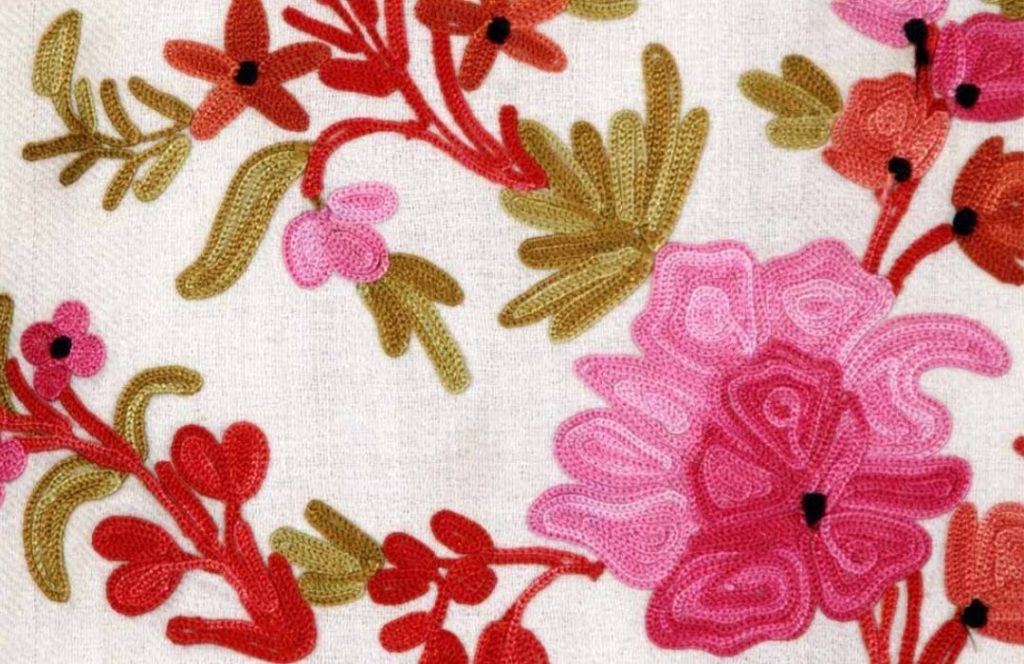
Pashmina is handwoven and hence fine and delicate enough to tear if dealt with harshly. Hence the best-suited embroidery for these beauties is Sozni Kari. After the shawl is woven, a Naqash uses block prints to make the outline of the design, which are usually traditional designs. These designs have emerged from Persian-inspired Paisley which the Mughals introduced, floral patterns which bloom in the valley itself in Spring and summer, and many other designs. Embroidery artisans have the choice to select colour for a particular shawl. They have decades of experience and depending upon the base colour, they select a complementing shade, which is influenced by the fashion trends in vogue.
Hand embroidered in the intricacy of Kashmiri Sozni Kari, the shawl hosts a plethora of flowers in a contrasting white
Sozni mostly uses cotton threads, but sometimes even silk is used. Fine needles are used to embroider motifs onto the gossamer base. The amount of embroidery to be done over the shawl decides the time in which it will be completed. Jaali shawls are less heavy, while tuki Jama is laden with embroidery motifs. Tuki Jama shawls take even years to get ready.
PAPIER MACHE EMBROIDERY
Papier Mache or Paper Mache embroidery is a form of embroidery which might be considered as a bolder variant of Sozni. It consists of breathtaking motifs which are worked in a bright coloured satin thread. Motifs are outlined in black to give a protruding effect.
Paper Mache uses thicker needle and thread for a more appealing visual effect.
When a motif is completed, it is outlined with another thread so as to make it appear more prominent
The most beautiful Papier Mache Pashmina shawls are often worn by brides on the day they leave their maternal homes. A white Pashmina shawl laden with colourful papier Mache embroidery looks marvellous. Papier Mache Kashmiri embroidery is so beautiful that if one does not afford a fully embroidered shawl, they just get the edges embroidered.
Papier Mache embroidery gets its name from the majestic Papier Mache craft where paper pulp is used to make objects which are later hand painted to look like art pieces. The resemblance of Papier Mache embroidery to that craft form is so much that the same name is used for both
TILLA EMBROIDERY
An embroidery which makes shawls relatively expensive is Tilla embroidery. This type is so popular in the valley that every bride should have at least one phiran (a garment worn by Kashmiri women) embroidered with tilla embroidery in her trousseau. Or else a shawl ornate with Tilla embroidered is expected by the onlookers.
Tilla originated from a village called “Zari” in Iran. But when Syed Ali Hamdani, a Sufi saint travelled to Kashmir with his artisans, he introduced the same in the local community. The then ruling Mughals were fascinated by its royal demeanour, and used this embroidery in their royal courts.
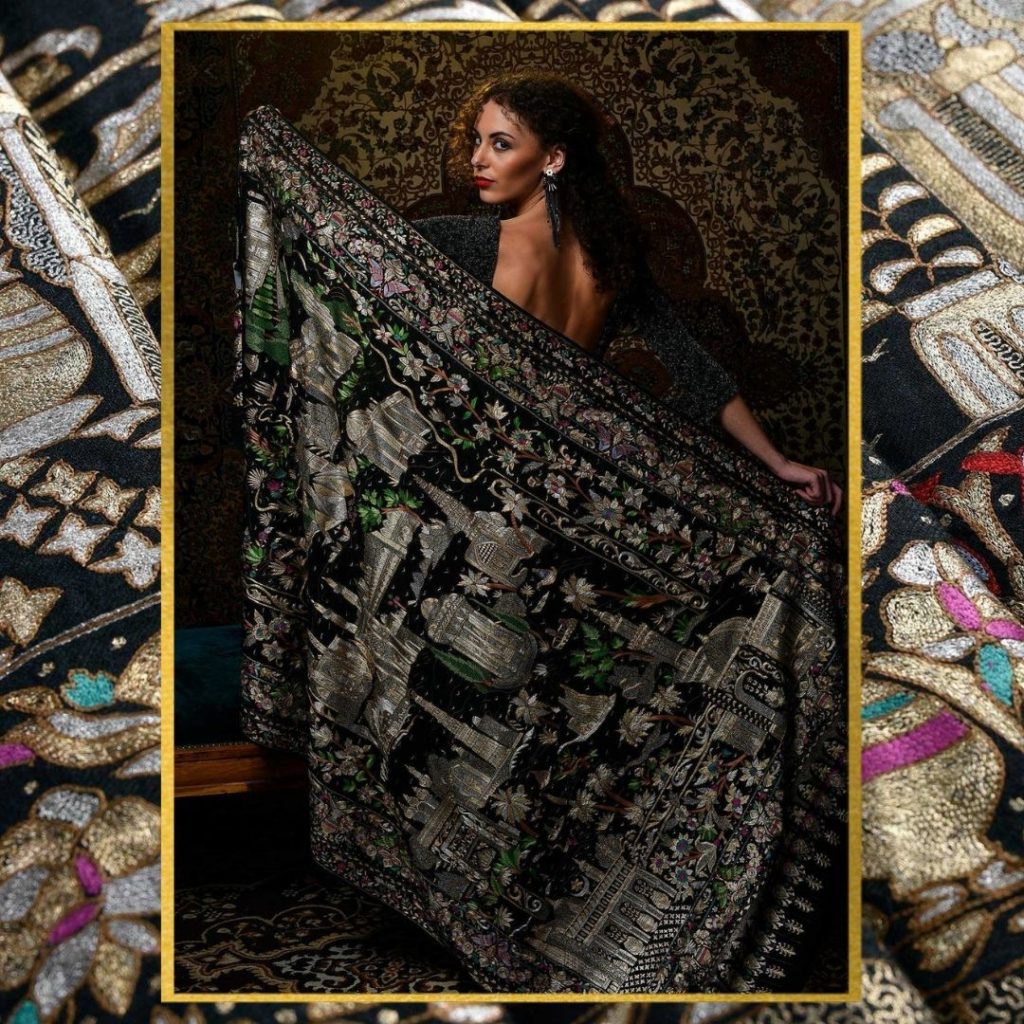
Handcrafted impeccably out of pure Cashmere, the shawl is hand embroidered in Zari Kari which showcases India's proud possession of heritage architecture, especially in the Mughal era
In the process of Tilla Dozi, metallic threads, dipped in gold and silver are delicately tied with the help of a needle to the fabric to create mesmerizing designs. This hand embroidery, like others, needs immense skill and patience.
Tilla is done in less quantities on Pashmina, due to the delicate nature of the base. On sheep wool Raffal shawls, it can be done profusely.
Tilla embroidery was made the most popular by the Mughal kings and queens, who used Tilla embroidery even on the furnishing of their courts. Tilla embroidery was earlier done with pure gold and silver threads. But since this was totally unaffordable for the commoners, metallic threads were used as replacement. Tilla Dozi looks the best when done on Pashmina shawls, as the rendezvous of two master art forms is totally magical.
KALAMKARI EMBROIDERY
Kalamkari designs aren't embroidery as such. But later, over the hand painted motifs, sozni embroidery is done.
This handmade piece of Kashmiri Pashmina gets hand painted in the Kalamkari art spanning in breath-taking shades of pastel colours
Kalamkari comes from two words, ‘kalam’ meaning ‘pen’ and ‘kari’ meaning ‘work’. Hence Kalamkari means the work of a pen. Pens used in Kalamkari are made from Bamboo. The colours used are natural dyes. The art of painting over shawls is fairly complicated, and uses as many as 20 steps to reach completion. The final result is intricately detailed, and breathtakingly beautiful.
Kalamkari shawls aren’t as popular in Kashmir as the other forms are, as Kalamakari is not embroidery but just spectacular hand painting. But some ardent fans of the craft get their shawls made on order and wear any anyway, irrespective of the popularity.
AARI EMBROIDERY
Aari embroidery, also known as Kashida Kari, is done on Raffal shawls, or sheep wool shawls. The threads used are thick woolen threads, which fine Pashmina cannot bear.
Aari embroidery uses a specialized crooked head hook called “aari” and not the needle for embroidering. Using a hook saves time, as the hook pulls several loops of the thread. On the contrary, the needle does the same one by one. Aari work is nowadays done with machines.
The Aari embroidery might not be the first Kashmiri embroidery that one looks for, but this variant of Kashmiri embroidery has spread it swings over and above just shawls. This embroidery can be seen on luxury sarees, cardigans, dresses, handbags and more. This particular Kashmiri embroidery has gained international fame, and designers all over the world have managed to imbibe it in their designs.
Common designs used in Kashmiri embroideries
Motifs crafted on shawls are usually those inspired from Persian culture, but have been modified with time. The most popular designs are Rose (Gulab) and Almond (Badam). Other types of motifs are Cypress (Sarav), Gul E Noor Jahan (a flower liked by Noor Jehan), Roses (GulabKan), Narcissus (Yumberzal), Chinar (Chinar Leaf), Lotus (Pamposh) and Vine (Dachh). These too are very frequently used. Calligraphy too is used in embroidery forms. The rich fauna of the valley too can also be seen in some pieces. Popular motifs are lions, deer, bulbuls, ducks. Some shawls even host human figures. The most common examples are Shikargarh (the hunting ground), or the Jangal tarah (jungle scenes)
Kashmir is the land of beauty. Be it the snow-capped mountains, mighty plains, lush greens landscapes, or the mesmerizing scenic places. But apart from these, its handicraft sector flourishes with exquisitely crafted pieces. Be it embroidery, copper making, Pashmina making, Papier Mache work, walnut wood art, and many other types, Kashmir never fails to disappoint the tourists which visit it in the largest numbers
Regardless of which embroidery women choose for their shawls or apparel, Kashmiri embroidery designs are timeless and keep getting more and more graceful as time passes.
Elegance is the only beauty that never fades... - Audrey Hepburn
THE SAGA
Kashmiri Pashmina is one of the finest, most exquisite fabrics ever made. It has also taken centuries of experimentation and refinement to raise this traditional practice of shawl making from being a necessity to unique textile art.
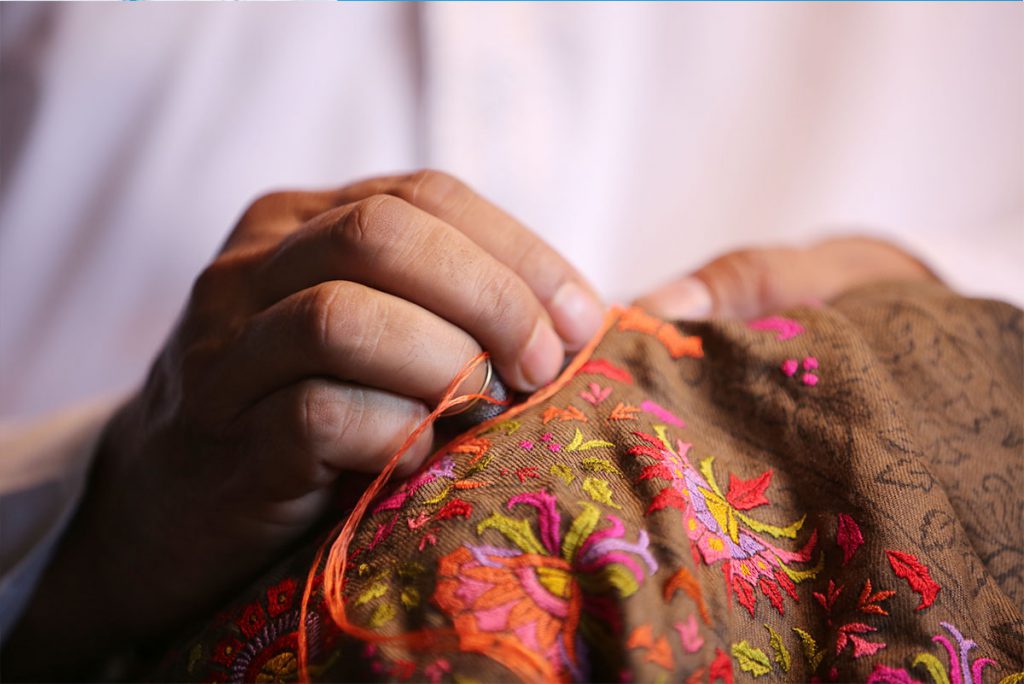
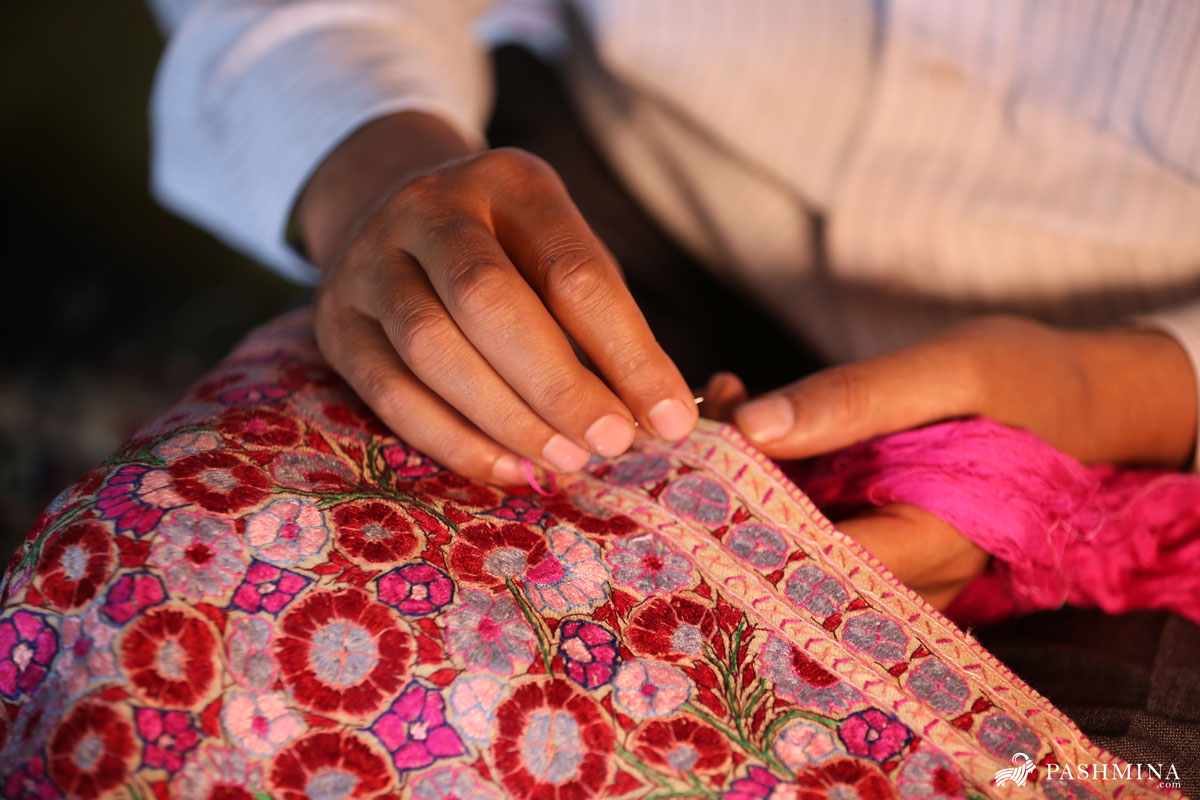
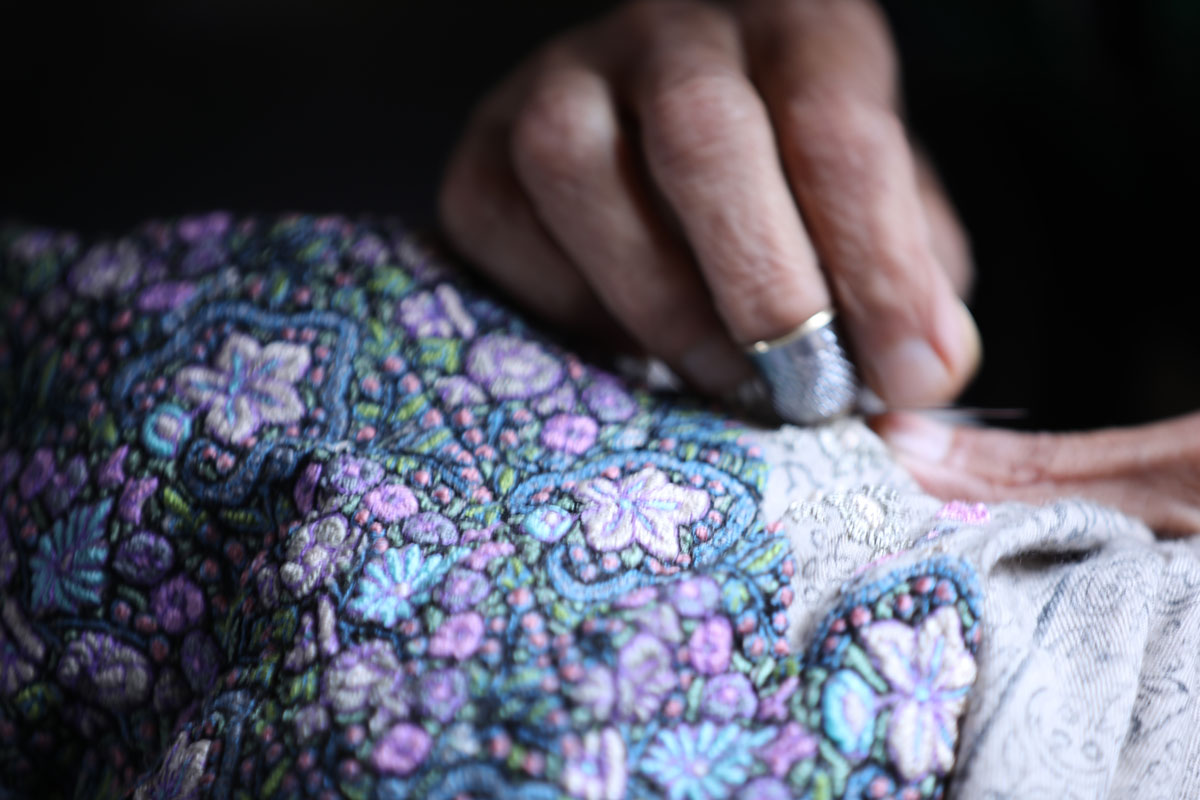
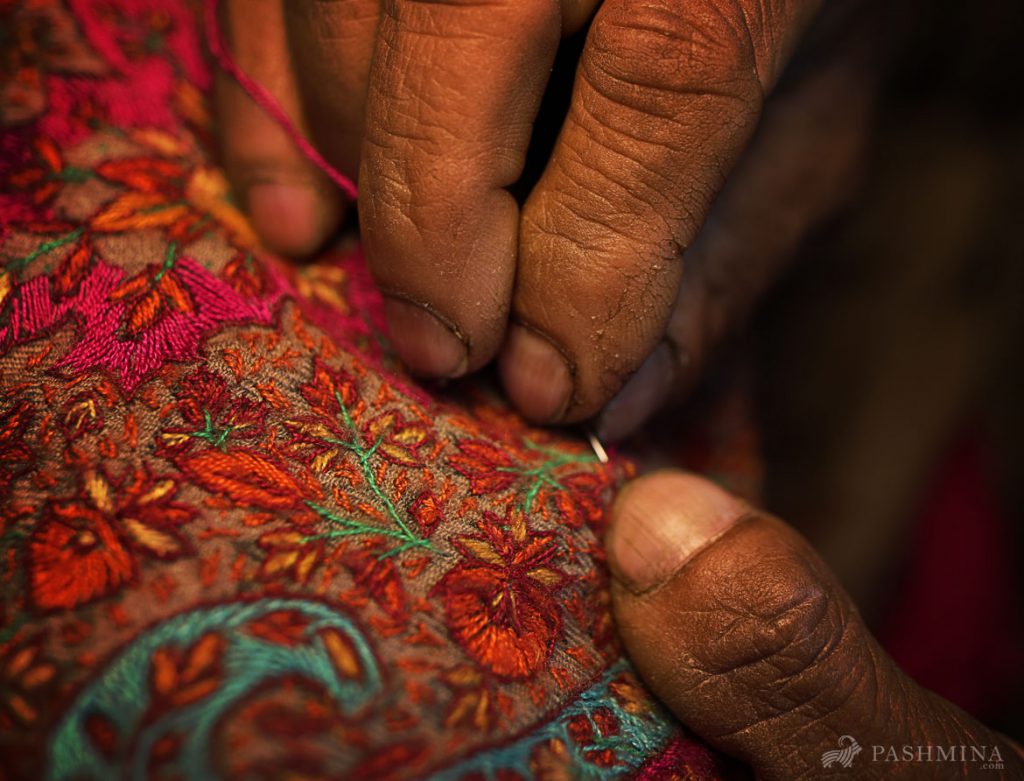
Pashmina Artisan doing Embroidery work on a Pashmina Shawl
Overall, Kashmir is the only place in the world where finely embroidered Pashmina shawls are being produced.
Despite upheavals, the art of making the Pashmina shawls in Kashmir is unique and is still practiced in the traditional way by local artisans.
Is Pashmina Expensive?
According to a few lovers of this traditional art, Pashmina is a bit expensive. To know if this claim is at all correct, we take you through the journey of a Pashmina.
Does its procurement make Pashmina expensive?
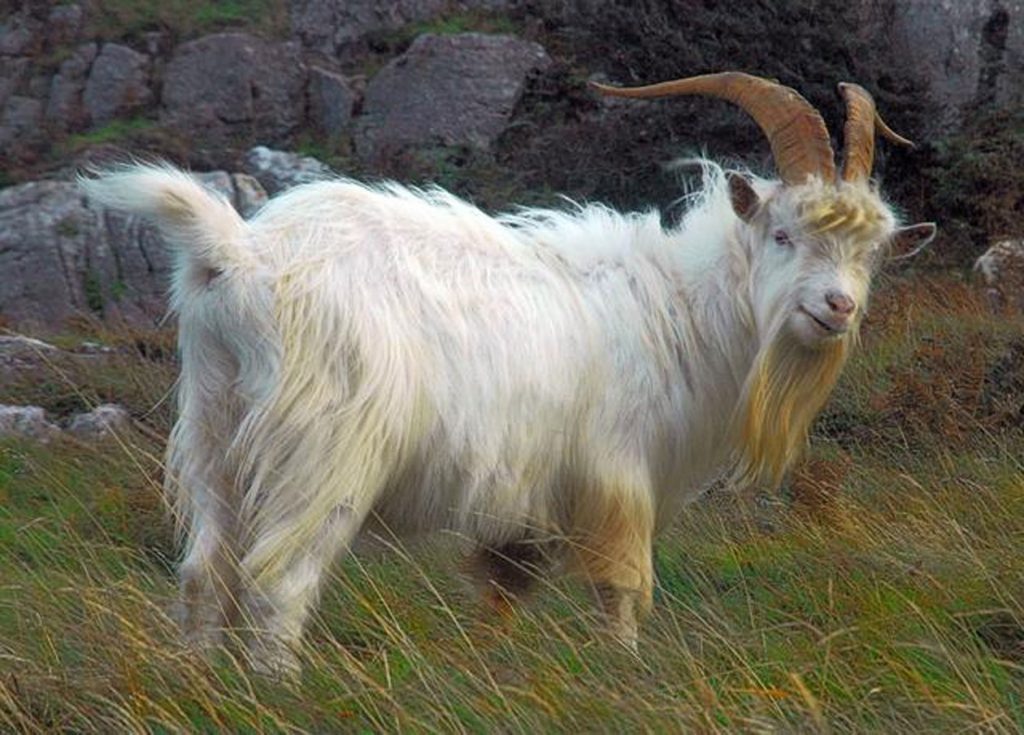
The pashm wool comes from the Capra Hircus goat indigenous to high altitudes of the Himalayan mountains.
Kashmiri Goat: Changthangi or capra hircus goats
Every spring, they shed their winter coat. Herders collect it later for the weaving process.
One goat produces only about a few grams of Pashmina each year. In addition to this, a single Pashmina shawl requires wool from about three goats. Hence the exorbitant price becomes obvious.
Does its purity make Pashmina expensive?
The test for a quality Pashmina has been warmth, feel, and the passing of the shawl through a wedding ring.
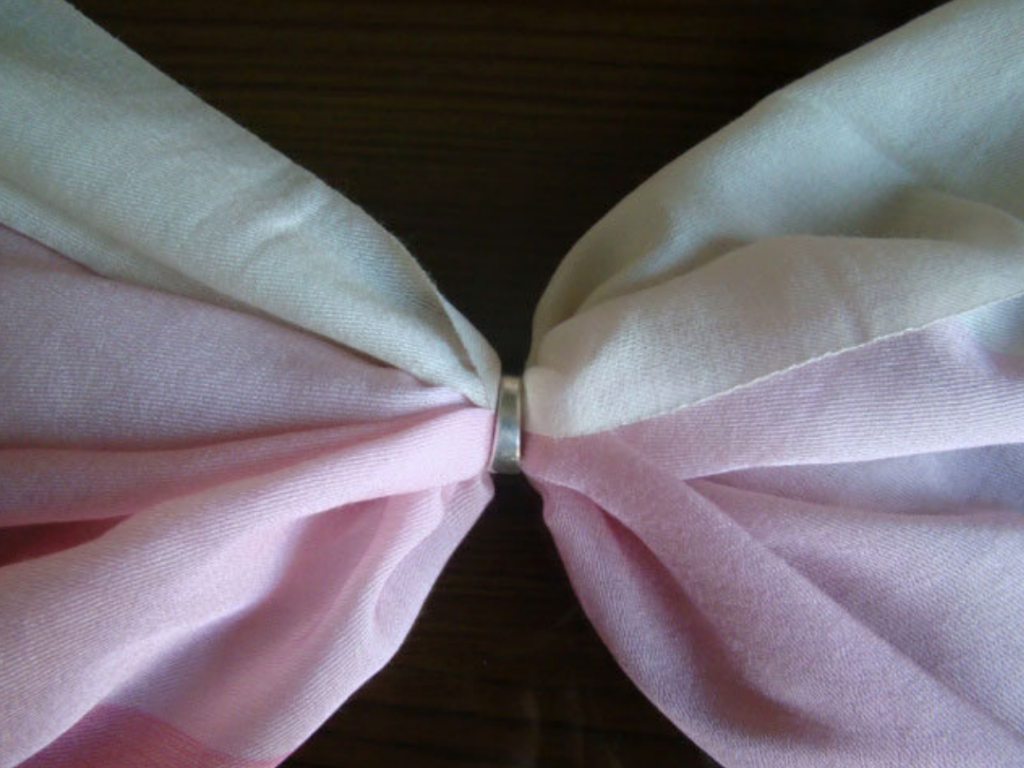
The ring test
The fineness of the pashm wool is between 14-16 microns in contrast to the finest sheep's wool which is 23 microns. To make your hair raise more, human hair is up to 50-70 microns.
Real Pashminas are very soft and warm to touch, owing to the thickness of the hair. The finer the thread, the greater warmth it produces. Perhaps this is one more reason to feel that Pashmina is expensive.
An authentic Pashmina is always handmade and hand-embroidered with a very minute thread. Only a talented artisan can create skillful shawls with intricate work that gives Pashmina its grace and glory. Depending on the work, a single Pashmina piece may take anywhere between a week to a decade to complete. With signature Pashmina styles exclusive to us and the countless designs created by our hard-working weavers, our Pashmina collection is worth a look. It offers something unique and felicitous for every occasion.
How expensive is Pashmina?
Apart from being unaware of why is Pashmina expensive, women often do not have an idea about how expensive Pashmina is? Well the price depends on a number of factors. Here are some:
Ply: Ply indicates the density of fibre used. Single ply Pashmina scarf would mean that basic thread is used in its single form. Double ply or two ply would indicate that fibre is double twisted. Two ply are more pricey
Count: Yarn count is a number indicating the meters of yarn that can be spun per gram. The more yarn count the thinner, the smoother and more precious is the scarf.
Thickness of the fibre: How thick the fibre is also determines the price of Pashmina scarves. The finer the fibre used, the more pricey the scarf becomes.
Weave patterns also determine the price of Pashmina scarves. The diamond weave is the most expensive type of scarves in Pashmina. Twill weave and basket weave follow. Jacquard weave is also one major type that is usually worn at weddings or special occasions.
How expensive is Pashmina scarf?
A Pashmina scarf, on average will be worth US$120 - 300 (dimension is 200 cm x 35cm). It also depends on purity. This was the price of a 100% pure scarf and not an amalgam of silk or nylon. Unfortunately, many deceptive sellers have hiked prices but sell fake scarves. It is important to ask the seller for a certificate of authenticity. If he is not able to produce one, then he might be a fraud. Nevertheless, plain scarves will range from $120 to $150. If the scarf is patterned, printed, or laced, it will rise in price. Embroidered scarves might even be priced at $300.
Pashmina shawl (sometimes called ring Pashminas) is the ever-loved and world-famous wrap accessory. These are found in Kashmir, India. The raw wool for these shawls is found in Ladakh. Here the exotic Changthangi goat grows Cashmere over its underbelly and neck to survive harsh temperature. When spring and summer arrive, this wool makes the goat extremely uncomfortable. This shows how warm the wool is. The goat starts rubbing itself with bushes, rocks, and other rough surfaces and gets rid of this wool. It is sent to Kashmir where artisans clean it, sort it, spin it, and weave it into heavenly soft, luxury Pashmina shawls.
Finesse of Pashmina shawls
The Pashmina yarn is so thin and it is sometimes barely visible. The average diameter of Pashmina yarn is 12-16 microns which equals one-fifth of human hair. The yarn is so light that it doesn't even feel over one's body. But this feathery light and the cozy shawl are so warm that you might not even need a sweater during the start of the winter season
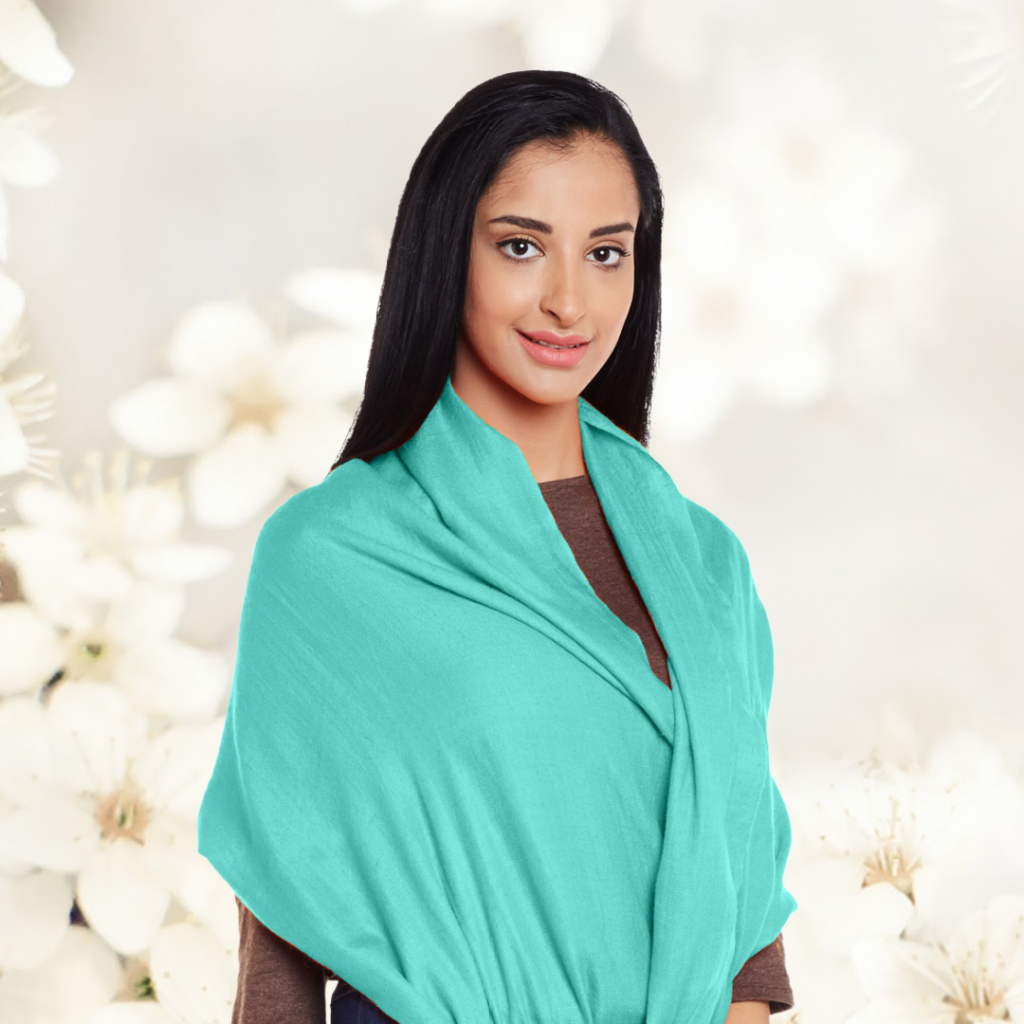
The feathery light Aqua Pashmina Shawl
In addition to being the most comfortable accessory, a Pashmina shawl is ever stylish and a classic. Ever since Empress Josephine set it into a timeless fashion, Pashmina shawl has never looked back. But a problem with its purity and originality rose when machines and fake synthetics began to interfere in markets. However, tests were invented to identify real Pashmina. One of the oldest tests is the ring test.
It is said that the purest Pashmina Shawl will pass through the tiniest of rings. The base is so smooth that the entire shawl passes through a ring of the little finger. This has earned it the name "ring Pashmina"
The Test
Pashmina is the fine art of weaving cashmere fiber into wrap accessories. It has a weaving style that is so thin, light, and delicate that the whole shawl can be passed through a ring.
The fineness of the pashm wool is between 14-16 microns. This is in contrast to the finest sheep’s wool which is 23 microns. Note that human hair is up to 70 microns in diameter
Real ring Pashmina shawls are very soft and warm to touch, owing to the fineness of the hair. All our plain Pashmina shawls, stoles, and scarves match the quality of shahtoosh and pass the ring test!
Click here to see our luxury collection of the finest Pashminas
Pashmina is the handwoven luxury that holds its wearer in a heavenly warmth. Raw wool or Cashmere is found in Ladakh. It is grown over the sensitive underbelly of an exotic species of goats called the Changthangi or Cashmere goat. The goat grows the luxury soft fleece in winters to protect itself from severe cold. Come spring, and its herders gently comb its body to remove the soft wool as it becomes more uncomfortable during summer. Later the soft wool is sent to Kashmir, where women artisans clean, sort, and spin it. Later men artisans weave and embroider it and it sells in the market as the grandest and regal accessory ever.
Pashmina is known all over the world, and not just locally. It once used to be a prime component of the wardrobes of queen, kings, and nobles of royal courts. Empress Josephine owned as many as a hundred Pashmina shawls. Mughal kings used to gift Pashmina shawls to each other. Hence these exquisite shawls need no introduction to the maximum number of people in the entire world. Are you one of them?
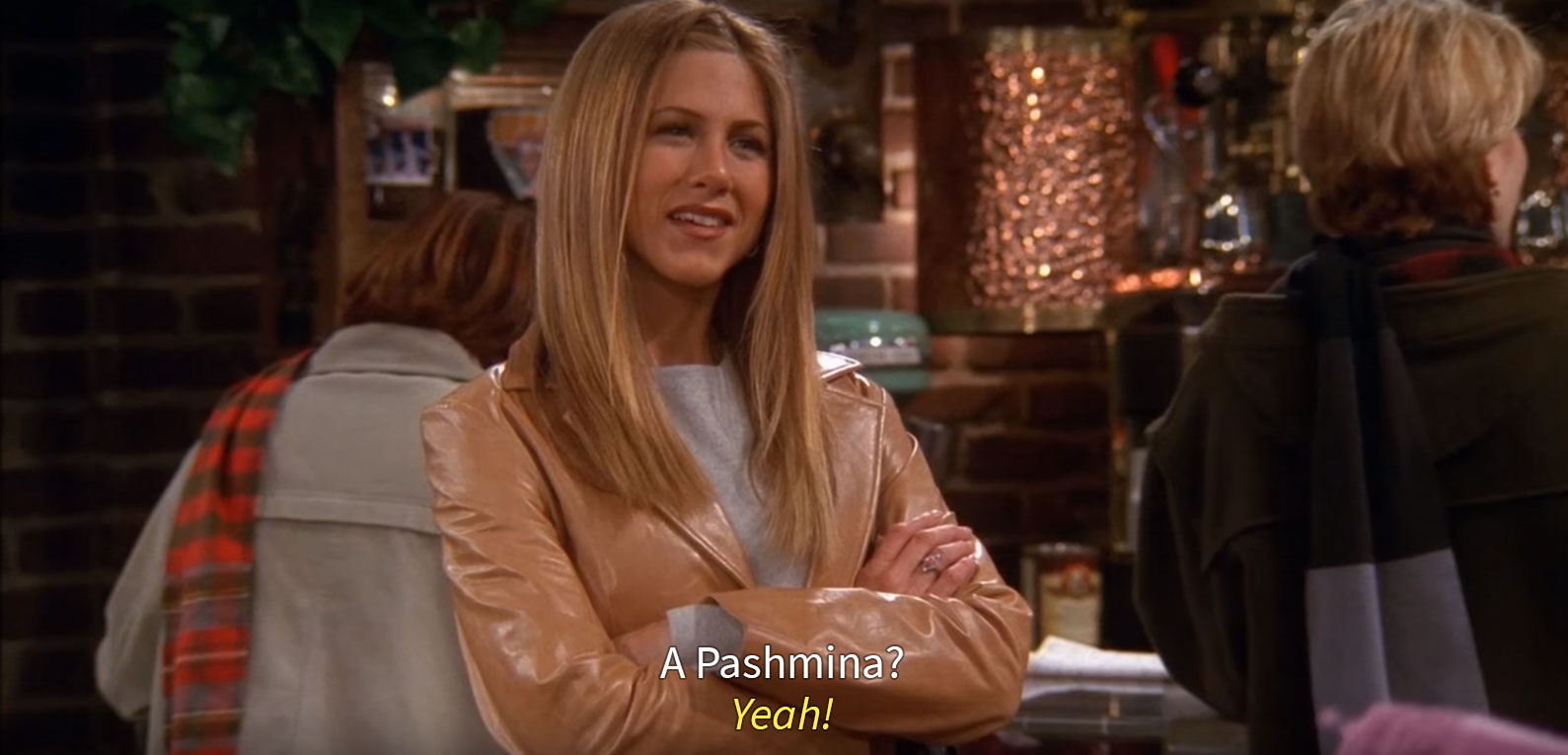
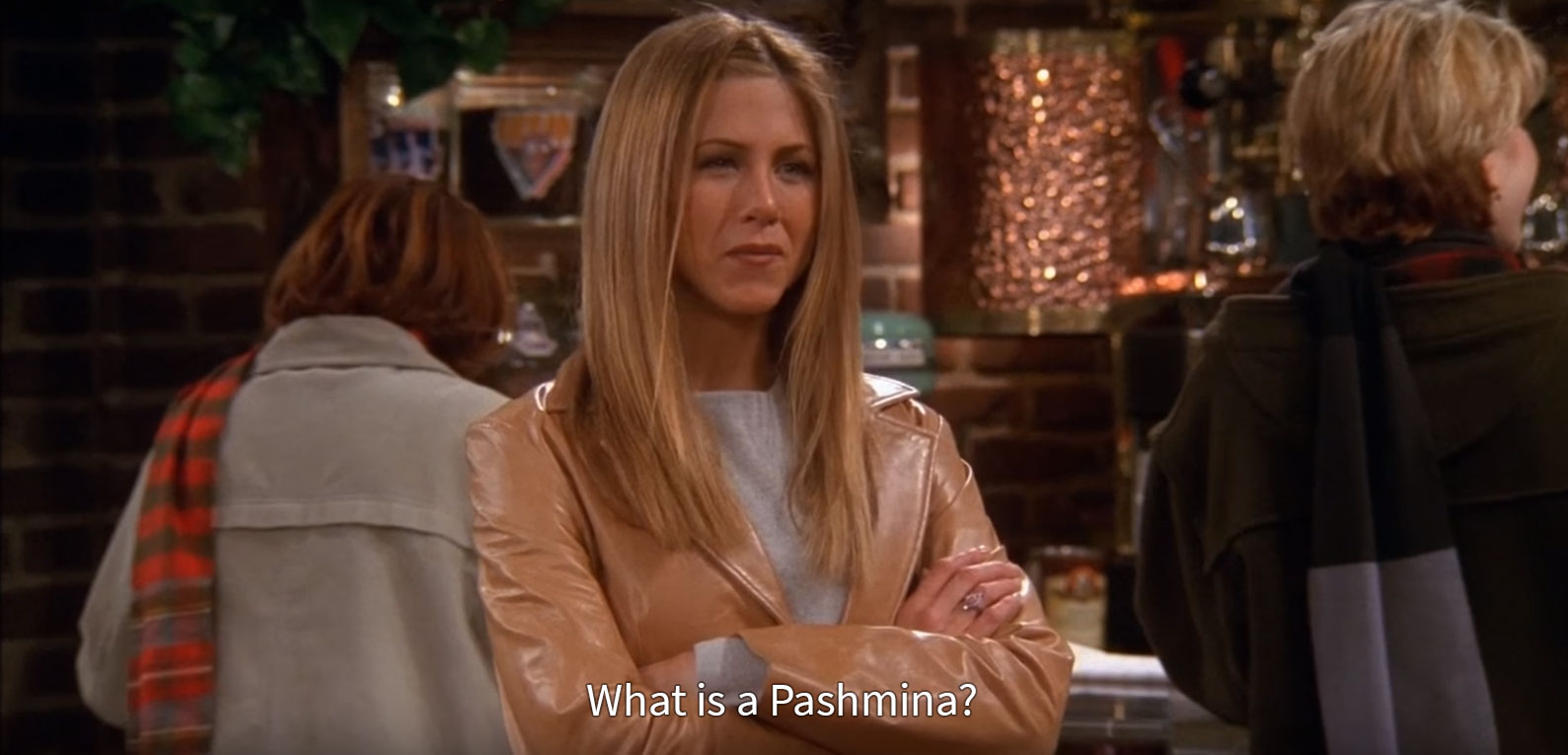
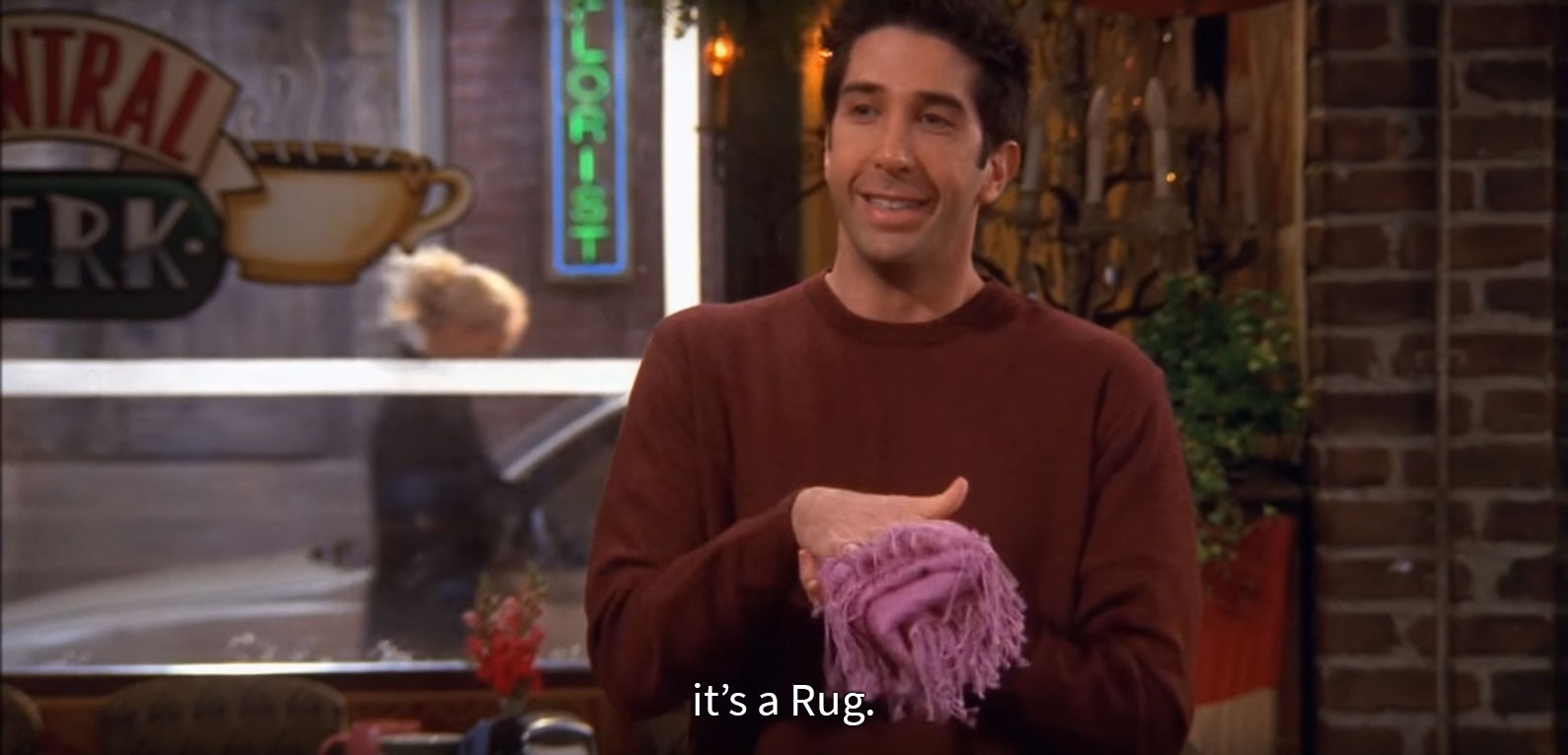
Even Rachel from FRIENDS knew what a Pashmina is. And when shows like “FRIENDS” have a mention of ‘Pashmina’ and fashionistas like Jennifer Aniston know it, how can we not investigate?
Well, the scene from FRIENDS showed Ross's timeless humor but reiterated the fact that people around the world are unaware of the quality of pure Pashmina and its exclusive nature. The prevalent use of the word has resulted in degrading its real value to quite an extent.
On a lighter note, the worldwide recognition and appreciation of this fine fabric have led to people compare everything which is soft and warm to it. Well, isn’t that nice?
But as Ross said, “I am in love with these babies” and we don’t disagree, who can resist the exquisiteness of a pure Pashmina?
It’s truly like diving into a cloud of fur.
Pashmina mentioned in FRIENDS
When you invest in art, you should know about the painter, his skill, and the type of art he is famous for. Similarly, when you buy a real Pashmina, you must know the terminology to make a smart purchase. Have a look...
Ply means the layers of threads used to make the pure Pashmina. Therefore higher the ply more is the thickness.
3. Is it a handwoven Pashmina or a machine-made Pashmina?
The fine Cashmere
There are many retailers who would sell you a Pashmina saying it's hand-woven when it is actually machine woven. Clearly, it is very difficult to find out the truth. Even so, the quality of the pure will speak for itself and help in the decision-making. Sometimes, the best way is to trust the source and the reviews of other clients. The higher the number of hours put into making this luxury wrap, the more expensive it is. Briefly, it’s mainly the amount of labor, which makes a big part of the cost.
4. How many hours did it take to make the Pashmina?
A fine needle work carried upon the delicate Pashmina shawl to infuse traditional motifs
When Kashmiri Pashmina is handwoven, the most important question is the number of hours put in. In that case, there is a high probability that the retailer might exaggerate it. However, trusted retailers would give you an exact measure to prove that the product of extremely high quality.
We, at Pashmina.com, make sure that below every product, there has been mentioned “time to craft” to help the buyer make the right decision.
The finest Pashmina comes from Kashmir. The Changthangi goat, indigenous to the Ladakh region grows a fine raw fleece as an undercoat. It is this undercoat that is ethically combed off the goat's body and processed to make Pashmina shawls, scarves, and wraps.
Note that the raw wool called Cashmere is found in Kashmir, whereas its processing is exclusive to Kashmir. It is solely the artisans of Kashmir who have the expertise to transform Cashmere to Pashmina wraps.
At Pashmina.com, we sell purely handcrafted and certified pieces free from any blends. The raw material is 100% Cashmere acquired from Ladakh, which is processed without mixing any foreign fabric. And since our products are handmade, they do not need any strengthening blends Pure Cashmere yarn is mounted onto wooden handlooms and handwoven by two local artisans in a span of 3-4 days. That is how these luxury pieces are conceived.
7. Are the Swarovski crystals real?
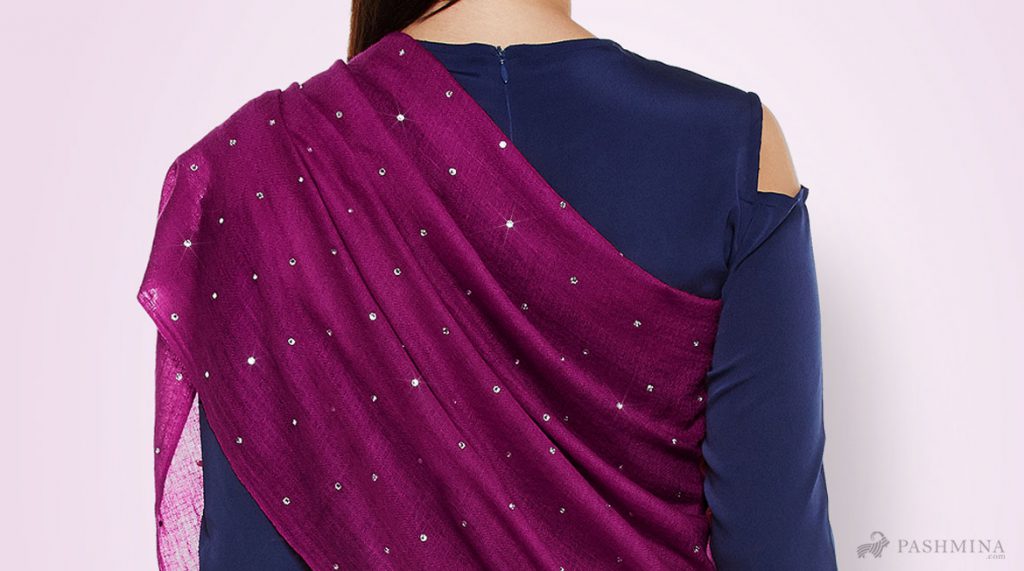
Swarovski studded Pashmina
You would see a lot of shawls with beautiful stones/crystals but not all of them are Swarovski. Even though the seller might say these are real crystals but beware! Real Swarovski is very expensive and they shine beautifully. Hence, if that’s the real crystal, the value of the Pashmina would be much higher than usual.