Luxury fabrics are always a treat to shop for. A cushy sweater, a thick or silky smooth scarf, a handmade, feathery light dress or minimal luxury accessories, all at high prices feel so good when you wear them. Who doesn't love a luxurious lifestyle afterall? However, the difficult part is the care. Taking care of these expensive products is usually hard. One can’t just toss them in washing machines and get away with their care. This way, handcrafted, luxury products often get worn out. Often, expensive fabrics, like Cashmere are hand washed or dry cleaned. Even then, a big list of precautions is followed and only then do these products remain safe. This is, however, one of the biggest hindrances why many prefer buying cheaper products, and expensive ones for just special occasions. Regular wear needs frequent washing, and frequent washing leads to more wear and tear.
Cashmere is one such fabric which is expensive and hence challenging to take care of. Be it a Cashmere sweater, a Cashmere shawl, a scarf or apparel made from Cashmere, all are a challenge to wash, dry, store and iron. Washing Cashmere is believed to be only professional. But why would one spend huge amounts on washing a sweater that they already spent a fortune over. Or why should ironing a garment take the longest time ever and still feel wrinkled?
Cashmere is Delicate and Fine
Did you know that Cashmere wrap or sweater that you just got from the shop is handmade? And what is the specialty of handmade fibres? They are delicate. As such, your Cashmere might be really warm, plush, and exquisite, but if proper care is not taken of it, it might end up in ruins. Cashmere is handcrafted, and hand embroidered. Even the dyes used in it are done manually. Such a fabric is gentle and needs the same treatment. But what if you stain it? What if a Cashmere wrap gets dirty? Or what, if it needs to be cleaned, and you don't have another option? We have the answers to all your queries about washing Cashmere, drying Cashmere, ironing it, or dry cleaning it. Let us answer all of them, but first, know what Cashmere is
What is Cashmere?
Cashmere is animal hair
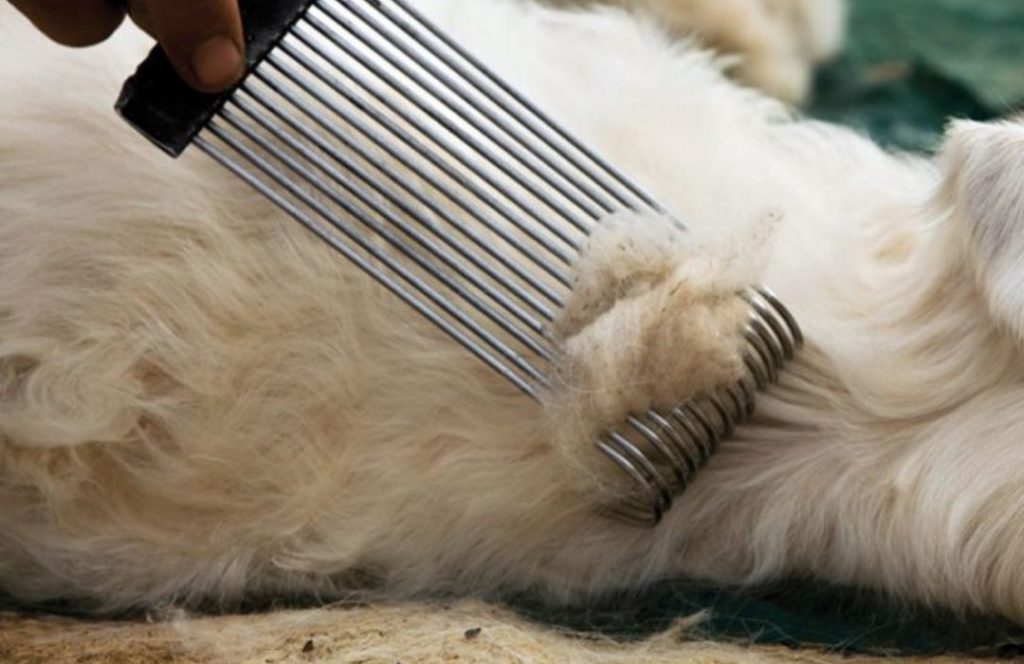
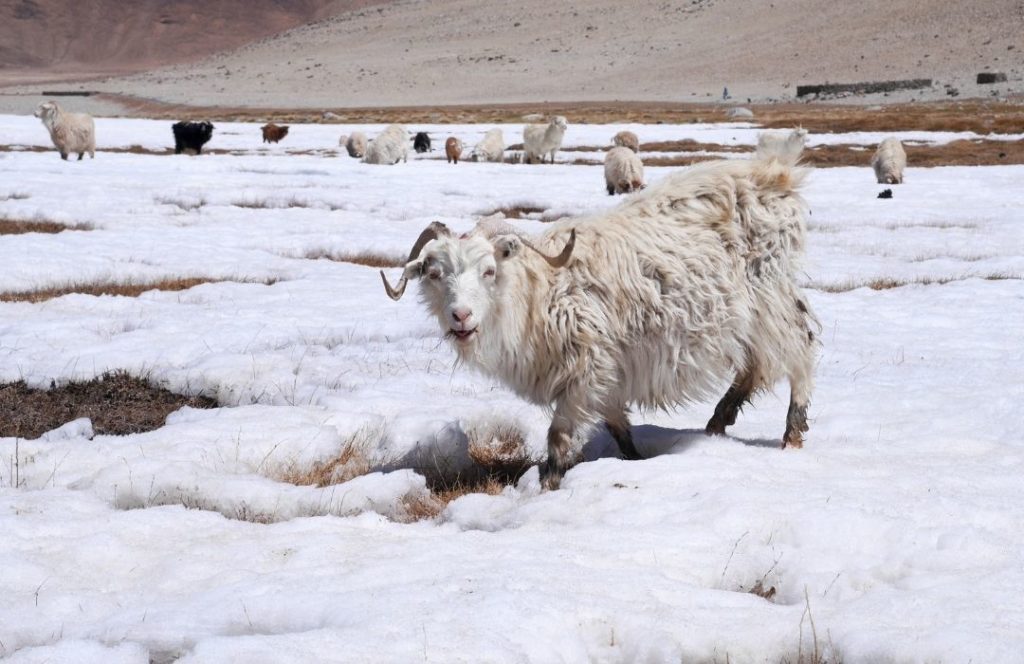
Cashmere is a variety of goat hair, which is found in Northern India. Changthang is situated in Ladakh, where the Cashmere goat is found. The goat grows fine fleece over its body in winters, to survive the harshest seasons ever. But as soon as Spring comes, the goat sheds this wool which now feels uncomfortably warm. Its herders comb off the rest of the wool from its body and pack it in small pouches. This is Cashmere wool in its raw form. It is sent for cleaning, and then for processing to Kashmir.
In Kashmir, womenfolk from the remotest corners come together and start with the cleaning of the wool. Clean wool is later spun and hand woven manually over traditional spinning wheels and handlooms. This produces pure Cashmere fibre which can be transformed into shawls, scarves, sweaters, and other accessories.
Why is Cashmere Expensive
Cashmere fibre is one of the most expensive fibres in the world. The reason for its high price is the process it has to go through to become fabric from raw lumps of wool. Raw Cashmere fibre is found high in the Himalayan ranges where an exotic breed of goats grow it as a downfibre. The downfibre is acquired from the goats in the summer season to keep them cool. This downfibre is cleaned thoroughly by womenfolk for a number of days, as it is fine, and hence takes much effort.
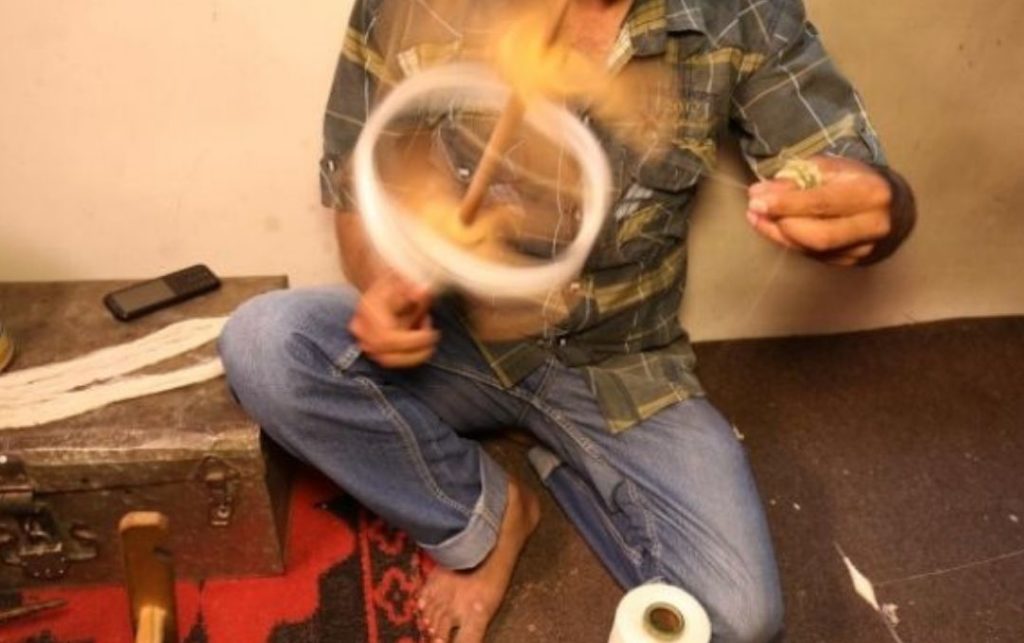
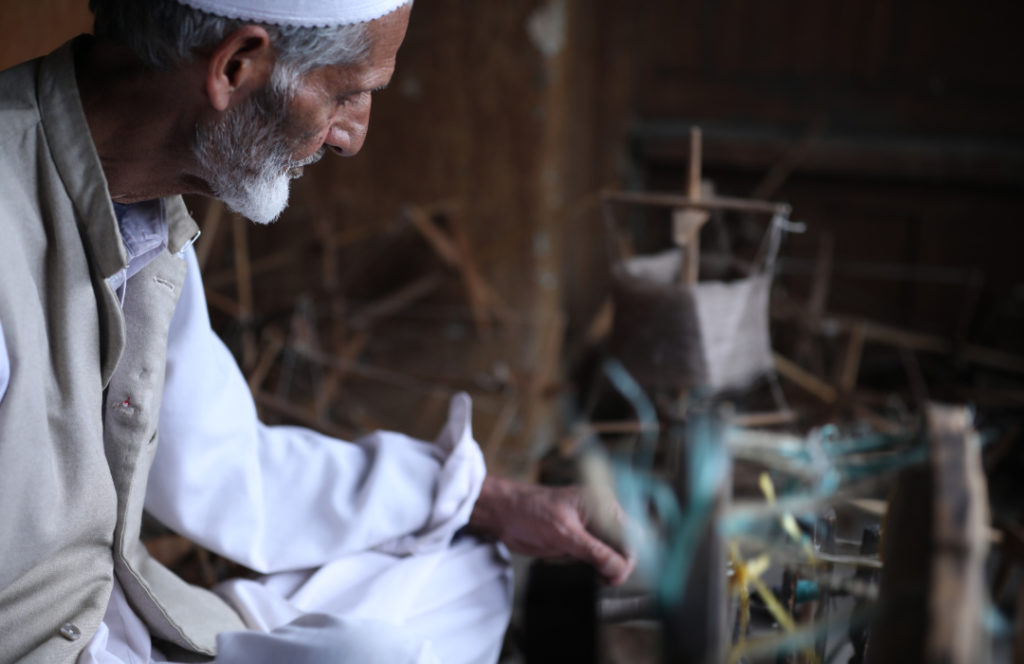
When the fibre is clean, it is hand spun by womenfolk again. Spinning is an intricate process where a wooden spinning wheel is put to use to convert lumps of wool to fine threads. This process is especially complex, as the spinning of the wheel and the movements of the hand should be in perfect coordination. It is the super speciality of Kashmiri women which makes this task look easy.
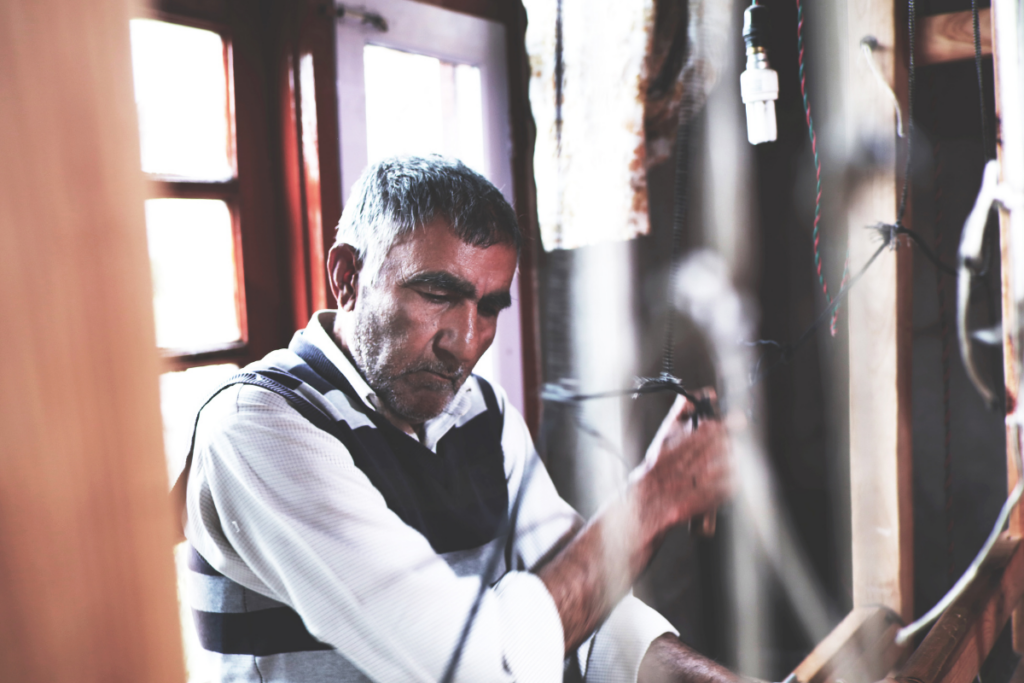
Post spinning the fine threads are handwoven together to convert these into fabric. Men mount these fine threads onto the heddles of the handloom, and keep weaving them for a number of days, till fabric is formed. The fabric can be moulded to Cashmere wraps, scarves, or apparel and accessories.
Handcrafted by Artisan Groups
It is just the bare hands of skillful artisans which are employed into making Cashmere apparel and accessories. Men and women work together, and at times take anywhere from a few months to several years to finish a product. The time taken and the hard work of the artisans are two primary reasons why Cashmere is expensive. Another reason is the less availability of Cashmere wool. The downfibre of the Cashmere gat grows only in winter season, and is acquired in summers. Hence, makers have to wait for a year to get just a few grams of this fine wool.
One goat produces just 150 grams of Cashmere, which is a very meagre amount as compared to sheep wool. All these reasons are enough to make some intricate Cashmere wraps sell for a few thousand dollars and make them super pricey when compared to sheep wool or nylon wraps selling the market for just tens or hundreds of dollars.
Can you wash Cashmere?
Washing cashmere at home
Can Cashmere be hand washed? Many of our audiences and the patrons of this luxury fabric do ask questions like" Can I wash Cashmere at home" "Can I wash Cashmere in a washing machine" or "How to wash Cashmere at home" "How to clean Cashmere". Hence we prepared a comprehensive guide of Cashmere care, by which you can make your Cashmere last for a lifetime. So, let's start with washing Cashmere
Can you wash Cashmere at home?
Can Cashmere be hand washed? Undoubtedly, the answer is Yes, if proper precaution and care is taken, Cashmere can be easily washed at home. One has to be extra gentle and careful while washing this gossamer fine fabric.
How to wash Cashmere at home?
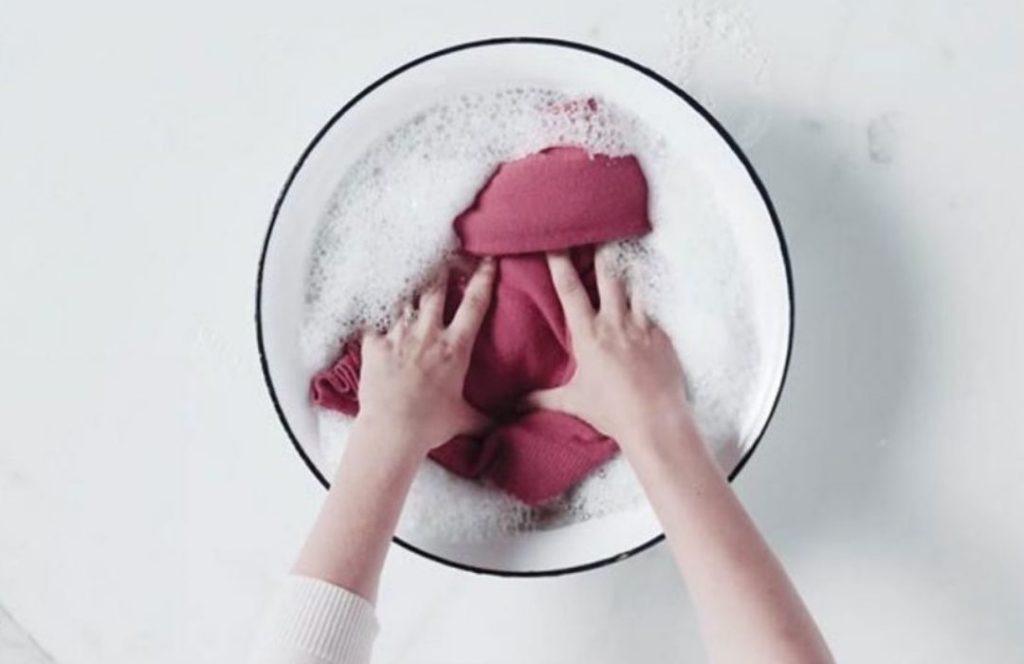
Follow the steps below to prepare the cleaning liquid for Cashmere: lukewarm water & a Cashmere shampoo. Do this in a tub or shower. Remember not to wash multiple things together. Only after following these steps strictly can Cashmere be hand washed at home:
Fill the tub with lukewarm water and Cashmere shampoo. Mix well. If Cashmere shampoo is not available, use baby shampoo or conditioner
Soak your Cashmere wrap into this mixture. Gently whirl, and let it sit for 20-30 minutes
Take the wrap out of this soapy mixture, and ball it between your hands to take extra water out. Do not wring the wrap.
Rinse it in cold water. Do not wring. Again ball the soap-free Cashmere in your hands, and squeeze it gently.
How to fix Cashmere after washing?
Washing is done. This might be a bit of relief for all, but washing is actually the easiest of all processes involved in the cleaning of Cashmere. The actual task is drying and ironing.
Can Cashmere be washed in a machine?
There are times when hand washing Cashmere is not possible. Those times call for a quick wash, and machine washing can be the next best option after hand washing. But again, the fabric demands to be gentle.
Women, especially working ladies, often do not have much time to hand wash Cashmere. It becomes a burden, especially when laundries around you aren't open for some reason, or are far away from your place. These women keep asking us the same question" Hey I don't have enough time, Can I wash Cashmere on a delicate cycle". Well yes, you can, provided your delicate cycle is actually delicate. Here is how to wash Cashmere in the washing machine
Put Cashmere wraps in mesh bags. This prevents them from getting stuck anywhere.
Change the settings to cold water, and hand washes.
Pour Cashmere shampoo in the soap section, and start the machine on a delicate cycle
Remove the wrap as soon as the cycle is over. This prevents creasing.
How to dry a Cashmere sweater/wrap?
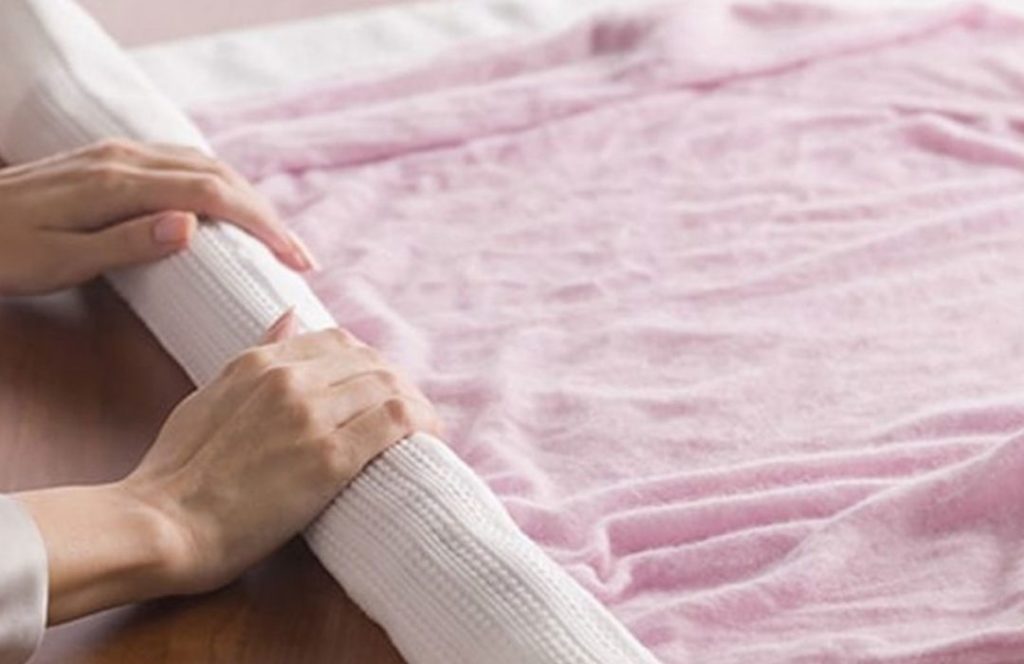
Roll the towel, along with the wrap, and let it absorb all the excess water from it
Drying a Cashmere wrap or sweater has to be handled gently as well. Do not tumble dry a Cashmere wrap or sweater. Dryers are meant to kill Cashmere fabric. Do not hand the wrap or it will deform. Do not place it in direct sunlight. Instead, let this gossamer fabric dry naturally.
Simply lay down a towel and let the wrap spread flat on it.
Now roll the towel, along with the wrap, and let it absorb all the excess water from it
Unroll the towel, and replace it with a new dry and clean towel
Let the wrap lay flat on the new dry towel for a few hours, till it dries naturally
Can you iron Cashmere?
People often send Cashmere wraps to laundries, thinking that Ironing Cashmere is not possible, or might be dangerous. But that is not the case. On a low setting, you can iron your Cashmere. Be extremely careful while doing so. If the iron is too hot and does not have a low setting, then place a cloth between the iron and the wrap.
Can you steam Cashmere?
Steaming is actually the best way to smooth out the wrinkles in a Cashmere wrap. Invest in a good steamer and post drying, treat your Cashmere with it. If the wrap catches moisture, leave it to air dry again. You will have a wrinkle-free, smooth Cashmere wrap at your disposal.
Dry Cleaning Cashmere
Dry cleaning Cashmere, too, is an option, but we would not recommend doing so unless the label on your product demands it.
Does Cashmere shrink when dry cleaned?
Dry cleaning uses harsh chemicals, which tend to ruin the fibre. While it might not shrink your precious piece, it might reduce the quality and life of your dear product.
Hence, hand washing is the best way to wash your Cashmere. Cashmere is animal hair, and just like we wash our hair, Cashmere needs the same too.
It is better to dry clean the product which reads "Dry Clean Only", but washing it at home manually should not be a problem. Be careful, use mild soaps or shampoos and air dry them naturally.
How can I store Cashmere
Storing a Cashmere Wrap is again a task, which has to be done after taking strict precautions. If you store your Cashmere properly this year, only then it will look fresh the next year. Storing Cashmere has to be careful. To start with, one should clean the shelf where Cashmere is to be stored, and make sure direct sunlight falls over it. The area should be dry, clean and free of any moisture. Moisture is the worst enemy of Cashmere, as it attracts moths, which can damage the fine base.
Cashmere wraps should be folded properly. If possible, paper tissue should be kept between two consecutive layers (not necessary). Now, the wrap should be wrapped inside a muslin cloth. Plastic bags should never be an option for storing Cashmere, as these attract moisture, and moisture attracts moths.
Never stack the Cashmere wraps one over the other if you are an owner of many wraps. This might cause friction and make the wrap bobble. Instead, place a paper sheet in between these, if there is no other place available.
Concluding
Cashmere is like a baby. One has to be super careful lest it may wither or get damaged. Even when wearing a Cashmere wrap or sweater, one has to be cautious. If you wear Cashmere everyday, there are high chances of bobbling on the surface. Instead, wear these delicate babies for a few special events. Wash them carefully, dry them properly and store them mindfully to get the best of them for a lifetime.
Taking care of Cashmere will yield the best results. One can find out that after proper care of Cashmere, the product will last for over 20 years (if it is made from 100% pure Cashmere). There are women who own 30 year old Cashmere wraps, and their precious pieces haven't lost a bit of their graceful sheen in all these years.
It’s a proud moment when you feel great wearing something new. And not just because it makes you look good. But its because of the way artisans created the garment. From improving the livelihood of its makers to giving customers something they can cherish forever, it’s a matter of pride to own a Pashmina.
Other than being an example of sustainable fashion, here are a few reasons why you should be proud of wearing Pashmina:
Pashmina wool is organic and obtained ethically
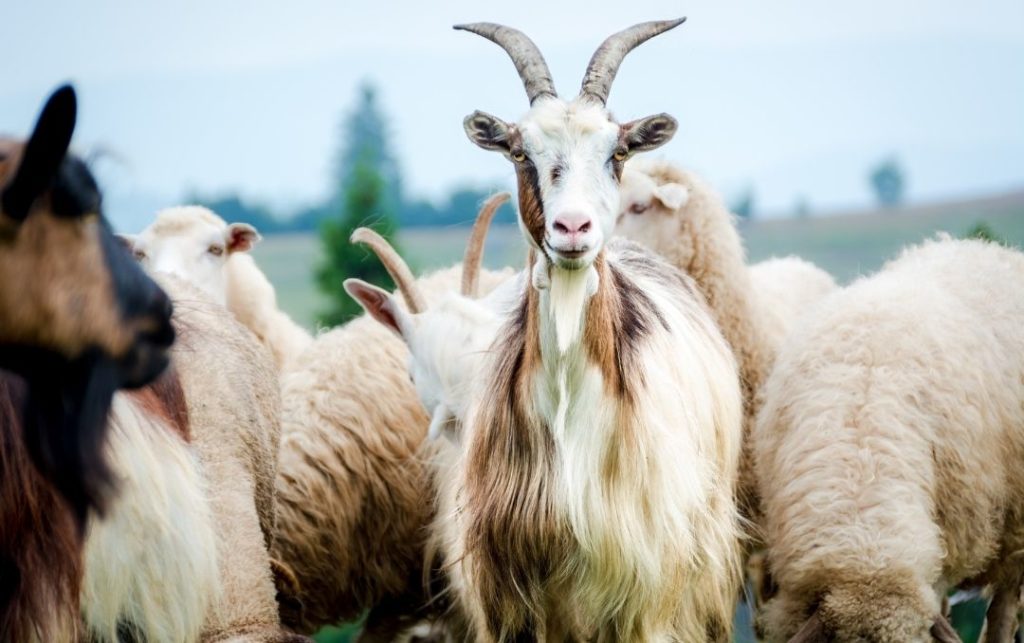
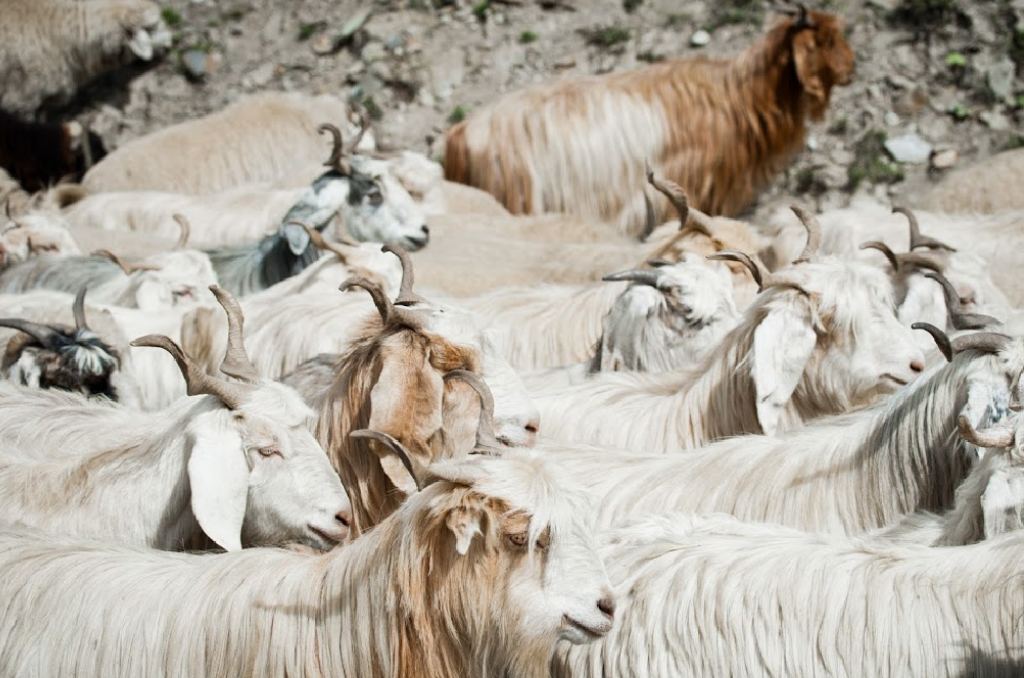
The Changthangi goat
Pashmina shawls come from ethically sourced wool which is organic. The wool used for Pashmina comes from the Changthangi goats which herders rear for their milk by the Changpa tribes. Unlike the infamous shahtoosh shawls, for Pashmina, herders do not hurt the animal in the process. The Changthangi goats naturally shed fur during the spring. Herders collect this shed fur from their underbelly. Hence the whole process of procurement is organic and free from cruelty to the animal.
When you buy Cashmere shawls you end up supporting the glorious Kashmiri art. You also indirectly support local artisans who put their hard work into these shawls. For many families, weaving Pashmina shawls is the only source of income. Hence, you can be proud of the contribution you have made. Though Pashmina is produced in China, Nepal & Mongolia, the ones made in Kashmir are unique as they're handwoven, hand-embroidered. Unlike machine-made shawls, no two handcrafted products are the same
Pashmina shawls enjoy an heirloom status
In today’s age of fast fashion, Pashmina is a timeless piece of fashion accessory that you can wear on all occasions. Pashmina was and is considered fine, luxurious art. Hence it should come as no surprise that the Mughal kings, Sikh maharajas, and British aristocrats took great pride in wearing it.
This fine fabric, one of the softest and warmest wool found in nature, has become an heirloom; it is passed on from generation to generation. The durability and timeless appeal of this classic accessory makes it the epitome of sustainable fashion
Traditional and modern unique artwork
This handmade piece of Kashmiri Pashmina gets hand painted in the Kalamkari art spanning in breath-taking shades of pastel colours
From intricate designs woven into shawls to those painstakingly embroidered over a period of time, the artwork on Pashmina shawls is reminiscent of our heritage.
PASHM infuses a modern soul into cashmere shawls with delicate lace designs and Swarovski crystals. This makes Pashmina a coveted item on every fashionista’s wish list.
Buying Pashmina can help up you give back to society
With sustainable fashion comes the mission to positively impact the artisans; it’s a win-win situation for artisans as well as the consumer. When you buy a cashmere product from Pashmina.com, we give back 5% of our proceeds towards artisans. It goes for the welfare, education, and upliftment of the children and the women of their families and overall communities
One of the rarest natural fibres in the world, Cashmere is a type of wool that comes all the way from the majestic Himalayan ranges. But how do we reach such places, where even basic essentials took too long to.
Changthang
Changthang - a region novice to the common man - is a part of the Tibetan plateau that extends into Southeastern Ladakh. The place consists of large lakes and huge highlands, which are a treat to the eye if you are visiting it. Mostly the nomadic population inhabits Changthang and it is just them and their goats and sheep who bear the harshness of the region together.
The climate at Changthang is no less than the Arctic itself. In winters the temperature drops to -40 degrees due to high elevation. Summers are warm but short, and life is pretty difficult for the locals and impossible for visitors who fail to understand how these nomadic people survive. This is where Cashmere comes from.
Nomadic Tribes of Changthang
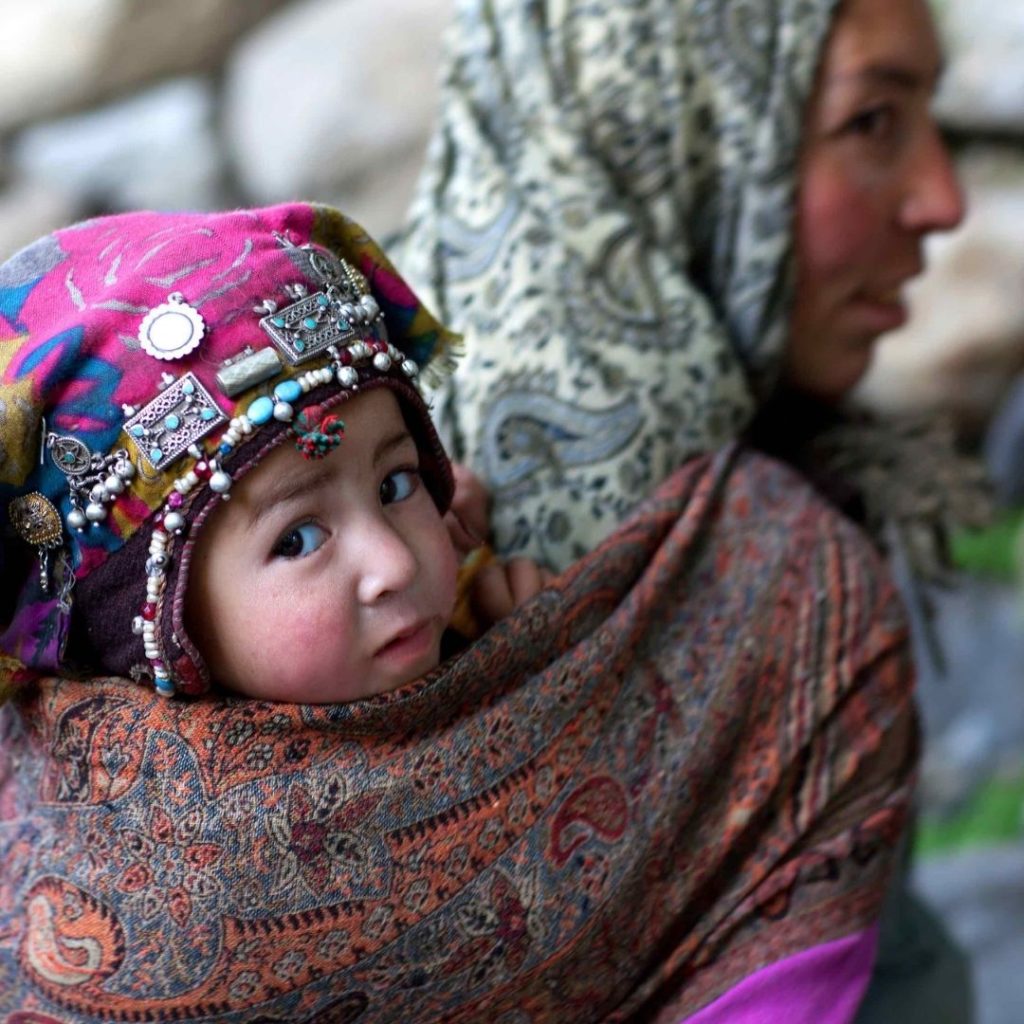
Most of the population in Changthang are Buddhist nomads. These people are pastoralists and survive the harshness of the region with the help of their animals and the plants that they graze. The Changpa tribe does not move from this place, and mostly they spend their entire lives in this region. Since most of the people are not wealthy and have the least resources, they live in tents. A camp consists of a number of tents where the neighbors live in complete harmony. The economy of the region depends only upon the animals that Changpas rear. Products like Salt, live animals, wool, and unprocessed cashmere are traded with other parts of the country for basic essentials like grain, cooking utensils, and more.
Usually the goats are white in colour, but grey, ash, brown goats too can be seen in smaller numbers
The Changthangi goat/Pashmina goat/Cashmere goat is the main attraction of the region for a number of reasons. It is this goat that grows the highly valued and precious Cashmere wool on its body.
It is the cold temperature of Ladakh which plays a crucial role in growing fine wool on the goat’s underbelly. This is the world's finest fibre, which upon spinning gives yarn of just 12 to 16 microns in diameter and is exceptionally warm and comfortable.
The goat survives on grass that grows along the pastures of its living area. Changthangi goats are the primary boosters of the economy of Ladakh, which otherwise is a poor economy. It's just the trade of Cashmere that generates millions for the economy to stand.
Changthangi goats have a double coat - a thick undercoat and a dense wavy overcoat. Usually, the goats are white in colour, but grey, ash, brown goats too can be seen in smaller numbers. The Goats have long, rounded horns, and an average lifespan of 10 to 12 years.
Where does Cashmere come from?
If you have been wondering "Where does Cashmere come from", here is the answer. Cashmere wool, or simply Cashmere comes from these Changthangi goats. It grows on the goat's underbelly, backbone area, behind the ears, and on the neck. Collection of the wool begins during the moulting season, which is Spring. It is the time when the goat naturally sheds some portion of its wool due to discomfort from its warmth. This time is usually late March to early May.
The goats grow the wool in winter and hence protect the animal from the cruel winter season that the region experiences. Come summers, the same warmth makes it uneasy, and hence it rubs its body against walls, shrubs, stones, and all over the area. Herders realize it's time, and call professionals to remove the wool from the goats’ body. With the use of specialized tools and combs, professionals gently comb off the wool from the body of the goats and let them roam freely while storing the wool in small packets.
This wool is full of wastes that the goat's body catches from winter to summer. It has dust, dirt, vegetable wastes, grass, and other materials which need to be cleaned. The first cleaning session takes place at Ladakh itself. A number of people clean the wool off Pure Cashmere and send it to Kashmir for further processing.
Processing of Cashmere
Cashmere comes from Ladakh as raw, semi-clean wool to Kashmir, it is firstly handed over to the womenfolk of the valley, who belong to distant corners of it. Women come together and, in groups, start cleaning Cashmere wool, removing all foreign material attached to it. Clean wool is then placed in a container, which is then filled with rice powder. This powder makes the wool smoother and stronger. After 3 to 4 days, the wool is removed from this rice container and cleaned again, only to get a smooth, fine, and luxurious pure Cashmere wool lump.
This process needs immense skill and patience as well as a perfect harmony between the spinning wheel and the motion of the hand
Pure wool is then sent for drying and then taken for spinning. Again it is the womenfolk of the valley who take this responsibility. Lumps of wool in bags are given to them and they mount it over a spinning wheel called ‘Yinder’. It takes months together to manually spin this lump of wool and transform it into yarn. This process needs immense skill and patience as well as a perfect harmony between the spinning wheel and the motion of the hand. Only Kashmiri women have the inherent skill and training of decades to perform these actions.
Weaving the Spun Cashmere
Now Cashmere yarn is sent to handloom units where a few men work. These men too have decades-old experience in weaving such delicate yarn. They start with mounting the threads properly onto the heddles of the loom and then work in pairs to weave it. In a period of 3 to 4 days, fine-spun yarn changes to a solid Pashmina shawl, soft, fine, and absolutely grand.
Finishing of the shawl
A solid shawl coming out of the loom isn't yet complete and contains some superfluous threads or stains over the base. A Purzgar tweezes off or clips any waste materials attached to the base. In fact, the shawl is fixed between two rollers that move up and down and give the artisan a close look at the fabric, so that the end product is smooth.
Now the shawl is taken to a washer, which washes it in running water. Springwater is mostly used to wash Cashmere, which is continuously struck with large stones for the perfect wash. Later, the fabric is dried in the open air, as natural drying is preferred for Pashmina shawls. Post this, it is sent for mechanical stretching and ironing
Now the shawl can be sent for dyeing. Pashmina shawls have this wonderful quality of taking in any colour.
Embroidering Cashmere Shawls
Traditional embroidery patterns further uplift the solid Pashmina shawls, by beautifully sitting over the luxury base in breathtaking patterns. Here are some embroidery types for Pashmina shawls.
A fine thread and needlework where artisans use colourful threads to ornament plain shawls
Sozni Embroidery: A fine thread and needlework where artisans use colourful threads to ornament plain shawls. Sozni can be done all over the delicate base of PAshmina, as it itself is lightweight and gentle.
Papier Mache Embroidery: Paper Mache embroidery is a somewhat thicker version of Sozni Kari, as the threads used are denser and protruding. Such shawls laden with Paper Mache work look magnificent and artful.
Tilla Embroidery: Tilla embroidery uses metallic threads dipped in real gold and silver to create magical patterns and motifs over a Pashmina shawl. Tilla is however dome in minimal patterns, as its weight might perforate the gentle base underneath.
A Pashmina shawl is complete now. How a simple fabric Cashmere, which comes from an almost inaccessible region of Ladakh, reaches Kashmir is purely amazing. And from Kashmir, it is spread all over the world. That is how precious and adored are traditional belongings. Cashmere wraps have a lifetime of over 25 years. Mothers give their own Pashmina shawls to their daughters as gifts when they are getting married. These shawls sometimes are 30 years old but haven't lost a bit of grace and luxurious demeanour. But have just acquired an heirloom look, which looks even more ethereal than a fresh piece.
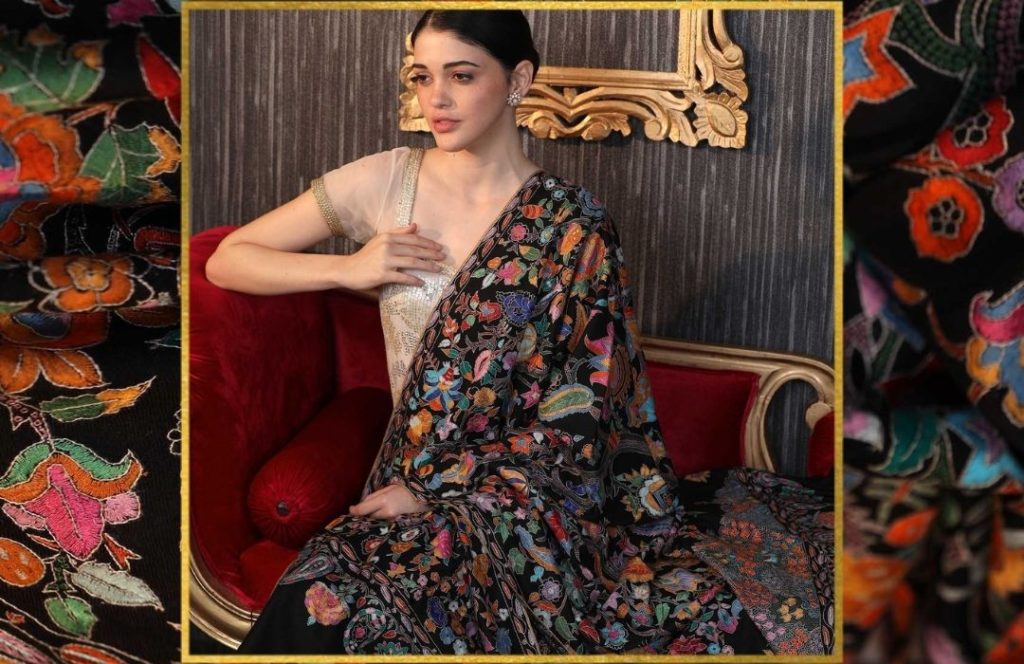
Painted with motifs from the heavens, a pure Kashmiri Pashmina shawl is what the people of class love to drape
Since Cashmere generates much revenue, frauds are bound to happen. Some decades back, traders started processing Cashmere on power looms, by mixing strengthening fabrics like nylon or silk with pure threads. This gave fake Pashminas or blended Pashminas, which were still sold at the same rates as pure Cashmere would. Others soaked sheep wool shawls in Fabric softeners and sold them as pure Pashmina shawls. This created havoc in the Cashmere market, as people believed that the quality of pure Pashmina might have declined. Hence there was a decline in the demand, as well as the associated jobs. Several underprivileged artisans went jobless, some opted for labour work, and some earned a meager amount not enough for even a day.
Hence, it is important to watch out for the source of your Cashmere shawl if you're buying one. Always buy from an authentic vendor. Ask the vendor to provide you with the certification or authentication certificate of the product you are buying. If he is unable to show you the same, stop buying from the same. Check for the GI tag, which is a purity label on the shawl, proving the shawl to be made of pure Cashmere.
It has been so many years since you said "I do". Time actually does fly when you are in a fun relationship. And these years you have really come to know each other, and you know well about what makes them happy. We know you've showered her with gifts by now. How about making this anniversary the perfect time to show her how deeply you know her as well as what she loves the most.
PASHM offers handmade lovely handcrafted Cashmere wraps as Anniversary gifts. These are special in their own way, as they have been made manually by veteran craftsmen from the valley of Kashmir. From hand embroideries beauties to solids & Ombre, Kani to Patterned & Reversibles, and original Swarovski studded to embellished with lace, these pieces are simply enchanting.
Why choose Cashmere for an anniversary?
A symbol of true love, comfort, and warmth; Cashmere is a great reminder that she has your back and that you are always there for her. These snuggly pieces have been handpicked from amongst a plethora of designs to make her feel pampered and extra special.
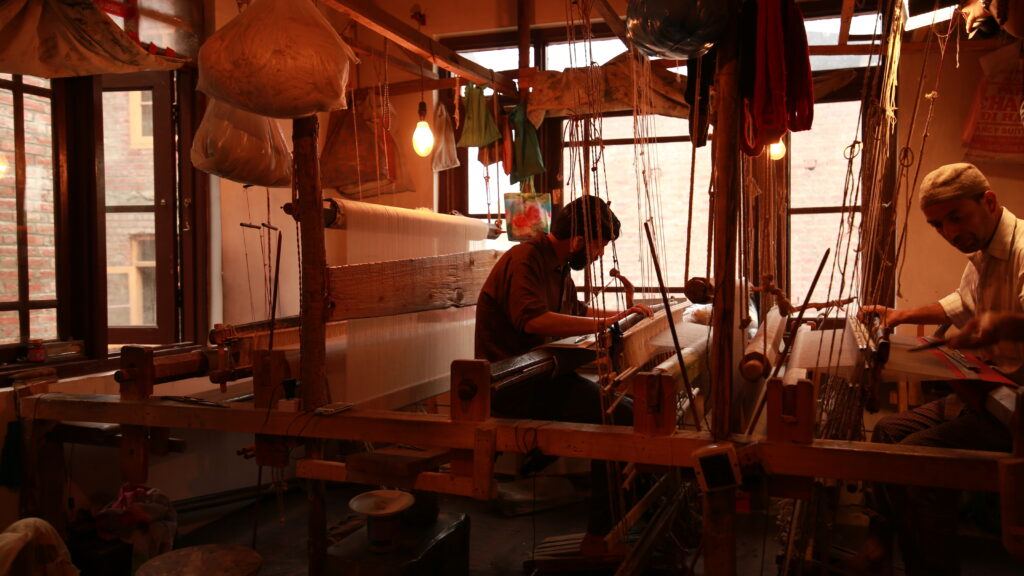
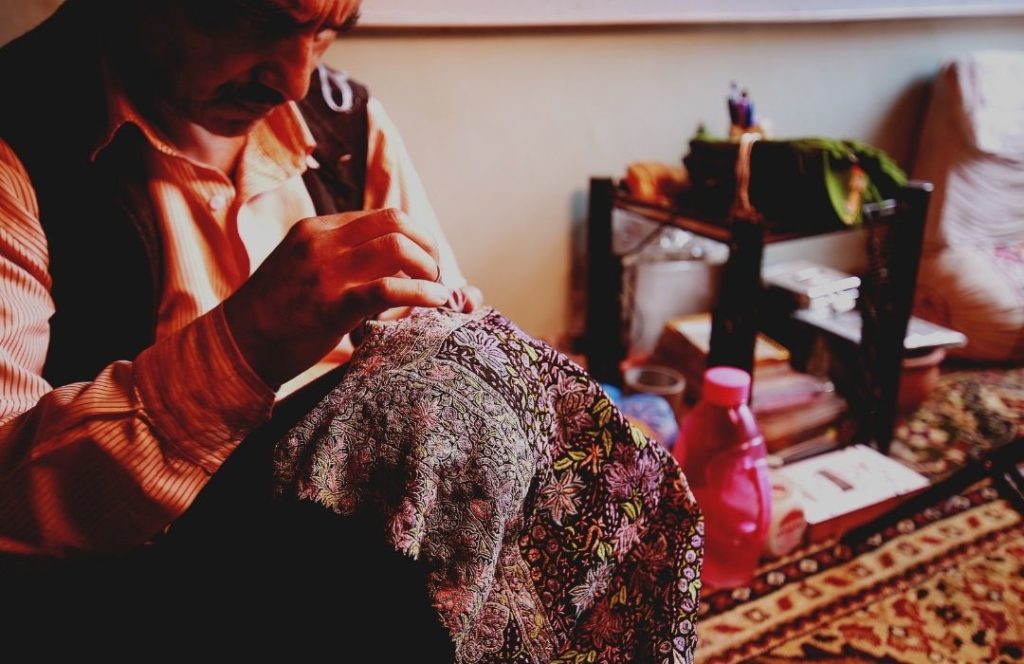
A Kashmiri artisan weaving a Pashmina on a traditional wooden handloom
The fibre of these cozy wrap accessories comes from Kashmir, where the exotic Changtangi goat leaves behind her underbelly fur. This fur is manually acquired, cleaned, spun, and handwoven to make luxury Cashmere wraps, Pashmina shawls, scarves, and more.
Laced and Patterned Cashmere as anniversary gift
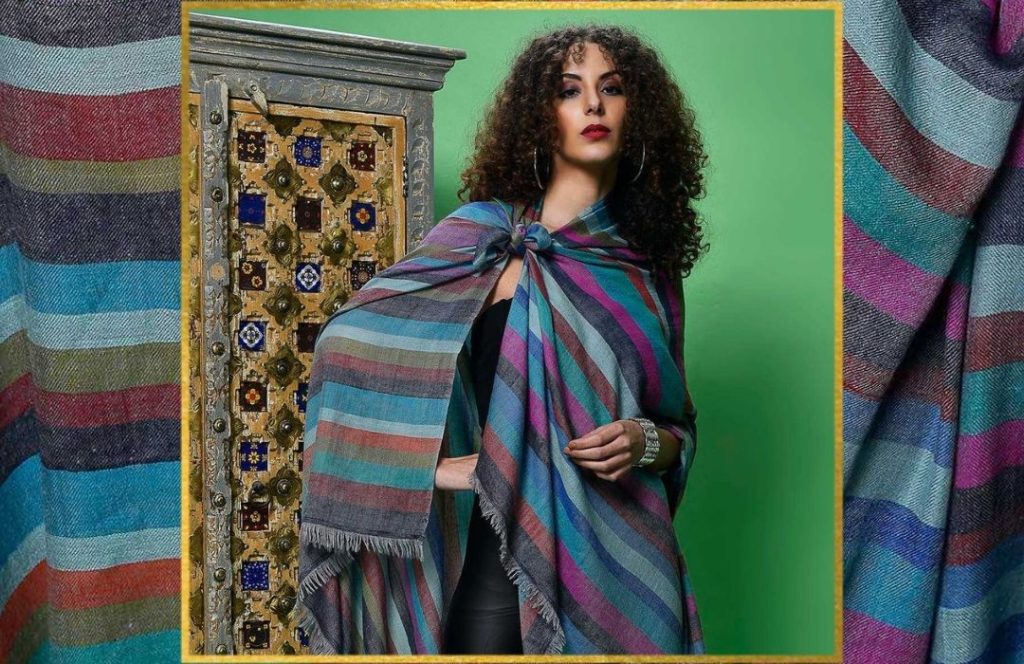
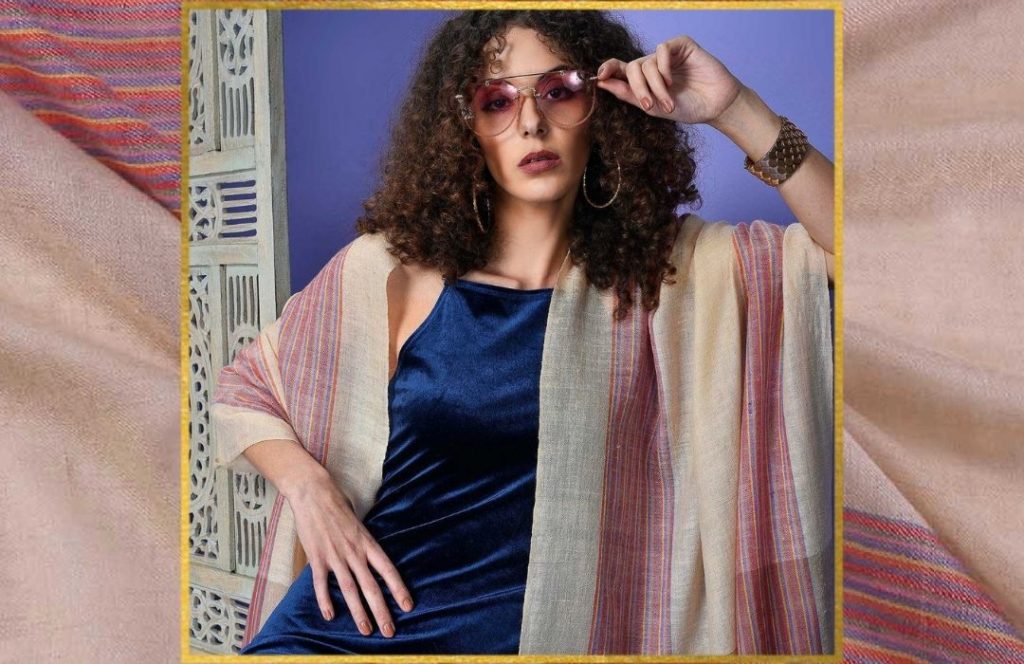
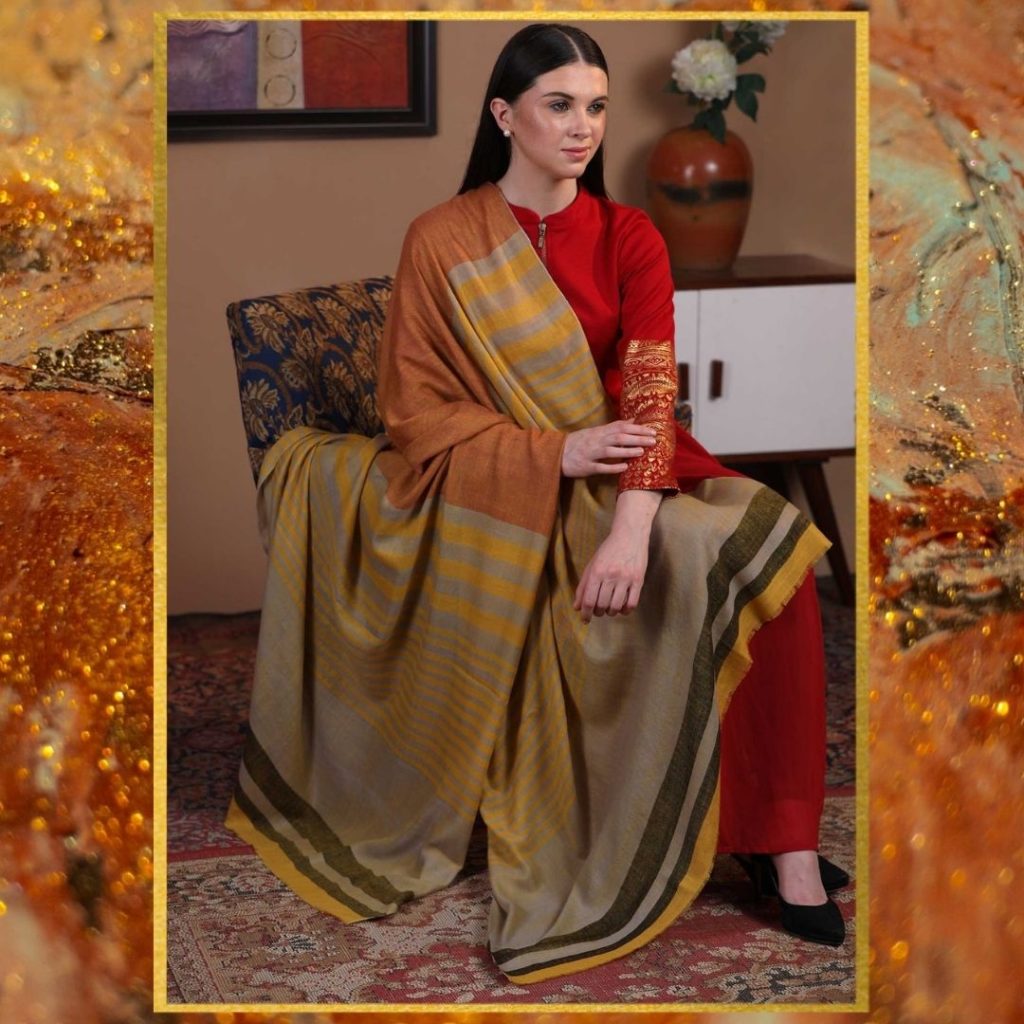
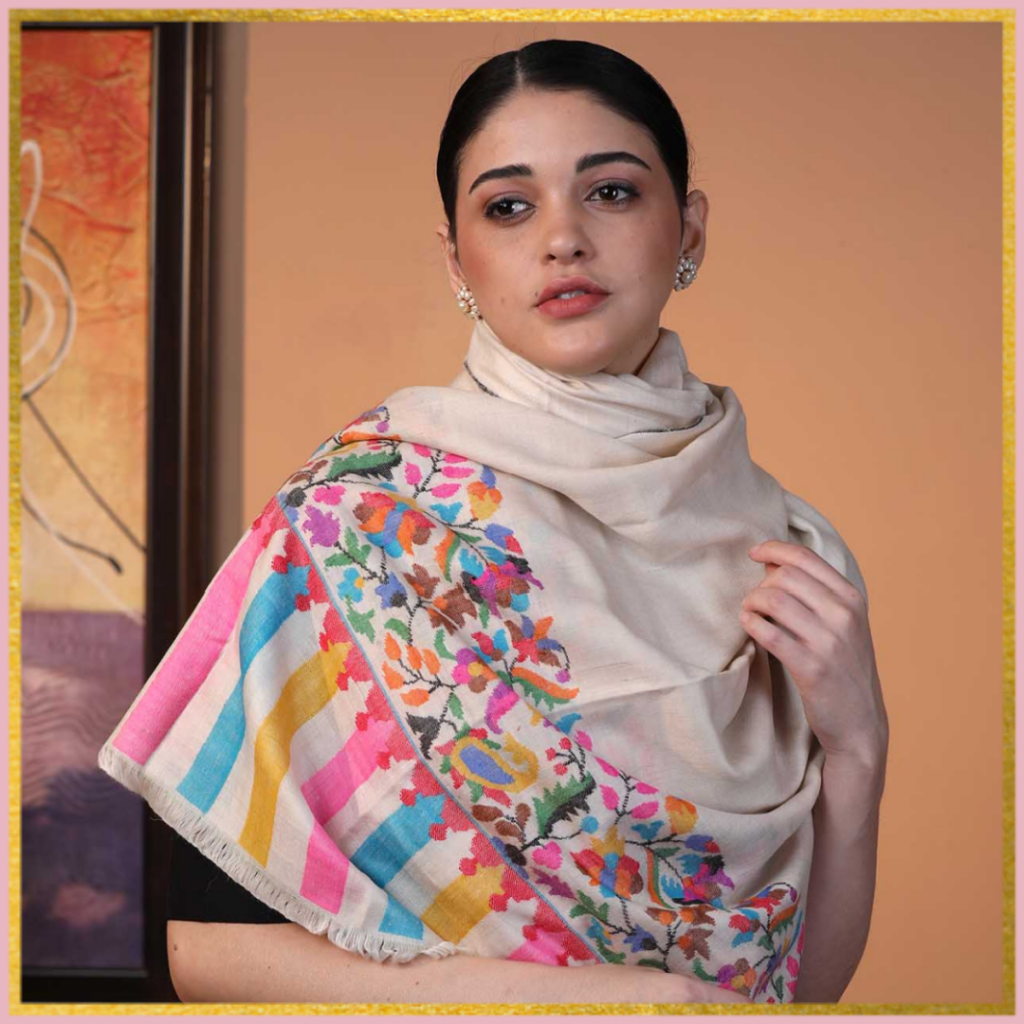
Specially curated for the ardent patrons of traditional art, the wrap has been accentuated with vivid stripes to fill colour into gloomy winter skies
If your special one is an outdoorsy type, know that they will be thinking of you when they wrap these elegant pieces. Lace cashmere shawls and wraps embellished breathtakingly beautiful French Chantilly laces to fill their casual days with warmth. Printed and patterned Cashmere wraps for a fun-filled weekend or a night out with friends, what else do they even need!
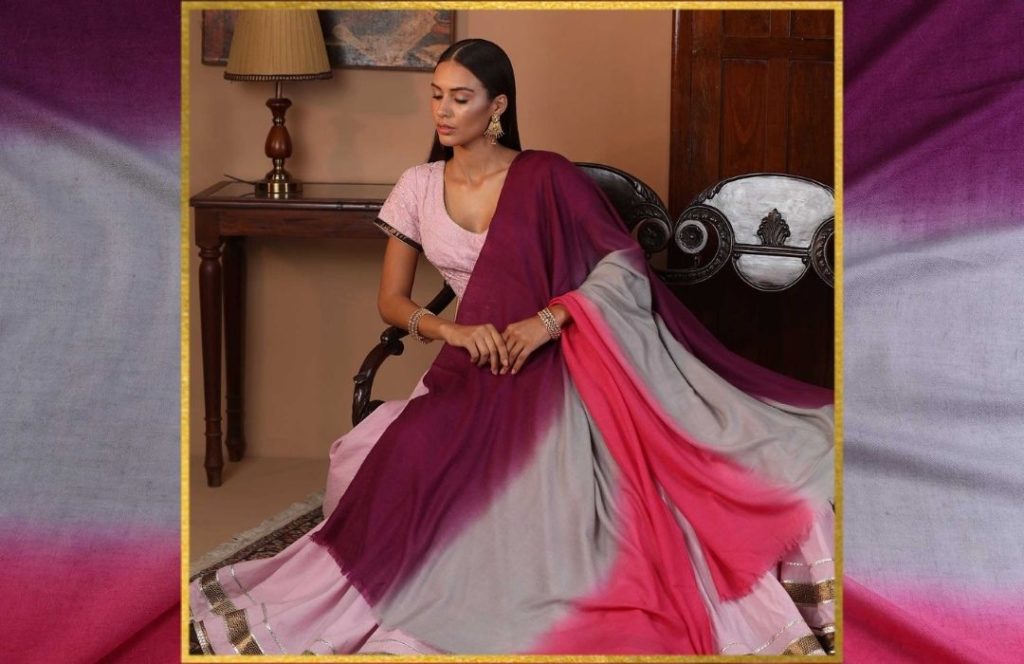
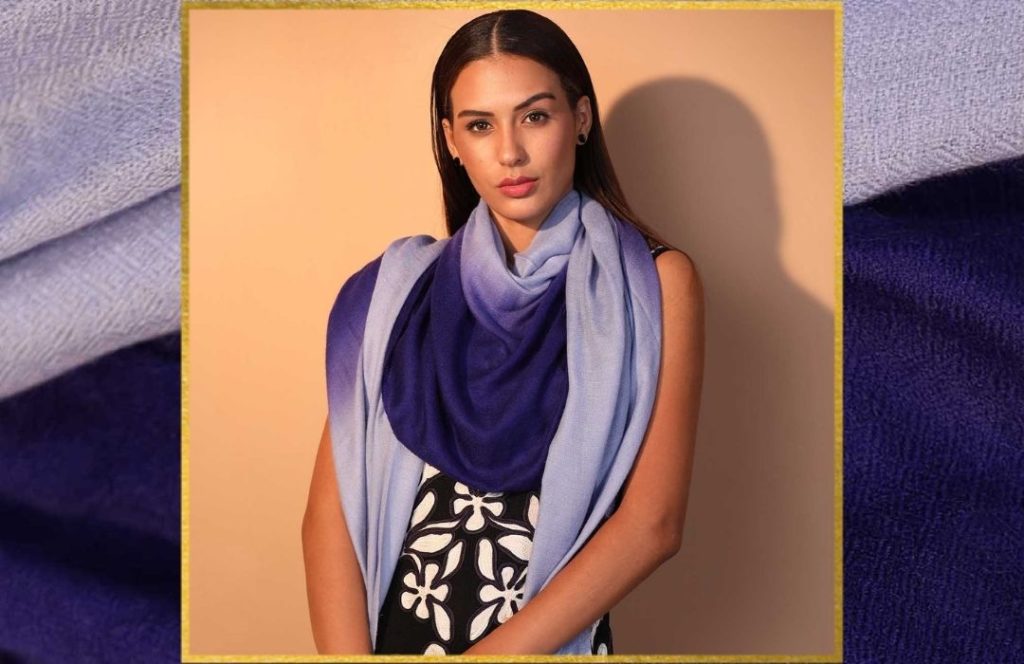
The shawl hosts a modish ombre pattern which advances from a deep pink to a mild grey and finally to a warm purple shade, all in the most graceful fashion
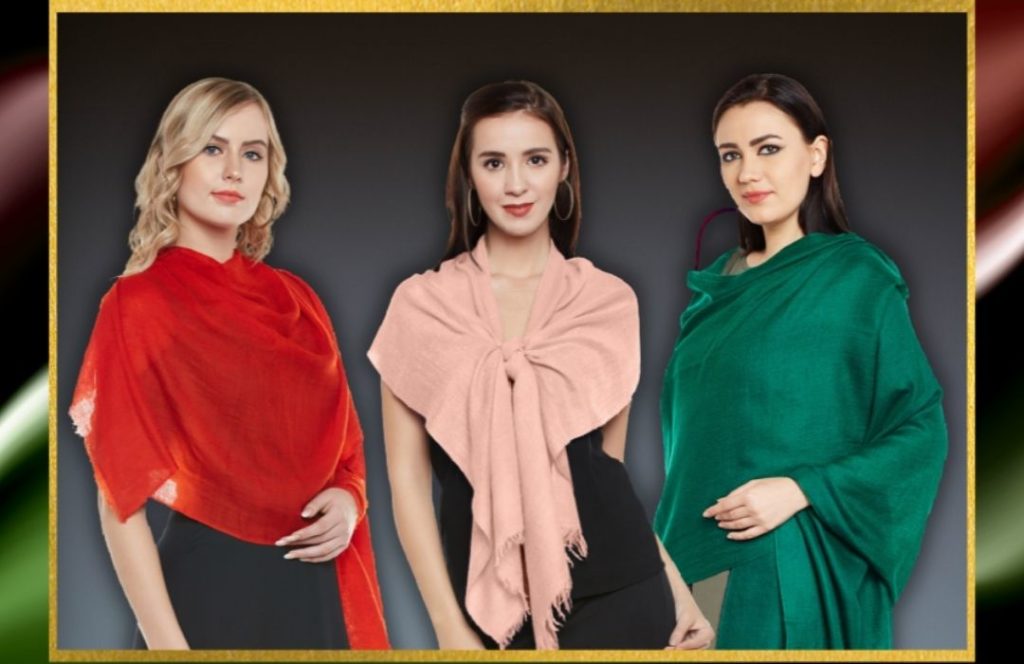
A collection for those who love to spend time working at offices yet never put their style game in jeopardy. Here are our handpicked solid and ombre pieces in eclectic shades. Solid Cashmere wraps in more than 50 exquisite colours, & Ombre wraps in kaleidoscopic patterns are the need for your beautiful anniversary day.
Embroideries and Kani Wraps for special Occasions
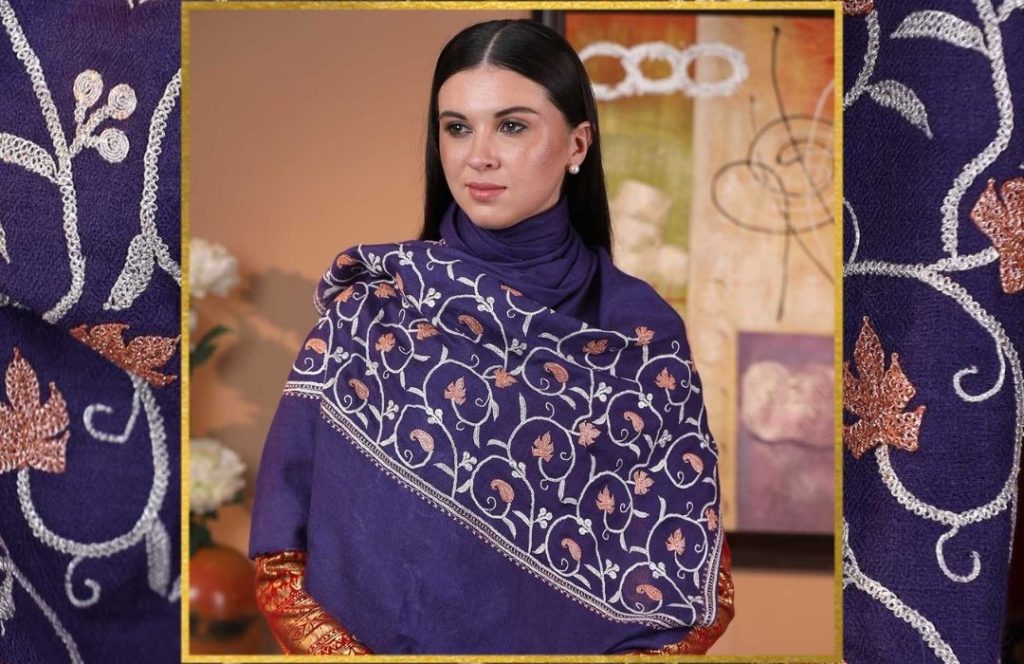
Over a handwoven Pashmina, the magical art of Zari embroidery casts a magical spell
Make it easier for your partner to look her best version at weddings, parties, and family get-togethers. Gift them a treasured piece from amongst a plethora of Embroidered and Kani Cashmere wraps. Let them see how its laboursome making processes make them pieces of marvel.
What better gift to give them on anniversaries, birthdays, or childbirth than a customized Pashmina. Add a personal touch to luxury Pashmina shawls, Cashmere wraps, and scarves and make it a memory to remember. From their name initials to logos, monograms to specific dates, we add personalized embroidery motifs to your precious pieces; we conform to your inclination towards aesthetic gifting
Personalized gifts for your better half
Your Anniversary is the best time that you can commemorate all the good things and experiences you had in your togetherness. And sometimes, when words fail to do so, it is these gifts that reflect your feelings. A handmade Cashmere, which has been made with immense love and care ooze the same, and become a perfect gift to make them feel special.
Indulge yourself in the world of the most exquisite collection of authentic Pashminas at PASHM...
One of the most exciting moments in a relationship is the gifting part. Gifts do make you feel special, whether you agree or not. The gift world brims with ideas when it comes to luxury gifting. Yet you always struggle to find the perfect gift which is sure shot way to their heart. A perfect gift has to be thoughtful, full of care; it should shout at them that they're the most special for you. We recommend gifting them a Cashmere wrap, which is handcrafted with love to exhibit all your emotions wordlessly.
The shawl is hand embroidered in an Aksi Do Rukha or reversible pattern, where one side of the shawl is the mirror image of the other for over a period of 5 long years.
Treat your loved ones to luxury with an opulent collection of eclectic Cashmere wraps. These beauties ensure that your beloved stays comfy in love and warmth of heavenly gossamer fibers. Certainly, Cashmere is a gift for your childhood friend, your office colleague, an impossible-to-shop-for-partner, or your aged parents or grandparents. In other words, there is nothing quite like the thrill of finding them the perfect gift., as Cashmere
The Pashmina shawl in pure and serene white hosts blooming flowers in rainbow shades of Kashmiri Paper Mache which hide the base in their exquisite semblance
With an exquisite feel warmth, a Pashmina Shawl as a gift serves all moods equally and is absolutely cherished by everyone. And why not so. After all, the heavenly soft underbelly fur of the exotic goat is crafted manually over a handloom. Hence the emerging blend - A Cashmere Wrap - is evidently ethereal, graceful, and an ideal gift for all.
Luxury Gifting: Why Choose us?
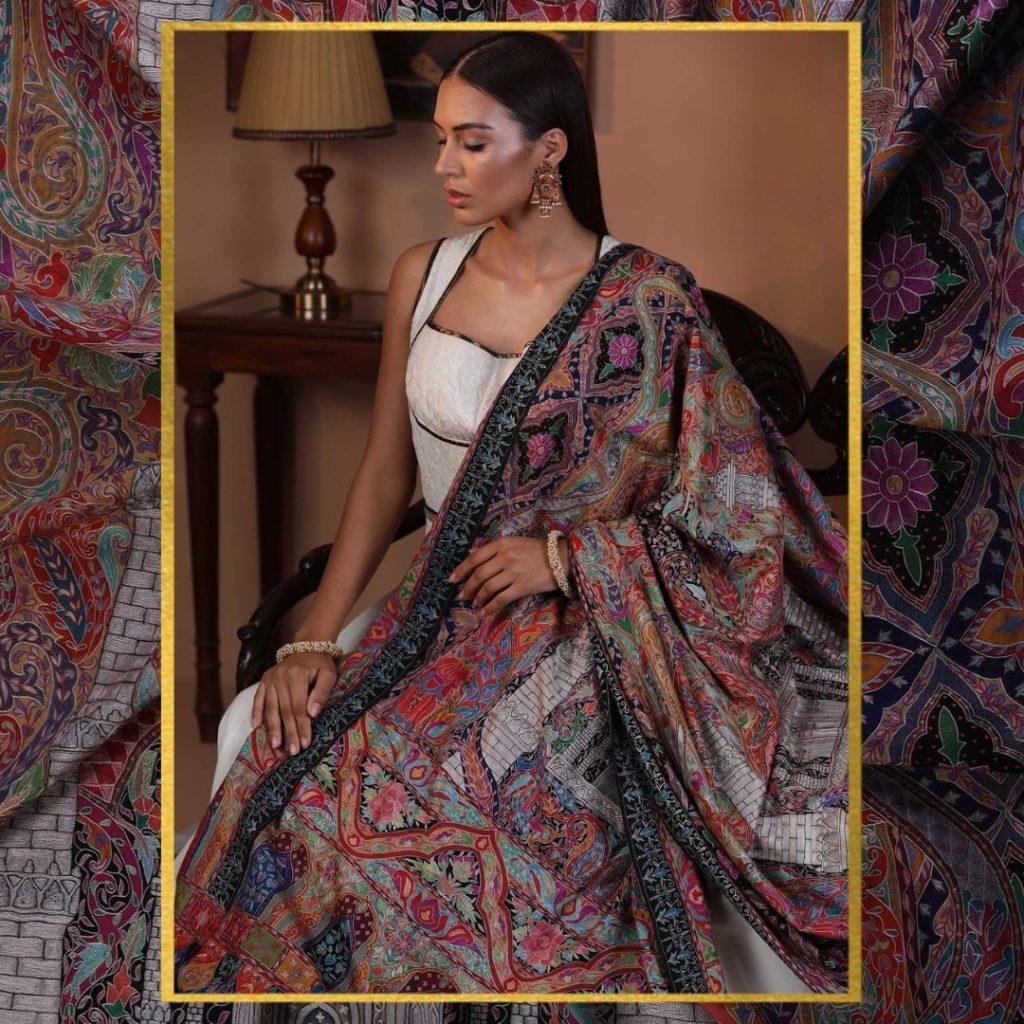
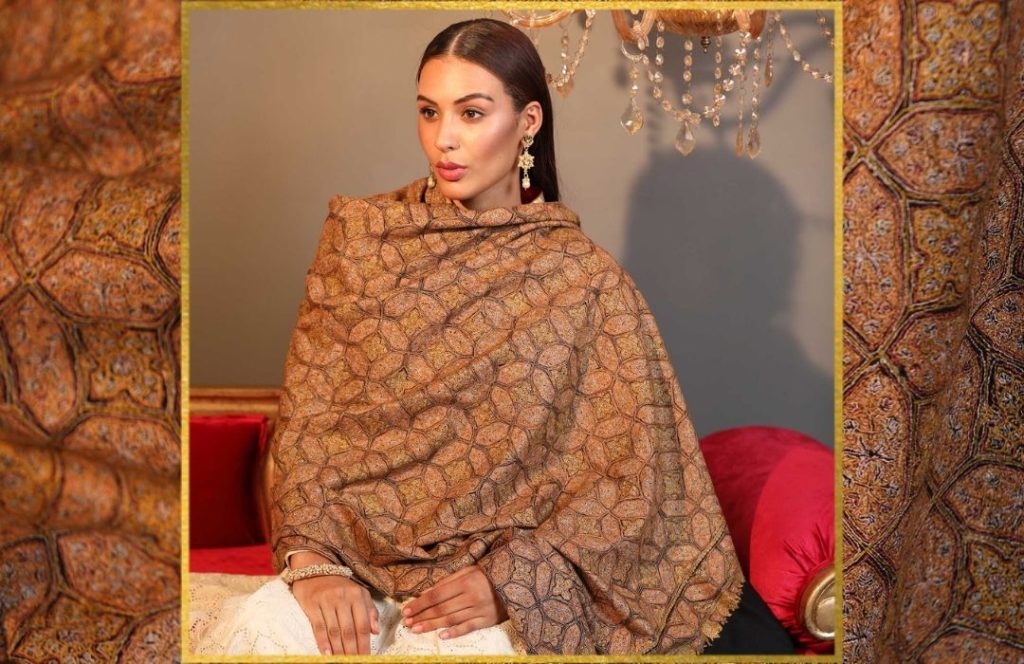
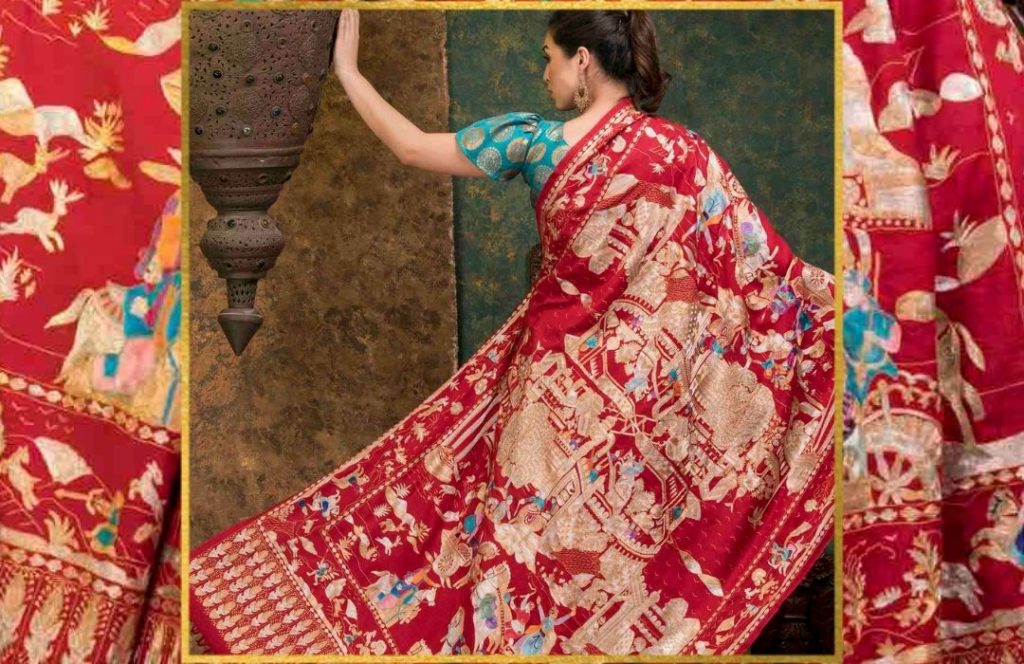
Inspired from the Mughal architecture, a shawl handcrafted in the realms of Pashmina art speaks a thousand words about the time royalty all over the world revered it
As a consequence of working in absence of any intermediate party, we at PASHM work directly with the artisans from the valley of Kashmir. Hence the Cashmere gifts we bring to you are 100% pure and authentic. These certified and breathtakingly beautiful pieces are considered the most exquisite wonders of Pashmina art. Moreover, the pieces are designed by famous Indian designers to make your winter wardrobe more affluent, spoilt with premium accessories.
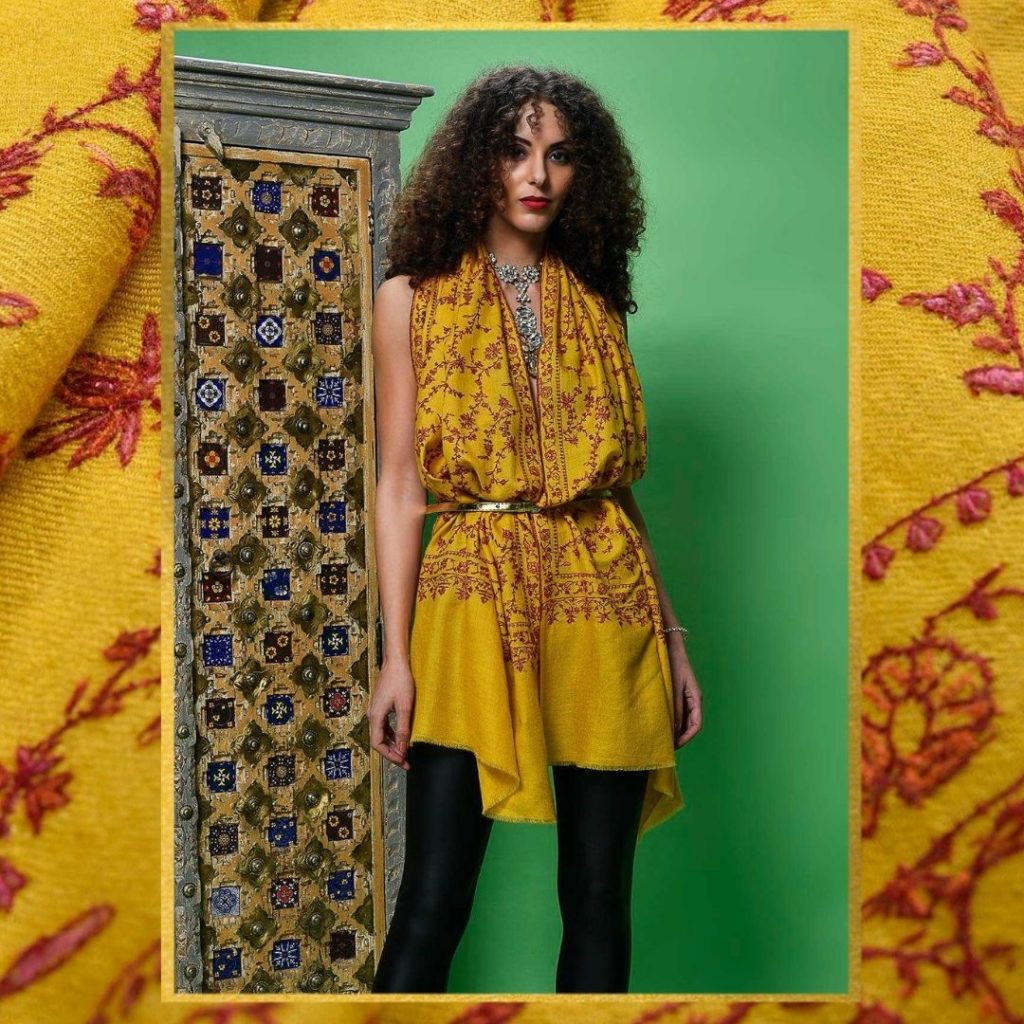
Over the resplendence of Kashmiri Pashmina, the afterglow of summer sun in the form of Zari embroidery creates a magical aura
Be it the style icon friend of yours who would be the show stopper on every occasion or an about-to-be bride who is collecting a luxury trousseau or your partner who is impossible to shop for, these opulent gifts brim with extravagant pieces. From richly hand embroidered Cashmere shawls, to Kashmiri Kani woven wraps; from Zari embroidery-filled scarves and more, this is evidently the assortment you have been yearning for years.
The Luxury from Us to You
Kani weave has a history of being one of the most ethereal crafts that the world has ever witnessed
From its concept to the final product we deliver, our luxury Cashmere wraps go through series of processes; all come under our expert supervision. Consequently, spinning, weaving, quality checks, embroidering, cleaning, ironing, packaging, and delivering; thus all activities are carried out by expert artisans, craft experts, and designers. All the processes help in delivering the most exquisite luxury gifts for your loved ones.
A solid Cashmere wrap refers to one which is without any embroidery - just one colour all over the base
The pleasure of giving a beautiful gift is extendable to businesses too, to make relations stronger and lifelong. That is why we chose for you a collection of ethereal and premium Cashmere wraps; these are timeless, beautiful, and exceptionally warm. Along with this, Cashmere wraps make the perfect corporate gifts and delight your partners to keep them forever.
What can we do for you?
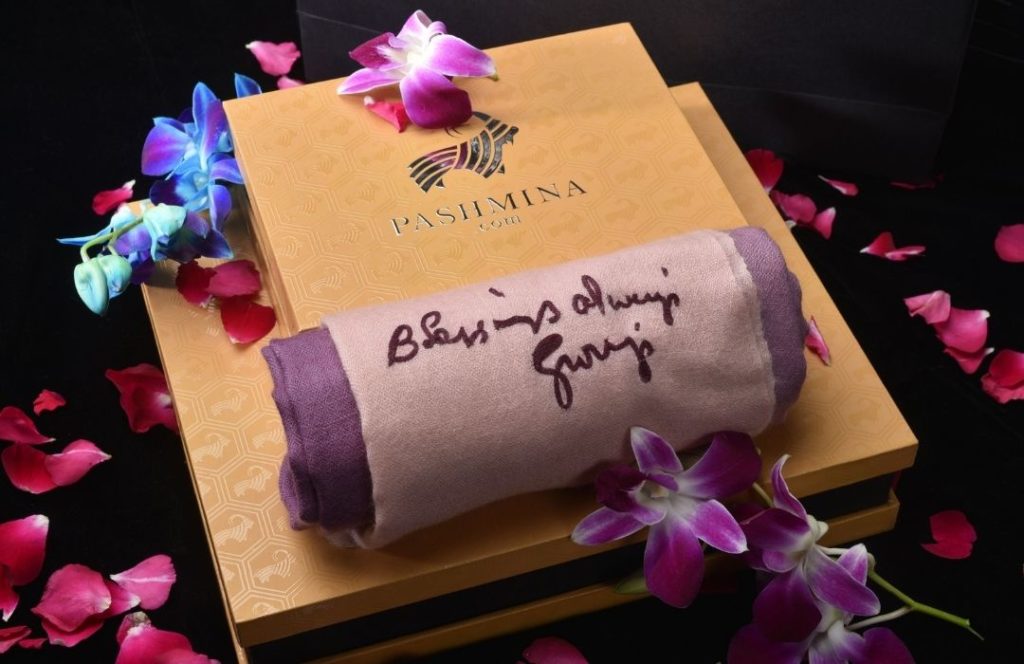
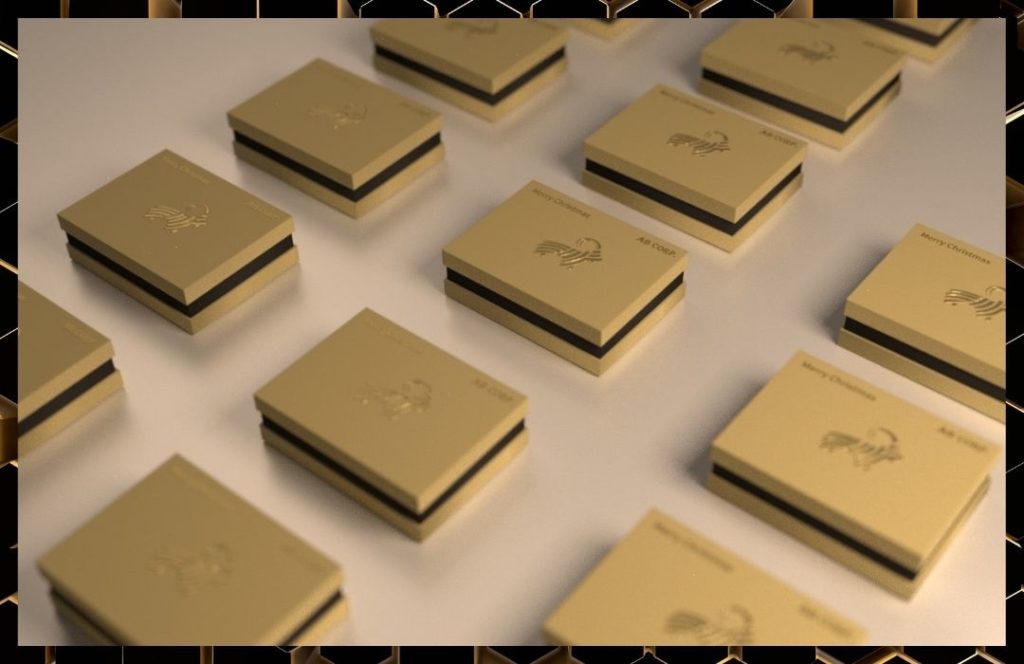
A Pashmina comes with the luxury packaging and can be personalized
When you choose a piece from our eclectic collection of Cashmere, we customize it according to your taste for corporate gifting. Our experts do this under expert supervision.
Be it the initials of a name, a date or a symbol, or a picture, we can expertly monogram anything over your chosen wrap
Our experts beautifully pack the wrap and your message consequently goes handwritten over a carefully placed card.
We offer a long-term relationship with you to serve you the best. You will have our back at every formal and informal event conducted at your end.
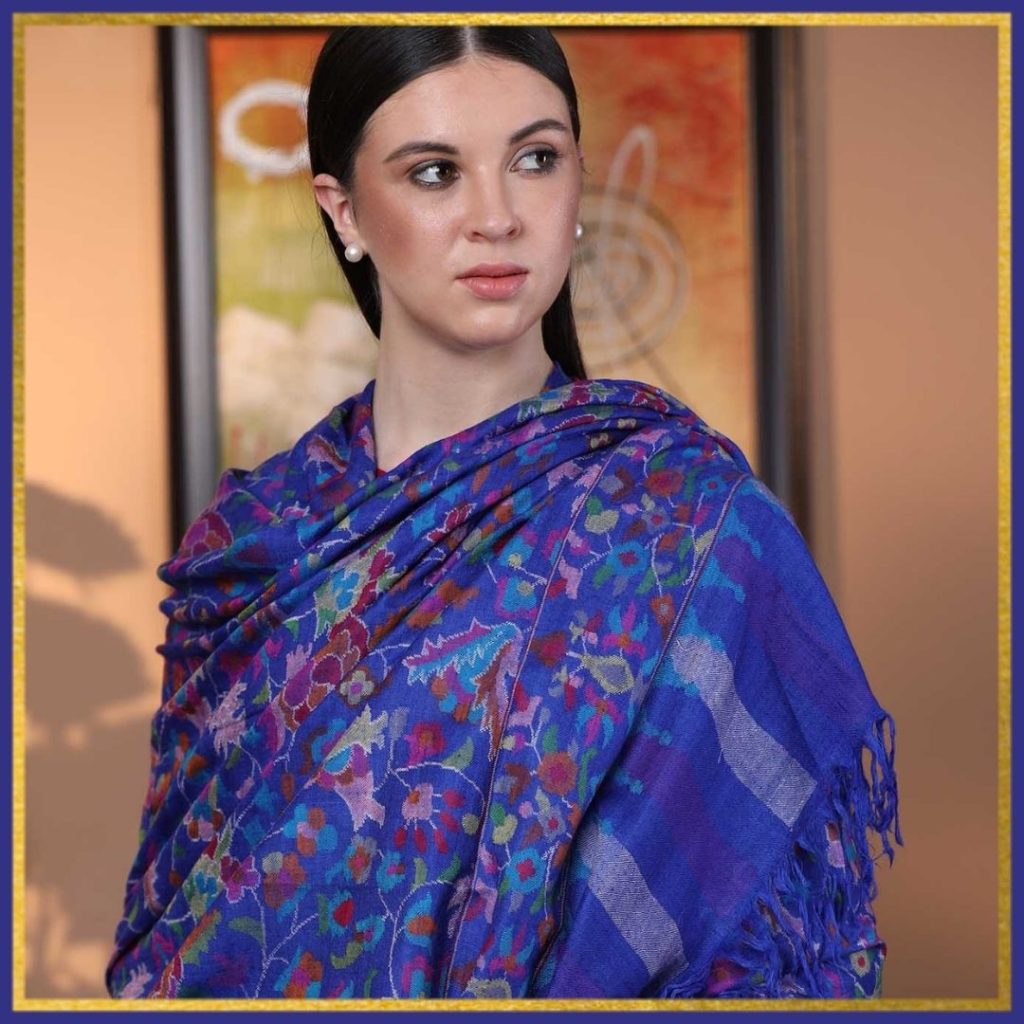
Handwoven over the classic wooden handloom with utmost precision, a Kashmiri Cashmere Wrap has just been soaked in the deep blue waters
100% pure and authentic Cashmere from Kashmir valley has been hand-woven into shawls, wraps, and scarves. And these make them the perfect corporate gift your clients will love to receive. Soft, cozy, and exquisite, these bespoke Cashmere wraps are an ideal way to express your emotions; besides maintaining positive relationships with your business associates.
Why Cashmere?
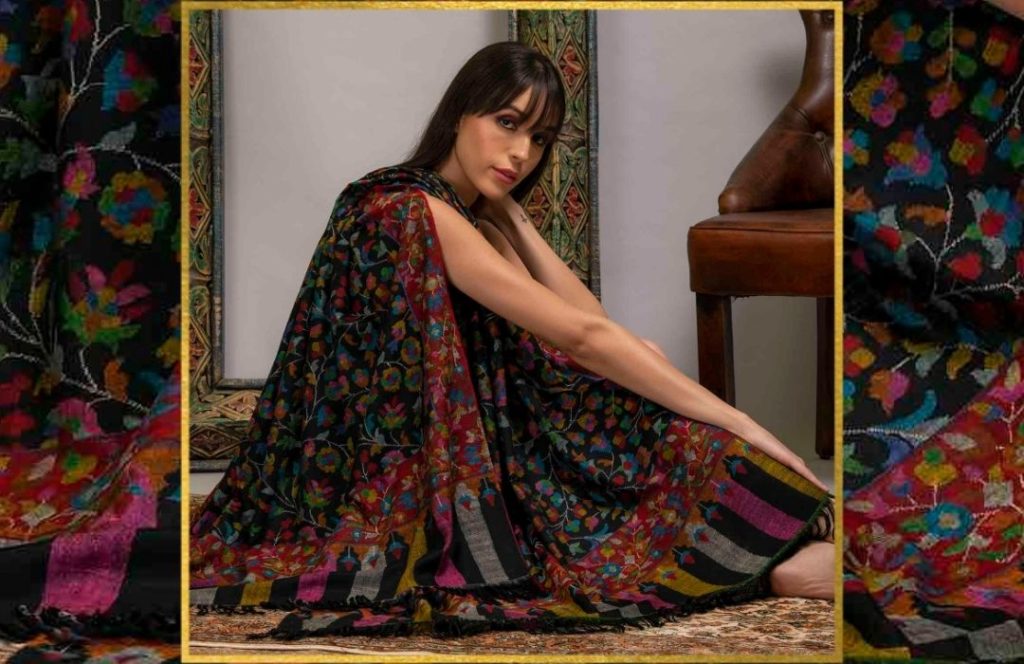
The Cashmere wrap embellished in voguish stripes for a colourful appearance and a rejuvenation
The pure Pashm to make these Cashmere pieces comes from Kashmir. After acquiring it manually, it is handwoven in the same snow-clad valley into heavenly wrap accessories. Be it formal solids, casual patterns, or occasion-friendly embroideries, there is no event that this luxury assortment has missed. It was once that only the nobles and royal class of the society relished the regality of Cashmere. Now it's your time to show your associates that they are no less.
Our handpicked pieces and the deluxe packaging will make these corporate gifts an effortless activity for you to influence and send the right message to your partners, employees, or customers. Moreover, the packaging consists of a handwritten message written on a card, which communicates your message in the perfect emotion. Furthermore, if you wish, we can hand-foil your logo over our signature packaging to create a sense of belonging for you and your client.
As corporate gifts, bearing an exquisite texture and incomparable warmth, know that a sumptuous cashmere scarf will always be well-received. Your business partners - be it employees, customers, clients, or any other party working with you, will love Cashmere and keep it treasured forever.
The one who has everything and is a true patron of traditional art and heritage craft, cares too little about fads and fashions which change every single season. For the one who has everything, one would never mind going for a classic outfit or an archetype accessory. For such admirers of ancient art, we have handpicked our best Pashmina Shawls. These will surely match their fine taste of dressing up even if the skies are grey and gloomy.
Do Rukha Pashmina Shawls
"Do-Rukha", literally means "two-faced" and it refers to the specific type of wraps that were embroidered in a manner that the front of the wrap is mirrored by the pattern on the back
One of the varieties of Cashmere shawls is often believed to be magical, as its weaving is complicated and unfathomable. The Do-Rukha Cashmere is handwoven in such a way that one side is the reflection of the other. This makes both sides wearable. In another way, there is no back and front of the shawl, and both sides are beautiful and worth flaunting.
A more lavish variety of the Do Rukha shawl is the Aksi Do Rukha which is hand embroidered. Even after the embroidery, the shawl can be worn from the sides. For the one who has everything, it is a must-have cashmere accessory that is a classical emblem of eternal love for this beautiful craft of Pashmina.
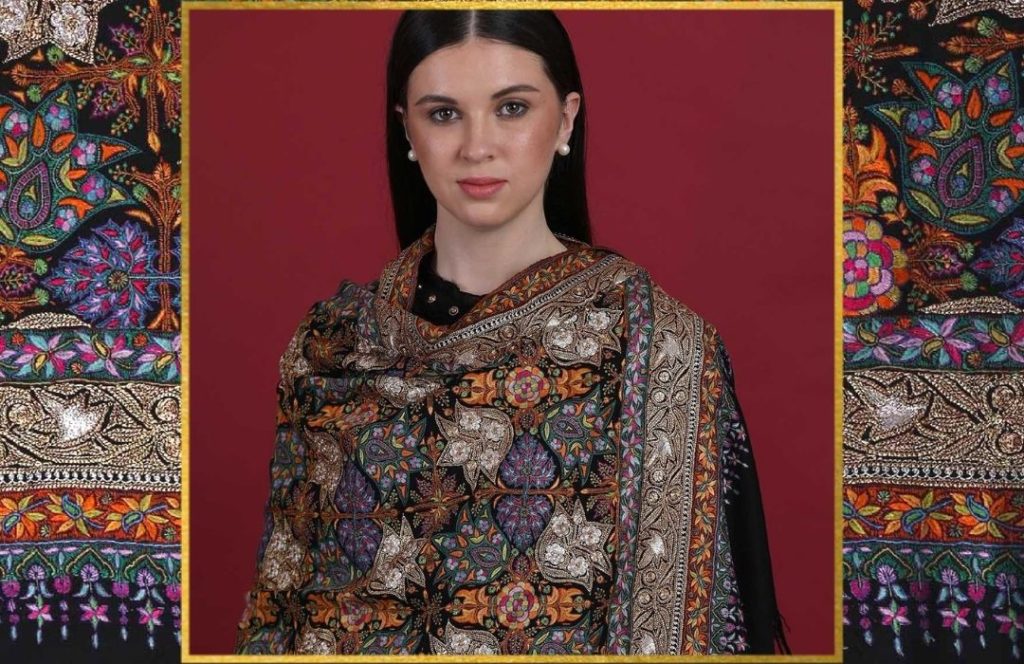
When a pure handmade Pashmina shawl is chosen to come under the shimmers of Tilla Dozi, even the artisan is not in a position to imagine how breath-taking the complete piece would look
Zari Kari is called Tilla Dozi in Kashmir. This embroidery uses metallic threads coated in real gold and silver to embellish wraps with classic motifs and designs. In ancient times, it was pure gold and silver over the wraps which the noble court men and royal queens would cherish. But now it is your turn to drape these regal pieces and feel the touch of glorious traditions that surround you in sheer warmth and sophistication.
Kani Pashmina Shawls
A sheer black Kani shawl from Kashmir, handwoven over wooden handloom, by a few artisans for years together
Convention dictates that art hangs on walls, or rests idly on a mantle. We have found wraps that hold art deep into their essence. Set to a timeless fashion by Empress Josephine, Kani Pashmina is simply magic woven into threads.
Intricately handwoven wraps will definitely serve as the best gifts for the one who has everything. Now shopping for them is no more troublesome.
A Sozni hand embroidered Pashmina, the same art, which has been the number one preference of ancient queens and kings alike
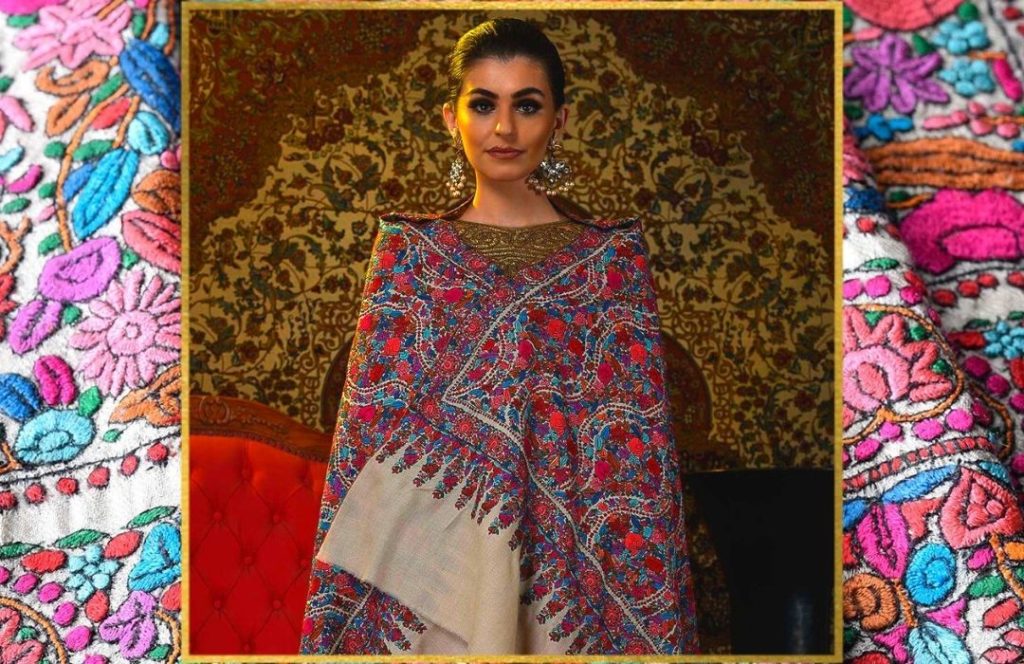
3-5 years of painstaking efforts, long working hours, and sometimes the vision of their eyes, is what goes into making just one piece. Nevertheless, a luxury Cashmere shawl hand embroidered with a needle and thread is living art. When embroidered in a Jamawar pattern, the base is barely visible. The motifs are so closely intertwined that it becomes difficult for one to differentiate between them all.
A lush Cashmere wrap like this not only look magical, but suffice your shopping needs for the one who has it all.
Papier Mache Embroidered Pashmina Shawls
A Kashmiri Pashmina shawl, handwoven in a flawless fashion, is covered with hues of Kashmiri Paper Mache which transforms the downy base into something extraordinary
Fine needles, thick and colourful threads, a high level of concentration, and utmost precision is all that it takes. Indeed, if the artisans wouldn't consider their work as worship, never would these shawls come to life.
Bulged out motifs in coveted colours; adorning the lush base of a shawl, Papier Mache embroidery derives its name from the ancient art of Paper Mache.
All these, and more editions of drool-worthy pieces are available in our fresh collection of handmade Pashmina at PASHM for the one who has everything. Be the first one to pick the best of them, and surprise them with your classic taste of gifting.
Sustainability is always in with Pashmina.com - a socially conscious brand that brings you cashmere straight from the valley of Kashmir. As such, we recommend choosing our sustainable gifts category to show your loved ones as well as the environment some love.
If there is something that we love more than Cashmere, it is mother earth. Hence the reason why we practice transparency, ethical practices, animal welfare, and environmental sustainability. Here is our three-pronged approach to sustainability.
The Cashmere we produce is of high quality and pure by every means. 100% authentic and certified Cashmere is manually acquired from Kashmir's Ladakh region. By working directly with the producers of the fibre, we get to pay them substantially better and you get the world's one of the finest fibres directly from the source, hence making the entire process sustainable.
Animals
The Capra Hircus goats popularly known as Cashmere goats
A responsible and cruelty-free practice of acquiring Cashmere fibre from the goat is made sure. The goat either leaves its fibre on surfaces naturally or else, herders comb their bodies softly and delicately to obtain Pashm from their underbelly. Ethical procuring of raw Cashmere wool is a pre-requisite.
People
Pashmina.com makes sure that products are handcrafted by artisans who use traditional artisan skills and organic Cashmere yarn to produce ethereal pieces
We come up with Cashmere accessories with transparent, open, and ethical relations between suppliers and ourselves to stay committed to environmental standards.
During holidays or sale periods, we see a lot of excess buying and consumerism rampant in the markets. And when all of this is out of fashion, and new trends come up just months after, all of the sale items are considered waste. This leads to wastage, improper disposal, and growth of fast fashion trends. Fast fashion forces manufacturers to produce more and more, and hence the burden on the planet causes nature to suffer.
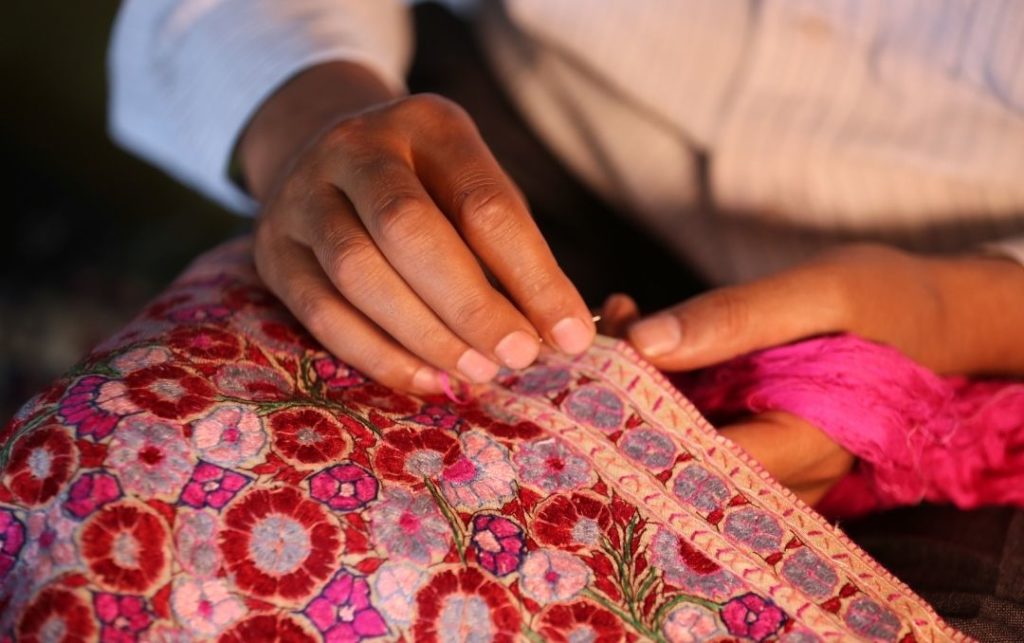
A Kashmiri Pashmina artisan carefully hand-embroidering his colourful imagination on a Cashmere shawl
Sustainable fashion and ethically produced products like Cashmere, on the other hand, are advocates of slow fashion. Products, which are a part of slow fashion, last for years together. Cashmere itself lasts for more than 20 years if it is pure and carefully cared about. There is no use of machines to manufacture Cashmere, and this simultaneously reduces the pressure on manufacturers to create more products. There is less use of machines, and the environment gets time to get replenished.
This is the reason we, at PASHM, offer sustainable gifts for your loved. As you exhibit your love for them, you should do the same for the environment you are living in. It is time to give back to nature, as it has nourished us since the beginning of life.
Your big day is just days away. You are getting married to the love of your life, and it is something to celebrate with the people who mean so much to you. Giving away wedding favors is no more an option, but a humble gesture from your side towards the guests to welcome them and thank them to be a part of your big day. And since all arrangements are in process, make sure you add our richly crafted Cashmere wraps to the list of wedding favors for making your guests special and this day, more memorable.
Why choose Cashmere wraps as wedding favors?
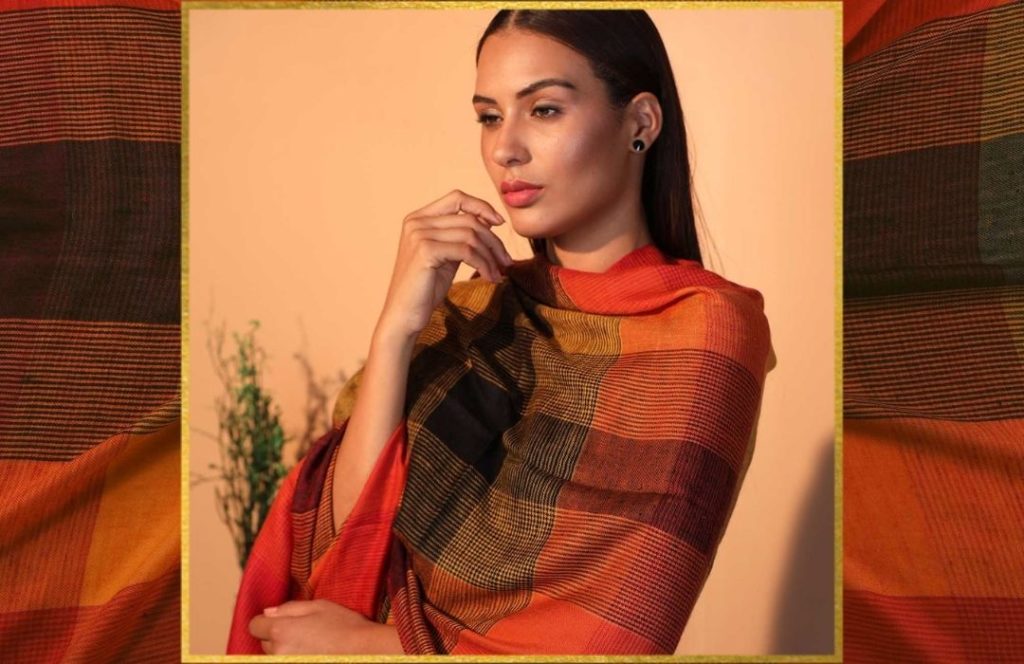
Delight both with a handwoven traditional Kashmiri Cashmere Wrap which hosts chic block pattern in sunny shades of oranges and reds
Wedding favors can be just anything. So why should you go for Cashmere wraps?
A Cashmere wrap is one such accessory which all your bridesmaids can wear, in the same colours and design - hence giving a theme to your wedding
Being versatile, the wrap can be easily taken off and wrapped around your bag, if it gets hot.
Since Cashmere is timeless, it will make your guests remember your big day for decades together.
Cashmere can be reused for more events in winters or fall.
Most people choose solid Cashmere as wedding favors, because of the amazing shades that erupt in a plain weave. But a minimal design hasn't hurt anybody ever. So this wedding season, we chose to go for patterns, prints, and reversible Cashmere wraps. Mix and match them with your outfits, and look graceful as ever.
For the elderly women
The world witnesses the unseen expertise of Kashmiri artisans behind the tireless fingers and wrinkled eyes, who bring their own vivid imagination to life
Our hand embroidered and Kani shawl collection would be ideal for the elderly as wedding favors. These look absolutely amazing for formal and semi-formal apparel. Choose light embroidery shawls with jaali pattern or Kani handcrafted shawls for these special guests.
For office going ladies
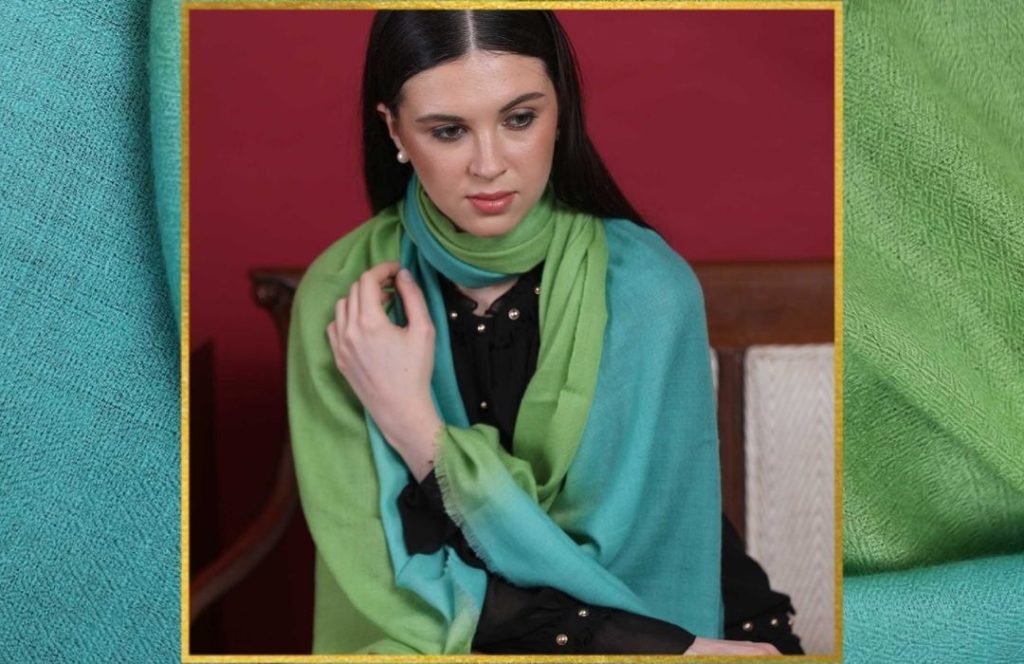
Handpicked from the traditional treasures of Kashmir is a Cashmere Wrap, soaked in shades of fresh green
Solids, ombre, or patterned scarves would be the best option for working women. This would serve as a wedding favor as well as a part of their daily winter routine for the office. From over 50 shades of Cashmere wraps that we have to offer, we are sure they will love each one of them.
For teenagers/millennial generation
Coordinate with nature with a floral winter wrap that features the fragrance and blossom of a Spring garden
Add a personal touch to luxury Cashmere wraps and scarves and make it a memory to remember. From their name initials to logos, monograms to specific dates, we add personalized embroidery motifs to your precious pieces and conform to your inclination towards aesthetic gifting.
At PASHM, we have covered all types of Cashmere wraps that would match your wedding theme, the season, or the outfits. From colourful solid Cashmere wraps to pretty lace embellished pieces to original Swarovski studded ones, our handwoven swoon-worthy wraps are versatile enough to spruce up your big day and make guests nostalgic about it even after years passed by.
For all these years now, this relationship has been warm and comforting. It's appropriate, then to show them the love and care you have for each other, this Valentine's day. Cozy, comforting, and snuggly warm, Cashmere is definitely the perfect Valentine Gift, being symbolic of the relationship you have built together. A relation as enduring and beautiful as yours deserves a present to pair.
To make this 14th Feb more special and cherished for a lifetime, we've taken it upon ourselves to curate a luxury assortment of Cashmere wraps to let your partner be the best version of themselves. Indulge in their resplendent Valentine gifts from our luxury assortment of pure shawls, wraps, and scarves.
Over a handloom, delicate warps and wefts of the fine Pashm result in a luxuriously smooth and soft Pashmina shawl
Is she a travel lover? Gift her a patterned Cashmere wrap handwoven perfectly to cuddle her up in warmth during long flights and stays.
Weekend warriors
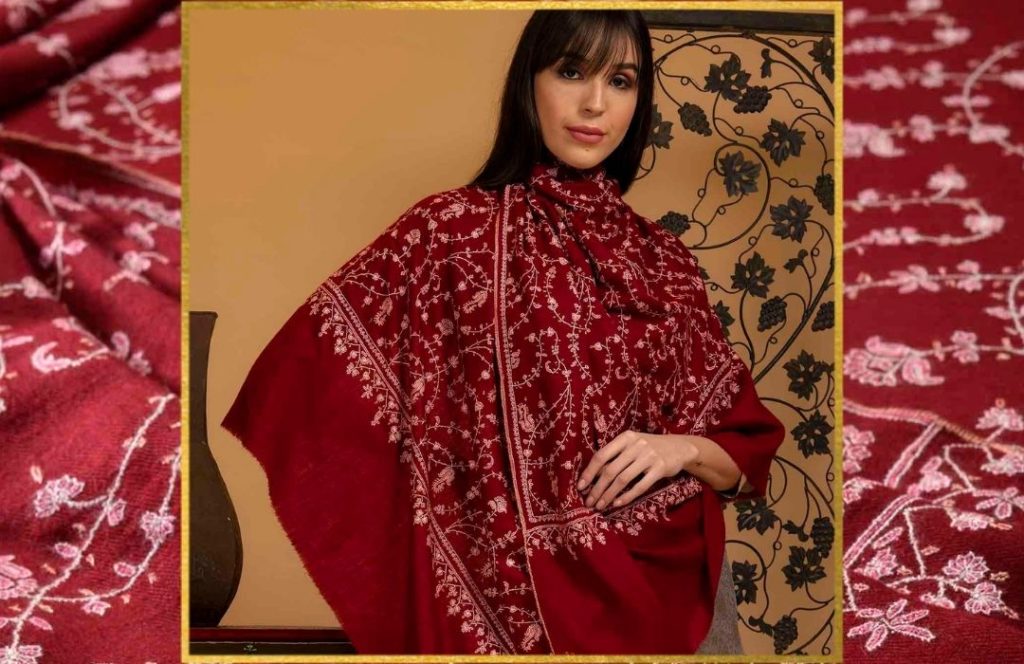
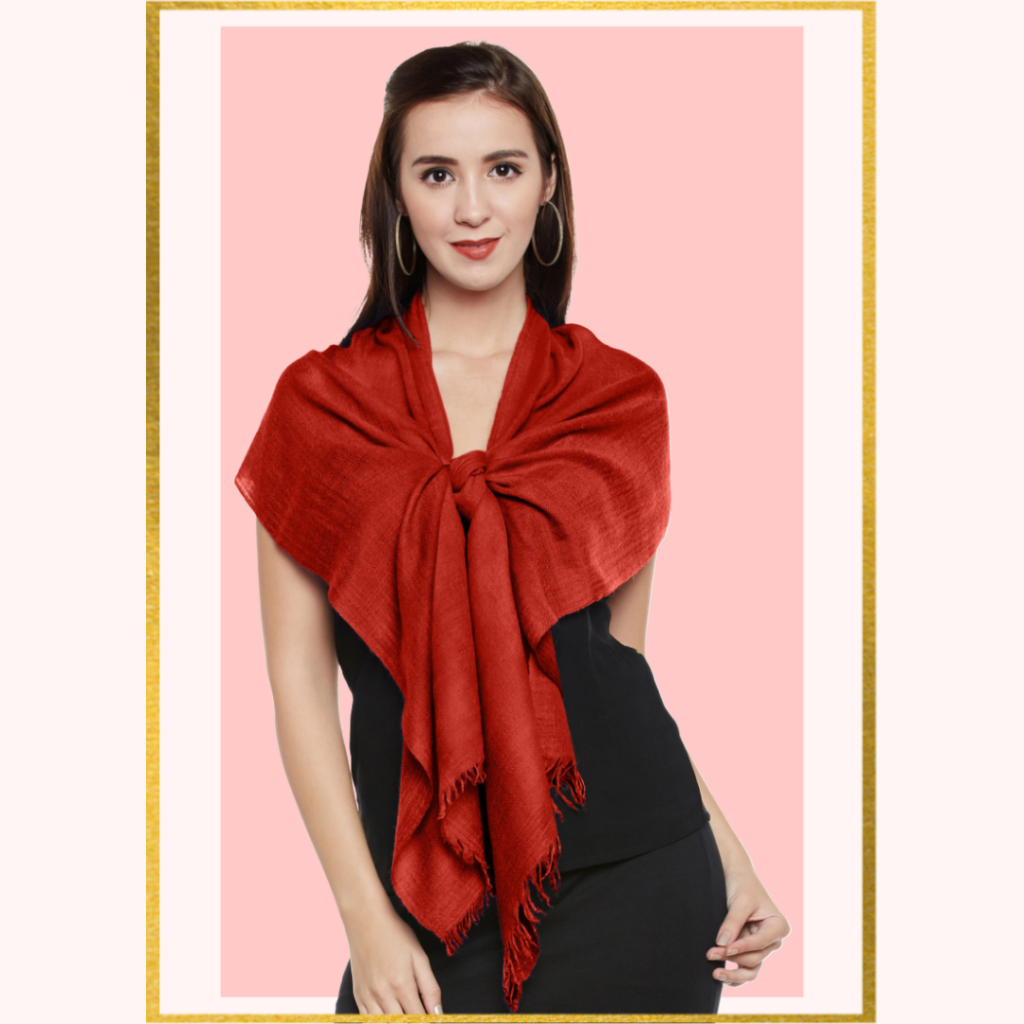
A glistening red Kashmiri Pashmina scarf, handwoven over traditional looms
Does she love to hang out with friends on weekends? Then your Valentine's gift has to be a solid Cashmere which styles her up in breathtaking shades. Be it a beach, a restaurant, a friend's place, or a frosty night out at parents', we have got her covered.
The Fashion Queen
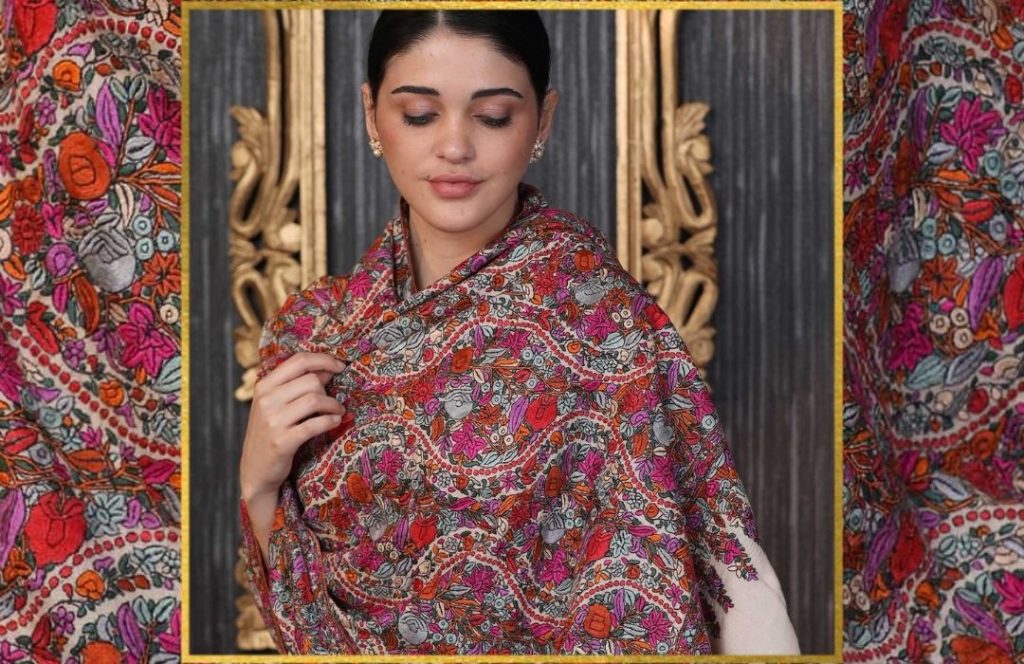
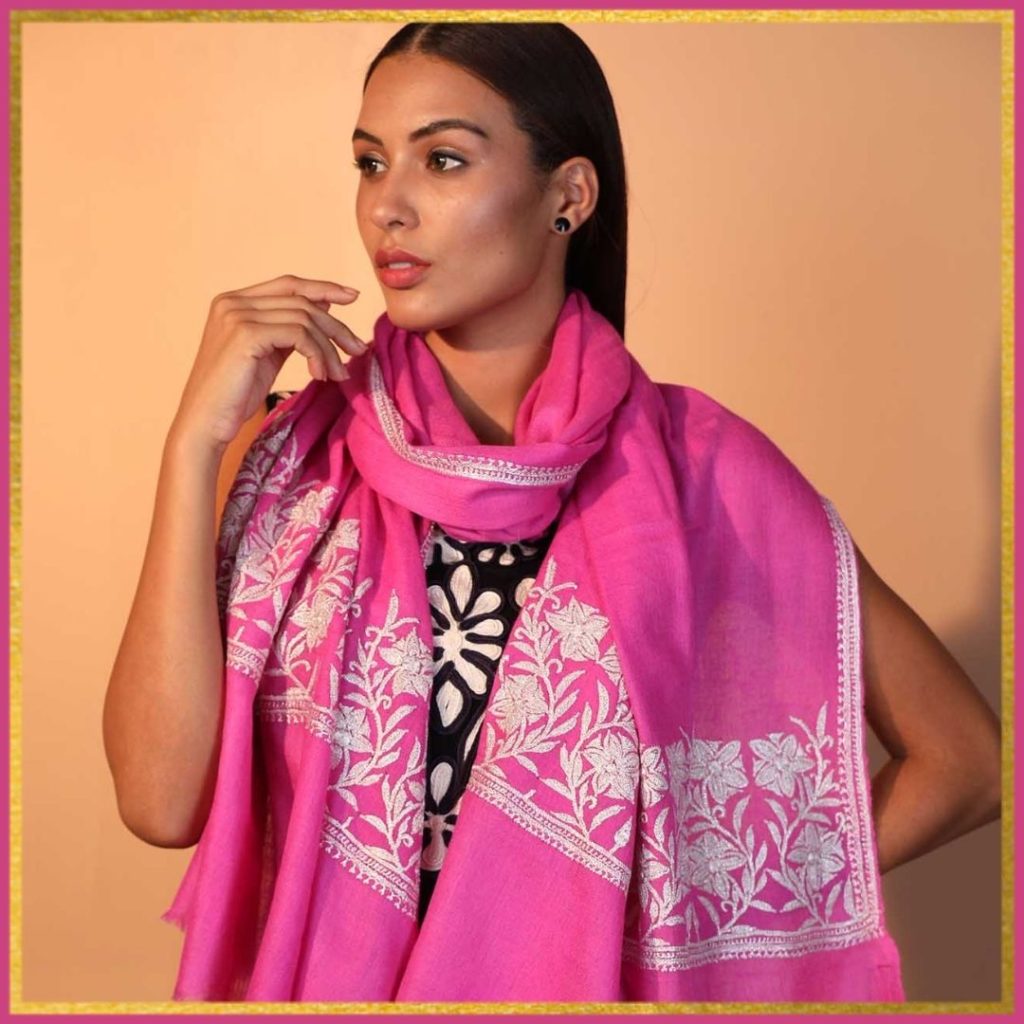
The Cashmere wrap features Sozni Kari - a delicate thread and needle work by local Kashmiri artisans - which spans all over the fine base in a netted pattern
Does she love to be the show stopper on special alfresco occasions? Choose a mesmerizing Cashmere wrap as your Valentine gift, which is hand embroidered in laboursome processes, so that she steals the night.
The Office Girl
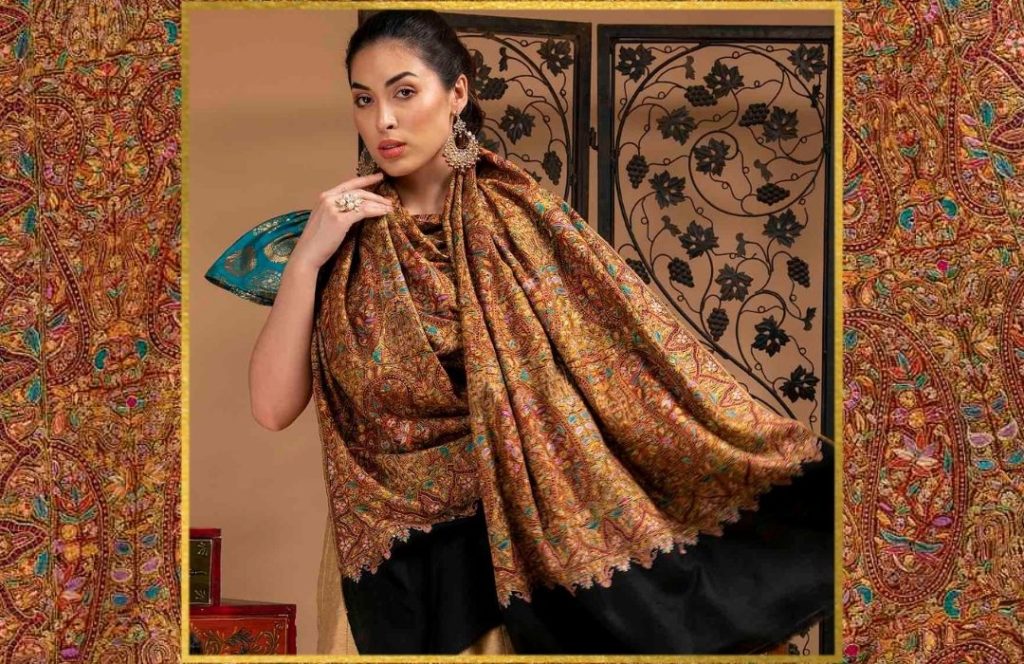
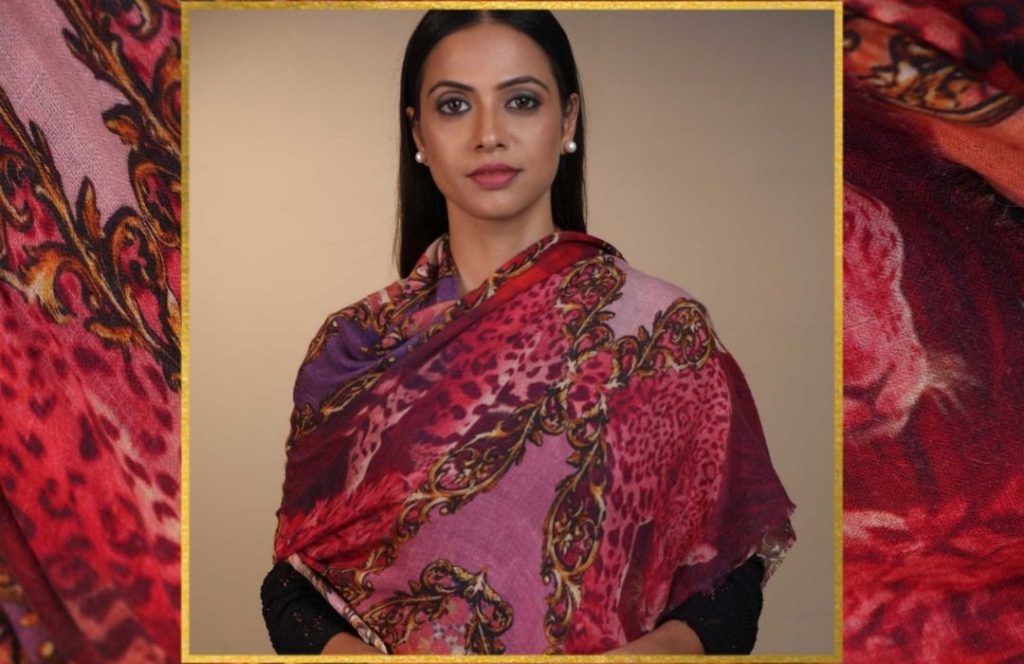
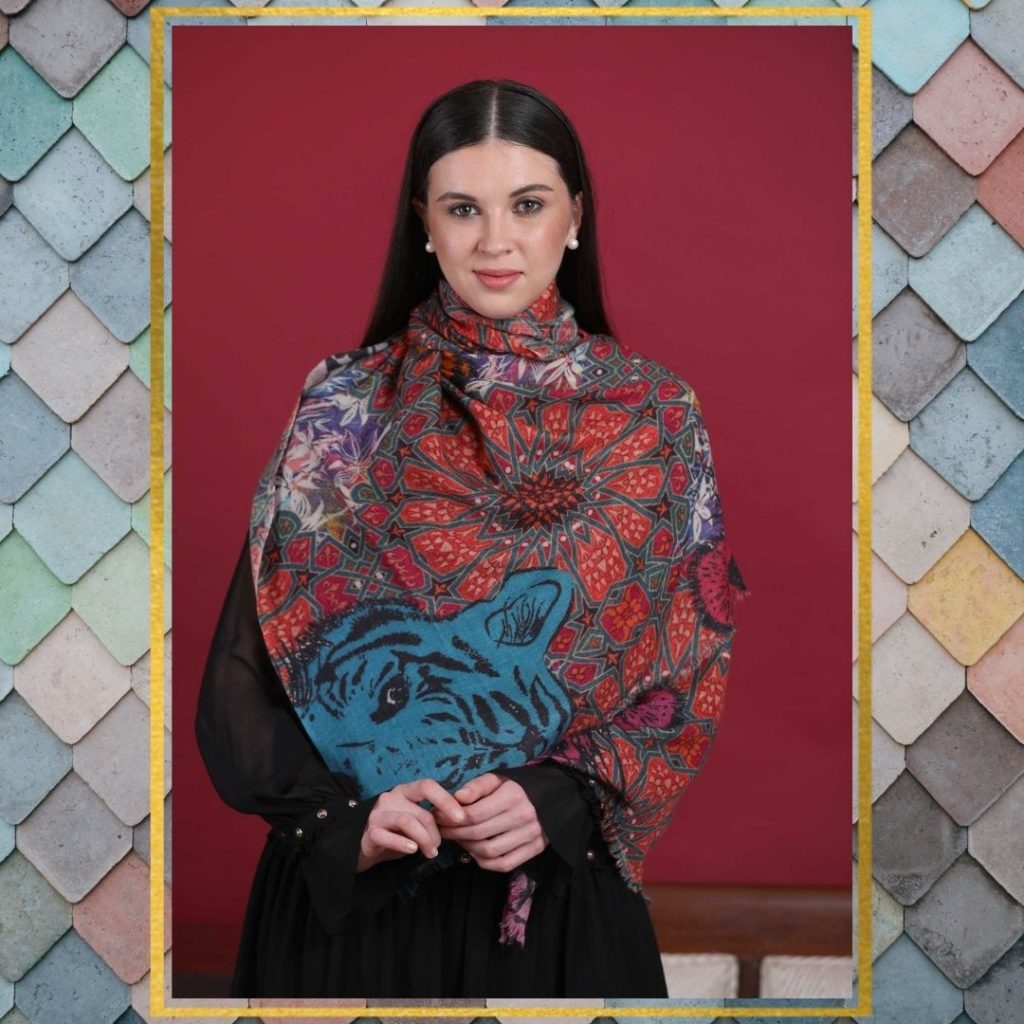
The wrap accentuates multicoloured patterns of Indian flora and fauna amongst a warm hued base
Is she a workaholic who takes office too seriously, even in her dressing and accessorizing? Meet our contemporarily printed and patterned wraps in solid colours and sophisticated designs to give her a warm company to everyday work.
Tradition Lover?
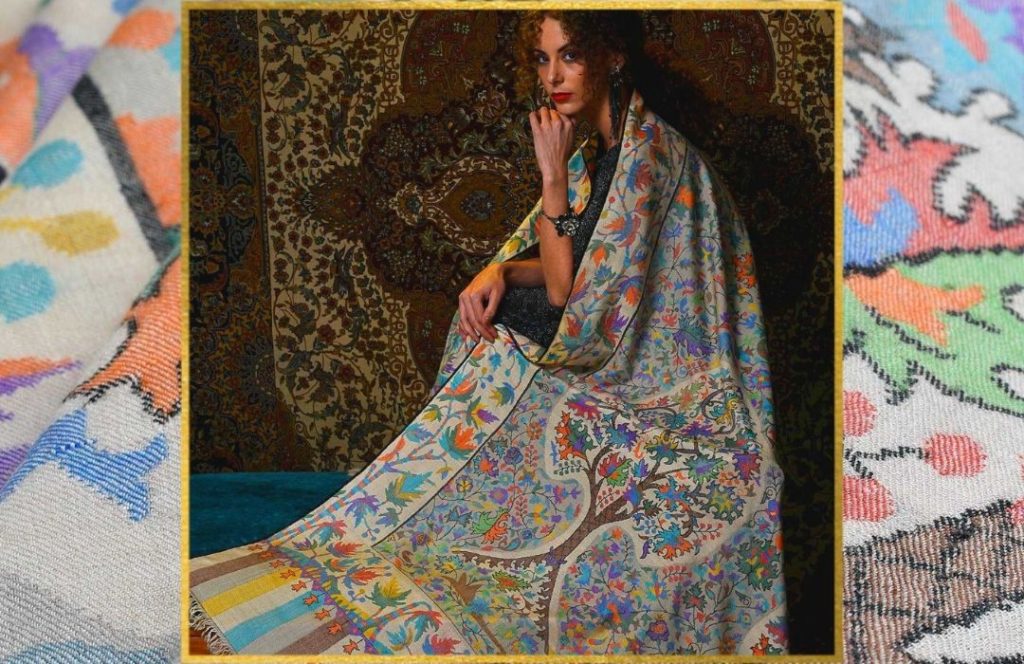
Art mixes with nature and hence is born a luxury winter accessory where the artisan paints the colours of nature onto his freshly made masterpiece
Is your valentine old school, rooted in traditions and culture? A Zari embroidered Cashmere or a Kani shawl will be the best thing you gift her this 14th February. The pieces have a history in the royal courts of Mughal kings in Kashmir and India, where the noble queens would love to drape them. And we bring it to you, on a day which brims with love itself.
While we have Cashmeres for all moods and occasion for her, there is an underlying theme for all - they are exceptionally luxurious.
There isn't just one reason to gift your loved ones Cashmere wraps. We just gathered a number of beautiful reasons why Cashmere is a sign of love, and why you should fall in love with it, this Valentine's day.
When a pure handmade Cashmere Wrap is chosen to come under the shimmers of Tilla Dozi, even the artisan is not in a position to imagine how breath-taking the complete piece would look
Cashmere is planet-friendly. It is a natural fibre and it is renewable and biodegradable. This makes cashmere wraps the most sustainable investment in the market.
Cashmere comes under a slow fashion. As such your Cashmere gift will last for so many years and make an unforgettable memory.
The luxury Cashmere fibre absorbs and releases moisture from the air as and when there is a change in humidity. It thus retains heat hence making itself an ideal gift for the cooler seasons. Cashmere is insulating, as well as highly breathable
Cashmere defines comfort in a new way. The fibre is exceptionally soft and comfortable and feels feathery against the skin. The soft silky finish and grandeur of a Cashmere wrap will definitely impress her for life
Cashmere just gets better with age. Your 20-year-old Cashmere wrap will not look withered but heritage. Cashmere, in history, would be passed from mothers to daughters, and it would look as exquisite as when it was new.
Cashmere care is easy. You can wash Cashmere at home with Cashmere shampoos and lukewarm water. There is no need to spend thousands on laundry and dry clean.
Your Valentine Gift needs to be as special as they are in your life. Unbox the treasure of timeless Cashmere shawls, stoles, and scarves with our extravagant edition of Pure Cashmere wraps.