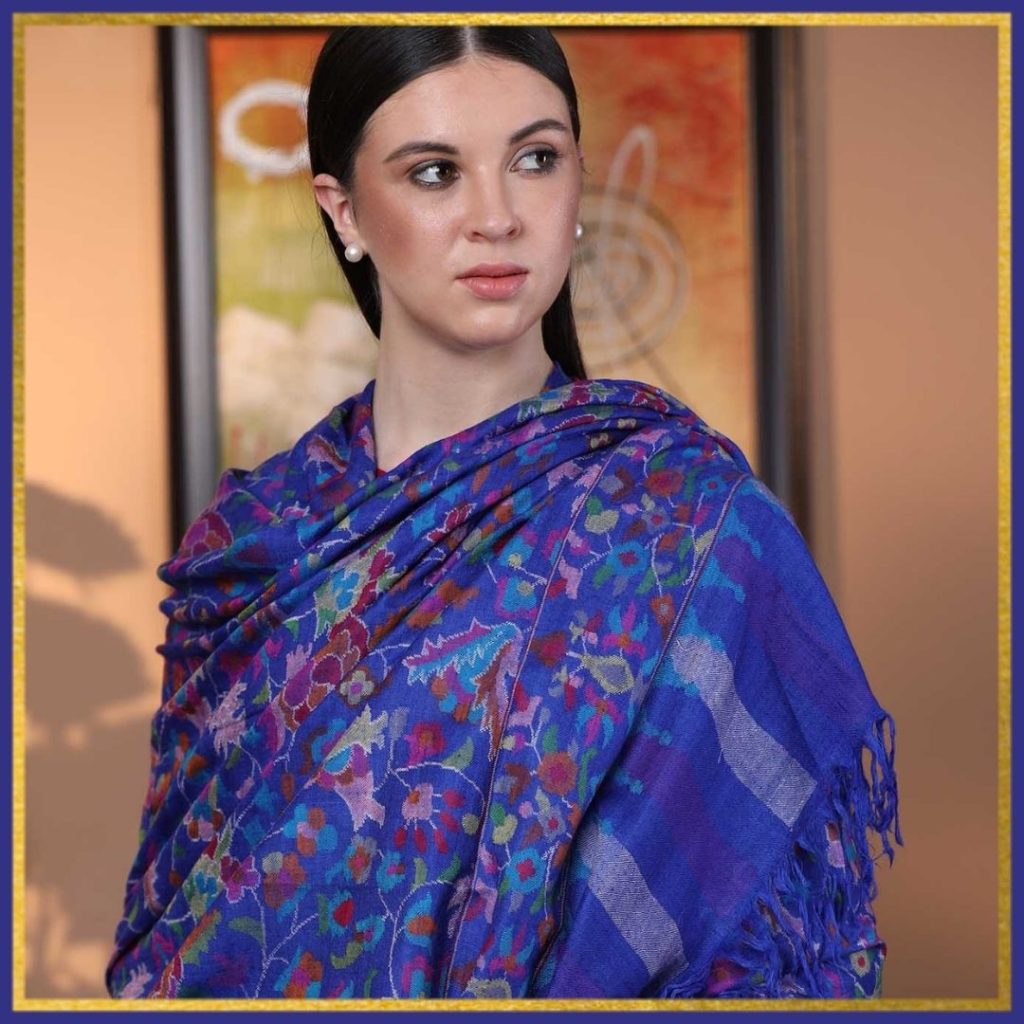
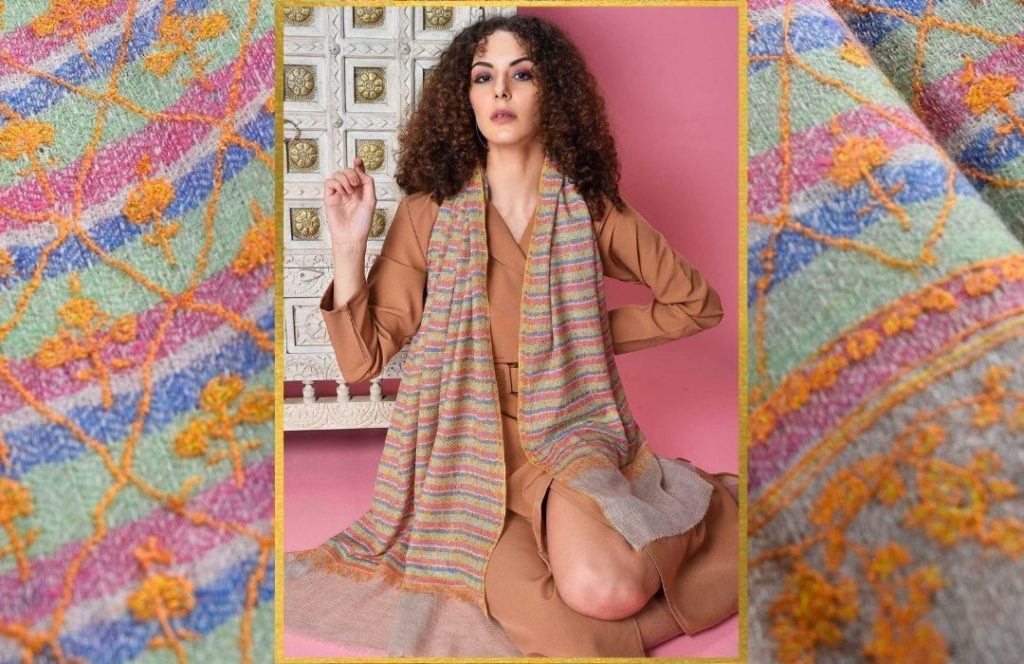
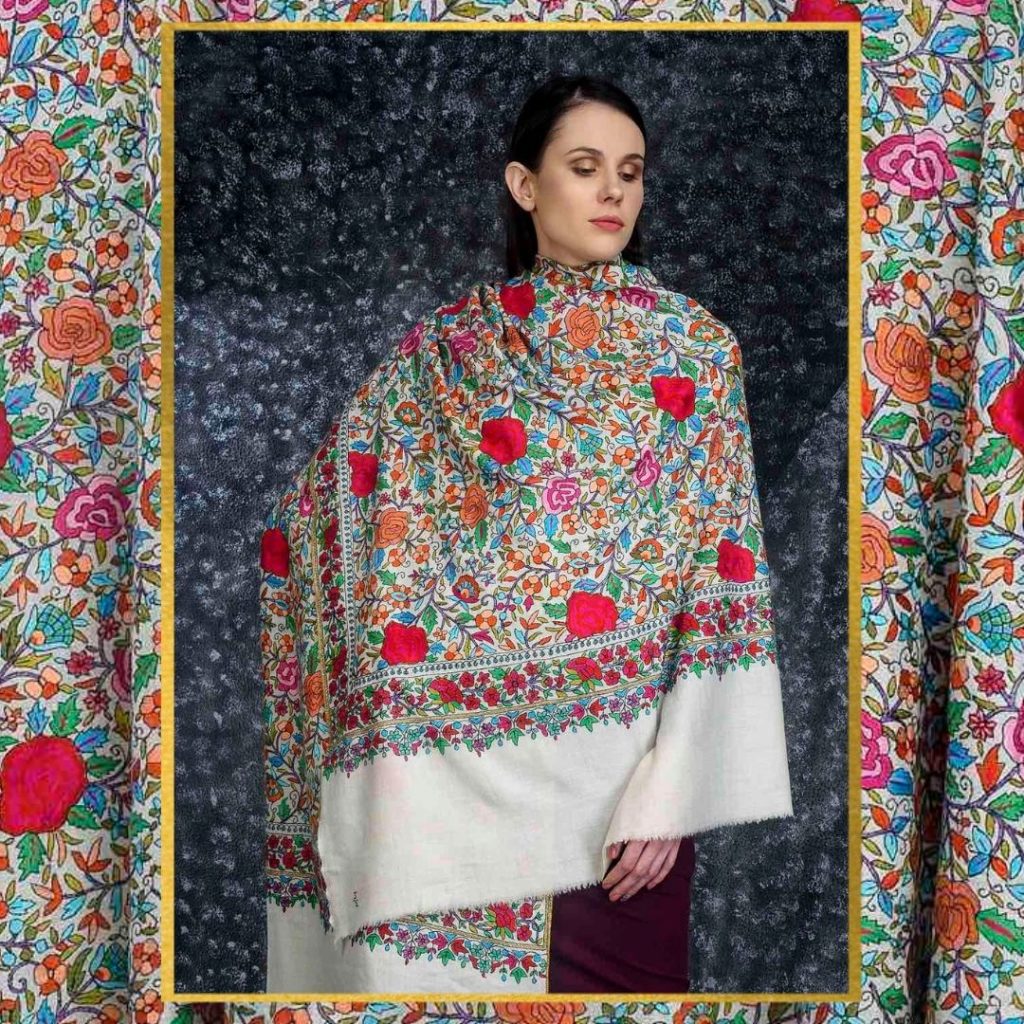
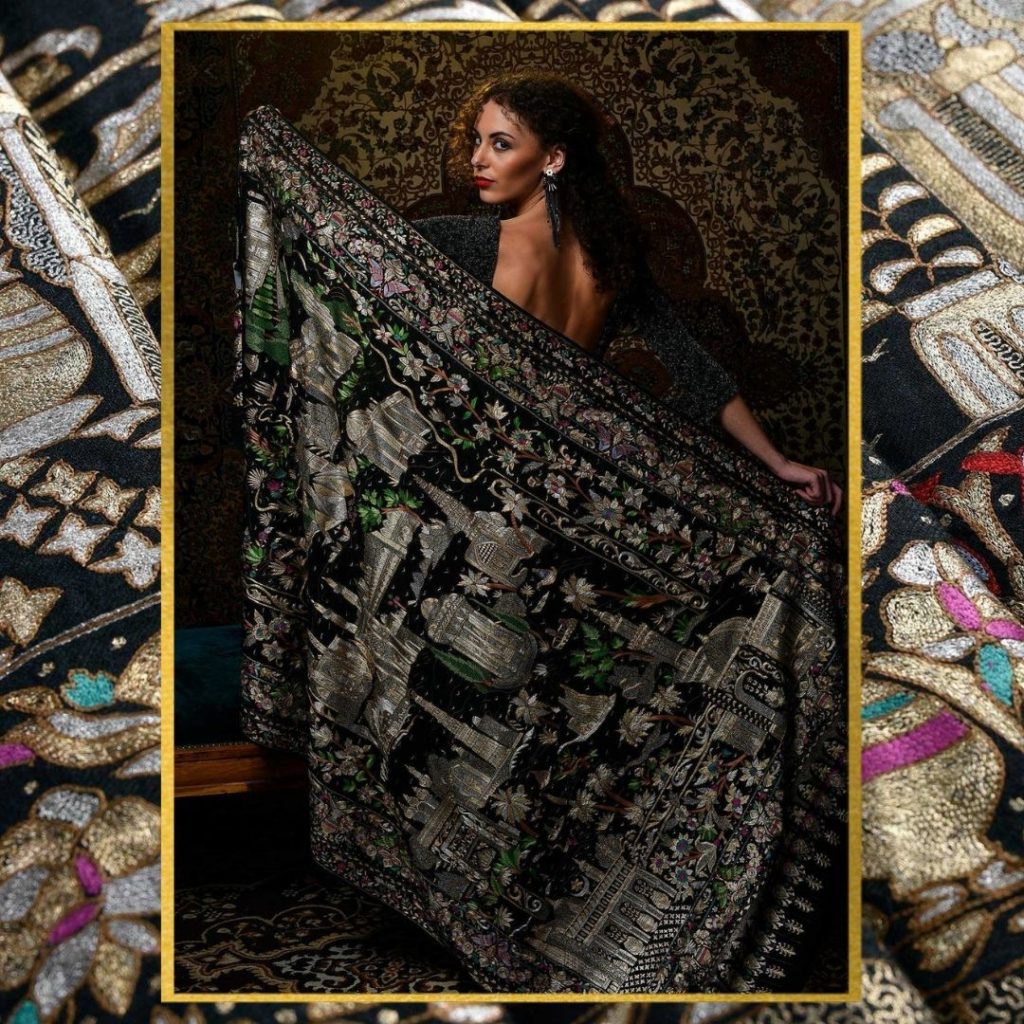
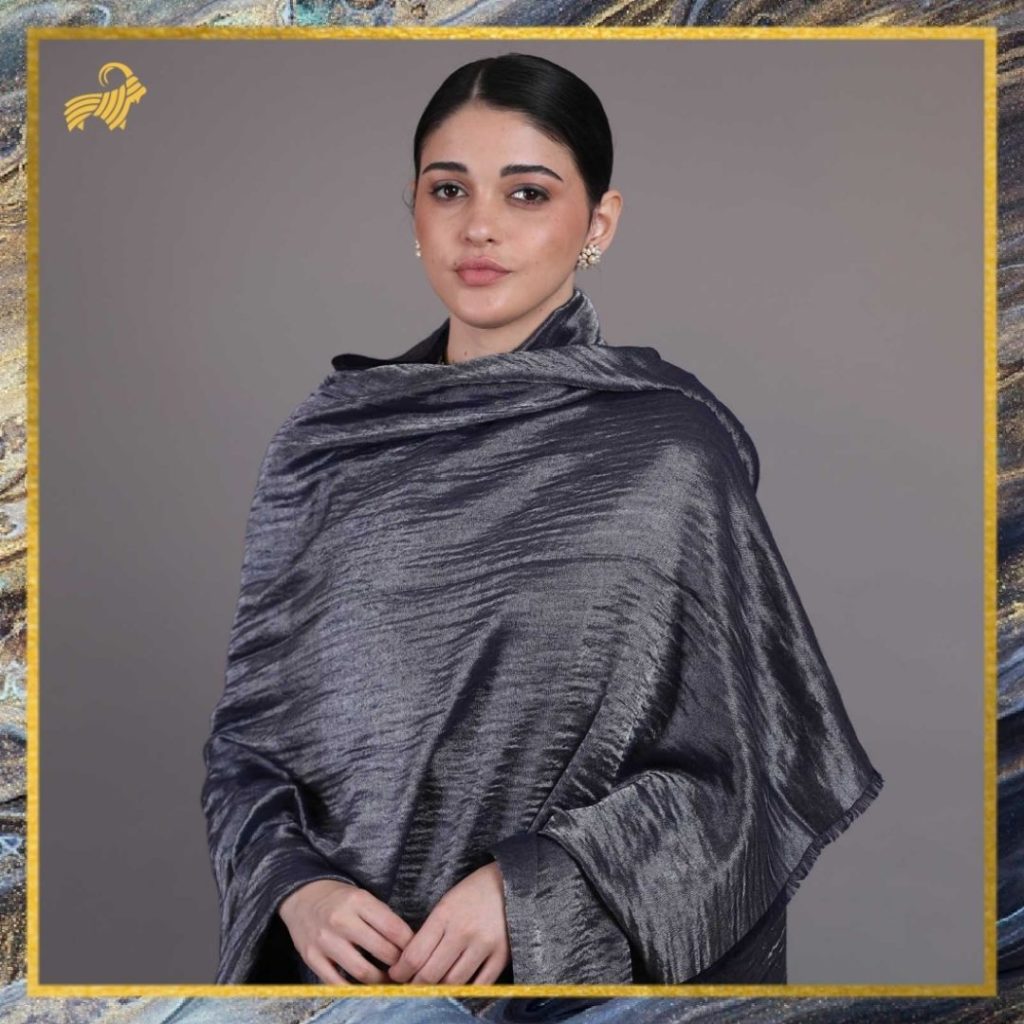
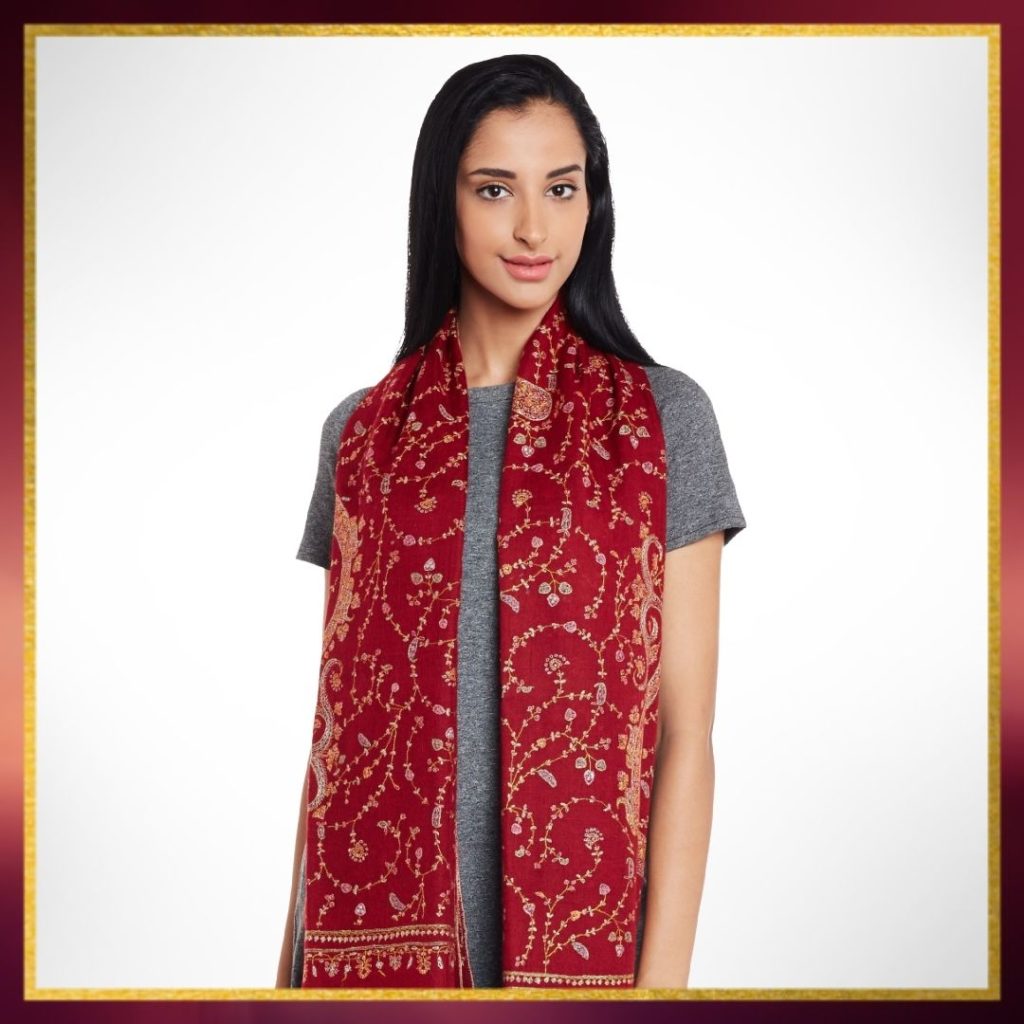
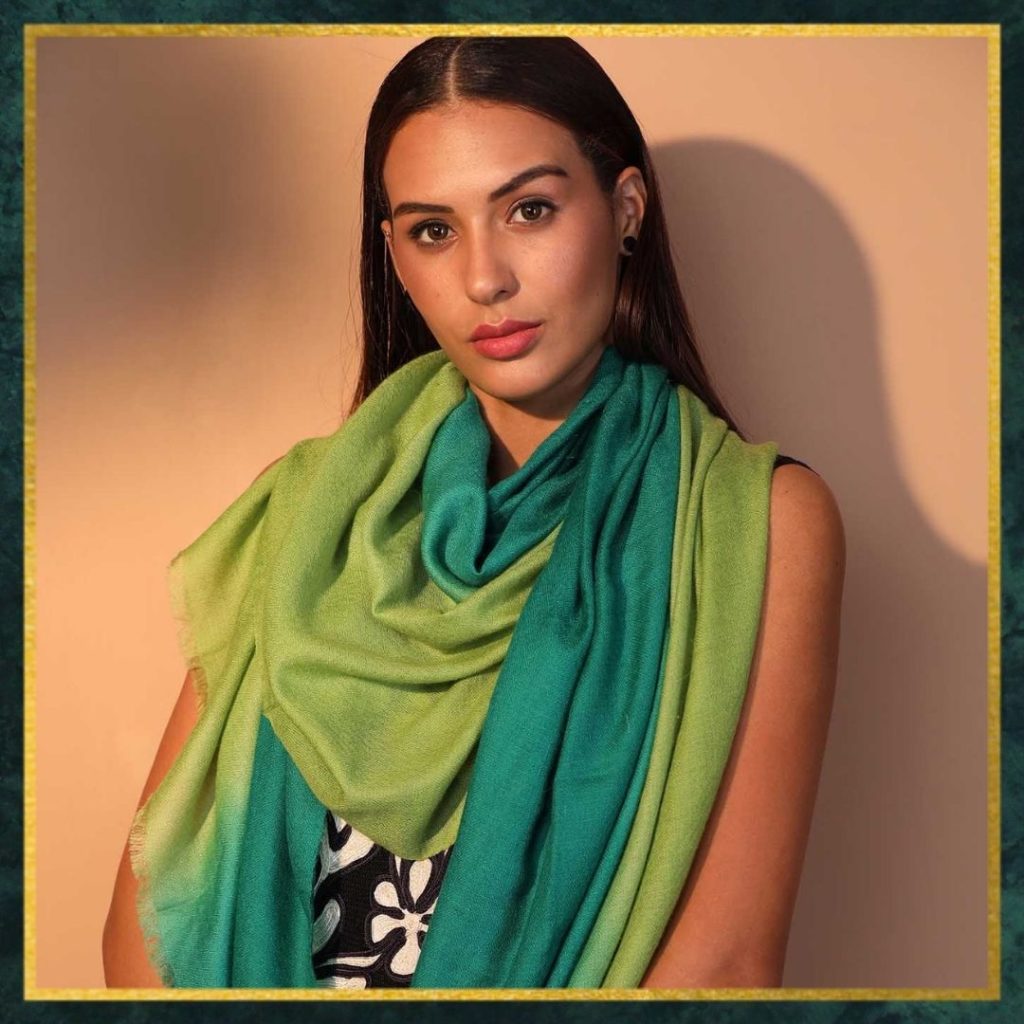
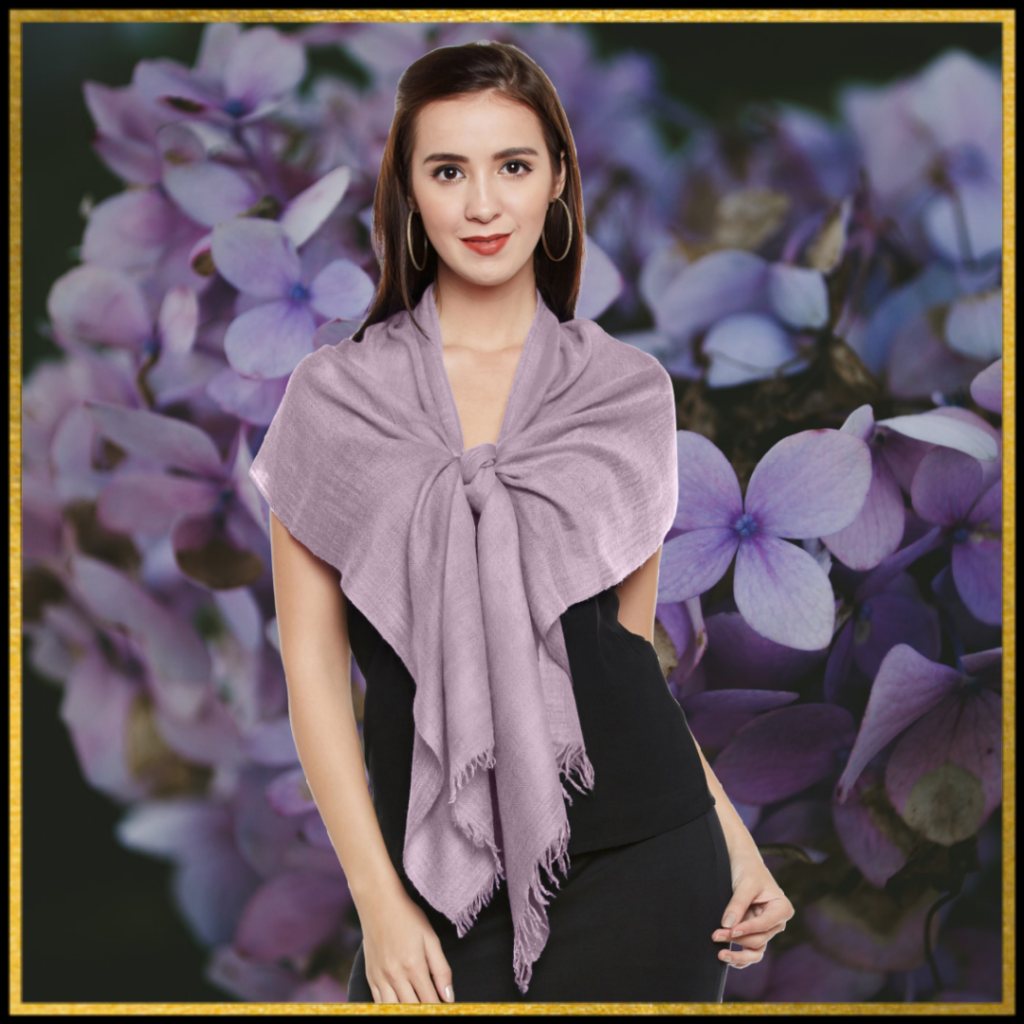
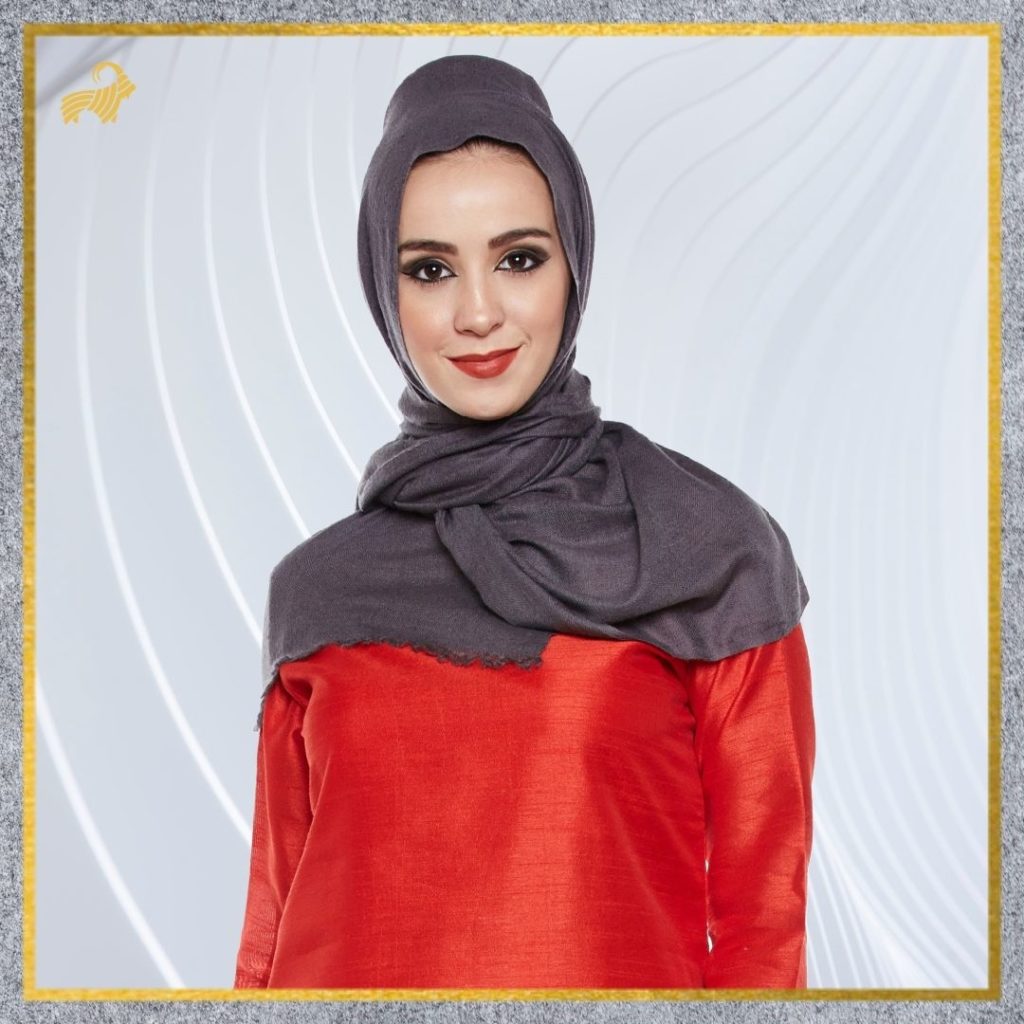
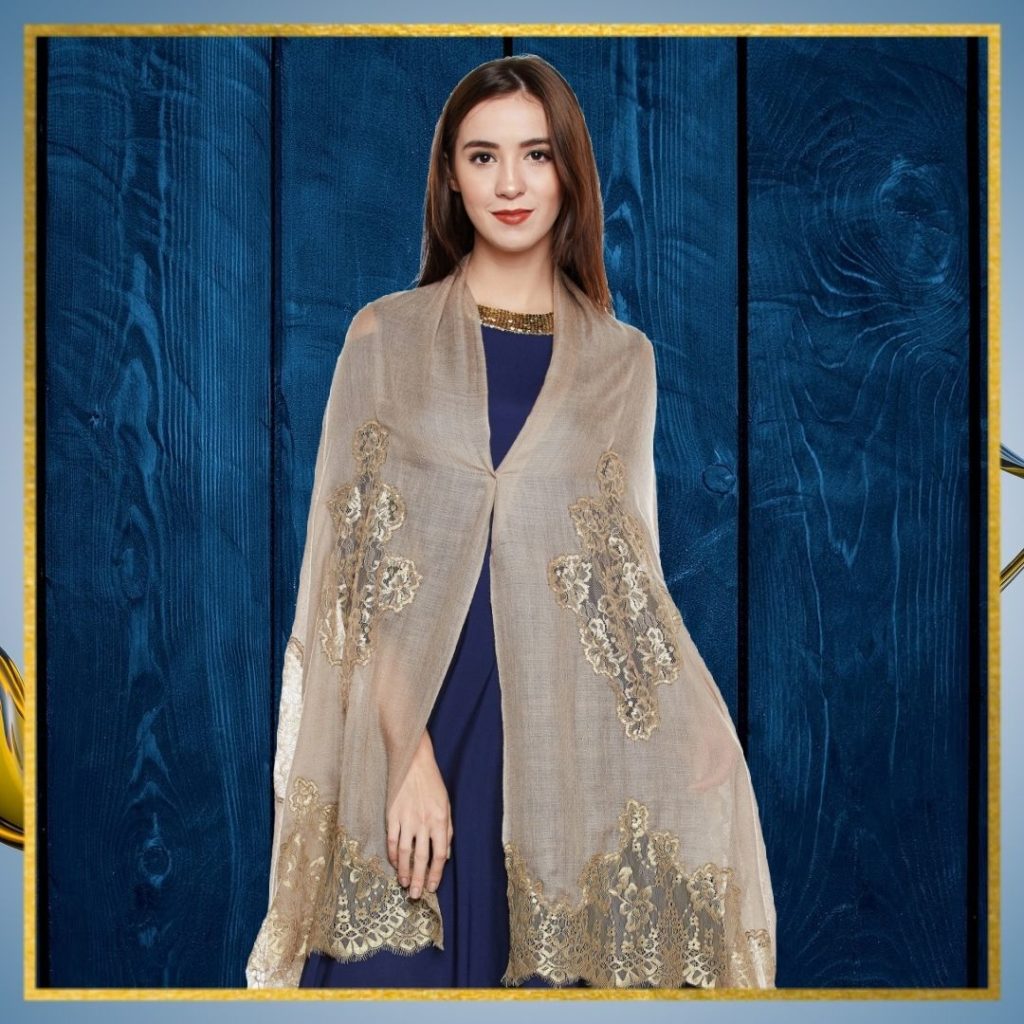
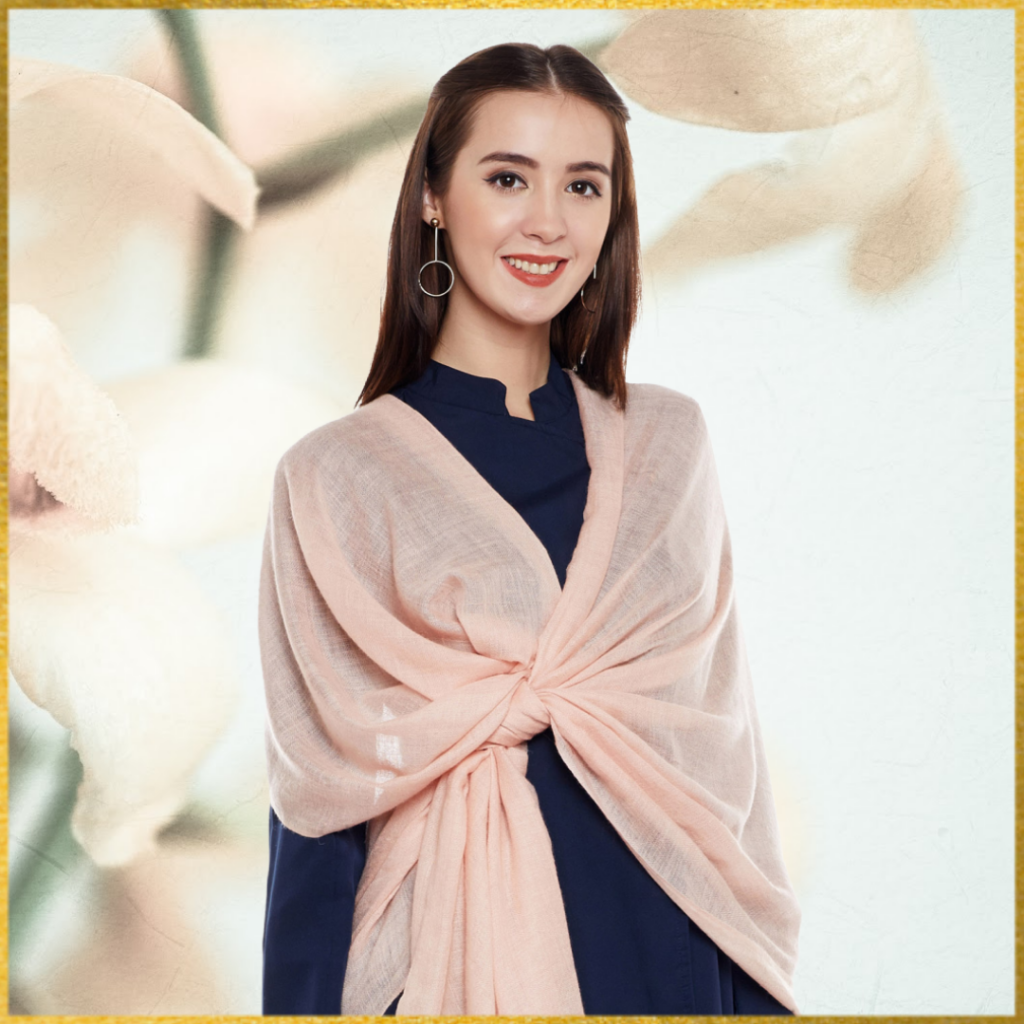
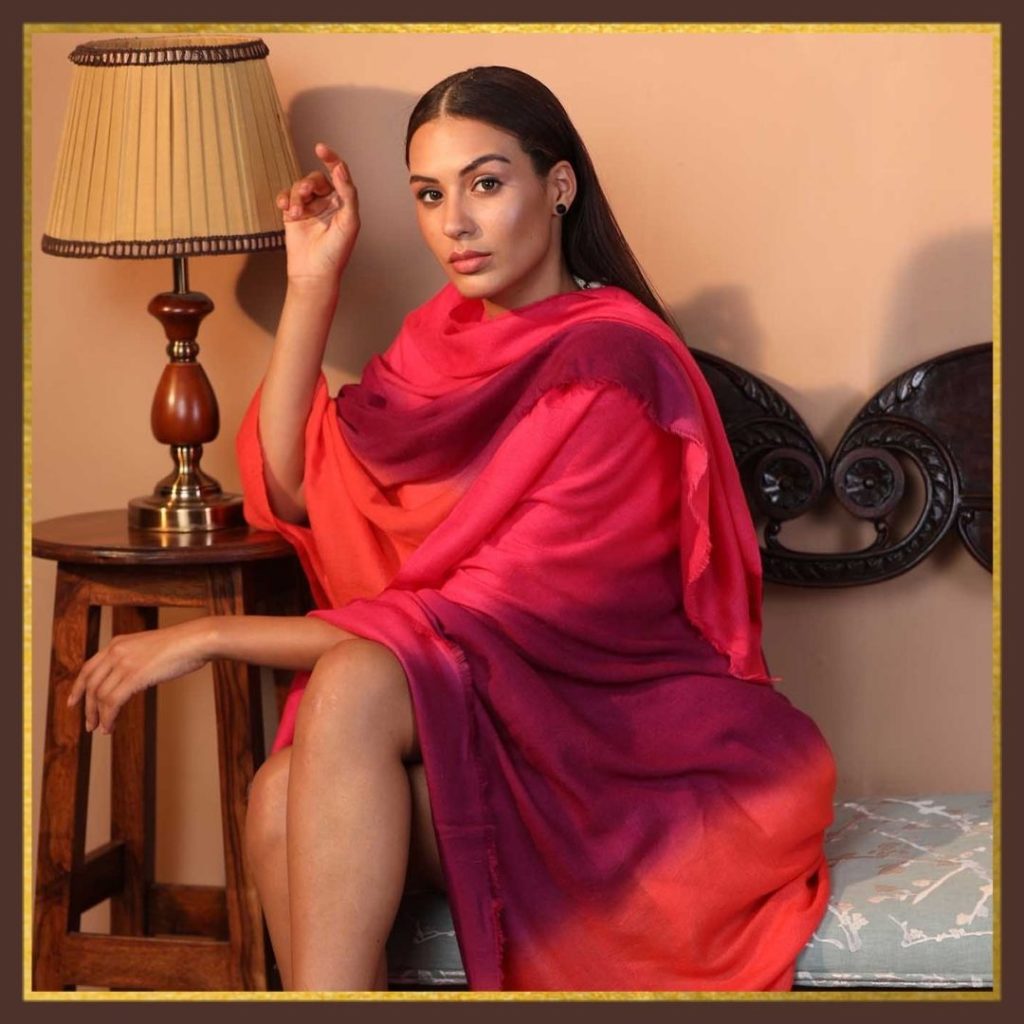
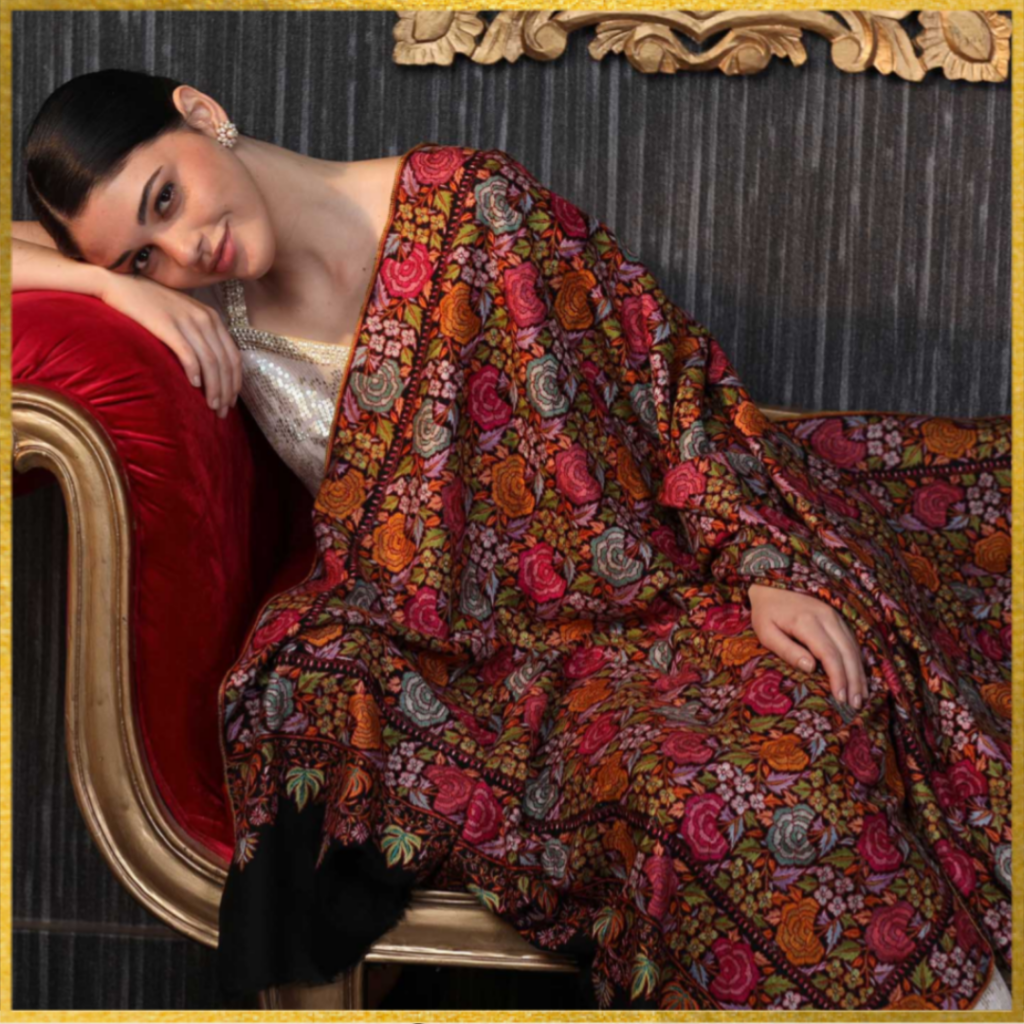
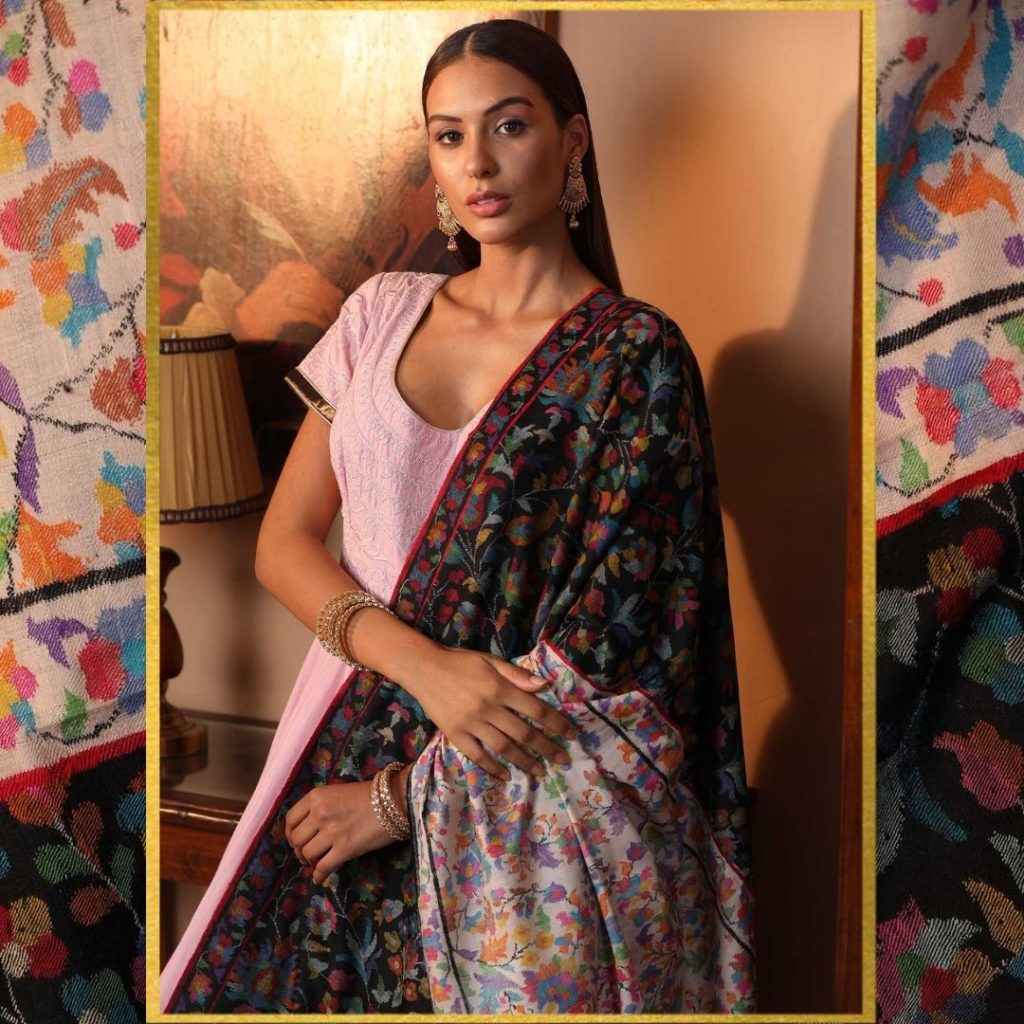
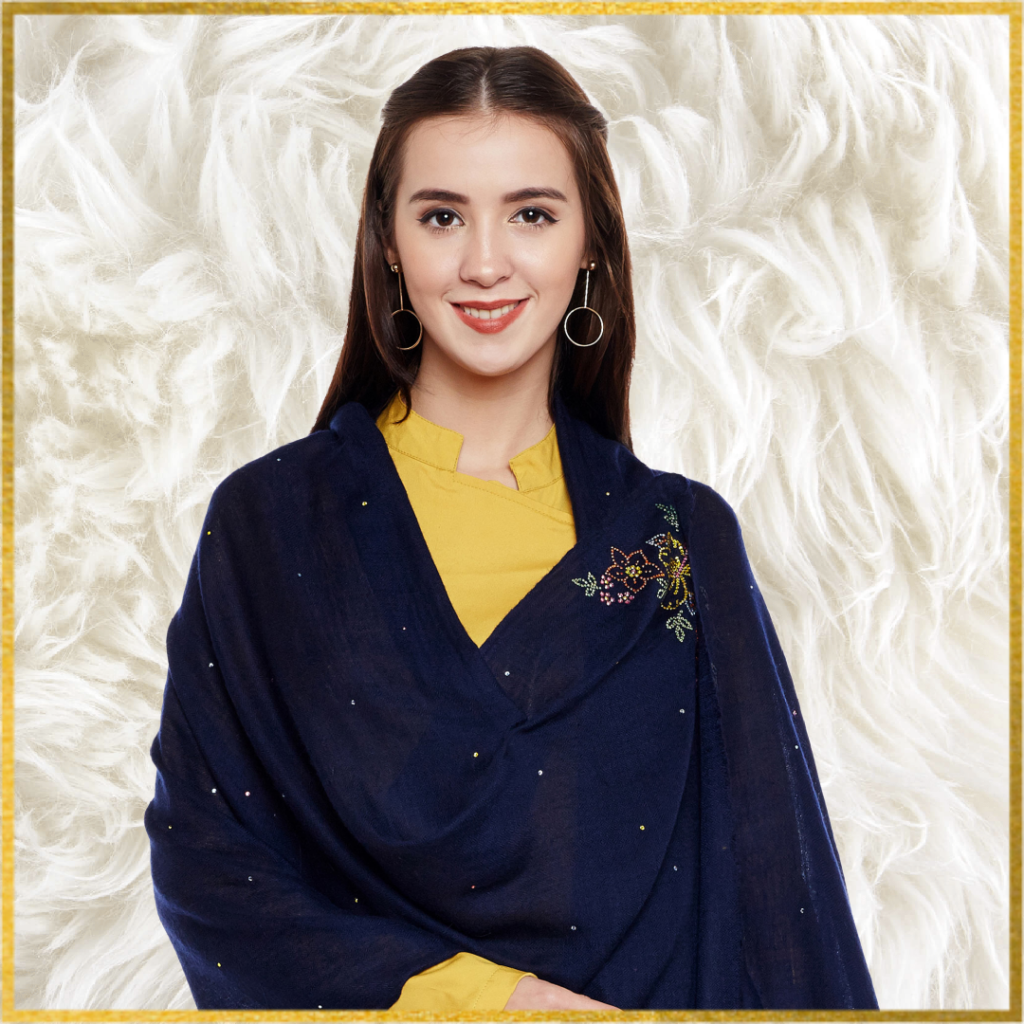
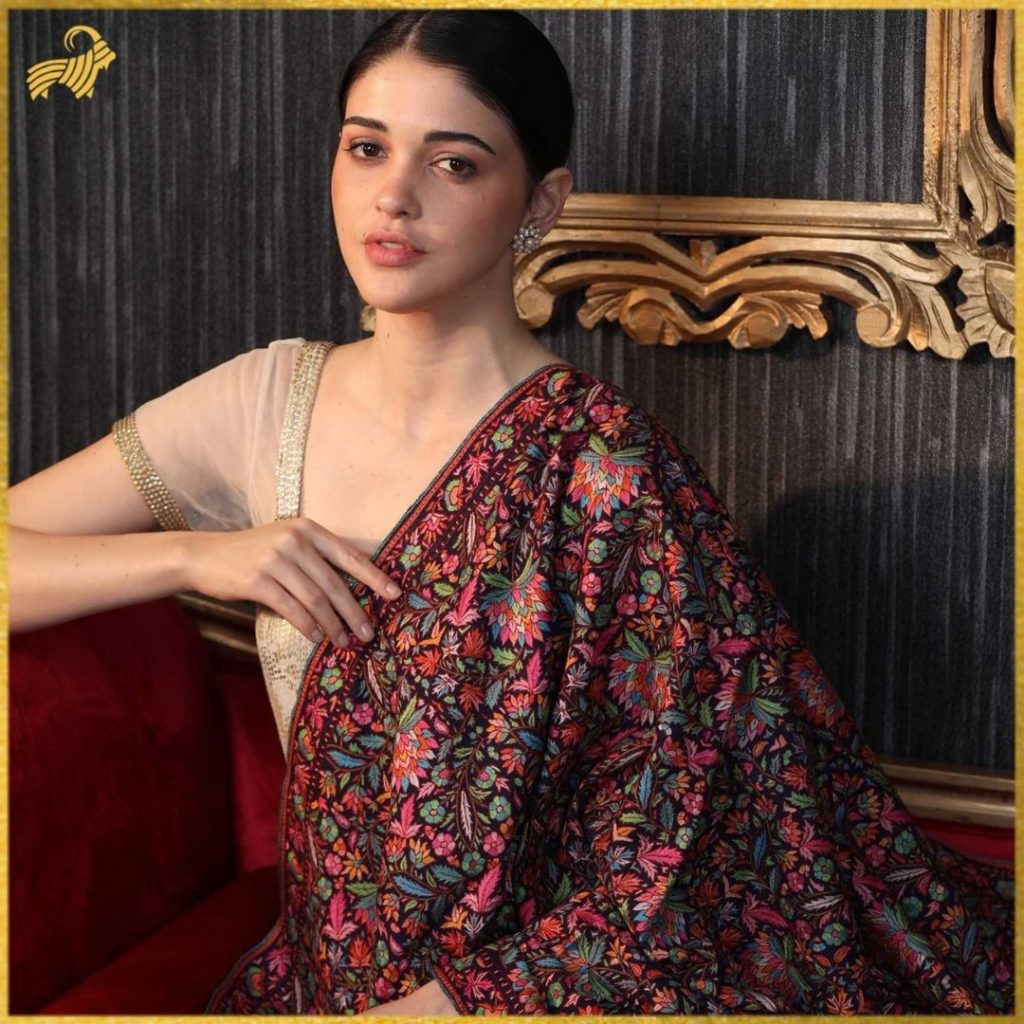
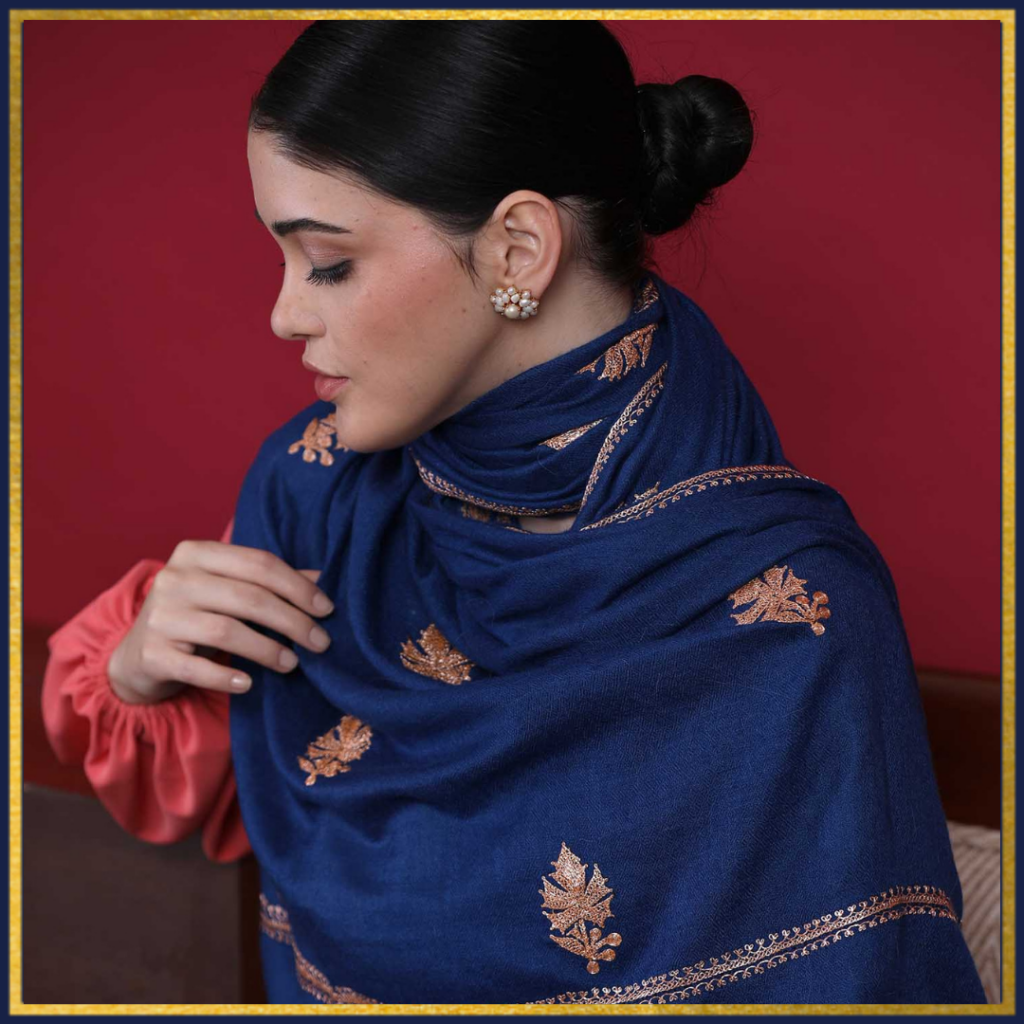
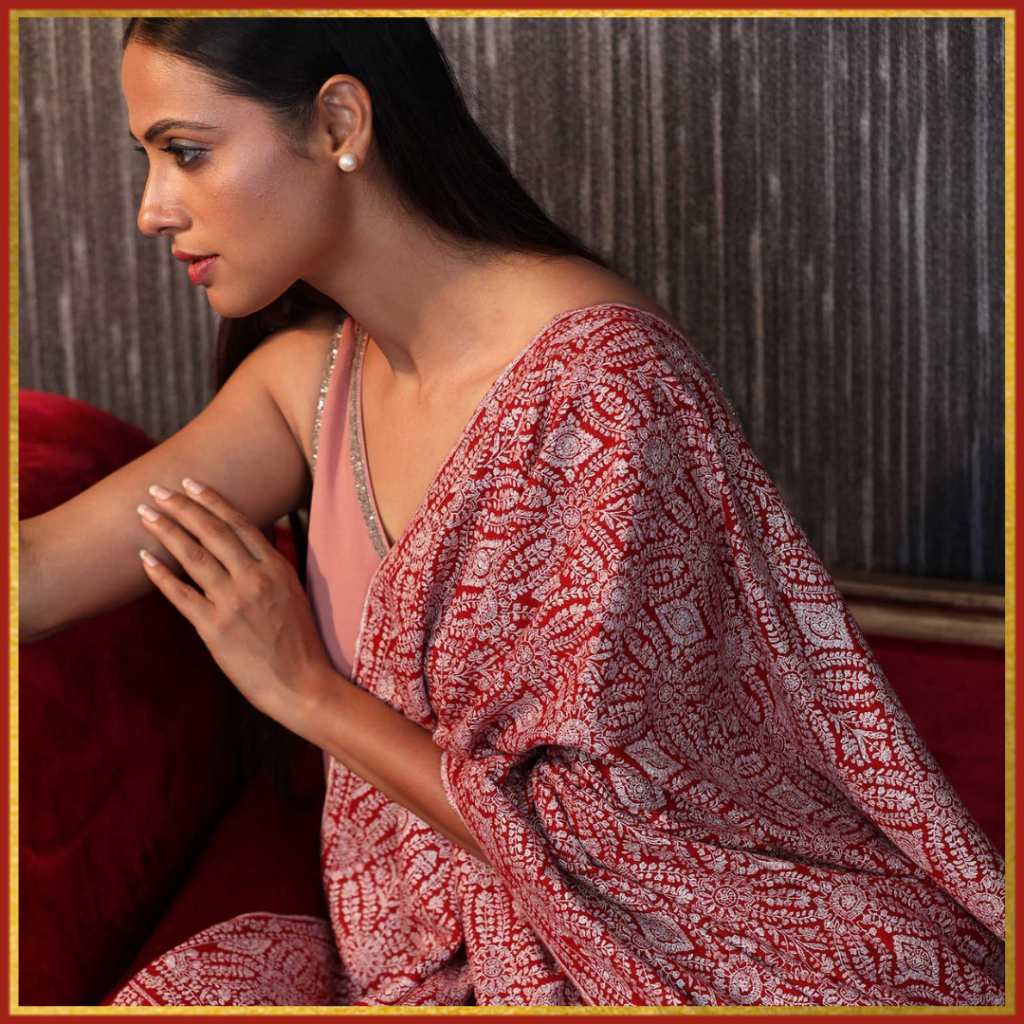
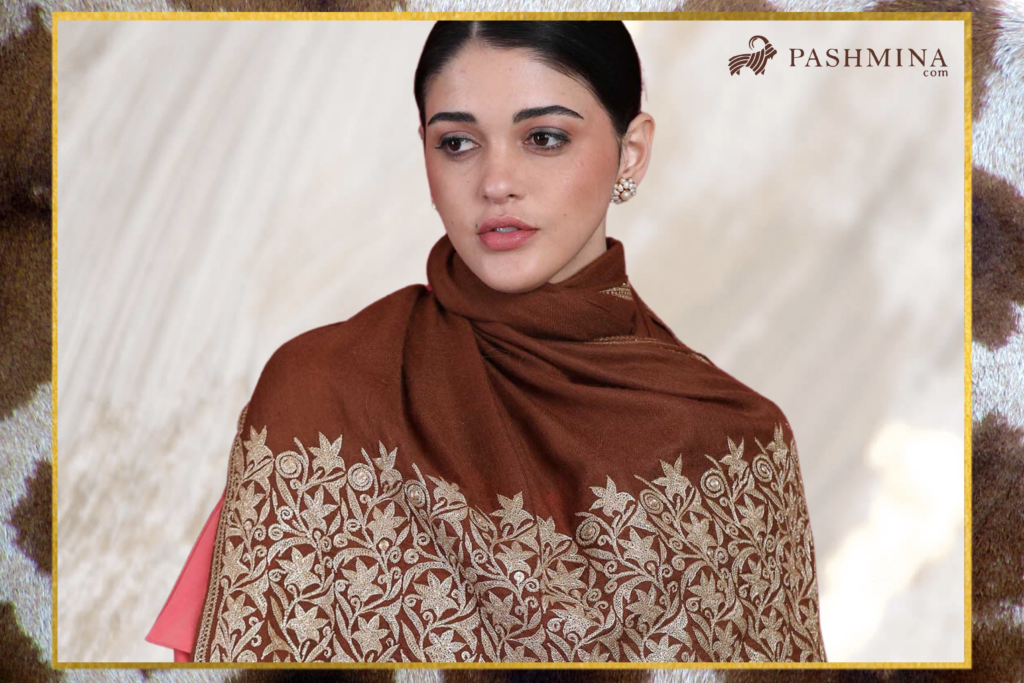
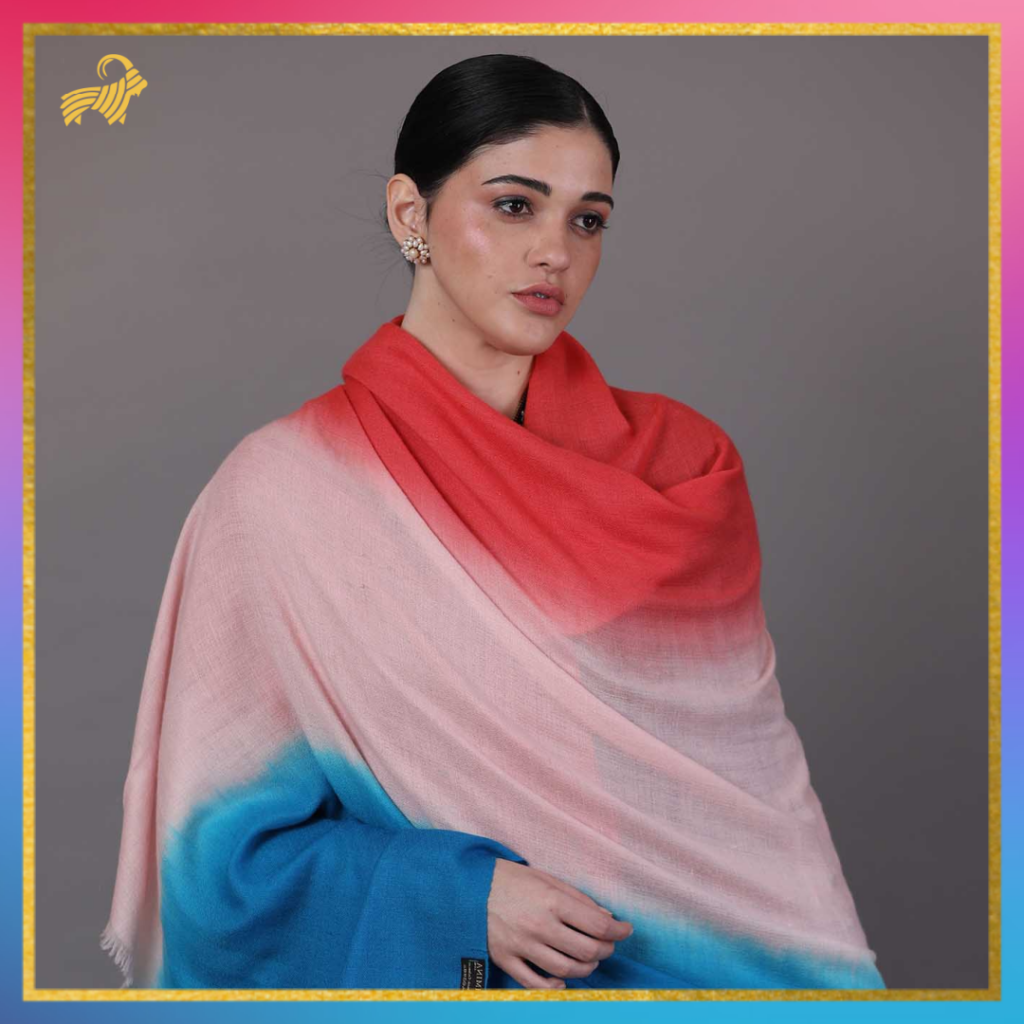
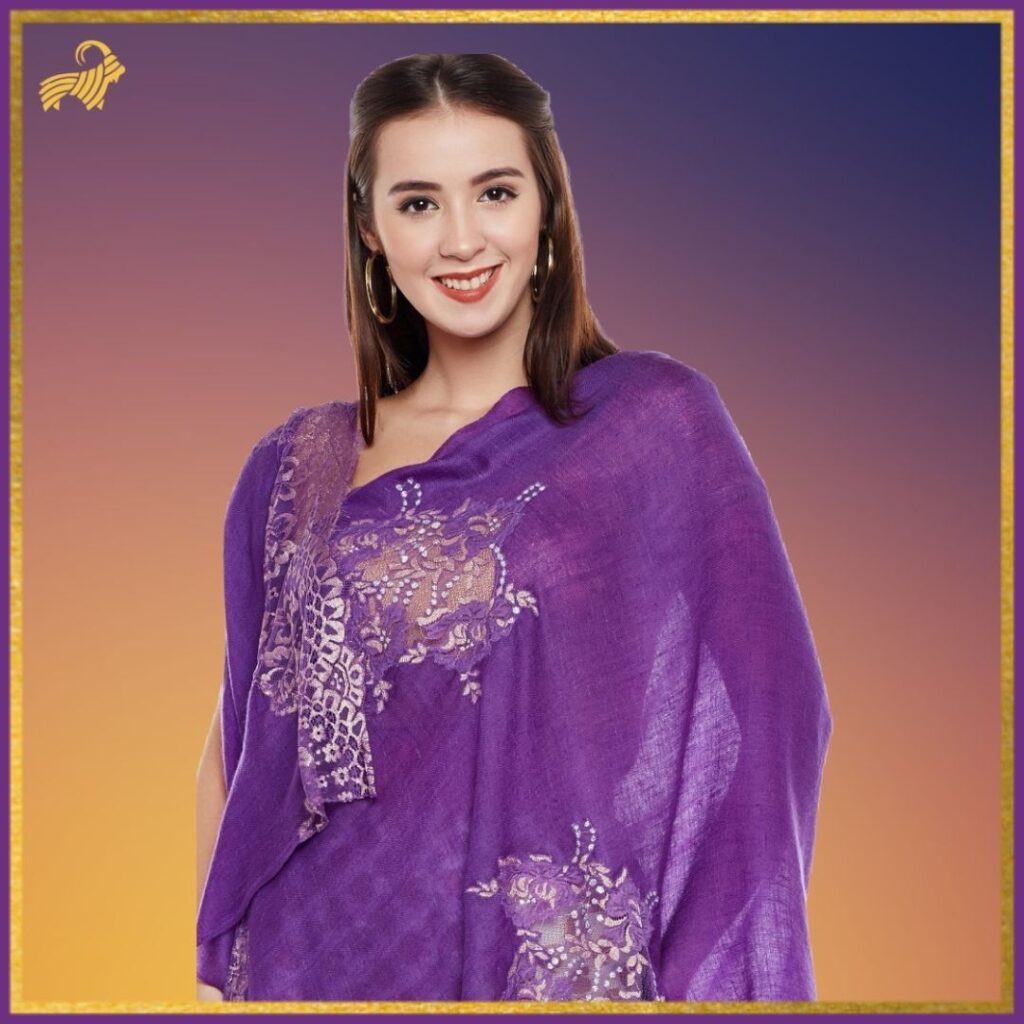
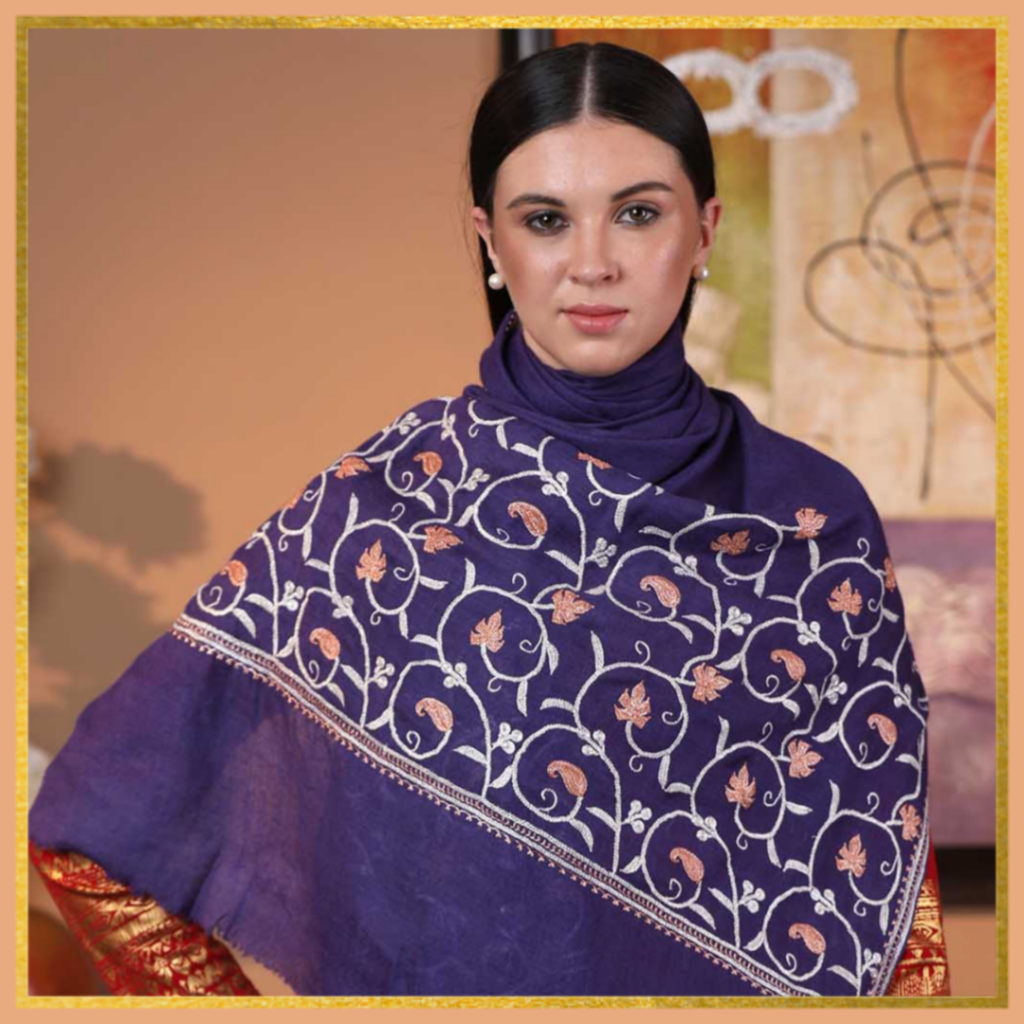
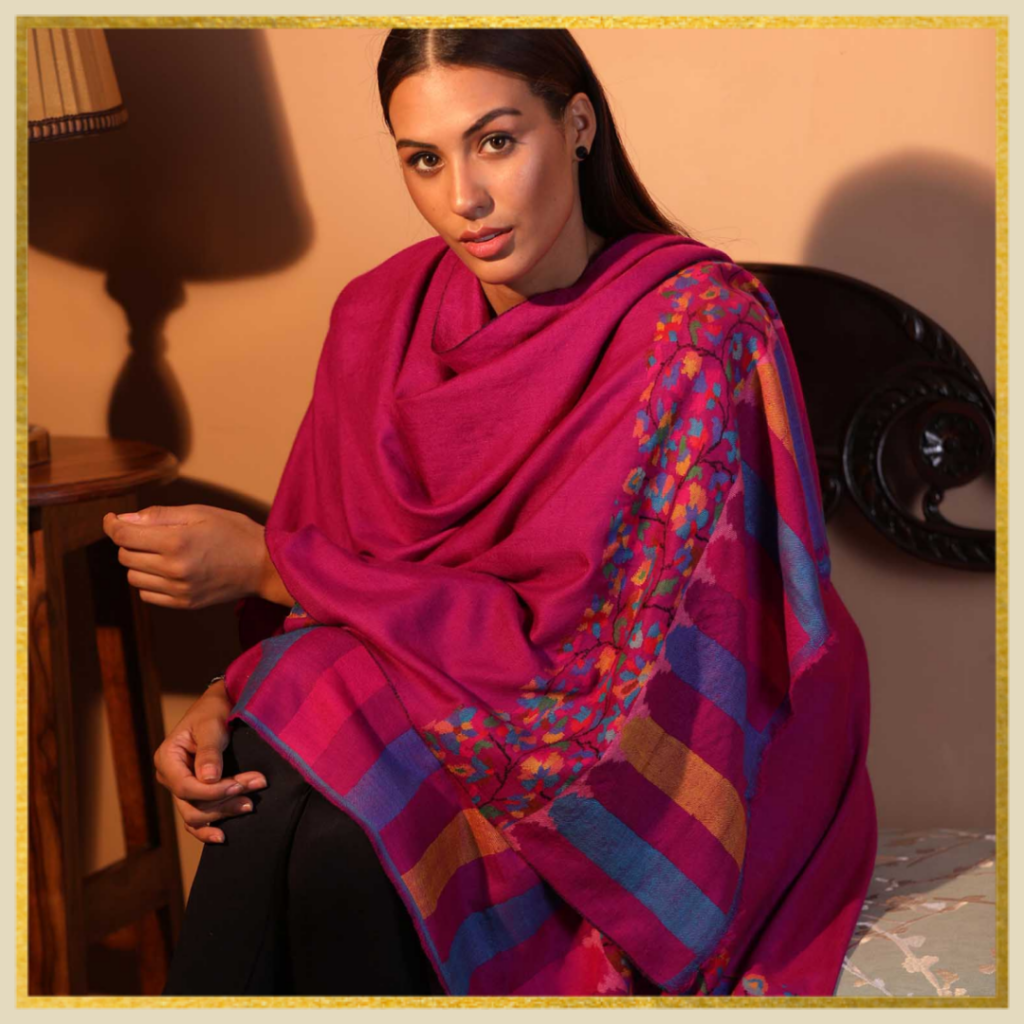
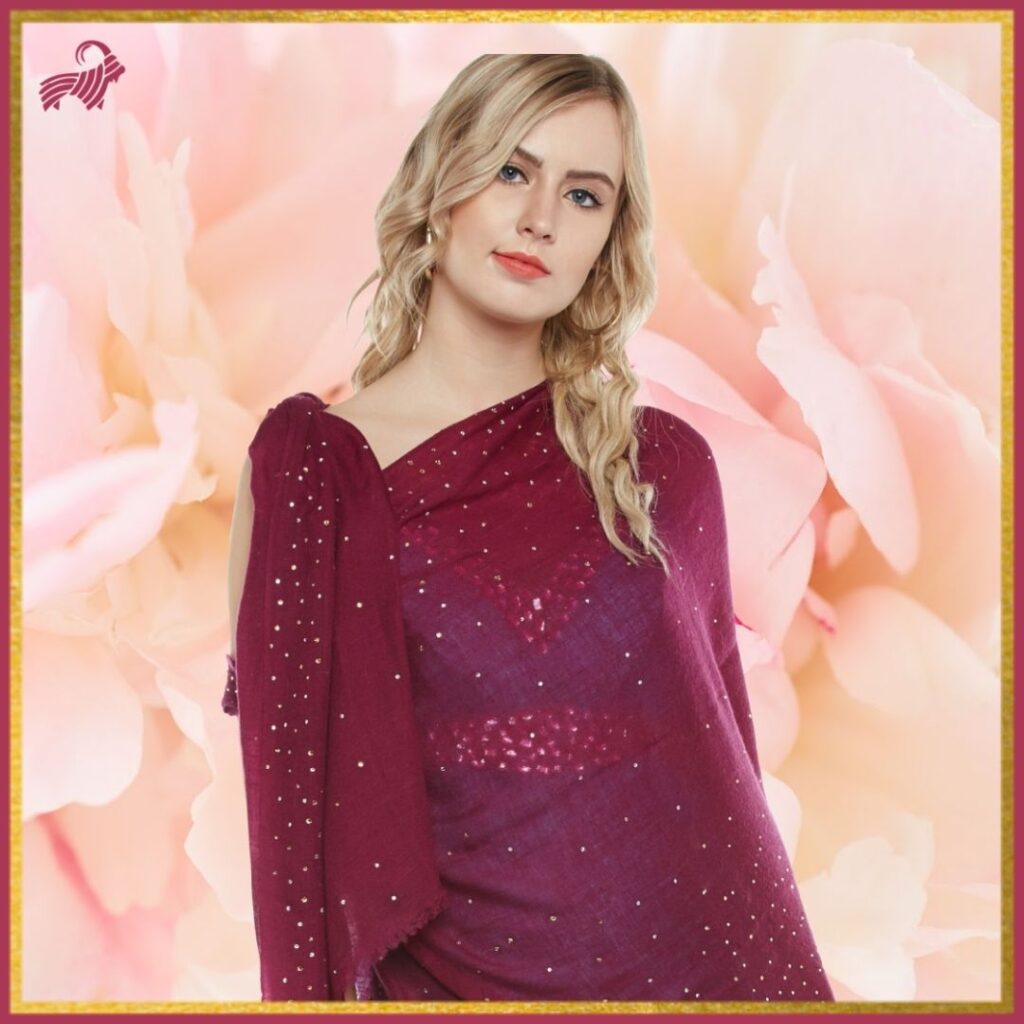
An epitome of luxury and style, the art of Pashmina has always been the centre of attention amongst women all over the world. Being the proud owner of a Pashmina scarf has always meant to experience royalty! And only women who have experienced this royalty can explain the beauty and high worth of a Pashmina scarf. And they have been doing so since times immemorial; explaining to the less aware the uniqueness and timelessness of this fine art. The delicate texture and cozy feel that a Pashmina scarf provides is simply beyond comparison. The know-how, experience, and expertise that the makers of Pashmina put into each piece that they create are noteworthy. And that has been the case since its inception in the 16th century.
Origins of Pashmina
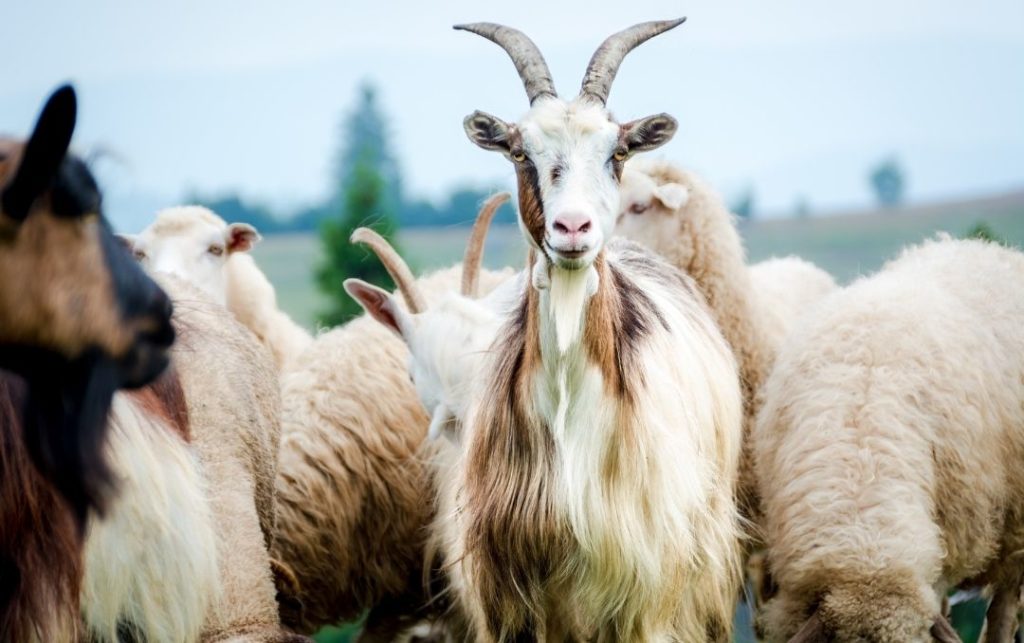
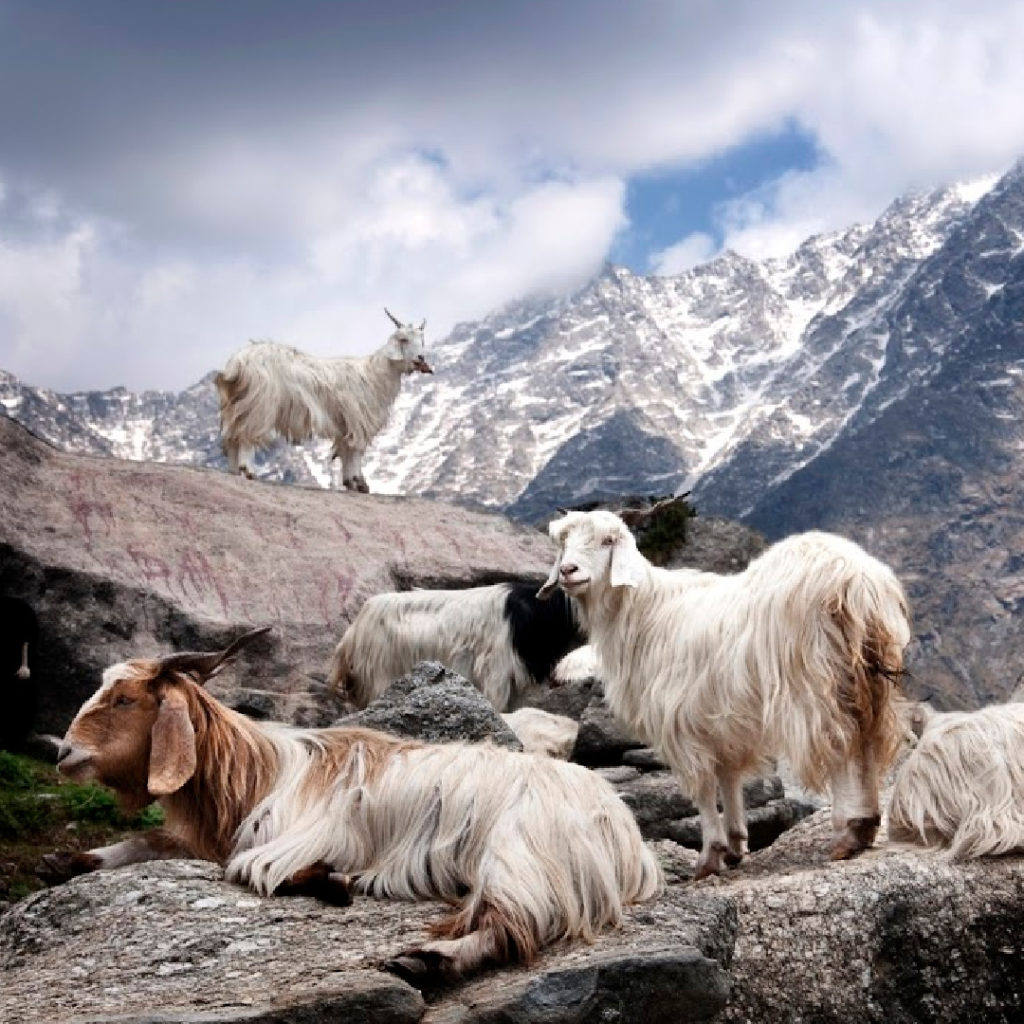
Pashmina represents the art of transforming raw cashmere wool into luxurious shawls, scarves, and other garments. This exquisite fiber comes from the Changthangi goats, native to the high-altitude regions of Ladakh in the Himalayas. These goats grow a fine undercoat of cashmere wool as downfibre. Herders gently comb it off during the molting season to create the renowned Pashmina shawls or scarves.
The history of Pashmina spans centuries and has deep roots in the royal courts of Kashmir. Shah-i-Hamdan, a Persian Sufi saint who traveled to Kashmir in the 14th century, played a pivotal role in introducing the art of Pashmina weaving to the region. His admiration for the softness and warmth of the cashmere wool led him to order a pair of socks made from it. This order marked the beginning of a tradition that would elevate Pashmina to a symbol of luxury and fine craftsmanship.
Over the years, Kashmiri artisans honed their skills in spinning and weaving this delicate fiber. The process of creating Pashmina is both intricate and labor-intensive. Artisans meticulously comb the wool from the goat’s underbelly, spin it into fine threads, and weave it using traditional looms. Artisans perform each step by hand, ensuring that the final product maintains the highest quality. The result is a fabric famous for its incredible softness, lightweight nature, and warmth, making it highly coveted by royalty and the elite around the world.
From its origins in the remote and rugged landscapes of the Himalayas to becoming a cherished luxury item, the journey of Pashmina is a testament to its enduring appeal and the artistry involved in its creation.
History of Pashmina scarves
Even though the art of Pashmina making has existed for millennia, its discovery didn't take place until the late 15th century. The then king of Kashmir - Zain ul Abideen - was the one responsible for creating small manufacturing units. The story behind it is really interesting. Legend says that a Sufi saint by the name of Shah I Hamdan visited the valley from Persia. It was him who discovered raw Cashmere wool and ordered artisans to craft a pair of socks out of it for the king. The king was so impressed with the quality and finesse of Cashmere that he ordered processing units to be set up for manufacturing the same.
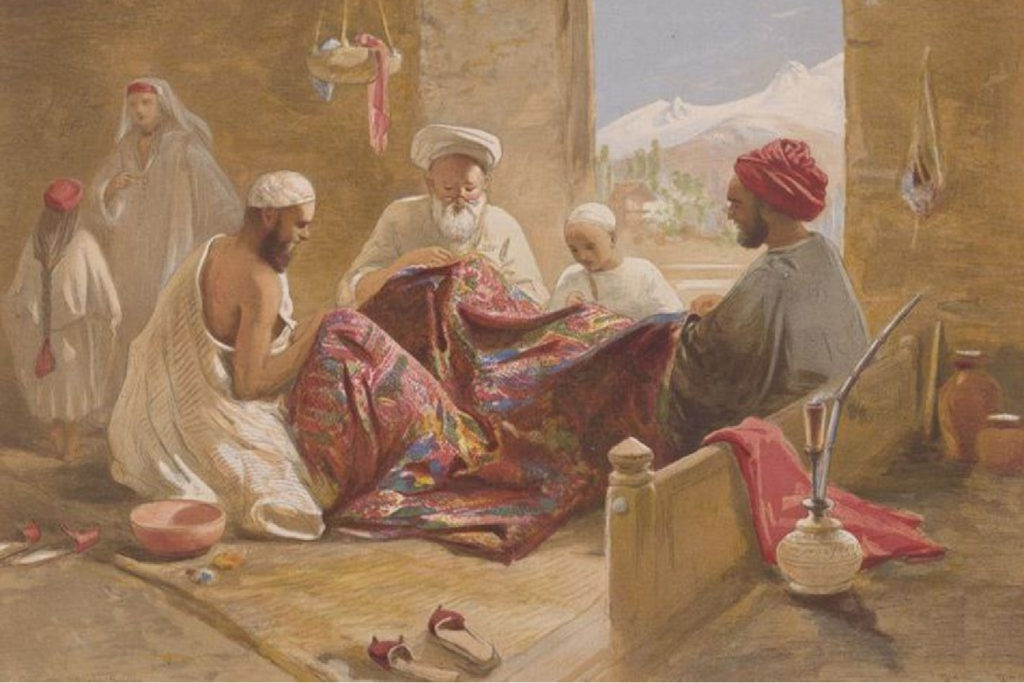
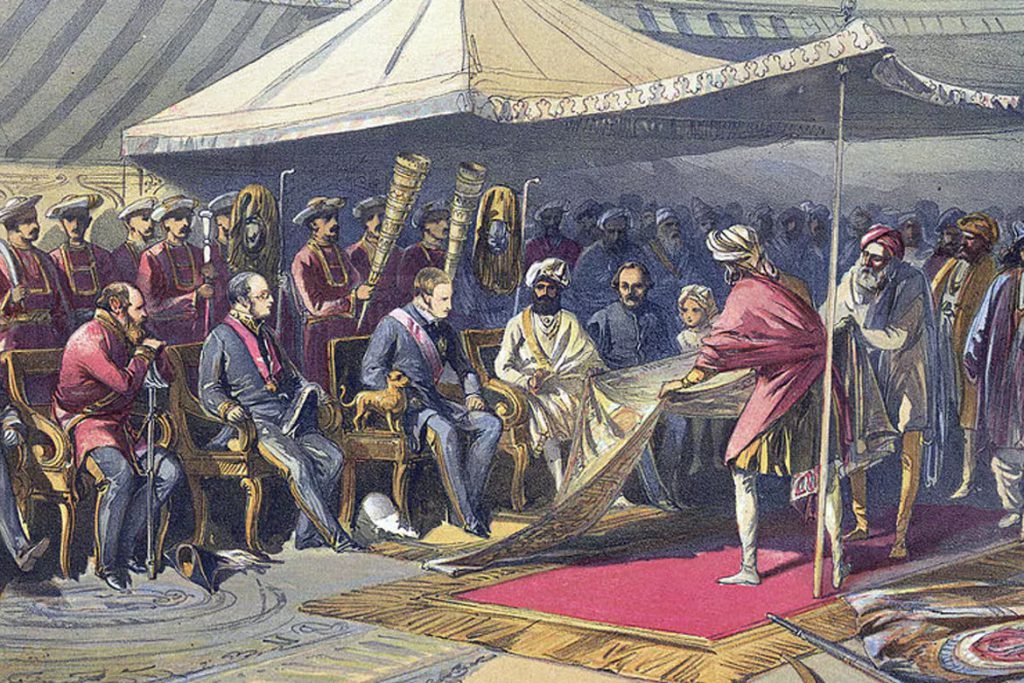
A Muslim shawl-making family shown in Cashmere shawl manufactory, 1867, chromolith., William Simpson.
Shah I Hamdan had brought along with him 700 craftsmen from his hometown Persia and many other regions, who had expertise in a number of realms in handicrafts. They in turn trained the locals in the same. Some were carpet weavers, some were Papier Mache artists, some were copper and silver specialists, while some were experts in wood carving. But the ones who knew the art of Pashmina were the most famous, and the maximum number of Kashmiri trainees chose Pashmina art to follow. Artisans could now make Pashmina shawls, Pashmina scarves, and stoles in an unparalleled manner, yet it would take days together to do so.
Pashmina in the Mughal Period
Later Pashmina art saw a blooming period in Mughal Emperor Akber's rule. Akber showed a keen interest in Pashmina. So, it was in his time when artisans introduced a number of new patterns and embroidery motifs into the art. Pashmina scarves became more beautiful and colourful when artisans embroidered them. Later Emperor Akbar as well as Emperor Jehangir mentioned Pashmina in their biographies, overwhelmed by the craft.
In the 18th century, Pashmina art reached Europe and became an accessory that every European cherished. French conqueror and monarch Napoleon is believed to have purchased Pashmina shawls on his way from a conquest, for his wife Empress Josephine. The empress loved the piece so much that she later owned a few hundred of the same. It was a Kani shawl.
Where is Cashmere found?
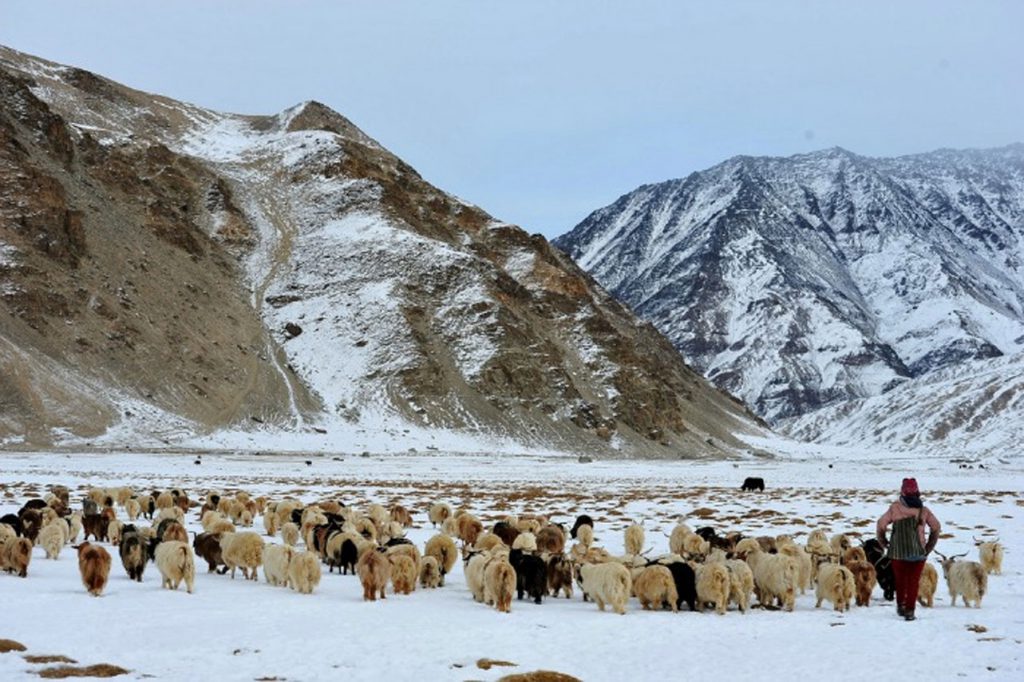
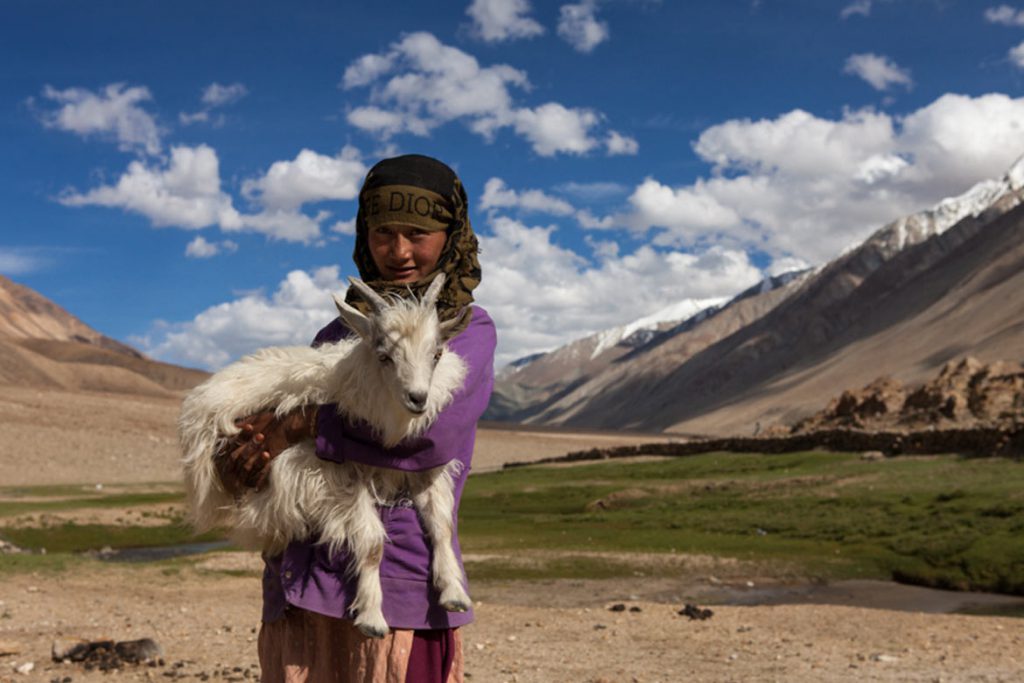
Many of us probably won't know, but Pashmina is the art of handcrafting luxury scarves from Cashmere wool. Cashmere wool grows as a downfibre on the exotic Ladakhi Pashmina goat which inhabits a region called Changthang. The area lies over 14,000 feet above sea level and witnesses a temperature of as low as -40°C (-40°F) in winter. It is the winter season when the goat grows an extremely soft and warm fleece over the most sensitive parts of its body like the underbelly and throat in order to survive. This is the reason they endure such harsh climatic conditions.
The Capra hircus goat
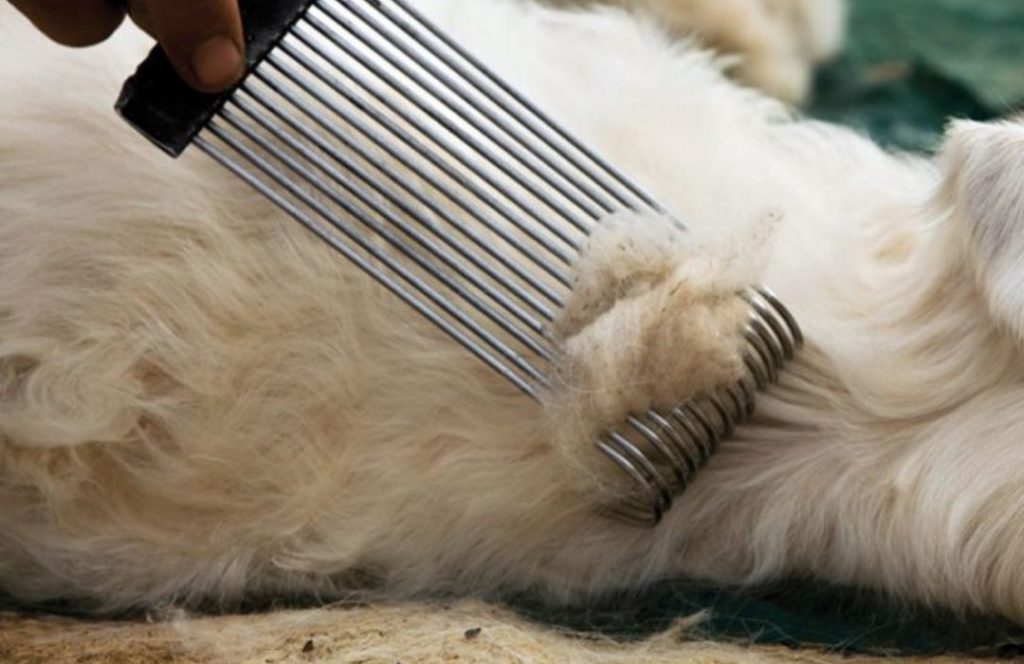
As soon as spring and early summer arrive, the goats become too uncomfortable and get rid of some portion of this wool by rubbing themselves against harsh surfaces like bushes, rough walls, and rocks. Local herders gather and keep safe the scattered wool. But even then, some portion of Cashmere wool is still left on the body of the goat. Professionals and herders together ethically remove this portion by using specialized combs, as soon as hot summer arrives. Hence, the wool is a kind of defense mechanism for the goat to survive in winters and a luxurious and comfortable accessory for us.
To make one shawl (100*200 cms), the raw wool from three or four goats is enough. One goat yields about 80 to 170 grams (3 to 6 ounces) of fiber. And while processing, much of even this small quantity is lost while cleaning, spinning, and weaving processes.
Herders pass the wool acquired as such to womenfolk of Kashmir. Women start by cleaning the raw wool which is full of dirt, dust, foreign materials, and thick guard hair, and needs to be freed from all foreign material. Women sit together in groups and start sorting and cleaning the hair. After cleaning, women send it to another group of women, who spin the wool into long yarns which are further processable.
Spinning the raw wool
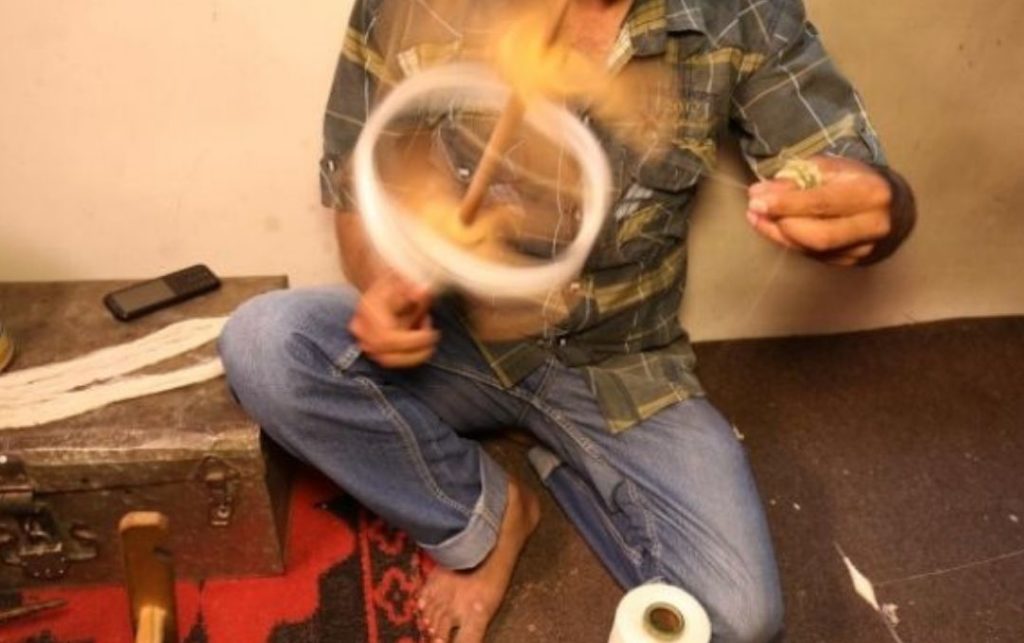
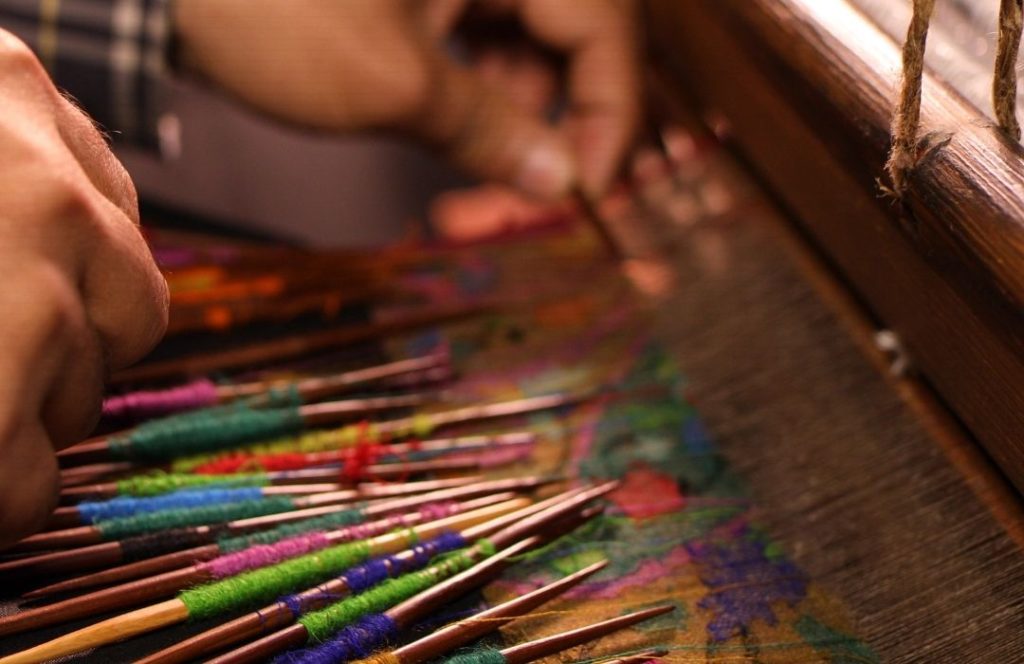
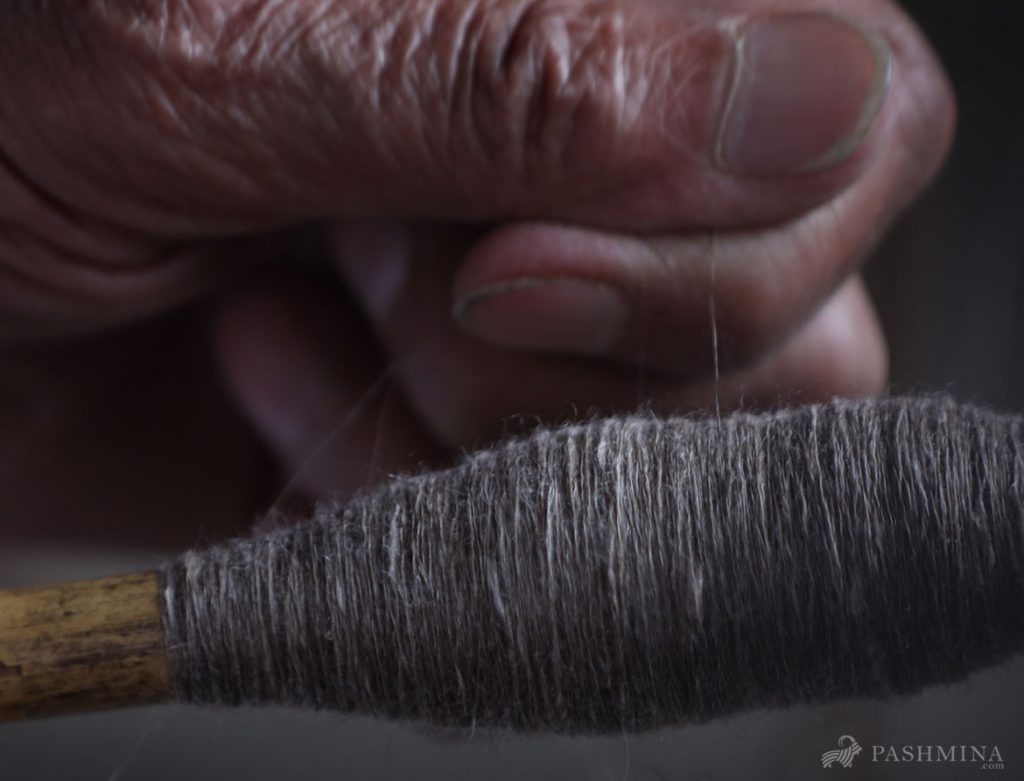
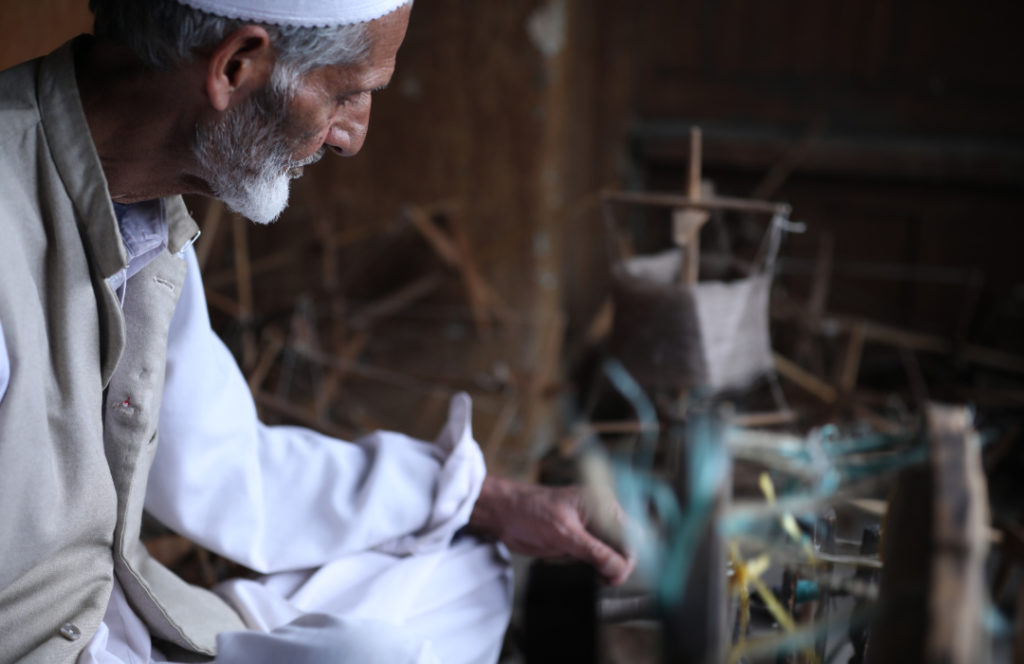
Women artisans spin the wool on a wooden spinning wheel to convert it into long yarns. The wheel can produce yarn as fine as ones having 12-15 microns diameter. Weavers collect these delicate yarn threads and mount the long yarn onto wooden handlooms, traditional to the valley. It should be noted that this handloom is not the handloom that is generally used, but native to Kashmir. It has a wooden strructure and artisans perform most of the activities manually over it. A scarf has the standard size of 70* 200 cm (approx)
Weaving a Pashmina scarf
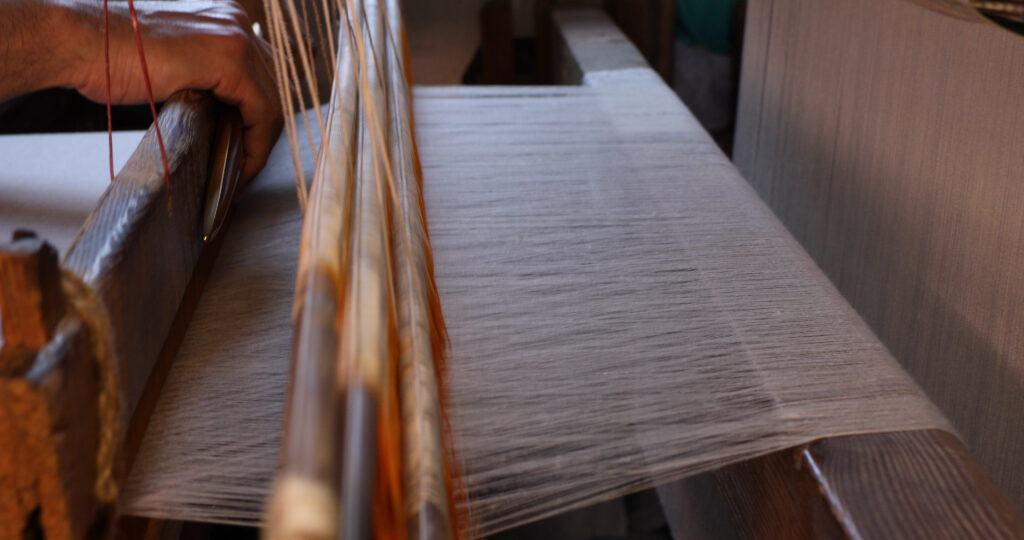
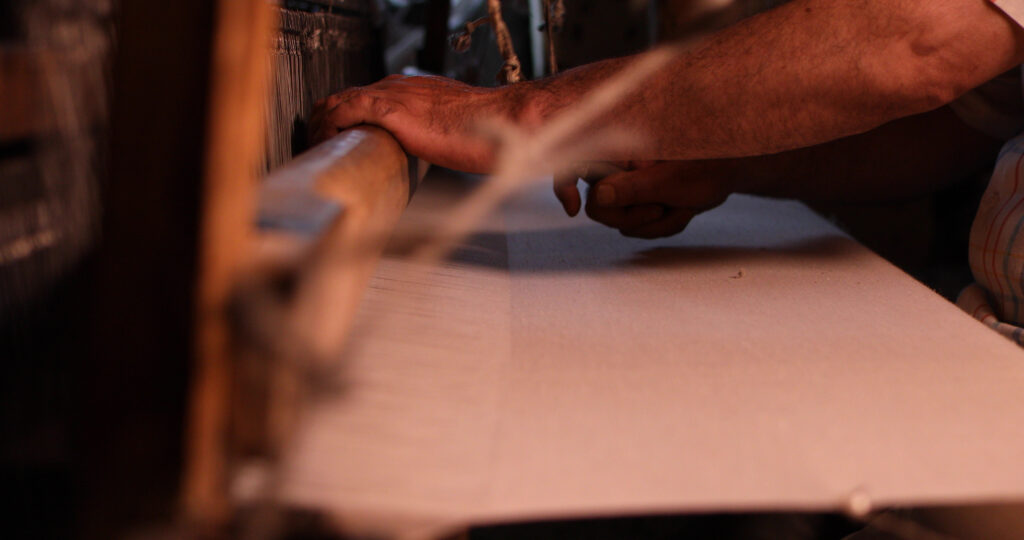
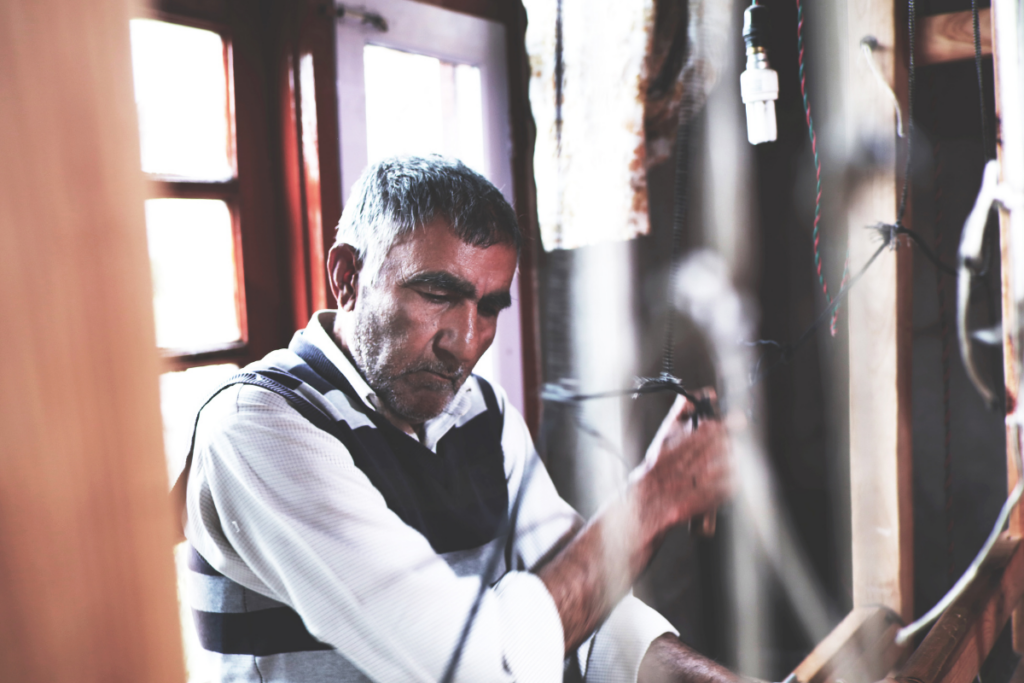
A Kashmiri artisan weaving a Pashmina on a traditional wooden loom
Two men sit at a time over a handloom and assist each other in weaving the entire piece. The workers are highly skilled weavers. They have experience of more than 30 or 40 years. At the end of three or four days, a plain Pashmina scarf is ready. Weavers send it for finishing touches like removal of extra fibres on the surface, trimming of edges, and embroidery.
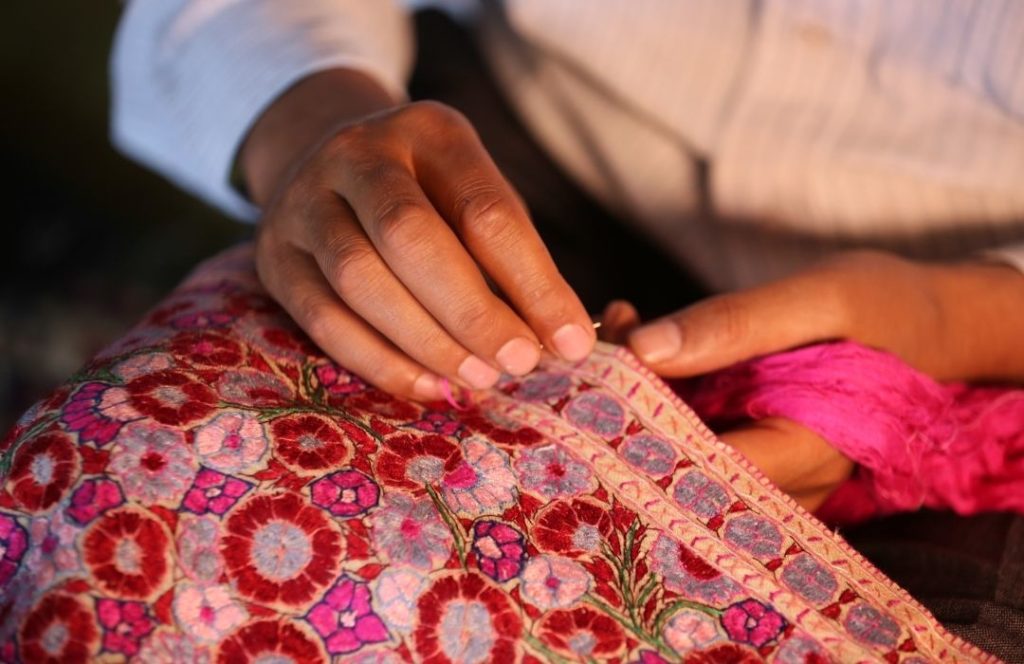
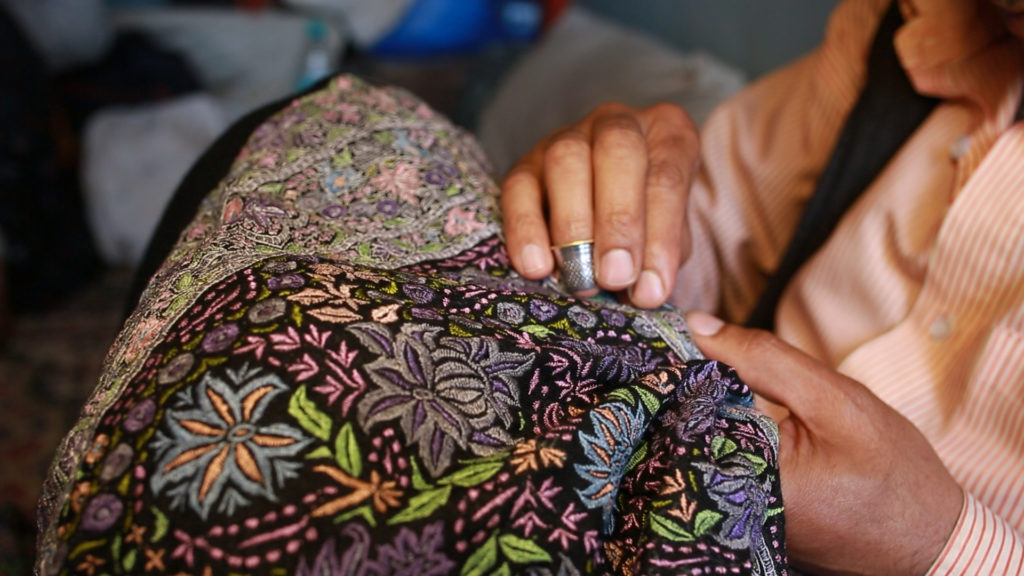
A Pashmina scarf can be an embroidered one. Artisans embroider it in three different patterns - Tilla Dozi, Papier Mache embroidery, and Sozni embroidery. It is up to the customer what he or she requires. Embroidery artisans do all the embroideries manually, using fine threads and needles. Colourful and intricate motifs leave the shawl looking classic and vintage.
What is a Pashmina Scarf?
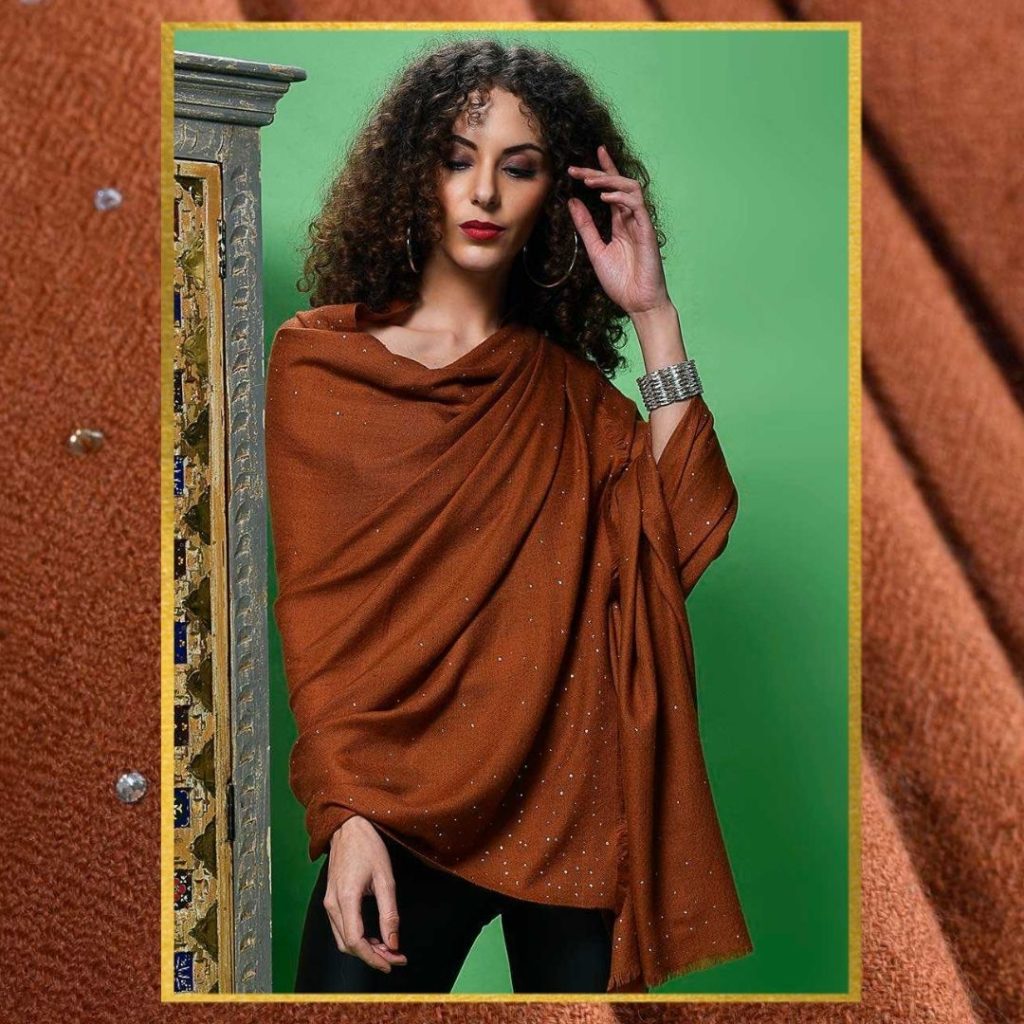
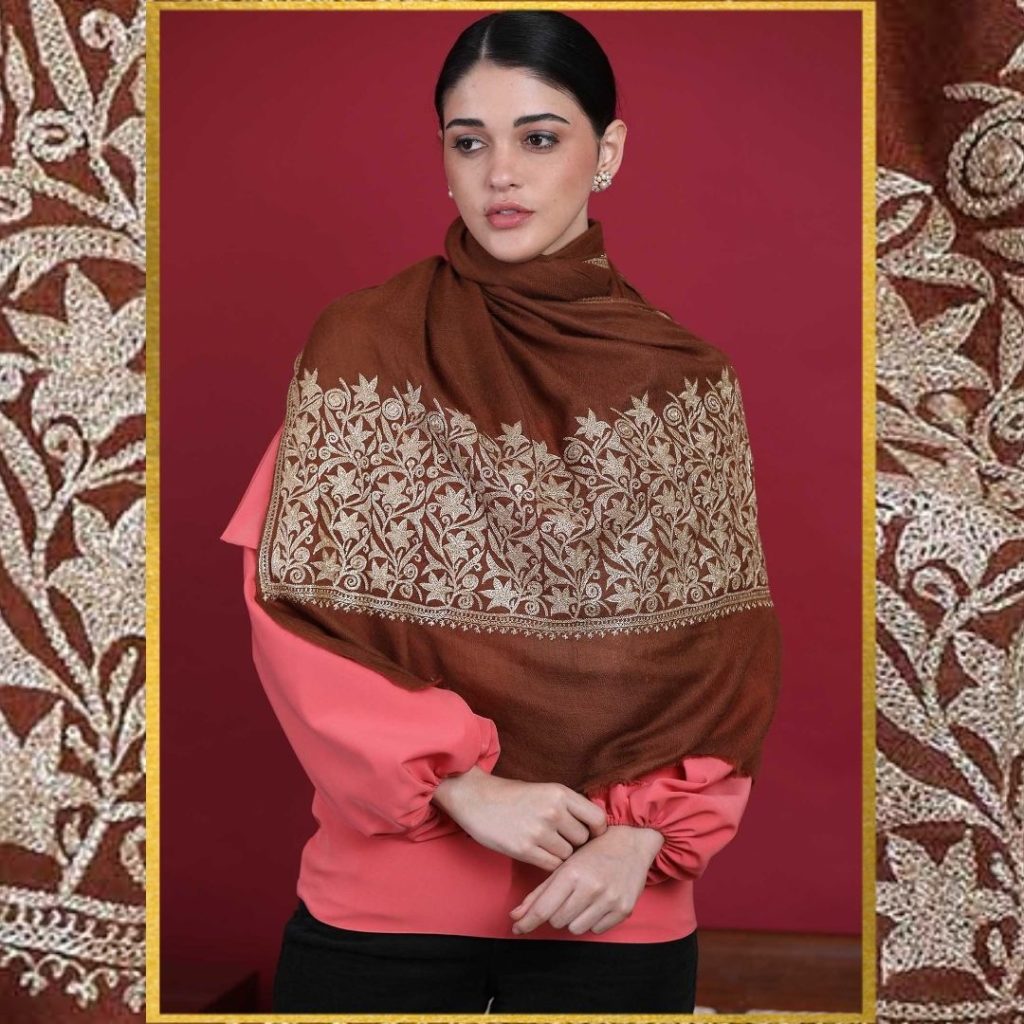
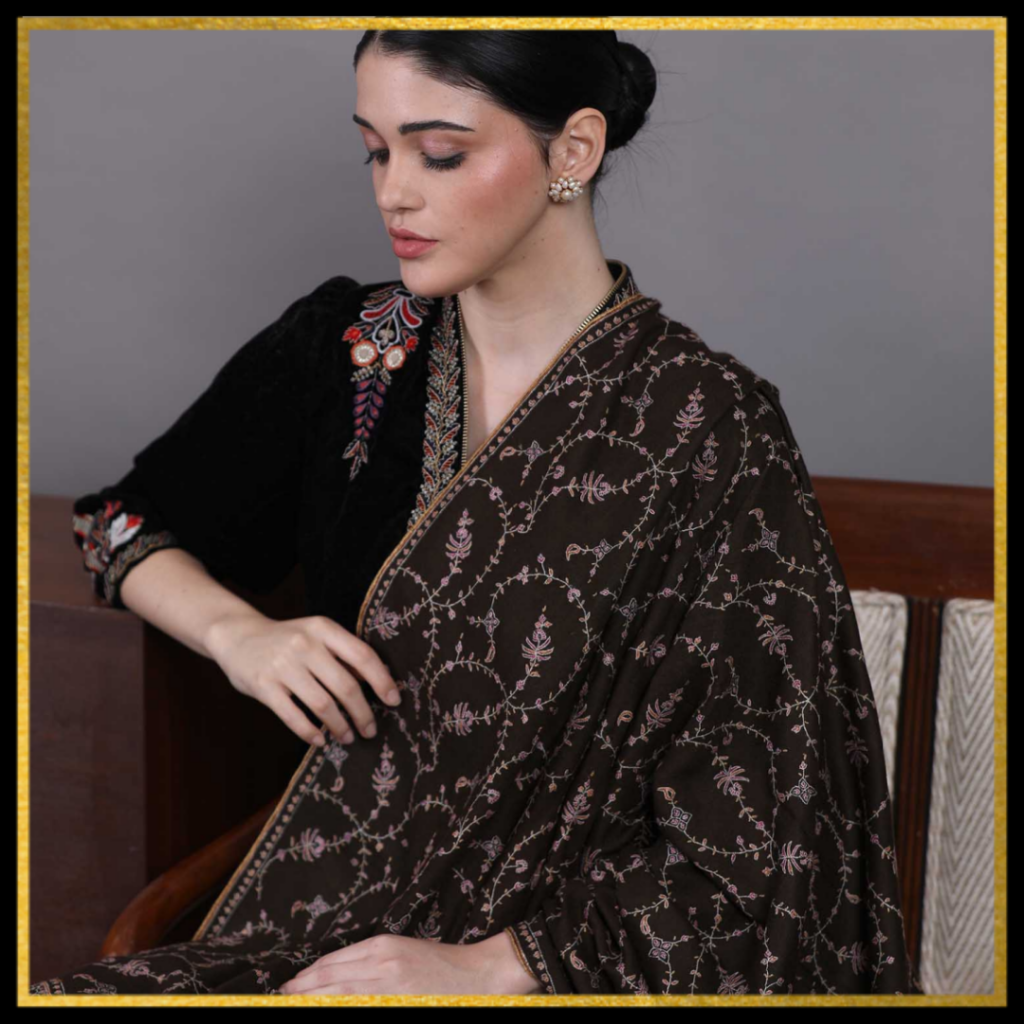
Featuring a play of brilliant Swarovski crystals over an intense brown shade, here is the world-famous Pashmina in a voguishly handcrafted wrap
Although it is Pashmina shawls that are more renowned, Pashmina scarves too are in huge demand. But what is a Pashmina scarf? It all began with the luxury fabric being used in royal courts as decorative items. Then Pashmina was used as a gift to present to rulers as 'khilat' to improve political relations. Gradually, as Pashmina spread in the west, it took different sizes and patterns. Westerners did start with embroidered shawls and Kani shawls, but they switched to a certain scarf size because their culture didn't support shawls. Hence, a size of 70*200 cm was carved out of the cashmere fabric and introduced as a scarf.
Pashmina scarf in Modern Times
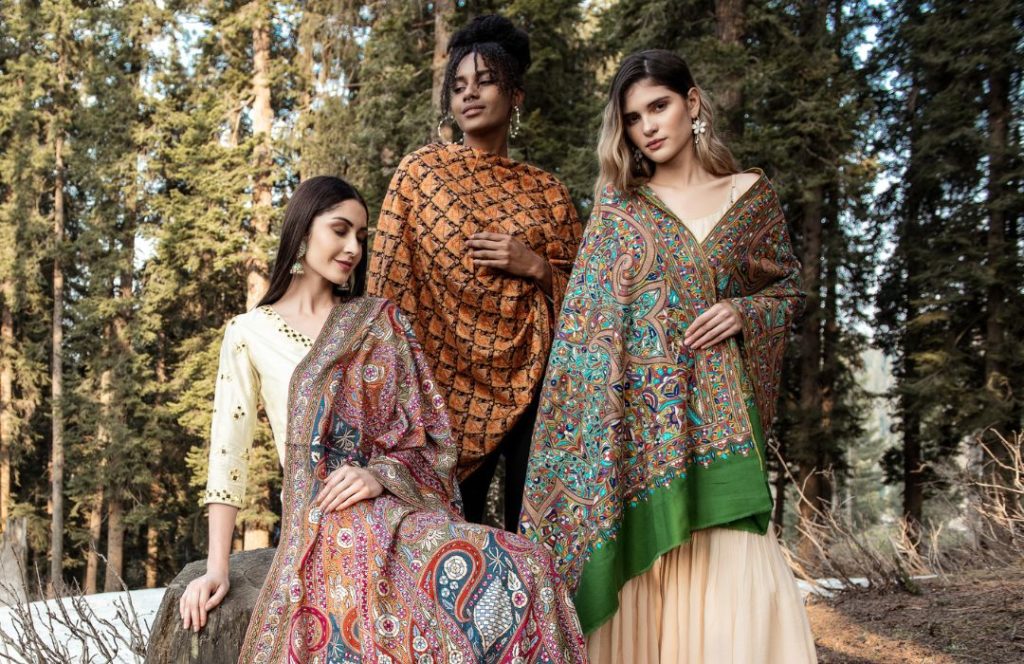
In the current times, Pashmina scarves are new modern accessories, which have been modernized to suit the new preferences. Instead of hand embroidery, new patterns like check and stripes, prints like animal and floral prints, and embellishments like laces and crystals have been bestowed upon these luxury pieces. Women now wear Pashmina scarves with western wear like jeans, skirts, and dresses. In fact, formal wear is even paired with nude shaded solid Pashmina scarves which give a sophisticated touch to the overall look.
The Purity of Pashmina Scarf | Sustainability
Even if Pashmina has managed to blend with modern preferences, it has lost the glory that it enjoyed once. While Pashmina scarves were only handmade, certain traders' greed compelled them to introduce mechanized Pashmina scarves, and hence ruin the trade altogether. To bear the strain of the machine, Cashmere yarn is mixed with nylon or any strengthening fibre. The scarf made in this manner doesn't remain pure. Pashmina art is a sustainable one and patronizes slow fashion since its conception. There is the least wastage, and the scarf remains with the owner for a long time only when it is pure. Pure Pashmina is believed to stay fresh for more than 20 years. The industry has survived small enterprises locally and still continues to do so.
Patterns in Pashmina scarves
Solid Pashmina scarves
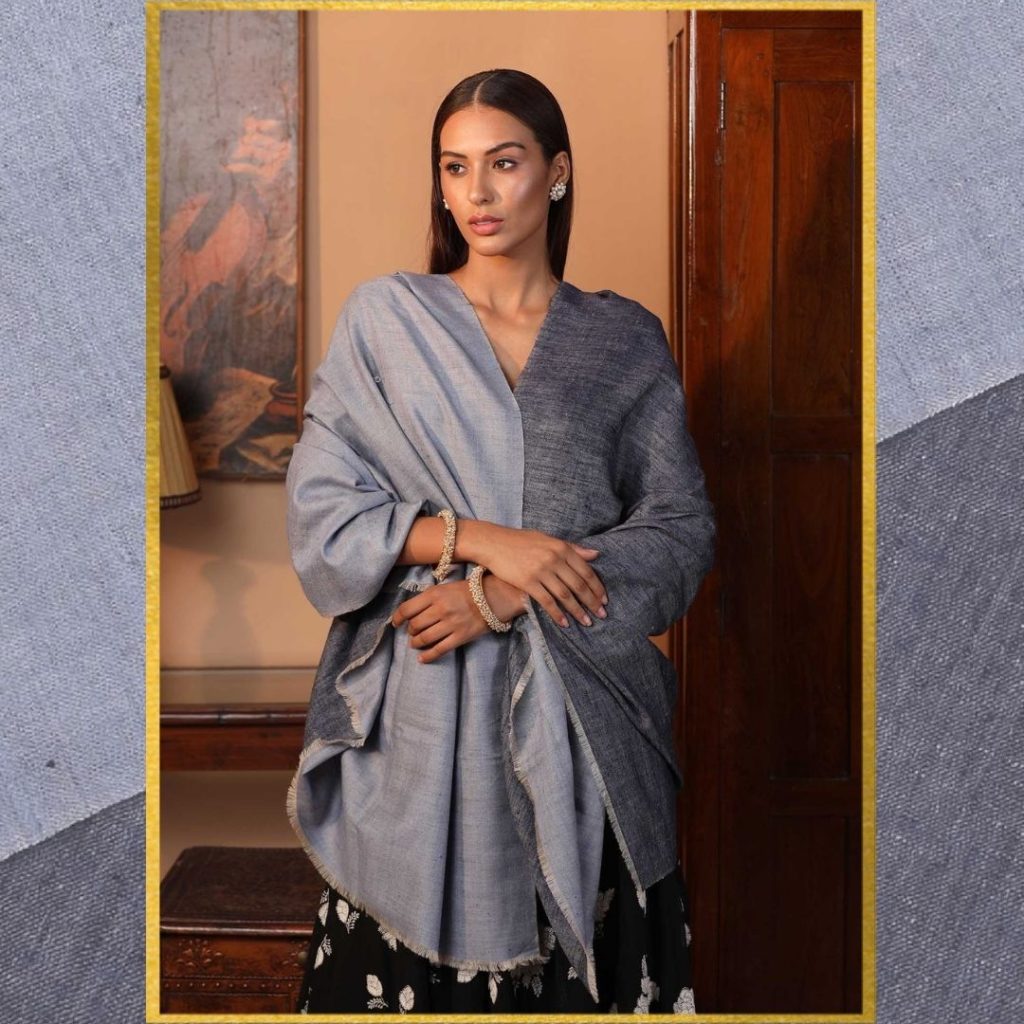
The soft fleecy feel of the shawl, owing to the fineness of the cashmere fibre is preserved by the art of handweaving
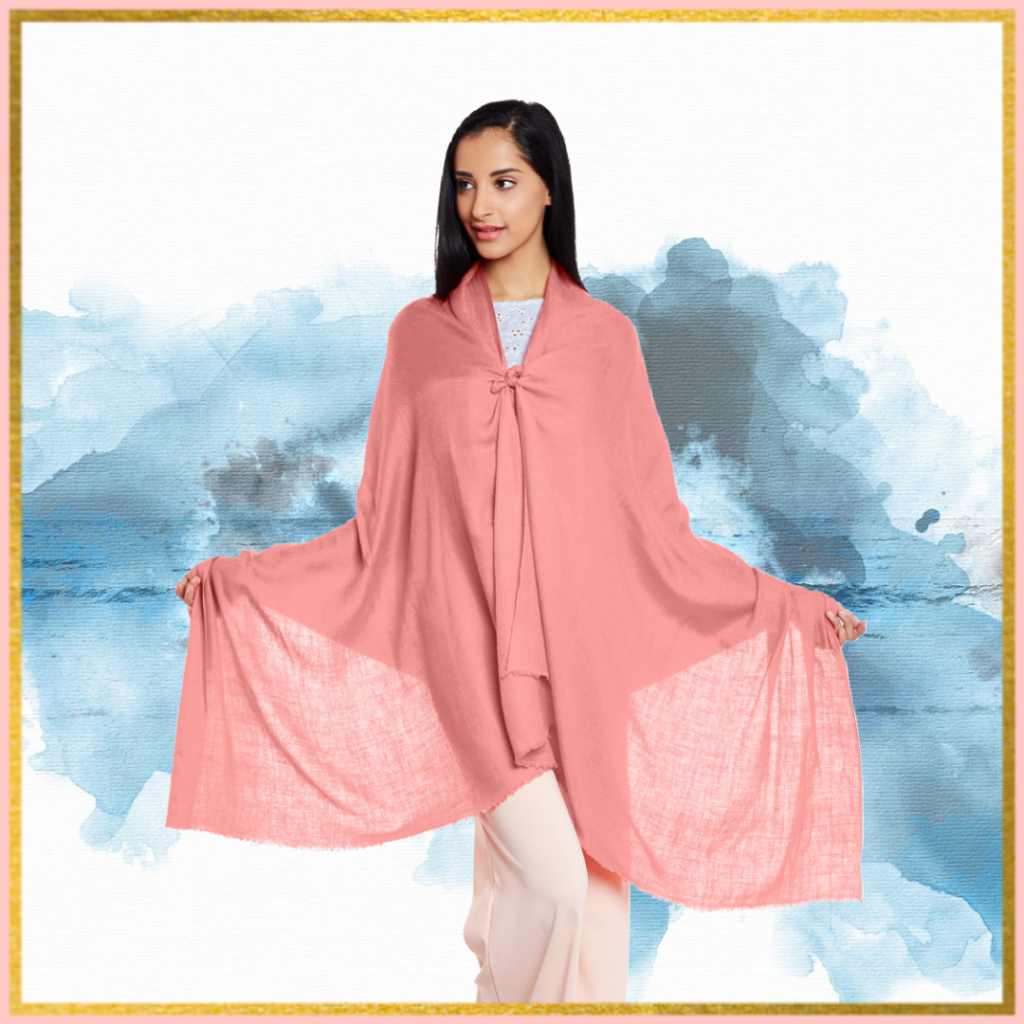
Solid scarves are kept plain, without any embellishments. Soon after hand-weaving them, solid Pashmina scarves are dyed, washed, dried, and ironed. Such scarves are ideal for formal and semi-formal outfits.
Printed and Patterned Pashmina scarves
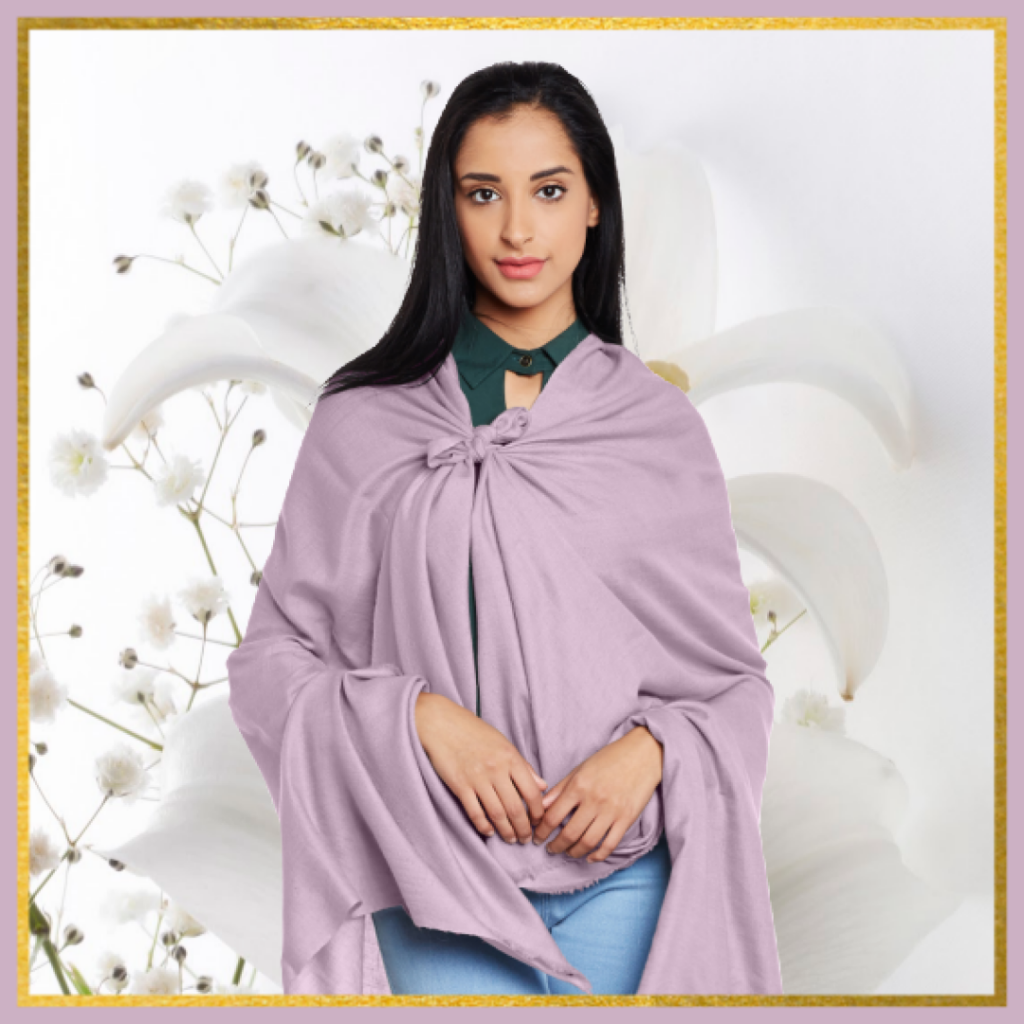
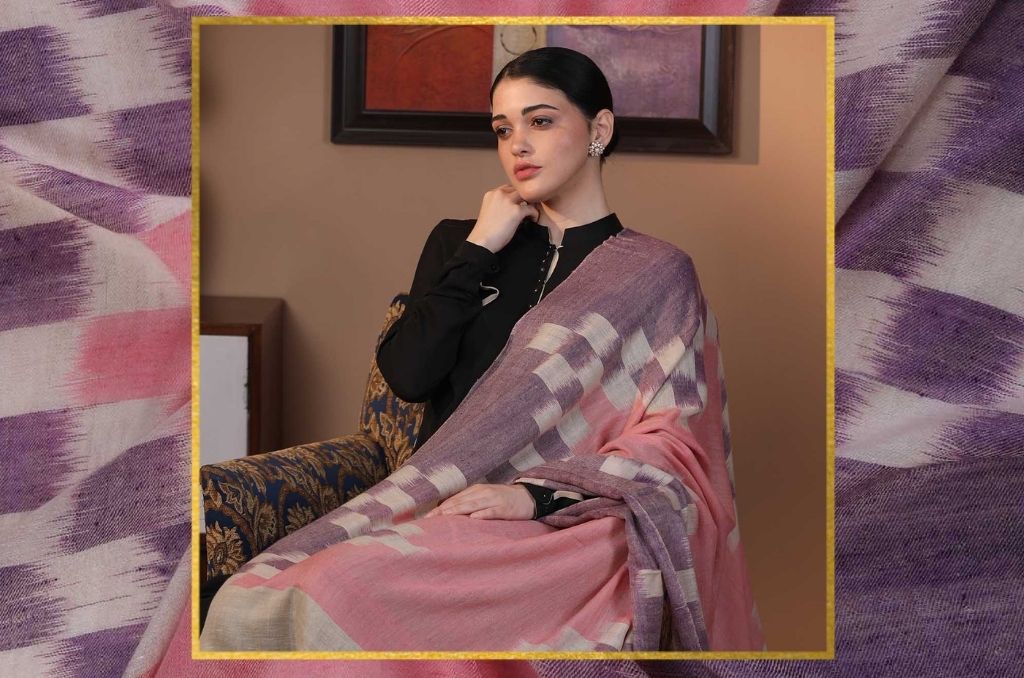
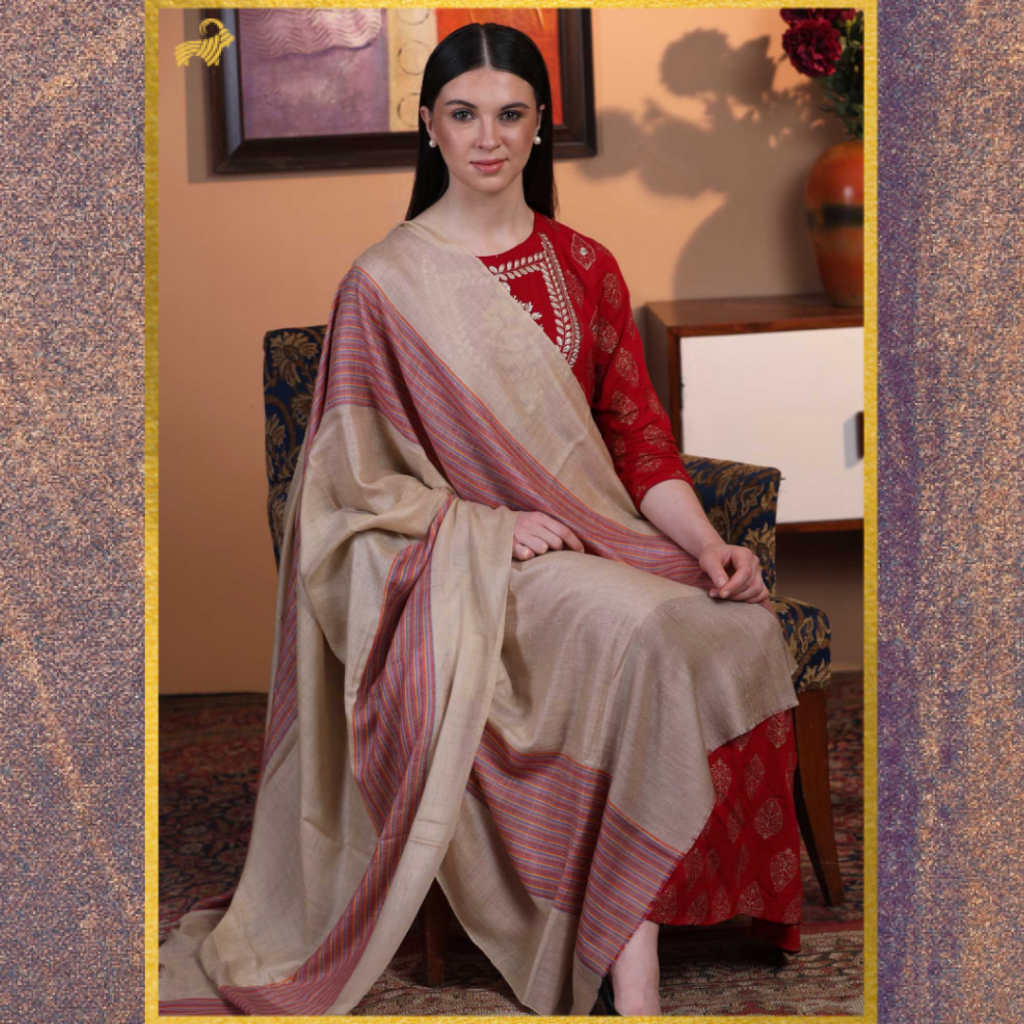
In a melange of muted pastel shades, the shawl is as comfortable as it is classy, making it an ideal choice for the devotees of timeless fashions
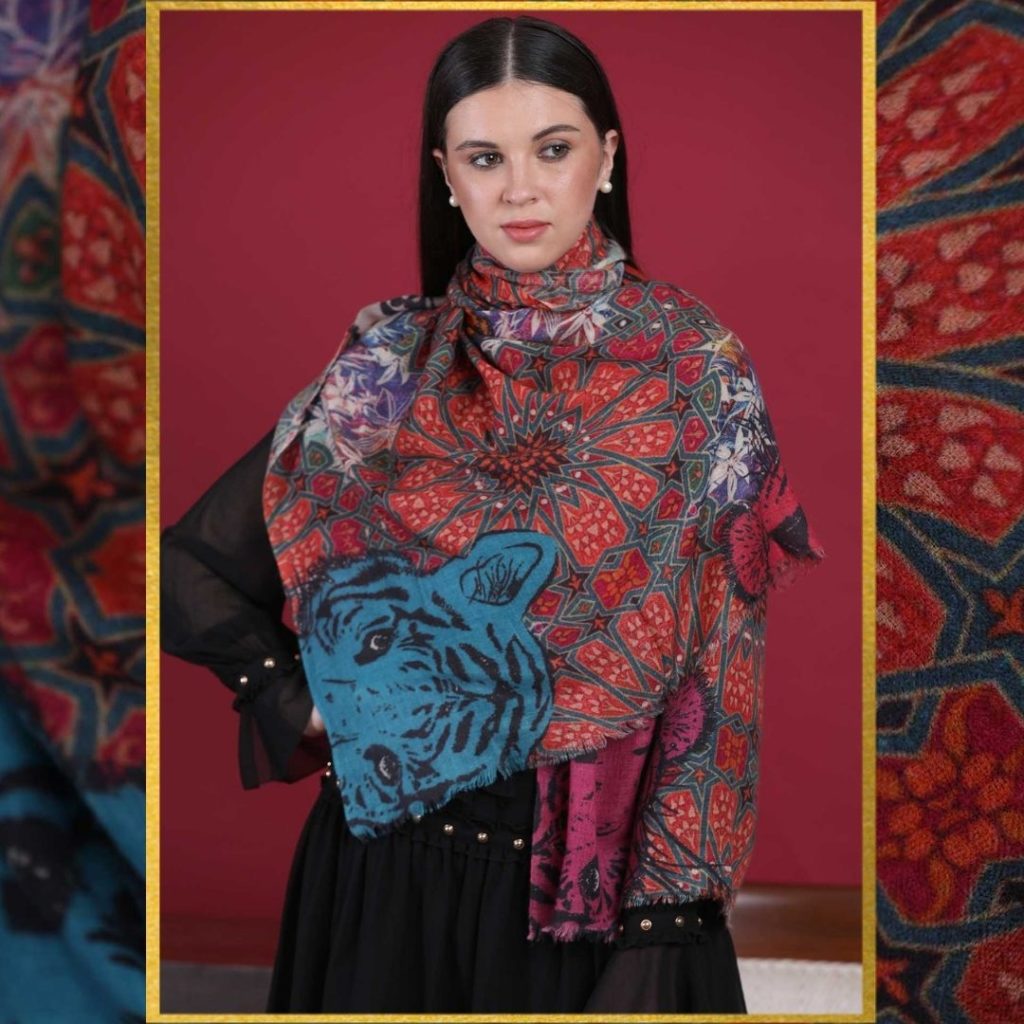
Printed scarves feature modern prints like floral prints, animal prints, or abstract prints. Patterned Pashmina scarves are patterned with checks, tartans, stripes, or ancient Mughal architecture-inspired patterns. These types of scarves are ideal for casual get-togethers with friends or weekend brunches with family
Reversible Pashmina scarves
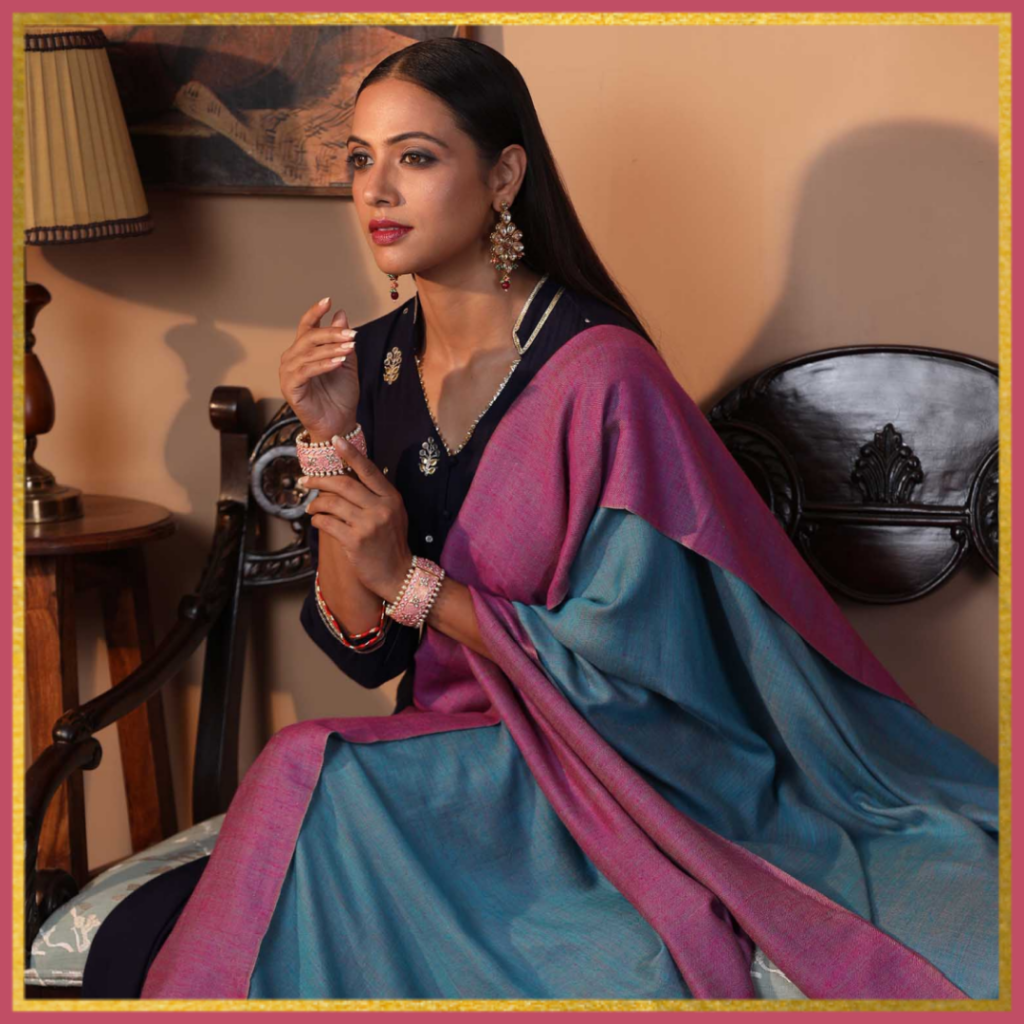
The traditional Pashmina gets a surprise modish twist when it gets handwoven in the Do Rukha or reversible pattern in quirky shades of pink and blue
Reversible Pashmina scarves are a marvel, in the sense that they feature a unique type of weave. The scarves are woven such that the front and the backside are a mirror image of each other, and the scarf looks ravishing from both sides.
Swarovski and Lace Pashmina scarves
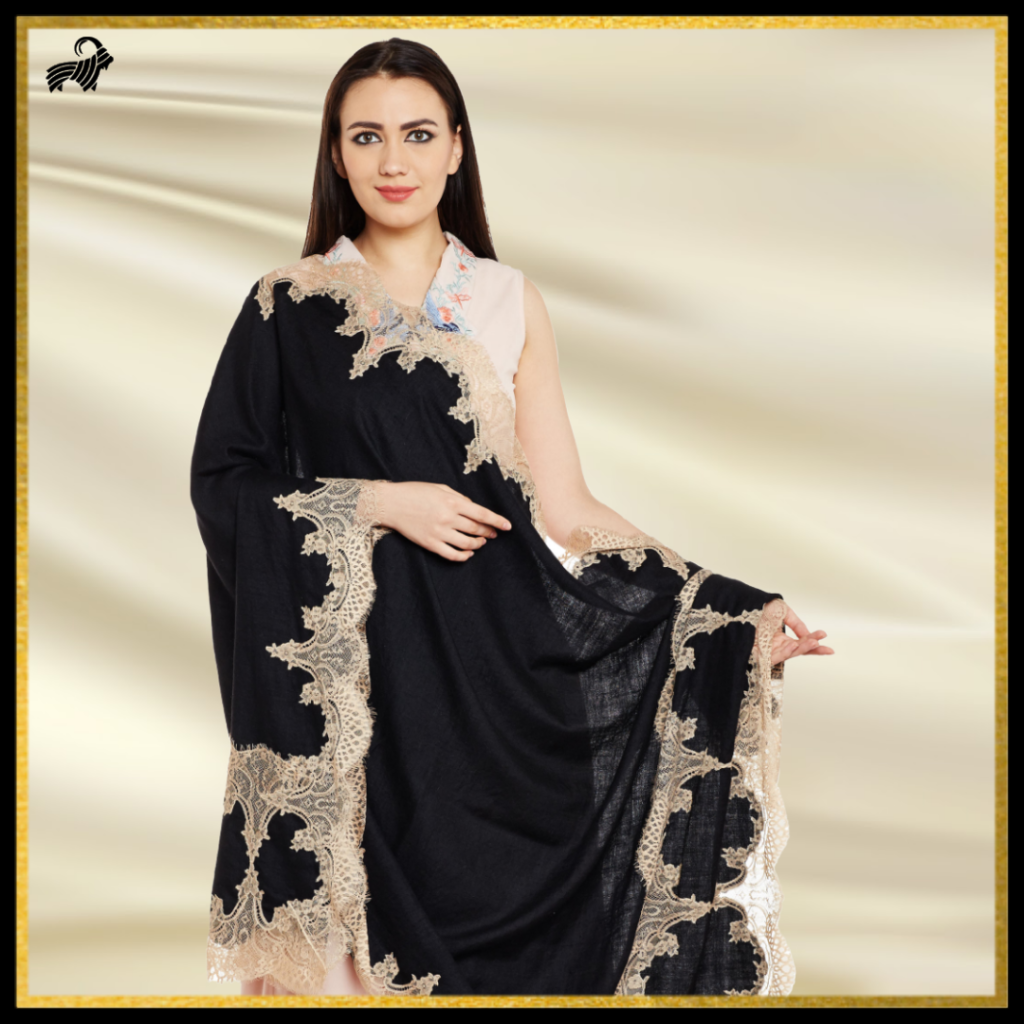
Exhibiting the skill of the golden hands, which never tire of transforming a simple fabric into a masterpiece, here is the grand Kashmiri Pashmina shawl with a modish tryst
Semi-formal events demand something formal as well as chic. For such occasions, Pashmina scarves have been embellished with Swarovski crystals or French laces for a dainty look for semi-formal events. These types of scarves can be gifted to a bride-to-be, and she can drape them on after wedding events.
Kani Pashmina scarves
For a three feet wide length of a Kani Pashmina, around 400 kani sticks are used
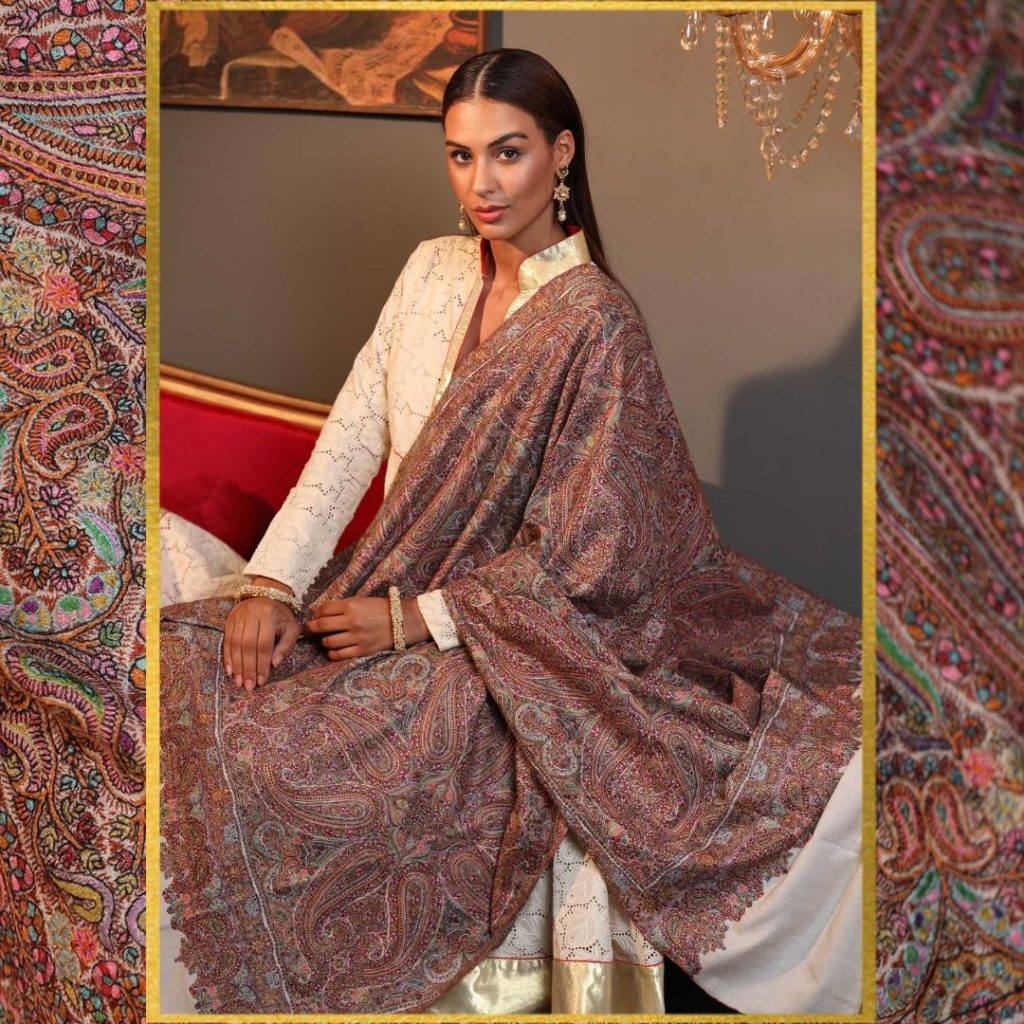
Heavy Kani scarves are a bit on the expensive side of the price scale. Kani work is really meticulous and takes even years to complete. Hence, these are draped on weddings and special events where ardent patrons of handicrafts are expected to gather
Hand Embroidered Pashmina scarves
Handmade and hand-embroidered scarves are luxury gifting pieces. People have used them as royal gifts for centuries in Kashmir. And even now in Kashmir, a mother gifts her daughter a pure Pashmina, as an important part of her wedding trousseau. There are a number of embroideries that artisans do on Pashmina scarves. A few of them are:
Sozni Embroidery
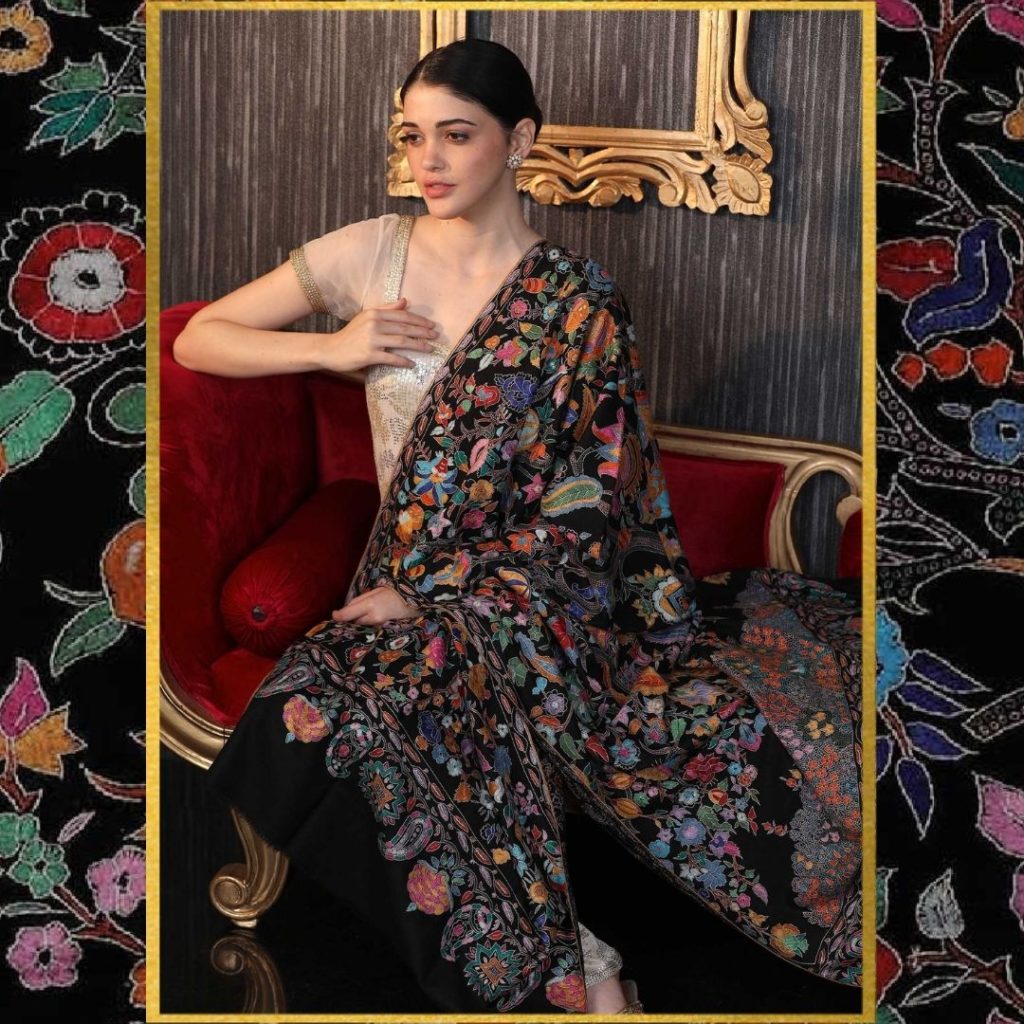
Handcrafted over a wooden loom, the wrap features local hand embroidery that spans every inch of the delicate Cashmere base
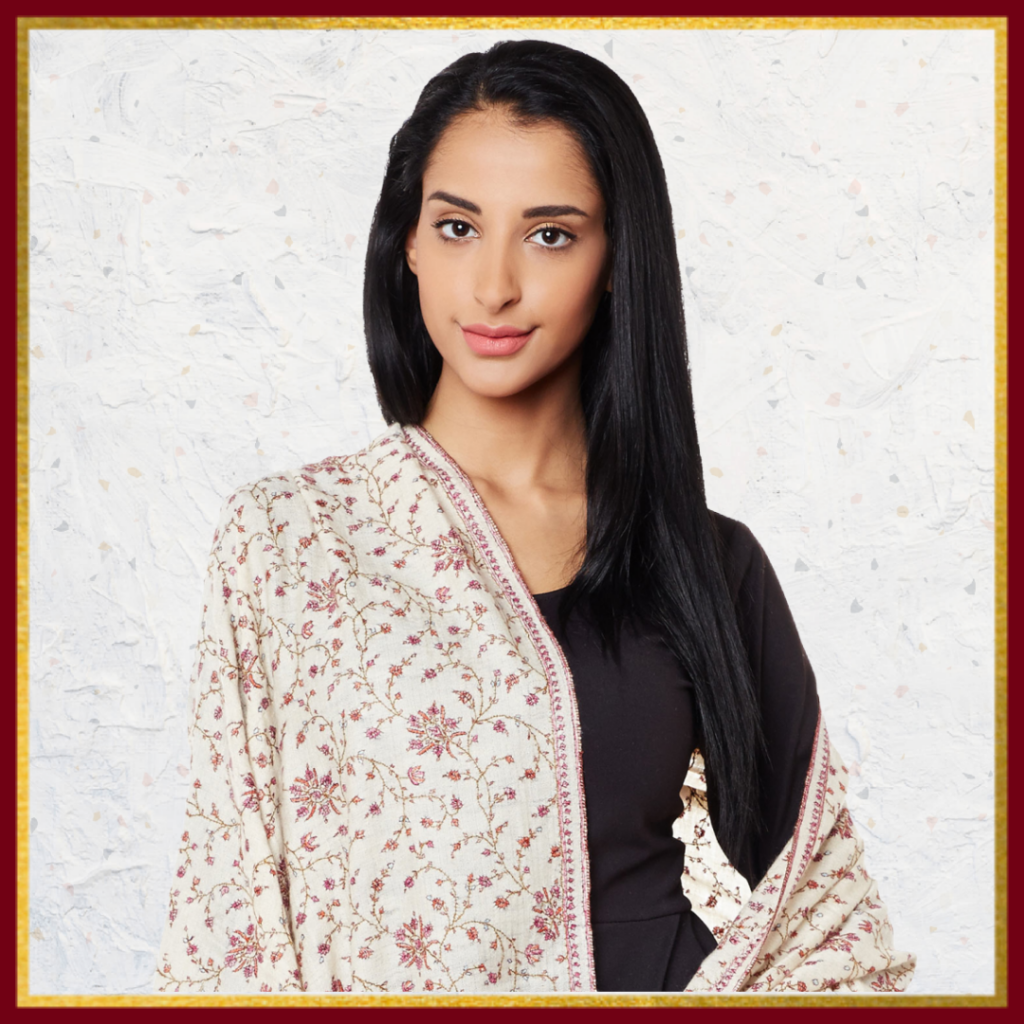
Sozni embroidery is thread embroidery that artisans do by hand. It includes fine threads and needles with which highly experienced embroidery artisans create intricate motifs for days together. A fully hand embroidered scarf often takes years together to complete. Sozni scarves are ideal for everyday use, or fully embroidered ones might help with special occasions.
Papier Mache Embroidery
A Pashmina shawl hand embroidered in colourful Papier Mache embroidery
Papier Mache embroidery uses brighter and thicker threads than those used in Sozni embroidery. Usually, artisans use silk threads with bright colours. As such, this embroidery gives a deeper effect and the motifs thus created look more protruding and attractive. Papier Mache embroidery is usually thick and deep shaded, hence women often wrap Papier Mache scarves on festive occasions or weddings. Those with Jamawar embroidery patterns spread all over the base are kept safe for brides. Brides wear Jamawar shawls as they bid goodbye to their home place.
Tilla Embroidery
The Pashmina shawl is hand embroidered in Zari Kari that showcases India's proud possession of heritage architecture, especially in the Mughal era
Tilla embroidery, in ancient times, was so expensive that only royalty could afford it. This was because it used real gold and silver threads to create motifs over the base. But nowadays Tilla uses threads of metal dipped in gold or silver. This embroidery makes the stole look straight out of a royal wardrobe. Tilla embroidered shawls and scarves are mostly for weddings and bridal purposes. Some also give these as gifts to those valued the most.
Why Pashmina Scarves have High Valued
Pashmina scarves are famous for their unparalleled luxury and exquisite craftsmanship, making them highly sought-after accessories. But what is a Pashmina scarf that makes it so valuable?
Firstly, the intrinsic quality of the material plays a crucial role. Pashmina comes from the soft undercoat of Changthangi goats, found in the high-altitude regions of Ladakh. This cashmere wool is incredibly fine and soft, offering a warmth that surpasses regular wool while remaining lightweight. The unique properties of Pashmina wool contribute significantly to the scarf’s exceptional comfort and elegance.
The craftsmanship involved in creating Pashmina scarves adds to their value. The process is meticulous and labor-intensive, with artisans hand-combing the wool, spinning it into fine threads, and weaving it on traditional looms. Each scarf undergoes an intricate process of hand-weaving and sometimes embellishment with detailed embroidery. This craftsmanship ensures that every Pashmina scarf is not only a piece of clothing but also a work of art.
Additionally, Pashmina scarves have a rich cultural heritage, which enhances their desirability. Originating from the royal courts of Kashmir, Pashmina associates with luxury and sophistication for centuries. The historical significance and the tradition of its production elevate its status as a high-value item.
Finally, the versatility and timeless appeal of Pashmina scarves make them a desirable addition to any wardrobe. One can style them in numerous ways, making them suitable for both casual and formal occasions. This adaptability, combined with their inherent beauty and comfort, ensures that Pashmina scarves remain a cherished and valuable accessory.
In summary, the value of a Pashmina scarf lies in its exceptional material quality, intricate craftsmanship, rich cultural heritage, and versatile styling options. Understanding "What is a Pashmina scarf" highlights why people around the world highly value them.
Caring for Your Pashmina Scarf: Tips for Longevity
To maintain the beauty and longevity of your Pashmina scarf, follow these essential care tips.
1. Hand Wash Gently Always hand wash your Pashmina scarf in cold water using a mild detergent designed for delicate fabrics. Avoid hot water as it can shrink the fibers. Gently agitate the water and let the scarf soak for about 10-15 minutes. Avoid wringing or twisting the fabric, which can damage its texture.
2. Rinse Thoroughly Rinse the scarf in cold water until all soap residues are gone. Gently press the water out without wringing.
3. Dry Carefully Lay the scarf flat on a clean, dry towel to air dry. Reshape it gently to its original form. Avoid hanging the scarf or exposing it to direct sunlight, as this can cause stretching and fading. Do not use a tumble dryer, as the heat can damage the delicate fibers.
4. Store Properly Store your Pashmina scarf in a cool, dry place. Keep it in a breathable garment bag or a cotton pillowcase to protect it from dust and moisture. Avoid storing it in direct sunlight or in a damp environment.
5. Avoid Frequent Washing Pashmina scarves do not need frequent washing. Instead, air them out after wearing to refresh the fabric. For minor stains, spot clean with a damp cloth and mild detergent.
By following these care tips, you ensure that your Pashmina scarf remains in excellent condition, retaining its luxurious feel and timeless elegance for years to come.
Conclusion
To have a pure Pashmina scarf is always better than having the one whose purity you doubt. Always choose a trustworthy seller when you buy a Pashmina. When you buy an authentic piece, it is thousands of local underprivileged Kashmiri artisans whose efforts you are supporting and whose art you are encouraging. Besides an authentic Pashmina will carry an unmatched grace and keep you ever stylish and comfortable for years to come.
The Pashmina shawl is one of the most sought-after wraps around the globe. Makers have fashioned Pashmina shawls through a lengthy and labour-intensive process. Herders ethically acquire fine Cashmere wool from a Himalayan goat and artisans process it for years to furnish the world-famous Kashmiri Pashmina. It is not only the process that makes it special but a number of other things too. These features make it popular amongst known celebrities and it has been so since the 15th century
What is Pashmina?
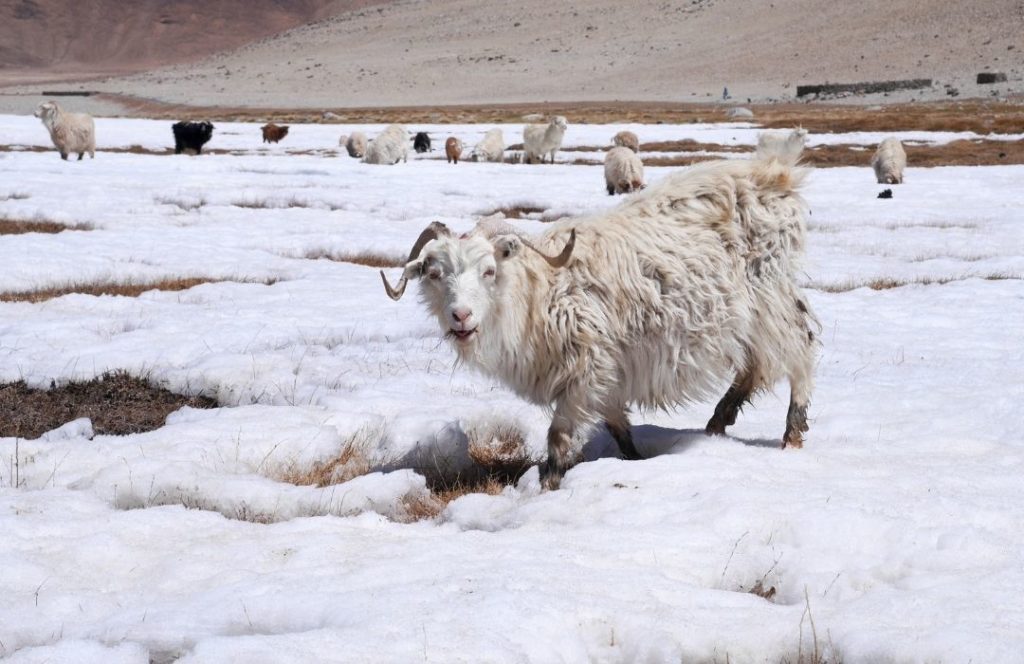
Himalayan Cashmere goat in Ladakh region
To know what is so special about Pashmina shawls, we need to know what Pashmina is. Pashmina is the art of handcrafting luxury apparel and accessories from the downy undercoat of the Himalayan goat. The goat dwells in the Changthang area of Ladakh - India.
This region over 14000 feet above sea level is home to a community of herders. The Changpa tribe has been occupying the region for decades now. It is they who rear an exotic species of goats - known as Changthangi goats. And it is them who take us to the first milestone in Pashmina making, i.e., collecting wool from the goat.
When it comes to surviving in the Changthang region, the weather, temperatures, and life are all quite challenging if not impossible. Already, the place cuts itself off from the rest of the world during snowfall in winter, and the temperature too is severe and troubling. In winter, Changthang experiences a temperature dip of -40 degrees Celsius making life an uphill climb. And it seems that no sign of life would be possible in such conditions, but there is. The Changpa tribe and their goats do manage to survive even in such grim circumstances. How the people manage life here is indeed difficult to perceive, but how the goat survives is even more fascinating.
Stunning land of Ladakh
To survive a temperature of -40 degrees, nature has bestowed the Changthangi goat with fine Cashmere wool which grows over its underbelly neck and some sensitive areas of its body. The wool is delicate, fine, and exceptionally warm. This wool acts as an insulator and keeps the goat warm and active. Even though the diameter of this fine wool is just 12-16 microns, its warmth is such that never has an animal died due to cold, as long there was Cashmere over its body!
Collecting Cashmere wool
Cashmere goat gently being combed
In winters the same wool which helped the goat survive, makes it uneasy as soon as summer arrives. And why shouldn't it? After all, wool has extraordinary warmth and comfort. Feeling the same, the goat rubs itself against surrounding rough areas leaving some portion of the wool helter-skelter. Herders watch this agony and seek professional help to gently comb off the rest of the wool from the goat's body. Professionals arrive and use specialized tools, combs, and blades. This process takes a long time, as the professionals have to make sure that the animals aren't harmed a bit.
People often ask "Why are Pashmina shawls famous in Ladakh". Well firstly, Pashmina shawls are more famous all over the world than they are in Ladakh, the reason being affordability. Secondly, there are many women and men who love to wear Pashmina in Ladakh too due to its insulating and warming properties. Nothing is as warm, lightweight, and comfortable in winter as Pashmina shawls are. Hence be it Ladakh or any part of the world, Pashmina receives admiration in winter, as well as in fall or Spring.
People often ask, "What is so special about Pashmina". And we believe it is the entire journey from start to end that makes it special.
As soon as herders collect the wool, the animal is free but the wool is in a lump. To make it processable, herders clean it and send it to Kashmir. Kashmir is the place where masterly skillful artisans are able to process Cashmere manually. On its arrival in the valley, workers again clean Pashmina and later sort it and that's how the entire process begins. After cleaning and sorting, workers hand it over to womenfolk of the valley who spin it over a wooden spinning wheel. This step is crucial, as the gentle cashmere wool is easily breakable even by manual stress. Women, by a regular motion of hands and the wheel, make it possible to convert the lump of wool into fine threads, sometimes barely visible. Women assemble these fine threads for many days till a sufficient quantity is flocked together. Now is the time for weaving.
Handweaving of Pashmina
Weavers are usually men. As the Cashmere fibre reaches their handloom units, they sit in combinations of two or three and start weaving the fibre into the fabric. After an arduous process of 4-5 days, a luxurious and exquisite Pashmina shawl is contrived, still in its basic form.
Further processing
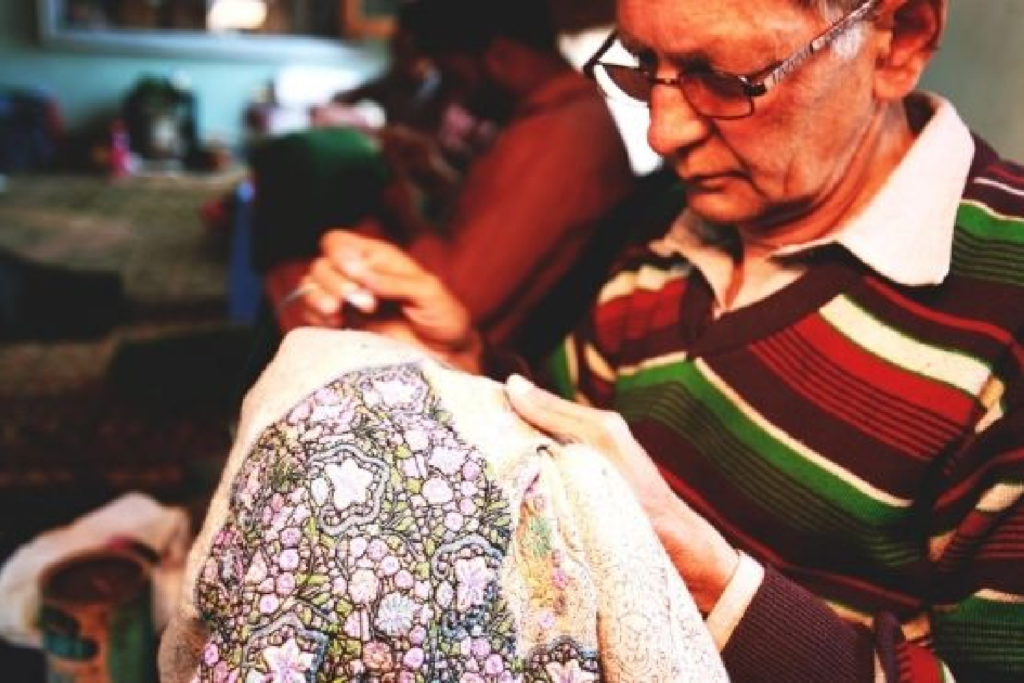
Artisan embroidering intricate designs on a Pashmina shawl
From the handloom unit, the shawls pass on to washers, who wash it on river banks. Then to dyers, who colour it as per the customers' preferences, and then again wash it. Later the shawl travels to embroiderers, who make simple solid shawl masterpieces. Hand embroidering each shawl might take several years depending upon the design. Artisans now work on Sozni embroidery and Papier Mache embroideries on Pashmina using fine threads and needles to cover the base in intricate designs. Tilla Dozi on the other hand uses metallic threads dipped in gold and silver to cover the base in shimmery classic motifs
Other than embroidery, a shawl can be patterned, printed, ombre dyed, or woven in Kani style. Being feathery light and unusually warm, the shawl looks as beautiful as it is comfortable. Not only shawls but huge demand from all over the world has led artisans to convert Cashmere wool into scarves, stoles, hijabs, handkerchiefs, sweaters, robes, and many more apparel and accessories.
Pashmina runs in families
Pashmina has been special since it was discovered in the 15th century by Syed Ali Hamdani, who was a Persian saint and had come to visit Kashmir. Along with 700 craftsmen, he was responsible for training locals in handicrafts, one amongst which was Pashmina making. This was the art that was chosen by the most number of people, as it was preferred by royals of that time. Royal courts would have furnishing made in Cashmere. Pashmina was revered by Kashmiris and Kashmiri artisans were respected all over the world. They were the most well-known people of their time.
Pashmina was back then a family affair. While some women would clean or spin Cashmere, men of the family would weave and embroidered shawls. Hence a Pashmina shawl would be a brand belonging to one or the other family. At a certain time, when the economy fell, women would sell pieces of their Pashmina to make some money. Hence Pashmina has an emotional connection with the people of the valley, and it is such that even after the industry is on the verge of extinction, it is these 70 and 80-year-olds, who haven't let go of it.
The balletic gaze of the intricate hand embroidery illicitly defines the charms of the Pashmina shawls
Pashmina shawls, often regarded as the epitome of luxury and elegance, hold a special place in the world of fashion and textiles. These exquisite shawls are cherished for their unparalleled softness, lightweight warmth, and timeless appeal. In this section, we'll uncover what is so special about Pashmina shawls and why they are prized by connoisseurs worldwide.
Origin and Heritage
Pashmina shawls have their origins in the high-altitude regions of the Himalayas, particularly in countries like Nepal, India, and Tibet. They are crafted from the wool of the Changthangi goat, also known as the Pashmina goat, which is native to these harsh and remote terrains. The word "Pashmina" is derived from the Persian word "pashm," which means wool, and it reflects the Persian influence on the trade of these shawls centuries ago.
Exceptional Softness
Artisan stretching the cashmere to check the fineness of the fibre
What is so special about Pashmina shawls is their exceptional softness. This unparalleled softness is attributed to the fineness of the Cashmere wool fibres, which are incredibly thin, measuring between 12 to 15 microns in diameter. To put it into perspective, these fibres are much finer than a human hair.
The fine diameter of Cashmere fibres allows them to be woven into exceptionally lightweight and soft fabrics. When you touch a Pashmina shawl, you experience a level of softness that is hard to replicate with other materials. The luxurious sensation of draping a Pashmina shawl around your shoulders is akin to being enveloped in a cloud of warmth and comfort.
Warmth Without Bulk
Handcrafted in the warps and wefts of the most luxurious fibre in the world, Kashmiri Pashmina
Despite their lightweight nature, Pashmina shawls are renowned for their remarkable warmth. The fine Pashmina fibers have natural insulating properties that trap warm air close to the body, providing an incredible level of warmth without the bulk that often comes with other winter accessories.
This unique combination of softness and warmth makes Pashmina shawls the perfect choice for staying cozy in colder weather without feeling weighed down by heavy layers. They offer a comfortable and elegant solution for warding off winter's chill. As such when patrons ask us "What is so special about Pashmina shawls?", we recommend they wear them once to feel the luxury.
Versatility in Styling
Pashmina shawls are incredibly versatile when it comes to styling. Their generous size allows for a myriad of ways to wear them. You can drape a Pashmina shawl over your shoulders for an elegant and classic look or wrap it around your neck as a scarf for added warmth. The fine fabric drapes beautifully and adds a touch of sophistication to any outfit.
These shawls are equally at home with casual attire or formal wear. Whether you're wearing jeans and a t-shirt or a cocktail dress, a Pashmina shawl can effortlessly elevate your style. The versatility of Pashmina shawls makes them suitable for various occasions, from everyday wear to special events. This versatility answers the question "What is so special about Pashmina shawls?"
Pashmina shawls come in a vast array of colours and designs, ranging from solid, classic shades to intricate patterns. This diversity allows you to find a Pashmina shawl that suits your personal style and complements your wardrobe.
Some Pashmina shawls feature intricate embroidery or hand-painted designs, adding a touch of artistry and craftsmanship to the already luxurious fabric. These details can make each Pashmina shawl a unique work of art.
Cultural Significance
What is so special about Pashmina shawls is their deep cultural and historical significance, particularly in the regions where they are produced. In Kashmir, India, for example, Pashmina weaving has been a traditional craft for generations. The art of crafting these shawls has been passed down through families, and it plays a vital role in the local economy.
A Muslim shawl-making family shown in Pashmina shawl manufactory, 1867, chromolith., William Simpson.
Pashmina shawls have also been favored by royalty and dignitaries throughout history. They have been exchanged as gifts between leaders and have been worn as a symbol of prestige and honour.
Artisanal Craftsmanship
Making of Pashmina Shawl
The creation of Pashmina shawls involves a labour-intensive and meticulous process. From collecting the wool during the molting season of Pashmina goats to sorting, cleaning, spinning, and weaving, each step is performed with great care and skill by skilled artisans. This feature is so special about Pashmina shawls.
The handcrafted nature of Pashmina shawls adds to their allure. It reflects the dedication and craftsmanship of the artisans who bring these luxurious creations to life.
Investment in Quality
Pashmina shawls are often considered an investment in quality and elegance. While they may come with a higher price tag compared to mass-produced accessories, their durability and timeless appeal make them a valuable addition to your wardrobe.
With proper care, a well-made Pashmina shawl can last for many years, and its classic design ensures that it won't go out of style. This longevity makes Pashmina shawls a sustainable and eco-friendly choice compared to fast fashion trends.
In recent years, there has been an increased focus on ethical and sustainable practices in the production of Pashmina shawls. Concerns about the treatment of Pashmina goats and the environmental impact of overgrazing have led to efforts to promote responsible and sustainable Pashmina production.
Many ethical brands and organizations are working to ensure fair wages for artisans, humane treatment of animals, and conservation efforts in the regions where Pashmina is produced. When purchasing Pashmina shawls, consumers can choose to support these ethical practices. What makes Pashmina shawls so special is the fact that these are easy to produce ethically, as long as manufacturers and sellers remain honest.
Conclusion
In conclusion, Pashmina shawls are special for a multitude of reasons. Their exceptional softness, lightweight warmth, and versatility in styling make them a luxurious and practical addition to any wardrobe. Their rich cultural heritage, artisanal craftsmanship, and timeless appeal add an extra layer of significance to these exquisite accessories.
Pashmina shawls are not just fashion items; they are symbols of elegance, craftsmanship, and cultural heritage. Investing in a Pashmina shawl is not only an investment in quality but also a connection to the traditions and artistry of the Himalayan regions where they originate.
Pashmina shawls are considered one of the best and warmest wrap accessories all over the world. These monarchically graceful beauties have a history of being cherished by royals all over the world. From locally reigning Mughal rulers to European and Asian kings and queens, Pashmina has had the privilege to reach every nook and corner around the globe, and fascinate avid admirers of handmade art and craft. But what is a Pashmina shawl? In fact, what is Pashmina? Let us find out and debunk the conundrum surrounding it.
What is Pashmina?
Pashmina is the art of producing fine fabric from raw Cashmere wool. In fact, it is raw Cashmere which is processed, spun, woven, and formed into Pashmina shawls, stoles, or scarves. Hence Pashmina shawls are those shawls that have been prepared handweaving fine Cashmere.
Origin
Cashmere fleece is found in Ladakh, where the Changthangi goat resides. The area has harsh climatic conditions and the temperature in winter dips as low as -40 degrees. To protect the Changthangi goat from such conditions, nature has bestowed the Cashmere wool which grows on its underbelly and neck and keeps it warm in the harshest of weathers.
Changthangi Goat, also known as Pashmina Goat
However, as soon as summer arrives, the goat becomes uncomfortable as the wool is exceptionally warm. The goat rubs itself against rough surfaces like shrubs, rocks, and walls to get rid of this wool. Then, herders professionally collect this wool by combing it off the body of these goats. This raw wool is Cashmere (locally called Pashm). It is later collected and sent to Kashmir, where the rest of the processing takes place. The goat is now free and at ease, and starts running around again.
Processing
As soon as the raw wool arrives in Kashmir, it is handed over to womenfolk who sit in groups and start with the cleaning of raw fibre. Raw fibre is full of dirt, dust, and foreign material which gets attached to the animal as it moves around. This wool is cleaned and sorted and prepared for spinning. Pre preparation includes placing the fibre ina container filled with powdered rice which makes it even, smoother, and a bit strong so as not to break easily.
Pashmina Yarn
Next, womenfolk from all parts of the valley come together and begin the process of spinning. This is done by fitting the raw wool in a wooden spinning wheel locally known as "Yinder". Spinning the wool transforms the raw wool lump into long threads or yarn. The yarn is so fine; its diameter is 12-16 microns only. Cashmere yarn is sometimes not visible to the naked eye at the first look. It is merely the skill of these women, who process it and convert a delicate lump to even more delicate threads
Weaving Fine Cashmere
Now, the yarn is then handed over to weavers. Weavers are usually men, who sit two at a time on a wooden handloom which is native to Kashmir. Then, men mount the fine yarn on the handloom and begin weaving into fabric. This fabric can be made into a shawl, wrap, scarf, or handkerchief even. This is how Pashmina shawls are made.
The artisan weaving Pashmina on a wooden handloom
Later shawls can be even embroidered based on the choice made by customers. The embroidery done on Pashmina shawls has to be done by hand. This is because the underlying fabric is so delicate and gentle that if embroidery is done by machine, it might be abrasive for the shawl.
Hand embroidery on Pashmina Shawls is done by experienced embroiderers
History
Pashmina hasn't been loved and cherished by our parents or grandparents. Rather, Pashmina is the art that has been most sought after since the 16th century. It all started when a Sufi saint Syed Ali Hamdani came for a visit to Kashmir valley and discovered Pashmina. He ordered Pashmina socks be made for the then king, who was highly impressed, and ordered several units to be set up at homes of artisans.
A Muslim shawl-making family shown in Cashmere shawl manufactory, 1867, chromolith., William Simpson.
Be it the Mughal rulers of India, the Kashmiri King Zain Ul Abideen, Empress Josephine, Napoleon, Kings, and queens of Persia, and many more royal rulers of the largest dynasties, Pashmina is such an art that had everyone swooned. Kings of Persia used to give Pashmina shawl to rulers of other countries as 'khilat'. This custom influenced others and later, nobles made it a habit to gift Pashmina shawls to each other, thereby improving relations with neighbouring countries and guests.
Pashmina has recently started to gain impetus in modern times with contemporary patterns introducing themselves into this ancient art. Now Pashminas aren't only embroidered but printed, patterned in stripes and checks, laced and adorned with styles which are relevant today.
Over a handloom, delicate warps and wefts of the fine Pashm result in a luxuriously smooth and soft Pashmina shawl
Hence Pashmina has become the first choice of young women and even teen girls today, contrary to the idea that Pashmina is primitive. It is a timeless accessory that shows us how beautiful and elegant our culture has been. Now women and even girls have apprehended the versatility of Pashmina, and the way that it can be worn on almost all occasions
Fake Pashminas
One of the main issues with Pashmina remains that of purity. As several traders and manufacturers introduced machines in the trade, pure pashmina makers suffered huge losses, and craft nearly reached its decay. Pashmina is an investment of a lifetime. Therefore much care should be taken while buying a Pashmina shawl.
A pure Pashmina will either have a GI stamp on one of its corners or a pure Pashmina seller will be able to produce a certificate of purity from the Crafts Development Institute (CDI) of Kashmir. If that doesn't happen, the shawl might not be made from pure Cashmere
There are a number of tests that can be done at home for the shawl that you already have in possession. Everyone who owns a piece should do those tests and check if their Pashmina is pure or fake.
Explore Pashm's luxury collection of Pure Pashmina HERE..
Kashmir is a place that is abundant in handicrafts and rich in the most artistic forms of utility products. And the best feature of all the crafty products is the fact that all of them are world famous. Be it the rich carpets of Kashmir, hand chiselled copper making, walnut wood vintage pieces, embroidery rich fabrics or others, the crafts have been revered by individuals across the globe. But, from amongst all the rich and famous handcrafted products of Kashmir, Pashmina shawls might be vanquishers. The art of Pashmina has defeated every other similar art; Pashmina shawls from Kashmir aren't the uncrowned kings, but fairly deserving champions.
Since their inception in the 15th century, Pashmina shawls have been considered treasures. Women all over the world have been fascinated by the mere looks of this art form. For this reason, Europeans used to travel all the way to the valley to have a first hand experience of Pashmina shawls. They were ones who spread their positive experience to the entire world. Women from their royal courts ordered Pashmina shawls from Kashmir and owned hundreds of the same. Queens, Empresses and others from royal courts used to be gifted by their men with Pashmina shawls, as this was considered as the finest and the most luxurious gift they could get.
Europeans introduced the material used to make Pashmina shawls in their countries, where it came to be known as Cashmere. Pashmina shawls were called Cashmere shawls or Cashmere wraps in European countries. These were so much in demand that a large number of producers started producing their own Cashmere wraps. But these were never able to compete with the original wraps of the valley.
Artisans of the Art
Pashmina shawl makers were one of the most admired and honoured communities in the 18th century. These were the masters of the art, who transformed raw Cashmere wool to luxury shawls and scarves. Shawl makers were considered the most talented and skilled men and women; they were continuously invited by European countries to train their labour. As such, artisans are believed to have travelled to the farthest of countries in order to teach the skill of weaving and embroidery to foreign artisans.
Pashmina art was so loved and famed that an entire generation of young men during the 15th to 18th century learnt the art of Pashmina shawl making. The children of craftsmen left studies to join their fathers, grandfathers and great grandfathers. They would assisst in weaving, spinning or embroidery of Pashmina shawls. This art form was their main source of income as well as their hobby. The work never disinterested or fatigued them, although it was one of the most meticulous and intricate work which needed patience and immense skill.
Till now, the art of Pashmina making is significantly valued all over the world. But there is an unsettling debate about the terms related to Pashmina. A question arises about the difference between Cashmere and Pashmina. While some argue both the terms have the same meaning, others comment that Cashmere is a type of Pashmina or vice versa. After a deep discussion and research on the same, we came to a final conclusion about the terms and their origin. But before that, it is essential to know the history of the terms and how each came into existence.
History of Pashmina
Kashmiri shawls have always been world-famous, right from the Indus valley civilization. But in its native place, Kashmir, it was a Persian Sufi saint by the name of Mir Syed Ali Hamdani, who discovered Pashmina in Ladakh. This was around the 15th century, when Shah E Hamdan (he was popularly called so amongst the masses) visited the valley for a trip. It was him, who for the first time discovered a fine and soft wool; this was growing as a downfibre on a Ladakhi goat.
Shah E Hamdan realised that such fine quality wool should not get wasted. Hence he immediately contacted the herders of this goat. He ordered them to get a pair of socks handcrafted from this fine wool. When the pair of socks was complete, it was presented as a gift to the then king of Kashmir - King Zain ul Abideen. The king was immensely impressed. He ordered the setting up of processing units in Kashmir. In these mini-factories, the fine wool would be processed into luxury shawls, scarves, socks, apparel, stoles and furnishing accessories.
Since Shah E Hamdan had come from Persia, he named this fine wool ‘Pashm’. Pashm translates to ‘soft gold’ in Persian language, and that is how the quality of the wool was considered by him. The shawls crafted from Pashm came to be known as Pashmina shawls. Similarly scarves became Pashmina scarves and stoles became Pashmina stoles. Locals called the fine wool Pashm, and the finished product as Pashmina. This went on for long, until the Europeans experienced the lavishness of the wool.
Origins of Pashm:
Pashmina shawls were highly honoured for a large number of reasons. Firstly, that their discovery was made by someone who was considered as a Messiah amongst the locals. And second, Pashmina shawl spinning, weaving and embroidery became the primary source of income for the locals. While women of the household would largely be the spinners of raw Pashm that came from Ladakh, men of the household took the responsibility of weaving the same. Hence women collected Pashm from those who acquired it from Ladakh, and handspun it over a wooden charkha/spinning wheel.
With the perfect movements of their hands and fingers, these exceptionally skilled women would transform Pashm to fine yarn. Yarn would then be taken over by men. Women cleaned, sorted and spun the Pashm, while men stretched and wove it to fine shawls, scarves and more. This was the end result of the fine Pashm procured from the hilly areas of Ladakh, which in itself would be a painstaking task.
Patronage by Mughals:
Mughals had especially a keen interest in Pashmina shawl manufacturing and improving the industry as a whole. It was during the Mughal era that embroidery was introduced in Pashmina shawls. As a matter of fact, the influence of Mughals is still visible in motifs embroidered on these shawls. Some motifs have been named after Mughal influence such as Shah Pasand (choice of the king), and Buta Muhammed Shah (Muhammed Shah’s flower). These are both named after Mughal emperors.
Under the aegis of King Akbar, Pashmina shawls reached their zenith. Abul Fazl writes in Ain E Akbari (biography of Akbar) that the king encouraged every way to improve the manufacture of shawls in Kashmir. It is even believed that King Akbar termed a new term for the Pashmina shawl - Parm Narm - which translates to exceptionally soft. And it was him who for the first time ordered dyeing of shawls, instead of leaving them in their natural shades only. It is even believed the Doshala shawls were invented by Akbar in his rule.
Emperor Jehangir is said to have followed the tradition of upkeeping the Pashmina industry. Infact, in his autobiography described Pashmina as his favourite art form. During his reign, dealers would bring large quantities of raw Pashm from Ladakh and get it processed in Kashmir. It was in this period that around 13 square feet of Pashmina could be twisted and passed through a finger ring.
Other than patronising it, Mughal emperors even used Pashmina fabric in their courts. They would wear Pashmina shawls, as well as use the fabric to decorate their courts. This was particularly for the Tilla embroidered Shawls, whose sheen multiplied the grace of the Mughal courts.
Pashmina Shawls and Europe:
In the second half of the 18th century, a new fashion rose to new heights in Europe. It was an exceptionally soft, fine and warm wool type which was so intricate that the European royalty fell in love with it. The Europeans had not encountered anything so luxurious and heavenly before. These were Kashmiri Pashmina shawls, the opulent wraps that were newly introduced in Europe. Very soon, these became a status symbol, especially after patronage by Empress Josephine and later by Queen Victoria.
By the end of the 19th century, these luxury products were regularly traded between Kashmir and Europe. Europeans were so much fascinated by Pashmina shawls, that some local producers started making copies of the shawl, but clearly their production never matched the original products. Queens, Empresses and Princesses ordered hundreds of Pashmina shawls from Kashmir, as the expensive tags attached to the shawls never bothered them. Infact, the kings of Europe were inspired by Mughal rulers who gave Pashmina shawls as ‘Khilat’ to friendly nation heads. Khilat would mean submission by the receiving party.
Kani shawl, made in Kashmiri Pashmina were the ones which gained the most popularity. These were produced in a small village of Kashmir (called Kanihama), and were the ones which were discovered by Napoleon on his Egypt trip. The Emperor gifted the same to his beloved wife - Empress Josephine. The empress luckily happened to be the style icon of the century. As she patronised Kani shawls of Kashmir, commoners too got swooned by the same. Soon the popularity of Kani shawls reached its zenith, and many hundred Kani shawls were ordered from Kashmir by European nobles as well as the less affluent.
The very popular Paisley Motif
The Buta motif was known in Europe as the Paisley. This was one of the most well known and widely recognized motifs in the 18th century. Buta was a teardrop shaped motif, and had ancient origins. It adapted to modern versions and changed its shape with time. But the paisley shawls were the most popular ones when it came to embroidered shawls. Before introducing themselves in Europe, the shape of the motifs was much different than after Europeans intervened. A town in Scotland was called Paisley, and that is where the motif was copied for the first time. The new adaptation of paisley was different, but was still beautiful enough to attract huge demand from locals.
Other than the paisley motif, floral motifs, geometric motifs, abstract motifs and more were used in Pashmina shawls.
The origin of Cashmere
Cashmere is a term introduced by Europeans. The term was an anglicization of the term ‘Kashmir’, as the foreigners could not pronounce Kashmir as the locals did. Cashmere was a new term for Kashmiri locals, but it gained prominence in Europe, as this new wool variant had brought about a revolution in the fashion world.
What is Cashmere
Cashmere is the name given to the wool that grows on the body of a rare goat species. These goats are found in Ladakh. The goat grows it as a downfibre, which protects it from one of the coldest temperatures in the world. This wool is acquired, processed and the products are cherished for life.
Changthang, Ladakh
Changthang, 170 km from Leh in Ladakh is home to a Buddhist tribe called Changpa. Changpa is the community that endures travails while nurturing, tending to and protecting a rare species of mountain goats that have a special wool. The Changpa tribe is a low profile one, and in the absence of electricity and telephones, remain more or less cut off from the main population of the cities. The population hardly receives any education or health facilities, and the development of this tribe has taken a snail pace. Hence the main occupation of the tribesmen and women is rearing animals.
Cattle farming is the basic mode of sustenance of the Changpa tribe, as the arid land hardly grows any crop. And since there is less or no scope for agricultural practices, Changpa rear goats, sheep, yaks, and more animals. Yaks and goats yield milk, which is used to make cheese. Yak hair is also used to make tents, which the tribespeople spend most of their life in. Goats and sheep provide meat.
Production of Cashmere
As soon as summer arrives, after an almost 8 month winter season, the Changpa tribe is ready to acquire Cashmere from the goats. It is the freezing months of winter when the Changpa goats grow fine Cashmere as a down coat. This is bestowed upon them by nature as a blessing, and this coat helps them to survive temperatures that go down to -40 degrees C.
On the arrival of warmer days, the coat is partially naturally shed by the animal. This is collected and the remaining portion is combed out gently. The goat is gently handled during the time when its down hair is to be combed off. It is upturned, and a long toothed comb is moved over the coat so that it gently comes out. Small amounts of Cashmere wool come out with each stroke. The process is painstaking and lengthy, but not for the tribesmen who have been doing the same for centuries now.
As little as just 300-400 grams of Cashmere is acquired from a single goat. Not more than 3 inches long, and 12 to 16 microns in diameter, the hair is super fine, soft and warm to touch. It is packed in small packets and sold to traders from Leh. These traders travel to Kashmir, and sell the hair to those who process it to make Pashmina shawls, scarves, and more.
Cashmere comes to Kashmir
As soon as Cashmere wool reaches the valley, it's welcomed by the womenfolk. Something to note here is that Cashmere has been one of the most empowering routes for women, and for this reason, Pashmina shawls aren't just loved but deeply revered by locals.
Womenfolk from the most remote areas of the valley come together to collect Cashmere wool from the traders. Post this, the wool is thoroughly cleaned by them, and then spinning of the same starts.
Spinning means converting lumps of Cashmere wool to fine fibre. Exceptionally skilled women from Kashmir have a know-how of this meticulous process since the 15th century. With a perfect rhythm of their hands and the fibre, the wool acquired from Ladakh in the shape of chunks is transformed to fine fibre. This fibre has a diameter of just 12 - 16 microns, and it is just these women who can see, process and handle just delicate and thin threads of Cashmere.
Weaving Fine Threads
Post spinning, the weaving of Cashmere threads has to be fulfilled. Weaving of the threads would turn fibre to a complete product. For this purpose the traditional handloom, indigenous to Kashmir, is brought to work. Two or three men sit in the two opposite directions of the handloom, and start firing the threads into the loom. This takes a number of days. Post this, the fibre is handwoven for a period of 3 or 4 days, and by the end of this speculated time, a solid Pashmina shawl is ready. This shawl is in a solid form, and is later sent for any embellishments like embroidery, lacing or printing.
Hence, it is the unmatched skill and competent talents of Kashmiri artisans which lead to lumps of wool being converted to luxury shawls and more. Post weaving, Cashmere isn't just converted to shawls and scarves, but to large fabric pieces. This fabric is used to make apparel, blankets, socks and more. Hence the use is versatile depending upon the demand.
What is the difference between Cashmere and Pashmina
The process of transforming Cashmere to Pashmina shawls tells us the difference between the two terms. Whileas, Cashmere is the fine wool that grows on the body of the Changthangi goat of Ladakh, Pashmina is the name given to the art of transforming it. Hence the transformation of Cashmere to luxury shawls, scarves, stoles or wraps is an art, which is called the art of Pashmina.
The Present Scenario: Is Cashmere same as Pashmina
Pashmina and Cashmere are often used as synonyms. But the above-mentioned making process will clear the differences, as will the present scenario faced by Pashmina.
At present, Cashmere is referred to the down fibre of Ladakhi goat which is found in the Changthang area of Ladakh. Cashmere yarn is 12-16 microns in diameter and is considered as one of the finest fibres in the world. The yarn is so fine that it is barely visible to the eye and so soft that it sometimes breaks, even by manual stress. It takes the Cashmere of three adult goats to make just one shawl. Naturally, Cashmere fibre is ash-coloured but later when woven, it can be dyed into any colour the wearer likes.
One of the reasons that Pashmina can't be woven on a machine is that it can't bear the strain that the machine puts on the thread.
Pashmina, on the other hand, is the name given to the art of handcrafting luxury wraps from Cashmere fibre. Hence, Pashmina is the art of spinning and weaving cashmere, the downy undercoat of the Changthangi goat to make luxury shawls, scarves, stoles, and more
Cashmere yarn is a natural fibre and is exceptionally warm and soft. This makes Kashmiri Pashmina shawls the warmest of all wrap accessories. It is said that if you wear a Pashmina shawl, you do not need to put on layers of oversized coats and cardigans in fall and early winter days.
Fake Pashmina: A Blow to Art
In the early 90’s, when Pashmina shawls reached their zenith, several producers started producing fake Pashmina shawls. This was because Pashmina was an expensive product, and making fake pieces would fetch them money, without investing much. Hence, producers used simple sheep wool or mixed the same in Cashmere threads to produce cheaper copies of the lavish Pashmina shawl.
Nowadays too, the market has been flooded with cheap and fake copies, which are sometimes sold as Cashmere, and the others as Pashmina. The fine Cashmere yarn is often mixed with strength providing silk and nylon threads, and sold as pure Pashmina. This type of Pashmina is purely machine-made, and brings shame to the pure one. Pashmina is the exclusive art, where only pure Cashmere can be used to make luxury accessories. It should be a product of pure skilled craftsmanship and the experience of an artisan should be visible. But contemporary designs and the allure of fast fashion have led to the introduction of machines in this trade.
However, the grace of pure Pashmina is still unmatched. The way its weaves are uneven, the way its embroidery takes years together to complete, the way it takes the experience of a lifetime of its artisans to perfectly conjure it has no parallel.
Downfall of Pashmina shawl sales
Customers who are the real patrons of the regal art, identify original Pashmina shawls quite well. For this reason, ardent admirers of Pashmina shawls became really confused about the purchase of these shawls, and after a while chose not to. This was because they needed the original product, which was hardly available. Fake products would last for a few years while original Pashmina shawls would last for decades together. This caused a commotion and ultimately the sales of Pashmina shawls lowered. The situation made real artisans of Pashmina shawls suffer, and ultimately the art reached the lowest point.
It is very recently that the real advocates of handmade art pieces demanded a ban on the fake shawls. These organisations or individuals came in direct contact with the original shawl makers and promoted them on an international level.
Pashmina and Slow Fashion
Slow fashion, ethical, and responsible shopping are all buzzwords now. And we are proud to confess that Pashmina has always been a sustainable accessory. One of the many reasons why knowing the difference between Cashmere and Pashmina is so important is the sustainability factor that the luxury wool provides. Right from the start Cashmere is a natural fibre and is acquired manually in an ethical fashion. No animals are harmed in the acquisition of fine Cashmere from the goat’s underbelly and neck. The process is natural, and the super-soft fur is gently combed off the goat’s body and not even sheared.
Secondly, there is no machine intervention in the making. The process of weaving a Pashmina is manual. It is done over a wooden handloom, where two or more artisans sit at one place and spend four to five days to weave a shawl
Whether it is called Cashmere or Pashmina, whether a seller is selling you Cashmere or Pashmina, the bottom line is that it should be pure. If you are a seller, it is your responsibility to sell original pieces to your customers so that they know what the ancient art of Pashmina is. But if you are a customer, you have to take special care of what you are buying. Always check the purity of your Pashmina before you buy it. It is a lifetime investment. Buy from a verified dealer, do some checks at home and relish this luxurious treasure for an entire lifetime. Gift it to someone special. Gift Pashmina as wedding favours. Customize the shawls to give as customised gifts for corporate gifting. Present this to a newlywed bride. But make sure the gift is pure, handmade, and full of love.
Winter is already here. Chilly breeze has surrounded all of us and lying all day in cozy beds has become like a hobby. But there is no reason why we need to hide behind the blankets and oversized sweaters. We do need to look super stylish in every season. We just came up with an alternative that could keep one warm throughout the day as well as make you a style icon. And that alternative is the world-famous Pashmina shawl from Kashmir.
Aksi Pashmina Reversible shawl, handwoven with sheer elegance
Pashmina is the art of handcrafting fine Cashmere wool into luxury scarves, shawls, and wraps. Cashmere wool is found in Ladakh where a rare species of goats grow it as an undercoat. It is extremely warm, soft, and delicate. The Pashmina goat grows this specific wool at a temperature of -40 degrees, which helps it survive the harsh weather.
But as soon as summer arrives, the goat becomes uneasy and keeps rubbing itself against rocks, shrubs, and trees to get rid of the same. As herders realize the time has come, they professionally get the hair combed and collect it all in lumps. These lumps of soft wool are in a raw form and need further processing. First spun, and then handwoven, Pashmina shawls are an entire matter of labour. A Pashmina shawl or wrap is so warm that you would hardly need oversized jackets and baggy woolen coats to layer up if you own this treasure of an accessory
Back to History
In Kashmir, it was around the 15th century when Pashmina got discovered. A Sufi saint by the name of Shah E Hamdan visited the valley from Persia. He brought along some 700 craftsmen who were masters in a number of crafts. These craftsmen trained local Kashmiris in handicrafts like Paper Mache, Walnut wood making, willow making, and many more. However one of the crafts became more popular amongst all. And that was Pashmina making. Pashmina making is the art in which fine Cashmere is transformed into luxury wraps, apparel, and accessories. The largest section of the society chose the same art as their profession and did the same for 8-10 hours a day. The wraps hence produced would be completely labour intensive and their artistic demeanour would be unmatched.
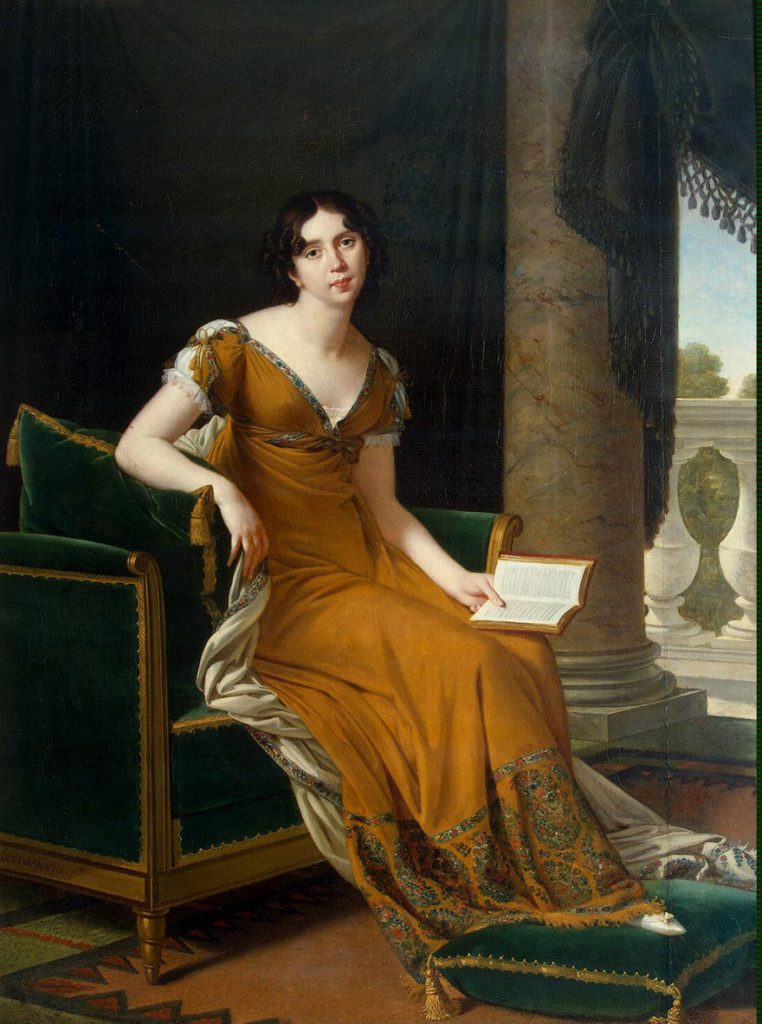
Elizaveta Alexandrovna Stroganova wearing a Pashmina dress
Not only in Kashmir but the admiration of Pashmina also grew all over the world. Be it Europe, Asia, or America, patrons of handicrafts came from all over the world to Kashmir to invest in these beauties. Kashmir used to be a hub of Pashmina trade back then. And it became the source of Pashmina from which it spread like a wildfire.
The making of a Pashmina itself dictates the user how to use it. The immense craftsmanship put into it, the delicate finesse that the final product has, and the exquisite patterns that are handwoven in kaleidoscopic colours are all proof that Pashmina is the most luxurious and extravagant art in the world. But what goes into its making is absolutely overwhelming.
Over a height of 15000 feet, in Ladakh, there is a region known by the name of Changthang, where an exotic goat species is found. This goat grows fine Cashmere as an undercoat which keeps it warm and helps it survive a temperature of -40 degrees. This fine wool is combed off the goat’s body in hot summers as its warmth makes the goat uncomfortable.
The Pashmina Goat
As the wool is collected, it is cleaned and sorted as per quality. The finest quality goes into spinning and weaving, and later embroidering, all in the valley of Kashmir. Artisans work for years together, and complete masterpieces for art admirers all over the world.
As soon as a woman receives her Pashmina, she herself chooses how to use Pashmina. Whether she chooses to wear her new piece as a shawl, a scarf, or an accessory, it's all up to her unique style.
Pashmina wraps are so versatile, that there can be over 50 styles to use them. There are hand-embroidered pieces, solids, ombre, Kani, patterned and printed, and Swarovski embellished ones. How to use Pashmina is up to the needs of the wearer. You can use it as a shawl, as a wrap, wear it like a scarf, or even make a DIY shrug out of its downy base. Here are a number of ways in which you can use a Pashmina
Wear your Pashmina like a shawl
Pashmina can be used as a shawl. The measurements of such a piece should be at least 100 * 200 cm. This type of Pashmina is generally draped over the shoulders to cover the upper portion of your body with its pleasant warmth. Or else you can let the shawl dangle on one shoulder by placing the center of it on the shoulder and suspending the rest down.
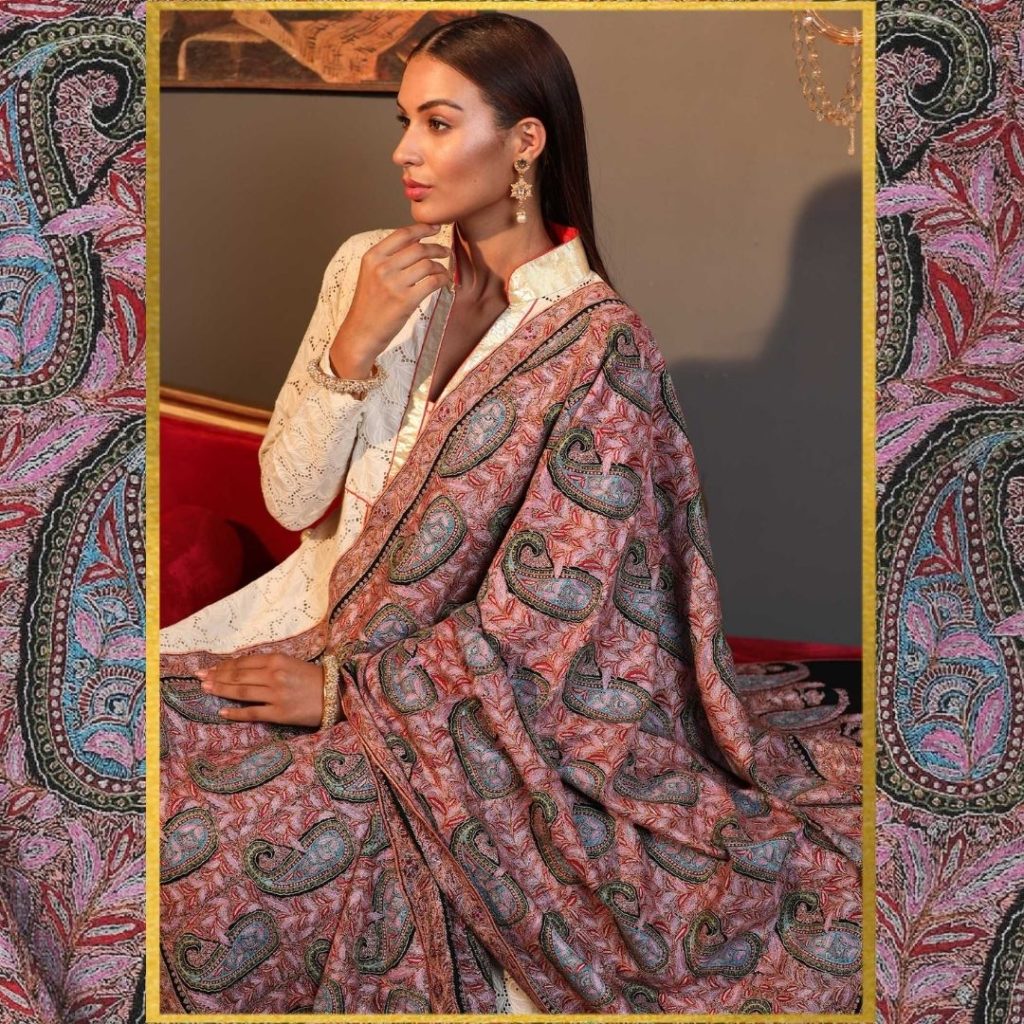
A classic Kashmiri Pashmina Shawl - the finest of shawls dazzling with a touch of Zari threads
Pashmina is worn as a shawl usually at weddings or special functions. Here you flaunt your classy sense of accessorizing and prove that you haven't let go of your cultural influence.
Wear your Pashmina as a stole
The Pashmina can be worn as a stole. Place the center of the stole over the neck and let the two sides loose from the front. You can take one of the ends and flick it over the other. The stole size is usually 70 cms * 100 cms and those wraps are used as stoles which are solid, printed, patterned, or other contemporary patterns. Women do not prefer to use a large heavy embroidered scarf to be worn as a stole. Having said that, it again depends on the style preference of the wearer.
Hand-embroidered Pashmina Stole - the timeless fashion
There are again a number of ways of how to wear the stole, which gives more variety to it. Hang from a shoulder, drape around the neck, tie over the waist in a large bow with a dress ors style however the diva inside you demands.
Wear Pashmina as a scarf
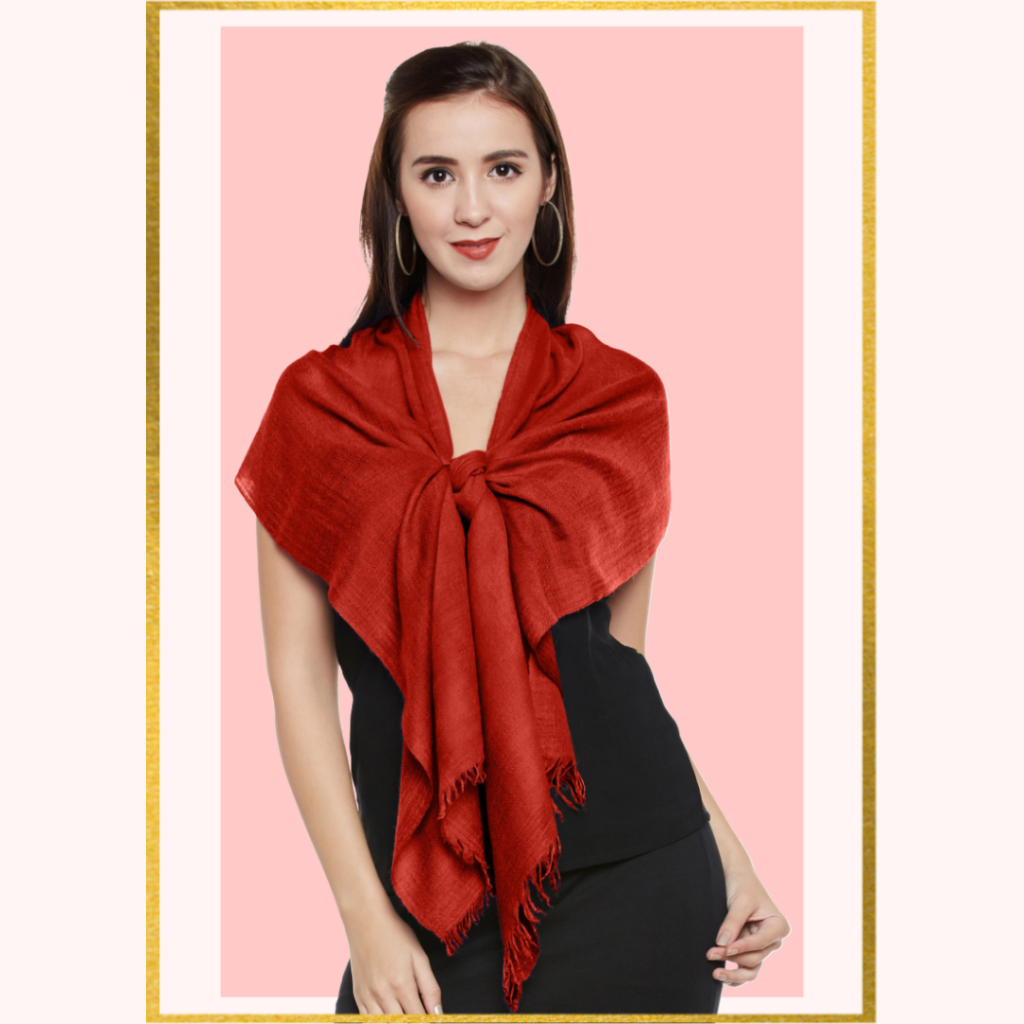
Pashmina can be worn as a scarf in so many ways. Tie it in a french knot and you are done for a formal day at the office. Wrap it like a loop around the ends with ends suspended down or fitted inside your sweater. Scarves are essential in winter in ways that they act as the ultimate warmth producers, and if they're Pashmina, then you will forget about every other wrap you ever possessed.
A Kashmiri Cashmere Wrap, handwoven with an unmatched fashion
Wear Pashmina as a dress accessory
Pashmina can be easily paired with a dress - long or short - by choosing the right colour. Usually, women pair Pashmina wraps with plain dresses. You can tie your Pashmina by making a large bow at the neck for a classic look. Or else you can just wrap it around the shoulders and let it brighten up a basic dress. A warm shaded Pashmina can be worn to pep up a basic nude outfit, and a minimal solid scarf might calm an overdone look.
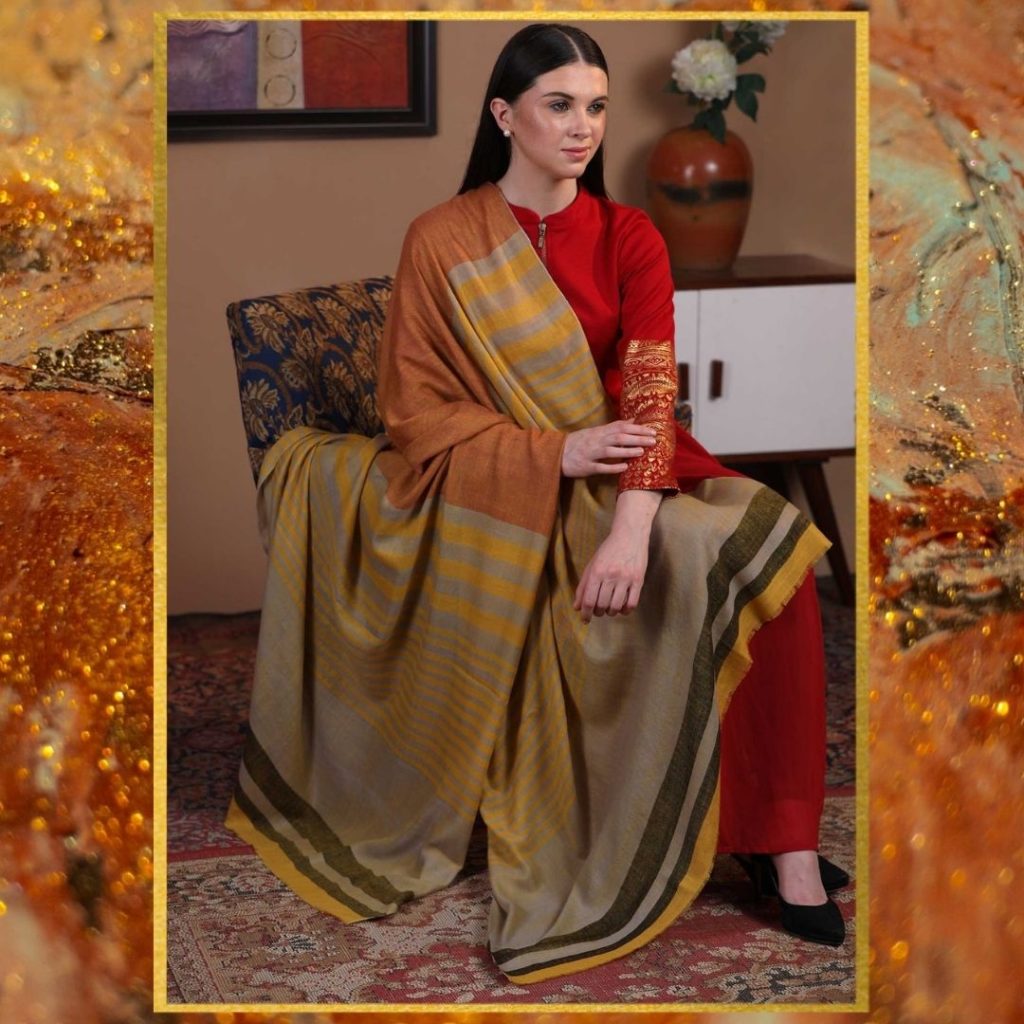
A solid Pashmina Scarf - Sophistication lies in each of the warps and wefts
Sometimes a Pashmina is tied over a bag for a modish demeanor. Simply make a beautiful knot when tied to the straps.
Wear Pashmina as a Bandana
For a chic look in the cold season, tie your Pashmina as a head accessory. Make a knot at the back of your head and let ends loose from the back. Pashmina, when used as bandana keeps a person warm as well as protects the hair and adds a chic touch to winter and fall outfits
A Kashmiri Cashmere wrap, handmade in a solid pattern to give your winters the life that they covet
Wear your wrap as a shrug
You can even transform a Pashmina shawl into a shrug easily. Spread the shawl across the back and bring the two ends from under your arms to the front. Extend these ends to the back of the neck and make a knot. This style of wearing Pashmina rids of a sweater, which is too much of a burden in the fall.
A lovely embellishment of the French Chantilly lace on a Pashmina Wrap
Pair warm and bold prints with minimal outfits, and similarly nude solids with overdone outfits which needs to be balanced properly.
You can pair a solid wrap with almost everything and on a number of occasions. Be it wearing a scarf with your formals, casuals, or an evening walk with friends, a solid piece never looks dull or out of fashion.
For a more chic look, you can combine bold and colourful prints and patterns with modish apparel to give them a stylish twist. Be it your favourite pair of jeans and shirts, or skirts, a Pashmina scarf will seamlessly blend with everything you shopped for.
Over a handloom, delicate warps and wefts of the fine Pashm result in a luxuriously smooth and soft Pashmina shawl
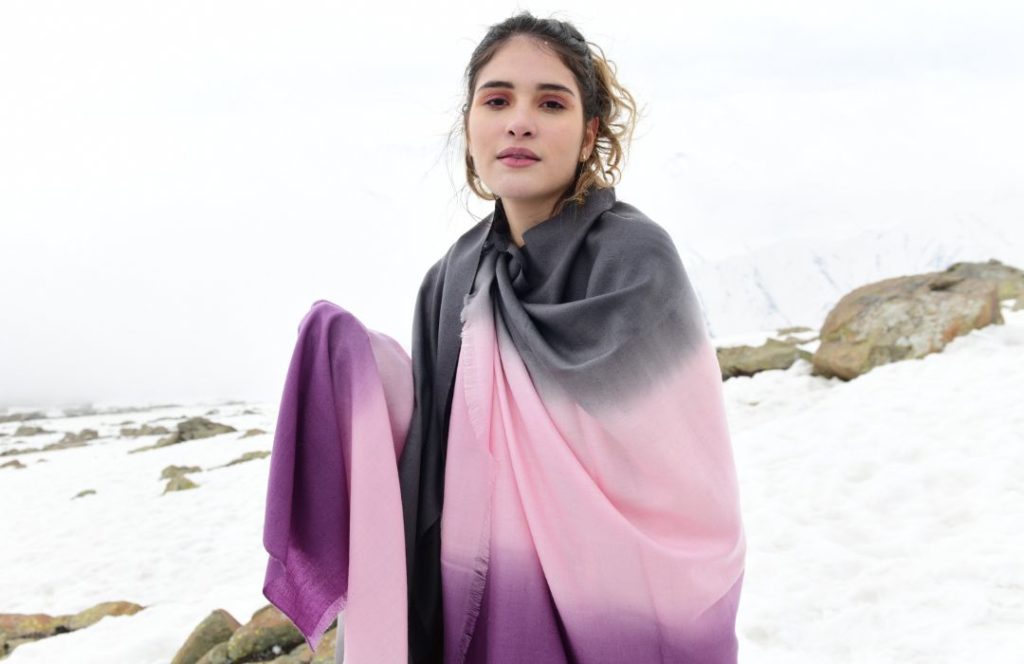
We love colours, don’t we? How wonderful would it be to dress up in all our favourite colours, as well as gradient shades. Ombre Pashmina shawls serve the purpose. Skillfully handwoven and more skillfully coloured in a number of gradient shades, or a combination of two or three shades make ombre styled shawls perfect for those who love to take a dip in the bright world of warm hues.
A Kashmiri Pashmina, in all iridescence of rainbow shades
Flaunt your culture with hand-embroidered Pashmina shawls that come from the valley of Kashmir. Done artistically by local craftsmen, hand-embroidered shawls look amazing in the wedding season or as a gift to your loved ones
Colourful roses in Kashmiri Paper Mache embroidery drop their fragrance which runs deep into the senses of the wearer
Kani shawls got fame when French Empress Josephine got a few hundred of them. Handwoven over a handloom, Kani Pashmina shawls from Kashmir are a must-have for those whose taste in accessories is purely artistic.
Handwoven over traditional handloom, with the intricate and meticulous intervention of Kani bobbins
The sophistication of a Pashmina shawl doubles with it is embellished with lace. To make a shawl look exclusive and utmost graceful, it is at times adorned with a chantilly lace in contrast or a tone on tone shade. Such shawls look especially pretty on semi-formal occasions or to gift your bridesmaid for the efforts she put to make your wedding day beautiful.
A Pashmina Shawl embellished with French Chantilly Lace on the borders
Have you ever met an accessory which can be wrapped from both sides, front and back, and both are equally exquisite? Pashmina shawls are on some occasions handwoven in such an artistic weave that the front side looks exactly like the backside. Reversible Pashmina shawls were one such type that fascinated ancient royalty, who had never encountered such masterpieces before.
Handwoven Pashmina Shawl in the Do Rukha or reversible pattern in quirky shades
For semi-formal events and when you're the bridesmaid, nothing looks more gentle and dainty like a Swarovski embellished Pashmina scarf would. Swarovski wraps can be ideal gifts for women who meet their friends after a long time.
Embellished by the one a kind Swarovski studs which evocate the feel of a starry winter night
How versatile is this single piece of cloth? Apparel, gifts, wedding favours, and more, the way to use Pashmina Shawls known no bounds. For this reason, it has popularity like no other art in the world. That is the reason why even after an introduction of fake copies, the real pure Pashmina doesn't die. It is the grace and elegance of the age-old traditional pieces which had kept the traditional alive.
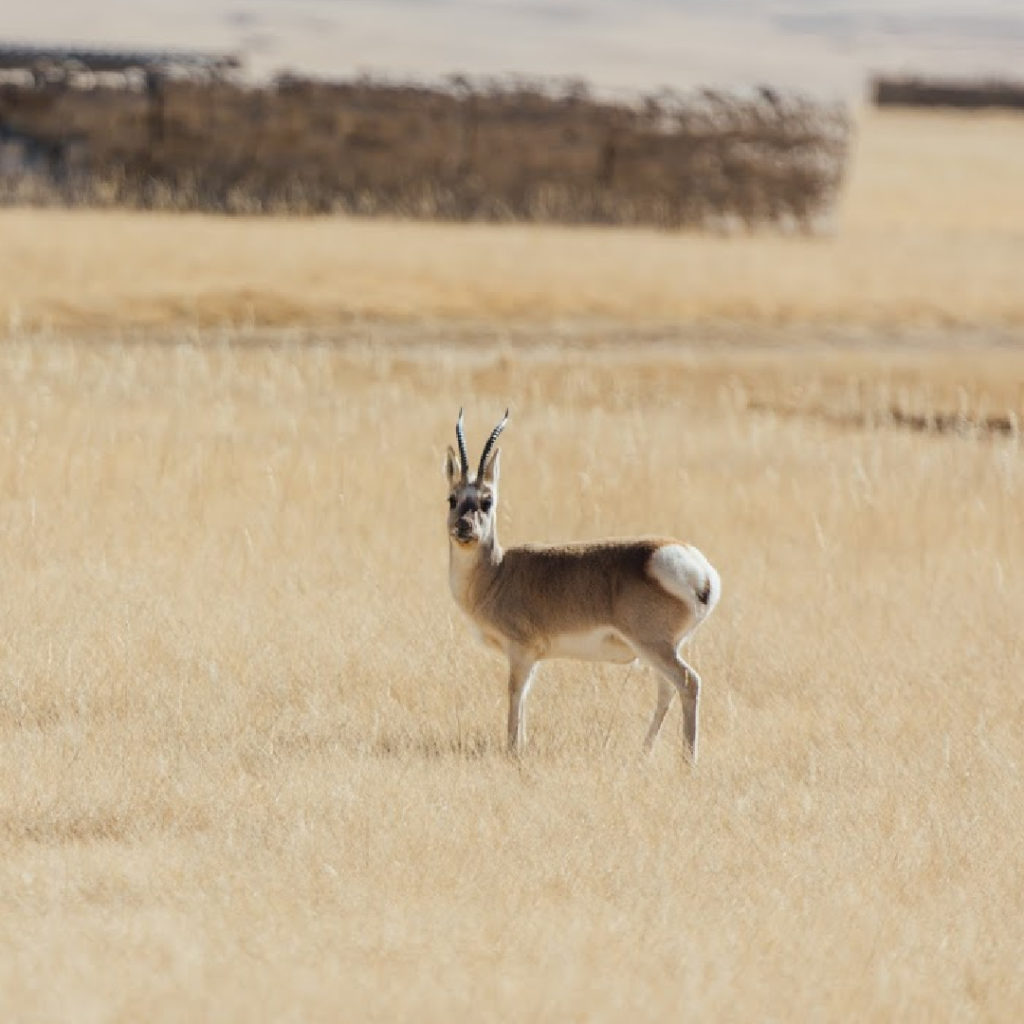
While many believe that Pashmina shawls are banned, this is actually not true. It is shahtoosh shawls, which come from the chiru goat (declared endangered under CITES), that received a ban. Pashmina is cruelty-free and permitted to wear whenever one wishes
The regality of Kashmiri Pashmina Shawls dates back to the 14th century. It was when Sufi saint Mir Syed Ali Hamdani traveled to Kashmir from Persia along with 700 skilled artisans. He made the then king start a factory to process and manufacture wraps and other wearables from this luxury fibre. Since then, the skill of Pashmina making and selling enjoyed purity and originality. But later when industrialization took over, a few vendors planned to deceive customers and sell wool or other adulterated fabrics by the name of Pashmina.
Because innocent customers didn’t know the difference between original and fake, they fell for the fake promises made by vendors; they purchased fake Pashminas in place of original ones. The problem further enhanced when the actual artisans of Pashmina making started to suffer. For this reason, the team of Pashm, along with an experienced Kashmiri Pashmina vendor, endeavor to regain the lost glory of original Pashmina making. In addition to this, we set out to find why are Pashmina shawls banned, if at all.
A Pashmina shawl gathers every single blooming flower from the Mughal garden of Kashmir
Understanding Pashmina: What Makes It So Special
Pashmina is the art where artisans transform Cashmere wool to luxury shawls, scarves. It is often called "soft gold". The luxurious Cashmere comes from the fine undercoat of the Changthangi goats, native to the high-altitude regions of the Himalayas, particularly in Ladakh and Kashmir. The unique climate of this region, with its extreme cold, allows these goats to grow an incredibly soft and warm underlayer of wool. Herders carefully hand-comb it every spring.
What sets Cashmere apart from other types of wool is its exceptional softness and fineness. The fibers are so delicate because they are six times finer than human hair. This fineness gives Pashmina its signature lightweight feel, making it incredibly soft against the skin, yet warm enough to provide insulation in cold weather. Unlike synthetic materials, Pashmina is also naturally breathable, allowing for comfort across a range of temperatures.
The craftsmanship involved in creating Pashmina shawls adds to their uniqueness. Traditional artisans spin the delicate fibers by hand and weave them into fabric using age-old techniques passed down through generations. This process is time-consuming and requires immense skill, but the result is a product that embodies both luxury and cultural heritage.
In addition to its softness and warmth, Pashmina is famous for its natural sheen and ability to take on dyes beautifully, resulting in vibrant, long-lasting colors. These qualities, combined with its cultural significance and the artisanal craftsmanship involved in its production, make Pashmina an exceptional and highly sought-after material, celebrated for its timeless elegance and unmatched quality.
How is Pashmina acquired?
Light, downy, and sensuous to touch, the word Pashmina in itself sounds luxurious. And why shouldn’t it be? After all, it is the 14000 feet high mountain range of Ladakh, where the Changthangi goat fights the severe winter season. It is a coat of Pashmina over its underbelly which protects it from the freezing weather. At the onset of summer, the goat rubs itself with shrubs, rocks, barbed wires, leaving this delicate and extremely fine treasure of fibre. Herders collect it and artisans weave it into majestic Pashmina shawls, wraps, or other regal ensembles or accessories.
How meticulous is the process of transforming the adulterated fibre of the Pashmina into a pure fabric. The collection from dangerous high altitude places, the cleaning, spinning, weaving, dyeing and finally designing it into the specified silhouette; all the steps toward making a Pashmina special requires huge skill and deftness. Such a special craft required special attention. And our quest to explore this wonderful craft gave surprising results. We went deep into the process of making a Pashmina with an artisan, who associates with this craft for more than 50 years now. Ghulam Nabi - a patron of the heritage Pashmina art whose sorrowful eyes narrate the tale of how his skill lost to fake and cheap copies of the original craft.
Kashmir - the heaven on earth
Our journey to Pashmina shawls
We took a trip through the narrow streets of the downtown area of Srinagar, the heart of the Kashmir valley. Finally, we reached a place where every traditional craft of the valley which includes Copperware, Paper Mache, silverware, and others had its own shops where the best-skilled artists worked. Amongst all of these matchbox-sized shops, Ghulam Nabi owned a larger shop; he sold his Pashmina shawls there but manufactured them at home.
We entered his shop and introduced ourselves, and asked him if he could give us some of his time. We wished he could narrate the legends of the original Kashmiri Pashmina and how he stepped into its making. But since the downtown area is filled with hustle and bustle of a typical marketplace, we got an invitation to his home the next day. We left his shop but our eyes couldn’t miss the masterpieces that they captured in this short period of time. In just a few minutes, we had perhaps witnessed all the colours and all the patterns that the valley is world-famous for, and that ever existed. And we knew one thing for sure, we had come to the right destination.
Our team spent the night in a local hotel room, excited about what was going to happen the other day. The next day, early in the morning, we reached the place where Ghulam Nabi had invited us to. Remembering the treasured collections we had seen yesterday, all of us expected a large showroom. We imagined around at least a hundred people working with him. Instead, we were surprised to see a small, not-so-well-lit room and four women working on four different pieces, over a charkha.
We all sat together, had a cup of tea, and then came to the main point of discussion. What is Pashmina, where it came from, how is it processed, and is there a compromise on the quality of Pashmina? At once Ghulam Nabi peeped out of the window, and his eyes seemed to be traveling in time. It seemed as if the 50 years he spent with this craft played right in front of him.
Word to Word with the artisan
“The craft is not at its best,'' said Ghulam Nabi who started his discussion with a complaint. We asked why the craft had lost itself with time, and he couldn’t stop but narrate the ordeal of his work. “When we started making Pashmina, our motive was to show Kashmir to the world; introduce its different crafts to those areas which had never even known what Kashmir was. But now, sellers just care about money. They want to give less and take more”, said Ghulam Nabi in a tone that sounded angrier.
An artisan creating a masterpiece
Gradually what we realized with his words was the same affliction that most of the crafts of Kashmir have been through. The craft of Pashmina was once at its zenith just because it was pure. But now, when people introduced cheaper copies of the same, adulterated with either wool or nylon, or dipped local woolen clothes in a fabric softener to give it a feel of Pashmina, the original craft started declining. Local vendors cheated customers by claiming fake Pashmina to be original. And innocent customers, who never before had seen or touched Pashmina believed it to be true. With time, there was a rumour that Pashmina is banned, as it leads to animal cruelty. But Ghulam Nabi had a different opinion. PASHMINA WAS NEVER BANNED!
Ban on Shahtoosh
While there is a mass confusion with regards to ban on a type of shawl, there certainly are reasons why it is so. We know that Pashmina is not banned. So there might be another type of shawl that received an international banned on account of animal cruelty?
It is Shahtoosh. Shahtoosh is banned. It's a tittle-tattle and is spread usually by the individuals who have vested interests in creating this confusion among the masses. Since Pashmina shawls are the best quality shawls, their low-quality produce get adversely affected due to more demand for the former.
The Changthang Goats of Ladakh
Which shawls are banned?
It's not completely a hoax that Kashmiri shawls are banned. But the category of shawls that received a ban in 1970's is Shahtoosh. Kashmiri wool has certain degrees according to their quality and finesse of the fibre artisans use to craft them. Shahtoosh is the top quality wool, obtained from Chiru goat. The fibre diameter is even less than that of Pashmina fibre. While Cashmere is 12-16 microns in diameter, Shahtoosh fibre is just 8 microns. This property leads it to be so fine that it can easily pass through a finger-ring. Many more differences between Pashmina and Shahtoosh follow:.
Why are Pashmina Shawls banned in India
There is no blanket ban on Pashmina shawls in India. Pashmina shawls are not banned in India; rather, they are a highly prized and culturally significant textile that has been produced and woven in the region of Kashmir for centuries.
However, there have been instances of counterfeit or mislabeled Pashmina products selling in the market. These can deceive consumers and undermine the authenticity of genuine Pashmina. To address this issue and protect the reputation of authentic Pashmina, the Indian government and various regulatory bodies have taken measures to promote and regulate the production and labeling of Pashmina products with the Geographical Indication (GI) Tag.
Difference between Pashmina shawls and Shahtoosh shawls
Pashmina and Shatoosh, both come from the hair of goats that live on high altitudes. But there are several commonalities between the two. Shahtoosh comes from an endangered species of goats called Chiru, or the Tibetan Antelope. The Convention on International Trade in Endangered Species (CITES) has listed the animal in the endangered species list..
Trappers forcefully obtain the fleece growing on the Tibetan Antelope by killing the animal and skinning the hair from its underbelly. The ban on Shahtoosh stemmed from animal cruelty and the decreasing number of Chiru goats. But unfortunately, a few traders still market Shahtoosh due to high demand from the west. The reason for this high demand is the finesse, lightweight, extreme warmth, and graceful look that Shahtoosh shawls lend to their wearer. A Shahtoosh shawl weighs less than half of a Pashmina shawl, and for this reason, it is too expensive.
Chiru - The Tibetan Antelope
Shahtoosh is one of the world's finest wools and is indeed the choice of the elite.
Why isn't Pashmina banned?
Pashmina too is one of the best quality shawls, just not as fine as Shahtoosh. It comes from the fine raw Cashmere wool which grows on the underbelly of the Ladakhi Changthangi goat. The main reason why Pashmina is not banned is that the Changthangi goat is domesticated. Hence, herders do not need to kill it for wool. Herders ethically deal with Pashmina goats in hot summer, and they gently comb off the wool of their body.
Pashmina shawls are soft, light, and beautiful when embellished with embroidery. For this reason, these are more expensive than ordinary sheep wool shawls.
The prices of Shahtoosh and Pashmina too differ. While a Shahtoosh shawl may even cost some 15-20 thousand dollars, the highest range of Pashmina will be 10 thousand dollars (US)
As responsible citizens, we should consider the ban on shahtoosh as a serious one. We should never try to buy or trade shahtoosh, even if it is too alluring. If you still have a question about why are Pashmina shawls banned, here is the answer to it. There is no ban on Pashmina, and we can have as many pieces of the same as we want.
Should we Buy Pashmina shawls?
As mentioned already in detail, Pashmina is not banned at all. And moreover, it is not even cruel. As many claim that hunters kill Pashmina goat in order to acquire its wool, the same is not true. It is this Changthangi goat on which the survival of its herders depends. So technically, if they kill their goat, they would be depriving themselves of their own livelihood, which would be foolish. When our team asked herders the same, they answered the same. Acquisition of Cashmere wool doesn't need the unethical killing of the goats.
Pashmina goat is a domestic animal and its herders don't need to look for it or hunt it to acquire wool. In fact, they professionally deal with it, using specialized tools, to comb off the hair gently.
It is this raw wool that weavers later weave over handlooms and introduce it in the market for the art admirers. The art of transforming Cashmere into luxury shawls and scarves is called Pashmina art. Artisans handcraft Pashmina shawls sustainably without using machines in the process. This makes them more responsible than cruel. The Pashmina industry is centuries old. Artisans have handcrafted Pashmina shawls for hundreds of years using the same technique.
Shahtoosh Shawls and Cruelty to the Chiru Antelope
As responsible citizens, we should consider the ban on Shahtoosh a serious one. We should never try to buy or trade-in shahtoosh, even if it is too alluring. It is this shawl that is cruel, and involves the killing of Chiru goats, as the goat is a wild animal. On the other hand, there is no ban on Pashmina, and we can have as many pieces of the same as we want. When we are investing in a luxury Pashmina shawl, we must know that this is a responsible purchase, and no blood has been shed to cover our shoulders, as is the case with many varieties of wool.
Now we are ready to face the question if anyone asks "Why is Pashmina Banned".
Explore Pashm's collection of Pure Pashmina Shawls and Wraps here...
The Global Demand for Ethical Pashmina
The global demand for ethical Pashmina has grown significantly. This is because consumers have become more aware of the importance of sustainability and ethical sourcing. Authentic Pashmina, that comes from the fine cashmere wool of the Changthangi goats, is famous for its luxurious softness, warmth, and lightweight nature. However, with the rise in demand, there has also been confusion about its production. And this leads some to wonder, "Why are Pashmina shawls banned?"
In reality, it is not Pashmina shawls that face a ban. The confusion often arises from the ban on Shahtoosh shawls. Artisans prepare shahtoosh shawls from the wool of the endangered Tibetan antelope. Unlike Shahtoosh, Pashmina has ethical source, with no harm done to animals. The goats naturally shed their wool during the molting season. Later, skilled artisans carefully collect and handcraft the wool into beautiful Pashmina shawls. This process is sustainable and supports the livelihoods of local communities in Kashmir and Ladakh.
As global awareness of ethical fashion grows, so does the demand for responsibly produced Pashmina. Consumers are increasingly seeking out Pashmina that is certified and traceable to ensure it meets ethical and environmental standards. This shift is encouraging producers to adopt more sustainable practices, from eco-friendly dyes to fair wages for artisans.
By choosing ethical Pashmina, consumers can enjoy the timeless elegance of these shawls while supporting a tradition that values both craftsmanship and sustainability. The question of "why are Pashmina shawls banned" serves as a reminder to stay informed and make responsible choices. These choices contribute to a more ethical and sustainable fashion industry.
Pashmina gifts can be the most timeless and classic of all gifts you can present to your loved ones. Their grace, elegance, exquisite make, naturally beautiful colors, and a restful warmth can fill them with love and appreciation for you. Handmade gifts are in any case always better, but when a Pashmina, handcrafted by over 50 artisans is made with an extraordinary effort for years together, it shows the effort you put in choosing this as a gift and makes them feel more special and blessed.
The Royals expressing their fondness for Kashmiri Pashmina Shawls
A common question that we are always asked by our customers and friends from around the world. And we have always narrated the same story of a Changthangi goat. It lives in Ladakh and grows Pashm to survive the harsh climatic conditions in Ladakh. But today, we want to answer this question in a different manner. Pashmina is indeed made of soft Cashmere wool from the Changpa goat, but it encompasses an abstract element that is not visible to us! Apart from wool, embroidery, and colors that fill a Pashmina with a refined charm and allure, it is LOVE which adds more to it.
If it wasn't for the love of this art, an artisan would never tire himself beyond his capacity to prepare one square inch of a Kani shawl. Were it not for the reverence of traditions, craftsmen would never exhaust themselves beyond measure to work on the purity of their handmade pieces. If it wasn't for the honor of Pashmina, women wouldn't ever spin threads of 12 microns which leaves a weakening effect on their eyesight. Just because its makers have immense love for the craft, it is able to survive. Otherwise, in the present world, why would anyone do such a draining activity, over and over again.
The purity and perfection of the Kashmiri craft
It is simply loved that a Pashmina is made up by the artisans who are in their old age. It's the affection from women who even after tiring themselves from the daily chores manage to spin the Charkha during the late hours of a day. The same adoration comes from weavers, who could have woven a Pashmina over powerloom but for the respect, they have of the art, work for months together on a traditional loom so that the fabric comes out pure. It is a devotion from all over the world who cherish Pashmina and pine for just one Kashmiri Pashmina shawl. And we feel there is perhaps a no better way to show the same love than to gift each other the passion entangled in the weaves of a Pashmina.
Apart from being a token of grace itself, that makes Pashmina one of the best gifts you could ever give to your close ones, there are a few reasons to do so.
1. Safety
Pashmina - shawls that speak the tales of traditions and culture
When harsh cold seasons tend to deprive women of everyday comfort, it is the warm touch of a Pashmina shawl that gives them a feeling of safety and protection. Just one Pashmina shawl is required to shoo off crisp and chilly air and you can easily unburden yourselves from thick sweater sand coats. This makes Pashmina gifts more cherished.
Explore Pashm's collection of Reversible Shawls here..
2. Timeless
Tree of Life Papier Mache Pashmina Shawl - nothing less than a marvel in itself
Many of the best gifts we give each other have a certain life. Your gift might last for a year or two, but maybe not more than that. Pashmina lasts for a lifetime if taken proper care of. A timeless Pashmina gift will stay with them forever and remind them of your love and care for an entire lifetime.
3. Versatile
A Kashmiri Pashmina shawl dipped in warm red and bright gold shades
Indeed Pashmina is a traditional heritage accessory which has been worn by Queens, Mughal kings, and the nobles of the past, but it has recently evolved to imbibe from the modern world chic prints and patterns. Now Pashmina is a versatile accessory that can be worn casually, while traveling, to the office every day, or a semi-formal or formal event.
Best Gift for women
When she was a mother, she nurtured you, gave you life, and protected you. As a wife, she has always supported you and given you motivation in the days when you felt like giving up. A woman has given you all the care you needed and became your mini mom when times were hard, when she was your friend. And as a daughter, she has worshipped you and been responsible to take care of your needs which you yourself couldn't fulfil. As much as we loved to curate exquisite pieces for the women in your life, they will equally love to drape these around themselves in winters, on special occasions and on the most important of their life.
Black & White Kani Pashmina Shawl - A Timeless Piece of Fashion
It is her who always used to dress you when you couldn't choose for yourself. Now it's your turn to return at least this favor with all grace and grandeur. The best gift for her would be a handmade Pashmina shawl in colors that you secretly know she has loved. Be it a plain solid handmade Pashmina shawl, or a heavy embroidered one, Pashmina is loved in all its patterns and styles identically.
A Zari Embroidered Cashmere Wrap - a portion of your emotions, and a part of your tradition
It is your wife who has always been your personal fashion designer and stylist. How about you giving her style tips today! Give your wife the most beautiful token of love and gratitude for all the days she stood by you.
Pashmina Gifts for your daughter
Dad’s little princess has loved every little thing you have given her as a kid. Be it a new school bag, a new dress, or her favorite toys, she had always won dad’s heart as his little princess. Now that she is all grown up, how about gifting something which has a history of being worn by ancient princesses and queens.
Chic Print Cashmere Wrap - a perfect accessory for a blissful winter experience
Make your daughter feel special and blessed as you shower the warm touch and soft caress of a Pashmina shawl. And she still hasn’t grown to be a mature women, you can choose from light embroidery pieces for her family events, or a patterned travel Pashmina wrap for her educational trips, a swarovski studded Pashmina stole for festive occasions and plain scarves for her casual days out with her BFFs.
An even more special way to overwhelm your loved ones a Pashmina is to customize it. Be it the name initials of your friends or family, a logo of your company that you might present to your business partners and employees, the name of a newly born child for his parents, or any design your loved ones secretly want to stay with them, this way of gifting makes them feel more important and connected to you.
For the one who has everything
Embroidered Shawl bestowed with an Aksi Do-Rukha or reversible pattern
You might have people around who don't need anything, and it feels like they already own everything they want. It makes shopping for them really hard as your present may not be of any value to them. With Pashmina, you don't need to stress yourself too much. The timeless essence of Pashmina is never outdated or unremarkable for anyone. Even if the art patrons have a hundred pashmina shawls, they will still love a new one. So choose a beautiful Pashmina, maybe of their favourite pattern or colour, and see how much they will value you and your love filled gift.
Click here to indulge yourself in the Luxury Collection of Pashm
It's not just the beauty and exquisiteness of a Kashmiri Pashmina shawl that makes it my favorite winter accessory. My savior is Pashmina in many dire situations. Whether I need to look beautiful, or stay warm, or look unique and make an everlasting impression. Perhaps it is this versatility of a Pashmina which makes it the world's most cherished fabric. And every woman craves to have an experience of.
When I purchased my first Pashmina shawls (two of them) I never knew they would be with me in my most desperate situations. I thank myself for the purchase I made from an online website. It proved to be the fruitful activity I had ever done.
The Picturesque Kashmir - the home of Pashmina Artisans
It was the winter of 2018 when for the first time I learned about Pashmina. I read a blog that mentioned that Pashmina wool is so warm that it saves the goat - on which it grows - from a temperature dip of -50 degrees. While this was a good enough reason to buy a Pashmina, I further learned that Pashmina shawls are handmade, hand embroidered. Also, Pashmina would be a choice of nobles and affluent nobles back in history. I decided to buy just two of them, to try and experience what it felt like to wear a Pashmina.
The first one was a plain piece. Since it cost me less, so it was an obvious choice. The cozy warm feel of this handmade pashmina shawl makes it extraordinary.
The exquisite Pashmina Shawl in Lilac colour
The second one was an embroidered one with thread hand embroidery (called Sozni Kari Kashmiri), a Kashmiri Pashmina shawl where flowery vines spread in a Jaali pattern.
Carob hand embroidered Pashmina Shawl
There were many more ethereal pieces of Pashmina on the website, but I chose minimal ones, to begin with. Little did I know how much I would need them.
And then occasions started.
Travel to Kashmir with a Kashmiri Pashmina
It was December and our family friends, who live in Kashmir, invited us to spend a month of winter with them in the valley. We knew that the weather in Kashmir is too cold in December as it's peak winter. So I took my plain shawl just “in case” I would need it. But when the plane landed in Srinagar airport, this shawl was the first thing I reached for. My shawl was plain pink and this particular accessory can be seen in all my photographs which we clicked in Kashmir.
Nothing can beat the winter of Kashmir like a Kashmiri Pashmina can. In Fact I never needed any more sweaters or jackets during casual walks in the afternoon. Mornings and evenings I would tuck myself in jackets and sweaters, but pashmina remained a quintessential accessory all month long. It actually saved me a few thousand bucks which I would have spent on buying too many winter essentials.
Another beautiful Coral Solid Pashmina I bought after Lilac
Formal and informal Meetings
The next year I had a meeting in Hong Kong where many of our clients stay. So I, along with three office colleagues, had to travel to Hong Kong in February, and we learned that it's pretty cold here (12 degrees). It wasn't planned, but I packed my Pashmina (the lilac plain one again) just in case I needed it. And it proved to be my saviour again. I attended formal meetings wearing my Pashmina as a scarf, tied in a knot, or wound around my neck. This time I never needed sweaters or jackets. My Kashmiri Pashmina was warm enough to alone survive me in 12 to 15 degrees. I felt warm, comfortable, and super feminine in its pretty lilac colour and resplendent demeanor.
I had found the love of my life in my best friend. And when it was our first formal date as a couple, it was fall (I believe fall is the season of love). This time it was deliberate - as I consciously picked my embroidered Pashmina which was white in color as it perfectly blended with my red dress. I tucked myself into its cozy essence and went on to impress him incalculably.
It was now, when I realised that I needed at least one more Pashmina in my life because the wedding season had already started
Hand Embroidered White Jamawar Pashmina
Gift to my best friend:
To my surprise, my best friend was getting married next month. But there was something to worry about. This friend of mine is a person who has everything. It is always difficult to shop for her. Every dress, every makeup and skincare essentials, every type of gold and diamond jewelry, you name it and she has it. So I decided to buy her a Pashmina, hoping that she would perhaps find it unique and maybe like it.
The Blue Zari Embroidered Cashmere Wrap I gifted my Bestie!
Amazingly enough, she loved it. I had purchased a Tilla embroidered Kashmiri Pashmina wrap for her. It was blue with golden tilla over its base. My friend, who by the way happens to be a blogger like me, wrote about this gift on her blog, and the title was “the best gift of my life”
Click here to explore Pashm's exquisite collection of the Embroidered Pashmina
Getting Married in Spring
On March 14, 2020, I got married. It was 22 degrees in North India. But since I prefer winter weddings more than summer ones, I chose the month of March for it. The weather was pleasant and lovely. The breeze was refreshing and cheerful and the evenings were wintry. The exchange of vows was to happen at around 4, so the weather was expected a little bit on the colder side.
I wore a white wedding dress and aggrandized the same with my newly shopped Pashmina. This time, it was a fresh red Pashmina shawl and over it was an embellishment of embroidery which made it such an effeminate accessory that I had as many as 20 guests ask about it.
I loved the way it made my dress look prettier and kept me comfy all day long, especially when in the late evening the breeze turned chillier. But my long trusted Pashmina had my back and I continued to look the best version of myself all through the night.
Hand embroidered Pashmina Shawl in Sozni Kari
A Pashmina can be a lifetime investment. I chose Pashmina for almost every kind of event I was to attend. Formal, informal or just casual get togethers, this versatile accessory from Paradise Kashmir has been a reliable friend and a trustworthy companion.
In addition to being unworldly beautiful, Kashmiri Pashmina is a classic winter must-have for those who love to exude class and sophistication even in the days when skies aren’t so cheery.
The very touch of Kashmiri Pashmina on your skin feels so luxurious. It’s velvety soft and like a wisp of fresh air. It evokes poetry in all our minds; it’s a warm, comforting hug in the biting cold. Yes, it’s exactly that. No wonder, it’s warm and luxe nature has been patronized since time immemorial by nobility and the upper social strata. Pashmina is like wine, it gets better with age and intoxicates you with its sublime softness and dreaminess.
Cashmere wrap handmade in the loveliest of colours in Diamond Weaves
There are several misconceptions regarding this fibre. Some believe that Pure Pashmina isn’t expensive; it can be bought off the shelves of fashion brands which sell it at economical prices. If you’re one of those who’ve been lured by this practice, there’s a bubble about to be burst. You do own a Pashmina product, but not a genuine one.
Let’s get this straight. Pure Pashmina is expensive and rightly so. It is a work of art through and through and nothing less than a labour of love. It ticks all the right boxes when it comes to sustainability and unlike a lot of other apparel won’t wear out for a lifetime if you take good care of it.
Here are five reasons why Original Pashmina is genuinely expensive. Let’s take a look:
Kashmiri Pashmina is naturally an expensive fibre
The raw Cashmere used to make Pashmina shawls has been called the ‘king of fibres’ for a reason since it is the most luxurious and treasured of all yarns. The journey of Pashmina begins in the highlands of Kashmir, where indigenous Capra hircus goats reside. The sub-zero temperatures, soaring altitudes, and harsh winds trigger the growth of the diamond fibre, which comes from the downy undercoat of these rare species of goats. The name cashmere comes from the old spelling of Kashmir, which is the source of origin for this luxurious yarn.
The Changthang Goat in the highlands of Kashmir
According to the historian Michelle Maskiell, who is also the author of “Consuming Kashmir: Shawls and Empires, 1500-2000,” describes that from the 1500's to as late as the early 1900's, Iranian and Indian emperors used Kashmiri shawls in political and religious settings. For instance, in a Mughal Indian court, presenting a Cashmere shawl represented a hierarchy.
As we already know these goats are rare and found in the higher climes, but what’s even rarer is the limited quantity of the fleece it produces. A single goat does not produce this sheer fibre in bulk. You can get anywhere between six and eight ounces from a goat initially, but once the fibre is processed, you are not likely to get more than four ounces back. In fact, in comparison to the yearly production of sheep wool, which is over 2,000,000 metric tons, the production of Kashmiri Pashmina in a year is about 6,500 metric tons annually. That’s a big reason why this fibre is so expensive!
A Kashmiri Artisan weaving on a traditional wooden hand loom
Pashmina fibres are manually sorted, cleaned and hand-spun before the weaving process begins. The undercoat of these coats that is sheared or collected is a greasy mess and has dandruff and other impurities. To clean it and sort out these unwanted elements, takes longer than you can imagine. The local herders carefully comb the hair to harvest the undercoat and then the good fibre is separated from the bad, which then completes the sorting procedure. It is only then that the weaving begins, which is equally demanding and painstaking. It takes several months to a year for these gifted artisans to work their magic on wooden looms and weave a masterpiece.
Now that you already know its origin and how labor-intensive the process is, you can assume the quality of this fibre. Did you know? Pure Pashmina fibre is less than 18 microns in diameter. Yes, you heard it right. Let’s put things into perspective now; a human hair is about 80 microns, so Pashmina yarn is four times finer than human hair. Besides, the fiber isn’t straight, so when it’s woven, it doesn’t itch. This is the reason why it is also preferred as a baby blanket, which feels comfortable in its warmth and softness. Oh, and there’s another interesting fact! Pashmina is up to 8 times warmer than clothes made from sheep wool. We did know it’s a natural insulator, but this does come as a surprise. What’s best is that Kashmiri Pashmina is much lighter than wool!
When you invest in a pure Pashmina product, you know you are buying it for a lifetime. It’s a timeless fashion choice and will never get old since it exudes elegance and class like no other. It’s the epitome of sustainable fashion, so you know your money is going in the right place since it’s the blood, sweat, tears of the artisans that have gone into making your product. And like we earlier said, it’s like wine. Why? Because it gets softer with each wash, just like wine gets better with age. Isn’t that a valid comparison?
Invest in a Kashmiri pashmina and reap rewards for life. After all, like John Varvatos, an American contemporary designer puts it, ‘style is timeless. It transcends generations - it's enduring. If you're thinking about fashion, it's of the moment. And that doesn't mean that it's not important at times to embrace trends and that type of thing, but the style is less about trends than it is about how you carry yourself.
Explore Pashm's luxury collection of Pure Pashmina here
Cashmere is a timeless accessory and goes way beyond the vagaries of time and trends. But now can adapt to modern sensibilities and design. The product was earlier only associated with traditional, plain weaves in dull colours. But today there are a barrage of options to choose from. And those are equally meticulous in design, texture, and quality. Of course, handmade Cashmere shawls are still the favourite of most. But there exists a large consumer base today that loves to accentuate their outfits with trendy scarves.
This ultimate accessory is being sported by the who’s who of the fashion world and garnering all the attention! At Pashm, we understand the nuances of luxury and comfort. And that is why we offer a palette of trends that are rocking the charts globally. Believe us, you’d love to invest in this sublime, luxurious product yourself, once you set your eyes on our masterpieces.
Add a touch of sophistication to any outfit with ombre scarves that are handmade with the finest Cashmere. Wonderfully light for spring and still luxuriously soft, these are a must-have in any fashionista’s wardrobe. Wear it on a day out or for a romantic dinner date, there’s no way you won’t be the cynosure of all eyes.
A warm red, blue and pink Cashmere Wrap exuding an unmatched grace
These fine handmade cashmere scarves might just seem like a piece of fabric, but they are painstakingly hand-woven on traditional wooden looms, for as long as 12 hours.
The Chantilly lace, named after the city of Chantilly in France, is most light and delicate of all. The silk lace saw its apogee of feminine elegance. Now add to this, the luxury of handmade Cashmere, and what you get is an elegant style!
The Pashmina Wrap hosts a contrasting French Chantilly lace which spans over the fringes
Cashmere scarves have adopted the trend, wherein fine, luxurious fabric comes woven in with French lace and enhances the elegance to another level! Sometimes, these handmade scarves are also laden with stunning floral motifs that make them a masterpiece to own. These are again handmade on wooden looms and take as long as over 25 hours since the finer nuances are all taken care of!
Hand-embroidery is no child’s play. It requires great skill and craftsmanship. Each of these scarves carries a rich legacy of their ancestors and propagate storytelling through their work, especially of the land they belong to.
Pashmina Stole with the magical art of Zari embroidery
As these gifted artisans meticulously weave intricate patterns, it takes them several months to years to craft products like this. These heavily embroidered scarves were once preferred by royalty, but today adorn the closets of the fashion-conscious and the rich and famous. It is not merely heard say that Cashmere has carved its niche all over the world. And when it boasts rich embroidery, it will always prove to be a trendsetter. These scarves embody your personality like no other and remind you of the craft that is the purest form of sustainable luxury.
In the cold climes of Kashmir, in a village called Kanihama, the lives of a chosen few are spent in weaving a magic spell of warmth and colour. It is the Kani Shawl. Pashm is no doubt among the finest fibres ever woven. But initially, it is no more than a greasy mass. That is because it comes from the goat, mixed with all sorts of dirt and coarse hair from the animal’s outer coat.
The world famous Kashmiri Pashmina handwoven in the realms of Kani weave
To transform this material into a fabric of gossamer finesse, takes all the artistry and skill of Kashmir’s gifted artisans.
The design is formed on the scarf by the manipulation of small wooden sticks called ‘kanis’. These interlock their respective coloured threads as they complete each weft of the warp. A single Kani can have around thirty colors. An artisan takes months, working consistently 5-6 hours a day, to produce this delicate piece of art.
Utterly stunning and hand-woven, these handmade scarves amp up your glamour quotient like no other. Swarovski crystals are the epitome of luxury and style. And when it comes together with handmade Cashmere, there’s a lot of magic and fireworks! The best of the best have settled for the trend and for good reason! Often associated only with jewelry, this trend of embellishment on handmade scarves and shawls has taken the fashion industry by storm! It’s truly the latest sparkle spot among celebrities and socialites alike since they offer style, & the joy of warmth and comfort.
Cashmere wrap embellished with Swarovski crystals
The quality of the embellishments is an undeniable factor, and Swarovski is a master in its class, so it’s also about prestige. Available today in a variety of colours and patterns, these Swarovski-embellished Cashmere scarves are sure to enrapture one and all!
These trends will not bring you into the limelight but will also give you the feeling of pure luxury and style. With these scarves boasting utility as well, it can glam up any of your dull outfits and make you a head-turner wherever you go! After all, it’s contemporary and trendy at the same time, what more can you ask for?