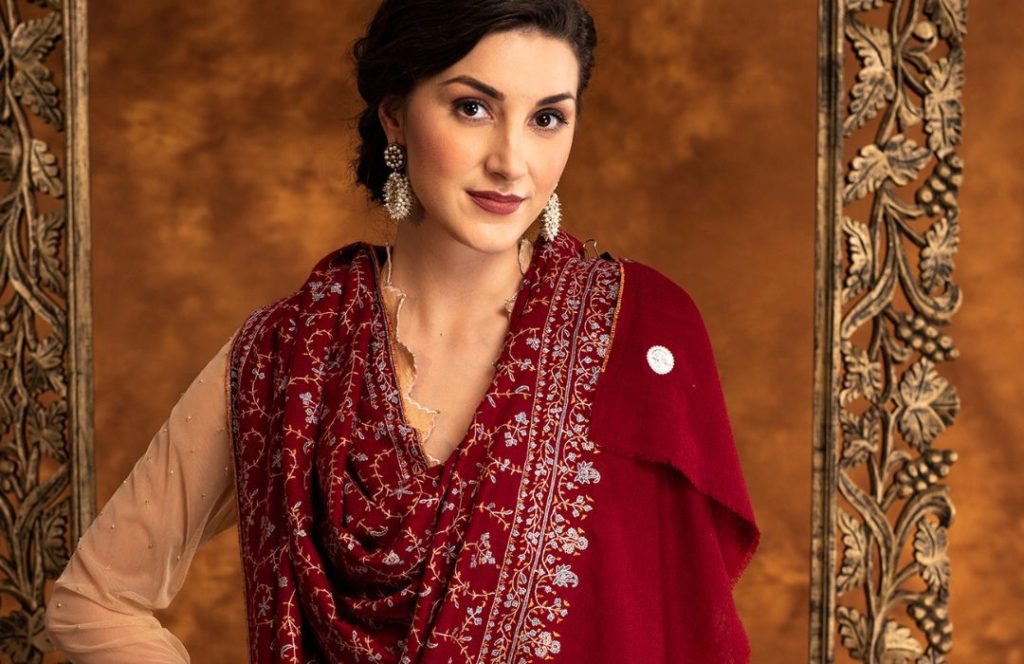
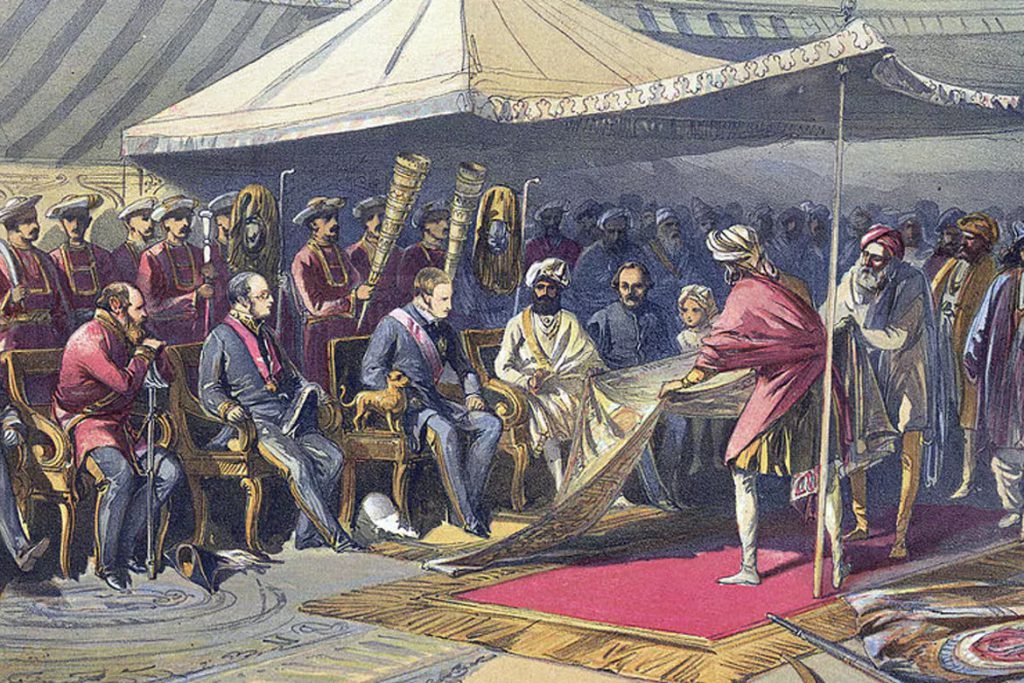
Cashmere shawls are the world-famous luxury wrap accessories that swept royals off their feet when they first got introduced to the world. Mughals in India, Chieftains in the East India Company, Persian Rulers, European kings, emperors, and empresses all were fascinated by the sheer charm that Cashmere shawls would exude.
Apart from being utmost fine and elegant, Cashmere shawls were the coziest wraps that the world had seen to date. Demand for Cashmere shawls exceeded its supply which gave Kashmir a superior name and fame back in the 16th century. They were traded all over the world with maximum customers being the rich and influential of Europe, North America, Australia, and Asia.
What is Cashmere?
Cashmere is one of the finest goat wool. The wool is a down fibre of an exotic goat found in Ladakh which survives a temperature of -40 degrees because of the warmth of raw Cashmere. As summers arrive, the wool is combed off its body by professionals and processed manually by Kashmiri artisans. It is cleaned, spun, woven, and embroidered and what comes out are exquisite Cashmere shawls, ready to fascinate the world by their allure and royal demeanor.
Where is Cashmere shawl made?
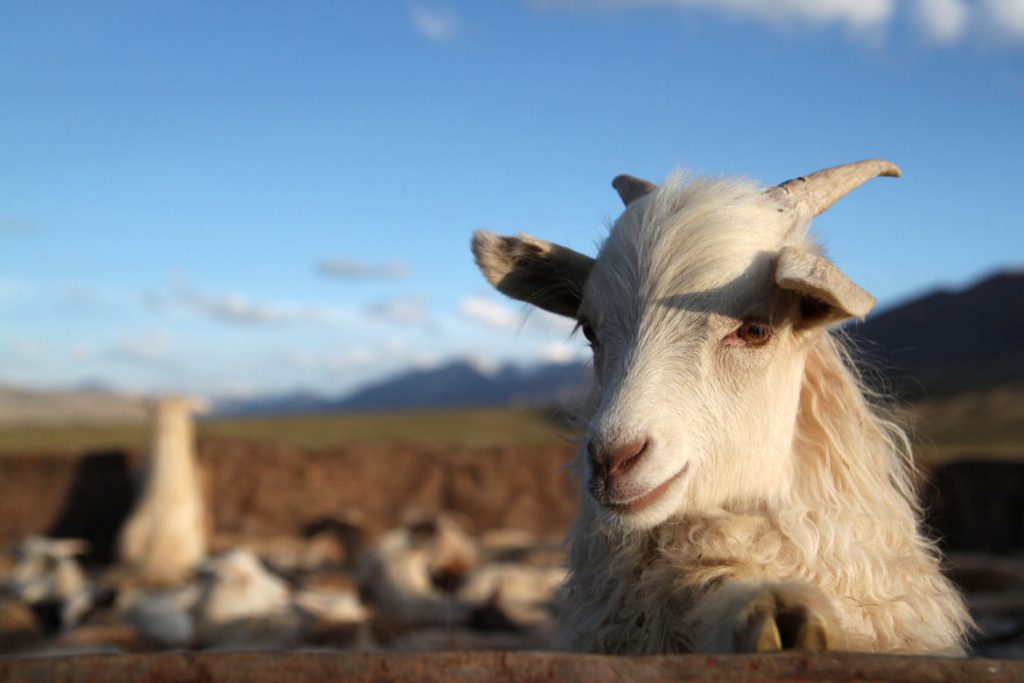
Capra Hircus - or the Pashmina goat belongs to a region called Changthang. The region lies over 14000 feet above sea level and is home to a nomadic tribe. This tribe is called Changpa. It is the Changpa tribe that is responsible for rearing the Pashmina goat. The tribe lives with its goats in a tent that is barely lit and minimally warm. In the morning the goats are sent outside the tent to graze but return back as cold intensifies. The region experience a tough winter and temperatures fall below-40 degrees.
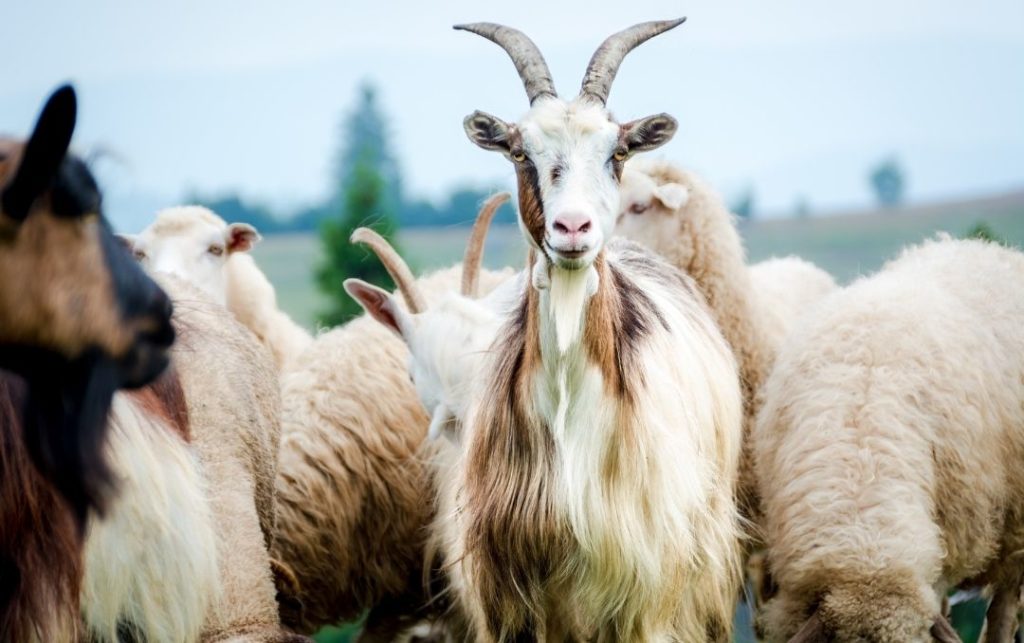
Pashmina goat
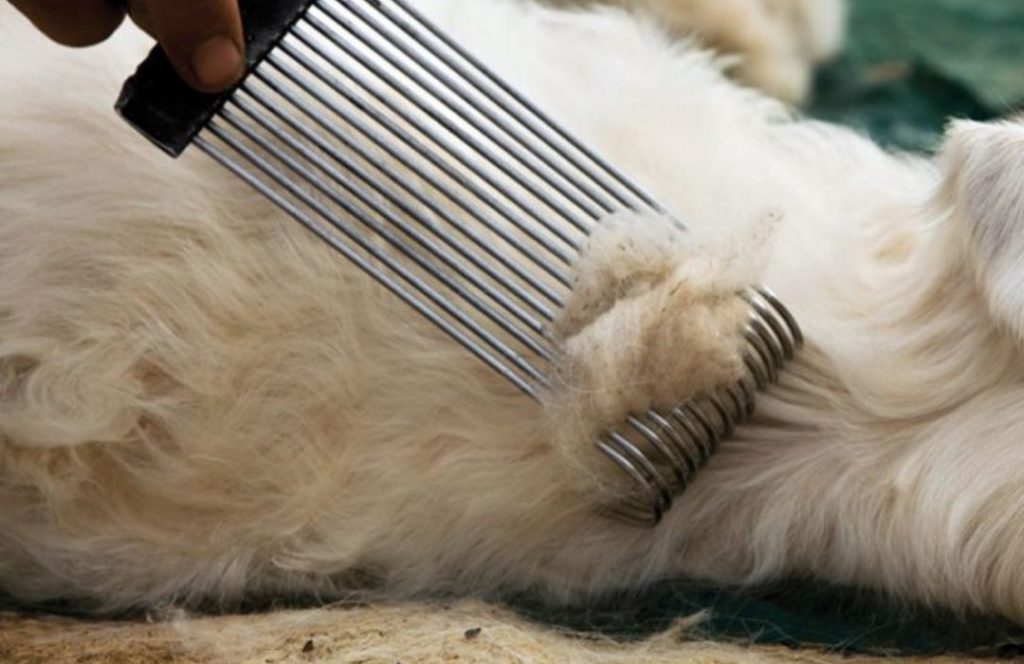
To survive these harsh conditions, the Pashmina goat grows a special kind of wool as an undercoat. This undercoat is soft, warm and fine, and saves the Pashmina goat from the harsh and freezing temperature around it. But as soon as summer arrives, the goat becomes hot and uneasy as it feels an uncomfortable warmth. It rubs its body against rough bushes and stones and gets rid of some of the wool. The rest of it is removed by professionals who comb the body of the goat gently and make it easy for it to move around in hot climatic conditions. Note that this wool grows back fully as soon as it's winter. This raw wool is Cashmere. It is manually processed and transformed into luxury shawls, over which the entire world swoons.
It takes three goats to make one cashmere shawl of length 200 cm and breadth 100 cm. A Pashmina goat grows around 150 grams of wool per year, and a Cashmere shawl weighs around 450-500 grams. The wool is so fine that its diameter is just 12-16 microns. Note that human hair is around 50-70 microns thick.
Ethical Processing of Cashmere shawls
The process of dehairing a goat is not cruel at all. A team of professionals dehair the goats one by one using specialized combs and shearing tools. The goats do not get hurt at all. The hair is very gently combed off the goat's body, collected, and handed over to Kashmiri artisans for further processing. The entire process is ethical and no living being is hurt.
Processing in Kashmir
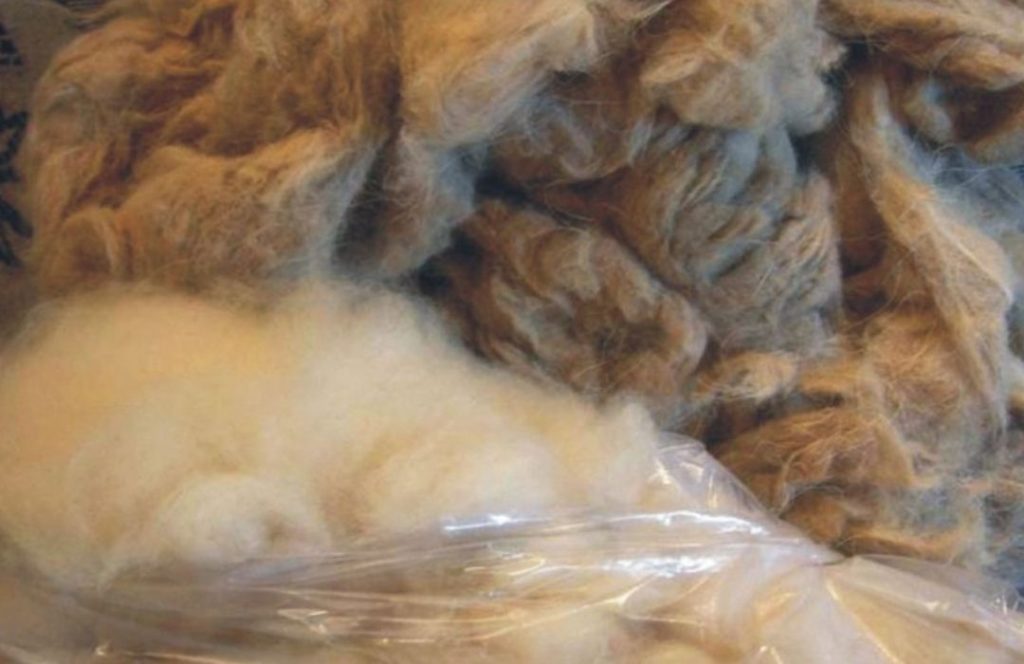
Raw cashmere
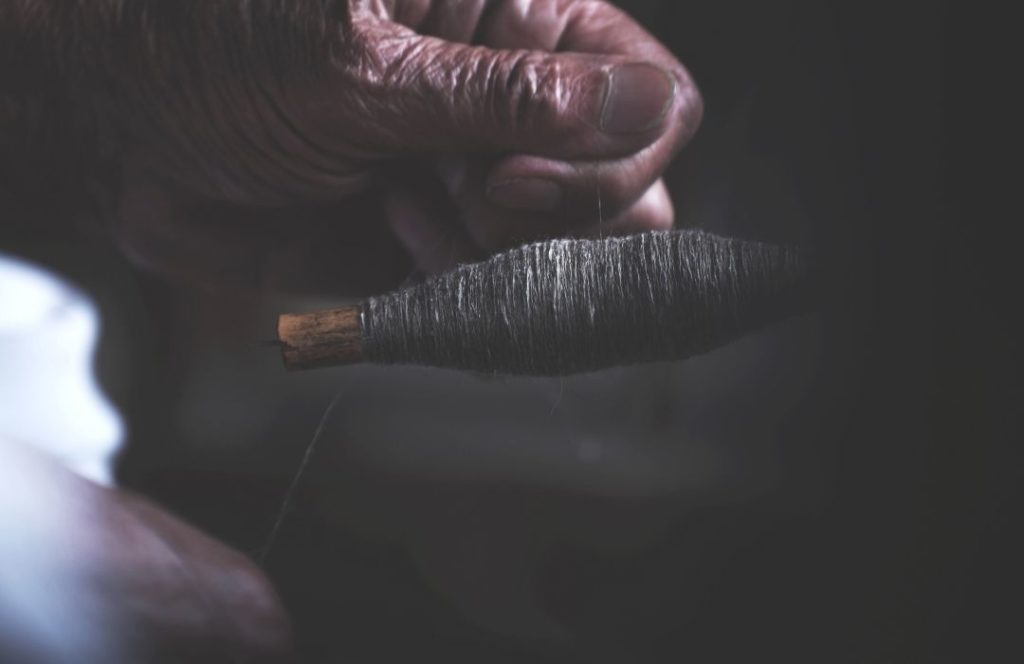
As soon as the wool reaches Kashmir, it is received by women who begin cleaning it for several; days. Dirt, dust, thorns, vegetable wastes and so many other impurities have to be removed to make it pure. The pure lump of wool is now sent for spinning. Womenfolk of Kashmir from different corners of the valley, take some quantity of wool and spin it at their respective homes over a wooden spinning wheel called Yinder. Yinder makes fine yarn out of the lump of wool. The fine yarn has a diameter of 12-16 microns. It is soft, delicate, and exceptionally warm.
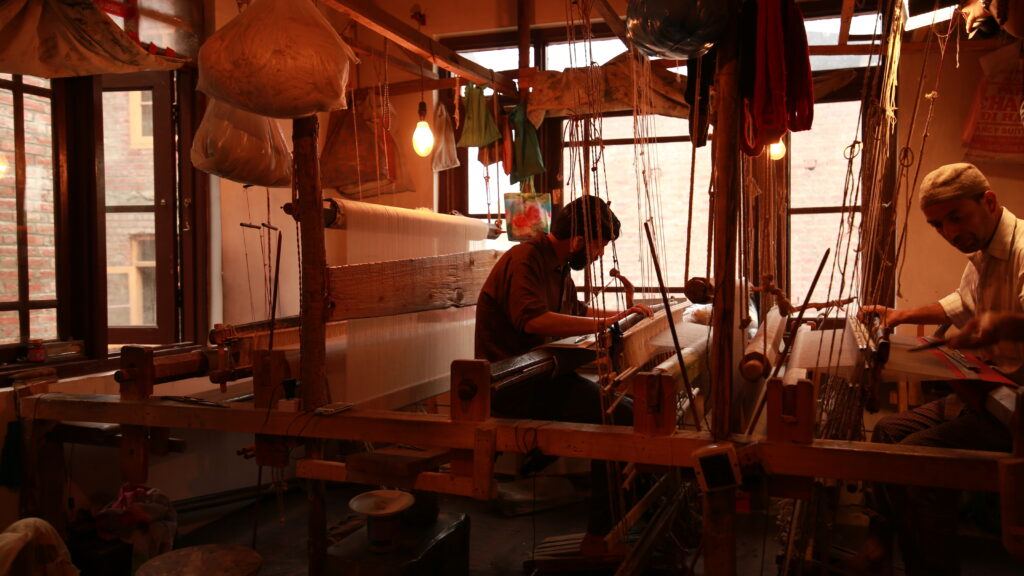
This yarn is now handed over to weavers who mount it over a manual handloom. It is the wooden classic handloom that weavers have been using for centuries. Weavers weave the fine yarn into luxury Cashmere shawls, stoles, scarves, and many other accessories. Hence Cashmere shawls are made in Kashmir, but the raw material (Pashm) is acquired from Ladakh.
India and Cashmere shawls
The possession of goats has been the heritage of India. Especially the goats in the Himalayan region which produce cashmere. Cashmere is the fine, warm, and soft undercoat of the goat which keeps it warm in winter. India produces the best quality Cashmere in the world. Two Pashmina goat breeds - Changthangi and Chegu - are found in India, but Changthangi goats yield the best quality Cashmere. It is this Cashmere that is famous all over the world and whose processing takes place manually in Kashmir
An ancient art patron hears about the Pashmina scarf and starts researching about the same. What he finds is Pashmina shawls of Kashmir, embroidery patterns, unprecedented warmth they give, and the best qualities that any winter wrap can have. But after some search, the patron finds that there is the term Cashmere, which is used interchangeably with Pashmina. He searches about Cashmere, finds the term defined in the same way Pashmina was. Is Pashmina Cashmere? Is Pashmina the same as Cashmere? What is the difference between the two, if they aren't the same.
People around the world have often been confused with two specific terms - Cashmere and Pashmina. Some use them interchangeably, while others differentiate them according to what information they have. Being one of the most ardent patrons of Pashmina, and the keepers of it, we too feel the responsibility to differentiate between the two terms. It should be clear in the minds of the general audience before they go out to purchase Cashmere or Pashmina. Let is start with defining Cashmere
What is Cashmere?
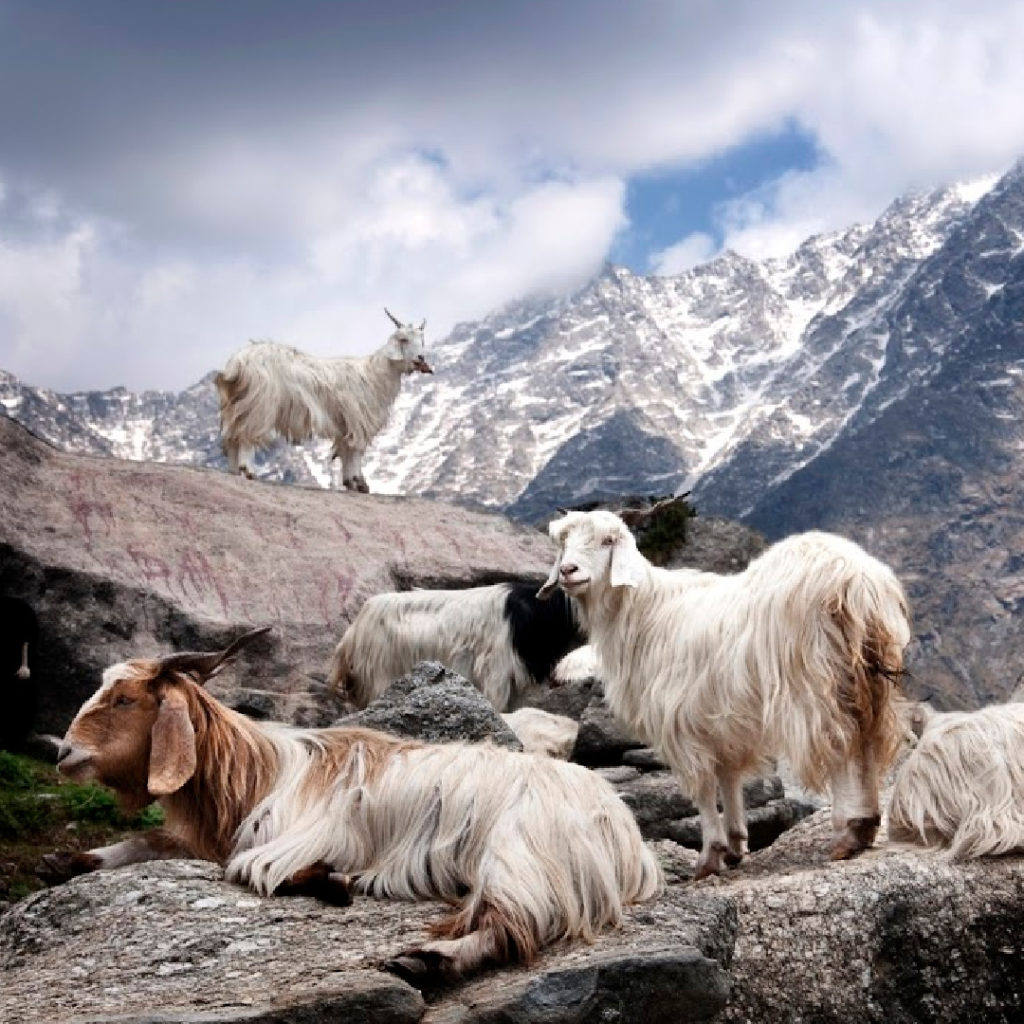
Cashmere is the wool that grows on the body of an exotic species of Ladakhi goats. These goats are found in the Changthang area of Ladakh and are hence called Changthangi goats. Cashmere grows as their down fibre and protects from the harsh climate they live in. The region experiences a temperature of -40 degrees C in winter, which would have made life difficult for the goats if it wasn't for Cashmere wool. The wool protects their bodies, and it becomes easy for them to roam around the region, even in such biting cold.
Ladakhi goats
Being so warm, the wool makes the goat uneasy, as winter departs and spring starts. And when finally summer starts, the goat rubs itself all over the region against rough surfaces. As such bushes, rocks, uneven walls, all are found to contain some portion of their wool. This is the wool they leave when rubbing their bodies against them. This wool is collected by herders of the goats besides informing professionals to remove the portion of the same from their bodies. Professionals bring along specialized combs. Then they gently remove the comb off the remaining portion of raw Cashmere, before sending it to Kashmir for processing.
As soon as raw wool reaches Kashmir, it is spun over a spinning wheel. This transforms this cotton ball-like raw wool into fine threads. The threads are as fine as 12 microns, and sometimes not even visible at the first glance. These fine threads are later handwoven over a wooden handloom. By the end of this stage, a shawl or scarf is ready.
What is Pashmina?
The processing of Cashmere is quite arduous. Acquiring raw material from such a region that lies 40000 feet above sea level is a task in itself. Then taking it to Kashmir, meeting womenfolk, who spin Yinder (the wooden charkha which women use to spin Cashmere) and wait for them to finish it (which is a matter of months sometimes), is a task. Then taking the threads to weavers, who weave the spun threads over handloom are the next steps, which are as persevering as the previous ones.
Next, if the wrap is to be embroidered, it has to be handed over to embroidery artisans. It again takes years to complete. Hence Cashmere processing is a journey itself, and not just a matter of some days or weeks. It is an art, which always deserved to be recognized with a name. And that is what happened. Pashmina was the name given to the process of handcrafting luxury pieces from the downy undercoat of the Himalayan goat (Cashmere). And that is where the confusion ends.
History of Pashmina Art
The art of Pashmina started in the 15th century. A traveler named Shah I Hamdan traveled to Kashmir from Persia. It was he, who discovered this fine fibre in Ladakh and ordered socks to be made for the then king Zain Ul Abideen. The king was highly impressed with the warmth and finesse of this newly found fibre. Thereafter Pashmina processing units were started. In these units, raw Cashmere wool was processed and transformed into luxury wraps, apparel, scarves, and more.
When Pashmina scarves gained recognition and spread to Europe, Europeans travelled to Kashmir to have a look at them. They could not pronounce Kashmir as locals do, and instead pronounced it “Cashmere”, and named the wraps the same as well. Hence Cashmere is the name given by Europeans, while Pashmina is the art of processing them, and it is just a local term. Cashmere on the other hand is renowned worldwide.
Is Pashmina more expensive than Cashmere?
While Pashmina only refers to the journey that transforms raw Cashmere to Pashmina shawls, Pashmina scarves, hijabs, and wraps, Cashmere is the wool that transforms wool to sweaters, handkerchiefs, dresses, and many other apparel and accessories. When referring to Pashmina, we talk about just shawls, scarves which are spun, woven, and then embroidered by Kashmiri artisans. But Cashmere is the wool that can be used to craft anything - even socks.
Price of Pashmina and Cashmere
Pashmina is expensive. A Pashmina scarf, on average can be worth US$120 - 300 (dimension is 200 cm x 35cm). It also depends on purity. This is the price of a 100% pure Pashmina scarf, not a fake one that includes threads of silk/nylon. Nevertheless, plain scarves will range from $120 to $150. If the scarf is patterned, printed or lace, it will rise in price. Embroidered scarves might even be priced at $300. Fully embroidered Pashmina shawls or Kani shawls can go thousands of dollars when handmade for 5-6 years together. It is the deft craftsmanship and proficient skill of local artisans which is rewarded when we pay for a Pashmina scarf.
Cashmere on the other may not be as pricey as Pashmina is. When compared to a cashmere sweater, an embroidered Pashmina shawl can sometimes be four times the price of a sweater. Pashmina art takes more skill, labour and time to complete, whereas Cashmere apparel and accessories might not need that much.
Purity of Pashmina - Relation with Cashmere.
The art of Pashmina depends on the purity of Cashmere wool. If the wool acquired from Ladakh is pure, then only Pashmina making will be art. Otherwise, if Cashmere is mixed with silk or nylon, and simultaneously woven in machines called power looms, then Pashmina shawl will not be the result of an artful journey. It will just be a wrap, as any sheep wool product is. For Pashmina to be called an artistic journey, its raw material Cashmere wool has to be pure, authentic, and processed manually, without the use of machines or wastage.
The art of Pashmina is sustainable. It is manual, includes zero wastage, helps in empowering underprivileged artisans and Pashmina scarves remain with you for a lifetime. These are made from natural fibre - Cashmere, which is ethically acquired from Ladakh. And hence buying Pure Cashmere or Pashmina scarf both cases are responsible for shopping.
Pashmina is rare and a labor-intensive art that transforms raw Cashmere wool into luxury wrap accessories. It is better in quality in comparison to most of its counterparts and hence a bit on the expensive side of the price scale. Hence, special care needs to be taken about its washing, drying, use of detergents, and other aspects of how to care about a Pashmina. Here we list a number of questions, which are often asked about Pashmina care, and our team of specialists answers them one by one.
Q: Is Pashmina washable?
A: Yes, Pashmina is washable. The preferred method for washing a Pashmina is dry cleaning. However, one can even wash it at home, after following a set of guidelines.
Pashmina should be hand washed in cold water.
A wool/Cashmere shampoo or a mild detergent such as baby cloth detergent or a baby shampoo has to be used
The detergent should be fully dissolved in the water beforehand
Pashmina should be dipped in this water and rubbed gently with hands
You can machine wash your Pashmina, with the hand wash setting on.
Q: Can my Pashmina scarf be dry - cleaned?
A: Yes, you can dry clean your Pashmina. In fact, it is dry cleaning which is the preferred method of washing Pashmina and general Pashmina care. If at all an emergency arises, you can hand wash your Pashmina. But you will have to be super careful and follow certain rules while you do that
Q: What type of soap or detergent should I use for washing a Pashmina scarf at home?
A: Even though dry cleaning is the preferred method of cleaning a Pashmina at home. But need arises, you can wash a Pashmina at home too, following these simple steps:
Always hand wash your Pashmina in cold water.
Use a wool specific shampoo, or a mild detergent such as baby cloth detergent or a baby shampoo.
Dissolve the detergent fully in the water
Dip your Pashmina into the solution and wash it gently and carefully
You can machine wash your Pashmina, but make sure the machine is on hand wash setting
Q: We have hard water in our area. How can I soften the water for washing a Pashmina scarf?
A: Hard water has been an immensely troubling laundry for a long time now. The laundry done in hard water is often seen developing stains and becoming less durable. To understand the ways to tackle it, let's first understand what hard water is.
Hard water is the natural water that contains a high mineral content, including minerals like magnesium & calcium. And since water can dissolve these materials, it comes directly in contact with the laundry. Soft water, on the other hand, contains just the traces of these minerals and hence it doesn't cause trouble with contact.
If you happen to live in an area where water is hard, your laundry might face the following problems.
White fabrics change colour to pale or grey
Fabrics become hard and rough and there seems a build up on their surface
White or pale grey lines appear on dark coloured garments
Hard water weakens fibers and they can be easily torn
If you happen to live in an area where soft water is not available then there is a problem with washing your Pashmina. Since Cashmere is wool, it can get really messy while washing it. '
However, there are options to wash Pashmina safely even if the water is hard. The first option is to send your Pashmina for dry clean and ask them not to use hard water with it. Dry cleaners have specialized detergents that can be used to soften fabrics. This way you can save your Pashmina from being ruined.
However, if you can't find dry cleaners around, you can purchase a water softener. It comes as detergent, or in the form of tablets. These solvents can soften hard water and you can wash your Pashmina easily at home.
Q: Should I use a fabric conditioner on Pashmina?
A: You should avoid using fabric conditioners on Pashmina. Fabrics conditioners are filled with chemicals that can cause more harm to your Pashmina than doing good. If however you are left with no choice, but to wash it in the same, then use a less quantity of the fabric conditions and rinse your Pashmina thoroughly (yet gently)
Q: How should I store my pashmina scarf when I am not wearing it?
A: Firstly, clean the shelf or generally the place where you store your Pashmina. It must be thoroughly cleaned and made damp-free. After the cleaning is done, you have to guard it against moths, since it can be easy for them to attack your luxurious Pashmina. You can lay down some anti-moth paper on the storage shelf and use naphthalene balls to keep avoid pests attacking your scarf. Replace them if they get old, as naphthalene balls tend to dissolve with time.
Do not store Pashmina in plastic bags for more than a few months. It can alter the colour of your Pashmina. Instead, try and wrap your luxury Pashmina in an acid-free tissue paper to preserve its original form and make sure it has greater protection against dust and moisture
Q: Can I use bleach while washing my Pashmina at home?
A: No. You cannot bleach Pashmina as it can badly affect the softness. Always use Cashmere shampoos or washing Pashmina, or even better, hand over your precious piece to dry cleaners.
Cashmere scarves are the exceptionally warm, soft, and timelessly elegant winter wraps that are handcrafted to keep one warm and stylish in colder seasons. These scarves are made from a natural fibre, which is acquired from the undercoat of Ladakhi goat. Cashmere has some features which are rare to find and which makes it revered all over the world.
Here are some amazing qualities of a Cashmere scarf, for which it is cherished by every admirer of traditional art.
The Source - Where do Cashmere goats live
Cashmere scarves are made from Cashmere wool, which the Ladakhi goat grows to withstand a temperature of- 40 degrees. It is the exceptional warmth of this fibre that makes this possible. In addition to being warm in winters, it is believed that Cashmere keeps one cool in summer and spring because of its insulating properties.
Cashmere goats are found in China, Mongolia, Myanmar, Bhutan, Nepal and Ladakh. Ladakhi Changthangi goat produces the best quality and the finest Cashmere all over the world. In fact the world famous Pashmina shawls are made from Ladakhi Cashmere.
Cashmere scarves are Handmade
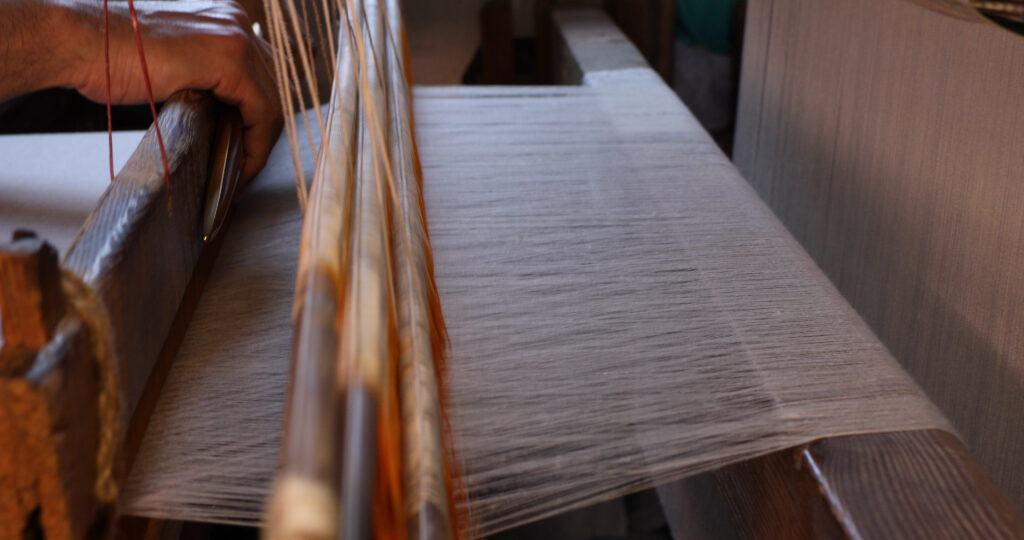
Handweaving Pashmina shawl
Cashmere scarves are totally handmade. The raw wool is spun on a wooden charkha or spinning wheel, which converts wool to long yarns. These yarns are then handwoven to the fabric. There is no intervention of machines and it is hard to believe that such a luxurious and intricate piece can be crafted with bare hands.
Finesse of these luxury scarves
Cashmere yarn is extremely fine. The diameter of a Cashmere yarn is 12-16 microns only. This quality makes Cashmere 8 times warmer than sheep’s wool.
It is a Family Affair
As many as 50 families and a few hundred individuals are associated with just one Pashmina scarf, which makes it more valued. In the past, one family used to accept one contract of shawl making, and the entire family would be associated with it. While womenfolk of the family would clean, sort, and spin the raw lump of Cashmere wool, men would weave, embroider, wash, iron it, thereby making it a product of this particular family.
Time and Labour
If a Cashmere scarf is embroidered, then it might take a few years to complete one piece. Such is the finesse and meticulousness of a Pashmina artisan. It is said that a total of 4-5 years are required to complete a fully embroidered shawl, and if an artisan working on a scarf passes away, it is not always possible to complete it
Rare Source
It takes the fibre from 2 goats to complete one Cashmere scarf. And since the goat is difficult to find and is extremely rare, the value of a scarf might seem exorbitant.
Worth of Cashmere Scarves
The worth of Cashmere depends upon a number of factors. Some of them are:
Ply
Ply indicates the density of fibre used. Single-ply Cashmere would mean that basic thread is used in its single form. Double-ply or two-ply would indicate that fibre is double twisted. Two-ply is more pricey
Count
Yarn count is a number indicating the meters of yarn that can be spun per gram. The more yarn count, the thinner, the smoother, and more precious is the scarf.
Thickness of the fibre
How thick the fibre also determines the price of Cashmere scarves and wraps. The finer the fibre used, the more pricey the wrap becomes.
Weave Pattern
Weave patterns also determine the price of Pashmina scarves. The diamond weave is the most expensive type of weave in Cashmere. These are followed by twill weave and basket weave. Jacquard weave is also one major type that is usually worn at weddings or special occasions.
Prices of Cashmere scarves
A Cashmere scarf, on average, will be worth US$120 - 300 (dimension is 200 cm x 35 cm). It also depends on purity. This was the price of a 100% pure scarf and not an amalgam of silk or nylon. Unfortunately, many deceptive sellers have hiked prices but sell fake scarves. It is important to ask the seller for a certificate of authenticity. If he is not able to produce one, then he might be a fraud. Nevertheless, plain scarves will range from $120 to $150. If the scarf is patterned, printed, or laced, it will rise in price. Embroidered scarves might even be priced at $300.
Are Cashmere scarves worth it?
The regal status that Cashmere enjoys is always questioned by some curious consumers. Is Cashmere really worth all the prices and popularity that it enjoys all over the world? Well, we would say, it is worth even more!
The labour-intensive process that carries raw lumps from Ladakh to Kashmir is all manual and painstaking. The cleaning of raw wool is meticulous and a matter of utmost skill. Later spinning is done which is altogether a different story. The movement of hands of the woman who is spinning the yarn is a skill learnt from decades.
Weaving is again special to Kashmiri artisans who weave scarves and wraps on a traditional handloom, and not a power loom. The handloom is made of wood and takes a lot of manual effort to work and weave fabric. Hence Cashmere is worth every penny you spend on it. It is worth the time you spend to choose it, it is worth the effort you put to buy it, it is worth the fame it enjoys and the royal status which it acquired centuries ago when it was conceived, till now.
If pure, Cashmere feels smooth, warm, and is feathery light. Cashmere is a natural fibre and hence its feel is the same too.
Cashmere is a natural fibre. It has insulating properties, due to which it is believed to keep a person warm in cold seasons and pleasant in warm temperatures. It has enjoyed a world-class reputation since its conception, and even now it is cherished by celebrities alike. But what is cherished is pure Cashmere, which is certified by the associated government.
When the fibre got popular and royalties and the affluent began to purchase the same, some traders’ greed got the better of them, and they introduced mechanization in this handcraft. And hence Cashmere became a part of the fast fashion trend whereas it was designed to be a patron of slow fashion. Machines produced large quantities, but the worst qualities of Cashmere and hence brought a bad name to the entire trade. Also, it was a blow to the artisans whose families depended only on their skills.
How do we know our Cashmere is pure?
To know how it feels, it is important to differentiate between pure and fake Cashmere. Here is a guide to know so.
Pure Cashmere is soft
The most basic method to identify the purity of your precious wrap is softness. So, in case your wrap doesn’t feel scratchy once you wrap it, your hands might have picked a fake one! Cashmere is a hypoallergenic fibre, which does not cause any allergic reaction. It is generally smooth and soft, as it is made in the finest of fibres.
Pure Cashmere won’t be see-through
The best way to check for this is by holding your wrap against a light source. If you can clearly see through, chances are that the piece is fake. Pashmina is a natural insulating fibre. Even if the ply is less, the wrap is still thick, even if lightweight
Pure Cashmere has an uneven weave
If the wrap you own has a regular weave with straight lines on it, you might have been cheated by your seller. A natural fibre that has been handcrafted by human hands won't have regular weaves. It will have the human deficiency of an irregular weave. So if you were feeling bad about the weaves which would seem consistent, be happy now. You Cashmere is genuine
Pure Cashmere won't generate sparks
When rubbed, a fake piece generates static electricity because of the mixtures of synthetic fibres in it. Pure Cashmere is a natural fibre, and hence does not generate small sparks when rubbed against the body or its own surface.
Pure Cashmere will Pill!
Surprisingly, pure Cashmere will pill. And if it doesn't pill, it is fake. Natural fibres tend to pile a little, which has its own remedies to get rid of. But it's only artificial Cashmere that won't pill and stay smooth as silk.
Pure Cashmere will give out a burnt smell
This test is a bit crucial. Take out a fringe from your wrap and burn it. If the fringe gives out a burnt smell, then the piece is pure. This is again because Cashmere is a natural fibre and will give out a burnt hair smell. Also, there will be some powdery residue behind
If all the tests above prove that your Cashmere is pure, then it will feel soft, fine, airy light, and exceptionally warm. However, you need to identify fake pieces as well. Here’s how!
Identification of a fake piece
The ring test hoax
The most deceptive test of all is the ring test. Firstly it wasn't Cashmere that could pass through a ring. It was Shatoosh (which is banned now) which was called the ring shawl. But nowadays it is even easy to pass a common sheep wool shawl through a ring, by treating it with chemicals and smootheners. Hence, if your Cashmere wrap is passing through a ring, relax, it may still be fake.
Too much shine
If you have been flaunting the shine of your wrap to everyone, stop. Too much shine, which seems artificial, indicates the presence of artificial fibre, maybe silk or nylon in your wrap.
Regular weave
As discussed earlier in this blog, if your wrap has a straight weave, chances are that it has been woven by a machine. Pure Cashmere will have uneven weaves, which prove the fact that it has been crafted by human hands.
Cashmere is 8 times warmer than regular sheep wool. This will be the greatest test of all. Moreover, it will be a bit high in price. Fake copies are usually cheap, and that is what lures customers toward them. Buying an impure piece wastes your efforts and your basic reason to buy a Cashmere. It has to be pure. Don't compromise on those qualities for which Cashmere is considered one of the most sought after luxuries.
A Cashmere scarf can be a life savior in the winter season. With such ho-hum about this fine and luxury winter accessory, we decided to double-check if investing in it is a good idea. And we came up with these 7 brilliant reasons to own Cashmere instantly.
Winter is inching closer and closer every passing day and so is the chill which accompanies it. Commonly, one gets to see two different types of people during the colder months. Ones who constantly crib about the gloomy skies and the others who are enthusiastic about it. Being optimists at heart, we will only talk about the latter-the winter enthusiasts. They are the ones who will leave no stone unturned to make the most of it. They make sure to indulge in skiing, ice skating, snow fights, and whatnot.
However, winter doesn’t come with fun activities and Santa Claus alone. Take a moment to reflect over the winter days-physical discomfort, despondent skies, and a slowed-down lifestyle. All you want to do is to cozy under a blanket and prevent yourself from falling sick. Under the garb of “not falling sick”, many people add layer upon layer of clothing. It often makes them feel heavy and even unable to move. Not only this, they are not able to move freely and hence end up depriving themselves of all the fun. Here is when even the winter lovers, who were pretty excited about winter, have second thoughts if they want to stay to move to a warmer place.
We have a solution!
At Pashmina.com, we observed Fall Winter fashion trends for over a decade. We came to a startling realization-that there has been a revolution in how people perceive winter fashion. Earlier, they would opt for dark and dull colors, which would complement the grey skies. They would wear at least 3 layers of clothing to keep themselves warm & lie snugly under warm blankets in their free time. Today, the lifestyle has changed. Eyes sparkle up at the mere mention of winter because there is so much to do! This change of attitude reflects how people dress up. People no longer prefer to clad themselves in bulky sweaters and dark colors. Rather, they associate winters with a life that will rejuvenate them and clothing which provides subtle warmth.
This realization led us straight into the breathtaking valley of Kashmir, nestled in the lap of the Himalayas. Here skilled artisans meticulously spin and weave the need of modern-day lifestyle - Cashmere scarves. The plush and soft fabric bears testimony to the fact that you can feel comfortable and look stylish during the winter months. The 100% natural fabric has been cherished by the elite since centuries. Yet it relates to the needs of the modern generation. It’s matte, yet subtle look silently whispers that you can look equally attractive in your winter clothes. It’s sophisticated folds elevate your appearance to the point of luxury. Perhaps this is the reason why more and more people are opting for a Cashmere scarf every day. Hence today, we debunk all myths and facts surrounding Cashmere, and make it clear for its admirers as to what they are buying.
What is Cashmere ?
Ever since we have tapped into its origins, we have been flooded with interesting queries about Cashmere.
What is the difference between Cashmere and Pashmina?
What is it made up of?
Why is it expensive?
How can we tell the difference between an original and fake Cashmere scarf?
We could go on and on, and the list would still be endless.
To begin with, Cashmere is the raw wool, the undercoat of a Pashmina goat that is found in Ladakh. Even though it is found in China, Mongolia, Tibet, Nepal, and other regions in the world, but Ladakhi Cashmere is the best and finest of them all. The Changthangi goat in Ladakh survives a temperature of -40 degrees just because it is covered in this warm fleece. Cashmere keeps the goat warm and comfortable in winters and is the only protection that the goat has in a freezing temperature.
As soon as Winter bids goodbye and Spring arrives, this wool becomes a burden for the goat. To get rid of its warmth, it rubs itself with rough surfaces. Fine hair can be seen around bushes, rough stones, coarse bushes, and in their own shed walls. Herders realize that it's time, and call for professional help. Professionals arrive with specialized tools and combs and start combing the goat's body gently, stroke by stroke. Firstly large portions are covered and then the smaller ones. Finally, the goat is freed from the burden and it starts moving around freely.
It must be noted that one goat produces 70-400 grams of Cashmere, depending upon the size. Hence, to make one Pashmina shawl, wool from 3 to 4 goats is required.
What is Pashmina
Pashmina on the other hand is an art - the art of handcrafting luxury shawls, scarves, stoles and accessories from this fine Cashmere wool. The fabric was discovered in the 14th century by a Sufi mystic, who envisioned the world wearing it. He got his artisans working on the first set of Cashmere socks ever and voila, Cashmere has remained the most sought-after fabric in the whole wide world.
The fact that over 33 artisans work from dawn to dusk to create a simple Cashmere scarf over a span of 2 to 6 months is enough to justify its value. In fact, if you find a really cheap variant claiming to be a 100% pure Cashmere scarf, you’ll need to stay miles away from it because Cashmere cannot be sold cheap owing to its rarity, less production, and the long stretches of unmatched craftsmanship that go into its making. Earlier, finding a real piece of Cashmere scarf would be no less than climbing a snow-laden mountain. Today, the luxury fabric is a click away.
Why is Cashmere special ~ Why choose Cashmere?
The question still remains, why should someone opt for an original Cashmere scarf when they can find cheaper alternatives in the market. What benefit would it bring to invest in this luxury fabric when you can easily do with low prices winter accents easily available in the market. It is a piece of warm wrap deserving of paying a hefty price in its exchange. Do we really need a Cashmere scarf.
We, at Pashmina.com, are giving you some solid reasons to choose a Cashmere scarf to combat the cold weather!
Here are 7 great reasons to choose Cashmere. Let’s get started!
Cashmere is an all natural fabric
Like comfortable cottons and lustrous silks, Cashmere is an all-natural fabric. It is essentially made from animal hair-that of Changthangi goat. What is special about this hair is that it is the finest in the world. Studies reveal that the fibre shed by this goat is 6 times thinner than a strand of human hair. Besides, the processing of the original Cashmere does not know any machine intervention. It is gathered and cleaned by the locals, traded by nomads, spun over a wooden spindle by underprivileged women, and finally handwoven by a weaver over a traditional handloom.
Not a single thread of synthetic fibre or pollutant is used in the making of 100% pure Cashmere. The process has been preserved for over seven centuries like a holy grail. Even the process of dyeing Cashmere uses only natural or azo-free dyes. The process causes no harm-neither to the environment nor to your skin. So while you have the option to choose the cheaper variations available in the markets, a natural cashmere, free from the harshness of chemicals would be ideal and unique.
The handwoven luxuries are the synonym of comfort!
These scarves keep you warm (without sweating)
Cashmere is known to be the warmest of all fabrics the world has ever known. This warmth traces its origin to the Changthangi goat who grows this ultra-warm fleece to protect itself from the harsh temperatures of the Ladakh region in India. Come summer and the goat sheds its mane by rubbing itself against shrubs, rocks, or whatever rough surface it can find lurking within the remote area of Changthang.
This wool is then harvested by the locals and spun and woven into the finest shawls, wraps, and clothing mankind has ever known. And this leads us to important conclusion-that Cashmere scarves have warming properties ingrained into their essence right from the beginning. In addition to this, Cashmere has natural air pockets that provide outstanding insulation. This extra warmth coupled with the fact that Cashmere is the finest fabric in the world makes it ideal to wear on a cold winter day.
It helps you stay warm and cozy even when the temperatures drop down to zero or less. You could achieve this by wearing acrylic or polyester clothing, but they would make you sweat profusely (owing to their synthetic nature).
Cashmere is quite contrary to this. Because it is handwoven and made out of purely natural fibre, it is extremely breathable in nature. When you opt for Cashmere clothing, you are opting for winter free from the common cold, sore throats and so much more. And that is a big deal!
Cashmere Scarves come in a wide range of colors and styles
In the good old days, Cashmere would be seen in three primary natural colors-beige, brown, and white. As the years progressed, dyers began using 5 natural substances to cast roughly 64 shades. Today, Cashmere is seen in a myriad of color families-pastel, dark, bright, and metallic. This means that cashmere is no longer confined to its natural shades and you can wear it through any occasion or time of day! Also, each shade is obtained using azo-free dyes to ensure that the wearer is not allergic to it. The presence of brighter shaded Cashmere scarves has given a whole new dimension to the gloomy winters. The skies may be sad, but your bright and beautiful persona ain’t!
Not only this, Cashmere was initially perceived as shawls laden with extra embroideries. Today, there is a Cashmere to suit every personality-minimal, formal, sophisticated, or bold. There are striped and plaid Cashmere for the city girls and then there are heavy hand embroidered Jamawars for those who like to stay rooted in traditions. No matter what your mood or personality type, there is a Pashmina tailor-made to your taste. All you need to do is look for it.
That ultra-soft feel of Cashmere scarves is to die for
Nothing matches the softness of an original handwoven Cashmere. There are many warm and soft materials that provide you warmth during the winters but none of them comes an inch closer to the feel of a Pashmina. If you’ve ever passed your fingers through the fold of one, you’ll know the difference. If you haven’t, well, it feels softer than a feather against your skin, it even feels softer than a newly made ball of cotton. Once you experience this feathery touch, you will not be able to settle for anything less. It is because of this soft touch, coupled with its feathery light essence, which makes Cashmere loved by the elite across the globe.
These do cause any allergies
Many of us have experienced allergies due to harsh chemicals, synthetic fibres, and whatnot. Moreover, you’ll agree that these allergies often come uninvited at any time of the year (even in winter). If you are among the experienced lot, you’ll understand how difficult it is to fight one (especially during the discomfort of winter). Now here’s the good part-Cashmere scarves cause no allergies. This is backed up by the fact that there is neither the use of synthetic fibres in the making of original Cashmere nor any chemicals. In addition to this, its molecular structure doesn’t allow particles and residue to breed.
Natural fibre in its pristine and unadulterated form will never cause you an allergy. If you are wearing cashmere clothes, you will significantly reduce your chances of being struck by an allergy. Moreover, cashmere scarves will never cause you any redness or skin irritations. Take it as a word from a Pashmina expert!
Your scarf is going to last a lifetime
Well Well, What is the average life of your favourite piece of clothing or accessory (other than Cashmere) - one year, or two? Even if you took care of it like it is your own baby, it is going to last for a maximum of 10 years. Agree? On the contrary, Cashmere lasts for almost a century if you take good care of it. Back in the place where it is made, a Pashmina shawl is passed on from mother to daughter for generations altogether. So if you are stuck in a dilemma of making the heavy investment, know that it is going to be your closest confidante for life. Of course, the long life depends upon how well you take care of it!
You’ll be the head-turner wherever you go!
As goes the adage, “luxury speaks for itself!” You won’t have to speak about your heavy investment piece when you choose an original Cashmere scarf. It will make a statement of its own. It will speak volumes about your sophistication and class like it has for the royals.
It is hot summers when Cashmere is gently combed off the body of a Cashmere goat. The process is carried out by professionals in an ethical way. No animals die in the process of obtaining Cashmere.
People who love to dress up in oversized cardigans and wraps have recently dropped the idea to shop for new ones of the same type. The reason being the new buzzwords of sustainability and ethical shopping catching their eye and making them guilty about being a part of animal cruelty. The same is the case with Cashmere. A back fence talking about Cashmere acquisition being cruel to animals has recently gained weight. Hence customers are totally avoiding Cashmere purchases. There have been seemingly painful pictures circulating, where goats are held by herders in inhuman ways and are shearing or picking hair from their body, leaving them bare-bodied in cold winter.
How much weight does this fact contain? Do goats die for Cashmere? Is it true that Cashmere counts for animal cruelty? Or is this a hoax? A detailed look into the matter gave us some insights into it; we realized that there is no truth to it.
What is Cashmere?
Far away, in the lands where no one seems to have travelled, a place called Changthang is located over 14000 feet. The place remains unaffected from whatever happens in the city, and follow their own religion, culture and lifestyle.
The main activity of the Bedouin herders is rearing animal and surviving in difficult conditions that nature has tested them with. It is just goat and sheep products that they are dependent on. They would have to walk miles together to get to the nearest shop, for a basic purchase. As such, Cashmere trading remains their only source of income
Cashmere is the fine unspun wool that is found on the body of the Himalayan goat. The goat is called Changthangi goat, as it is found in the Changthang area of Ladakh. As a way out to survive in winters, nature has blessed this goat with a fine and smooth down hair, which protects it from -40 degrees. This wool is the reason that the goat is able to survive such harsh conditions. Cashmere grows as an undercoat on the underbelly, back, neck and behind the ears of the goat. It is only when spring and summer arrive, that the wool makes this goat uneasy and uncomfortable. It rubs itself against the surrounding areas like rough walls, shrubs, and the floor to leave a part of the wool around.
Seeing the goats in agony, herders call for professional help, who bring along specialized tools as well as their know-how, and gently comb off the wool from the goat’s body. The goat is left free to roam around the region and herders are left with a lump of delicate wool, which needs processing to become valuable.
The Changthangi Goat
Changthangi goat/Pashmina goat or the Cashmere goat is a mammal which produces fine as well as coarse hair called guard hair. These goats are of medium stature, and do not grow beyond 80 cm in height. Males weigh around 45-47 kg while females weigh around 35 kg. Pashmina goats have large wide horns, a blocky buildup and beautiful features which attract even casual passers by. The most dominant colour among Pashmina goats is white, but black, brown, cream, grey coloured goats are also found, however in lesser numbers.
Pashmina goats are alert and active, and not lazy and docile. Perhaps for this reason, nature has chosen it to survive one of the harshest climates in the world. Pashmina goats sustain themselves in -40 degrees, as well as manage to grow the world finest fleece over their bodies, which becomes the source of Pashmina shawls. Changthangi goats give just one birth a year. Making Cashmere rarer and more exclusive.
One Pashmina goat yields 60 to 500 grams, spending on their size or general productivity. The wool is obtained once a year in the spring season. Being so rare and unique leads to its high pricing in the market. Wool from the goat is collected by hand as much as possible. The rest of the wool still attached to the goat’s body is acquired by combing it off with specialized combs and tools. This process is ethically carried out by professionals, who wait patiently for the Cashmere wool to loosen naturally, so that the goat doesn't feel pained. The right time for combing is indicated by the goats themselves rubbing their bodies against harsh and coarse surfaces.
The Armed Professionals
Professionals use safe and sterilized combs and other sorts of equipment to free the goats off the wool. They usually carry paper sacks to store the wool, natural bristle brushes, pin brushes, and metal tooth combs. Combing is done by removing any dirt or foreign material from the goat’s body with a larger bristles brush.
Following the removal of guard hair, thin pinned brush is used to remove the actual Cashmere wool off its ribs, backbone and areas where the fibre is longer. Afterwards shorter hair is removed from the neck, behind the ears and other areas where less hair is expected to grow. Combing the entire body of a Pashmina goat takes a minimum of 30 minutes. The time varies with the skill and experience of the professional as well as the size of the goats. Sometimes external conditions like bad weather can also affect the overall duration of the combing process. Nevertheless, the goat is now free of this burden and roams around freely
Guard Hair vs Fine Hair
Fine Cashmere is pure and it is used to make Pashmina shawls. It is free from foreign material like dust, dirt, animal residues and vegetable wastes. It is this fine Cashmere that is transported to Kashmir to get it processed.
When Pure Cashmere is acquired, it is merged with coarse and rough guard hair. Guard hair is thicker, and is used to make products like brushes, interlinings and apparel.
Sorting fine wool:
As soon as the fine Cashmere reaches a sorting stage, it is thoroughly checked for any presence of guard hair, or dirt which is left during the combing process. Finer Cashmere too gets separated from the fibres that aren't as fine smooth. This is done to make sure that the final Pashmina shawl, stole, scarf or wrap is in the purest form.
Processing Cashmere
The lump of wool is sent to Kashmir where it is, on its arrival, cleaned thoroughly and sorted. A clean lump of wool is handed over to womenfolk coming from different underprivileged areas. They clean the wool, and place it in a container, and over this powdered rice is scattered. This mixture stands for a few days. It makes the fibre stronger and smoother. After 3-4 days, the fibre is removed from this container and cleaned again to get rid of any rice residue left.
Clean fibre is handed over to women, who group together and start spinning Cashmere into fine threads. This is a laborious process and takes high skill and patience to do. A perfect rhythm and balance between the hands of the spinner and the movement of the spinning wheel is a must. Or else the fine fibre would easily break and lose its value. Spun threads are of a diameter of 12-16 microns, thus being one of the finest and luxurious ones. Perfection is achieved, as Kashmiri women have mastered the skill, and are able to spin fine hair with ease and perfection.
Hand Weaving - a one of a kind skill
The threads are now ready to be handwoven, as such fine threads can't tolerate machine strain. Hence they are handed over to men weavers who have a specialization of decades to hand weave the finest fibre in the world. Men weavers mount the fibre onto a traditional wooden hand loom and start weaving it in classic techniques. This takes place for a period of 4-5 days. Hence a solid fabric comes out as a result of meticulous labour of these craftsmen. This is the raw form of a Pashmina shawl. Later it goes through a number of procedures like smoothening the base, geting rid of foreign threads and materials that attached during the weaving process, washing the wrap in spring water, sun drying it, ironing and packing. If the shawl is to be embroidered, then it takes a few months to years to embroider Pashmina shawls.
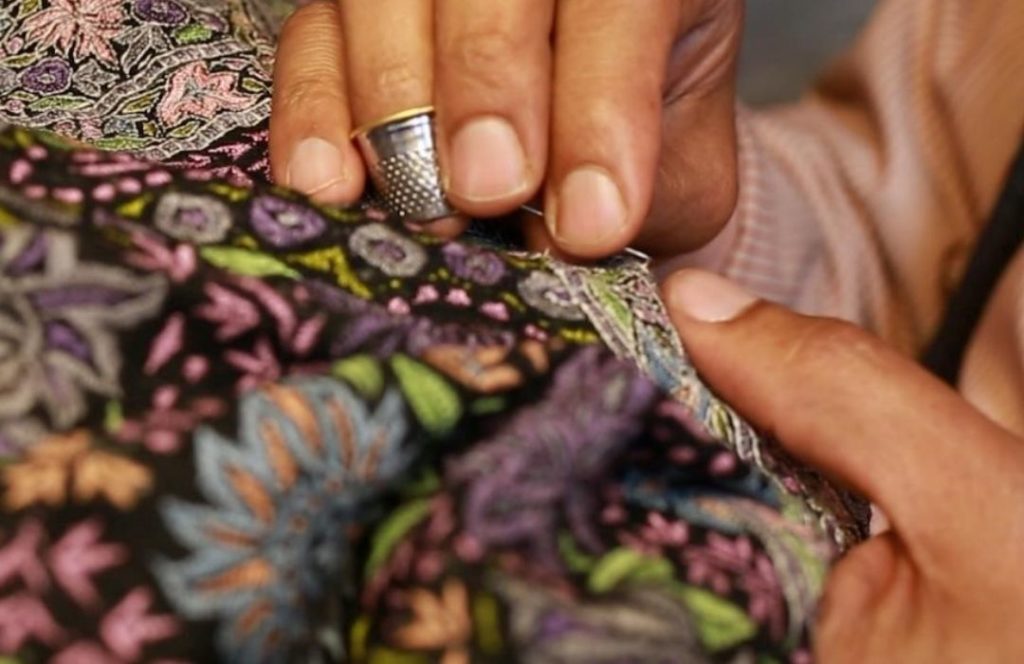
A solid piece is sized as per the requirement of a customer of Cashmere wraps and scarves. It can be a large wrap of 100*200 cm size, or a medium wrap of 70 * 200 cm, or a small scarf for accessorizing. Some Cashmere wraps are hand embroidered with fine threads and needles, which are intricate enough to suit the gossamer base underneath. While some are embroidered in metallic threads (Tilla Dozi) which needs more skill, as metal can perforate the fabric underneath. Thus are produced beautiful and exquisite wraps, which are cherished by royalty all around the world.
Do goats die for Cashmere?
As rumours hover over the manufacturing of Pashmina shawls, and in turn the processing of raw Cashmere wool, we are proud to say that Pashmina goats do not die for Cashmere.
As we saw the process of Cashmere weaving in Kashmir, we realized that there is nothing unethical or cruel when it comes to the entire journey. The animals are carefully reared in the region of Changthang, and given proper food and drink. Their wool is not sheared or plucked; in fact, it is professionally and gently combed off its body, and the process is completely harmless and painless.
Combing is, again, done in the summer season when the wool has already made the goat uneasy, and it itself wants to get rid of it. It is never done in winters or early spring. The animal again grows the wool in early winters and remains safe from the freezing cold. Hence what we saw, was a complete ethical process that did not include a single step or process of cruelty. No animal dies; in fact, no animal is even slightly harmed.
Why aren't goats hurt in the process of acquiring Pashmina
If animal activists and vegans claim that every animal product is cruel, we are confused why Cashmere sourcing is not. Why do herders take special care of their goats. There is a reason why the herders who rear Pashmina goats do not wish to hurt or kill them. After all, the goats are all they have.
Nomads have lived the life of a bedouin always. They survive harsh climatic conditions, and live thousands of kilometres away from the main city. And it is just the goats that help survive them, even in the worst of environmental conditions. The wool of the goats for clothing and flooring, their milk for drinking, and their company to survive and roam around the arid region, is what is their lifestyle. Hence, killing them would be like killing yourself
Another reason for the goats not be even slightly harmed is that they are domestic. When taken for combing, goats are well aware of the entire process. Hence they lie down calmly and patiently until all of the hair is combed. Had they been wild animals, they would certainly shake and try to run away. But since Pashmina goat habitually goes through the process for years, they know they are out of danger
In addition to bring compassionate for animals, we found Cashmere and its processing to be planet friendly too. Infact, processing Cashmere is sustainable. The process empowers small-scale units, hence encouraging people to work, which in turn uplifts their social and financial status. Cashmere processing minimizes wastage, and doesn't include any machine work. There is no associated pollution with regards to processing Cashmere, and the entire process is manual. We found Cashmere shopping responsible and ethical. A Cashmere wrap lasts for a lifetime (around 30 years). It is a heritage piece, which is gifted to brides as well as bridesmaids. In today’s world of fast fashion and ever-changing trends, Cashmere is one such fabric that becomes more and more graceful as time passes. It has not remained rooted in traditional patterns only but mixed with contemporary designs too, to gel with the young generation.
If you shop Pashmina, you are in turn helping an underprivileged artisan, and helping revive a dying heritage as well. You are contributing towards slow and sustainable fashion, which helps the planet be free of the much spread carbon footprint.
Pashmina wrap is a luxuriously light yet warm drape accessory, which is handcrafted from delicate and fine Cashmere wool; ethically acquired from the down coat of the Ladakhi goat. It is world-famous and endorsed by celebrities around the globe
Pashmina comes from the root word "pashm" which means "soft gold" in Persian. But in Kashmir, pashm refers to unspun Cashmere wool of Changthangi goats. Today Pashmina is considered an art that refers to the process of transforming fine goat fibre into the extraordinarily luxurious fabric.
History of Pashmina
Pashmina gained acclaim in Kashmir during the Mughal rule. During this period, Pashmina indicated a high rank and a noble stature. Mughals gifted neighboring countries' rulers the robes of honor which were made in Cashmere wool. This would mean either friendship or a great achievement and service to the court. Back then, Pashmina would be only afforded by nobles and kings. In fact, their apparel and upholstery would be made in Pashmina embroidered with real gold.
Since the 19th-century Pashmina began to be used as a piece of a woman's bridal trousseau. An heirloom piece of a Pashmina wrap would be given to a girl the day she would get married; it would accompany her to her new life.
Pashmina gained impetus in France when Empress Josephine enthusiastically used it. It is believed that she owned a few hundred pieces. In fact, the famous Buta or Paisley motif that actually Pashmina wraps introduced in the west were now imprinted on gowns and accessories in Europe. Other than this, Pashminas kept women as warm as they kept them looking graceful and monarchical all the time. Every single person in Europe, Asia, and in Kashmir itself was swooned by the fineness of the fibre, the embroidery patterns, and the ultimate warmth it provided. Everyone wanted to own a piece for themselves.
Making of Pashmina - The source of a Pashmina wrap
Changthangi goats
Pashmina wraps are made with Cashmere fibre, one of the finest fibers in the world. The raw wool comes from Ladakh's Changthangi goat, which is found at over 14000 feet above sea level. The goat survives -40 degrees because of a fine down coat that grows over its underbelly, neck, and a few areas on its body. This wool is smooth, fine, and exceptionally warm, and it is just because of this wool that the goat is able to get fed and roam around in the area.
As soon as spring and summer arrive, the same wool leaves the goat feeling uneasy and irritable. Its natural tendency to rub itself against walls, rough stones, bushes, and the floor lets some wool from its body spread around the entire region. This is collected in hot summers, and the rest is collected off its body by professionals with the help of specialized combs and tools. It is a lump of wool, to be processed further
The wool reaches Kashmir because Kashmir is the hub of handicrafts, including Pashmina art. The process begins with cleaning and sorting the raw wool, which takes a few weeks. The clean lump of wool is then spun by womenfolk of the valley who have specialized in the same for decades now.
Spinning leads to the creation of threads of the same wool. These threads are so fine that sometimes they aren't visible to the naked eye until clearly noticed. The diameter of these threads is 12-16 microns only. This fibre is Cashmere - the raw material for making a Pashmina wrap. It is later sent to weavers who mount it over their wooden handlooms. They weave it for 4-5 days continuously to come up with plain solid fabric. This is the Pashmina wrap. It can be made in different sizes according to the customer's taste.
Embroideries done over Pashmina
Hand embroidering Pashmina
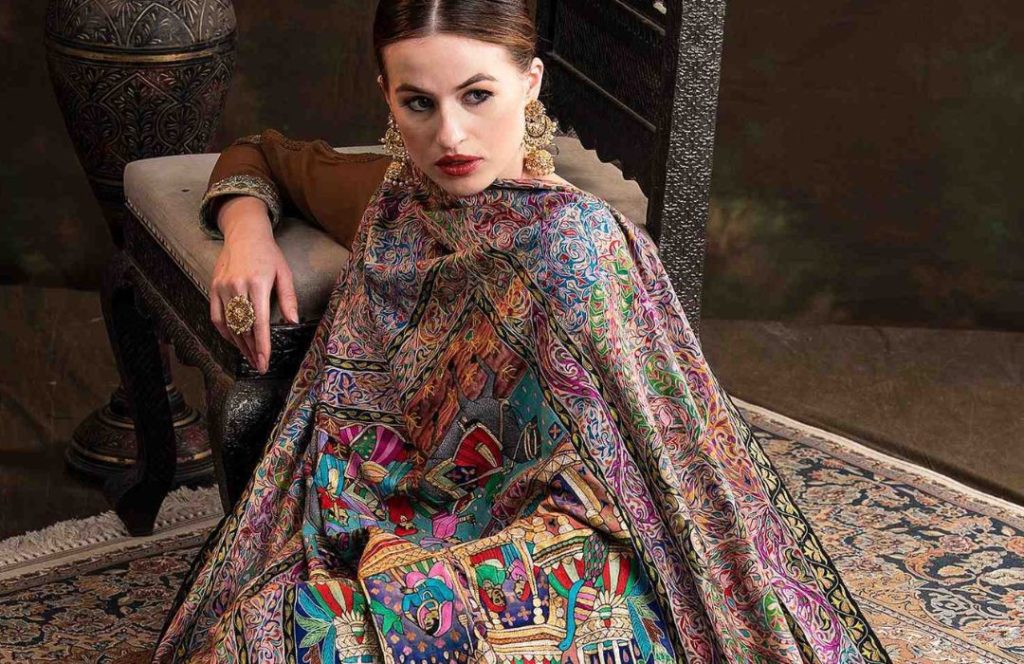
A number of hand embroideries are done over the Pashmina wraps, as they come out of handloom setups. Sozni Kari and Papier Mache Embroidery are thread embroideries that use fine needles and threads in kaleidoscopic colours to pep up the solid base of Pashmina wraps. Tilla Dozi, too, is a thread embroidery, just that thread is metallic, and sometimes real gold and silver are used in place of metals. Pashmina has started to incorporate contemporary patterns like stripes, animal prints, monograms, and checks to be a part of the young generation's wardrobes, who have already embraced its ardor and love
Sizes: How long and broad is a Pashmina wrap?
Pashmina wraps come in a number of sizes. Men's Pashmina wraps are large; about 55*108 inches in size. Women's shawls come in 100*200 cms size, stoles in 70*200 cms size. Then there are scarves that can be just 8 inches wide. Pashmina wraps can be worn with ethnic as well as modern outfits. They can be used to enliven dull shaded outfits as well as minimize overdone looks.
Responsible Shopping - Is buying Pashmina ethical?
Pashmina is the art that substantiates the concept of sustainability and doing good for the planet at large. The wraps are handcrafted, which helps grow local small enterprises and minimizes wastage by lasting for over 25 years. Pashmina sustains families of artisans, thereby helping their community prosper and their children a better life. There is zero intervention of machines when a Pashmina wrap is processed, and hence a large percentage of the population decreases. Hence when a pure Pashmina wrap is purchased, it is, by all means, an ethical shopping done by patrons of art as well as conscious shoppers who wish to make the world a better place to live in.
Only a few buyers are smart and knowledgeable shoppers when it comes to fabric. Most of us while buying a fabric pick one that feels good, or it has a nice colour, maybe a favourite one, or other petty reasons excluding the actual fruit. Even though there are some tangibles for which such unconscious shopping is justified. But what happens if you shop carelessly for something that is a lifetime investment? You regret the decision for the rest of the year. A person usually buys a Pashmina scarf just once or twice in his entire lifetime. It is an exceptional craft & in ancient times it would only be affordable to queens and the affluent. But now since it is easily available, people easily afford it. As such an authentic Pashmina has become hard to find.
When buying a Pashmina there are a number of things a buyer needs to keep in mind. It is not the colour, design, and size that matters in a Pashmina, but purity, originality, and authenticity.
Is your Pashmina original?
How to test my Pashmina?
Is my Pashmina Authentic?
How do I know if my Pashmina is pure?
Where to buy a pure Pashmina from?
How to tell if a pashmina is real
We answer all these questions, but first, we ask ourselves: why is the purity of Pashmina an issue? Do we always care about the material when we shop for wraps or apparel? We don't! Then why care about the authenticity and originality of Pashmina so much? We tell you why
What is Pashmina?
Every time you go shop for apparel, it is just an in-vogue set of fabrics styled to the latest fashion, which you see in the shop, on TV, on the internet, or elsewhere. However, Pashmina wraps aren't like this. Because Pashmina is an art.
Handpainted Pashmina Shawl with intricate embroidery
In the 16th century, Kashmir was a place reeling under darkness; the darkness of being economically backward, ignorance, and inequality of caste system and social status. But when a Sufi Saint from Persia visited the valley, these social prejudices and economic issues improved drastically. This was Shah I Hamdan, who not only uplifted the nation morally but economically as well. With a team of more than 700 craftsmen, who were masters of their skills from Persia, China, Egypt, and Russia, Shah I Hamdan managed to train local Kashmiri men and women in some handicrafts for which Kashmir became famous.
Shah E Hamdan and Pashmina
Among the crafts that Shah I Hamdan taught the locals were the following; carpet manufacturing, shawl making, Papier Mache, copper work, silverwork, embroideries, calligraphy, bookbinding, and many more. But one craft that caught the attention of the maximum number of people who opted for it was Pashmina. Pashmina was the art of converting fine Cashmere wool to luxury scarves or shawls. These were so graceful and magical in their making, that royalty and commoners all over the world swooned.
However, it was Zain Ul Abideen, the then king of the Kashmir valley, during whose rule the Pashmina manufacturing units came into existence and the art thrived. The king enlivened the art of Pashmina by encouraging people to make it a cottage industry. This was especially for women. The king offered women the proposal to work from their respective homes. If so, they would be able to earn even in those days when the valley would be completely cut off from the outside world due to enormous amounts of snow (the harsh winter period, which would last for almost 6 months - or even more).
Hence the economy drastically improved and Kashmir became renowned for a number of arts - especially that of Pashmina. Now Kashmiri artisans would be invited to places near and far, nationally and internationally. They would be requested to train local artisans who would take training sessions from them.
What is Pashmina?
Pashmina is a luxurious art form that transforms the fine cashmere wool of Changthangi goats into exquisite shawls, scarves, and wraps. This delicate and labour-intensive process begins with sourcing the wool from these high-altitude goats, which reside in the remote regions of Ladakh in India. The wool, known for its exceptional softness and warmth, undergoes several meticulous stages to become the luxurious Pashmina products cherished worldwide.
Definition and Process
The journey of Pashmina starts with the collection of raw cashmere wool. The Changthangi goats, also known as Pashmina goats, grow a fine undercoat of wool to survive the harsh Himalayan winters. This wool is carefully combed or sheared during the spring season when the goats naturally shed their winter coat. The collected wool is then cleaned and sorted to remove impurities.
The next step is spinning, where the fine wool fibers are handspun into yarn. This process requires immense skill and patience, as the fibers are extremely delicate. Traditional spinning wheels, known as "charkhas," are used by skilled artisans to create the fine yarn that forms the foundation of Pashmina.
Once the yarn is ready, it moves to the weaving stage. Expert weavers use traditional handlooms to interlace the yarn into intricate patterns. This process can take weeks or even months, depending on the complexity of the design. The resulting fabric is then washed and stretched to enhance its softness and drape.
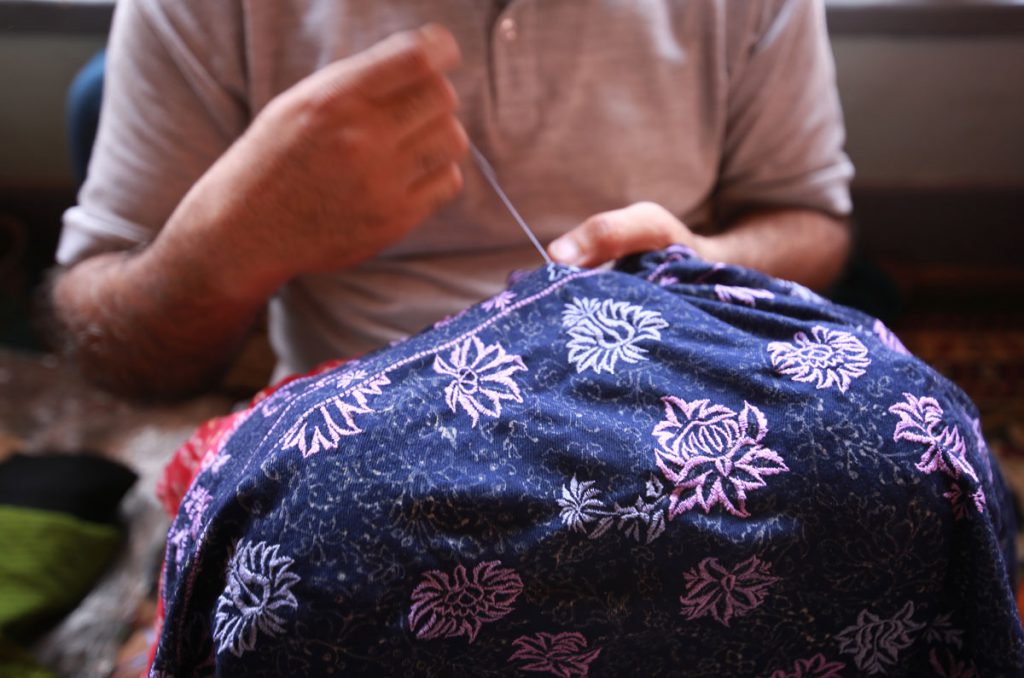
For many Pashmina products, embroidery is an integral part of the artistry. Artisans embellish the fabric with intricate needlework, often using silk or metallic threads. These designs can range from simple motifs to elaborate patterns, adding to the uniqueness and beauty of each piece.
Unique Properties of Pashmina
Pashmina is renowned for its unparalleled softness. The fine fibers of cashmere wool are much softer than regular sheep's wool, making Pashmina products incredibly gentle against the skin. This softness is one of the key factors in determining "How to Tell if a Pashmina is Real." Authentic Pashmina will feel exceptionally smooth and luxurious to the touch.
Another hallmark of Pashmina is its remarkable warmth. Despite being lightweight, Pashmina offers excellent insulation, providing warmth without the bulk. This makes Pashmina shawls and scarves perfect for both chilly winter days and cool summer evenings. The lightweight nature of Pashmina also adds to its appeal, as it drapes beautifully and can be worn comfortably in various styles.
Pashmina’s unique properties of softness, warmth, and lightweight make it a highly sought-after luxury item. However, the market is flooded with imitations, making it crucial for buyers to know "How to Tell if a Pashmina is Real?" Authentic Pashmina products come from trusted sources and exhibit the fine craftsmanship and quality that have been perfected over centuries.
Pashmina is a testament to the rich cultural heritage and skilled artistry of the regions where it is produced. The transformation of raw cashmere wool into luxurious Pashmina shawls, scarves, and wraps involves intricate processes that highlight the dedication and expertise of the artisans. With its unmatched softness, warmth, and lightweight nature, genuine Pashmina remains a symbol of luxury and elegance, cherished by those who appreciate fine craftsmanship and timeless beauty.
Making of a Pashmina Scarf
Perhaps the most meticulous processes are those included in making a Pashmina scarf. Be it a Pashmina shawl, scarf, or stole, the way it is handcrafted is not an ordinary one. A scarf has to roughly pass around 30 stages before it can be sold to its admirers all over the world. As many as 36 individuals, who are masters in a different skill than the previous one, are involved. Thus a Pashmina scarf becomes a family affair. If the man takes care of weaving Cashmere, women might be busy with spinning and other family members would spend time embroidering or calendaring the scarf.
It all starts with the spinning of raw Cashmere by the womenfolk of a family. They spend almost all day cleaning, sorting, smoothening, and spinning raw Cashmere. Women collect raw Cashmere wool from those who acquire it from Ladakh. This practice is as old as Pashmina itself in Kashmir. Women of all ages have spun Cashmere at some point in time. Nowadays this practice is largely done by machines.
Artisan weaving Pashmina on wooden handloom
After spinning the wool is sent for weaving where men of the family mount the fine-spun yarn onto a wooden handloom and spin it into wraps, stoles, scarves, and more. This results in the formation of a plain wrap; it can be embellished in any way one can - the most common being embroidery. Hence, these pieces are hand embroidered in a number of embroideries, which are again all traditional to the valley.
Embroideries on Pashmina need to be done by hand as the underlying fabric is too delicate, gentle, and gossamer to bear the burden of thicker machine threads.
Why choose pure?
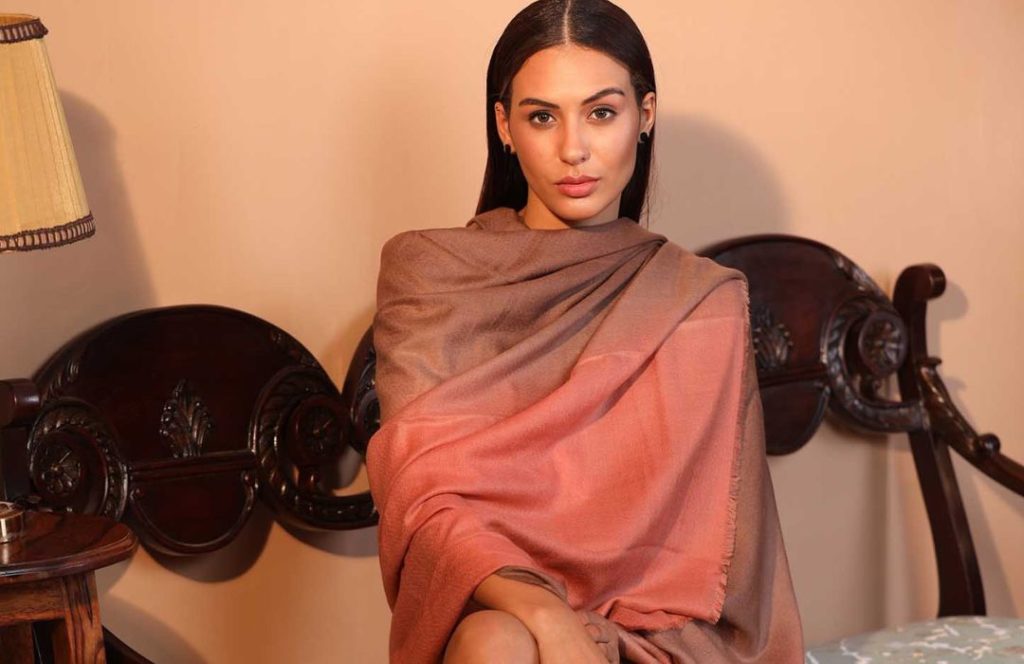
Handwoven traditionally over a wooden loom and patterned in a modish fashion in an ombre style
When huge revenues started pouring into the valley on account of the sale of heavenly warm Pashmina scarves, a few traders indulged in unethical practices. Pashmina scarves are handmade, and one scarf can be handwoven in a span of 3-4 days. Hence customers have to wait for a long time before the product comes out of the loom. And if someone needs an embroidered piece, he/she has to wait for years for the product to get embroidered woven, and spun. Hence revenue gets stuck, and makers have to wait for their share for a long time.
Some traders, therefore, gave away to frauds and started making scarves on power looms. The power loom could prepare the same scarves in one hour that the handloom did in 4 days. To make the soft and delicate Cashmere bear the strain of machines, these traders would mix strengthening fibre like nylon, or silk with Cashmere, and then pass it through a machine. As such more quantity and less quality Pashmina scarves were manufactured. And thus finding a pure Pashmina scarf became a challenge, as well as a luxury to possess.
The Importance of Identifying Real Pashmina
Identifying real Pashmina is crucial for several reasons, including its economic value and cultural significance. Understanding "How to Tell if a Pashmina is Real" can help buyers make informed decisions and appreciate the true worth of this luxurious fabric.
Economic Value:
Real Pashmina commands a high price due to its exceptional quality and the labour-intensive processes involved in its production. From sourcing the fine cashmere wool of Changthangi goats to the intricate weaving and embroidery, each step requires skilled craftsmanship and considerable time. This results in a product that is not only beautiful but also durable and valuable. However, the market is flooded with imitations and synthetic substitutes that are sold as genuine Pashmina.
Buying fake Pashmina can lead to significant financial loss. Consumers may pay a high price for a product that lacks the unique qualities of real Pashmina, such as its softness, warmth, and lightweight nature. These imitations often deteriorate quickly, lacking the longevity and comfort of genuine Pashmina. Therefore, knowing "How to Tell if a Pashmina is Real" is essential to ensure that the investment is worthwhile and that the buyer receives a product that matches the price they pay.
Cultural and Sentimental Value:
Beyond its economic worth, Pashmina holds deep cultural and sentimental significance, particularly in regions like Kashmir and Ladakh. Pashmina has been a part of these cultures for centuries, symbolizing elegance, luxury, and heritage. The art of Pashmina weaving is passed down through generations, with artisans dedicating their lives to perfecting their craft. Each Pashmina piece is a testament to this rich cultural heritage and the meticulous skill of the artisans who create it.
Authenticity matters because real Pashmina represents more than just a fabric; it embodies tradition, history, and cultural identity. For many, owning a genuine Pashmina shawl or scarf is a way to connect with this heritage and honour the craftsmanship of the artisans. Fake Pashmina, on the other hand, undermines this cultural value and diminishes the recognition and respect that genuine Pashmina deserves.
Moreover, Pashmina often carries sentimental value as it is commonly given as a gift during significant life events such as weddings, festivals, and other celebrations. A genuine Pashmina piece is not only a luxurious gift but also a meaningful one, symbolizing warmth, care, and appreciation. In contrast, a fake Pashmina can tarnish these sentiments, leaving the giver and receiver disappointed.
Identifying real Pashmina is essential to preserve its economic, cultural, and sentimental value. Understanding "How to Tell if a Pashmina is Real" ensures that buyers can make informed choices, support genuine craftsmanship, and appreciate the true essence of this luxurious fabric.
The Deception
Imagine investing in a $2000-4000 shawl and then coming to know that it is not Pure Pashmina. How much effort was wasted? The people who acquire the raw fibre from Ladakh, the women who spun it, the men who had to weave it on the handloom, and the embroiderers who would feel it a pleasure to embroider handmade Pashmina, all feel cheated when greedy vendors make scarves on power looms. Hence the need to buy a pure Pashmina rose. Ardent patrons of the art became more and more active in search of pure shawls. They started questioning the sellers, and looking for flaws in their already purchased pieces, but didn't know how to spot a fake Pashmina.
So we decided to write this article to assist the general audience in finding the purest, most authentic and certified Pashmina for them, and enjoy its luxurious warmth and graceful demeanour it exudes.
How can you tell a real Pashmina? | How to tell if a pashmina is real
Real Pashmina, possesses distinctive qualities that can help identify its genuineness. A true pashmina is famous for its exceptional softness, lightweight feel, and exquisite warmth. This stems from the unique climate conditions and natural fibers of the Himalayan region. When examining a pashmina, one has to look for a number of factors. Authentic pashminas often display handcrafted designs, intricate patterns, and fine embroidery. Hence they showcase the artisanal craftsmanship that has been passed down through generations. While assessing its authenticity, consider the source, price, and reputation of the seller, as well as any certification or labelling that might accompany the product.
Here are a few factors to notice when buying a Pashmina:
Did the seller present to you a Certificate?
If your seller isn't giving you a scarf with the GI tag on it, it can still be pure and original, but on one condition; he should be able to present to you a certificate. Craft Development Institute (CDI) Srinagar is an organization that issues certificates for pure Pashminas on the basis of purity and authenticity. It measures a number of things like micron conformation, weight, purity, handmade certification, and more. If a seller can produce this certificate for a scarf, then the piece is an authentic Pashmina.
Look for Variety in Pashmina scarves
Even though this might not always be the case, if a seller has a large variety of Pashminas scarves, or has a large number of customers who trust him and speak well of his quality products, chances are that he is an authentic dealer. This is because a large number of manufacturers will put their trust in an authentic vendor. As such, readily sell him their painstakingly produced authentic Pashmina pieces.
On the other hand, a seller who isn't authentic might not be able to attract more manufacturers because of the lack of trust, as well as won't have a large customer base.
An Authentic Pashmina scarf can't be too cheap
The Ladakhi Pashmina Goat
Pashmina is the art of handcrafted luxury fabric out of fine Cashmere wool, which an exotic Pashmina goat grows over its sensitive areas like belly and throat. It is this wool that makes the goat survive a harsh -40 degree temperature. This raw wool then comes to Kashmir. There artisans spin and weave it into luxury accessories and apparel. The entire process is time-consuming, painstaking, and patience-testing, and consumes a lot of labour and effort. Hence, an authentic Pashmina is a little higher on the price scale.
Similarly, there are sellers who, to make the customers happy, sell their scarves at a low price, which is too good to be true for a Pashmina scarf. These are sellers of fake pieces who sell either pure wool in place of Pashmina or mix Pashmina and silk and sell it as a pure piece. Always make it a point to thoroughly check the authenticity of the seller as well as the scarf that he is selling you.
When buying a pure Pashmina, don't look for perfection, because a handmade product will never be even in texture. The weave should be rather gauzy, an open weave because fine Cashmere fibre cannot tolerate high tension. If you hold a real Pashmina up to the light it should show the mastery of the ‘hand’ of the weaver, which means the weave should be uneven. Shuttle speeds of power loom tend to tear the fragile fibre. Hence to weave an authentic Pashmina, a traditional Kashmiri wooden loom has to be used.
For the same reason, a genuine & real pashmina should never have tasselled edges but a simple ‘eyelash’ fringe, because the fibre is not strong enough to twist and pull in that fashion.
Look for the (Geographical Indication) GI tag on a Pashmina Scarf
GI (Geographical Indication) is a mark of purity that distinguishes pure Pashmina from its fake copies
To preserve the purity of the art of Pashmina making, the govt of Jammu and Kashmir has rewarded pure Pashmina with a GI tag.
GI (Geographical Indication) is a mark of purity that distinguishes pure Pashmina from its fake copies. It is similar to a stamp, located at the corners of a scarf. If a scarf shawl or any Pashmina product contains this stamp, it is 100% pure and authentic Pashmina of Kashmir.
It is quintessential to have good information on Pashmina quality and pricing before you start shopping for the cherished luxury piece, which comes straight from Paradise-Kashmir. It is, after all, the dream of women all over the world to own just one piece of Pashmina. Hence we made sure it is of the best quality
Own a Pashmina already? Test your Pashmina at home to check purity.
5 tests to check your Pashmina purity at home
Identifying pure Pashmina can be challenging because there are many imitations and blends in the market. If you already own a Pashmina, and now have doubts about its purity, we got solutions. There are a few purity tests that one can conduct at home. Keep in mind that a combination of these methods is often the most reliable way to confirm purity. Here are five essential tests that one can easily do at home to confirm the purity of their Pashmina.
Fibre Thickness
The Pashmina fibre
Pure Pashmina fibres are extremely fine, typically measuring between 12 to 15 microns in diameter. You can use a microscope to examine the fibres in a small section of the fabric. You can take your shawl or scarf to a nearby lab and get it professionally tested too. If the fibres are significantly thicker, it may indicate that the product is not pure Pashmina.
The Burn Test
This test involves burning a small piece of the fabric. Pashmina is made from animal fibres and will smell like burnt hair when ignited. It will also leave a fine ash residue. Synthetic materials or blends tend to produce different smells and may not leave ash behind.
The Touch Test
Pure Pashmina is incredibly soft to the touch. Run your fingers across the fabric's surface and see if it feels exceptionally soft and luxurious. Synthetic or blended materials often lack this softness.
The Price and Source
Authentic Pashmina is a premium product, and the price should reflect its quality. If you purchased this Pashmina shawl or scarf at a significantly lower cost than what is typical for genuine Pashmina shawls or scarves. Additionally, if you have purchased it from reputable sources or sellers who provided certification of authenticity, then you need not worry.
Irregular Weave of Pashmina
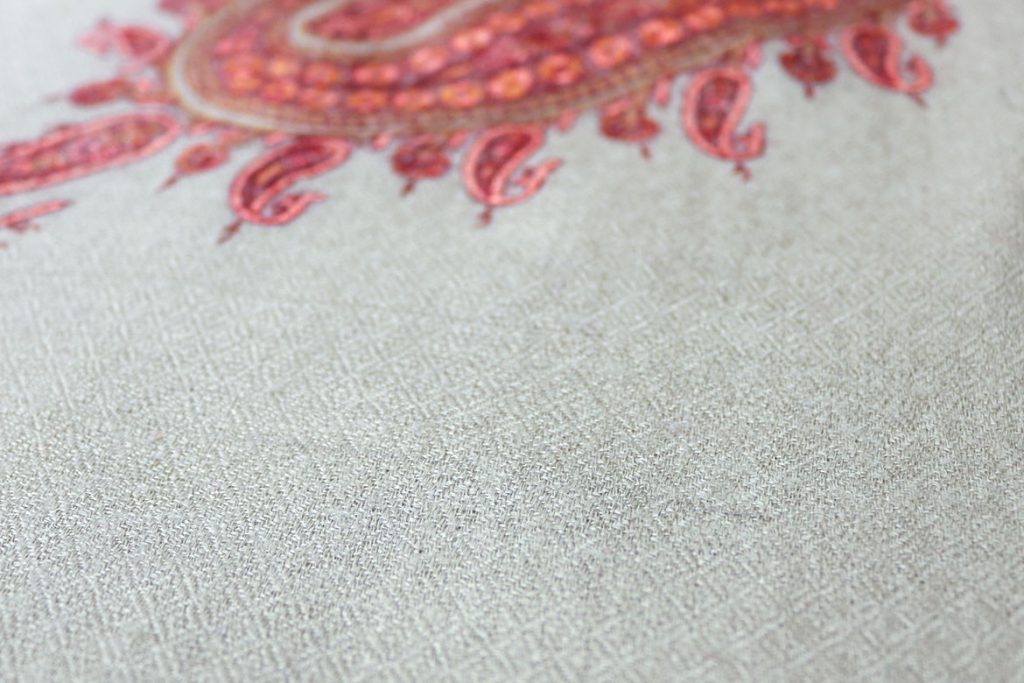
Uneven diamond weave of pure Pashmina scarf
Pure Pashmina fabric often exhibits an irregular or slightly textured weave, and this unique characteristic is one of the hallmarks of authentic Pashmina. A sequenced and regular weave can be done by a machine. Authentic Pashmina shawls and scarves are often handwoven by skilled artisans. The handmade nature of the weaving process can result in slight irregularities in the weave pattern. These imperfections are not considered flaws but rather a testament to the craftsmanship and authenticity of the product.
Common Myths and Misconceptions
Pashmina, known for its luxurious feel and exquisite craftsmanship, often falls prey to various myths and misconceptions. These misunderstandings can mislead potential buyers and detract from the true value of genuine Pashmina. Let’s address and debunk some common myths while providing accurate information to help you understand "How to Tell if a Pashmina is Real?"
Myth 1: Pashmina and Cashmere are the Same
A widespread misconception is that Pashmina and cashmere are interchangeable terms. While both are used interchangeably, Pashmina refers to the art of converting cashmere wool to luxury Pashmina shawls, This wool is sourced from the Changthangi goats of the Himalayas. The art of Pashmina encompasses the intricate processes of weaving this raw wool into luxurious shawls, scarves, and embroidering and embellishing these. Understanding this distinction is crucial in learning "How to Tell if a Pashmina is Real."
Myth 2: Pashmina is Always Expensive
While genuine Pashmina products can be pricey due to the labour-intensive process and high-quality materials, not all expensive shawls or scarves are authentic Pashmina. The cost alone should not be the sole indicator of authenticity. Buyers should look for specific markers of genuine Pashmina, such as the feel, craftsmanship, and sometimes even certifications, rather than relying solely on price as a determinant.
Myth 3: All Pashmina is Handwoven
Another misconception is that all Pashmina products are handwoven. While traditional Pashmina shawls are indeed crafted by skilled artisans using handlooms, some modern Pashmina products may be machine-woven. This does not necessarily mean they are of inferior quality, but for those seeking traditional craftsmanship, it is essential to confirm the weaving method. Knowing "How to Tell if a Pashmina is Real" involves understanding these nuances and being able to identify handwoven pieces.
Myth 4: Pashmina is Not Warm
Due to its lightweight nature, some people believe that Pashmina does not provide adequate warmth. In reality, Pashmina’s fine fibers offer excellent insulation, making it exceptionally warm without the bulk. This unique property allows Pashmina to be both lightweight and highly effective in keeping the wearer warm, debunking the myth that it lacks warmth.
Myth 5: Pashmina is Too Delicate to Wear Regularly
While Pashmina is indeed delicate and requires careful handling, it is not too fragile for regular use. With proper care, such as gentle hand washing and careful storage, Pashmina products can maintain their beauty and functionality for many years. This misconception often deters people from investing in Pashmina, but knowing how to care for it properly is part of "How to Tell if a Pashmina is Real."
Myth 6: Pashmina Only Comes in Plain Designs
Some people believe that Pashmina shawls and scarves only come in plain, solid colours. However, Pashmina can be found in a variety of designs, including intricate embroidery, patterns, and even modern prints. The versatility in design is part of what makes Pashmina a cherished accessory in both traditional and contemporary fashion.
By addressing these common myths and providing accurate information, we can better appreciate the true value of Pashmina. Recognizing "How to Tell if a Pashmina is Real?" involves understanding its origins, craftsmanship, and unique properties, which distinguish it from other fabrics and ensure its place as a timeless and luxurious material.
Conclusion
In conclusion, determining the authenticity of a Pashmina is a matter of careful observation and a series of tests that can help you make an informed decision. The allure of Pashmina lies in its exceptional softness, lightweight warmth, and timeless elegance, making it a sought-after addition to any wardrobe. However, with the market flooded with imitations and blends, it becomes crucial to distinguish genuine Pashmina from the rest.
Investing in a real Pashmina not only provides you with a luxurious and timeless accessory but also connects you to a rich cultural heritage and supports the skilled artisans who craft these exquisite pieces. In your quest for authenticity, trust your senses and seek out reputable sources to experience the true beauty of pure Pashmina.
Dressing up well has always been an obsession for women all around the world. In fact, what you wear casts a huge impression on others and even yourself. But little do they know how much goes into making each of the apparel or accessories they wear. It is never known to a customer how much material, labour, energy & time goes into making one piece of clothing.
So today, we decided to demystify one of the most luxurious pieces of accessory, that the entire world has been swooning over for centuries together. Cashmere - Scarves & Wraps
Winter is upon us. It means we would need something to keep warm but keep the style statement all graceful and timeless. Hence we choose Cashmere which has all the qualities of being a woman's best friend, just not in the hot season. But why choose Cashmere, when there are so many types of wool. We have answers, which will make you an ardent fan of this fine, exceptionally warm, and graceful variety of goat wool.
What is Cashmere?
Cashmere - there is a luxury in the name itself. And why shouldn't it be? The feel of a Cashmere wrap, the gentle caress, the cozy warmth, and the way it upgrades even the most basic of clothing to a more royal one, is just amazing
Cashmere is a variety of wool that is obtained from Pashmina goats found in Ladakh. The fine wool is obtained from the goats and used to make luxury textiles for centuries now. The best and the most famous use of Cashmere is the making of the Kashmiri Pashmina shawl. It crossed all boundaries of the world to be owned by royal families in Europe, Asia, Australia, and America. The reason was the softness, smoothness, and finesse of the Cashmere fibre, which was 1/4th of the human hair in diameter. It began to be used as shawls, apparel, and upholstery items for the royals and their courts.
Where does Cashmere come from?
Cashmere comes from China and Mongolia. 90% of the world's total Cashmere production comes from these two places. Other than these, Cashmere is found in Afghanistan, Iran, Turkey and Ladakh. Ladakhi Cashmere is considered the best quality, and the finest Cashmere in the world.
Ladakhi Cashmere
The Changthang region is situated 15000 feet above sea level in the Ladakh region of Jammu and Kashmir. It stretches across 1600 kilometres from the west to the east, and just one-third of it lies in India. At times, the area freezes at -40 degrees and thus remains cut off from the entire world, for even 9 months. Yet, facing such difficulties and hardships, the native Changpa tribe masters the art of surviving here with their heritage lifestyle
Cashmere comes from goats. These exotic cashmere goats belong to a Buddhist tribe of Ladakh, called the Changpa tribe. The main occupation of the Changpa tribe is rearing a small herd of the Capra Hircus goats. And they have been doing so for 500 years. This nomadic tribe takes care of their goats in the best way. It rears them not only for their milk and meat but especially for their wool.
Cashmere goats in Ladakh region
Life in this part of the world is the least complicated. However, trends change in the rest of the world is the least concern for them. And this has been their situation for 400 years now. The Changpa tribe has always remained clung to their own lifestyle, religion, and beliefs.
How is Cashmere obtained?
Cashmere wool is collected during mid-spring when goats tend to shed it naturally. It starts from March end to May. During this time, hormonal changes in the animal force it to shed the wool. The goat rubs itself with rough surfaces to get rid of some portion of this warm fleece. The animal is ethically treated and wool is combed off its body with specialized tools and combs by professionals. When the entire wool is collected, it is sorted as per finesse. This fleece called ‘Asli Tus’ locally is collected manually and sold to the sellers who process it further
Cashmere goat being combed for fibre
This raw Pashm is 6 times finer than human hair, with an average fibre length of 40 mm & a diameter under 14 microns. Even after being so fine and delicate, Cashmere is considered the warmest natural fibre. Hence it is used to make the cosiest Cashmere wraps, scarves, and stoles
Even if the demand for Kashmiri Cashmere wraps and Cashmere scarves is increasing day by day all over the world, the quality has never compromised. The fibre acquired from Ladakh is pure like always and obtained from the same Changthangi goat. It has been considered superior to Cashmere from other parts of the world like China, Nepal, India or Tibet, etc.
Cashmere In Kashmir
An ancient Sufi Saint - Shah E Hamdan was the first person to discover Cashmere fibre. He once decided to give Cashmere socks as a gift to the then King Zain ul Abideen. That is when Kashmir first experienced the warmth of this luxury fibre.
After obtaining the raw wool from Changthang, it is sent to Kashmir. This is because the people of Ladakh do not have expertise in processing raw wool. Women from Kashmir clean, sort, spin and weave the raw wool into plain Cashmere wraps or Cashmere scarves. Later, if required, the wraps and scarves are sent for embroidery which is again done by Kashmiris.
How is Cashmere made? | The Processing
Hence we get to know that Cashmere goes through the following steps to get completed.
Lets us go through the processes one by one and learn how cashmere is made:
Pre Spinning Process
The changpa goat sheds its wool in Springtime as the weather becomes warmer and makes the goat uneasy. The wool is collected at the same time and thus the pre-spinning processes begin. One Changpa cashmere goat produces 80 to 450 grams of Cashmere per year. And it takes the wool of at least three goats to produce one Cashmere wrap
The next step is to comb the goats’ body carefully and free it of the wool which has by now become more of a burden for the goat. Even before the process of combing starts, this goat rubs itself against rough surfaces like large rocks, shrubs, tree stems and more, leaving a portion of this wool all over natural surfaces. The rest of the wool which is still on its body is carefully combed by professionals using professional tools and skill. They make sure the process is ethically carried out with high precision.
The experts use specialized tools like a pin brush, a slicker brush, and a brush with natural bristles. They brush the backbone, across the ribs and the belly which loosens the wool naturally and separates from the goat's body. The expert moves from one area to the other carefully, taking his time. He completes combing a goat in not less than 30 minutes. The wool hence obtained is impure, full of dust and dirt, and in desperate need of cleaning and sorting.
Dusting and Cleaning Cashmere
The process of dusting and cleaning begins. This process ensures that sand and dust totally separate from the wool. As much as 20% of Cashmere is lost in this process because the fibre is too fine to separate completely. Hence some portion is let go with impurities. Sometimes the impurities are too large to be sorted with hands. As such a metal comb uprighted over a wooden stand is used and the raw wool is run through this comb continuously till it appears clean.
After cleaning, the raw wool is sorted and dehaired. Sorting includes classifying the raw wool according to the quality and length of the fibre. Detailing includes separating the coarse guard hair from the actual pure fibre. Raw wool consists of 50% guard hair. It needs to be separated either manually by the womenfolk of Kashmir or by specialized machines.
Pure wool fibres are now mixed with natural glue to make it stronger and smoother. This process is called glueing. Pounded rice mixed with water is stored in a vessel & raw fibre is soaked into it for 2-3 days. On the third day, the fibre is taken out and cleaned again to remove rice particles. The resulting strong, clean and pure fibre is called Thumb (locally)
It is this Thumb that is handed over to spinners who spin it over a classic traditional Charkha called Yinder.
Spinning
The spinning of the yarn is the most intricate and meticulous activity as far as the preparation of Cashmere is concerned. But since Kashmiri women have mastered this skill from times immemorial, it is an easy and everyday task for them that they enjoy doing.
The spinning process starts with the Thumb which was the end result of the Pre Spinning process. Thumb is handed over to womenfolk of the valley who come from the remotest and underprivileged areas. The women master the skill of converting a Thumb to long and delicate Cashmere fibre.
Hand Spinning
If a Cashmere wrap is to be handspun on a classic Yinder, then the Yinder is prepared beforehand. The Thumb (pure tuft of Cashmere wool) is held between two fingers and the thumb. The spinner turns the charkha wheel with her right hand and keeps moving the tuft of fibre upwards and downwards with the left hand in a balanced rhythm. If the movement of the charkha is not in rhythm with the movement of the hand, the fibre will break. Thus spinning a charkha is a skill in itself and needs precision and careful attention.
The yarn thus obtained from the Yinder is the Cashmere fibre. It is fine, delicate, and warm. This yarn is spun wound around a grass straw. Later yarn from two such wounds is transferred over a wooden reeler for more strength (double the strength of a single yarn). At last, this double yarn is made into hanks over another wooden reeler and sent to weavers. Weavers open the hank to load it over handlooms.
Machine Spinning
Spinning Pashm can even be done with the help of a machine, which is a modern alternative to hand spinning. To increase the production of Cashmere wraps, Cashmere wool is sometimes spun over machines (semi-automated). Pure Cashmere wool is first mixed with nylon (or any fibre with great strength) to make it able to bear the harshness of a machine. Later, when the wrap is complete, it is treated with acid to remove the added component fibre. The wrap thus prepared is pure too, but it lacks the traditional charm of handmade Cashmere. It is the handspun wraps that are often preferred over machine-spun pieces because they are more soft and lustrous. But handspun shawls take time to get manufactured because spinning a shawl itself takes months together.
It takes around 30 days to spin 100 grams of the pashmina yarn on Yinder, working for 7 hours a day. Hence it is now a days preferred to spin a shawl with the help of a machine and then weave it by hand.
Weaving
As soon as the weavers get spun yarn from spinners, they begin the pre loom processes. Weavers get the yarn in the shape of hanks, thus the first activity that weavers perform is opening these hanks. The yarn is stretched over a thanjoor which is a large wooden stand consisting of two vertically standing iron rods. When it is stretched enough, then it is wound over a precz (wooden spindle) to be taken outdoors for Yarun. But before the process of Yarun, if the yarn needs to be dyed, it is dyed first. Natural dyes are used to dye Cashmere as it can't bear the harshness of chemical dyes.
Yarun: Two wooden spindles are taken outdoors and wound around 4-6 wooden rods, dug into the ground vertically. Two men walk back and forth around these rods and continuously keep winding the yarn on the spindles around these erected rods. More than a thousand threads are wound around these rods. This process is considered crucial and labour intensive.
The Loom
From the iron rods, the yarn is removed after it is perfectly stretched. It is handed over to a professional warp dresser who fixes these yarns as warps in a loom. The process is not an easy one. It is believed to take more than 6 days to fix each warp into the heddles of the loom
The traditional Kashmiri loom is made of wood. It comes with a small bench enough for just two people to sit. The yarn has already been fixed into the loom as per the weave of the wrap that they have to start making. The process starts by the two men assisting each other. As one passes the yarn from behind, the other one pulls it through the loop. A 10% wastage during the weaving of Cashmere wraps is normal. It takes an average of around 4-5 days to weave a plain Cashmere wrap.
The result of weaving Cashmere is a plain fabric called thaan. From this thaan, wraps of different sizes are cut out as and when required.
Finishing And Embroidery
The artisan embroidering the Pashmina shawl
The thaan is still incomplete and imperfections like superfluous threads, attached material and the like are to be removed before selling. It is then handed over to purzgar who carefully tweezes, clips or removes any waste or foreign material attached to the surface. Thaan is fixed in a wooden frame tightly with two rollers above and below. The rollers move the fabric up and down, giving the expert a close look at the fabric so that the finishing becomes flawless.
The thaan is rubbed with the rough core of a gourd, bitter gourd, or maize cob to make the surface smoother and free from foreign materials and impurities.
Next, it is taken for washing to a professional Cashmere washer, who washes the thaan in running water (spring water is mostly used). He continuously keeps striking the fabric with large stones or cemented surfaces
For drying, the fabric is wrung in a specialized spinner or just left in the sun for days together. Natural drying is preferred for Pashmina. Later the fabric is sent for calendering where it gets mechanically stretched and ironed.
The Cashmere scarf, now ready can be dyed at this stage also. Then it can be sent for embroidery to come to a final piece which can be purchased by patrons of the art
Embroideries done on Cashmere
The most popular embroideries done on a Cashmere wrap are:
Sozni Kari is the art of hand embroidering a Cashmere wrap with fine and intricate threads. This embroidery can be done profusely as it is light and doesn't harm the delicate base at all. The embroiderer uses a fine needle and thread and works 7-8 hours a day to prepare a wrap. At times, it takes more than 4 years to complete one wrap if the embroidery is spread all over the base
Metallic threads are used in Tilla Dozi which are coated in real gold and silver to make breathtaking motifs over a Cashmere wrap. However, while doing this embroidery great care needs to be taken. That's because the thick threads can cause the base Cashmere fabric to get perforated. As such, Tilla dozi is usually done just over the borders. Tilla embroidered shawls are usually worn for weddings.
Papier Mache embroidery uses thicker and colourful satin threads with bolder strokes to mark protruding motifs over a wrap. The final product looks nothing less than a live painting
Kalamkari Cashmere scarf is another form of wrap which uses vegetable dyes to paint large motifs over a Cashmere scarf with the help of a stylized brush.
Kani Cashmere scarf uses colourful threads wound around wooden sticks as warps to create marvellous patterns all over the wrap. A Kani Cashmere scarf was the one which was introduced in Europe for the first time. It was when Napoleon gifted his wife one.
Reversible scarves use special techniques of weaving. As such the wrap obtained can be worn both from the front and back side.
Modern styles in Cashmere
Since embroidery and heavy woven Cashmere wraps aren't a day to day accessory, designers have come up with modern ways to style traditional Cashmere scarves & wraps.
Printed Cashmere
Modish prints, monograms, graphical prints are some of the in-vogue embellishments that Cashmere has gotten into. These ices can be worn every day with casual outfits.
Patterned Cashmere
Stripes, checks, abstract patterns, and more make a Cashmere scarf look chic and more casual
Lace Cashmere
Laced cashmere scarf looks more formal for weekly or monthly events especially if it hosts a pastel shade
Ombre Cashmere
Scarves of this type are coloured ombre to match modern outfits. It gives wearers a chic and casual feel.
What is a 100% Cashmere scarf?
When the popularity of Cashmere rose to its zenith in the 19th century, many fraudulent traders started making cheap copies. This led to a downfall in the making of pure Cashmere wraps as cheap copies were sold for less. Hence customers got lured to them. 100 Cashmere scarf would be such a scarf which is made from 100% Cashmere only. No foreign strengthening material would be used in it. After the advent of power looms, Cashmere wool would be mixed with strengthening nylon or silk to make it eligible for the wear and tear of the machine. The scarves, hence, would be an amalgam of a number of materials and not pure. 100 Cashmere scarf is 100% pure Cashmere scarf, which is handmade and there is no interference of machine.
Is Cashmere from Kashmir?
Cashmere production is the largest in China, which is followed by Mongolia. But the quality of Cashmere coming from these areas is nowhere close to the Cashmere from Kashmir. Kashmiri Cashmere is rare, finest and hence expensive than the others. One Cashmere goat of Ladakh produced around 150 grams of Cashmere wool per year
Properties of Cashmere wool
One Cashmere goat produces just 150 grams of Cashmere per year. Hence it takes three to four Cashmere goats to produce one Pashmina shawl. The diameter of Cashmere yarn is just 12-16 microns which makes it the finest fibre after Shahtoosh (whose diameter used to be just 8-10 microns) which is banned today. Cashmere fleece grows on the sensitive areas of the Ladakhi goat as a down hair which protects it from -40 degrees temperature of the Changthang plateau.
History of Cashmere | Where does Cashmere come from?
Cashmere was first discovered by a Sufi saint Shah I Hamdan, who visited Kashmir with 700 craftsmen. He discovered the fine Cashmere in Ladakh and ordered socks made out of the same. He presented the socks to the then king of Kashmir, Zain ul Abideen who liked the socks so much that he ordered factories to be set up for processing Cashmere and making Pashmina shawls. Hence factories were set up and the 700 craftsmen who Shah I Hamdan had gotten from Persia with him, started training locals. The craftsmen trained locals in many local arts, the primary being Pashmina making. This helped Kashmiri economy grow and Pashmina shawls made Kashmir further famous all over the world.
Hence factories were set up and the 700 craftsmen who Shah I Hamdan had gotten from Persia with him, started training locals. The craftsmen trained locals in many local arts, the primary being Pashmina making. This helped the Kashmiri economy grow and Pashmina shawls made Kashmir further famous all over the world.
Soon Cashmere spread all over the world and became the most cherished wrap accessory in Europe. It was given as a gift by Napoleon to his wife Empress Josephine who later ordered several hundred of the same and set Pashmina shawls to timeless fashion. Pashmina shawls were given to rulers of neighbouring countries as a sign of peace or gifted to kings and queens of royal courts. Pashmina crossed all national and international boundaries and visitors used to visit Kashmir only to buy Pashmina shawls
Cashmere and Pashmina
The best use of Cashmere in the valley was done by making Shawls out of Cashmere wool which came to be known as Pashmina shawls. These Pashmina shawls were made in a number of varieties like plain shawls, embroidered shawls and Kani shawls of Kashmir. Hence Cashmere was the wool used to make the shawls and Pashmina came to known as the exquisite art of making shawls from Cashmere.
Cashmere vs Shahtoosh
Cashmere is the down fibre of the Ladakhi Capra Hircus, also known as Pashmina goat, while as Shatoosh is the down fibre of the chiru goat or the Tibetan antelope.
The goats are domestic while as the Chiru is wild
Cashmere goats are ethically treated, but Chiru goats are hunted and killed for Shahtoosh wool
Shahtoosh is banned and Cashmere is not
Shahtoosh is finer than Cashmere. While Cashmere has a diameter of 12-16 microns, Shahtoosh has a diameter of just 8 microns.