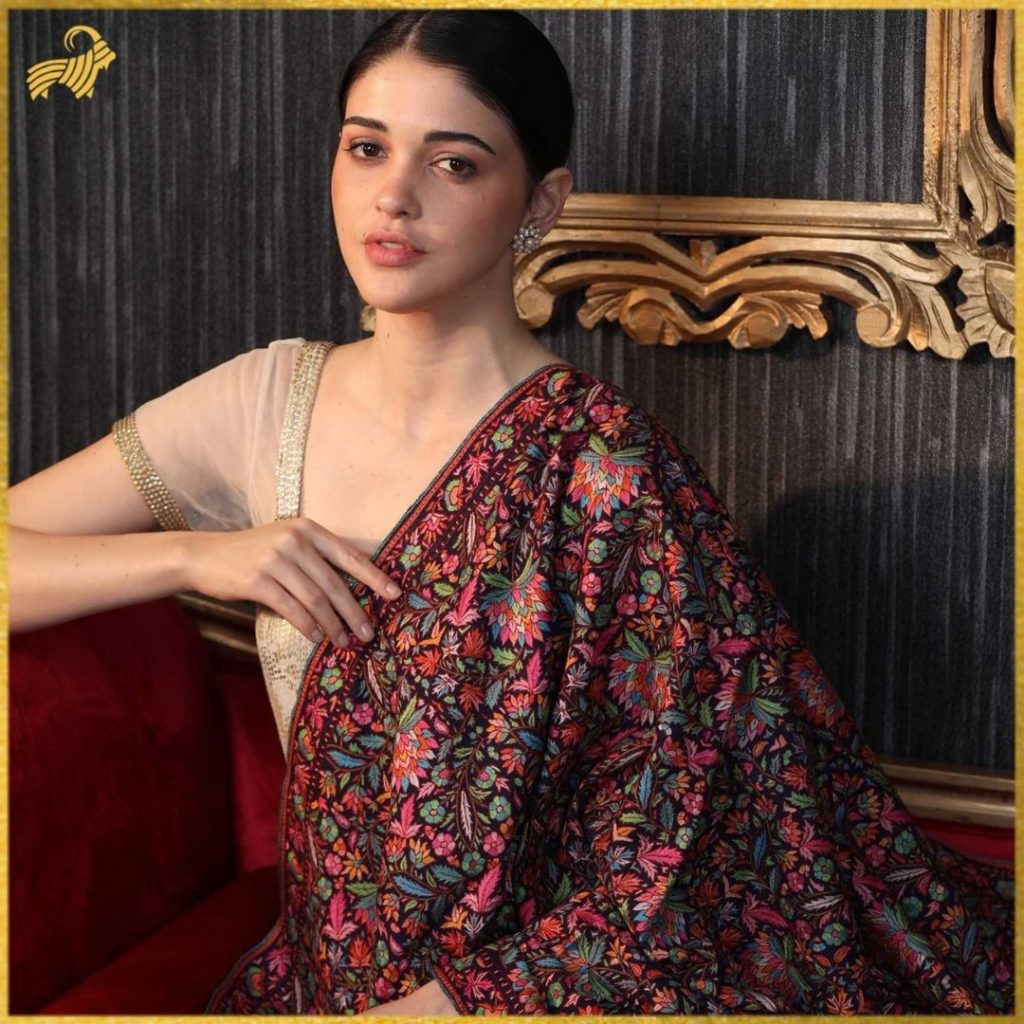
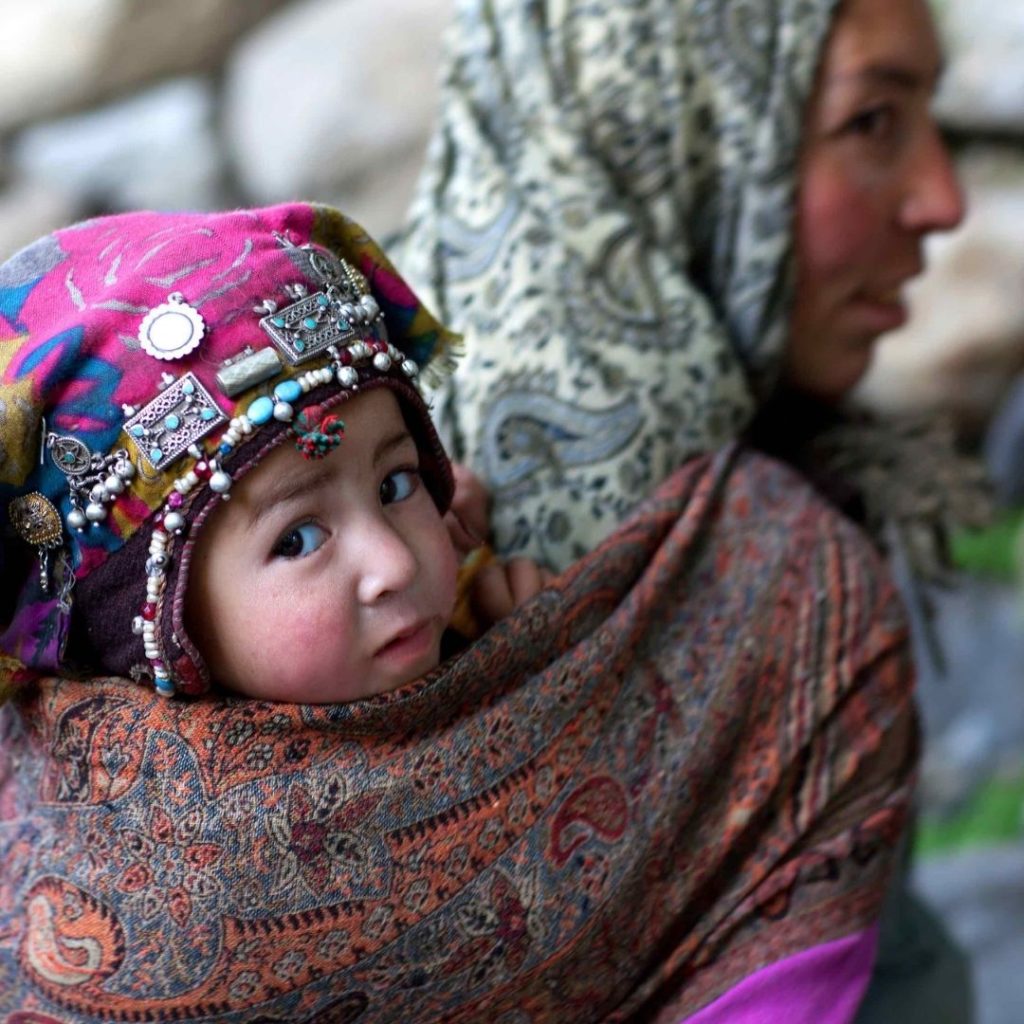
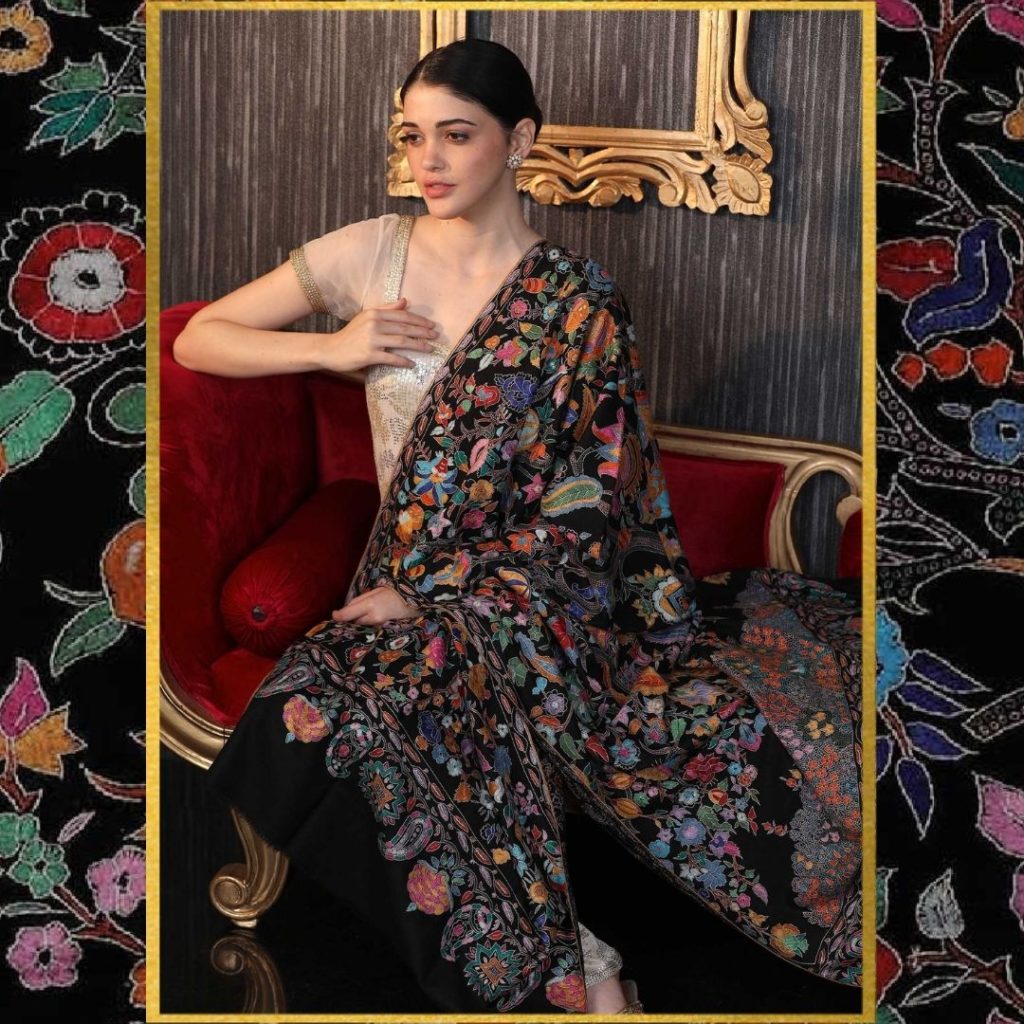
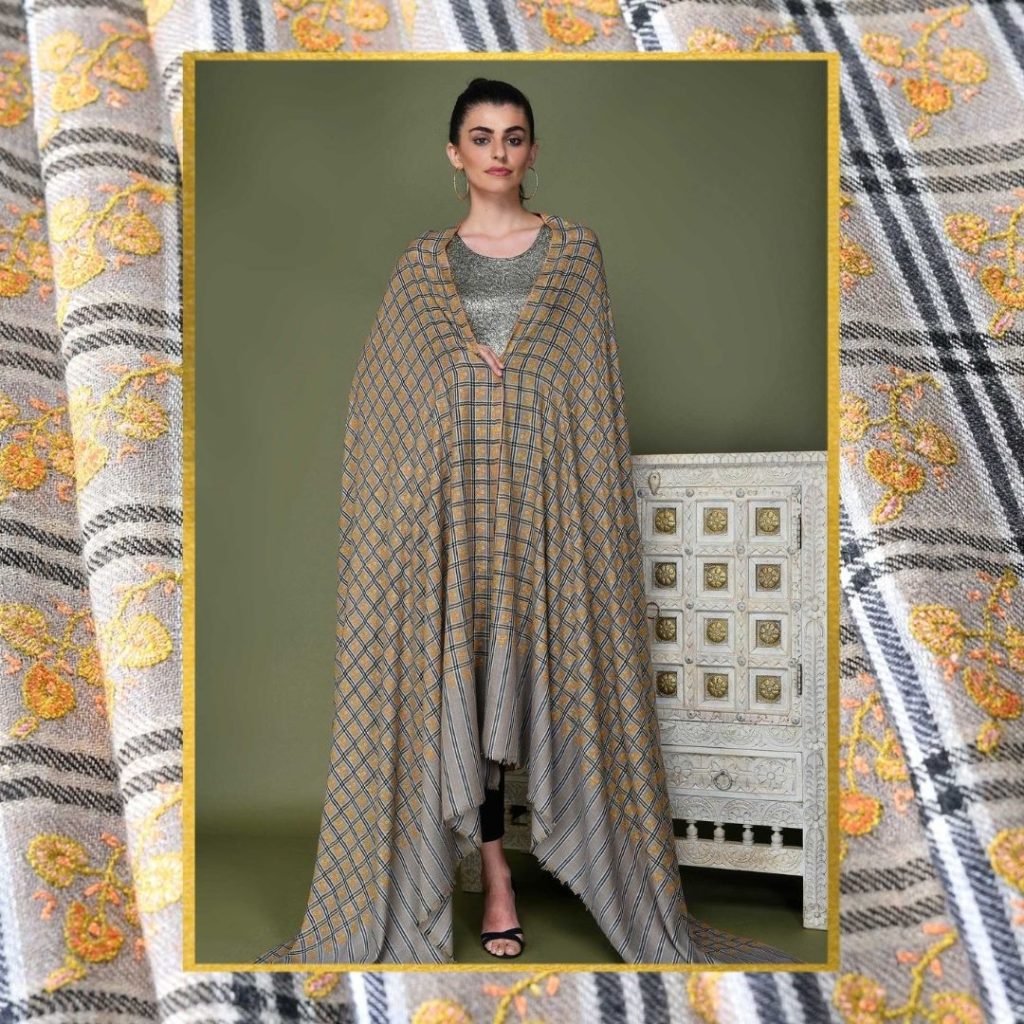
The Patrons of Shahtoosh call it “the king of wools". Patrons have long regarded it as one of the most luxurious and sought-after fabrics in the world. Famous for its extraordinary softness and warmth, the most skillful artisans weave Shahtoosh shawls. The wool comes from the fine undercoat of the Tibetan antelope. Despite its allure and historical significance, the production and trade of Shahtoosh shawls have been banned across the globe. This is due to conservation and ethical concerns.
The international ban on Shahtoosh has raised questions for many consumers who might not understand why this precious fabric is illegal. While its allure remains, the reason behind the ban is the protection of the endangered chiru. Note that the poaching for the wool caused the Chiru population to severely decline . Also known as Chiru goat, the Tibetan antelope is an endangered species (under CITES). Therefore, Shahtoosh received a ban in most of the countries in the world. However, unfortunately, the weaving of Shatoosh shawls still continues secretly in Kashmir, due to high demand from the west.
This blog delves into the reasons why Shahtoosh receievd a ban. We will examine the conservation issues, legal regulations, and the cultural and ethical implications behind the ban. We will also consider the impacts of the ban on traditional artisans, the enforcement of international wildlife protection laws, and the sustainable alternatives available today.
Origins and Cultural Significance of Shahtoosh
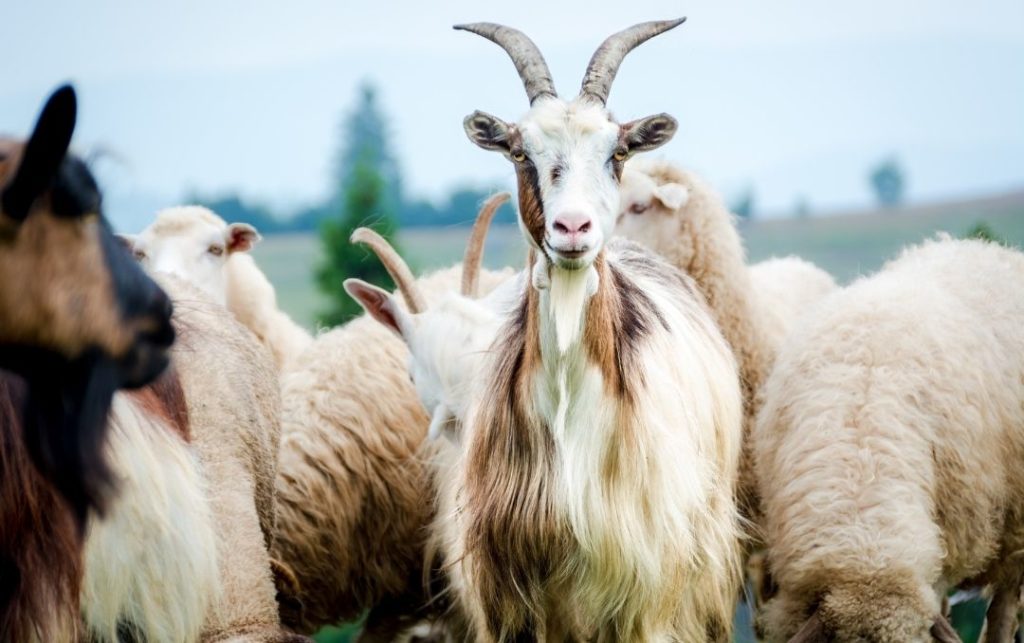
Shahtoosh shawls have been a symbol of luxury and status for centuries, treasured by royalty, aristocrats, and the wealthy elite. The term “Shahtoosh” comes from Persian, meaning “king of fine wools". The shawls are incredibly lightweight, yet warm enough to pass through a wedding ring. The wool used to make these shawls comes from the fine undercoat of the chiru. Chiru is an antelope that roams the high-altitude plains of Tibet and Ladakh.
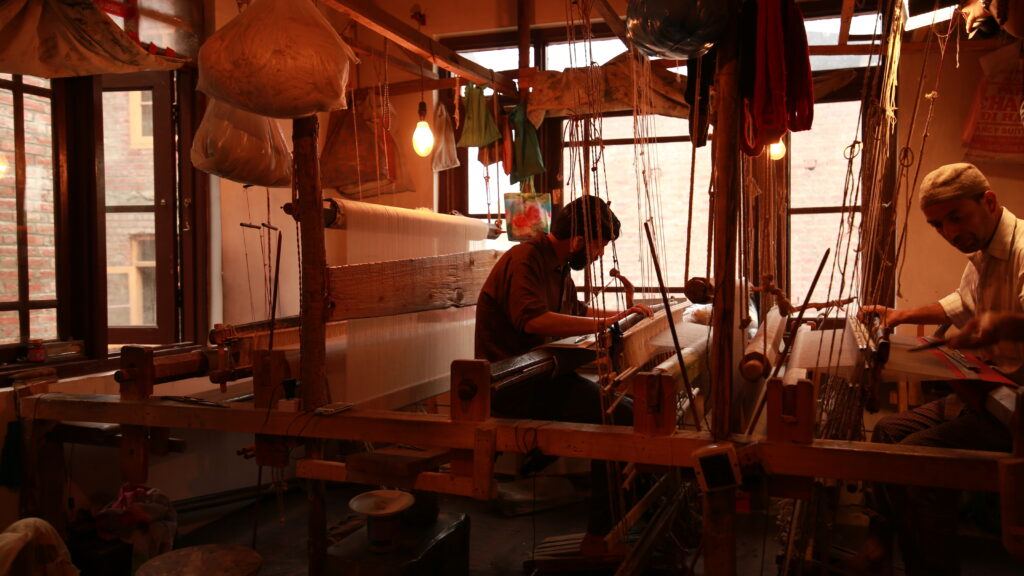
Historically, Shahtoosh weaving was a highly specialized craft that comes down through generations in Kashmir. Artisans would skillfully hand-spin and weave the delicate wool into shawls that were famous for their softness, lightness, and warmth. These shawls were not only a symbol of status but also played an important role in local culture and tradition. Many families handed them down as heirlooms.
The demand for Shahtoosh grew over time. This was particularly in Europe and other parts of the world, where they became a symbol of ultimate luxury. However, as demand increased, so did the pressure on the chiru population, as obtaining the wool required killing the animals. Unlike Cashmere, which comes from goats that herders gently comb, one can collect Shahtoosh wool only by killing the antelope. This lead to significant ethical and environmental concerns.
The Endangered Status of the Tibetan Antelope (Chiru)
The Tibetan antelope, known as the chiru (Pantholops hodgsonii), holds a crucial place in the ongoing conversation around endangered species and ethical fashion. Native to the Tibetan Plateau, this graceful animal has become the central figure in understanding the question, "Why is Shahtoosh banned?" The answer lies in the chiru's status as an endangered species. Also, the devastating impact that the Shahtoosh trade has had on its population can answer this question
Habitat and Physical Characteristics of the Chiru
The chiru is a unique species, specially adapted to survive in the harsh, high-altitude environment of the Tibetan Plateau. This region, stretching across parts of China, India, and Nepal. This region experiences extreme cold, sparse vegetation, and low oxygen levels. The chiru's thick coat, particularly the fine undercoat known as "Shahtoosh," allows it to withstand these severe conditions. The wool fibers of Shahtoosh are incredibly fine - about 9 to 11 microns in diameter. This makes it softer, warmer, and lighter than any other natural fiber.
However, the very quality that enables the chiru to survive in its habitat has also made it a target for poaching. The undercoat is so highly prized that poachers kill chirus in large numbers to harvest the wool. One cannot collect the wool through shearing, unlike the wool of goats or sheep. This unsustainable practice has led to a rapid decline in the chiru population, pushing the species to the brink of extinction.
The Decline in Chiru Population
Historically, the Tibetan antelope roamed the plateau in large herds, with an estimated population of over one million at the start of the 20th century. However, as the demand for Shahtoosh shawls grew in the mid-20th century, especially in global markets, the chiru population plummeted. By the 1980s and 1990s, poaching for Shahtoosh wool had become rampant. The population of chiru dropped to an estimated 75,000 to 100,000.
The answer to the question "Why is Shahtoosh banned? is largely due to this alarming decline in the chiru population. Each Shahtoosh shawl requires wool from three to five chiru. This means that hunters kill thousands of animals for every batch of shawls produced. The scale of the slaughter became so vast that conservationists feared the species would become extinct if they didn't take drastic measures
Conservation Efforts and Legal Protections
To protect the Tibetan antelope from further exploitation, the international community, along with national governments, began to take action. In 1979, the chiru was listed under Appendix I of the Convention on International Trade in Endangered Species of Wild Fauna and Flora (CITES). This listing included the strictest protections available under international law, prohibiting the trade of any products made from endangered species. As a result, the international trade of Shahtoosh shawls received a ban.
India, home to the majority of Shahtoosh production in Kashmir, also enacted stringent laws to protect the chiru. The Wildlife (Protection) Act of 1972, amended over the years, explicitly bans the hunting of chiru and the production or sale of Shahtoosh. Despite the ban, the illegal trade of Shahtoosh continued for several decades. It was primarily driven by demand from wealthy consumers in Europe, the United States, and the Middle East. Smugglers and traders took advantage of the high prices Shahtoosh shawls could command, often bypassing legal protections through black markets.
However, increased enforcement efforts, particularly in the early 2000s, have helped to reduce the scale of poaching. Governments in India, China, and Nepal have implemented stricter penalties for poaching and smuggling Shahtoosh, including fines and imprisonment. Conservation agencies have also worked to raise awareness about the plight of the chiru. They encourage consumers to choose ethically sourced alternatives like Pashmina or Alpaca wool instead.
Current Status of the Chiru Population
While conservation efforts have slowed the decline of the chiru population, the species remains endangered. They have a current estimated population of 100,000 to 150,000 individuals. Protected areas like the Changtang Nature Reserve in Tibet and wildlife sanctuaries in Ladakh, India, provide critical habitats for the chiru. In these areas, they can migrate and reproduce without the threat of poaching.
Anti-poaching patrols have been established to monitor these areas. Also, local communities have been enlisted to help in conservation efforts. Despite these protections, the chiru population remains vulnerable due to the ongoing demand for Shahtoosh on the black market. As long as there is financial incentive for poaching, the risk to the species persists.
The Ethical Dilemma and the Global Ban
Ultimately, the ban is a reflection of the ethical and environmental dilemma posed by the Shahtoosh trade. While the shawls themselves are undeniably beautiful, the cost in terms of animal lives and biodiversity loss is far too high. By banning Shahtoosh, international organizations and national governments have taken a stand for wildlife conservation. They have recognized that no luxury product is worth the extinction of a species.
The Shahtoosh ban also highlights a broader shift in consumer ethics. As awareness of endangered species and environmental protection grows, more consumers are choosing to support sustainable and cruelty-free products. The fashion industry, too, has begun to embrace ethical sourcing and production practices. Many are now moving away from materials that harm animals or ecosystems.
Making of Shahtoosh shawls
The Tibetan antelope or Chiru goat lives at an altitude of over 5,000 metres in one of the harshest conditions. To survive the freezing cold of the Himalayas in winter, it grows a special type of down fur, extremely warm. Chiru goat is a wild animal. Hence, hunters need to hunt it down to obtain its wool. As chiru goats migrate to a point in a year, hunters follow them. After finding them, hunters kill them for their skin, bones, meat, and pelts. Artisans convert the pelts to precious Shahtoosh shawls while hunters take their long horns along as trophies. Note that it takes three to five Chiru goats to prepare one shawl.
It is this precious wool, which artisans later process manually in Kashmir and transform into luxury shawls. These sell at around $US 20,000.
Shahtoosh Shawls in Kashmir - Variety and Colors
An off-white shade and a warm beige are two natural shades that Shahtoosh features. These colors are traditional and most used. However, artisans dye Shahtoosh in any shade of the spectrum, be it brights or pastels.
In addition to this, artisans at times embellish Shahtoosh shawls by embroidery, patterning in checks and modish patterns, covering in fringes, or coloring in multiple shades. However, the grace of a plain Shahtoosh shawl is unparalleled.
History of Shahtoosh Shawls
Emperor Akbar was an ardent patron of Shahtoosh and Pashmina both, and he stared factories of the same. Shahtoosh remained his first choice. It was so fine, warm, and delicate that one could pass it through a finger-ring. Besides, kings got it embroidered in fine patterns and used it for themselves exclusively, mostly in natural colours
The Impact on Artisans and Local Communities
The ban on Shahtoosh, while essential for protecting the endangered Tibetan antelope (chiru), has had a profound impact on artisans and local communities. This was particularly in Kashmir, where the craft of Shahtoosh weaving has passed down for generations. The question of "Why is Shahtoosh banned?" is often discussed in the context of conservation. But it’s equally important to consider how the ban has affected the livelihoods of those who have depended on this industry for centuries.
A Loss of Generational Craftsmanship
For generations, artisans in Kashmir have been famous for their exceptional skill in creating Shahtoosh shawls. These were world famous for their softness, warmth, and intricate designs. Weaving Shahtoosh is not just a trade but an art form, requiring years of practice to master. The wool of the chiru is so delicate that artisans must spin it by hand, and each shawl could take months to weave. Traditionally, the ability to produce a flawless Shahtoosh shawl was a matter of great pride and prestige for Kashmiri weavers.
With the ban on Shahtoosh, many artisans lost their primary source of income. The sudden prohibition on the sale and production of Shahtoosh shawls left many without a market for their skills. For weavers who had spent their lives perfecting this craft, the ban meant more than just economic hardship; it represented the potential loss of a cultural heritage. Weaving Shahtoosh is an ancestral tradition, passed down through families. But its sudden outlawing has created a cultural gap that may never be fully restored.
Economic Hardship in Local Communities
The economic impact of the Shahtoosh ban has been severe. This is particularly for communities in Kashmir that relied heavily on the production and sale of these shawls. Before the ban, Shahtoosh shawls commanded high prices on the international market. The industry provided a steady source of income for artisans and traders alike. Shahtoosh shawls were in high demand in Europe, the Middle East, and the United States, and the profits from these sales supported not only individual artisans but also entire local economies.
However, when the trade was declared illegal under the Convention on International Trade in Endangered Species of Wild Fauna and Flora (CITES) and national wildlife protection laws, the livelihood of these artisans came under threat. Many weavers had no alternative employment, as their specialized skills were not easily transferable to other industries. The sudden drop in income led to widespread financial hardship in communities that had long depended on Shahtoosh.
In response, some artisans turned to the production of other luxury textiles, such as Pashmina. While Pashmina weaving is another highly skilled craft, it does not command the same prices as Shahtoosh. Also, many artisans found it difficult to transition to this new market. Additionally, the oversupply of Pashmina shawls due to the influx of former Shahtoosh weavers into this industry has driven down prices, further compounding economic challenges for artisans.
The Debate Over Livelihoods vs. Conservation
The ban on Shahtoosh has sparked a heated debate about the balance between conservation efforts and the protection of livelihoods. On one hand, there is no doubt that the Tibetan antelope’s endangered status makes the Shahtoosh trade unsustainable. The demand for Shahtoosh wool has driven the species to the brink of extinction. Without the ban, poachers could have wiped out the chiru population entirely..
On the other hand, many argue that the ban has disproportionately affected poor artisans and weavers. These craftsmen had no role in the illegal poaching of the chiru. Critics of the ban contend that the government should have done more to provide alternative livelihoods for these communities. Others argue that authorities could create programs to retrain these weavers in other crafts. Some organizations and NGOs have, in fact, made efforts to support these communities. But the scale of assistance has not been sufficient to offset the economic losses caused by the ban.
Efforts to Support Displaced Artisans
In the wake of the ban, several initiatives have been launched to help artisans transition away from Shahtoosh production. NGOs, government programs, and even private enterprises have tried to support displaced weavers by promoting alternative crafts, such as Pashmina weaving, silk production, and embroidery. These efforts aim to preserve the artisanal skills that artisans used in Shahtoosh production while providing weavers with a sustainable source of income.
However, despite these initiatives, many artisans still struggle to make a living. The shift from Shahtoosh to other textiles has been slow, and many former weavers have found it difficult to compete in new markets. Additionally, the cultural importance of Shahtoosh weaving is not easily replaceable. In fact, for many artisans, the transition to other forms of textile production feels like a loss of identity.
The Rise of Sustainable Alternatives
In response to the growing awareness of wildlife conservation and ethical fashion, many consumers and artisans have turned to sustainable alternatives to Shahtoosh. One of the most prominent alternatives is Cashmere, a luxurious wool sourced from the Changthangi goats of Ladakh. Unlike Shahtoosh, which comes from the endangered Tibetan antelope, Cashmere wool is sustainably harvested without harming the animals. This shift has helped reduce the demand for illegal Shahtoosh, offering a more ethical option for those who appreciate fine textiles.
The primary reason lies in the protection of the Tibetan antelope, whose population was dwindling due to poaching for its wool. The ban, enforced by the Convention on International Trade in Endangered Species (CITES) and other wildlife protection laws, aims to prevent the extinction of this species. As a result, sustainable textiles like Cashmere have gained popularity among eco-conscious consumers who seek luxurious, high-quality alternatives that don’t contribute to environmental harm.
Beyond Cashmere, other eco-friendly materials such as organic cotton, bamboo, and ethically sourced silk have become more widely available. These fabrics not only align with ethical consumer values but also support the livelihoods of artisans who have shifted away from Shahtoosh production. By choosing these sustainable options, consumers contribute to the preservation of wildlife while promoting responsible fashion practices. The rise of these alternatives marks a positive step toward balancing luxury, craftsmanship, and environmental stewardship in the textile industry.
Conclusion
The ban on Shahtoosh was an essential step in preserving the endangered Tibetan antelope, or Chiru, whose numbers dwindled alarmingly due to poaching for their coveted wool. Once hailed as the ultimate luxury fabric, Shahtoosh shawls carried an immense ethical and environmental toll. To produce a single Shahtoosh shawl, hunters kill up to four Tibetan antelopes, putting their survival at risk. Recognizing the gravity of this issue, wildlife protection laws, most notably through the Convention on International Trade in Endangered Species (CITES), led to the global prohibition of Shahtoosh production and trade.
So, for the question Why is Shahtoosh banned, the ban stems from the need to protect a critically endangered species from extinction. Despite its unparalleled softness and warmth, Shahtoosh came at too great a cost, contributing to the near-collapse of an entire species. Governments, conservationists, and ethical consumers alike have supported the ban to prevent further exploitation of the Chiru and to promote sustainable, cruelty-free alternatives.
As the demand for Shahtoosh diminished, the fashion world has increasingly turned toward eco-friendly alternatives like Cashmere and other ethically sourced materials. This transition not only preserves endangered species but also ensures the livelihood of artisans and communities that once relied on Shahtoosh production. By embracing these alternatives, consumers can still enjoy the luxury of fine textiles while aligning with ethical and sustainable practices. Ultimately, the Shahtoosh ban represents a significant victory for wildlife conservation and highlights the responsibility we all share in preserving the balance between luxury and the natural world.
Kashmiri shawl is the epitome of luxury, and this fact is not hidden from any patron in the world. One such Kashmiri Shawl is Pashmina. What remains a mystery is its making. There are lovers of the art who would go an extra mile anytime for a Pashmina shawl. Yet do not have any idea about its history or making or anything else associated with it. Just the end product and they are done for almost a lifetime.
But isn't it important to know the history or origin of something that you cherish so much? There are Kashmiri Pashmina shawls which would cost around a million. There are some which get ready in a time of five long years. Shouldn't you be concerned about why it took such a long time for it to be prepared?
It's 2021. And we think an educated customer is better than one who isn't aware at all. To know what you are eating is as important as knowing what you are wearing. Hence this blog is coming up to make you aware of the ever loved, ever cherished Pashmina shawl. We go back to its birthplace ‘Kashmir’ and dig deep into how it all started.
Kashmir - the Paradise on Earth
A scenic beauty Kashmir remains far away in the lap of the Himalayas with a history of over 4000 years. Kashmir was once known as ‘Holland of the East’ by western travelers. It was one of these travelers, who discovered Pashmina and called it Cashmere. He cleverly named it after its homeland (that's how a westerner would pronounce Kashmir). Even when the Mughals ruled over India, they were fascinated by the quality and texture of this luxury fabric. Emperor Akber loved Kashmir and every single thing associated with it. Emperor Jehangir expressed his love for the beautiful valley with his poetic words - ‘If there is a heaven on earth, it is here, it is here, it is here’. Kashmir began to be called by various names in the centuries. It was called the heaven on earth, the paradise on earth, the valley of saints, and more unpopular terms.
Kashmir - The beautiful sunset
At many scenic destinations in Kashmir, ancient architectural monuments and palace-like buildings can be seen in the middle of cities. The summer capital Srinagar has a history beyond the 3rd century BC and historic places are still open to the public. Monuments, parks, buildings and so many other souvenirs from the past can be easily seen and visited any day. Some believe that the Great Pandavas of Mahabharata have lived centuries ago on this land.
Kashmir and Art
Srinagar city is also very well known for shrines and tombs which date back to even a thousand years. And worshippers throng them every other day. These shrines are built-in memories of great saints who visited Kashmir centuries ago & brought with them the teachings of Islam. Many ancient mosques can also be seen in the heart of Kashmir valley which has histories of their own.
There are some places filled with legends. Roza Bal was claimed by people to be the resting place of Jesus Christ. Soliman Taing (Throne of Solomon) which the locals believed to be a place where King Solomon (PBUH) had lived. Some theories narrated say that Kashmiris are the lost lineage of Jews and that they were expelled from Jerusalem.
Crafts and art entered the valley of Kashmir when a famous Sufi saint named Shah I Hamdan came with a group of artisans. Other than preaching locals the lessons of spirituality, religions, and basic human values, He trained locals in various arts and crafts. His Irani (Hamdan) artisans themselves spent time with the locals and let them practice crafts from Iran to make them specialists in the same. Carpet Making, Papier Mache, wood carving, shawl making, and others were some crafts that were taught to locals. This craft-making helped grow the local economy and made Kashmiris independent. Even if times were hard for the locals, these skills never forced them to beg.
Kashmiri Pashmina Shawl
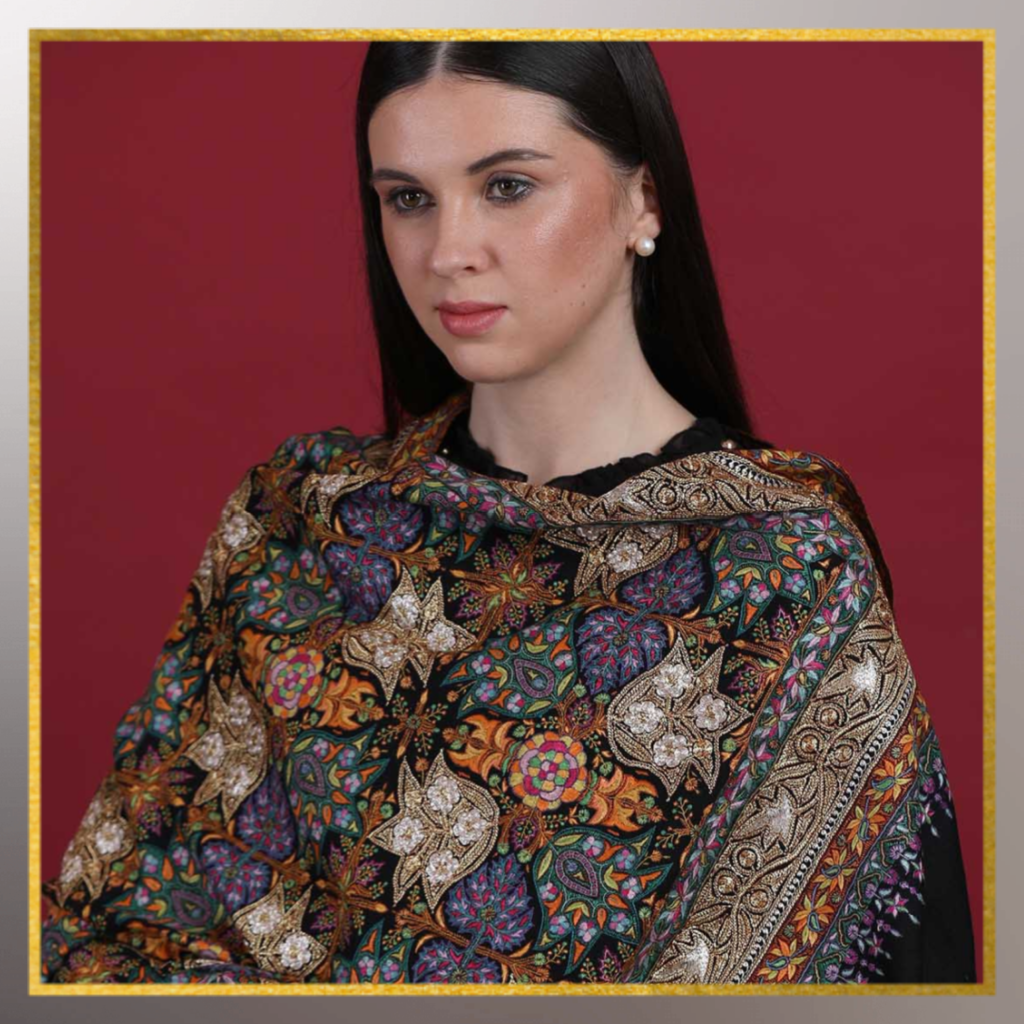
Over the resplendence of Kashmiri Pashmina, the afterglow of summer sun in the form of Zari embroidery creates a magical aura
One such craft that came from Shah I Hamdan’s artisans was ‘Making of the Pashmina shawl’. Kashmiri artisans achieved perfection in Kashmiri Pashmina shawl making with the coming of Shah i Hamdan. It was the 14th century. Kashmir was ruled by King Zain ul Abideen (locally called Budshah which means Great Emperor). This was the same time when the making of Pashmina shawls reached its zenith. Most of the people remained associated with shawl making during this period. In fact, during the 1940s - 1950s, Kashmir had one of the largest Mulberry Silk Factories in the world.
The handicraft sector saw the very first decline when Yusuf Shah Chak was captured in Delhi by Akber’s army. Akber wanted to rule the valley himself. Yusuf Shah Chak died around 1586 AD. And Kashmir was for the first time under a ruler they were not familiar with.
History of Kashmiri Pashmina Shawl
It was in the 16th century when travelers from the west arrived in Kashmir through the silk route. They discovered some fascinating crafts and art hidden in this valley. Travelers from Britain and France were the first ones to discover Pashmina. The sumptuousness and softness of this special wool overwhelmed them and they named it Cashmere. The high officials and affluent amongst them sent some Pashmina shawls as gifts to each other, their queens & family members. Extraordinarily soft, exceptionally woven, light as a feather, and warm as the summer sun - Pashmina shawls earned the admiration of Mughal Kings and Queens of the British empire. Royals were seen regularly buying Pashmina shawls from Kashmir and lavishly using them in their noble courts.
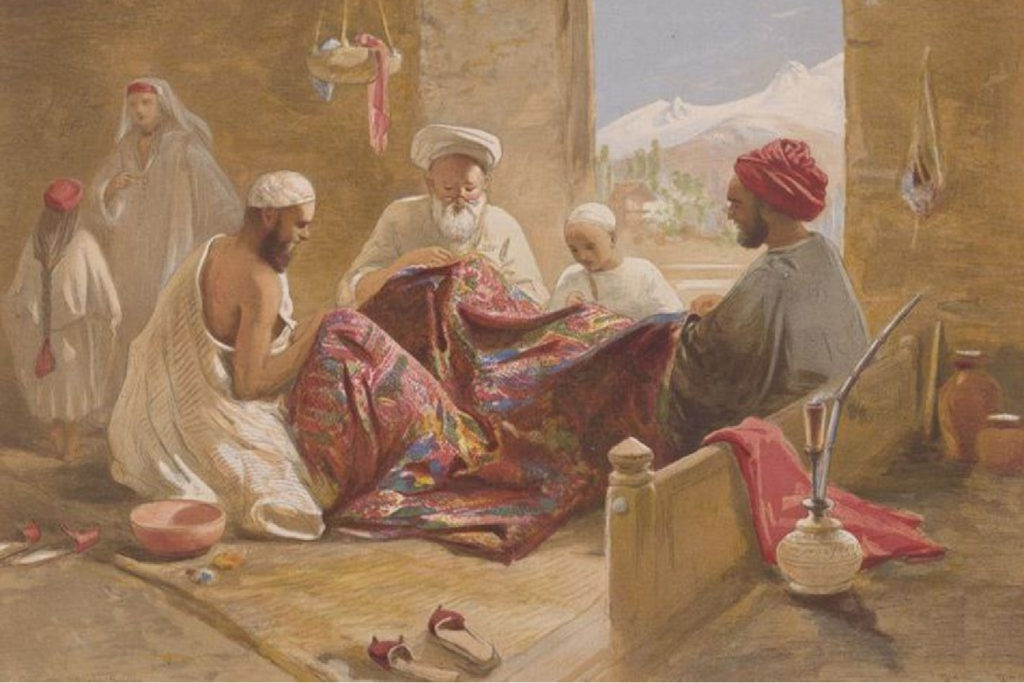
A Muslim shawl-making family shown in Cashmere shawl manufactory, 1867, chromolith., William Simpson.
Kashmir’s Pashmina shawl was special. It was handspun, handwoven, and dyed with a vegetable dye. Note that it wasn't a handloom, but a special wooden traditional loom that was used to weave Pashmina. Hence, in a way, the Pashmina shawl from Kashmir was all-natural. This unique art was soon made copies of to sell all around the world, as it inspired the imagination of many designers and artists.
Pashm - Raw Pashmina Wool
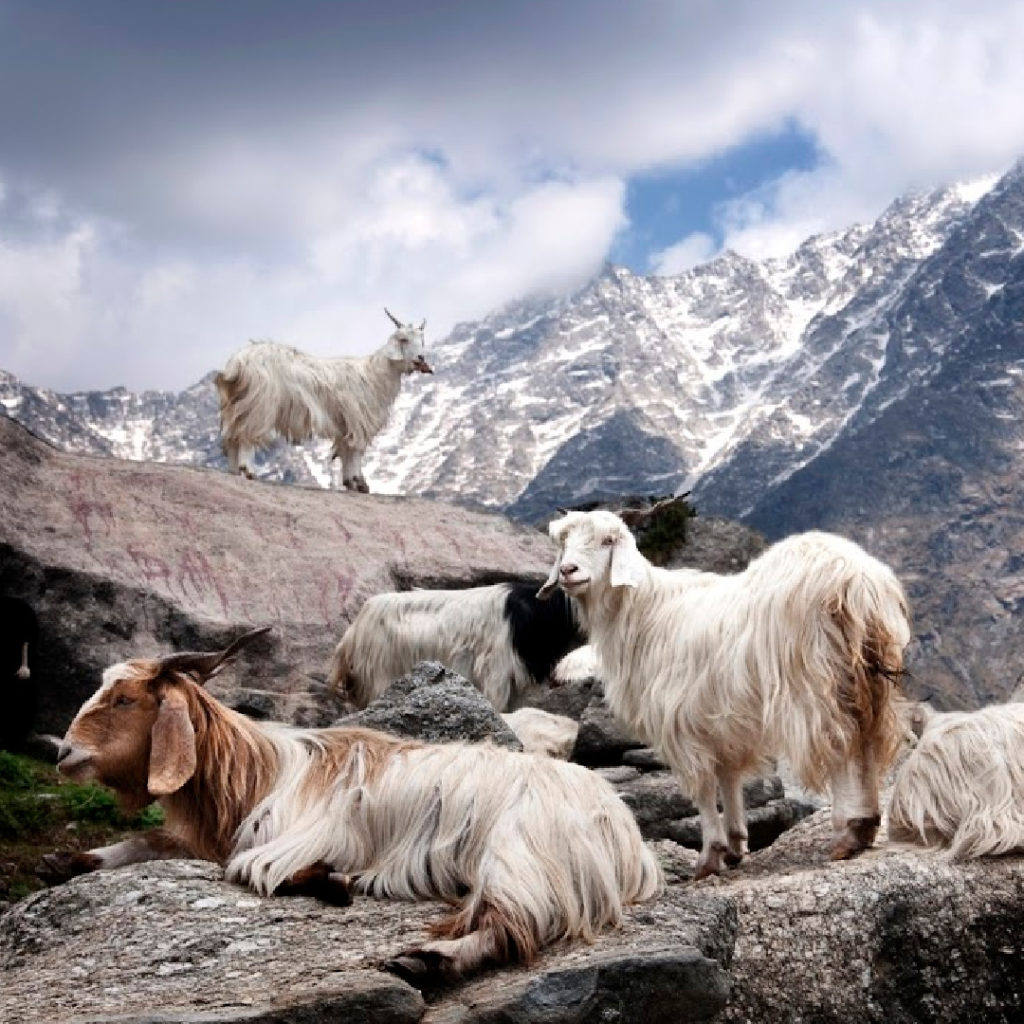
The name Pashmina comes from ‘Pashm’ - a Persian word that translates to ‘soft gold’. It was Persians who came as preachers to the valley of Kashmir. They discovered this soft fleece over the throat and underbelly of the Capra Hircus goat and called it Pashm. The goat is found 15000 feet above sea level in the Himalayas in the Ladakh region of Jammu and Kashmir. This goat is the only goat in the world that can produce a fibre of a diameter less than 12 microns, which in itself is amazing.
It is believed that, if the same Pashmina goat would be separated from its local environment, it wouldn't grow Pashm of the same type! The altitude, temperature, air pressure, and geographical conditions that are found in the native area of this goat are all factors that help grow Pashmina of 12 microns diameter.
How is Kashmiri Pashmina shawl made?
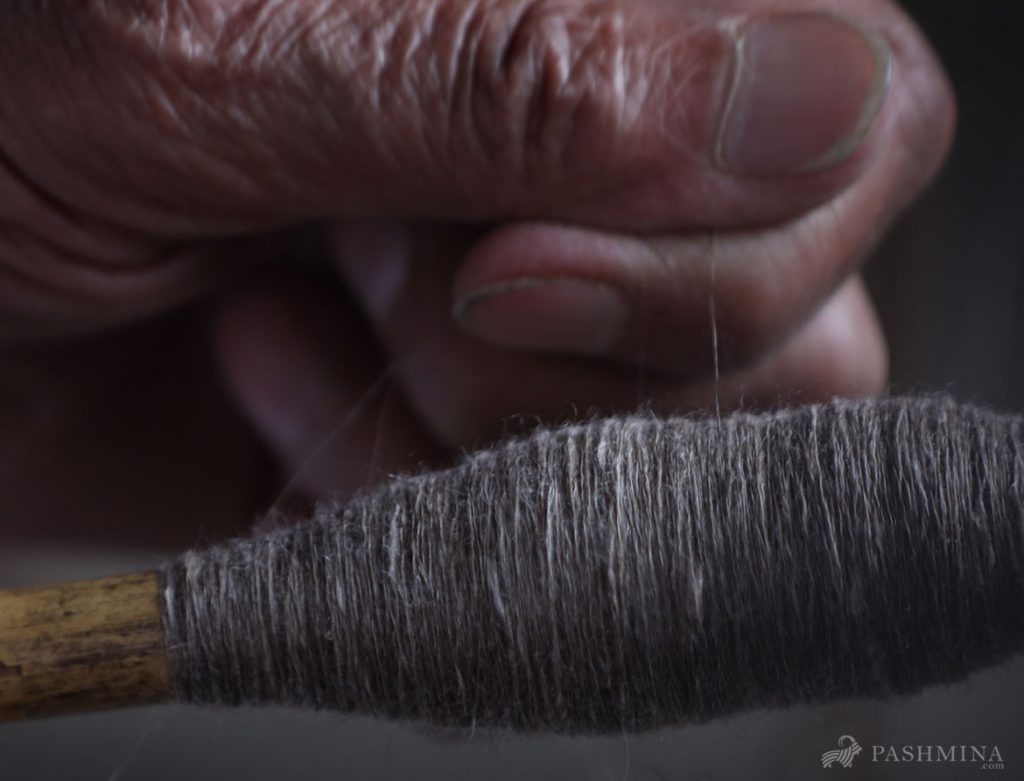
Original Pashmina shawl weaving is a labour-intensive process. It takes huge efforts of strongly skilled men & a time period of some years even to complete one shawl. It is said that amongst the 30 people who work on a shawl if one artisan passes away, the entire work stops. Such specialized are the skills of every single artisan. It takes around a month to spin just 100 grams of Pashmina yarn on a traditional wheel (called Yinder) even when working for 7-8 hours every day. Later it reaches a weaver, who takes around 7-8 days to weave one Pashmina shawl (120*80 cms).
When Pashm (raw wool) is acquired from Ladakh, it is full of dust and dirt. Only after properly cleaning and sorting it, it is sent to Kashmir to get spun into yarns. Only Kashmiri women are able to spin the fine and delicate thread out of Pashmina raw wool on the Yinder. Kashmiri women have long mastered the skill of Pashmina spinning. In fact, it is these exceptionally skilled women who used to spin Shahtoos fibre in the days when it wasn't banned yet. Note that shahtoosh fibre has a diameter of 9 microns (a human hair is about 50 microns)
Weaving a Pashmina shawl
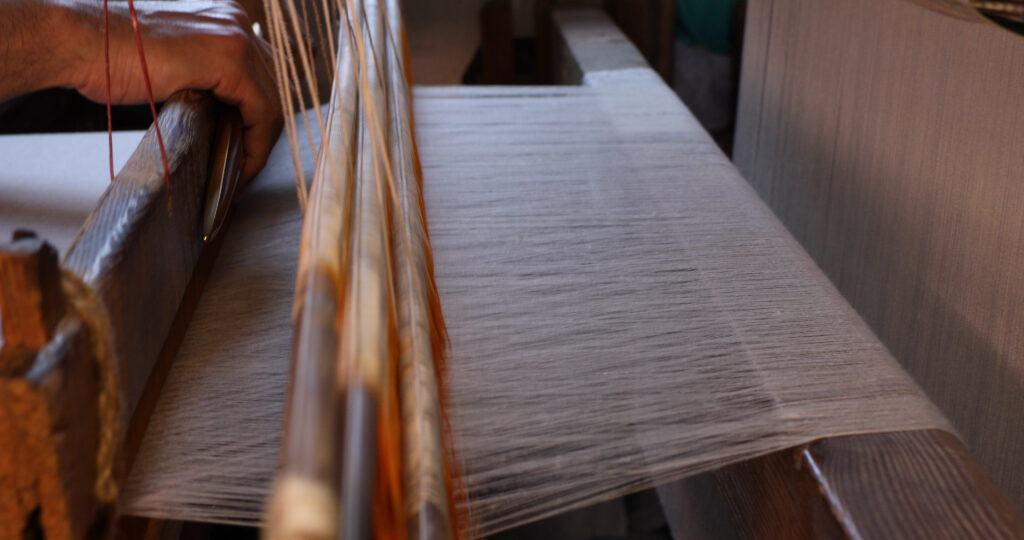
The spun yarn is handed over to weavers who mount it over the traditional loom. It would be worthy of mentioning that handloom is different from a traditional loom. Experts say that genuine Pashmina can only be woven over a traditional loom. Even a handloom would be harsh for its delicateness and fineness.
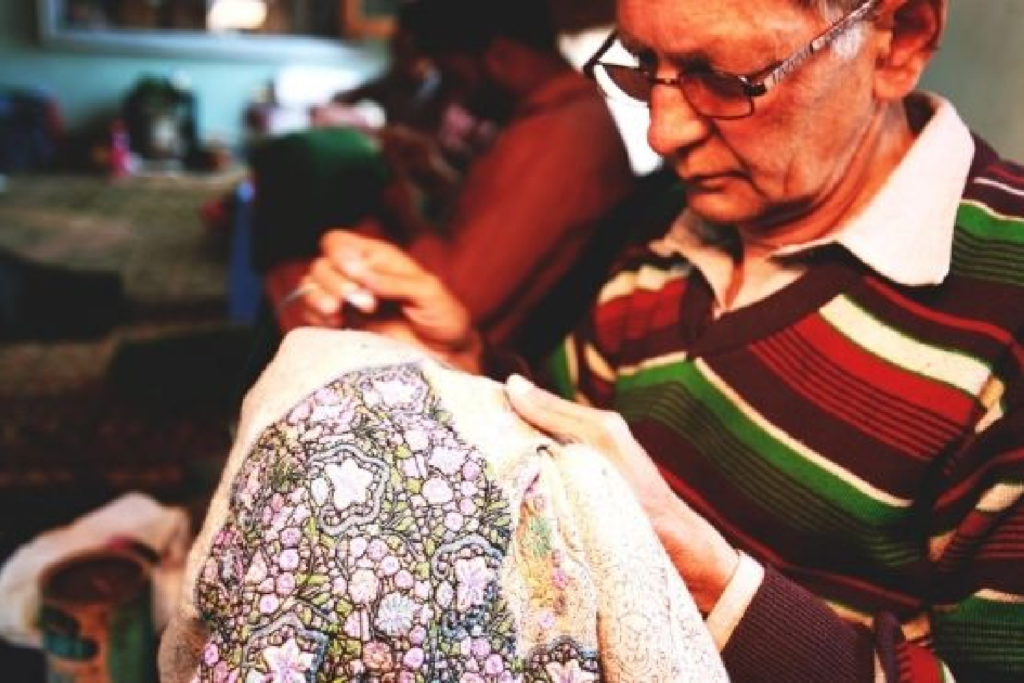
After weaving, the shawl is hand embroidered. This sometimes takes just weeks and sometimes more than 5 years to complete depending upon the design.
Fake Pashmina Shawls
Kashmiri handicrafts are known all over the world mainly for being handmade and thus sophisticated and intricate. But unfortunately this quality of theirs is facing a serious threat from fake and substandard products. Similar is the case of Pashmina. Machine made lookalikes or pure wool shawls have taken over markets claiming to be pure Pashmina shawls. Local artisans are aghast and blame some deceivers to malign the brand Kashmir. These deceivers introduce fake copies into the business and defame the art of making pure Pashmina.
Cheap shawls produced by power looms in some factories in Punjab are other states outside JK are being sold as Pashmina shawls to less aware customers. Machine made shawls and Amritsari shawls are being sold as handmade Pashminas. It is just because the customer is innocent and doesn't know how to identify a pure Pashmina.
A pure Pashmina shawl would be an heirloom asset which would pass through generations. Mothers would gift their Pashmina shawls to their daughters especially on the day they were getting married. So high was this piece held by locals. However as its quality diminished and fake copies spread all over the place, the value of Pashmina shawl deteriorated. And no mother would want to give her daughter a fake Pashmina. There was something to be done to tackle this issue.
Kashmiri Pashmina shawl gets Patent!
In a welcome step to check the spread of fake Pashmina shawls, the central govt has decided to award it with a patent. Under the Geographical Indication (GI) of goods patent, Kashmiri Pashmina shawl now has its own logo.
This step was taken to preserve this ages old art of spinning and weaving a genuine Pashmina fabric. The Govt of India established a quality mark for original Pashmina. It recognizes items which are made from pure Pashm obtained from Capra Hircus goat of Ladakh.
What is the GI Mark?
Geographical Indication (GI) mark on a Pashmina is a US patent stamp. This sign is used on some unique products to show that these products correspond to a specific geographic location or origin. The GI Mark hence is a certification that this specified product possesses certain qualities which are not found in the same products manufactured at other locations.
GI Mark further specifies that a specific product is made according to traditional methods of a place. And that it has a certain reputation because of originating from a particular place.
Putting this into simple words, GI mark is like a stamp which can be found attached somewhere to the corners of a pure Pashmina shawl. The shawl hence has three major qualities.
It is hand spun on the traditional Charkha called tinder in Kashmir.
It is handwoven on a traditional wooden loom.
The fibre used in the shawl has a diameter of 12 to 16 microns only.
This is done at the Craft Development Institute Srinagar (CDI). Here Kashmiri Pashmina goes through several quality checks using electronic microscopy, physical and chemical tests before labelling a product. This label or stamp is patented and under UV light, a person can easily see 100% Genuine and Registered Pashmina. A registration number on the stamp can be checked online which shows the manufacturer, his address and contact.
Pashmina Shawl is Dying
Even after receiving the helping hand of local and central government, Kashmiri Pashmina is still facing challenges and obstacles to survive. It started during the late 90s when shawl manufacturing first saw decline. Be it the invention and use of modern machinery or lack of vital information, it is sometimes the labours and sometimes the sellers who continue to face challenges.
Challenges faced by Pashmina Artisans
Low income
The main problem faced by the artisans of Kashmir who make pashmina shawl is their income. The average income of a Pashmina artisan is as less as Rs 200-250 per day. This is extremely low if present market conditions are taken into account. This is the condition of those artisans who are engaged with handmade Pashminas, hence the reason for switching to machine made shawls. A machine made shawl is stronger and takes less days to complete one shawl. A machine made shawl fetches some 2000-3000 rupees more than a handmade would. Therefore it becomes the major cause why artisans with expert skills in hand making shawls are switching towards machine mades.
Raw materials like thread, needles, or other assisting tools which artisans need are increasing in value day by day. But since artisans do not have any other source of income, they are willing to work on even low wage. This makes their condition miserable.
Lack of Financial support
A large number of artisans are forced to work for a manufacturer because of the non availability of his own loom or other resources. When working under a manufacturer, artisans are bound to obey his commands which might include working on a little income. Hence financial support is needed for an artisan to set up his own working material. This would include a loom, which is not available at all.
Slow transfer of money
The artisan gets his payment only when a shawl is complete, and that too in installments. Hence an artisan, who could have taken a bank loan to set up his own loom will never be able to repay the loan with interest. This will be more problematic for him.
Ban on Shahtoosh
Working on Shahtoosh would fetch an artisan double than what he gets from working on Pashmina. Hence artisans would plead administration to acquire raw material from chiru goats without killing it.
No or less access to the market
If an artisan decides to work independently, it invites a lot of issues. Firstly he has to look for customers himself, then travel to the market himself to buy materials, then market his shawls himself and other activities which lead to profits and sales. But his financial condition does not support even the basic activities, let alone be the secondary ones.
Involvement of too many parties
The supply chain of the Pashmina shawl is built of a number of middlemen. It is because of these middlemen that Pashmina shawls are sometimes sold at higher rates and all the profits go to the middlemen themselves. Middlemen travel to Ladakh and buy raw material in bulk, sending it straight to machine owners because an independent artisan would need it in lesser quantity. Hence independent artisans find raw material difficult to acquire.
Old Age
Maximum artisans with Pashmina making expertise are over the age of 70. In addition to old age, artisans are found to have a number of health problems like weak eyesight, neck problems, back strain, and many more.
Modern designs
Many artisans would have worked independently if they had proper knowledge of what would work in the market at present. But since old age, lack of awareness, and less customer base does not allow our artisan to do his research, he again falls into the hands of their masters. It is their masters who ask them to design a shawl in an in-vogue design and they work just as he commands them to.
Lack of platform to support artisans
The supply chain of Pashmina consists of a minimum of four people. Herders to artisans to manufacturers to the customer. Never has an artisan had direct contact with the customer so that he could get as many wages as he deserved? This leads to the distribution of profits amongst the many members of the chain and leaves a meager amount for the underprivileged artisan.
Machine made
Last but definitely not least - since the advent and use of machines, artisans of the handmade have suffered the worst blow. Machines are considered good when it comes to cleaning or dehairing raw wool. But spinning and weaving on machines and power looms are detrimental to the entire craft. No doubt that machine makes shawls faster and hence an artisan is able to earn more than handmade could ever fetch him.
Challenges faced by traders and manufacturers
It's not just artisans, even traders or dealers of Pashmina shawls face their own set of problems. We listed a few here:
Dearth of Raw Material
As per manufacturers of Pashmina shawls, the raw material isn't easily available in the market and even if it is, the quality is compromised. Kashmiris usually do not have direct access to Ladakhi herders and hence need middlemen to intervene. These middlemen aren't always honest and might charge more than what is the fair price. Moreover, the cost of raw material has anyway increased from the past 10-15 days which small scale manufacturers can’t afford to buy
Less women spinners
One of the biggest setbacks in the manufacturing world is that women have given up on spinning yarn. This activity was once thriving and every household has at least one Charkha (locally called Yinder). In fact, women used to manage their day-to-day expenses with help of this income. But as time passed, the income began to look meager. Women used to get Rs 100-150 per day which wouldn't even suffice the basic needs. Hence this activity of hand spinning was abandoned, such that in the present scenario, it is much difficult to find women who spin the wheel.
Dishonest Weavers
In order to increase the production of Pashmina shawls, there are weavers who weave Ladakhi Pashmina with Chinese Pashmina or pure wool, thereby decreasing the quality of the final product that the manufacturer has to deal with. Machine owners usually mix other types of yarn with pure Pashmina, and because of high production, this forgery actually works for them.
Problems with the Management
Manufacturers and traders blame the management, which was set up for the provision of authentic Kashmiri goods to the public, for not functioning properly. The employees working in such institutions which had been set up to assist the local artisans do not play their roles actively and leave the artisans to the mercy of manufacturers who are themselves more or less suffering.
Registration institutions
There are several privileges provided by the state and central government to those traders who work directly under them. Hence those traders who aren't registered with the government tend to suffer. The reason for not registering with the government is less awareness of these traders. Some of them claim that they do not know that a government institution even exists, while others do not want to waste their time in “useless” formalities and activities.
Ban on Shahtoosh
According to traders, the ban on Shahtoosh has been the most detrimental activity when it comes to their income. Traders say that the process of making Pashmina and Shahtoosh is almost the same, but Shahtoosh would earn double of what Pashmina making would fetch. This group of manufacturers and traders urge the government to take steps so that the Chiru animals aren’t killed to extract Shahtoosh.
Selling of Fake Pashminas
Traders are agitated by the fact that the Kashmiri Pashmina shawls which used to sell like hotcakes all over the world have no buyers now. They blame the dishonest sellers who make fake copies of Pashmina shawl and sell them at hefty prices claiming the shawls to be pure.
Pashmina is a generation-old craft and the makers of Pashmina shawls have been in this business for centuries. But in recent times, even those traders who don't have any prior knowledge of the craft start manufacturing the same. The result is that quality is compromised which affects the sale of even those pieces which are 100% pure and authentic. Again shawls manufactured in other parts of the country are sold as Pashmina, even though they are either pure wool or Pashmina mixed with silk
Less market awareness and research
There were times when artisans made a shawl or embroidered a shawl with their own choice of designs or weave. But now the customer is smart and aware and wants the designs to be customized. This is a problem for the old aged or illiterate Pashmina trader, who hasn't adapted his work to the modern world. Modern customers' needs are absolutely different from the past. Yet traders seem to be indifferent toward this change which is a major contributor to their loss and outmoded work.
Rate system
There is no fixed rate for Pashmina shawls and traders, whose pieces aren't as pure, tend to sell their Pashmina shawls at lower prices. This becomes a hindrance for pure shawls to gain their worth. And since the fake sellers are more in number with more products in their stores, it is the sellers of Pure shawls who always have to compromise.
A lot of people have a wrong perception about Pashmina that Pashmina is acquired from a goat only after killing it. This is not true. A Pashmina goat grows the Pashm in winters naturally to keep itself warm, but this wool makes it uncomfortable in summers. Hence it rubs itself with rough rocks and shrubs to get rid of some portion of this wool. The rest is ethically combed off from its body and it enjoys a pleasant summer.
Lack of proper training centers
Some training centers which were set to enhance the skill of Pashmina makers and traders have not lived up to the expectations of the administration. The reason is solely less attention toward these centers and fewer salaries paid to the trainers because of which they opted out of this profession.
Increasing demands
The increasing demands of foreign markets have led to the making of fake Pashmina shawls because the magnitude of the order is high. Hence generally traders mix Pashmina with wool or silk and sell a large number of pieces internationally. This leads to a decline in the manufacturing of pure shawls as the honest traders aren't able to cope up with the competition.
Be it labourers or traders of the craft, it is pure Pashmina that has suffered. A craft that in the past would make ends meet for the poor and be an heirloom piece for the affluent is now a common accessory that people wear casually, just because it isn't Pashmina at all. A helping hand, a platform, assistance, and encouragement was all that was needed to let this craft bloom again and reclaim its lost glory. That is how and that is why we, Pashmina.com came into existence.
Kashmiri Pashmina Shawl and Pashmina.com
A Pashmina shawl gathers every single blooming flower from the Mughal garden of Kashmir
Pashmina.com came into existence when a group of nature lovers were overwhelmed with their mundane techno jobs and decided to go for an outing. To Kashmir. And that's where we fell in love with a Pashmina shawl. Pashmina made us follow it until we reached Ladakh and found out its origins. Getting in contact with herders in Ladakh, and then artisans like spinners, weavers, embroiderers, and other craftsmen associated with Pashmina making was a tedious job. Since we had found out our purpose, nothing could hinder our research.
It was at this same time we realized the plight of the grassroot artisan and made our minds to cut out the middlemen in the chain. At Pashmina.com we work directly with the grassroot artisan, hence providing him the actual worth of a Pashmina shawl or other accessories. Later the shawls are patterned further by designers and marketed all over the world. Pashmina.com reserves 5% of its profits for the well-being of the artisan.
A number of our programs work for the empowerment of underprivileged communities especially women and children of poverty-stricken families who are employees with no other source of income. We facilitate their education to make them employable and contribute towards the wellbeing of their family and society as a whole.
How Pashmina.com helps solve the Artisan’s problems
Our current program focuses on empowerment of women and daughters of these families, who are not employed and have no source of income
The idea behind Pashmina.com has been to reintroduce to the entire world the treasures of Kashmiri Pashmina shawl. But in addition to that, we are determined to empower its makers without whom the most luxurious fabric wouldn't have been existing in its purest form. A few problems that artisans faced have been tackled easily because of the omission of middlemen who would eat up maximum profits and leave negligible amounts for artisans.
Issues of Artisans that Pashmina.com has been able to solve
Lack of Financial support
Artisans lacked financial support due to which they had started to switch to meager jobs to support their families. Pashmina.com has provided a lot of financial help to the artisans and a number of artisans have happily agreed to come back to Pashmina making
Slow transfer of money
Our model is such that we pay the artisans at the start of the agreement. The artisan never has to wait for money.
No or less access to the market
Artisans who never had access to the market dont even need it when they are working with us. It is us who market their products and inform them about any change that takes place.
Involvement of too many parties
It's just us and our artisans. No middlemen, no retailers and no profit centres have been set up which do more harm than good.
Old Age
We work with young as well as artisans who are 70 years plus. But we make sure to work with them ethically and assist them in whatever way we can
Modern designs
We keep our artisans well aware of the market trends and fashions so that their pieces are never outdated. This way if they want to sell independently, their pieces will sell like hot cakes
Lack of platform to support artisans
Artisans never found a platform to market the Pashmina which was worldwide famous in the past. But we being an international platform assist them with their handmade pieces and sell them in countries where the artisans couldn't have imagined
Machine-made Kashmiri Pashmina Shawl
Since the advent of power looms, artisans considered themselves outdated. But at Pashmina.com, we concentrate more on quality than quantity. Even though it might feel that we add fewer pieces to our collection per year, all of those are handwoven over traditional Kashmiri looms and 100% pure, original, and authentic. We provide the certificate of authenticity with each piece that has been awarded to our collections by Craft Development Institute (CDI) Srinagar. (CDI is an autonomous body set up by the State and Central govt to develop handicrafts in Kashmir)
There are a few occasions in your life when you need to give gifts to the entire family. It's festival time, it's someone's birthday, you are getting married, or more such occasions when your family expects gifts from you. But never had it been an easy task to buy gifts for everyone in the family. All of them are of different temperaments. Grandparents will like something healthy, parents would want something timeless. Your young siblings would want trendy gifts which would fetch them compliments. Kids around the house will love toys and video games.
Hence it becomes a hectic task to choose a gift for each member of the family. And then have them adore it is more of a challenge. Shouldn't there be something common, which everyone would love? Shouldn't there be a similar gift for everyone yet still blends with their temperaments, age, and style? Well, there is. Pashmina Scarves
Pashmina - the heavenly soft wool, comes from Kashmir. It is found to grow on the throat and underbelly of the Capra Hircus goat. The goat lives 15000 feet above sea level in the Changthang region of Ladakh. The goat naturally sheds its wool in Spring when the temperature begins to rise. Herders collect this raw wool and process it to make it clean and sorted. The wool is sent to Kashmir from Ladakh where further processing like spinning, weaving, embroidery, and finishing takes place. It is from Kashmir where the sale finally starts. People all over the world visit the valley to experience the picturesque destinations, as well as relish in the warmth of Kashmiri Pashmina.
A Pashmina Scarf as a gift has proven to be the most versatile one. People have gifted Pashmina to parents, friends, company heads, employees, spouses, brides, grooms, basically people from every age group. And the reason behind this is the adaptability of this fabric. Traditionally, Pashmina scarves would only be worn by queens, kings, and affluent ones in royal courts. That's when it was discovered in the 16th century. Later it was made more affordable for the general public. Yet it would still be preferred by women above 30 years of age, or maybe once they got married. But lately, craftsmen have introduced modern, chic designs into the craft, thus making it suitable for all ages and moods.
Let us demystify some traditional as well as modish Pashmina designs so that you decide which one suits who.
Pashmina Scarf for Mom - who is always on the go
Pashmina Shawl - covered with hues of Kashmiri Papier Mache which transforms the downy base into something extraordinary
If there is a job in the world where you don't get holidays, rest, and perks, it is a mom's job. Thank her, appreciate her and shower your love on her with beautiful hand embroidered Pashmina scarves. These have been crafted in the same painstaking ways that your mom nurtured you, supported you, and stood by you all the time.
Pashmina Scarf for Dad - whose wardrobe desperately needs a fashion update
Pashmina Shawl - accentuated with gingham checks which appear all over the fine Cashmere
We know you are tired of dad's minimal style. And you're tired of watching him wear the same styled sweaters and coats all your life. Upgrade his winter wardrobe with hand-embroidered Pashmina scarves for men or a Kani Pashmina scarf for men. It will surely aggrandize his looks and bestow on his winter apparel a touch of warmth and comfort
For the Sister - who lives to Travel
Shades of so many colours to carry along with joy and happiness
Travelling for internships, travelling for holidays, travelling to meet a friend who lives far away, your sister just needs reasons to travel. And she doesn't spare even the coldest of countries, a printed or patterned Pashmina scarf would be her ideal companion. Pashmina has been recently able to adapt to modish prints and chic striped and checkered patterns to suit the need of young women who would be otherwise uneasy to carry embroidered pieces. Gift her a contemporary stylized Pashmina and watch her filled with excitement.
Pashmina Scarves for Grandparents - who will choose quality and long life in a gift
Kani Pashmina - Handwoven over traditional handloom, with the intricate and meticulous intervention of Kani bobbins
My experience with grandparents has been the same. I have been asked a hundred questions about my gifts to them.
How much did you buy it for (for a bracelet)?
Is it breakable (a dinner set)?
What quality is it (sweater)?
Why do we even need it (mobile phone)?
So this time, just as I did, give them a Pashmina scarf. Maybe grandma would like plain or minimal embroidery Pashmina scarves and granddad would love a border embroidered or Kani Pashmina scarf. Pashmina is natural, pure, stays for a lifetime, ages with grace, and keeps them warm and comfortable altogether
For your workaholic brother
Luxury with our unmatched fleecy Cashmere fibre sourced from the Changthangi goats of the Himalayas
For him, who is always busy with office work and business meetings, a formal Pashmina scarf is a perfect gift. Gift this busy professional a plain or patterned Pashmina which he can easily blend with his office formal outfits. Let him tie it in a French knot to exude sophistication and be the focus of all attention.
Pashmina Scarves for Lovers of Special Seasons
In a deep red shade, this shawl is reminiscence of how glorious our roots are and proud we should be of where we come from
There are people to whom festivals, holidays, or events do not mean much excitement. And then there are those whose festival seasons are full of emotion and drama. For those lovers of special occasions, a Pashmina scarf as a gift would add more incitement to their already throbbing heart. Be it for a patron of Christmas celebration, a lover of the winter season, or for the one who celebrates the new year pompously, Pashmina would do wonders for their happy temperament.
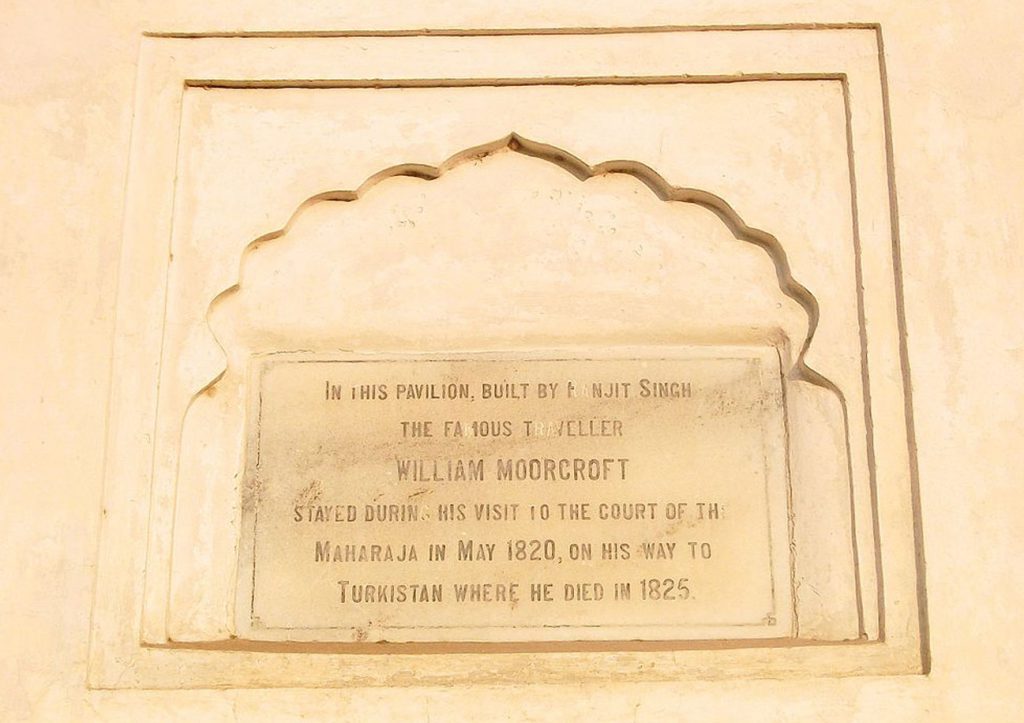
In the early 19th century, William Moorcroft traversed the length and breadth of the Himalayas. He never really revealed his zeal for adventure and went about just because “the mountains were there.” As a veterinary surgeon and superintendent of East India Company’s military regiment, he first made the trip to these soaring hills in pursuance of Turkman horses. While he failed there, he gathered tons of knowledge and geographical data as well as fifty mountain goats. The fleece of this variety of goat that resided in parts of Tibet and Central Asia were exported to Kashmir from which the fibre was extracted, which came to be known as Cashmere. These were later made into the finest Kashmiri shawls, famously known as Pashmina Shawls or Cashmere Wraps.
William Moorcroft's plauqe in Shalimar Gardens, Lahore, where Moorcorft stayed in May 1820
These pashmina shawls were in great demand by the English and later by the French, who both tried to make copies of the product. Moorcroft was unable to import the cashmere wool because of Kashmiri monopoly. Later, they tried to naturalize the goat. He sent his goats – males on one ship, females on the other. Unfortunately, there were no female survivors. Similarly, the French too experimented at their end, but it also resulted in failure. By now, Moorcroft understood that England and India could reap commercial benefits from further trade with Asia. He tried his best to convince the Britishers. They gave him a reluctant nod.
Discovering evidence of Kashmiri Shawls through travels
Once again, he set out on his travels to Asia. He had planned to travel via Yarkand, but since he couldn’t get permission, he turned towards Kashmir. In October 1822, he reached the beautiful slopes of Kashmir and was stationed there for ten months. He closely observed the manufacture of these pashmina shawls and employed tens of thousands of people.
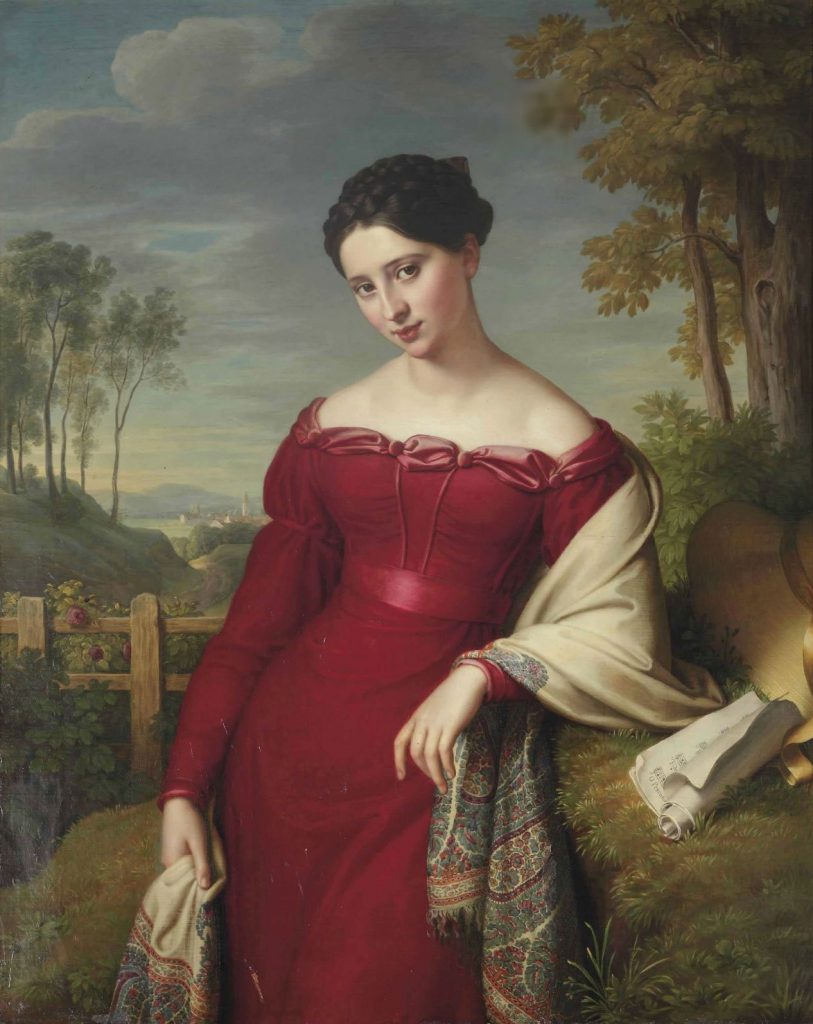
Portrait of a Young Lady in a Red Dress with a Paisley Pashmina Shawl by Eduard Friedrich Leybold, 1824
He was really obsessed with the shawls and could do anything to make British shawls supreme all over the world. Moorcroft consistently tried to persuade Kashmiri shawl manufacturers to move to Norwich and Paisley. He also went to the extent of commissioning a native painter from his country. This man was to imitate the characteristic motifs from the executed Pashmina shawls.
These cashmere shawls with motifs became popular in the West during this stage. Documents suggest that these shawls were already made in Kashmir before the Mughal conquest. Emperor Akbar was so in awe of these shawls. He introduced the fashion of wearing two of these shawls, stitched back to back. They were also presented as gifts to the nobles as well as other stately people. It is also believed that the sultan at Constantinople accepted a large number of Pashmina shawls in 1739 from Nadir Shah, the Persian invader of India.
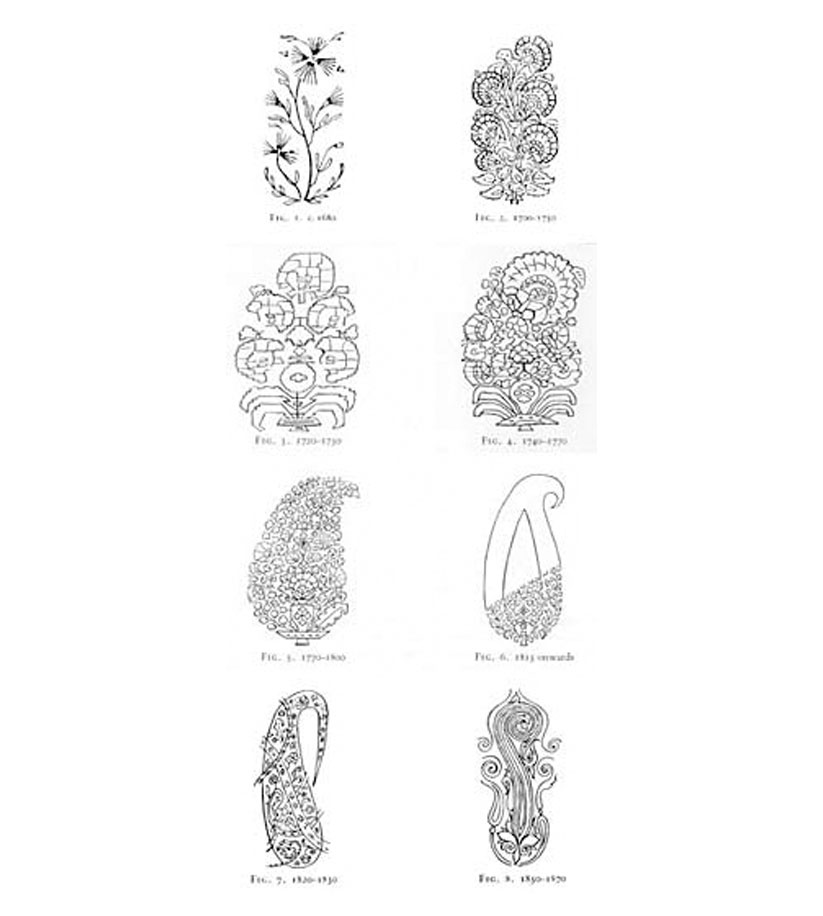
In the 17th and 18th centuries, the first design that was observed on Kashmiri shawls was a single flowering plant. This had roots and drew inspiration from English herbals. It was prevalent in the Mughal court in the 1600s By 1800, it evolved into a cone-shaped motif, popularly known as ‘boteh’. It is also called the paisley pine.
Popular motifs during 17th century europe - Kashmiri shawl and the paisley
Several theories exist around this motif. It is believed that it first originated in ancient Babylon when it was shaped like a drop. It was used as a symbol to represent the growing shoot of a date palm. The palm was symbolic of food, shelter, clothing and came to be known as the ‘Tree of Life’. It had branches extending and later being considered a symbol of fertility.
Kashmiri Pashmina shawl hosts prominent motifs of paisleys in the labyrinthine Papier Mache work
With the growing demand for Kashmiri shawls in Europe, several men weavers in Kashmir worked together to create a shawl. It would take anywhere between one and a half months to several years to create it. The British officials observed this rising trend and imitated these shawls both in Norwich as well as Paisley.
The Buti - Much in Favour
There is also the buti, a similar motif that is smaller in size but is often seen in Indian and Iranian shawls. It might be solitary or be accompanied by several leaves but doesn’t have a root structure. They sometimes appear in staggered rows, on the palla of a doshala. It was a favourite during the 1700s and in the 1800s.
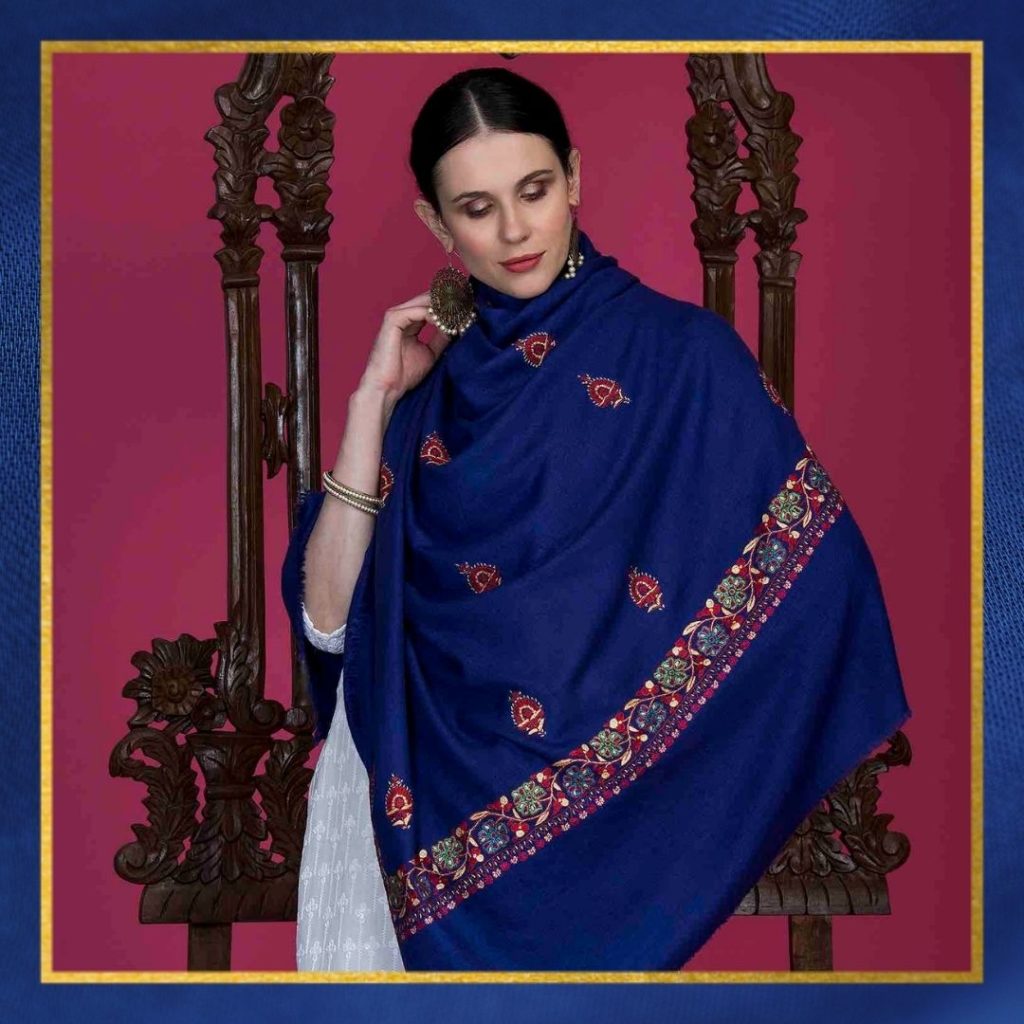
A Pashmina shawl hosts embroidery butis in a minimal pattern
There is certainly a lot more to shawl design other than paisley. This was the predominant motif. The buti is versatile in nature and found application in several textiles. Sometimes, it was scaled down. It is often termed as “semi-naturalistic” in historical accounts and some say it comes from a characteristic tree in Kashmir. Another possibility is the Iran connection, and since Pashmina shawls were being exported there, the influence can’t be ruled out.
There were several innovations that were introduced. This coincided with the rise in demand in the Western market. It was also matched up by the creativity of the artisans. It was further accentuated with a stunning border, which also had elements of the floral meander.
Embroidery does permit a greater field of design and these have distinct affinities. In fact, some of these motifs were also incorporated in floor spreads, wall hangings, or coverings of some kind.
“Slow fashion is about designing, producing, consuming, and living better. This fashion is not time-based but quality-based (which has some time components). This does not mean the opposite of fast – there is no dualism – but a different approach in which designers, buyers, retailers, and consumers are more aware of the impacts of products on artisans, communities, and ecosystems.”
Kate Fletcher, “Slow fashion” for The Ecologist, June 1, 2007.
The past few decades have witnessed a spurt of interest in the luxurious and royal art of “Pashmina”. Once the exclusive domain of Indian and European nobility, it is today falling off the racks of top high-fashion brands and is now ubiquitous as it once was at royal palaces. As the demand for “Cashmere’ is rapidly growing among the middle class, high-fashion retailers are feeding consumers with quantity, as opposed to quality. Of course, this has led to a considerable reduction in price as well. Cashmere has always exuded an air of aspiration; it has always been timeless. For many, it was no less than an investment, which is why it was considered a symbol of exclusivity. In the last decade though, this art has been “disrupted” with fake blends and machine-made products.
Wooing the world
This sublime art first came into existence for a functional purpose. Every year, when winter’s biting winds howl over the coldest places over the world, including Kashmir, the resident mammals don their protective undercoat. The luxurious fibres of these discarded undercoats have for millennia been plucked or combed out by the local communities and recycled for their own use. Of all these animal fibres, the down from some breeds became more popular and came to be known as pashmor internationally, Cashmere.
A Muslim shawl-making family shown in Cashmere shawl manufactory, 1867, chromolith., William Simpson.
From at least the 16th century till the 19th, Kashmir was the sole region where the skills existed to exploit fully the qualities of pashm – not only its warmth and softness but also its capacity to retain natural dyes and to weave it into a polychrome textile of superlative delicacy, an object of desire for neighboring and distant elites. From the third decade of the 20th century, cashmere emerged as a premium material for the highest quality of knitwear and woven fabrics and as a result, production increased astronomically, the bulk coming from China and Mongolia. Later, selective breeds undertook experiments. This diluted the purity of this soft under-fleece.
Sustainable fashion - need of the hour
In the flood of fast fashion, we at PASHM believe there is a dire need to propagate slow and sustainable fashion, or in other words, the ‘anti-fast-fashion movement’. Being the largest curators of pure hand-made and hand-embroidered Cashmere products in the online sphere, our motto is to celebrate timeless elegance in an ethical fashion. Our styles do not adhere to fast fashion trends, rather timeless and classic pieces that will stand the vagaries of time, both with respect to style and immaculate quality.
Ethical Fashion is at the core of our operations. The masterpieces we offer at PASHM follow ethical fashion exactly from the procurement of Cashmere from Ladakh to the final weaving. Herders at Ladakh treat animals in the most considerate way as far as their food, shelter, or acquisition of Cashmere from their bodies is concerned. This Cashmere is processed with out the use of machines, and its makers are compensated fairly.
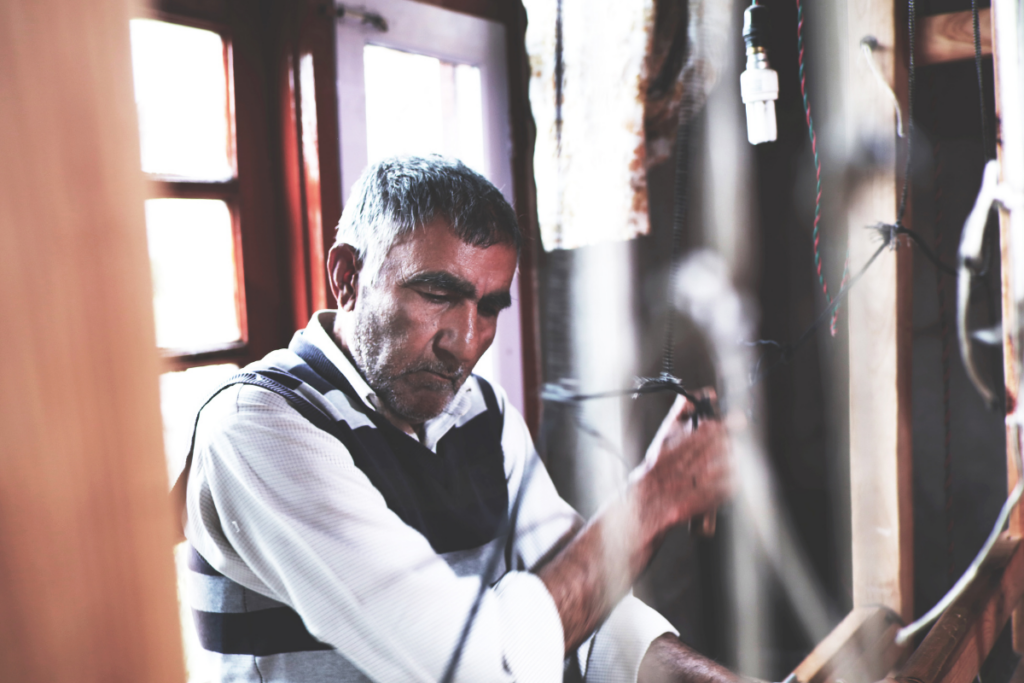
Artisan weaving on a traditional Hand Loom
The skilled artisans painstakingly design each of our pieces that exhibit the highest levels of craftsmanship. The art of weaving Cashmere is an ancient and highly skilled practice. The master weaver, who is responsible for translating exquisite designs onto the loom, requires an eagle eye. We truly believe in the adage ‘Less is More’ because the quality of our products matters a lot. Weaving and hand-embroidering on Cashmere is a labour of love and for us. That is how Pashmina is handcrafted. Appreciation of the quality and longevity of our products screams sustainable fashion.
Intricacy in every step
Every step requires utmost precision and care – right from hand-carding to winding of yarn to twisting, dyeing, and then embroidering; it is certainly not child’s play. These workers’ skills shine through our pieces, and it is essential for us to convey the story of each piece to our customers.
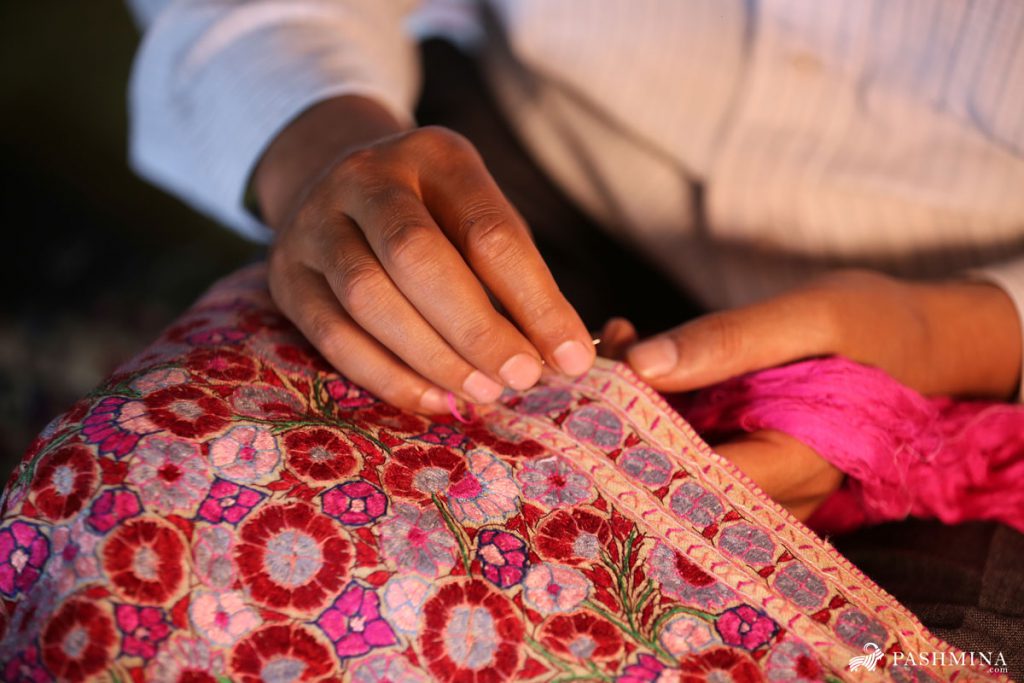
Pashmina Artisan doing Embroidery work on a Pashmina Shawl
Our products – pashmina shawls, wraps, scarves, hijabs as well as throws and blankets – take inspiration from the glorious heritage of Kashmir and its picturesque beauty. Our pieces depict the mystic nature of this land. This is through distinctive elements and largely a great workmanship. It tells the story of the indigenous Kashmiri weavers and reflects the hallmark of purity and sustainable luxury. Our diverse range of Pashmina products blend in elements of comfort and style and are feather-light, sublimely soft, and unbelievably warm. Believe us, it feels like magic on your skin.
To many, sustainable luxury might not sound as appealing. We believe in preserving the heritage of Pashmina, but “boring” isn’t a word in our dictionary. Our collection has an eclectic interplay of colours, exquisite design, and of course, traditional weaves. We understand the diversity of taste among our clientele and we like to cater to each of you. To make it simple, we amalgamate sustainable fashion with style
Giving back to the artisans
There’s no meaning of “sustainability” if you cannot give back to the artisans who work tirelessly for you. We believe in working towards the upliftment of these communities. These gifted artisans lose their sheen in the market of high-fashion retailers. Besides, this art, which once employed women artisans has now witnessed a substantial decline. This is due to the surge in demand for machine-made blends at a lower cost. We endeavor to empower these women artisans as a part of our ethical fashion focus. We contribute towards the education of their children as well, by giving $10 from every sale of our product.
“The best product is one that makes citizens look at their community with fresh eyes".
John Thackara
Our goal is to be restorative and regenerative by design. Fashion is about luxury and style, but also a responsibility. With the exposure of ecological living, there’s a gradual shift towards sustainable fashion. We still have a long way to go! Come, be a part of this movement and help artisans flourish!
(If there is a paradise on earth, it is this, it is this, it is this)
~Amir Khusrau
This couplet, framed by one of the most acclaimed Persian poets in awe of the Kashmir Valley, aptly describes its breathtaking beauty which rustles in the autumnal leaves of the Chinar. It unfolds in the soft thuds of snow and flows through its capital in the silent murmur of the Jhelum river.
The city of Srinagar is home to a rich culture that resonates in its several parts. Be it primitive architecture, close-knit neighborhoods, traditional attires, and century-old customs. The locals have preserved everything like a Holy grail. Home to over 15 luxury handicrafts including hand-carving, Papier Mache, Pashmina shawls, and tapestry making, one would possibly assume that the valley brims with economic prosperity like the intermediaries of its crafts do.
However, that is far from the reality
Take a closer look at a Pashmina artisan’s life and you will realize how this skilled class of people has been devoid of a decent standard of living. Take the case of Pashmina shawls for instance. Who would have imagined that a weaver of the most expensive and rare fabric of the world would be struggling to send his children to school?
Pashmina Artisans and The Turmoil
Precisely three decades ago, the craft of Pashmina making was a matter of pride. If you were a Pashmina artisan from Kashmir, you would be revered by people from all walks of life. You would be asked how you spin and weave the miraculous fabric and you would be sought after by international fashion designers, brands, and fashion houses alike (especially from European countries where Pashmina, known to them as Cashmere, is as precious as a diamond on the Queen’s crown).
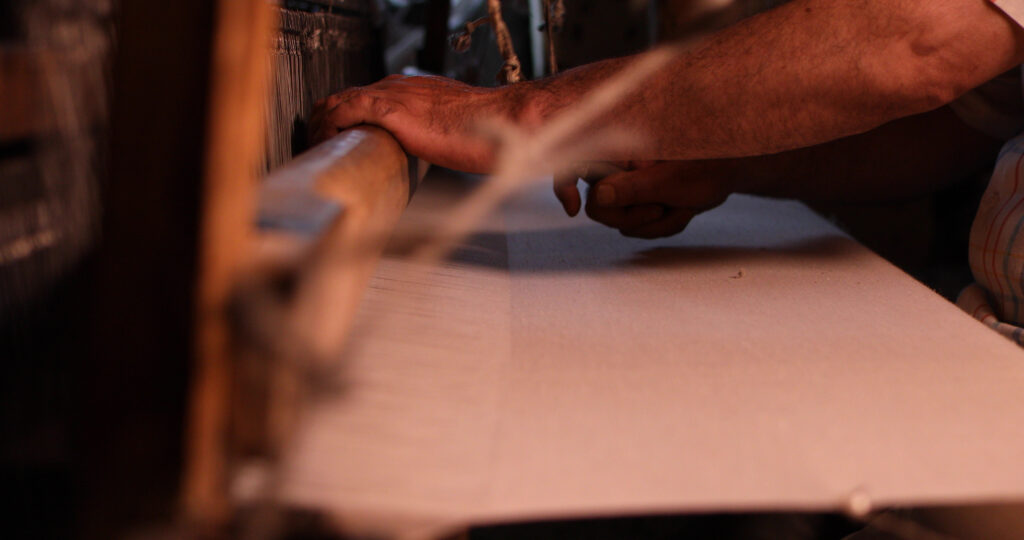
Handweaving of Pashmina being done by a Kashmiri Artisan
Needless to say, with so many international orders pouring in, Pashmina making was considered a good source of revenue for all the 33 artisans involved in its making. And then the calamity struck. The beautiful valley was faced with never-ending political turmoil. All of a sudden, life came to a standstill. Designers stopped visiting, customers stopped pouring and the Pashmina artisan was the worst hit. Suddenly, a weaver, who would live a flamboyant lifestyle was on his knees, deprived of basic income. When the desperation for work grew, they settled for lower wages.“Something is better than nothing,” they thought. Little did they know that this settling would doom their living standards for decades to come.
Intervention of the machine - a blow to Pashmina artisans
Earlier, each household in the old Srinagar city would produce at least two Pashmina artisans-a spinner and a weaver. Generally, the women would spin the fibre while the men would weave. Together, they would run the errands of the house. Others would opt for dyeing, embroidering, washing, and cleaning.
Women Pashmina Artisans
A lesser-known fact is that Pashmina spinning was a means of financial independence for Kashmiri women. They could earn their own bucks, without having to depend on a man to provide for them. However, that is a thing of the past now.
“Factory owners purchase all of the raw material these days. They get the Pashmina spun by machines and even adulterate it with nylon. They are exploiting our Pashmina craft with these synthetic infected cheaper variants. We feel obsolete. Despite our protests, we are not able to stop them and protect our livelihood because they pay better prices to the trader than what we can offer. Money speaks. We feel like we have traveled back to a time when women were not in a position to earn their own money,” says Hasina, a middle-aged woman who was known to spin Pashmina fibres at the speed of light. Unfortunately, she could not match the price a rich factory owner can pay for the raw material.
Loss of Livelihood
So many women like Haseena have lost their livelihood because of similar reasons and their financial independence has been crippled, perhaps forever.
These women are not the only ones being hit. With machine intervention in the craft of Pashmina making, all the artisans were equally impacted-some sooner, others later. This is because factory owners added synthetic fibres (like nylon) to Pashmina shawls while spinning them over machines. The resulting product was low on quality and sold in the name of pure Pashmina. This cheaper variant caused allergies and skin irritations in a few people. They would wobble soon and show evident signs of a nylon product. When customers realized this, they stopped trusting the quality a Kashmiri artisan provided them and thus orders stopped. A Kashmiri artisan was misrepresented on an international level, his innocent voice unheard due to the influence of more powerful people dominating the market.
Fake Pashmina and replicas
The misrepresentation did not stop here. Soon, Pashminas shawls started selling for as little as $5. How could this be when it takes between two to six months of unending work by 33 people to craft one Pashmina shawl? Yes, you guessed it right. Replicas started flooding the market and the mistrust between a Pashmina lover and maker kept on growing. Nothing was done to widen the gap between the two. How would Pashmina then sell?
“Nylon scarves are being sold in the name of the Pashmina we spend months making. Since these are cheap, people tend to gravitate towards them, only to be disappointed later. Our name and craft which we hold so dear to our hearts are being exploited over and over again. We urge the customers not to fall for the trap and choose the real Pashmina instead!”, says Bashir Ahmed, a 60-year-old Pashmina weaver. Bashir has witnessed both the glory and the downfall of this elaborate art form.
To put a final nail in the coffin, intermediaries (distributors, wholesalers, and retailers) emerged and made heaps of money by exploiting the grassroot Pashmina artisan. How? They would procure Pashmina directly from the artisan, add their own margin (without adding any value). Later they would sell it at hefty prices in the international markets. When it came to paying the artisan, they paid peanuts, filling their own pockets with all of the profit. Back in the 1980s, when the valley was free of conflict & turmoil, a Pashmina artisan would make around $3 per shawl. Sadly, he still earns the same amount. His wages have not improved ever since. With increased inflation, Pashmina makers find it hard to sustain a basic living.
“I have been struggling to arrange the school fee for my 7-year-old. This is the state of all Pashmina artisans today. While the intermediaries who sell in our name live flamboyant lives, we are left to struggle for basic survival. This time, our own people have sucked our blood. You see my glasses. They are broken and I do not have money to get them fixed. Buying a new frame would be a luxury. I don’t even want that. I just want my child to get a quality education and choose a profession other than Pashmina making. That way he does not have to reel under the same poverty that we do,” says Fayaz, a third-generation Pashmina weaver. Fayaz desperately wants his son to secure a government job so that he lives a stable life, unlike his father.
While his eyes reveal his struggles, an embroiderer from his group, about 60 years of age chimes in.
The Ordeal of Women Pashmina artisans
“It was a matter of honor when my father handed over this Karkhana (workshop) to me. About 60 artisans would work here every single day. Our craft was booming. Today, we barely see 5 to 6 faces in a single Pashmina workshop. The others have changed their occupations. I don’t blame them. What else could they do? Passion for a craft does not quench thirst or hunger. The number of Pashmina makers in the valley has drastically reduced because we are paid very little and untimely wages. For instance, if I embroider a shawl today, I will have to follow up with the intermediary for over a year, till he pays me. During that time, I have to toil on my own, unpaid for the work I have already done.
I have a daughter who inherited my skills at a very young age. She would earn on her own, never rely on me or her husband for any money until our craft was struck by calamities. Today, she works as a maid in somebody’s house. These intermediaries have killed our market, our honour, and our pride. The way things are progressing, I don’t think there will be any Pashmina makers left in the valley. Perhaps then the world will understand the true value of an artisan.”
And there was more...
While looking for artisans who had switched to other occupations, we met Gulshan. Gulshan was a calm and composed 21 year old lady who happens to be the sole breadwinner of her family. Her brothers have abandoned her parents. Now the entire responsibility of the household, comprising of ailing elderly parents, rests on her shoulders. Gulshan learnt the skill of Pashmina spinning from her mother while she was barely 12 years old. Her father used to be a Pashmina weaver before he was paralyzed. With barely any education received, Meenu knows of no other way to run the basic errands of her household. Pashmina spinning is just not enough anymore. It doesn’t even suffice for the monthly groceries.
Slowly, but surely, many people of this craft started shifting to other occupations. Some embraced carpentry, some secured government jobs.
Lack of new designs and technological intervention
If you are served a chocolate cake right now, you’ll hog it all. If we serve you the same chocolate cake every day, you’ll hate it. Something similar happened with Pashmina. Cashmere Pashmina shawls are 7 centuries old. In the initial days, artisans would create heavy embroidery-laden shawls. These were cherished by people across the world.
However, there came a time when people evolved. So did the market and their lifestyle. The era of wearing gawdy accessories was over while our Kashmiri artisans had no clue about the changing trends. When they could not match what the customers really wanted, the sales dropped down. Pashmina artisans are generally uneducated. They have no clue about technological interventions and the power of the internet. This is one of the reasons they lagged behind.
How Pashmina.com Uplifts Kashmiri Pashmina Artisans
However, there is a light at the end of the tunnel. The gloom of Kashmiri Pashmina artisans finally met some optimism when Pashmina.com empowered them. Now artisans had the ability to showcase their products directly to a global audience. It bridged the gap between a Cashmere lover who seeks nothing but an original masterpiece and a grassroot artisan who wants to be recognized for his work.
When you buy a Pashmina from Pashmina.com, you are not just shopping. Rather, you are eliminating intermediaries, fakes, and replicas which have tarnished the Cashmere market. Above all, you are eliminating the powerful factory owners who have infected this elaborate art form with cheap variations of their own.
The Independence of Artisans
At Pashm, an artisan gets to decide the price of his/her product without having to share the earnings with anyone. Each purchase you make directly improves their livelihood and elevates their standards. The artisans associated with Pashmina.com are always paid upfront in order to motivate them to keep working at their craft. Your purchase sparks hope in their hearts. It encourages them to do better. Not only this, the designers at Pashmina.com ensure that an artisan knows exactly what the modern buyer wants so that they can align their products accordingly. Today, Pashmina.com has become the face of the Kashmiri artisan who now feels confident and positive. Do you realize how powerful that is?
A symbol of luxury and status, Pashmina products have always been sought-after not only in India but worldwide. However, behind the elegance and grandeur of Pashmina shawls are Kashmiri artisans. These artisans have mastered the skill of weaving and embroidery over generations. Pashmina owes its popularity to the pashm wool that is gotten from the Changthangi goats that survive temperatures below -40° C.
While the pashm wool is known for its softness and texture, it’s the delicate skill of Kashmiri artisans that make the end-result the luxury that it is
Why should you buy pure Pashmina products?
Fluffy and shiny Pashmina is available in the market at the fraction price of a pure Pashmina product. But what you will not get here is the unique craftsmanship of Kashmiri artisans. Made in two minutes on a machine, blended with silk & other materials, cheap Pashmina is absolutely fake. In addition to that, it lacks the soul of the age-old art of shawl making. As pure Pashmina shawls are handmade and feature hand-embroidery, no two shawls are the same. When you lay your hand on a pure Pashmina shawl, all you get is pure elegance and sophistication. A pure Pashmina product is an amalgamation of age-old craftsmanship, artistic innovation, and the rich history of Kashmir
When you wear a pure Pashmina product, you do not only support the local artisans. You also support the Changpa tribes that rear the Pashmina goats on the high mountains of Ladakh. These goats are raised for not just their fur, but also for their milk. This herding community is the backbone of Pashmina manufacturing. These tribes have little or no access to the mainland. The way these herding sources of the wool are totally ethical and cause no harm to the animals. Moreover, local artisans use blocks for embroidery designs.
As more and more customers want contemporary designs, these patterns have to be first created on blocks. Blocks are hand cut out of the local walnut wood. Therefore, every time a new pattern is required, a new wooden block is created. Basically, when you drape yourself in a pure Pashmina, you end up supporting a number of groups. This includes the conventional keepers of Changthangi goats, the block printers and the local artisans who are struggling to keep the handweaving art form alive.
It might be easy to get your hands on inexpensive, highly disposable Pashmina shawls. But these shawls are responsible for water pollution, textile waste, and other issues. For fashion connoisseurs and conscious consumers, a pure Pashmina comes as an ethical choice.
Not only does a pure Pashmina last for generations, earning an heirloom status, but it is also evergreen and will never go out of style. Besides, supporting the artisans who handcraft Pashmina products, you care for the environment as a pure Pashmina product is organic
Buy from Pashmina.com, Support Kashmiri artisans
At a time when the art of hand weaving and hand-embroidery is on the verge of dying, it is our attempt to empower communities involved in Pashmina-making. We facilitate their access to education, training, and vocational studies. Also at Pashmina.com, we give back 5% of our proceeds to the overall welfare of the community.
This program especially focuses on empowering children and women of the families who don’t have any other source of income. So, instead of waiting for your next visit to Kashmir, shop it online. Splurge on a pure Pashmina shawl and give yourself the best gift ever.
Visit Pashmina.com to step into the world of Pashmina products like shawls, stoles, scarves, and Hijabs
Before we start discussing Pashmina and Cashmere, why not discuss the broader category from which both of them originate. Wool. Wool in garments has been used since 6000 BC. It was the Iranians who started to rear sheep to take advantage of their wool. Hence, wool started as a basic need, and today it is a fashion industry in which many people have the luxury to choose from hundreds of options in front of them.
Apart from stopping chilly winds to get to you, wool often gives a luxurious feeling especially those varieties which are acquired from rare and exotic animals. But you might be surprised to know that wool is different from hair, and the sweater, apparel, or wrap you are wearing might be made of either wool or hair!
Wool is sourced from sheep whereas hair is sourced from other animals like goats, alpaca, rabbits, etc. Wool is the outer fleece over the sheep's body, while hair can be the top fleece (guard hair) which protects the animal from rain etc, or the undercoat, which protects it from cold. Guard hair is coarser than the downhair. It is the undercoat that is soft, fine, smooth, warm, and highly prized. Wool fibres are short while hair fibres are longer.
Cashmere wool - Ladakh
Ladakhi Capra Hircus goat
Cashmere is one such down coat of the rare and exotic Ladakhi Capra Hircus goat. The goat is found 15000 feet above sea level in Ladakh's Changthang area. The region is cold and dry. Apart from this, it is home to a tribal group of nomads, who rear these goats for their wool, milk, and meat.
The goat grows a special kind of down coat in winters, and it protects it from one of the harshest winters ever (-40 degrees). The wool grows on the most sensitive parts of this goat, like the underbelly, ears, neck and so. As soon as summer arrives, the fleece makes the goat too hot and uneasy. This results in the goat rubbing itself against coarse surfaces to get rid of it. The rest of the wool is professionally combed off its body. It is collected and sent to Kashmir.
Cashmere in Kashmir
Cashmere wool was for the first time discovered by Shah I Hamdan. He was a Sufi saint who visited Kashmir, and traveled to Ladakh. There he found this luxury soft and warm wool, growing on the body of this goat. Thereafter, he ordered a pair of socks to be made out of it. This pair of socks was gifted to the then Mughal ruler of Kashmir - Zain ul Abideen - who was highly impressed by the quality and warmth of Cashmere. He immediately ordered processing units to be set, where this wool could be processed. The wool could be transformed into apparel, accessories, or anything that could be made out of it.
Shah I Hamdan had already brought along a group of craftsmen from Persia. They mastered several handicrafts like wool processing, Papier Mache, wool carving, copper work, and many more. It was them who now trained the locals to process Pashmina and make luxury shawls, scarves, apparel, and accessories out of it. Pashmina art was one which the maximum number of people chose as their source of income. Shawls began to be getting exported to India, as well as outside India. The economy improved, and so did the financial condition of locals.
Processing of Cashmere
Processing of raw Cashmere takes place in Kashmir. Wool is cleaned for several days and sorted according to quality. This is done by womenfolk. Clean wool is now spun, manually over a wooden spinning wheel, locally called 'Yinder'. Yinder converts a lump of wool into yarn, which is 12-16 microns in diameter. This fine thread is sent for weaving.
Weaving the Pashmina
Weaving takes place over a wooden handloom. Fine Cashmere yarn is mounted over the loom, and two or three men work simultaneously. The yarn gets processed to a luxuriously gentle and downy smooth and soft fabric, and what comes to life is the world-famous Pashmina shawl.
Hence Pashmina is the royal art of handcrafting luxury shawls out of fine Cashmere wool. Pashmina is different and superior in quality from other kinds of wool/hair as it originates from a rare species of goats. The yarn is so fine that the diameter is between 12-16 microns only.
The process of spinning and weaving is quite labour intensive. It takes as many as 50 different artisans to complete one Pashmina shawl. If the shawl is to be embroidered, it takes 4-5 years to complete each piece. Pashmina shawls were once only afforded by the royals, rich and influential personalities. Even today, Pashmina shawls are a major yes for celebrities around the world. It is the natural elegance, exquisite craftsmanship which goes into making it, sumptuous warmth, and coziness that makes Pashmina the king of all its counterparts.
Another difference between Cashmere and Pashmina is the usage of the two terms. Locally the shawls are called Pashmina shawl because the same term was used for the first time. 'Pashm' literally translates to 'soft gold'. It is a Persian word. However, when Europeans traveled to Kashmir, at the beginning of the 18th century, they discovered this luxury wool, which was called Pashm locally. They purchased a few hundreds of these but rather than calling these by their local name, they called the shawls Cashmere (which they would pronounce Kashmir as). With time, Cashmere became better known in Europe and even locally because Europeans were more in number and more influential than the locals
Call it Cashmere, or Pashmina or simply Kashmiri shawls, the products are ethically handcrafted and hence their purchase would definitely be responsible shopping. Are Pashmina and Cashmere the same? Cashmere is the fibre that is manually acquired without hurting the animal. Later it is manually spun and manually woven by underprivileged sections of the society whose only source of income is Pashmina making and selling. There is no use of machines, which pollute the environment. In fact, if Pashmina is machine-made, it is considered fake.
The paradisaical valley of Kashmir has an invincible heritage in the possession of High altitude goats which are found in the Himalayan region. The cold and arid Changthang area of Ladakh owns an exotic species of goats, which are known as Changthang goats. A soft and fine fibre is grown over their bodies which is called Cashmere wool. It is this Cashmere wool that undergoes several processes to produce the world-famous Pashmina shawls. Hence we can say that it is the Changthang goat of Ladakh which gives Pashmina wool (Cashmere). That is in turn used to make shawls, scarves, and wraps of the finest quality.
The word Pashmina comes from the Persian word 'Pashm' which means 'soft gold'. And indeed, the experience of wearing a luxury Pashmina shawl or scarf is the same. But, what animal is pashmina wool from? While there are many more types of goats found all over the Himalayan region, it is the Changthangi goat of Ladakh which produces the finest fibre or cashmere, also called pashmina wool. And in turn, it is Kashmir, where the best quality Pashmina shawls are found.
Pashmina comes from an animal fibre Cashmere, derived from the Changthangi goat of Ladakh. It is well known for its warmth, lightweight, and softness in addition to its characteristic dye absorbing property. Pashmina has been accredited by the Guinness Book of World Records for being the costliest cloth in the world (after a ban imposed on Shahtoosh - the fibre produced by the Tibetan Antelope). The reason for being world-renowned is the diameter of each Cashmere thread, which is just 12-16 microns. Note that the human hair has an average diameter of 50 microns, and that makes Cashmere fibre equal to one-fourth of a human hair!
The Pashmina Goat
The Pashmina Goat - Capra Hircus species
A mammal belonging to the Bovidae family, the Pashmina goat belongs to the Capra hircus species. It produces fine, gossamer raw wool which has been named Cashmere by Europeans who used to visit the valley to buy Pashmina shawls. These goats are neither too large nor of small stature, and their height ranges from 60 to 80 cm. The average weight of a male Pashmina goat is about 45 kgs, and that of a female Pashmina goat is around 35 kg.
The goats have wide horns and a compact build. These can be found in a few colours with white dominating the breed and black, brown, red, cream, ash being the other variants. Pashmina goats are quite alert and active and this trait has been considered to be due to their feral ancestry.
The whole body of a Pashmina goat is covered with an undercoat of Cashmere as well as long hair. It is just the face and muzzle which are without hair. The ears of Changthangi goats are small in size and erect while the horns are typically curved.
Types of Pashmina goats
Based on a number of physical features, Pashmina goats can be classified into four main groups; western, eastern, feral, and northern goats, Pashmina-Mohair crossbred
The western (Kirgiz) type Pashmina goat
The western type of Pashmina goats produces a huge quantity of Cashmere than their other counterparts. This might be because of their more bodyweight which is approximately 55-60 kg. The fibre diameter of the wool they give is around 18–20 μm
The eastern (Mongolian) type
The eastern type of Pashmina goats has finer and shorter undercoats than the western type. Their undercoat fibre diameter is the same as the Kirgiz type of Pashmina goat, but they are just longer.
Feral and Northern goats
Feral goats are relatively new in the world of cashmere production. Their population is heterogeneous and undeveloped. These goats produce lesser undercoat than the quantity required.
Pashmina-Mohair crossbred goats
Crossbreeding of Pashmina goats with mohair goats has lead to an increase in their fibre length, weight, and diameter.
Pashmina goats and the Changthang
The nimble Changthangi goat has gotten well adapted to the harsh conditions that the Changthang region has to offer. The herder tribes are known as Changpa. These are nomadic communities that are a sub-sect of the larger Buddhist community in the northern Indian union territory of Ladakh. Changpa inhabits the Changthang plateau which has the lowest altitude of 14000 feet above sea level and winter temperature can drop to −40-degree Celsius. For this reason, they rear sheep in these harsh climates for meat, and Pashmina goats for wool primarily.
Changpa tribe resides in tents that are small and circular, with a central heating arrangement. These herders let the animals graze throughout the day, and are returned to the village at night. The grazing areas for summers and winters are differentiated. The climatic conditions induce in the goats the ability to produce warm undercoats so that they survive the harsh climate outside. The Changthangi goats have even adapted to the scarce variety of foods available in the region. As such, they prefer shrubs to richer grasses.
The Pashmina goat moults at the beginning of summer, and by the end of winter combing is done using specialized combs to obtain the maximum out of their bodies.
The fineness of Cashmere fibre is the most important quality parameter when it comes to Pashmina shawls and scarves. As a matter of fact, fineness is the very parameter that differentiates it from the sheep wool. The average fibre fineness of Cashmere wool fibre is 12-16 microns. It takes the wool from three to four goats to produce one Pashmina shawl of measurements 200*100 cm. One goat produces about 150 grams of Pashmina per year.
From the Animal to your Wardrobe
For centuries the processing of Pashmina has been taken care of in Kashmir. This is because the people of Ladakh might be rich in the acquisition of the Pashmina goat, but the expertise of processing the fibre lies in the heart of Kashmir.
When the moulting period of the goat is complete, the raw wool is combed off the goat's body and sent to Kashmir for processing. In Kashmir, it is received and straight away sent to artisans who begin by cleaning and sorting the wool which is full of impurities. When the wool is clean, it is spun over a wooden spinning wheel called 'Yinder'. This technique is indigenous to Kashmir and has been so for centuries now. Post spinning the actual Cashmere yarn is produced which is just 12-16 microns in diameter. It is just the meticulous effort and sheer hard work of women who can produce such fine yarn by hand.
After the spinning process, the yarn enters handloom factories where wooden handlooms, traditional to Kashmir, are found. Two or sometimes three men sit over the loom and begin the weaving of fine yarn handed over to them. It is only after three or four days that a Pashmina shawl is produced over the handloom. the shawl is still in its solid form, yet ready to take on any embellishment as the consumer requires. Common embellishments are embroidery which tops the list, followed by prints, patterns, laces, studs and more.
Pashmina and Slow Fashion
While most of the fashion followers today follow fast fashion trends which come and go, besides causing tremendous harm to the environment, Pashmina is different. Firstly it is acquired from an animal which makes it a natural fibre, acquired without any use of the machine. Secondly, it is acquired ethically, without harming the animal, and without using any cruel or hurting methods. And third, Pashmina follows slow fashion trends in the way that a Pashmina shawl lasts for decades together. In ancient Kashmir, a bride used to receive a Pashmina shawl as a gift from her mother, which would be thirty years old. But not a tad in its grace would be lost for such a long time. In fact, it would look more traditional and exquisite in its demeanor
The Question of Purity
As beautiful and graceful as your Pashmina shawl is, there is a chance that it cannot be 100% pure. A Pure Pashmina shawl is one that is only made up of pure Cashmere fibre. with no mixtures. But several dishonest traders and manufacturers have started weaving Pashmina on machines (power looms) to increase production, instead of traditional wooden handlooms. As such, to make the fibre tolerate the strength of the machine, for which pure Cashmere is too weak, some strong fibre like silk or nylon is mixed with the Cashmere, thus making it strong. This mixed fibre is handwoven to shawls and these are sold as pure Pashmina shawls.
The best option for the admirers of Pure Pashmina is to invest in the purest of shawls. Checking for the GI Tag, asking the seller for a certificate that shows the purity of Pashmina, and always buying from authentic sellers are some ways to buy only pure Pashmina.
If it ever becomes possible, visit Ladakh for once and check for yourself how beautiful and graceful is the animal from which the fibre comes. The region it lives in is so pure, fresh, and free from the pollution-filled environment which is found in the cities. And this purity is clearly visible on its coat, which wraps its buyers in the coziest warmth they have ever experienced.
Owning a Pashmina has been a dream of women ever since its inception. And that has been the case all over the world, across gender, race, ages, and cultures. There have absolutely been no borders whenever it came to owning a Pashmina. Shawls made in Kashmir would reach Europe and the US alike and cherished by each and every admirer of craft.
In the past, Kashmiri artisans lived the life of kings. They would be invited to foreign countries so as to train the locals in their realms of artistic work like weaving, embroidery, or any other craft. This was especially true for Pashmina artisans. Being a manifestation of sophistication, every artisan around the world would love to be a Pashmina artisan and learn this craft. But that wouldn't be much possible, as raw Cashmere of the finest quality was available only in Ladakh - India.
The glory didn't live long
As time passed, the fame began to shun. And the community which once lived a luxurious life suddenly felt worthless in the society. The reason behind this downfall was another section of counterfeit traders, who sold fake Pashminas in the name of real Pashminas.
Pashmina is the art of handcrafting luxury wraps from raw Cashmere. Cashmere is found in Ladakh. It grows on the body of the Changthangi goat, which grows it as a defense against harsh cold. It is this smooth and fine wool that is extracted (ethically) from the goat, processed, and handcrafted to make Pashmina shawls, scarves, hijabs, and many accessories. Hence Pashmina comes from a natural fibre that is processed manually to make end products. And since the procedure is purely labour-intensive, it takes a lot of time for wraps to get ready.
The Artisan at work
For solid scarves and wraps, it might take 4-5 days, but for Kani shawls or fully embroidered Jamawar shawls, artisans spend years together to prepare one piece, which is as elegant as it is comfortable. But a problem arose during this time. There were customers who would need their scarves immediately, and couldn't get them. They would have to wait for at least 3 days; that is if the artisan worked days and nights together. Perhaps the solution would be to employ more than one artisan, but some traders had other plans, the plans which proved vicious for the entire industry. Machines
Introduction of Power Loom
As the demand for Pashmina shawls grew more and more, but the processing was slow because of manual labour, traders introduced machines into this craft. Power looms replaced handloom, and the shawl that was earlier crafted in 3-4 days, would now be ready in an hour! But the issue wasn't the speed, it was how the power loom treated the fine Cashmere, which is so delicate that it breaks even with the slightest of forces, even with hands. Hence to make the yarn bear the strain of the machine, pure Cashmere yarn would be mixed with strengthening fibre like nylon or silk, and then passed through machines. This way the resulting product wouldn't be pure Cashmere, it would be a fake Pashmina shawl, a fake Pashmina scarf, and hence not what the customer expected.
This new "quick-made" Pashmina created ruckus in the entire industry. Handloom workers lost jobs and the trend rendered hundreds of artisans jobless. Why would the customer wait for 3 days for them if he could get the same in one hour? Not knowing the long-term harm of this activity, customers actually went for fake Pashmina shawls. But later when the shawl exhausted in just a year, they realized that they have been cheated.
Reputation of Pashmina
Unaware of the reality, the customers came to the conclusion that Pashminas are all fake, and do not last for more than a year, whereas a real Pashmina lasts for a lifetime. Unnecessarily, Pashmina got a bad reputation and was replaced by its alternatives in a short span of time. Locally people still knew about fake and original Pashmina, and would directly shop from vendors who sold real Pashmina. But people living outside India never knew the real keepsake and went on with the idea that Pashmina is always compromised, and real Pashmina shawls do not exist now, at all.
Why is Pashmina special
Pashmina, often referred to as the "soft gold" of Kashmir, is an ancient art form that involves transforming Cashmere wool to luxury wraps and shawls. Cashmere is a luxurious and world famous wool type that people cherish. Its origins trace back to the high-altitude regions of the Himalayas, particularly in Kashmir and Ladakh, areas the Changthangi goats, the source of Cashmere, inhabit. The word "Pashmina" itself comes from the Persian word "Pashm," meaning "soft gold," symbolizing its unparalleled softness and value.
The history of Pashmina dates back to ancient times, with references found in the texts and traditions of the Himalayan region. For centuries, Pashmina shawls have been a symbol of royalty and luxury, often gifted to emperors, kings, and nobility. The craft of Pashmina weaving was introduced to Kashmir in the 15th century. It was Zain-ul-Abidin, a ruler who brought skilled weavers from Central Asia. Over time, Kashmiri artisans became perfect in the art of spinning and weaving Pashmina. They created shawls that were famous for their exquisite craftsmanship and delicate patterns.
What is Real Pashmina?
Real Pashmina, or call it original or authentic Pashmina is the one that has been handcrafted manually out of pure Cashmere from the goat. The goat sheds its down fibre in Spring, which is collected by herders, besides combing off the rest from the goat's body. This raw wool is collected and cleaned, sorted, before sending it to Kashmir. In Kashmir, artisans spin and weave it manually, and hence comes to life a handcrafted Pashmina, which has been famous ever since it was discovered. It is pure, soft, exceptionally warm, and has a natural grace. These shawls last for more than 20 years.
On the contrary, fake Pashmina shawls aren't as warm, have an artificial sheen, and last at the most for a year. These are the ones whose yarn gets mixed up with strengthening fibre and as a result, comes out a conglomerate of pure Cashmere and foreign material. This type sells for a lesser price due to a less percentage of Cashmere present in it. Moreover identifying a real Pashmina isn't easy. It takes an expert eye to differentiate between pure and fake Pashminas. But recently some tests have been devised to identify real Pashmina, and differentiate it from an impure one. Let us discuss one by one.
How to identify Real Pashmina?
There are a number of tests that we can conduct over a Pashmina shawl, that is if we already own one.
Test 1: The Burn Test
The burn has always been the first and primary test to prove the purity of Pashmina. Pick a piece from the fringes, place it on a plate, and burn it. If the cut fringe gives out the odour of a natural hair fibre upon burning, there are higher chances of the shawl being a real Pashmina. Also, the ash should turn into a powder, just burning a single strand of your own hair would do.
Test 2: Matte texture following the Burn
After you burn the fringe from Pashmina, the residue should be matte, and not very shiny. Pashmina mostly carries a matte look. If there is too much shine after burning, or even your shawl, chances are that the shawl is fake.
Test 3: Uneven weave of the shawl
Hold your shawl against bright light and notice the weave properly. Is it uneven? If yes, then there is a chance of the shawl being pure. If it has been handcrafted by artisans manually, the weave won't be perfect, and human error will be present clearly.
Test 4: Rubbing the Shawl
Rub your shawl a little at one of the corners. Does it produce static electricity? If it does, there is a chance that the shawl is fake. That is because polyester or acrylic fibre produces static electricity, and would generate sparks if rubbed. Natural fibre doesn't possess this quality and hence doesn't produce sparks if rubbed. This test is perhaps the easiest to conduct.
Test 5: The Pilling Test
Even if we never like our clothes piling, but here piling would prove otherwise. Real, original Pashmina shawls will pile. That is because artisans craft them from natural fibre. If your Pashmina is shiny and does not pill at all, there are chances that is a silk or nylon mix. It is just synthetic which prevents piling. This rule goes for wool too (sheep's wool)
Test 6: Is it actually comfortable to wear?
If your Pashmina shawl itches when you wear it or causes allergic reactions, then you might be possessing a fake product. Original Pashmina is soft, comfortable, and easy on your body.
Value of a Real Pashmina
Even though sellers sell their Pashmina, fake or real, at the same prices, but real Pashmina is indeed a little expensive than its cheaper copies. But, how much does a real pashmina cost? The price however depends on a number of factors like ply, count, and weaving design.
Ply
Ply is the density of fibre artisans use to make a shawl. A single-ply Pashmina means that artisans use the basic thread in its single form. Double-ply or two-ply indicates that artisans double twist the fibre. Two-ply is more pricey, as it gives more strength to the scarf made. A single-ply scarf would be more delicate, sheer, and cheaper than the two-ply.
Yarn Count
Yarn count is a number indicating the meters of yarn that artisans spin per gram. The more yarn count, the thinner, smoother, and more precious is the scarf. Therefore, a 100 count Pashmina shawl would mean that one gram of the shawl 100 meters of the yarn, and the fibre would be more delicate. This type of Pashmina would be more expensive, because the finer the fibre, the more painstakingly it is made. So one should know the yarn count before asking "How much does a real Pashmina cost"?
Thickness of the Fibre
How much does a real Pashmina cost depends on the thickness of the fibre:
The fine Cashmere is spun by womenfolk of Kashmir for making Pashmina
If the fibre used is thick, the Pashmina would lose its essence, and hence be less expensive. The finer the fibre used, the more pricey the shawl becomes. Besides, it is believed that the finer the fibre used, the warmer the shawl is.
Weaving Patterns
How the shawl is woven, also determines how much does a real Pashmina cost. The diamond weave is the most expensive type, followed by twill weave and basket weave. Jacquard weave is also one special type that is usually saved for weddings or special occasions. A tighter weave will be more pricey than a loose one
In general, Pashmina shawls. in their solid exterior would value around $300, patterned and printed might go $350, embroidered shawls range from $800 to $10000 or more. The world popular Kani shawls value ranges from $1200 to $5000 or more. This is just an average. The values might be lesser more far greater than the above mentioned.
Explore Pashm's collection of luxury PashminasHERE.
Why is Real Pashmina Expensive
Before knowing how much does a real Pashmina coat, We need to understand real Pashmina vs fake ones. Real Pashmina, renowned for its unparalleled softness, warmth, and elegance, is more than just an art form. It is a product of meticulous craftsmanship, sustainable practices, and a limited natural resource. The high cost of authentic Pashmina is justified by several key factors, including the labor-intensive production process, commitment to sustainability, and the balance between limited supply and high demand.
Labor-Intensive Production Process
One of the primary reasons real Pashmina is expensive is the labor-intensive nature of its production. The process begins with the collection of the fine undercoat wool from the Changthangi goats, which are native to the Himalayan regions of Ladakh and Kashmir. Artisans carefully hand comb this wool from the goats during the molting season, so that the animals remain unharmed. After collection, the wool undergoes a meticulous cleaning process to remove impurities.
Spinners then spin the cleaned wool by hand using a traditional spinning wheel, or "charkha," to create fine Pashmina threads. This process requires immense skill and patience, as the threads are delicate and need to be spun to the perfect consistency. Next, weavers weave the hand-spun threads on traditional handlooms, a process that can take weeks or even months, depending on the complexity of the design. The intricate patterns and embroidery, often done by hand, add to the overall time and effort invested in each piece.
Sustainable and Ethical Practices
The production of real Pashmina has roots in sustainable and ethical practices, which further contributes to its cost. The traditional methods of collecting and processing Cashmere wool are environmentally friendly, with minimal impact on the ecosystem. The herders and artisans involved in the Pashmina trade often follow age-old practices. These practices passed down through generations, ensuring that the goats and the environment are treated with respect.
Moreover, the ethical treatment of the artisans is a significant aspect of Pashmina production. Many artisans work in cooperatives or small family-run businesses, where owners pay them fair wages for their craftsmanship. The emphasis on ethical labor practices ensures that the artisans can sustain their livelihoods while preserving their cultural heritage.
Limited Supply and High Demand
The rarity of the Changthangi goat's wool and the labor-intensive process involved in making Pashmina result in a limited supply of authentic Pashmina products. These goats inhabit specific high-altitude regions, and each goat produces only a small amount of wool annually. This limited supply, combined with the growing global demand for luxury products, drives up the price of real Pashmina.
As more consumers seek out sustainable and ethically produced goods, the demand for authentic Pashmina continues to rise. This increased demand, coupled with the scarcity of genuine Pashmina wool, contributes to the high cost of the final product.
In summary, the high price of real Pashmina is a reflection of the laborious craftsmanship, commitment to sustainability, and the rarity of its raw material. Investing in a Pashmina piece is not just about acquiring a luxurious item; it's about supporting a tradition that values quality, ethics, and environmental stewardship.
How much does a pashmina shawl cost in Kashmir?
The cost of a pashmina shawl in Kashmir can vary widely depending on factors like the quality of the Cashmere, the craftsmanship, and the design intricacy. On average, authentic pashmina shawls from Kashmir can range from $80 to $500 or even more. However, prices can vary even further based on factors such as the shop you're buying from, the specific design, and whether it's a traditional handwoven piece or machine-made.
It's important to purchase from reputable sellers to ensure the authenticity and quality of the product. For the most accurate and up-to-date pricing information, it's recommended to check with local retailers or online shops that specialize in Kashmiri pashmina products.
Is Pashmina Worth the Investment?
When considering "how much does a real Pashmina cost", it's essential to understand what makes it a worthwhile investment. Beyond its luxurious feel and timeless appeal, Pashmina offers significant value in terms of durability, versatility, and cultural significance.
Durability and Longevity
One of the key reasons people consider Pashmina a valuable investment is its remarkable durability and longevity. Authentic Pashmina, that artisans craft from the fine Cashmere of the Changthangi goat, is famous for its strength despite its delicate texture. When properly cared for, a genuine Pashmina shawl or scarf can last for decades, retaining its softness and warmth through the years. Unlike synthetic fibers or lower-quality wools, Pashmina resists pilling and fraying. This property makes it a piece that can be passed down through generations. This long-lasting quality ensures that the initial cost of purchasing a Pashmina is offset by its enduring value, as it remains a staple in your wardrobe for years to come.
Versatility in Fashion and Use
Pashmina’s versatility is another factor that makes it a sound investment. Its lightweight yet warm nature makes it suitable for various climates and occasions. Whether draped elegantly over an evening gown, wrapped casually around your neck during a brisk autumn day, or even used as a cozy wrap during travel, Pashmina effortlessly adapts to different settings. The wide range of colors, patterns, and designs available means that there’s a Pashmina to complement any outfit, making it a versatile accessory that enhances your wardrobe.
Moreover, Pashmina’s ability to be styled in multiple ways - whether as a shawl, scarf, or head covering - adds to its practical value. Its versatility extends beyond fashion, as it can also serve as a luxurious throw or a statement piece in home decor.
Cultural and Emotional Value
Beyond its physical attributes, Pashmina holds significant cultural and emotional value, particularly for those who appreciate craftsmanship and heritage. Each Pashmina piece is a testament to centuries-old traditions, with artisans in Kashmir and Ladakh dedicating their skills to create these exquisite items. Owning a Pashmina is not just about possessing a luxurious fabric; it’s about connecting with a rich history and supporting the livelihoods of skilled artisans who continue this legacy.
For many, Pashmina carries emotional significance, often becoming a cherished item passed down through families as an heirloom. The sentimental value attached to Pashmina, combined with its cultural importance, elevates it beyond a mere fashion accessory, making it a meaningful investment.
Investing in a real Pashmina is about more than just luxury. Its durability, versatility, and deep cultural roots ensure that it’s a purchase with lasting value, both in your wardrobe and in your heart.
Conclusion
When considering the question, “How much does a real Pashmina cost?” it’s crucial to weigh the costs and benefits to make an informed decision. The price of an authentic Pashmina reflects its exceptional quality, the intricate craftsmanship involved, and its cultural significance. While the cost may seem high at first glance, understanding what goes into creating a genuine Pashmina reveals why it is worth the investment.
First, consider the durability and longevity of real Pashmina. Unlike cheaper alternatives, a genuine Pashmina will last for years, maintaining its softness, warmth, and elegance with proper care. This durability ensures that your investment is not just for a season but for a lifetime, making the cost per wear remarkably low over time.
Next, think about the versatility in fashion and use. A real Pashmina can be styled in various ways and worn across different seasons and occasions. Its adaptability in both casual and formal settings adds significant value, making it a versatile staple in any wardrobe.
Lastly, reflect on the cultural and emotional value of owning a Pashmina. This is not just a purchase of luxury; it’s a connection to a rich tradition of craftsmanship and artistry. Supporting the artisans who create these beautiful pieces adds an ethical dimension to your investment, contributing to the preservation of a centuries-old art form.
While the question “How much does a real Pashmina cost?” is important, the true value of Pashmina extends beyond its price tag. By weighing the costs and benefits, you’ll see that a real Pashmina is more than just an accessory—it’s a timeless investment in quality, culture, and sustainability.