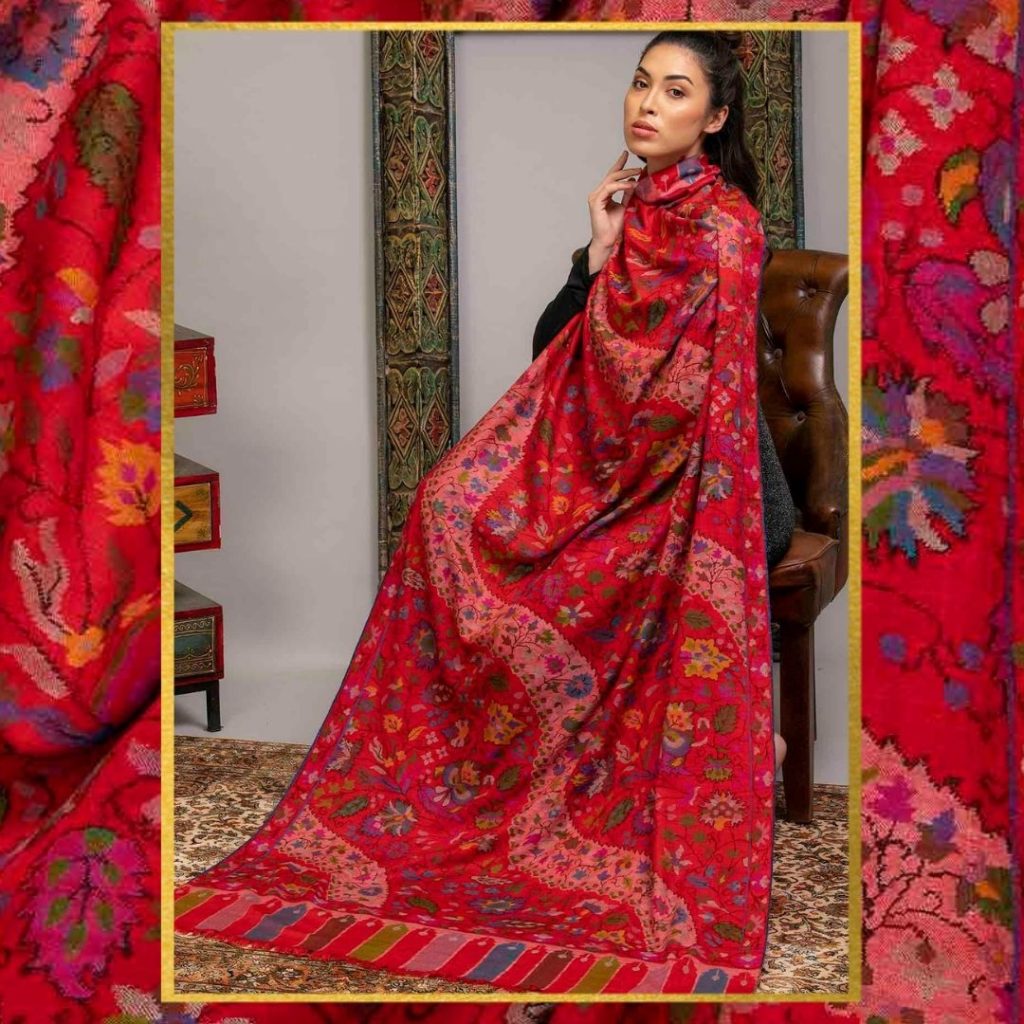
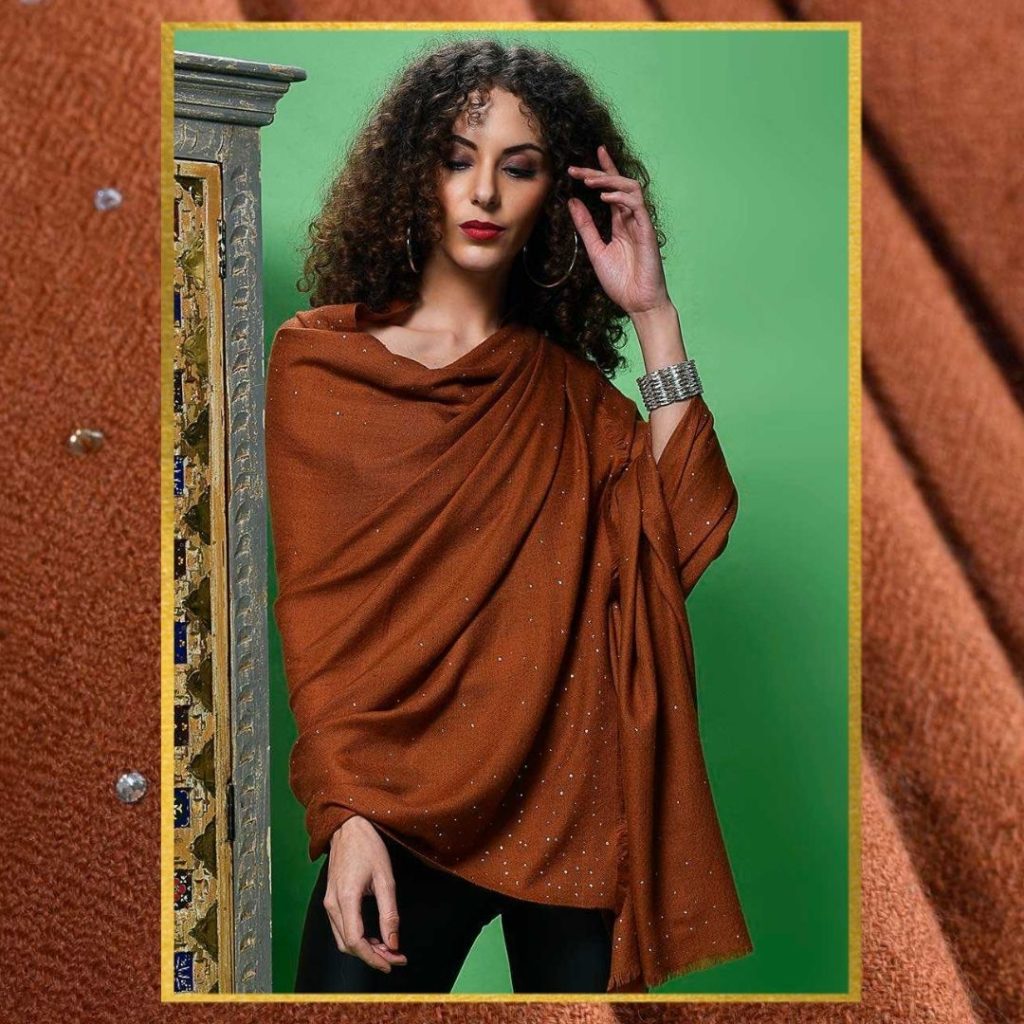
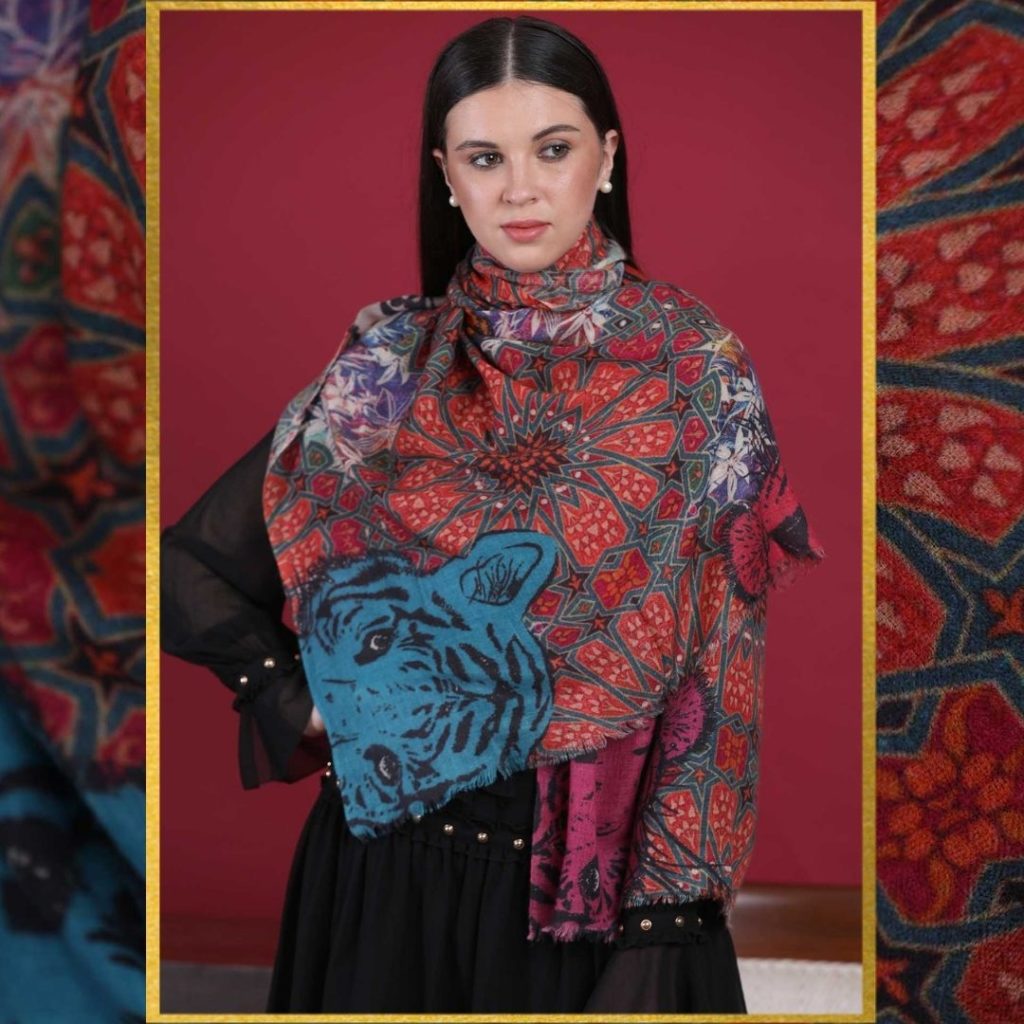
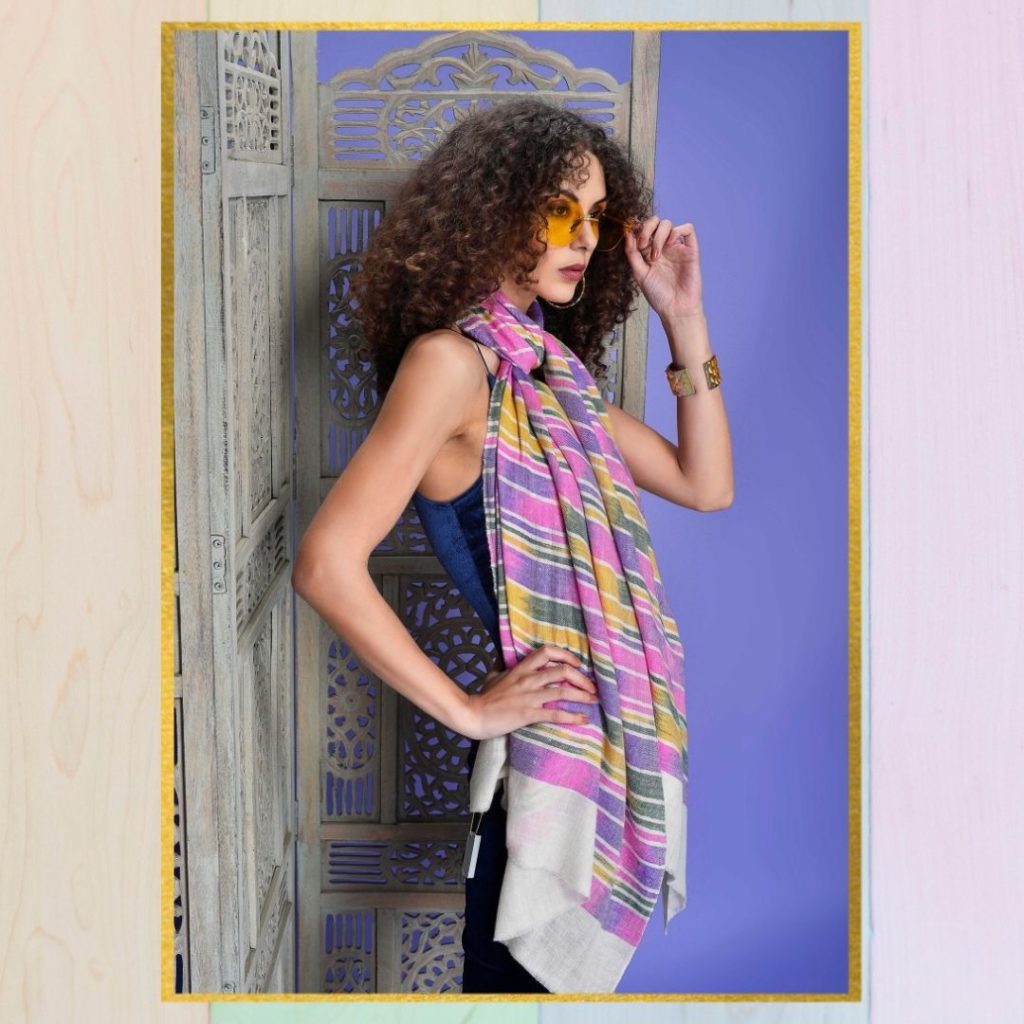
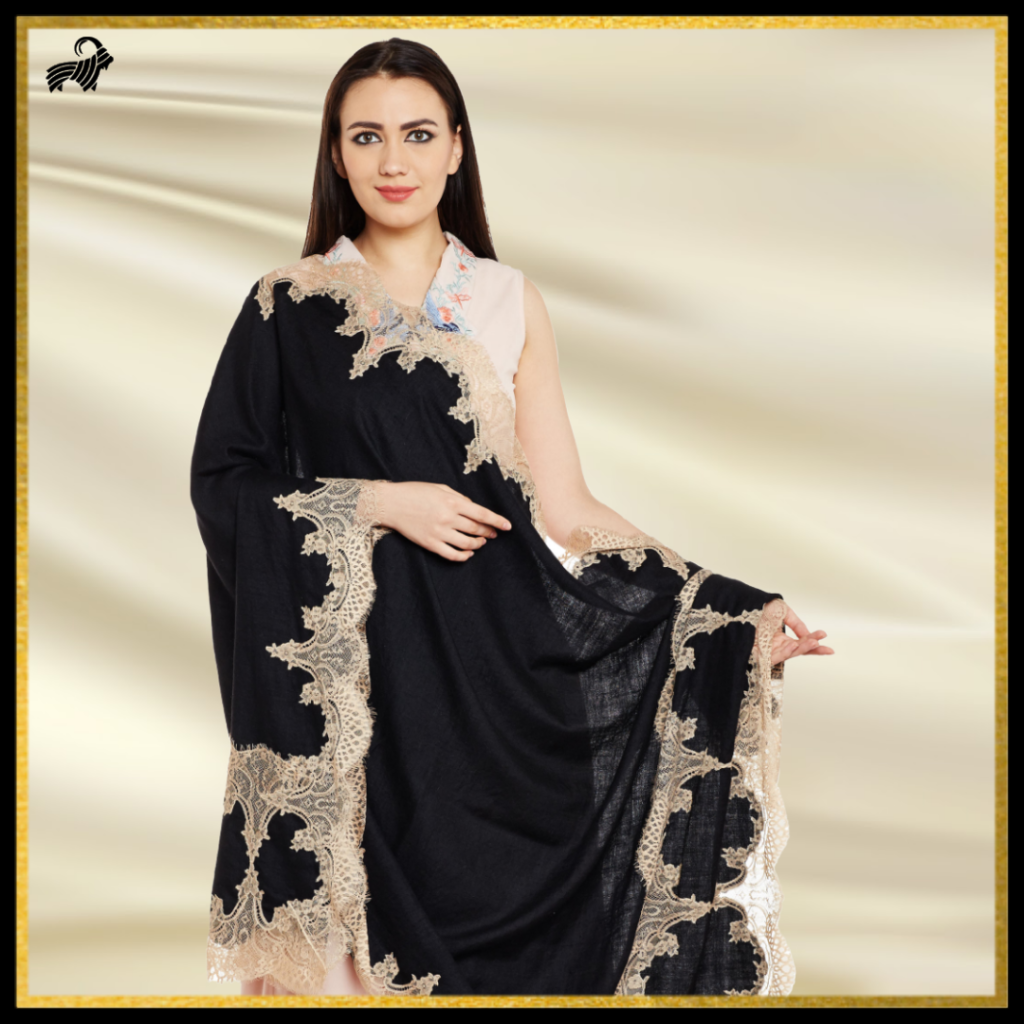
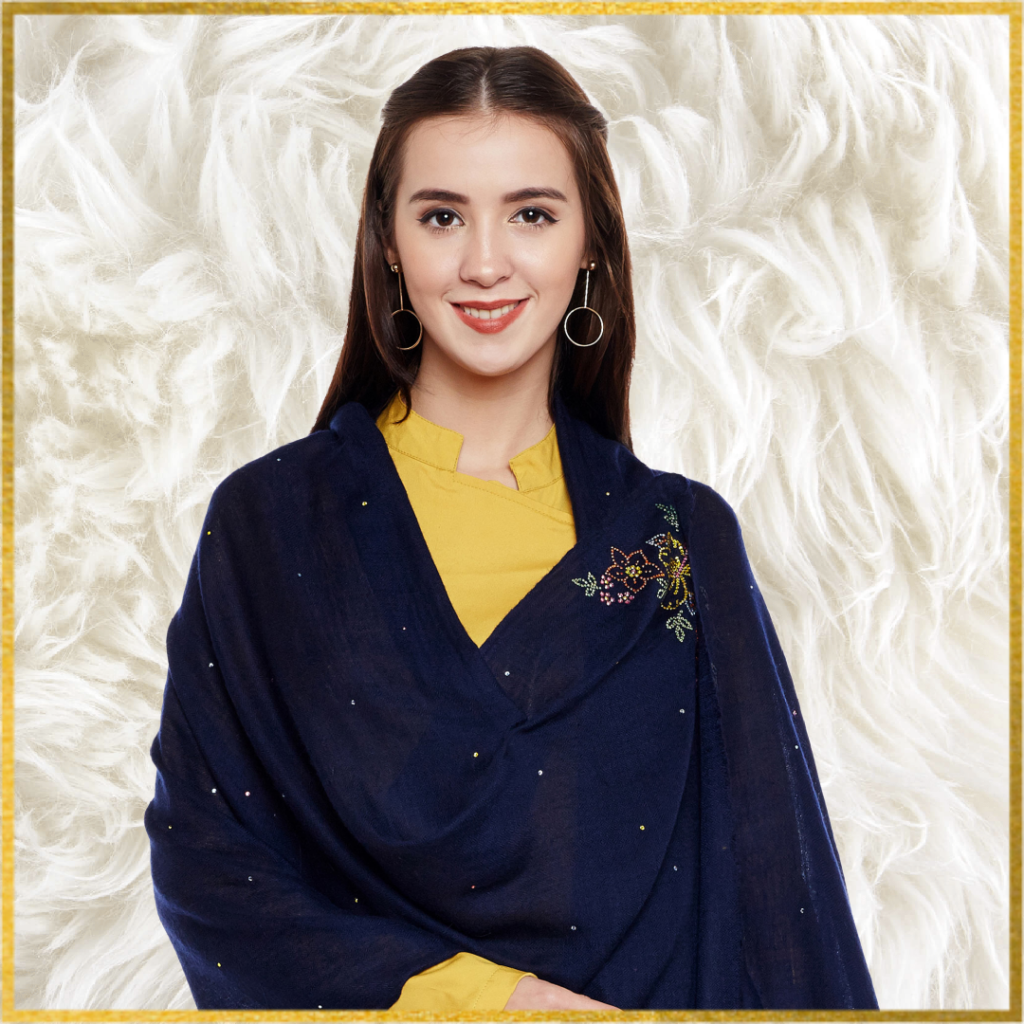
From runways to streets, if there’s one color that rules the roost, it is red. Flirtatious, attention-grabbing, and sensual, red is undoubtedly the most fashionable color. Incorporating bright colors, especially red, into your wardrobe is definitely no easy task. One of the best and easiest ways to add red to your wardrobe is by investing in a red Pashmina shawl. A color as bold as red has the power to take a plain outfit from blah to beautiful. A red Pashmina shawl can be your go-to accessory for instantly updating your daily look, be it an afternoon event or an evening soiree.
Here are a few fail-proof shortcuts to wear a red Pashmina shawl:
Play with color combinations
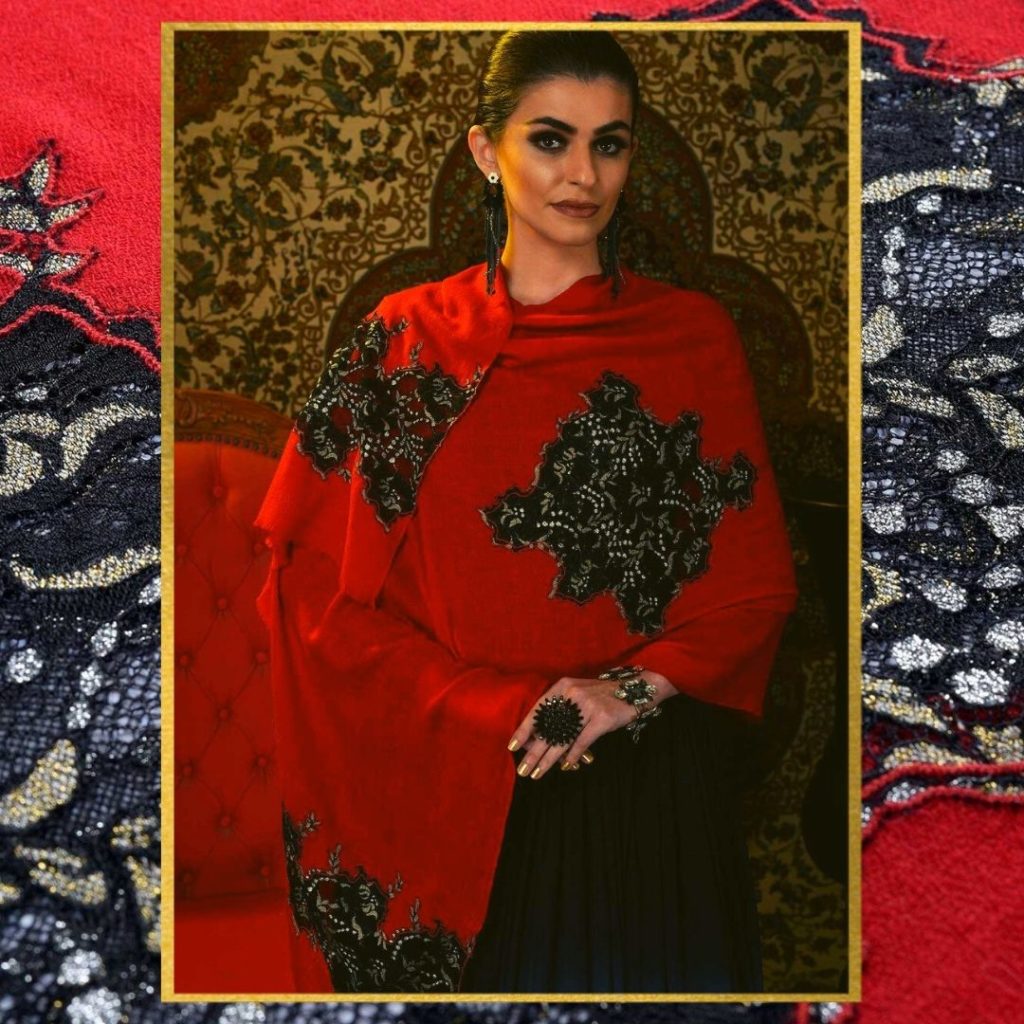
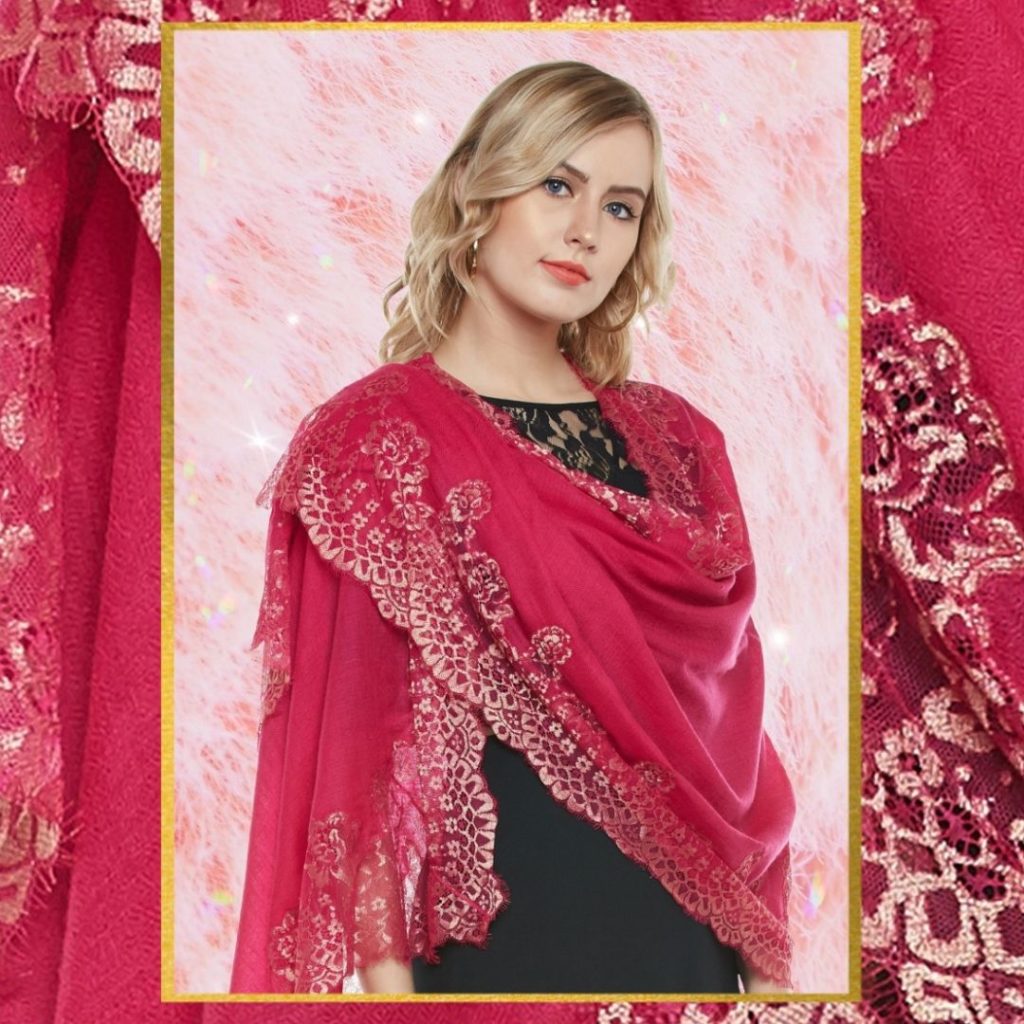
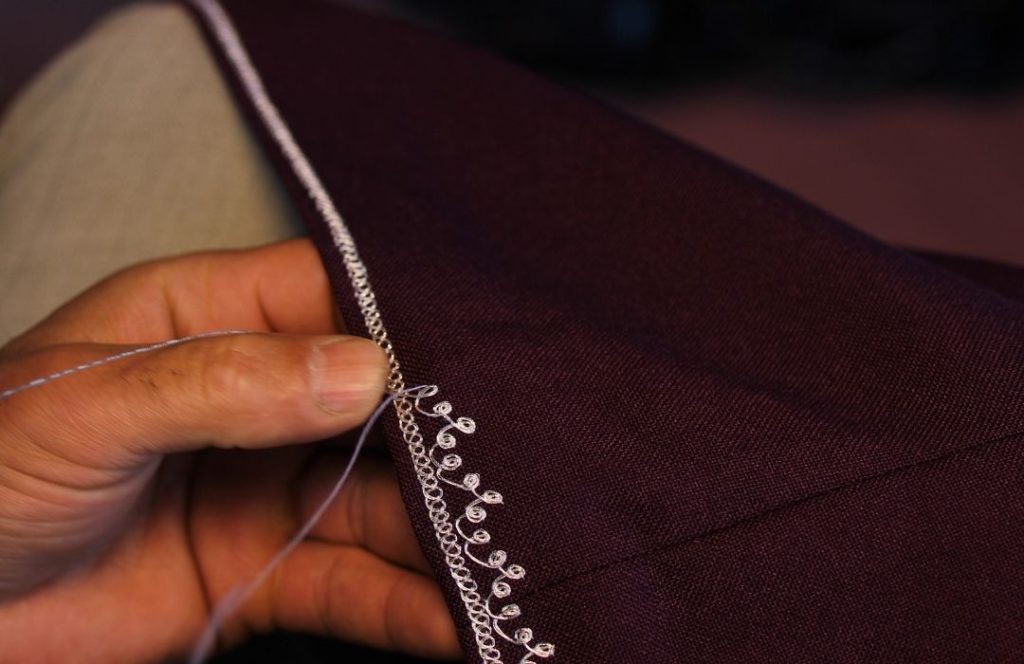
The Pashmina features a hot red base tone, which is embellished with a contrasting French Chantilly lace
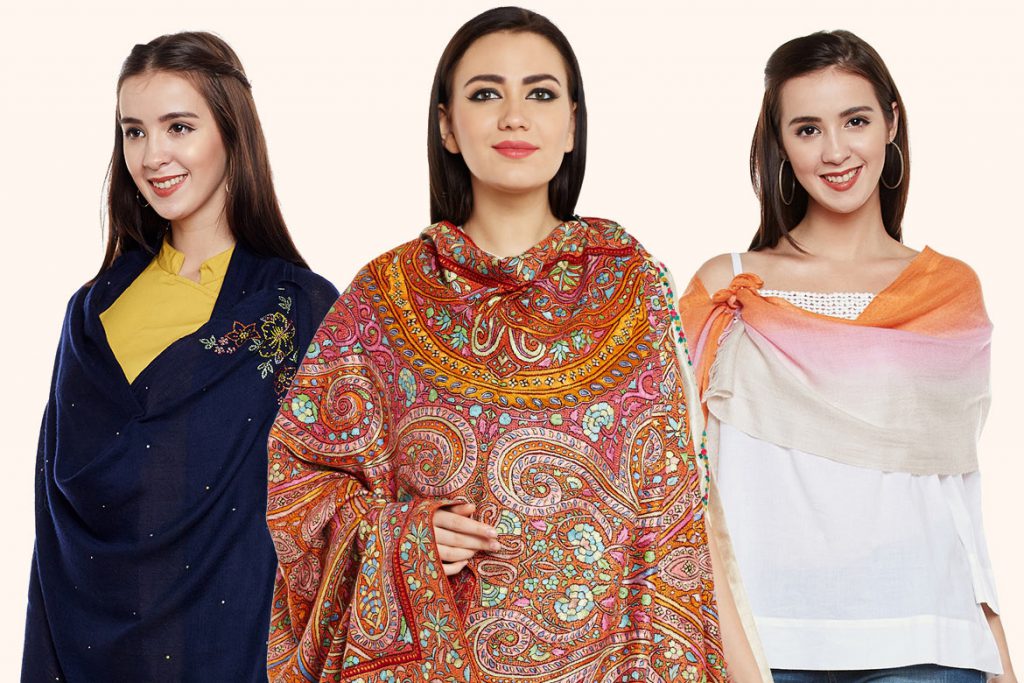
If you’re wary of donning a power-red shade from head-to-toe, wear a red Pashmina shawl along with subtle outfits. For a minimalist look, go for outfits in muted colors and let your red Pashmina shawl shine bright. Red and white, and red and black are classic color combinations that are never going to let you down. A black dress and the red Pashmina shawl will make you effortlessly look party-ready. For a luncheon, pair the red Pashmina shawl with a crisp white shirt and a pair of denim jeans and you are good to go.
Dress in all red
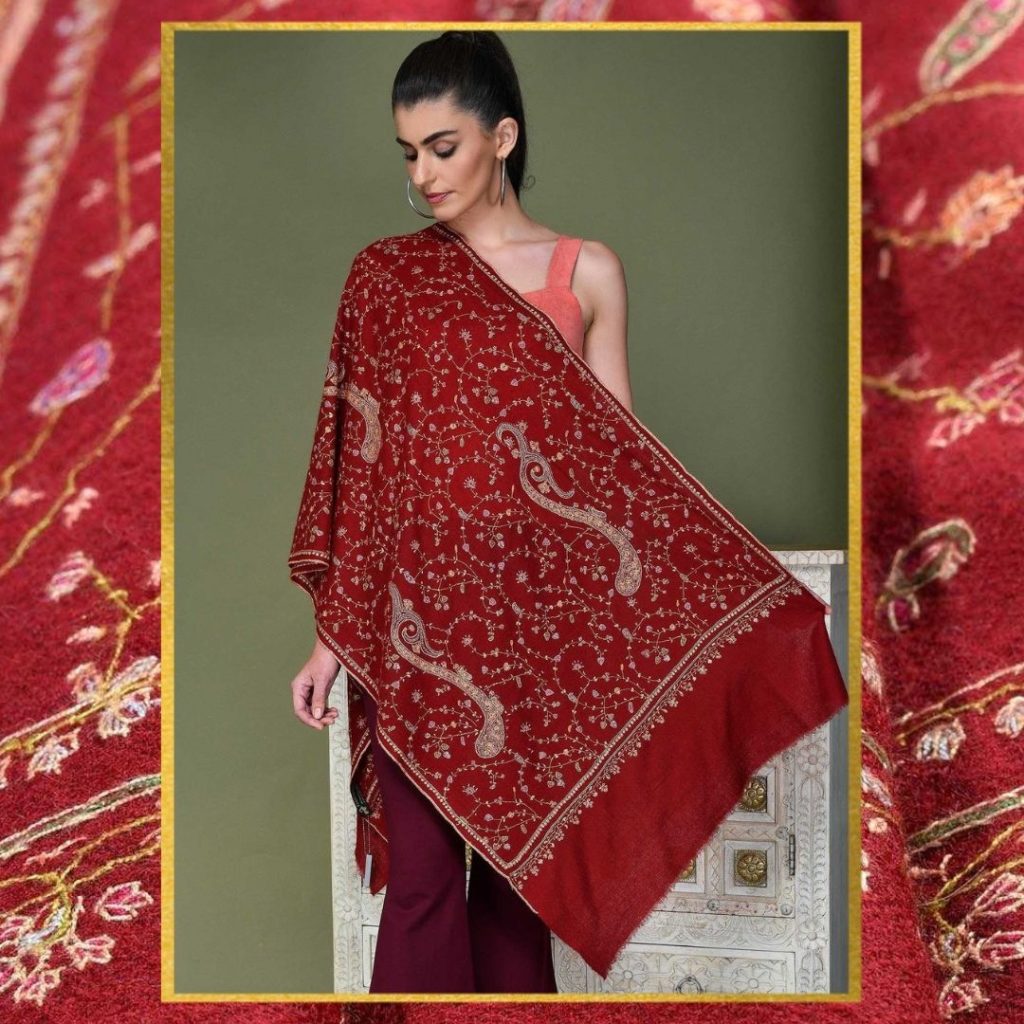
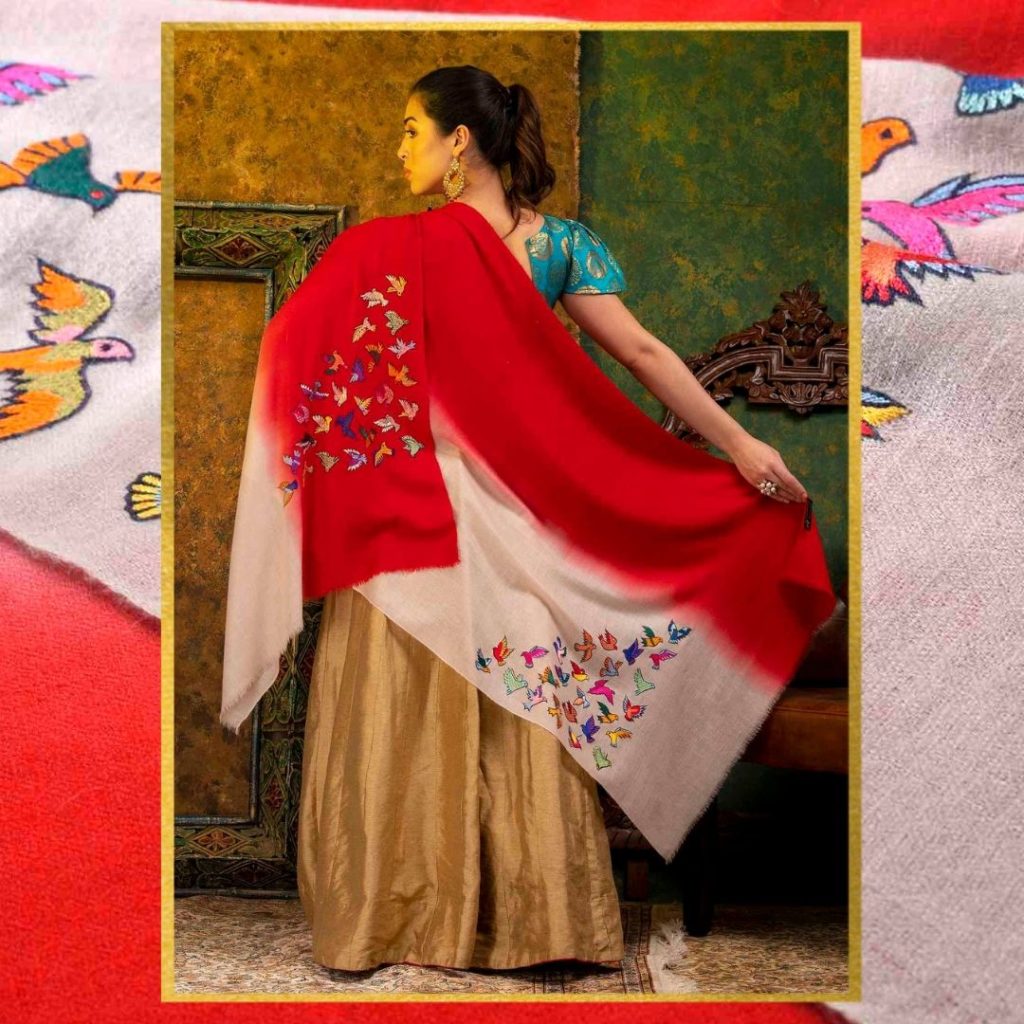
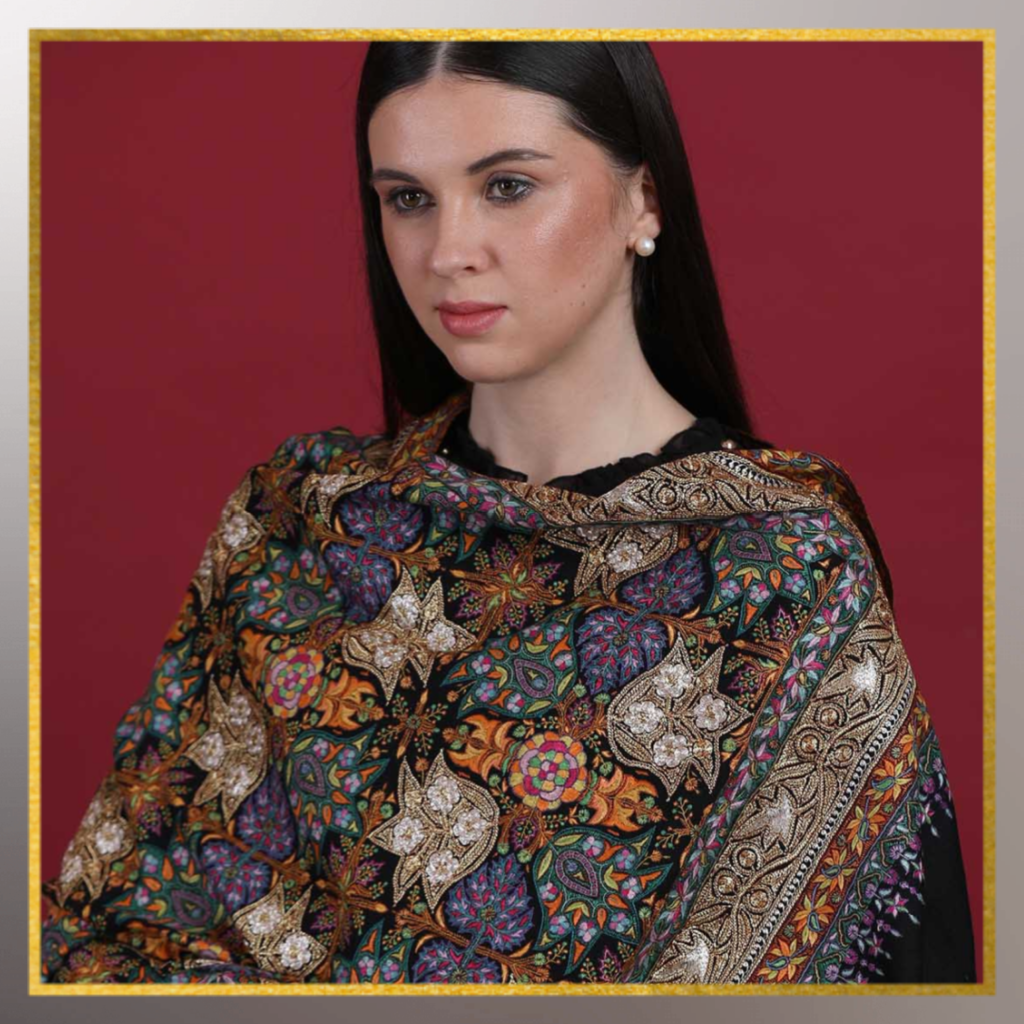
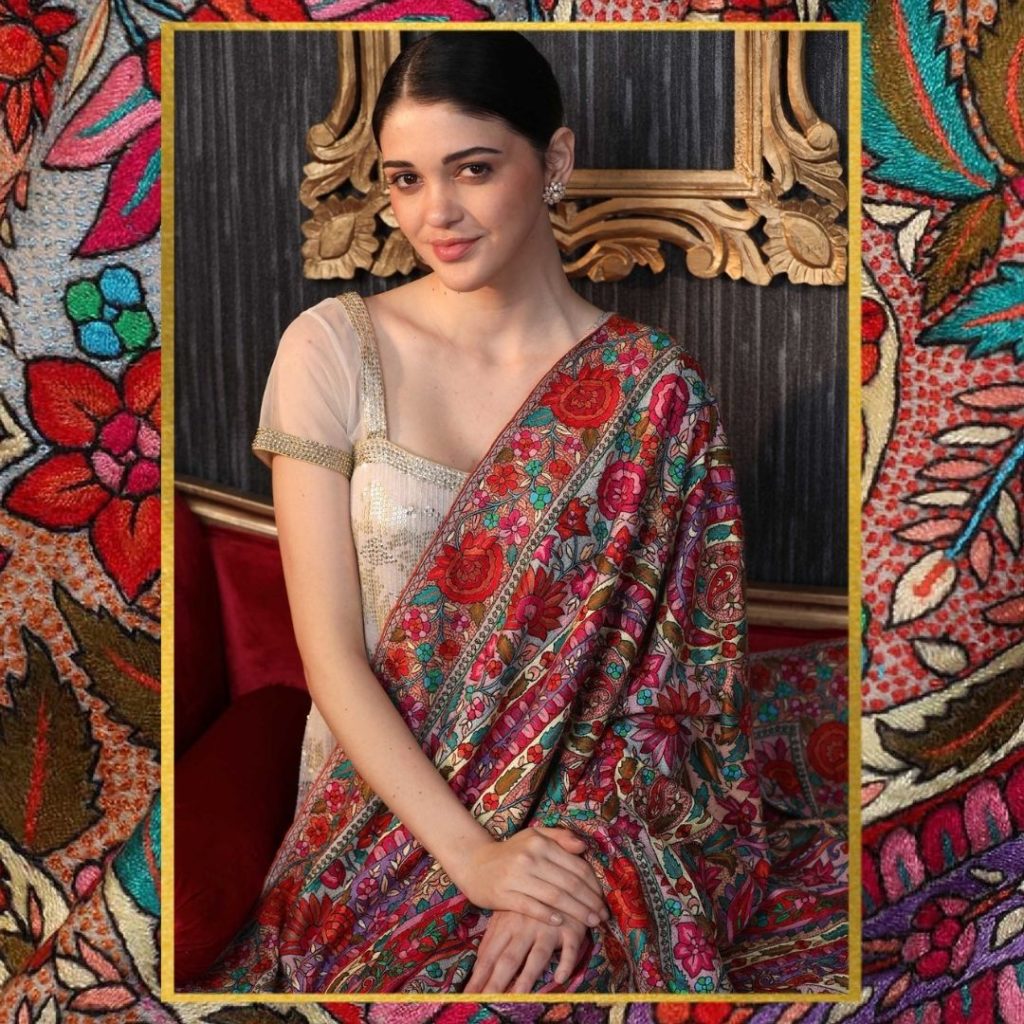
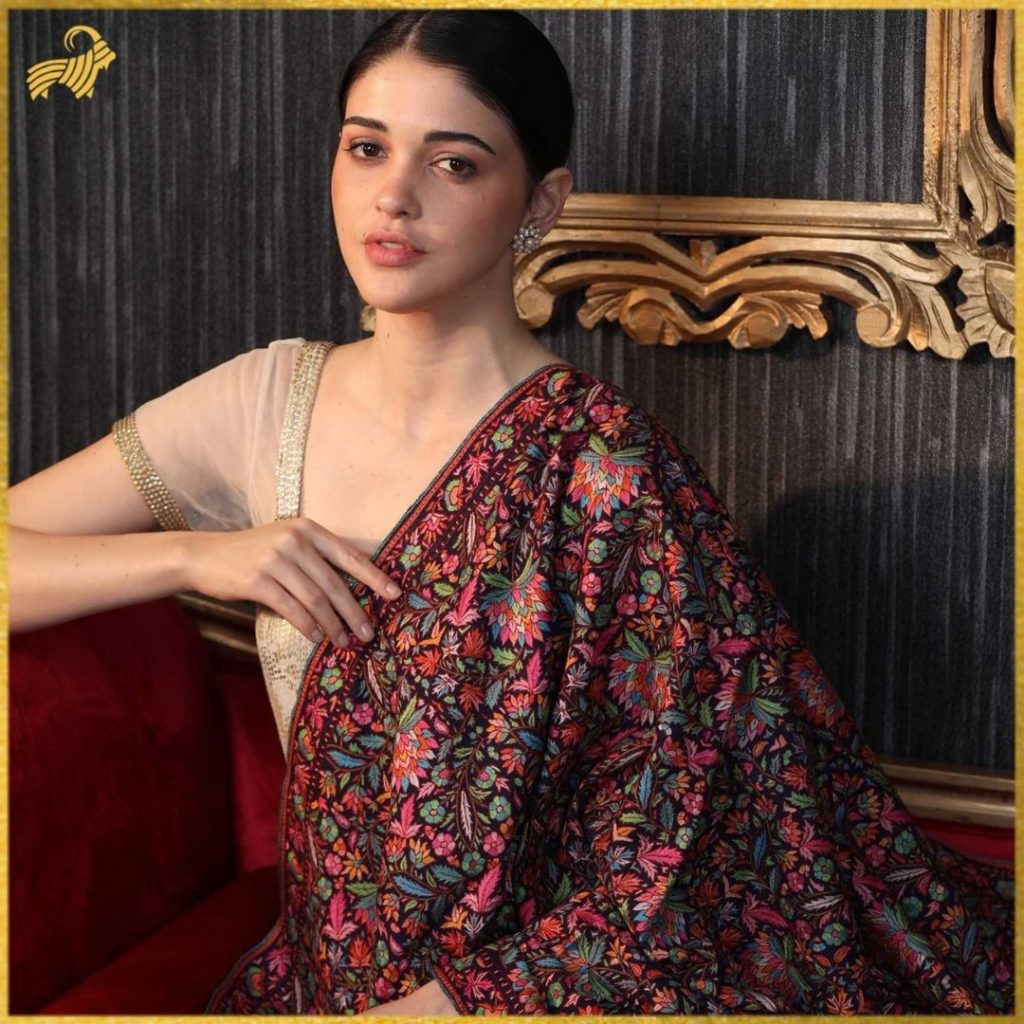
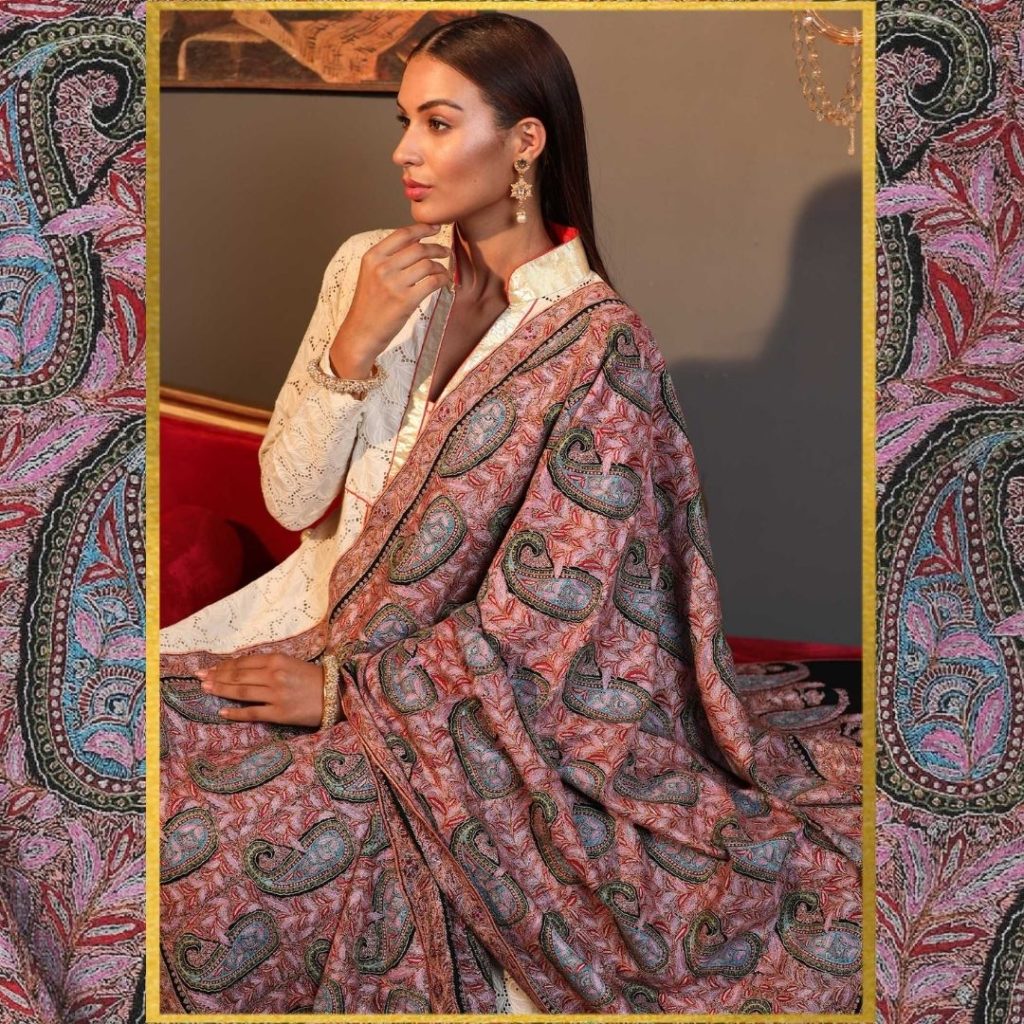
Beauty in warm red, hand embroidered in Kashmiri Sozni Kari, which looks magical as it feels
You don’t have to wait for holidays to pull off a red-on-red ensemble. To celebrate the maximalist fashion trend, pair your red Pashmina shawl with a red dress and a red pair of stilettos. To get this look right, make sure the shades of red do not vary too much. If you find this look too bold, you can keep accessories like earrings, belts, and handbags black. The look is perfect for an evening party or a cocktail event
Why choose PASHM?
A red Pashmina shawl is a perfect choice for a date, a formal event, or a casual outing. But why should you buy a red Pashmina shawl from PASHM? Our Pashmina shawls are made from pure cashmere wool that is ethically obtained from the fleece of Changthangi goats that are found on the highlands of Ladakh. From sorting of the wool to embroidery, every aspect of the making of a Pashmina shawl is done by Kashmiri artisans who have learned this art from their forefathers. When you buy cashmere shawls from PASHM you end up supporting the glorious Kashmiri art and local artisans who put their hard work into these shawls
Will the red colour last?
A Kashmiri Pashmina, in all iridescence of rainbow shades
Each Pashmina shawl and stole is dyed by hand. This process of hand-dyeing requires years of practice, skill, and patience. As Pashm wool is highly absorbent, it dyes easily and deeply, making sure that it doesn’t fade for years to come
The timelessness of a pure Pashmina
Pashmina shawls are not a part of today's fast fashion. Pashmina shawls are a timeless piece of fashion accessories. When you buy a Pashmina shawl, you don’t just buy it for yourself, you buy it for generations. The fact that many families pass on Pashmina shawls from one generation to another bears testimony to the longevity of Pashmina shawls
The past few decades have witnessed an interest in the shawl. Earlier used just as a piece of wrap to protect oneself from the biting cold, today it is also about making a style statement. The word ‘shawl’ comes from the Indo-Persian word shal, which was basically a fine woolen fabric the women draped. In 1623, the Italian traveler Pietro Della Valle observed that while it was primarily worn as a girdle. But in India people draped it across the shoulders.
“The shawls are one of India’s best products. It is unique in that while it offers the intimacy of a warm garment, it leaves you free and unencumbered’.
~Kamaladevi Chattopadhyay
Although its origins trace back to the medieval period, archaeological findings and literary references suggest that the tradition of shawls in India existed right from the Indus Valley Civilization.
These shawls have a rich legacy and speak volumes about their past. And today there are wardrobe must-haves that notch up your style and reflect opulence. Worn during weddings in winter, it is a sight to behold when women turn up in the most stunning pieces in myriads of colours and exquisite embroidery. Besides, they are a great gift that blends both style and utility in the best manner.
1.
Pure Pashmina Shawls
The diamond weave lends a fluid drape & a soft touch, both of which are the main characteristics of a handwoven Pashmina
Nothing epitomizes the glorious history of Kashmiri craftsmanship as warmly and beautifully as the Pashmina. These shawls once spelled exclusivity and security for Kashmiri women. Some say that if they fell upon bad days, they cut up a shawl length of Pashmina and sold it to the shawl peddler for cash.
A legacy of the Mughals, the romance of Pashmina reached its zenith when it cast its spell over European royalty. The great Napolean Bonaparte found the shawl fit to adorn the shoulders of his beloved, Josephine.
2.
Kani Shawls
Handcrafted over years together, a Kani shawl weaving takes help from small wooden bobbins, which are penetrated into the weave of the shawl over a handloom to create artistic marvels out of plain shawls
In the cold days of Kashmir, the lives of a chosen few are spent in weaving a spell of warmth and colour. We are talking about the exquisite Kani shawl. This mostly happens in a quaint village of Kanihama. This exquisite shawl was once coveted by Mughal kings, Sikh maharajas, and British aristocrats. The Ain-i-Akbari records that Emperor Akbar was an avid collector of Kani shawls.
These shawls involve one of the most laborious techniques used in weaving. Numerous Kanis (little wooden stick used as spool) or shuttles rich coloured threads wound around them. Artisans move these Kanis around even in a single weft line. An intricately designed wrap may use as many as 50 Kanis with different coloured threads. These shawls may take several months to complete. The designs are codified on paper, known as talim, and sung out as two weavers work on a shawl together.
3.
Sozni Jamawar Shawls
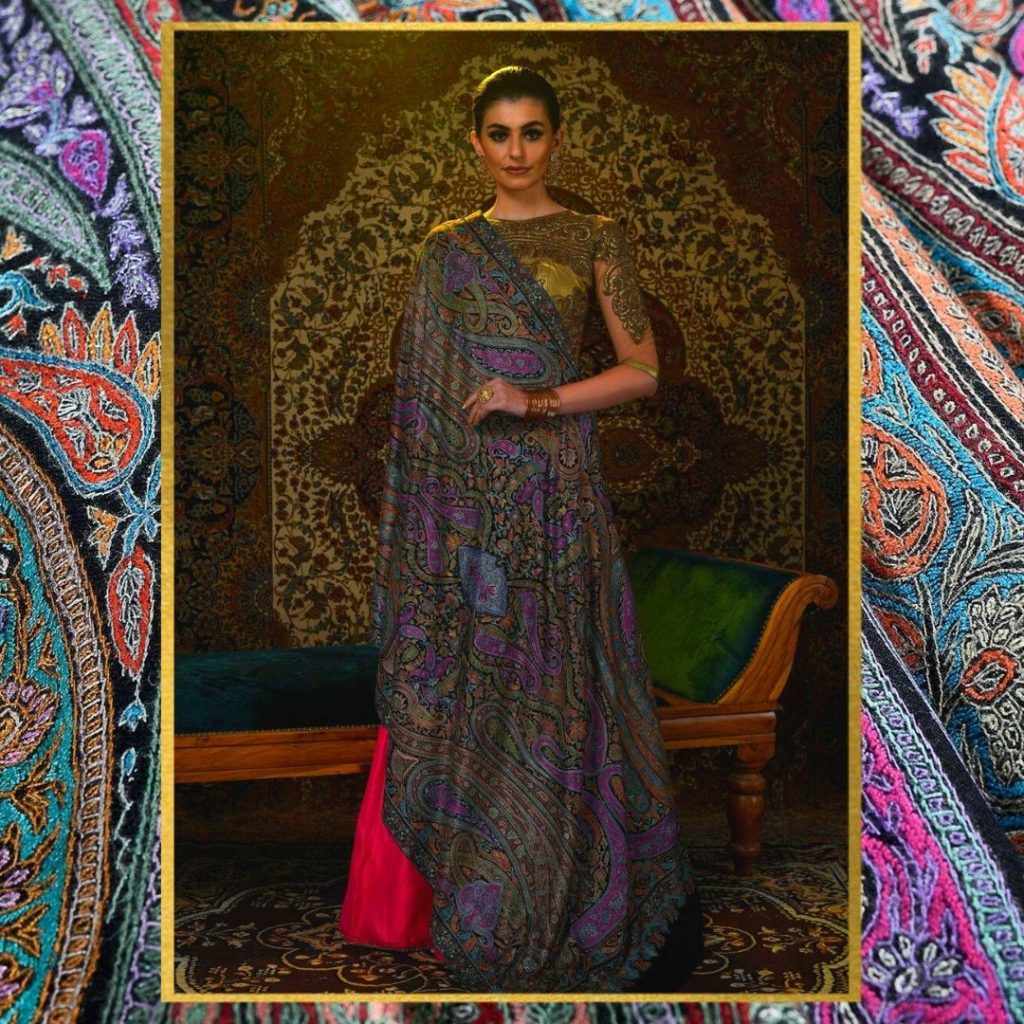
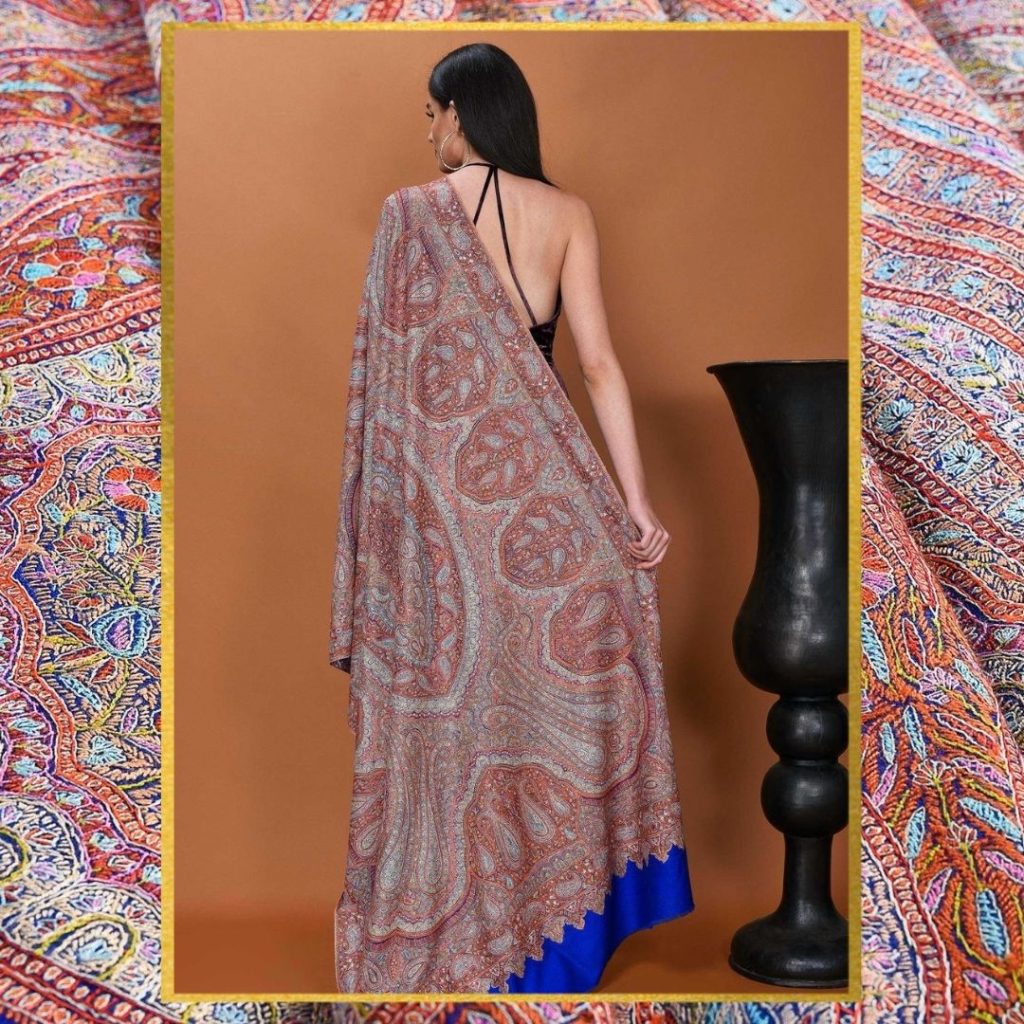
The eclectic display of warm colours and shades, this shawl has been specially curated for those with a royal taste of luxury accessorizing
These beautiful Kashmiri shawls from the land of beauty loosely translate into a “robe to cover the body”. It comes from the word Jama meaning ‘robe’ and Var meaning ‘chest or body’. Artisans handweave Jamawar with the pashm fibre, with the brocaded parts woven in similar threads.
Most of the designs today feature floral motifs or paisleys and add a touch of elegance to the wearer. Historically, these Kashmiri shawls were a prized possession of the aristocrats. These men used to buy woven fabric by the yard and wear it as a shawl or wrap. Emperor Akbar was one of its most popular patrons.
4.
Tilla Shawls
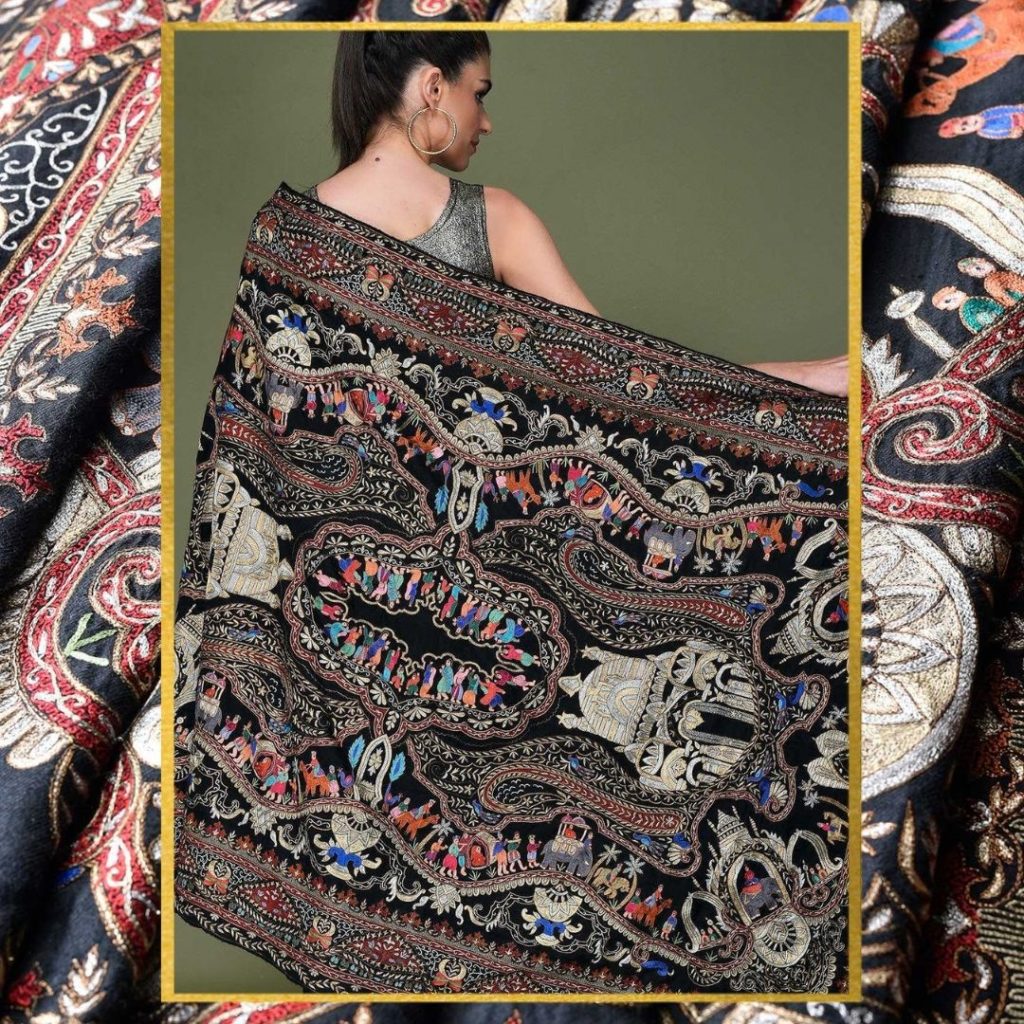
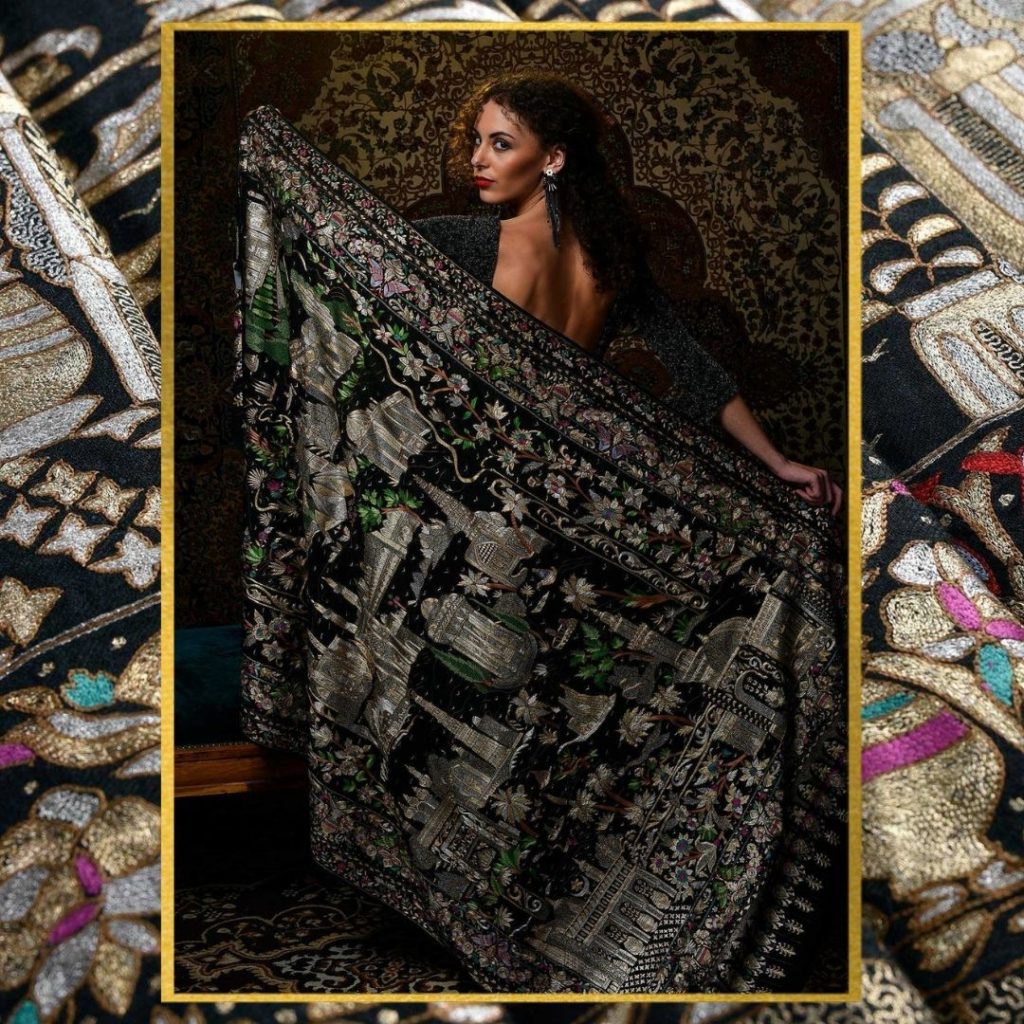
Handcrafted impeccably out of pure Cashmere, the shawl is hand embroidered in Zari Kari which showcases India's proud possession of heritage architecture, especially in the Mughal era
Artisans craft the Tilla shawls from pure Cashmere wool, which comes from Ladakh, J&K. Tilla embroidery was once done using real gold and silver threads. During this time, only the royalty and influential nobles would afford it. But gradually, to make it more affordable to common masses, craftsmen chose metal threads. Workers coated plain metal threads with gold to embroider these luxury shawls.
Tilla embroidery is locally Tilla Dozi. Shawls laden with it are an essential part of a bride's wedding trousseau.
5.
Papier Mache Jamawar Shawls
Delicate, velvety soft and gossamer Cashmere has been handwoven in the realms of Pashmina to create a shawl whose exquisiteness is unparalleled
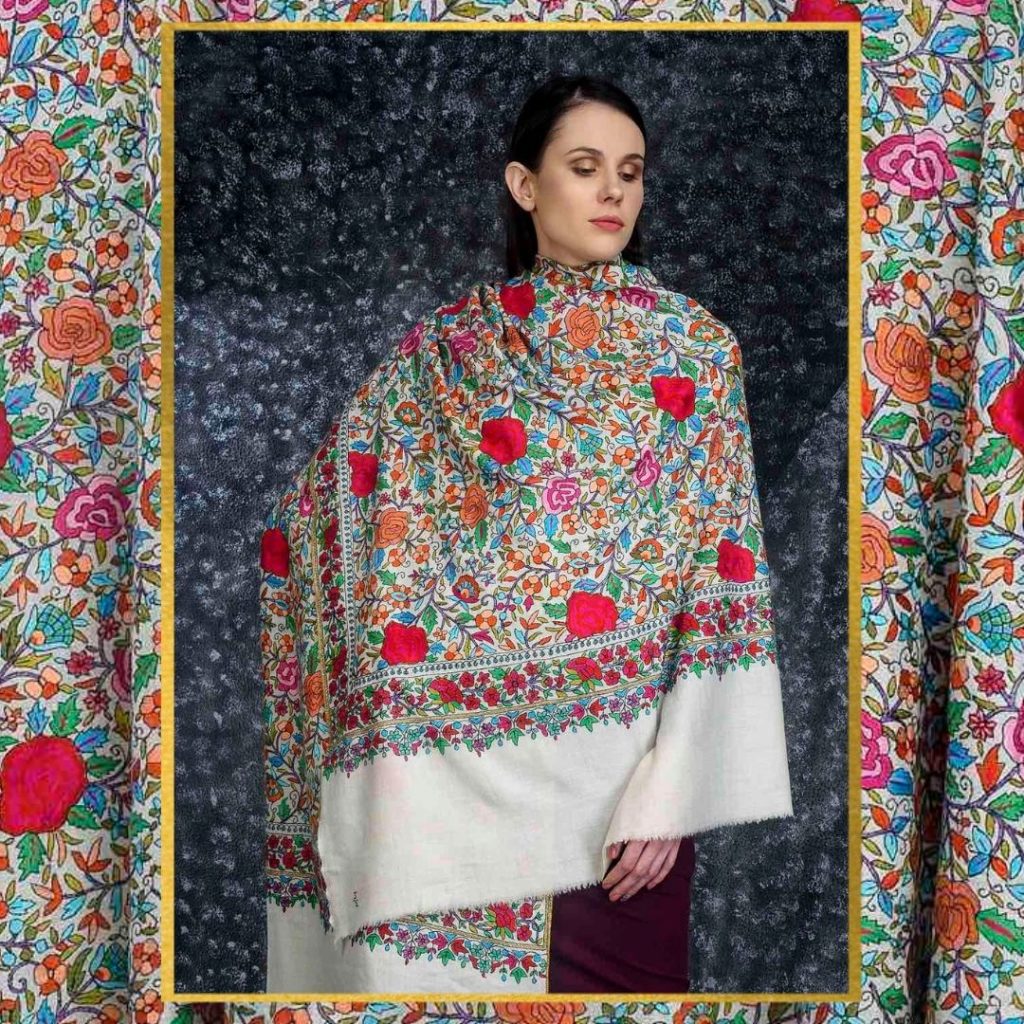
Perhaps the most alluring kind of Kashmiri shawl is the Papier Mache Jamawar Pashmina shawls. For these shawls, artisans usually choose a white base. Over the white base, embroiderers use colourful threads for embroidery. These specialists do it in such a way that thick strokes bedeck the plush base underneath. The final product looks nothing less than a live piece of art.
The name of the embroidery comes from the Papier Mache art, as both look similar in their artistic demeanour.
These Kashmiri shawls are all different from each other but stand apart due to their unique personality. Winter weddings are the best time to flaunt your collection and make heads turn with your fashion appeal and classy demeanour. Make sure you stock up on these by then!
A bridesmaid is someone who stands by the bride all through her most important day. We think she deserves something special. Hence we curated a list of bridesmaid Pashminas which she can wear to look as ethereal as the bride herself
Who doesn't love a winter wedding? Be it the one to attend or your own, winter weddings are as fun as spring or summer ones. Refreshing crisp air and the mellow sunshine, winter weddings can be a huge relief. Especially for the places whose summers are scorching.
A winter wedding can be bliss. Your carefully coiffed hair doesn't mess up. And your makeup does not fuse with sweat. The ambiance is so calm and romantic and everything around seems so fresh. You have higher chances of getting stunning wedding photos in a snowy background. A holiday-themed wedding day decoration is possible, and so much more.
But is it just a bed of roses? Is a winter wedding completely free of worries and stress? Isn't there a factor that is very basic to winter, the biggest worry to care about? Of course! It is cold. Winter wedding might be the best idea in many ways, except for the low temperature and the uncomfortable cold that engulfs all. On the other hand, one has to look their best. Be it the bride, her guests and friends, and the the MVP of the wedding - bridesmaid
How to dress up?
Even though winter is indeed the best season of the year to be a bride or bridesmaid, there are still some things you need to keep in mind before you choose the winter season.
The basic and foremost worry of a winter wedding is the choice of apparel. A bridesmaid will have to be enveloped from head to toe which might not leave you any choices for a beautiful dress. As a matter of fact, if you live at a place where winters mean anywhere around 20 degrees of temperature, you might need more layering. But who would love to wear a sweater over a formal dress? No one right? We have a backup plan.
Ever heard of the ‘Paradise on Earth’. Kashmir valley situated in the north of India is so beautiful and naturally scenic that it has secured for itself some lovely names like paradise, heaven, Venice of the east, and many more. The place experiences harsh winters and temperatures even dip to sub-zero levels.
Kashmir, a land of unimaginable beauty
It is in this part of the world where a luxurious fabric known as Pashmina was discovered in the 16th century by a traveler. It soon gained such popularity that the entire world cherished it and dreamed of having just one single shawl or wrap made of Pashmina. The main reasons for the love and admiration it earned were its lightweight, smooth touch and immense warmth it lent to its wearer.
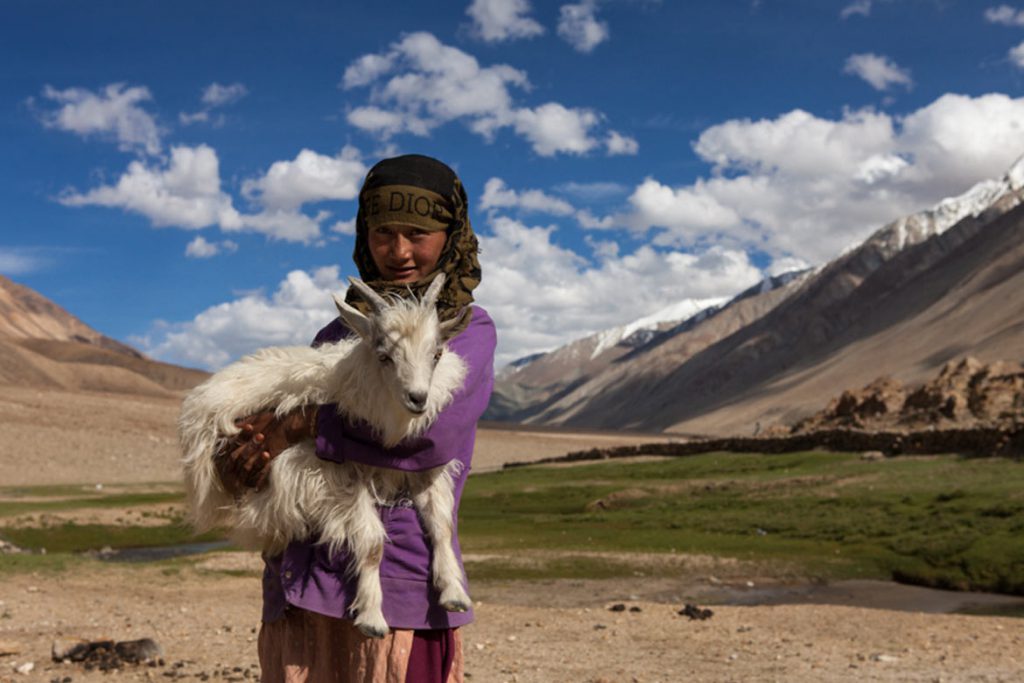
Pashmina comes from the Capra Hircus goat which is found in the Ladakh region of Jammu and Kashmir. In order to protect itself from the harsh environment of the winters, the goat naturally grows an exceptionally warm and soft fleece over its throat and underbelly area. This fleece keeps it warm and comfortable in winters but too uneasy in summer. Hence the goat rubs itself with rough surfaces of shrubs and rocks and gets rid of this wool. This is collected by herders who free the goat of any leftover wool by gently combing its body. This wool is Pashmina.
Bridesmaids are the wonderful women who are chosen by the brides themselves to be with them all the time. Bridesmaids are all through the time of the wedding responsible for each task related to the bride. Even before all the main events, bridesmaids have to be super careful and should be able to manage everything that happens around.
Bridesmaids are the bride’s best friends or a close family member who they can trust the most. Hence, their role is the most significant throughout the planning and eventualizing the events. The main role of the bridesmaid is to assist the bride with her wedding duties and offer additional help to the bride as and when required. The list is endless, and there are so many responsibilities that make up for the entire bridal preparation.
Here is the list of a bridesmaid’s duties.
Everyone doesn't know about this, but a bridesmaid emotionally supports the bride throughout the wedding. The bride shouldnt be overwhelmed at any point in the wedding planning.
Assisting the bride and their maid of honour in getting the bride ready for every event.
Attending all the pre wedding functions like the bridal shower, engagement parties, rehearsal dinner and more.
Keeping a record of gifts received by the bride so that the next time she thanks them, she knows what to mention.
Stamp and prepare bridal shower cards or the wedding cards and work simultaneously with the maid of honour for the same.
Offering assistance in the making of accessories for either the events or for the bride herself. Making of decorations, place cards, wedding favour kits and more are a big engagement for the bridesmaids.
Purchasing her own dresses, accessories, jewellery and more. The bridesmaid has to look her best. The bridesmaid has to have her clothes well fitted, her shoes properly matched and jewellery to the point. She has to look the best version of herself.
Double checking the bride is a core responsibility of the bridesmaid. Is her dress properly pinned? Is her veil straight? Has she worn all of her accessories? A bridesmaid has to be vigilant about all these questions.
Decorating the settee of the bride, or decorating any place related to the event, too, is the responsibility of the bridesmaid. Be it the bridal shower, reception, the church events and other smaller events, the bridesmaid has to do it all.
Coordinating with the guests, vendors and any outsider upon whom the arrangements of the events are dependent.
Walking down the aisle and standing in the receiving line too is a core responsibility of the bridesmaid.
Managing the party themes. Interacting with guests, playing the theme music, encouraging interactions among guests who are yet to interact.
How busy are the days of the bridesmaid, and how important is she as a person during the wedding. Isn't it necessary to present her a gift that she can't forget all through her life?
Bridesmaid Pashmina
Why not? Pashmina has evolved to be such a versatile piece of accessory that we recommend brides, bridesmaids, and even the guests to carry a Pashmina shawl for a winter wedding.
Furthermore, Pashmina has recently embraced all patterns - modern or heritage. It has made itself a perfect accessory that is irresistible to not incorporate in your list of dresses that you chose to wear for your best friend's wedding
Colourful and vivid, the birds have been hand embroidered over the softest Cashmere base
If you like to wear matching accessories or contrasting ones, Pashmina comes in all colours now. Be a warm red, black, white, or pastels pinks and nudes, Pashmina features all colours, all shades, and ups your formal apparel a hundred notches. You can simply drape a Pashmina shawl over your dress and you are good to go.
Types of Pashmina for Bridesmaid
It's one of the most important days of your life. And you have to look the best version of yourself. That is the reason we curated some special types of bridesmaid Pashmina shawls for your big day. Here are some special ones from our collection
Solid Pashmina for Bridesmaid
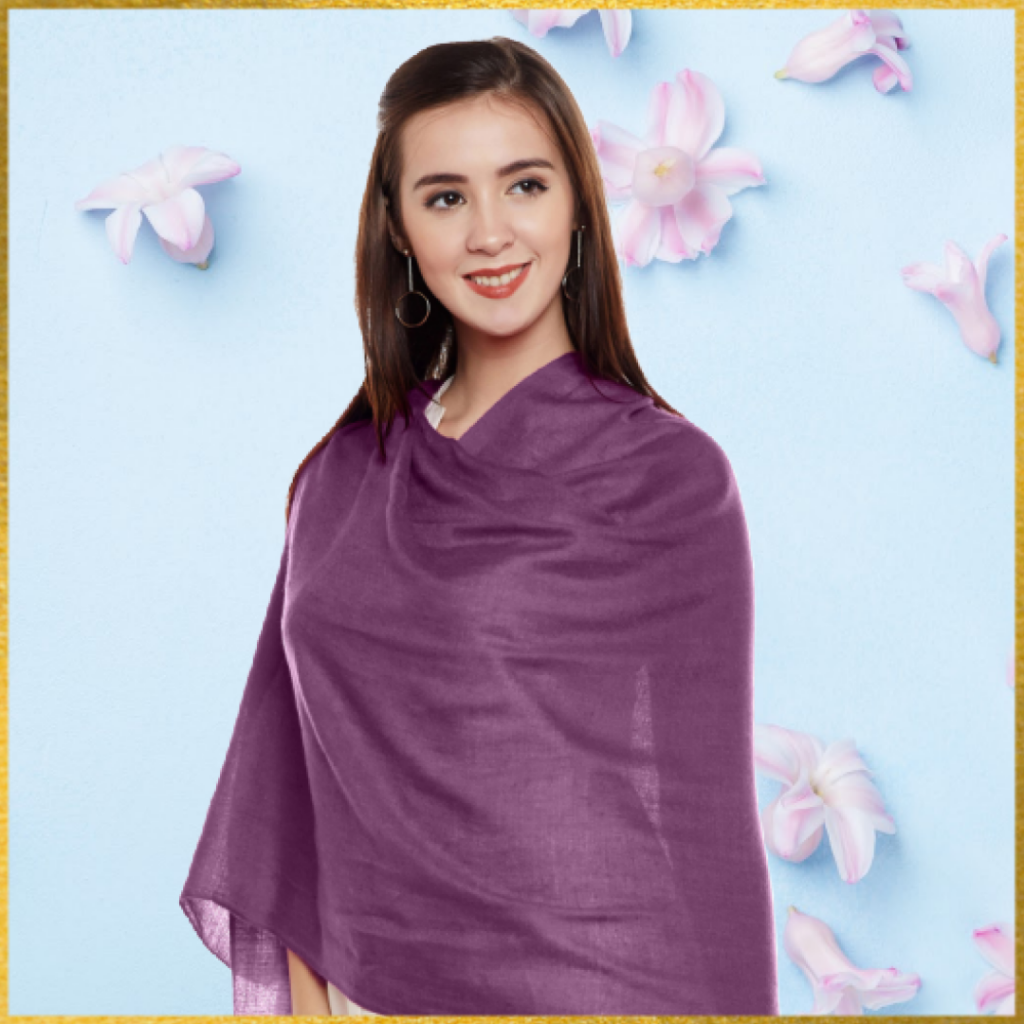
Cashmere wraps woven in the diamond weave, add grace to the fabric and makes the solid colour more prominent and vibrant
The most basic yet classy shawls of our collection no doubt will be the solid Pashminas. The shawls are made of pure Pashmina and our collection features an overwhelming 55 colours. These types of shawls resonate with the classics of Pashmina shawl makings because Pashmina started with just solid ones. Your bridesmaid can pair up these beauties with the shade they like.
Solid Pashminas can pair with any dress and apparel type. Your bridesmaid does not have to care about matching or pairing of the Pashmina shawl or scarf as these are timeless accessories that pair with every type of outfits.
Ombre Pashmina for Bridesmaid
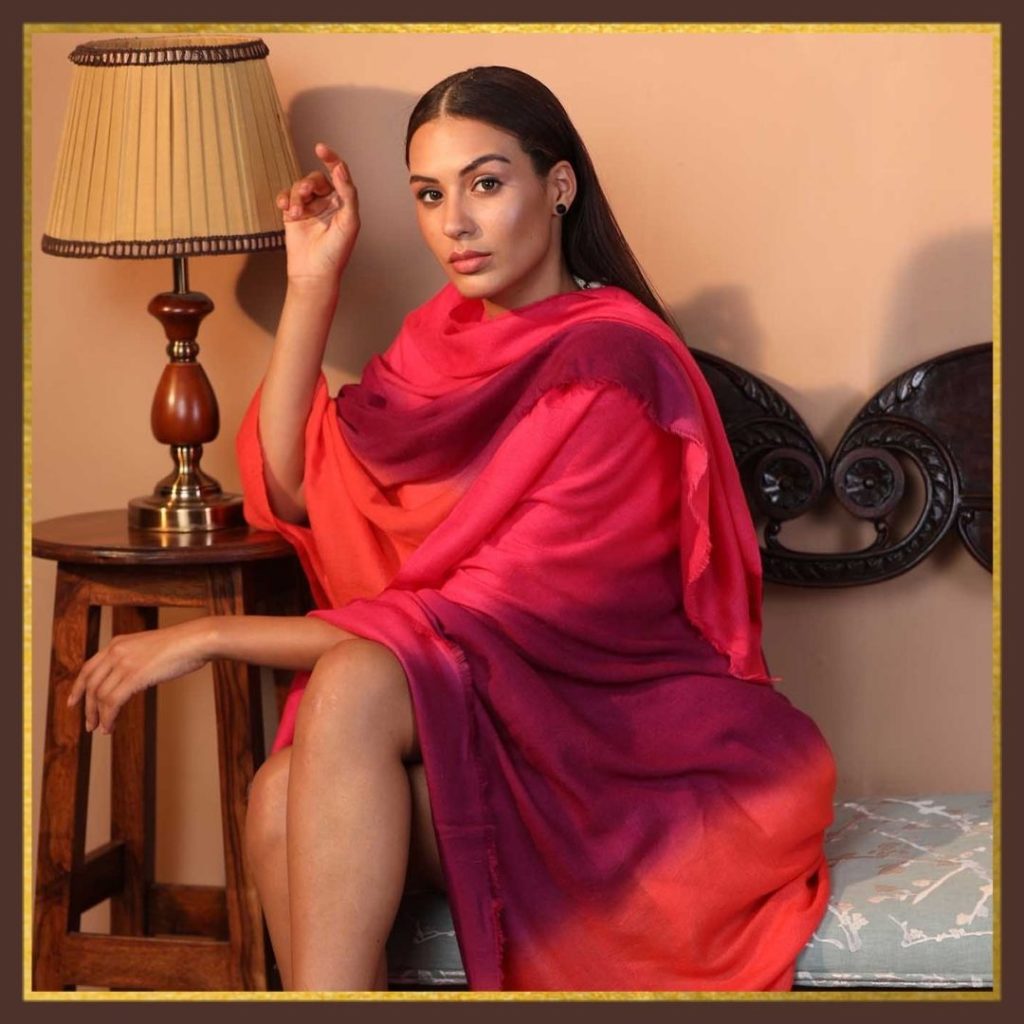
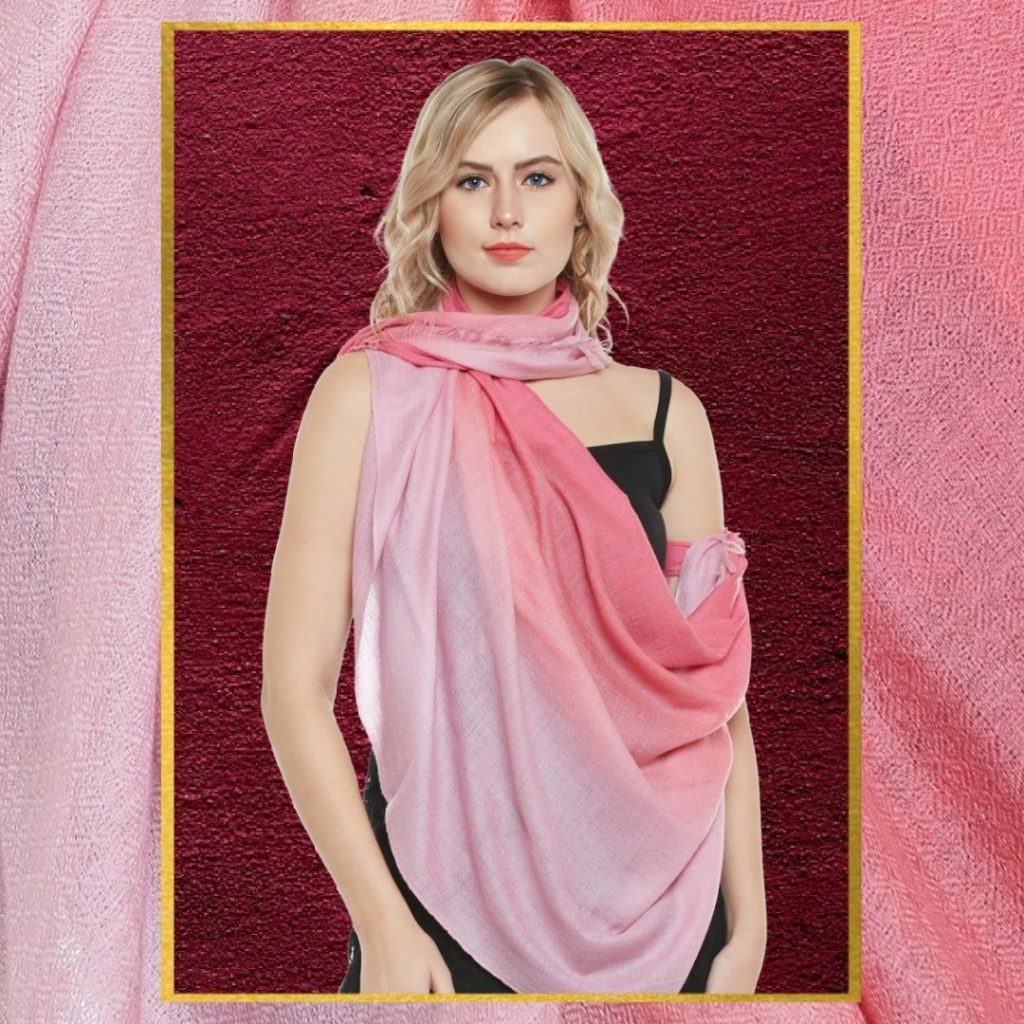
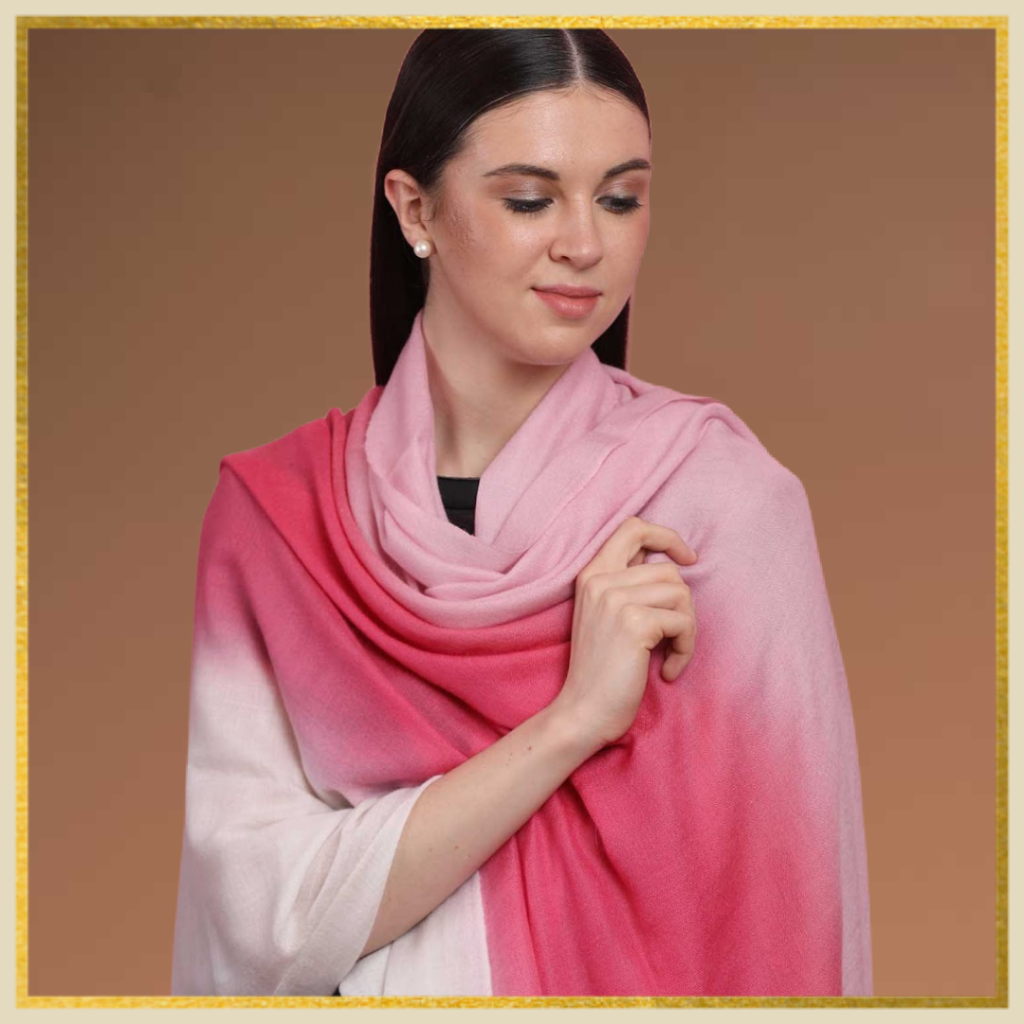
Ombre Pashminas - soaked in trending shades of rich colours
Original, 100% pure Pashmina yarn threads are mount over a traditional loom as warps and wefts in such an artistic pattern, that the resultant shawl comes out in an ombre pattern. It is the sheer skill and experience of Kashmiri weavers which can concoct such a dramatic piece of accessory without an effort! These shawls are colorful and swoon-worthy and your bridesmaid is definitely going to love them
An infusion of one colour into the other is going to make your bridesmaid delightfully surprised. Now she can pair it with outfits of two different colours and feel like a fashion diva.
Swarovski Studded Pashmina Shawls
Showered with rich Swarovski studs, the Pashmina wrap epitomizes simplicity
Swarovski Studs are small crystals that are attached by hand to plush Pashmina shawls to bestow a shimmery and modish look to them. A shawl with Swarovski studs looks like the night sky enlightened with stars. Gift this shawl to your bridesmaid and watch her overwhelmed with happiness
If your bridesmaid has star studded your wedding events, she needs a Pashmina shawl, studded with swarovski crystals. These shawls are handmade and take months together to get ready. These are the gifts that your bridesmaid deserves, as these are thoughtful and exceptionally exclusive.
Lace Pashmina Shawls for Bridesmaid
The French Chantilly lace, hand stitched on to the fleecy cashmere
Embellished with the world-famous French Chantilly lace, an assortment of feminine Pashmina shawls includes over 50 colors to go with her ensembles. The shawls feature the lace in all places and patterns which make any basic ensemble of your bridesmaid a more colorful and feminine one.
To make these laced shawls even more unique and swoon worthy, we have introduced laces not only on the borders, but also inside the body of these shawls. The laces are hand stitched with exceptional efforts of the craftsmen who put their soul into the making of these beauties. The French laces have been handpicked for the shawls because of their lightweight and graceful mien. You too handpick these pretty and elegant shawls for the woman who makes your wedding special for you.
If a bridesmaid has a choice to wear any warm fabric why should she invest in a bridesmaid Pashmina shawl? Well we can have a hundred reason, but the most important ones are as follows
Pashmina is lightweight. When you are already wearing a formal dress and jewelry, a light wrap will definitely be a win.
Pashmina has a huge choice (as already discussed above). Whether you like solids, patterns, prints or Swarovski crystals, bridesmaid Pashminas feature every bit of them, bridesmaid Pashminas feature every bit of them.
Pashmina shawl is timeless. It stays with you even after a lifetime of your wedding day, and never ever gets out of fashion
Your bridesmaid is special. She has managed all of your events and made your day perfect. She helped you create a thousand memories, and it wouldn't have been possible without her presence. Thank her with the most amazing gift of all times. A timeless Pashmina for her unmatched efforts of making your wedding day the best day of your life.
Concluding
Pashmina shawls are versatile. They can be used by bridesmaids on every occasion. Your bridesmaid might like an elaborately embroidered shawl for the bridal shower, a solid white shawl for the events in the church, a bright shaded one for the bachelorette party, and a laced one to bid you goodbye as you leave with your loved one.
The luxurious art of Pashmina (or Cashmere) is coveted by men and women alike. It adds a touch of exuberance and royalty to the wearer. No wonder, this is an ideal luxury gift for all seasons and occasions. And best part is that it never goes out of fashion. Cashmere shawls, stoles, and scarves are prized for their gentle texture, warmth, and superior comfort. Interestingly, it is said that the Cashmere product becomes softer after every wash feeling like a gentle wisp on your skin.
The diverse range of products we offer exude an air of elegance. These can brighten up your wardrobe with its myriad hues and exquisite designs. What’s more, these can serve up as versatile gifts for any occasion; weddings, anniversaries, birthdays, or just as a token of love!
We believe gifts are a form of expression and must last a lifetime. This is why our products propagate sustainable luxury gifting. Each of the pieces is painstakingly crafted by skilled artisans with the highest quality of Cashmere. So you know you’re in safe hands! Our collection caters to different tastes – there are traditional pieces, funky ombres, Swarovski-embellished as well as stunning stoles. To make a lasting impression, one can customize it as per their liking. Additionally, we’d have it shipped globally within no time!
Here's a lowdown on the gifts you can opt for.
Personalized and Customized: Luxury Gifting
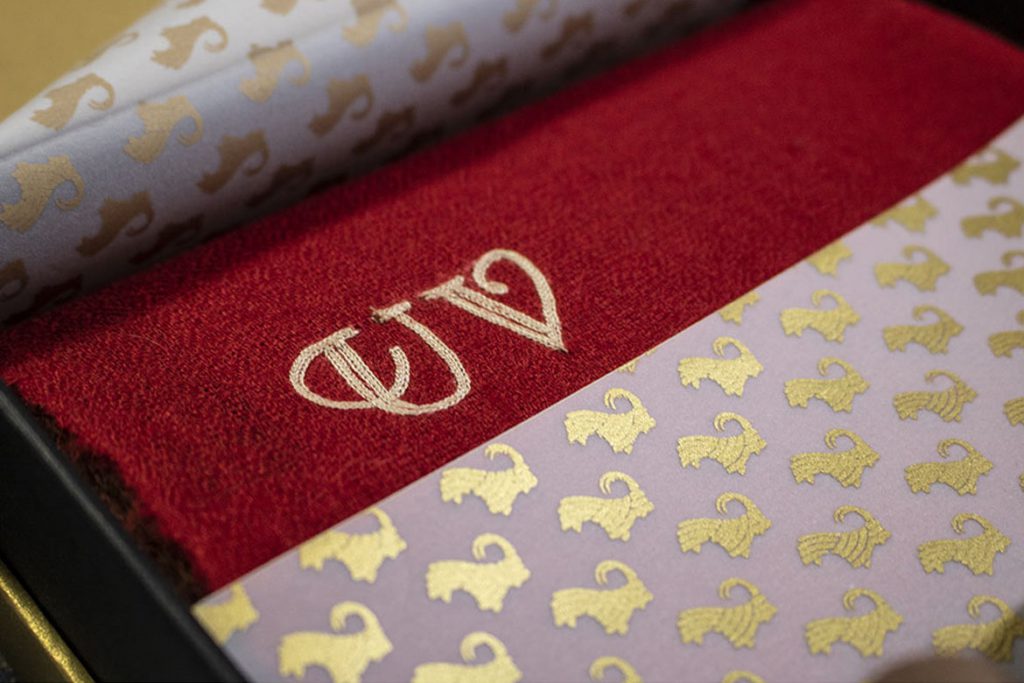
We have a large palette of colours on offer, a 2600-strong Pantone chart, so whatever be the mood, there’s a bunch of vivid shades to brighten you up. The product is then luxuriously presented in a personalized box, which is not less than a collector’s item. Believe us, it is difficult to take your eyes away from it! What’s more? You can get traditional monograms with personalized details or even names hand-embroidered on these Cashmere products. Its time to express your affection for a loved one. These monograms are made by our craftsmen, who make sure these are as exquisite as the shawl or stole itself!
Personalized Cashmere for your loved one
What matters the most while choosing a product is authenticity and credibility. In a world populated with fake and machine-made Cashmere blends, it is difficult to trust sellers, especially in the online sphere. At Pashmina.com, what you see is what you get. Each of the products sold on our website undergoes a stringent quality assurance procedure. This is done by the Crafts Development Institute, Government of India. Every Cashmere product comes along with a lab test report. The report contains the product name, visual, micron count, make of the product as well the procedure to test the fibre.
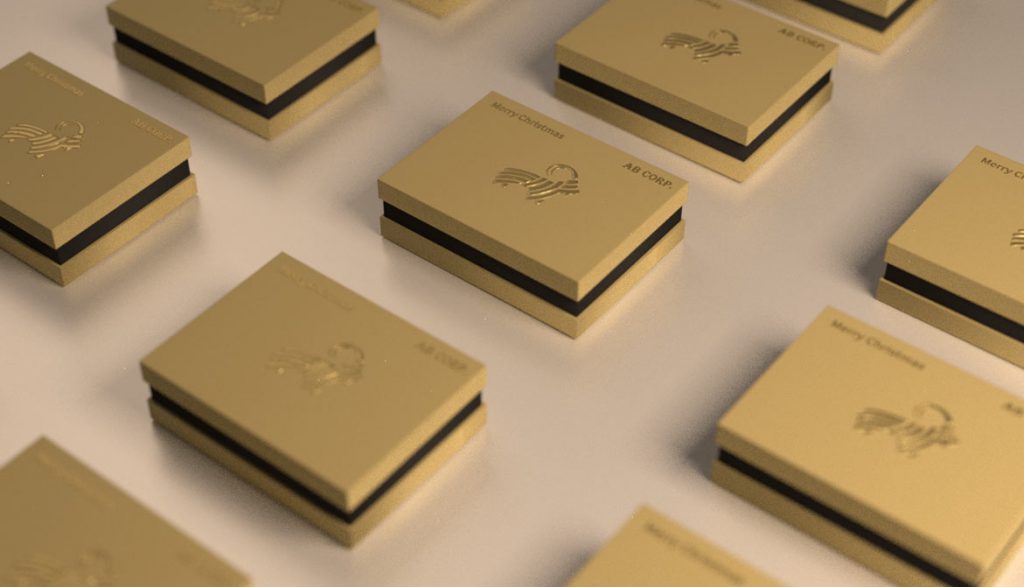
If you are a corporate, it isn’t really a rare scenario where you present gifts to your clients. In fact, these gifts speak volumes about your company and make the right impression. We customize as per the brand’s taste. Hence, there’s an array of colours to choose from and again, the option to go for a personalized monogram. Whatever be your choice, we’ll make sure you have it! In addition, we offer options to present your gift in a personalized box with the name and logo of your company. Within the box too, the product is secure in luxurious wrapping to ensure that your gift receives all the care it deserves.
Customized Corporate Gifts
Best of all, we ensure prompt delivery and globally ship your product so that it reaches any part of the world. So, what are you waiting for? Take your pick and chose Cashmere for luxury gifting for your loved ones!
Not everyone would know this, but the Kashmiri Pashmina shawl is the world's most sought-after fabric. Nothing in the world feels so luxurious and comfortable as does a Kashmiri Pashmina shawl or scarf. Being minimal in its demeanor, a Pashmina shawl adds an exceptional grace to any outfit, western or ethnic, traditional or modish, bright or pastel.
Processed in the most painstaking and skilled fashion, a single Pashmina shawl or wrap has the ability to transform your wardrobe into a whole new collection of a celebrity closet.
Apart from obvious and apparent reasons, there are a number of justifications for Pashmina to be selected for weddings. Let us analyze each one and decide for ourselves.
Where does Pashmina come from?
Ladakh is one of the coldest regions in the Jammu and Kashmir union territory. It homes a place called Changthang - over 15000 feet above sea level. This melancholic community of Buddhist monks experiences a harsh winter and the temperature dips below -40 degrees. The community is that of herders who are survived by exotic and beautiful changthangi goats. It is these goats that protect themselves in the winter with a soft and exceptionally warm raw wool called Pashm. The wool is warm enough to guard the goats against harsh weather conditions.
Harvesting Pashmina - The journey from a super fine fibre to your closets
As summer arrives, the goats rub themselves against rough rocky surfaces and coarse bushes and trees to get rid of this wool which has now started to make the goats uneasy. The herders collect this wool, clean it properly, sort it according to certain quality standards and send it to Kashmir for further processing.
In Kashmir, this wool is again cleaned. It is then spun and then handwoven to attain an airy light soft fabric which is locally called Pashmina. The entire process takes hundreds of men and women to complete, and months or sometimes years to complete just one shawl. A typical shawl has measurements of 100*200 cms. The product is pure, handmade, and made out of the natural fibre. Being such labour intensive and painstaking to acquire, it is quite obvious to consider Pashmina for wedding.
A Pashmina shawl lasts for an entire lifetime, or even more if it is properly managed. In Kashmir, it has been a tradition to give your daughter your preserved Pashmina shawl as a gift when she is a bride. (As the daughter wears her mother’s shawl, the moment is full of emotions and love). This shawl can be even 30 years old. But the purity and originality are such that not a bit of exquisiteness and grace gets lost in the years. It is also a tradition in Kashmir to keep a Pashmina for weddings.
Wedding Pashminas
If the yarn is acquired by weavers and stored, then a plain Pashmina will take around 15-20 days to complete. It is however the embroidery that takes more time and makes the buyer wait for the shawl. If a shawl is to be minimally filled with embroidery, it would take a few months. Some elaborate designs which are widespread over the base such that the base isn't even visible, take 3-4 years to finish. Similarly, Kani Pashmina shawls too take a few years to get to the markets.
Over the resplendence of Kashmiri Pashmina, the afterglow of summer sun in the form of Zari embroidery creates a magical aura
The reason for such a long length of time taken to complete a Pashmina is doing everything manually. The embroidery threads are so intricate, that a commoner might not consider it possible and human to cover a large shawl with it. Similarly, designs are elaborate and labyrinthine that it takes time to plan it, embroider it and add finishing touches.
Authentic Kashmiri Pashmina shawls are available in a variety of styles, from vibrant colors to hand embroidered
Traditionally, the Pashmina shawl was thought of as an accessory for mature women, (over 30 years of age). And it was only worn with ethnic apparel like a saree, salwar suit, bridal gowns, etc. But lately, Pashmina has evolved to be quite a versatile accessory and has been embraced by all ages and apparel. Now you can buy a Pashmina scarf for your teenage daughter and watch her look pretty graceful carrying it. Pashmina has even adapted to all types of apparel. You can wear a Pashmina with western wear, ethnic apparel, or casuals.
The reason for this versatility is Pashmina being able to embody patterns other than just embroidery, as it did in the past!
The yarn for Pashmina which is spun by Kashmiri women is so fine that it is barely visible. Pashmina yarn is just 12-16 microns in diameter (a human hair is 50 microns on average) which makes it one of the finest yarns in the world. This yarn leads to a Pashmina shawl being exceptionally light and soft, yet exceptionally warm and snug
For Men and women
Talking of versatility, one last reason to absolutely love Pashmina is its quality of being unisex. There are hand embroidery and Kani Pashmina shawls for men which look unconditionally stunning on them. Men can wrap plain Pashmina scarves with formal and casual wear. Kani Pashmina and embroidery full mens’ shawls can be ideal for festivals or wedding ceremonies.
Being favoured with royal patronage in the past, it is Kani shawl which is still in style for the timeless beauty it is
Like a fine wine, Pashmina has always gotten better with age and never looks old. In fact, it is said that the more you wear it, the softer it gets. This makes Pashmina a must-have for your winter wardrobes.
Unlike most winter fabrics, Pashmina doesn't pill (when taken good care of) and stays fresh for an entire lifetime. Minimal and timeless, Pashmina never gets out of style and can be worn for more than 30 years looking more and more artistic and pleasing to the eyes every year.
Arrayed with a blanket of snow, agitated with a few disturbances or fighting societal issues, the valley of Kashmir often remains shrouded from the rest of the world. But what lies under the dense layer of clouds is a small world, brimming with magnificent art and crafts. Yet the outside world remains least aware of it.
Since times immemorial, Kashmir has been the hub of handmade wonders. Be it shawl making, embroideries, or architecture, the valley in its reposed state houses antique, traditional, and heritage crafts. Irrespective of foreign trends and influences, the valley has always clung to what its locals create - like that, is timeless.
Types of Kashmiri Shawls
One should know that its not just Pashmina shawls which are a product of the valley of Kashmir. Kashmiri embroideries see a wide range of base materials. Wool, Pashmina and Shahtoosh shawls are three main types of shawls. Consequently over all these types, magnificent motifs in exquisite embroideries are hand done.
Sheep Wool
Shawls made from Sheep wool are most commonly used in Kashmir, as soon as winter season arrives. There are categories in Sheep wool shawls too according to the finesse and quality of the wool. Sheep wool shawls host all types of embroideries, as they are thick and strong. Sheep wool is about 20-25 microns, which makes products made from it bear more weight than Pashmina or Shahtoosh. Embroideries done on Woolen shawls include Sozni, Tilla, and the bulky Aari embroidery
Pashmina
Pashmina shawls come from Ladakhi goat, which grows Cashmere wool in winters. It should be noted that this Ladakhi goat is found over 14000 feet above sea level, in a region which experiences -40 degrees temperature in winter. But because of Cashmere wool growing all over its body, the goat remains safe and comfortable.
As soon as summer arrives, the goat rubs its body against rough surfaces, trying to get rid of the same wool. Thereupon, it is collected by herders and processed to make Pashmina shawls. Pashmina shawls are fine, and do not bear the weight of thicker embroidery variants. Hence Sozni, Tilla and Papier Mache embroideries are chosen for Pashmina.
Shahtoosh
Shahtoosh shawls are banned currently, due to the animal cruelty associated with it. These shawls were made from the hair of the wild Chiru goat, found in the Himalayas. Shahtoosh fibre was exceptionally fine and soft and its diameter was just 8-12 microns. Hence, embroidery atists choose mostly Sozni embroidery for Shahtoosh
The most popular shawls in Kashmir and overseas is Pashmina shawl. Hence we today discover Pashmina and popular embroideries done on it.
Pashmina - and Popular Embroideries
Pashmina, and popular embroideries done on it, made the shawls more famous, and cherished. Briefly here are some of the most common embroideries done on Pashmina shawls.
Sozni Kari
One such craft from the realms of age-old embroideries is Sozni Kari - or thread embroidery. It is done usually on Pashmina shawls. In fact, it was introduced to the locals by the 14th-century Islamic saint - Shah I Hamdan. He bought with himself some 700 artisans to train the locals in this meticulous art. Consequently, it was usually farmers who took this art as a profession. Farmers used to work over Pashmina shawls during a time when farming wouldn’t need day-long efforts! Since then, till now the art of making an embroidered Pashmina provides livelihood to many artisans in the valley.
Handcrafted in a deep black, a Pashmina shawl gets the royal embroidery motifs done in Sozni Kari, inspired from Mughal architecture
What is Sozni Embroidery?
Sozni Kari, an art, almost 500 years old, is one of the most intricate and sophisticated forms of hand embroidery. This is one of those special crafts that is practiced only in the valley of Kashmir. The base is usually Pashmina. However, the embroidery can be done on any soft fabric, jackets, handkerchiefs, pocket squares, scarves, and alike.
Sozni embroidery requires massive hard work and concentration of the maker. Moreover, if done over a Pashmina shawl, it takes each shawl some two to three years to complete. The artisan must sit with his workpiece for a period of 6-8 hours every day to create the labyrinth designs. The shawl carries these for centuries together. As a matter of fact, sometimes the embroidery patterns are so dense that the Pashmina base is barely visible.
Sozni Embroidered Pashmina - The Process
Sozni Kari is done with the hand using a small needle and fine threads of infinite hues and shades. Consequently, the art becomes so intricate that over an area of 1 centimetre, a motif can be embroidered in 5 stitches, and over the same area, another motif can be embroidered with 500 stitches, both looking equally and extremely graceful.
The process of making a Sozni embroidered Pashmina is a meticulous one. Consequently it includes a series of steps to be followed in order.
Step 1: Choosing the base
The first step is to choose the fabric over which embroidery is to be done. Even though the embroidery looks exquisite over a Pashmina shawl, it can be done over apparel too. Fabrics like wool, silk, cotton, and other soft ones are usually chosen.
Step 2: Choose a design
The next step is to pick a design. Firstly, the Naqash carefully draws a design which is embroidered over a fine graph paper.
There are a number of designs that a Kashmiri Naqash usually designs. Traditionally the paisley design was the most popular. Nonetheless, Animate motifs such as the local sparrows, parrots, or butterflies are also made in alluring shades. Else, the world-famous fruits and flowers of the valley are embroidered which grace the Pashmina shawls in unique patterns. As importantly, the heritage Chinar motif holds a special place over the Pashminas. It can be seen over borders or all over the base of these masterpieces. Nevertheless, the charm that each motif emanates from is nothing less than spectacular.
Step 3: Carving the design
On the basis of what the Naqash has designed, a woodblock is carved in the same design by a specialist wood engraver
There are a number of motifs which the Naqash designs.
Step 4: Stamping the Pashmina shawl
Following, this wooden block is dipped in ink and stamped over the shawl as an outline for the embroider to imitate.
Step 5: Choice of colors
As soon as the stamped Pashmina shawl is taken to a master artist, it is him who determines which colours should be used by the embroider. Later another master artisan called “Voste” approves or disapproves of the design, and recommends changes.
Step 6: Embroidery
Now, the shawl is ready to be sent to an embroider, who, with his years of experience and skill, embroiders the shawl in the approved colours.
Step 7: Washing
As soon as the Pashmina shawl completes its time with the embroiderer, it is taken to a spring for wash. Using mild washing agents, the shawl is washed by specialist washers.
Types of designs in Sozni Embroidery
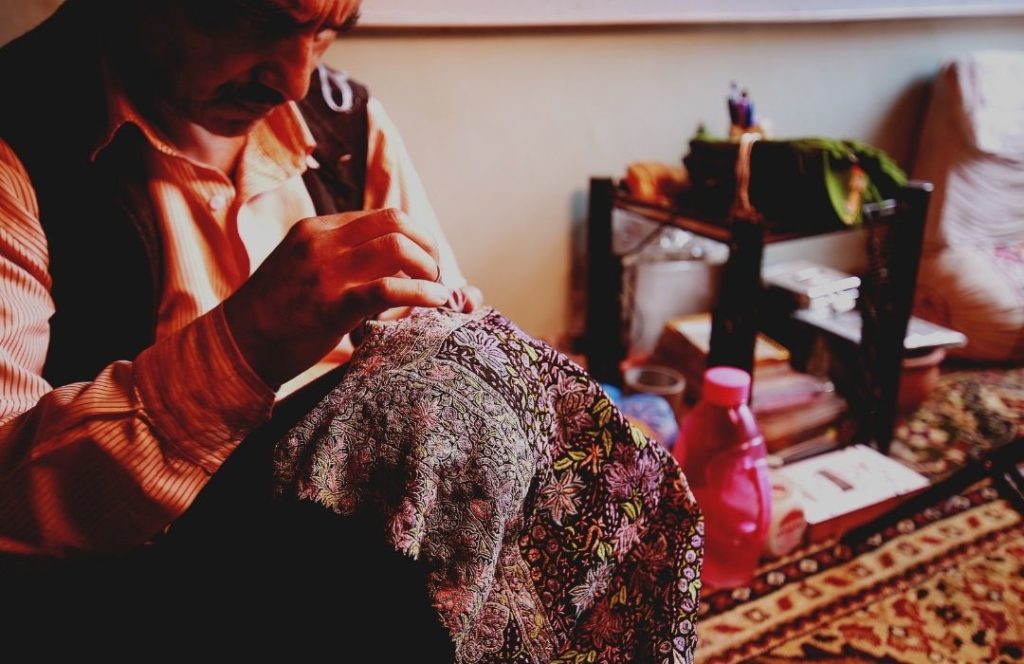
The Kashmiri Artisan hand embroidering an exquisite Pashmina Shawl in Sozni Kari
Undoubtly, embroidered Pashmina varies from one shawl to another. And some patterns are thick, some are more loose and some are condensed such that the base is hardly distinguishable. Depending upon the design, Sozni embroidered Pashmina shawls have been classified as follows:
Pattern 1: Dordaar Pashmina Shawl
In this pattern, the embroidery spans over the borders as a vine of motifs. The border can be one, two or three inches wide. Hence, these type of shawls can be worn for casual occasions.
Pattern 2: Palladar Pashmina Shawl
A Palldar shawl hosts embroidery motifs over two sides - width wise. Semi formal occasion or even casual occasions, therefore, call for such shawls.
Pattern 3: Bootidaar Pashmina Shawl
Small booties of embroidery motifs spread all over the base of this Pashmina shawl. These can be used for casual use, as well as formal occasions.
Pattern 4: Jalidaar Pashmina Shawl
As a result of the masterly skill of the artisan, an intricate needle work spreads all over the base, in a loose pattern. This design showcases the embroidery as well as the underlying luxury base of Pashmina.
Pattern 5: Jamawar Pashmina Shawl
Similar to the Jalidar pattern, this embroidery spans all over the base, but in such a dense pattern that the base gets the least attention. These can be used for wedding occasions, for the bride herself, or as a gift for the bride.
Shimmers of Tilla Dozi
Cuddling a needle with his wrinkled hands, One of our artisans started working over a white shawl with a bright gold thread. Simultaneously he started explaining to us this skill which he had perfected for over 60 years now.
Handcrafted impeccably out of pure Cashmere, the shawl is hand embroidered in Zari Kari
“It's not just today or some years back. Tilla embroidery has found patrons during the Mughal era when the royals discovered the grandeur of this craft. Originally, the embroidery was done using real gold and silver threads which made the heritage pieces ethereal. In the event, the precious metals were beaten into flat wires, made into threads that were used to enrich the apparel of the royals or brides. Not everyone could afford them”, he said boastfully.
Nowadays it's not real silver and gold, but ordinary metals coated with a layer of these precious metals. It makes Tilla affordable for all.
Making of a Tilla Embroidered Kashmiri Pashmina
The beginning of Tilla embroidery starts with a designer or ‘Naqash’ who draws a design of his choice on tracing paper. He then perforates this design with a specially designed needle. This process is called ‘Trombun’ which locally means ‘Perforating’. Next, this perforated paper is placed over the Pashmina shawl and a duster dipped in ink is moved over its surface. When the tracing paper is removed, the Shawl underneath gets the outline of the design to be embroidered over it.
The strokes of the metal are fastened by a camouflaging thread, which makes sure the thread is held tight and in place with the underlying Pashmina base
This stamped shawl is then passed over to the embroider who chooses two threads to embroider it. One of the threads is the golden or silver thread. The other one is a cotton or silk thread of the same colour which is used to attach the tilla thread tightly to the base of a shawl for an enduring effect. When done with the embroidery, the shawl is sent for washing and then for ironing. That how we get to the final piece - a gossamer Tilla embroidered Kashmiri Pashmina shawl - looks-ing nothing less than exquisite.
Motifs chosen for a Kashmiri Pashmina
The shimmers of Tilla embroidery fall over the delicate depths of Pashmina in a number of designs and popular motifs. Drawing inspiration from the scenic beauty that nature has bestowed over the valley, traditional tilla designs often reflect the same over apparel, shawls, sarees, and phirans. Accordingly, some prominent motifs that are usually embroidered in Tilla are:
Paisley motif (Badam)
Lotus motif (Pamposh)
Rose motif (Golab)
Maple motif (Chinar)
Iris motif (Sosan)
In addition to this, various kinds of birds, animals, and even human motifs are embroidered in several patterns with sheer finesse and acumen.
Machine Tilla vs Hand Tilla
Back in the days, Tilla embroidered garments would be a form of keepsake for the entire world. The nimbleness of the hands which worked days and nights together with this craft would be held privileged in every part of the world. But with the advent of modern technology, machines started to intervene in the process of handicrafts too. Tilla embroidery was also one of the crafts which would be done with the help of a machine and continues until now.
However, the true patron of this art never settles for less and always looks for the opulence that is possible only when tilla is done with the hand. The grandeur of hand tilla is such that women who wore Tilla embroidered phirans never wore jewelry along because they never felt the need for the same. It is said that when done with the hand, Tilla acquires an antique look with time, and matures like an artifact.
Even if the times have changed and modern traditions have taken over the cultural space, yet a Kashmiri bride’s trousseau is considered incomplete with the absence of a Tilla embroidered phiran and Kashmiri Pashmina shawl, which the bride wears and carries to her next home.
Papier Mache Embroidery
Papier Mache is the art that uses waste paper and creates marvels out of it. Someone who is aware of Papier Mache will be absolutely bewildered as to how the same could be done over a shawl or any fabric for that matter. But the two crafts are totally different, it's just that they look alike.
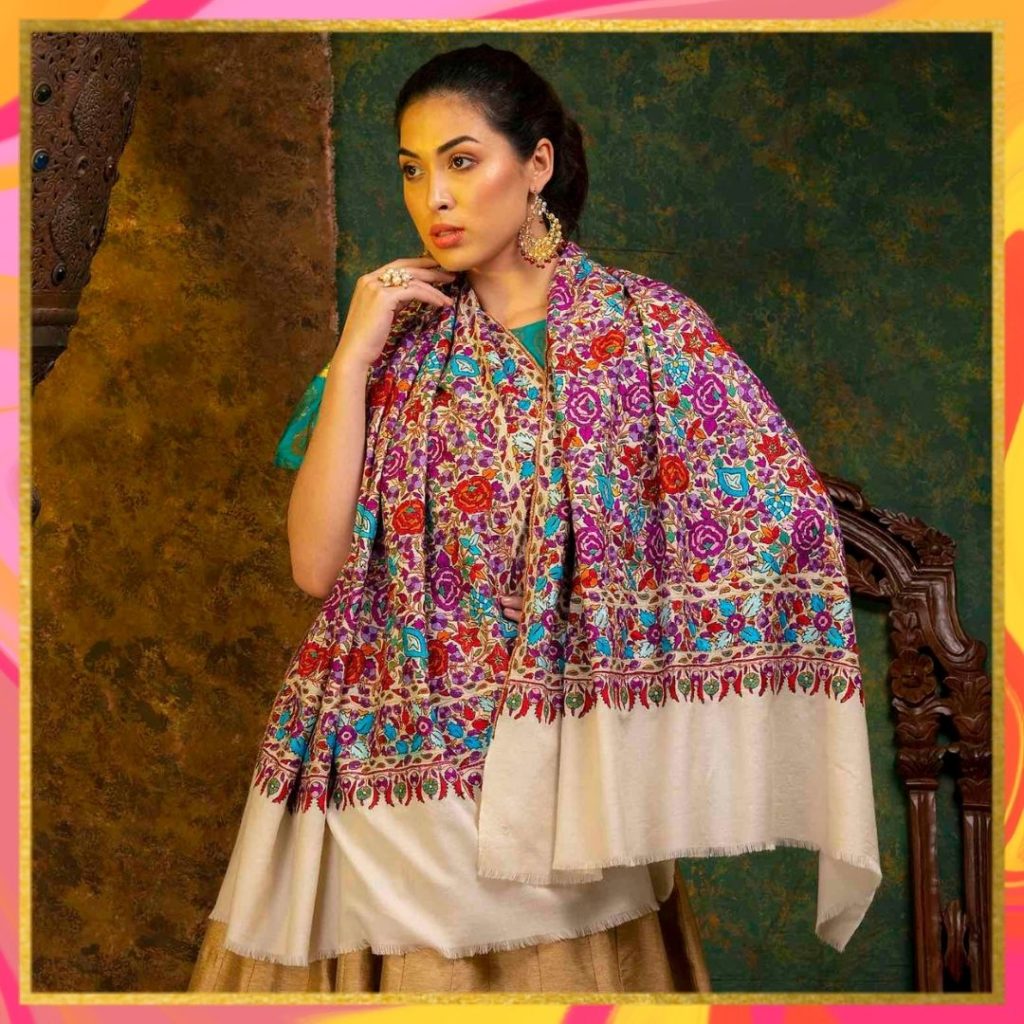
Pashmina base acts as a canvas to all the colours that it could accommodate, which swirl freely as a floral burst, all Hand Embroidered with Papier Mache
Papier Mache Embroidery is a type of embroidery which is done by hand using a needlepoint. Resembling the designs made in Papier Mache, this embroidery requires covering the underlying base with vivid embroidery. This is achieved as a result of the continuous overlapping of the thread. The needle used in this form of embroidery is comparatively thicker than the one used in traditional sozni.
In a Papier Mache Embroidered Pashmina, fine count thread is embroidered with stitches extremely close to each other which gives a somewhat embossed effect. The thread used should be a high-quality fine count silken thread and intricate such that the base fabric partially disappears.
Other Types of Pashmina Shawls
Its not just embroideries which make Pashmina shawls the exquisite accessories that they are. Several other embellishments are done on the fine base. Mainly two types of Pashmina shawls, unembroidered, are world famous.
Kani shawl
One of the most magical craftsmanship in Kashmir is the Kani weave. Small sticks, called Kanis are introduced in the weaving process. Colourful threads are wound around these wooden bobbins, and then step by step these threads are blended into the weave. Thus comes to life a Kani shawl which gained such popularity in the ancient world that even Europeans could not get their hands off it. It was Empress Josephine who owned hundreds of Kani shawls, and gifted several to her friends and relatives too.
Kalamkari Shawl
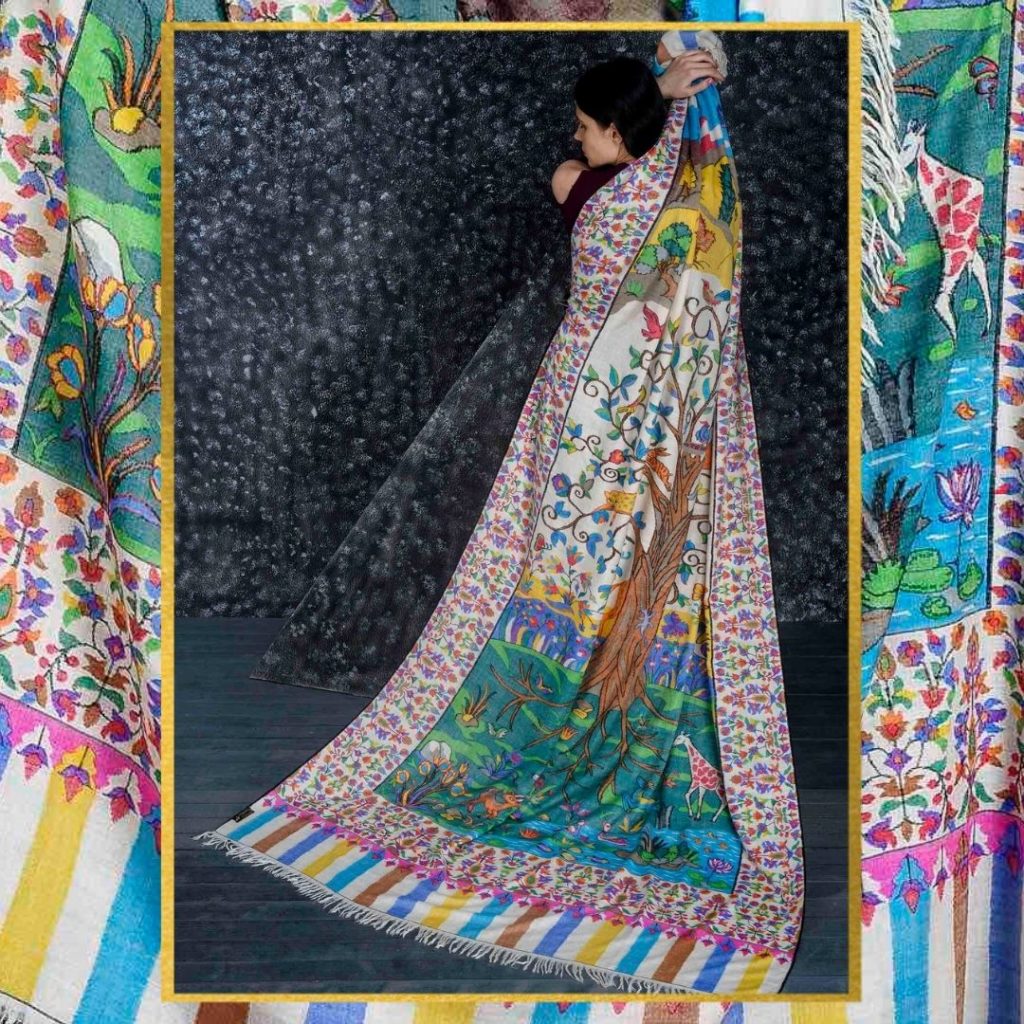
Kalamkari is a process in which the base is hand painted with large brushes. 'Kalam' means 'Pen', and 'Kari' means 'Work'. Special brushes are dipped in vegetable dyed or ink, and marvelous patterns are hand drawn over the base (here Pashmina). Sometimes, as soon as the painting dries, Sozni embroidery is done over them as outline.
It is believed that this embroidery is the most meticulous and difficult to achieve, thus making it quite rare. The use of brilliant colors and an extraordinary finesse is what gives birth to the final product. The shawl looks nothing less than a painting. It takes an artisan multiple hours with such an embroidered Pashmina shawl. And that too when the embroidery consists barely of a floral wine, not to ask about a fully embroidered one.
As soon as winter and fall come upon us, all we think about are sweaters, wraps, and basically anything that would keep us warm and comfortable, all season long. The most popular choice amongst common masses is wool. We visit shops, online stores, and simply pick wool, perhaps without even knowing what we are buying. Wool is not just one type, but it has several types, based on the source. Should we pick merino wool, or should we ask for Cashmere? What is the difference between merino wool and cashmere? How warm is cashmere compared to merino wool? Let's find our answers to all these questions frequently asked by customers.
What is Wool?
Wool is the coat that is on the outer body of sheep. The hair on the other side is again of two types: guard hair and undercoat. The guard hair is on the outside of the goat or other hair-bearing animals. Guard hair is used for rain protection as it is thick and coarse. The undercoat bears fine hair. It is used to keep the animal warm. Undercoat hair is highly prized, as it is finer, warmer, and softer than guard hair or wool itself.
History of Wool
It was around 6000 BC when wool was used in garments. It is believed that ancient Iranians started rearing sheep to acquire wool from them, which they use in apparel to keep themselves warm. Little did they know that this basic practice of theirs would emerge as an industry. So much so that people now have the luxury to pick any type of wool that they want and it gets acquired from the animal, processed, and crafted to meet the requirement.
While there are many types of wool, there are classifications on the basis of softness, luxuriousness, and warmth factor. Again wool is different from hair, as wool comes from sheep, and hair is sourced from goats, rabbits, and alpacas.
Properties of Wool
Wool has a number of properties which makes it the number one choice of women, as soon as summer departs. Here is a list of them
Wool is durable and water repellent.
It allows good insulation because of its moisture-absorbing properties, and the ability to trap air.
Wool accepts dye very well. In fact, both wool and hair take dyes well, and there is no need to colour the material further after the initial one.
Wool, as well as hair, are recyclable.
Types of Wool
Here is a breakdown of the types of wool.
Lambswool
The first shearing of sheep produces the finest and softest wool which is called Lambswool. This type of wool is acquired generally from lambs younger than seven months. Sheep can produce between one to thirteen kg of wool, which depends on their health, breed type, etc. Some breeds produce hair such strong and resilient that carpets and rugs can be made out of it. Others give away softer wool, which is put into making apparel or wraps.
Merino Wool
The softest sheep wool in the world comes from Merino sheep and is called Merino wool. This type of wool is the most popular and is used in clothing. This type of clothing is most luxurious, and its fiber count can go down to even 20 microns. Merino wool gives a beautiful drape to apparel and wraps.
Mohair wool
Mohair comes from Angora goat. The hair is longer in length which gives the production a smooth texture. Mohair is lustrous and durable. Mohair is often used in dresses, baby clothing, sweaters, and scarves.
Angora
Angora is sourced from the undercoat of the Angora rabbit. The fibers are exceptionally fine at about 10-15 microns, which makes them incredibly soft and the finest of all their counterparts. Rabbits are continuously combed, and at the end of each year, a rabbit produces at the most 400 grams of wool.
Qiviut
Sourced from the undercoat of the arctic muskox, Qiviut is finer, more expensive, and softer than sheep wool. It is eight times warmer than ordinary wool and does not shrink in water. The muskox sheds its fleece during the molting season, and the breeders either comb it off or pick it from the ground
Cashmere wool
Cashmere is the down coat of the Changthangi goat and the processed fleece is only one-fourth of the total hair sheared off the goat. Well known for its luxurious and warm feel, cashmere is extremely fine and the diameter of the fibre is around 16 microns. Cashmere comes from the neck and underbelly region of the goat which has to be combed gently for 7-15 days continuously. One goat yields around 150 grams of Cashmere a year. Hence, to craft one shawl, it takes the fleece over 3-4 goats, hence explaining the high price of Pashmina shawls. The fine fibres constituting Cashmere wraps or apparel make it less resilient and gentle as compared to sheep wool. Yet Pashmina shawls are the most luxurious wraps and have a history of getting ancient royalty spellbound.
Vicuna
The rarest wool in the world is Vicuna. It is even finer and warmer than Cashmere. Vicuna is so delicate and gentle that it doesn't take dyes and hence is left in its natural state. But the shearing of Vicuna is done in limits since the fall in the numbers of the animal population.
Cashmere vs Wool
The comparison of wool is often done with Cashmere as buyers believe that Cashmere is better than wool. This is absolutely true when it comes to warmth, finesse, lightweight of Cashmere, and the breathtaking colours and patterns Cashmere wraps and apparel are produced in. However, when it comes to prices, Cashmere is much more expensive than wool.
Owing to this, wool and Cashmere buyers often compare the two to each other. Wool buyers do not want to buy an overly expensive accessory, while Cashmere patrons believe that Cashmere wraps and apparel are more warm, and hence they do not need to buy many wraps. Just one or two Cashmere pieces are enough for the entire winter.
What is Cashmere
Cashmere is the most popular kind of animal hair, as far as warmth is concerned. It is often compared to merino wool, as both are used for keeping oneself warm and comfortable, besides being luxurious and fine. The difference between merino wool and Cashmere is that Merino wool is sheep wool and Cashmere is goat hair. And we know wool and hair are two different things.
Cashmere comes from the Himalayan ranges, situated in Asia. An exotic goat species is found in the top regions of these mountain ranges. It is these goats that grow the luxury Cashmere as a downfibre. It grows on their bodies in the colder months and keeps them warm in the biting cold of the winter Himalayas where temperature drops to -50 degrees C. In the summer months however, the hair naturally falls off from the body as a result of hormonal changes. This is collected by its herders and cleaned thoroughly.
Post cleaning, Cashmere is sent for spinning and weaving which produces luxury shawls, wraps, sweaters, accessories and apparel.
Warmth of Cashmere
It is enough evident that Cashmere is one of the most warm fabrics ever discovered by the fact that it survives goats in the harshest temperatures. As temperatures fall to sub zero, it is this fine wool that helps the goats as well as its herders survive. But as soon as summer starts, the goat rubs its body against coarse surfaces like shrubs, walls, large stones and the ground itself. This leaves its hair helter skelter, all over its habitat, and takes time to collect. There is still some portion on its body, which is ethically acquired by professionals by gentle combing.
The raw Cashmere is processed for months or even years at times and transformed to super warm apparel and accessories. Cashmere is considered 8 times warmer than sheep wool (the Cashmere vs wool discussion), and is often worn in sub zero temperatures.
Cashmere is Stylish
Besides being luxuriously warm and comfortable, especially for the winter days, Cashmere wraps, scarves or apparel are super stylish. It was empress Josephine, who set Cashmere wraps to a timeless fashion. Since she was a style icon of her time, every single woman followed her, and acquired Cashmere wraps even when these were not affordable for all. The Empress owned a certain hundred shawls made in Cashmere, and hence started the trend, which is being followed till now.
In this era, famous designers, celebrities and commoners own Cashmere wraps not only for warmth but a timeless appearance. Cashmere wraps haven't been out of fashion ever since the first shawl was made in Kashmir. Popular designers have started putting their own creativity in action as far as producing wrps are concerned. As such, modern embroidery patterns, contemporary checks, stripes, abstract patterns and more can be found in Cashmere wraps. Some designers customise wraps as per the demand of a taker.
Hence Cashmere wraps are traditionally as well contemporarily in vogue. A 30 year old shawl looks as elegant as a freshly made piece. Hence a woman of today can easily pull off a shawl that belongs to her mother or grandmother. Thanks to the timelessness and the ageless nature of Cashmere designs, one can own even the most pricey pieces at one time.
Wool vs Cashmere (Is Cashmere Warm when compared to Wool)
Both Cashmere and Merino wool are warm, comfortable, and come in a large variety of styles to keep their wearers looking stylish. However, there are a number of differences between them which makes each of them unique and special in their own way. Be it warmth, weight, or price, Cashmere as well as Merino wool are high quality wool types and offer their own special properties to enrich your winters.
Is Cashmere warmer than Merino Wool? (Merino wool vs Cashmere
For a contest of Merino wool vs Cashmere, it is believed that Cashmere is 7 times warmer than Merino wool. For this reason, Cashmere is highly-priced. Not only it provides more warmth, but cashmere is gracefully lightweight to carry around as compared to Merino wool
Another difference between the two is softness. Cashmere is softer as compared to Merino wool. However, wool is treated with fabric softeners nowadays and it transforms into a much softer fabric than before.
As far as durability is concerned, Merino wool is more sturdy than Cashmere, and requires less care as compared to Cashmere. Cashmere is more complicated to clean and store and might become troublesome for those who do not have much idea about the same.
Cashmere is warm, luxurious and super comfortable. But did you know that there are fake Cashmere wraps and shawls selling in the market like hot cakes. Why?Because they are cheaper.
It all started in the late 1990’s when a few traders started mixing Cashmere fibre with nylon or silk, or simply sheep wool. This proved to be detrimental for the art form, as Cashmere buyers sensed something was different with these. The fake and mixed varieties did not last for even a few years, whereas original Cashmere does last for a month, and the regular buyers knew it. Hence the industry got in trouble and the sales declined on account of fake Cashmere being sold. Sellers who sold the purest Cashmere, too, earned a bad reputation because the entire industry was now infamous for dishonesty.
Soon the industry recovered after some serious albeit challenging efforts of a few honest sellers, who revived the industry by selling only the purest Cashmere. These sellers contacted the makers of original Cashmere (the artisans of the ancient art form), and began selling the best, high quality Cashmere that was famous all over the world in the 18th century.
One of those is Pashmina.com. We sell the purest, high quality Cashmere shawls, wraps and scarves that come from Kashmir. It is Ladakh, where the Changthangi goat is found, whose Cashmere wool is put to use to produce the finest Cashmere wraps and scarves. Kashmiri Pashmina shawls or Cashmere wraps are world famous and have travelled the globe earlier in the 15th to 18th century. These are considered the finest of all its counterparts, and Pashmina.com is the leading seller of Kashmiri shawls with designer prints and patterns. From contemporary to conventional, the assortment features all types of wraps and scarves, handcrafted from purest Cashmere.
The state of Jammu and Kashmir was created way back in 1846. This is when a treaty was signed between the British government and Maharaja Gulab Singh of Jammu. To acknowledge the power of the British, the king promised to annually offer one horse, twelve perfect shawl goats, and three pairs of Kashmir Pashmina shawls. This is when the Pashmina shawl production came to the fore and was considered important in the state.
This was referred to as the practice of gifting “treaty shawls”. It continued as later as the 20th century. But since the first lot died, the goats were not presented after 1848.
This might paint a sorry picture of the Pashmina trade in the times bygone. However, it is critical to note that Pashmina making is heavily dependent on high-altitude pastures of Ladakh, Tibet, and Central Asia.
The first mention is believed to have been made by Francois Bernier, who visited Kashmir with Emperor Aurangzeb in 1663. About two decades later, the supply of Pashm to Srinagar was a significant clause in the tripartite settlement between Kashmir, Tibet, and Ladakh. In 1684, this supply to Srinagar was the most important subject as part of the tripartite agreement.
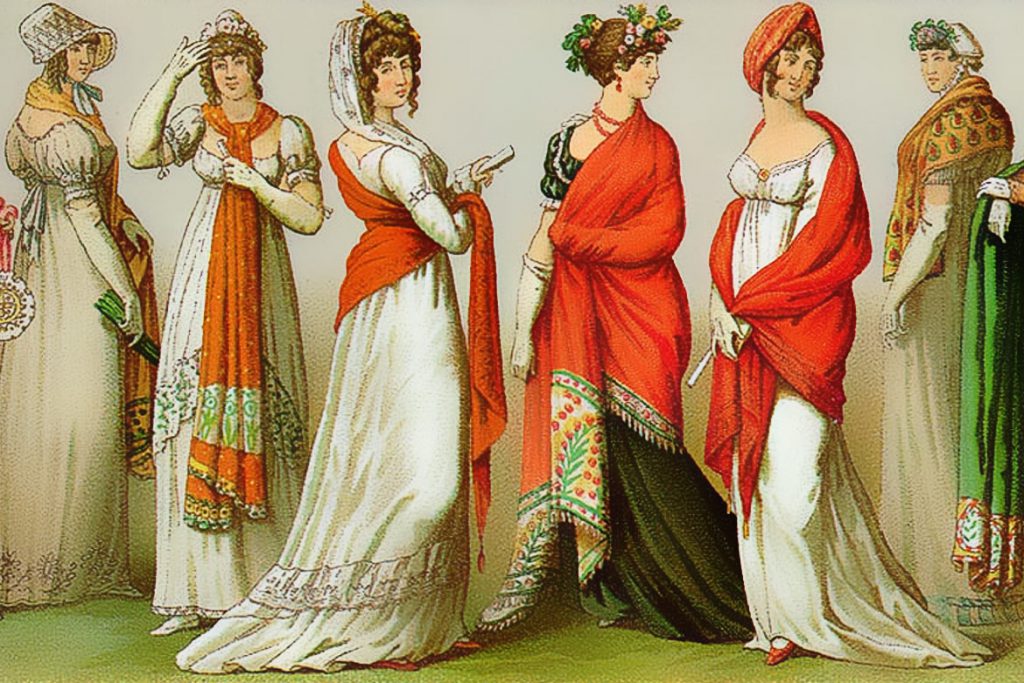
Painting depicting European women wearing Kashmiri shawls in the 19th century
Under this situation, there were four Kashmiri merchants who settled in Ladakh. This was done so that they could procure pashm from the pastures of western Tibet and bring it to Ladakh. Thus, the trade in cashmere, whether it was produced in western Tibet or in Ladakh, was an area of common interest between Ladakh and Kashmir.
Thirty years later, the account of Jesuit priest Ippolito Desideri, who visited Kashmir in 1715 confirms the importance of the pashm trade. He calls it “a source of great riches to Kascimir (sic)”. He added that a “large number of agents” were involved by the Kashmir merchants in Ladakh to collect the pashm.
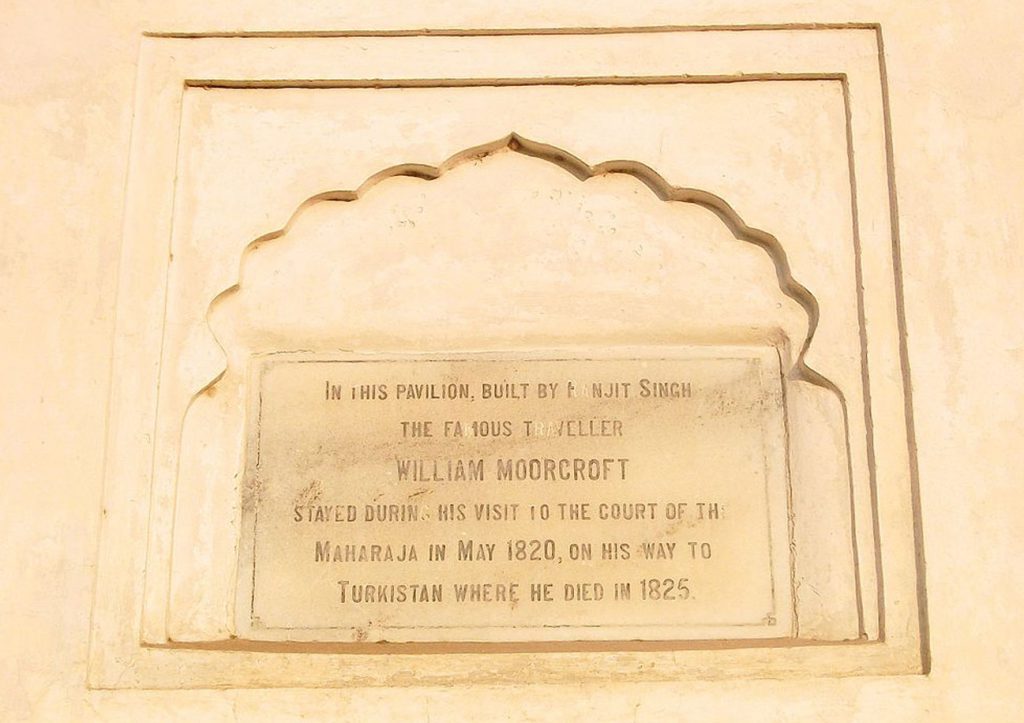
William Moorcroft's plauqe in Shalimar Gardens, Lahore, where Moorcorft stayed in May 1820
Sometime in 1820, William Moorcroft visited India under the pretext of buying horses. But his motive was to divert part of the Kashmir Pashmina trade to the British, which is why he came all the way. However, he did not receive whole-hearted support from the British and his attempts turned futile.
The Contemporary Pashmina Trade
Until the 1960s, the Cashmere that came to Srinagar (the heart of Kashmir) was primarily from western Tibet, from across the border. But during this period, the relations with Tibet were going kaput. Consequently, there were radical changes observed in the trade of this precious fibre. Though wool continued to be a significant trade item, it was Pashmina that gained commercial significance. This led to the barter system getting diluted and gradual integration of the Changpa nomads into a market-led system. Here they needed money to survive and purchase staples such as rice and other essentials to make a living.
The increased demand for Pashmina from Ladakh, after ties with Tibet were severed. It led to prices skyrocketing. For instance, the highest price for pashm in western Tibet before 1962 was Rs 30/kg. But by 1970, the price of local pashm multiplied ten-fold and became Rs 300/kg.
At the same time, the government tried its best to establish a monopoly of the fibre in Kashmir by issuing the Raw Pashmina Wool (Control) Order. This gave the Controller the right to fix the price. It also prohibited the export of raw pashm from Jammu and Kashmir with prior permission from the government. Later, the Sheep and Sheep Products Development Board was also established to issue licenses without which no one could trade in pashm.
At first, these steps saw success. A support price was set at the start of the combing season, so that the Changpas do not sell their produce for less. Initially, the local traders were unable to match the prices set by the Board. But over the years, the Changpas found it difficult for the Board to pay their dues. They then dealt with local traders, who they relied upon to make their payments.
The Growers Society
In 1995, the government then set up the All Changthang Pashmina Growers Cooperative Marketing Society. This was done so that the Changpas get a better price. It also enabled them to sell directly to the Pashmina shawl manufacturers as well as to the big companies. This would reduce the role of middlemen. Every year, the Cooperative sets an average price and the current year’s demand and broadcasts it.
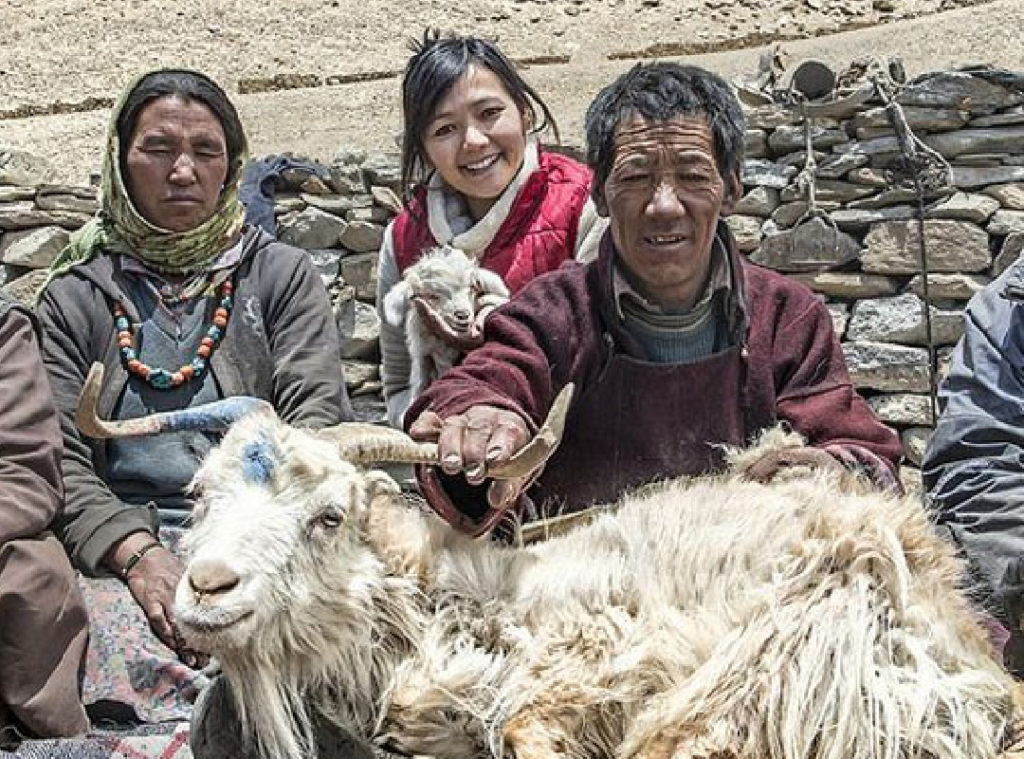
A Pashmina Goat Capra hircus sits placidly in the lap of a Changpa nomad at Tsokar in Changathang
The amount of pashm a family has for sale varies. Some may have 100 kg, while others as little as 10. The cost of transport to Leh is high; only limited quantities are on sale since Changpas do not go there themselves.
Pashmina is also promoted by the government through the Handloom Department, Handicraft Department, SICOP (Small Scale Industrial Development Corporation Limited.). Also, Handloom Development Corporation (Sales and Export), Ministry of Textiles, and private traders to encourage its trade.
Generally, these are traded by different means such as exclusive showrooms, exhibitions, door-to-door or even online.
What is Pashmina? This simple question has confounded many people. The answer to this question is actually quite straightforward. However, the myths surrounding the beautiful & pure Pashmina are so deeply ingrained that we find it difficult to not believe them. Hence we went on a journey to look for the truest facts and myths about Pashmina, and make it clear once and for all for the true patrons of the art.
Pashmina shawls, stoles, and scarves are made from the wool of Changthangi goats that they shed during the springtime. This fine outer layer of fur helps these goats survive temperatures below -40° C. Pure Pashmina shawls are handwoven and hand embroidered. Unfortunately, today the term Pashmina is labeled on all sorts of fabrics. Hence, the well-spun tale of myths needs to be dispelled.
Here are a few myths about Pashmina that need to be dispelled straight away:
Pashmina and Cashmere are different
Pashmina is referred to as the art of handcrafting luxury shawls, stoles, and accessories from fine Cashmere fibre, which is found growing as a down fibre on the body of the Changthangi goat. The goat naturally sheds its hair post-winter, as soon as Spring starts. The herders collect the same and send it forth for processing. It is this fine, smooth, and luxury Cashmere fibre that is handcrafted to make Pashmina shawls, Pashmina scarves, and other luxury accessories that women clamour for.
The mere use of ‘pashm’ wool doesn’t indicate animal cruelty. Neither the goats are killed nor are they hurt during the process of obtaining the wool. The Changthangi goats naturally shed their wool which is collected by the locals who rear these goats for their milk. Goats rub their bodies against rough surfaces like bushes, rocks, and other harsh surfaces to get rid of the wool whose warmth makes them uneasy in Spring and summer. This wool is combed off their body by professionals, and in the process, no animal is harmed. Hence, Pashmina making is responsible, cruelty free and one of the most nature-friendly ways of handcrafting beautiful wraps and accessories for women to have in possession.
Pashmina and shahtoosh are the same
Pure Pashmina is made from the wool of the Changthangi goats. And Shahtoosh is made from the wool of the Tibetan Chiru antelopes. These antelopes are wild animals. Hence they are trapped and killed for their fine fleece. Shawls and stoles made from Shahtoosh are softer than their Pashmina counterparts. However, Shahtoosh is banned in many countries including India and the United States due to animal exploitation.
Pashmina shawls on the other hand are crafted in a responsible way and animals are not even harmed in the process, let alone being killed.
Pure Pashmina shawls, stoles, and scarves do get softer even after years of use. But they do not become fluffy. There are several sellers of Pashmina shawls that using fabric softeners or brushing Pashmina shawls might make them look more fluffy, hence authentic, But these methods only reduce the life of the shawl by weakening the fabric. Pure Pashmina is soft, smooth, and has a gossamer fineness.
Pure Pashmina products are inexpensive
This confusion arises from the fact that Pashmina is not a registered fabric. Though Kashmiri Pashmina has a GI (Geographical Indication) registration, the term is used indiscriminately, causing confusion. The market is flooded with inexpensive Pashmina shawls. However, pure Pashmina shawls are handcrafted and are not machine-made. Kashmiri artisans have learned the art of weaving and embroidery through generations. As such they make pure Pashmina shawls with intricate designs that are hand-embroidered. As pure Pashmina shawls take months, and sometimes years, to be made, they are not inexpensive at all.
Water Pashmina is finer and more luxurious
The term water Pashmina is a hoax in itself. It is true that the finer the Cashmere fibre, the softer and warmer the Pashmina shawl will become. But the inventors of water Pashmina simply add shiny synthetic fibre into wool, making it thinner and shimmery, and call it Pashmina. Make sure as a patron of fine Pashmina art, you never believe someone who claims to sell water Pashmina as the purest form of handcrafted Cashmere.
In an attempt to know about the world-famous Pashmina, we went straight to paradise to see for ourselves. We found a thousand patterns of Womens Pashmina and chose to discover each of them individually
Gushing water down mighty mountains makes the sound of life sprouting here, in this valley. Its a place where the snow had clothed every single bit of nature for 4 long months. Kashmir - the paradise on earth - is home to so many pristine destinations of natural beauty. From heavenly landscapes, snow-covered mountain ranges, glacier-fed water bodies to lush saffron fields, orchards of juicy apples, Mughal gardens or the world-famous Dal lake bejewelled with its shikaras. On the other hand, there is something which makes this place more special and worth visiting often. It is the art and craft corresponding realm of the society whose hub is the downtown area. And that is what fascinated us the most.
Downtown, also known as Sheher E Khaas, is located centrally in Srinagar. Surprisingly, here fashion fads are yet to fully dissolve the century-old cultural flavours. And, it is a place where narrow lanes take you to amazing places. There are matchbox-size shops, traditional craft shops, mesmerizing ancient architecture, and warm and generous people. Amongst the people, a section of this society is the artisan community. Highly skilled artisans who craft shawls, paper mache, copperware, silverware, and our favorite traditional embroideries inhabit this area.
Owing to their experience, artisans have immense expertise in the work they do. They perform all the intricate work manually, without any use of machines and tertiary help. Although all of the crafts are mesmerizing, we found the most enthralling one was the art of Pashmina, its making. So we went deeper into the same.
Kashmiri Shawls and Fabrics
Kashmiri shawls are of various qualities and prices. There are three main fibres from which Kashmiri shawls can be crafted. The most expensive one is Shahtoosh the ‘ring shawl’, which is not available now, since its global ban in 1975.
Next is most beautiful and prized Kashmiri shawl is the Pashmina - famous for its softness and warmth. Lastly, the least expensive is pure wool shawls - Raffal, which it has different counts.
Thus the most popular and the crown of the Kashmiri shawls are the world famous Pashmina shawls. These are world famous for their elegance and coziness. That's what took us to our favourite artisan’s home, where he introduced us to all patterns done on Pashmina.
While patterning Pashmina, it is to be kept in mind that the pattern is done carefully. Artisans unquestionably pay full attention to the base fabric. Pashmina is delicate & fragile & one strong embroidery stroke, one harsh dyeing method, one rough weave pull might harm the fabric. Hence the patterns chosen to adorn a plain Pashmina shawl are themselves fine. Hence, the combination results in the making of heritage pieces
Types of Pashmina shawls
Based on traditional and modern patterns, following is a classification of various types of Pashmina shawls.
Some things are better when left untouched. Perhaps that is the story behind a Pashmina which artisans weave in a solid or plain pattern. A solid Pashmina shawl features no embellishments over its base. It is just the lush Pashmina base and the breathtaking colours it hosts that makes even solid wraps enshrined accessories
A Kashmiri Pashmina shawl, handwoven in a solid pattern in classic diamond weave
Even if the fabric is plain, a solid Pashmina still has varieties based on the pattern of the weave. Note that a Kashmiri Pashmina is handwoven over a traditional handloom in a number of patterns manually. This brings into existence a few varieties in solid types of Pashmina shawls.
Twill Weave Women's Pashmina
Twill is a type of weave that produces diagonal parallel ribs over the base of Pashmina. In the twill weave, artisans weave the weft across warp at a jog converse to a straight criss-cross fashion. This results in diagonal ridges all over the fabric. The ridges are quite visible when one sees this type of Pashmina closely.
When woven in a twill weave, the base is strong enough to hold embroidery motifs. As such these are the pieces that specialists choose for embroidery
Diamond Weave
Mostly artisans weave Pashmina shawls in the diamond weave. This is because this pattern gives the otherwise plain fabric more life and grace. When woven in a diamond weave, a Pashmina base will be full of tiny lozenge-shaped squares. This has earned it the name of ‘Chashme Bulbul’ meaning ‘Eye of a Bulbul’. Because this type of weave makes the piece a classic in itself, it is usually left plain. No further adornments and value additions.
Basket Weave
The weave is a basic loose, almost gauzy weave. In this weave, two or more wefts are laid out in a criss-cross fashion across two or more warps. Doing so gives the base a texture. Artisans weave the threads exactly like a basket and upon close monitoring, the criss-cross patterns are clearly visible.
More than the weave, there are certain factors that determine the quality of a Pashmina. It is important to note here that these parameters show the durability and strength of the Pashmina you wear.
The thickness of Cashmere fibres
For a fabric to qualify as Pashmina, the average diameter of the fibre has to be between 12-16 microns. In fact, the finer the fibre, the more high quality and exclusive the product is.
Yarn Count
A yarn count is a number that indicates how many meters of yarn can be spun pr. gram. Hence the higher the yarn count, the thinner and smoother a Pashmina will be. Therefore if we say a Pashmina of yarn-count 100, it means that 100 metres of spun yarn weigh 1 gram. Imagine how fine the thread would be!
Ply
Ply indicates the number of yarns spun together to one thread. One-ply indicates that one single yarn is used, while 2 ply would mean two strands of threads are used. The more yarns plied together, the stronger the Pashmina is.
Embellished Women's Pashminas
It was in the Mughal era when artisans embellished plain Pashminas with embroideries. But later, to meet the demands of modern customers, Pashminas got modish embellishments. This took it out of the stereotypical image of a “traditional accessory”. And currently, Pashminas brim with colours, laces, prints and patterns to make them appropriate in the modern fashion world
Ombre Pashmina
A glamourous colour filling into plain Pashmina shawls is what the Ombre shawl is all about
As the name suggests, an Ombre Pashmina is full of Ombre shades of brilliant colours. Hence, this makes it a modern fashion accessory. Artisans dip the wrap in colours and move it up and down in the dye container. This deepens some areas and keeps other areas subtler. A Pashmina can be dyed into more than two colours which highly depends on the skill of the dyer.
Printed Pashmina
Digital printing transforming the Pashmina into a vogue accessory
Pashminas have clearly seen a change to become chic accessories with modish prints. From animal prints to floral ones, Pashminas hold all prints with equal grace and elegance. Currently, there are leopard print Pashminas, animal print pashminas, floral print Pashminas, and even monogrammed Pashminas which make perfect customized gifts.
Patterned Pashmina
the magical hands of the weaver weave the shawls with specific placements of the warps and wefts which makes each colour visible at different places
From pencil stripes to chic checks, from plaids to abstract patterns, a Pashmina shawl has adapted to as many patterns as the modern fashion world invents. Owing to these properties, Pashmina is the most versatile piece of fabric. Patterns in warm and brilliant colours bedeck an otherwise plain Pashmina in sheer charm and allure.
Lace Pashmina
French Chantilly lace hand stitched on to the fleecy cashmere
What could be more feminine than a fine netted lace wrapping around you in a pleasant fashion? The classic Pashmina shawl consists of a pretty French Chantilly lace. In detail, this dainty lace spans over the base for a more girly and feminine touch.
Swarovski Studded Pashmina
Embellished by the one a kind Swarovski studs which evocate the feel of a starry winter night
One more pattern which makes the rich Pashmina base beam with glittery studs is a Swarovski Pashmina. In this case, tiny golden or silver Swarovski studs are put over the base. This makes the shawl apt to wear on casual days & semi-formal events.
Embroidered Pashmina
Wrapped in the warmth of native emotions, a Kashmiri Pashmina shawl gathers every single blooming flower from the Mughal garden of Kashmir
Perhaps the most loved and cherished type of Pashmina shawl would be one with classic embroidery motifs. Since an embroidered Pashmina shawl needs more details and in-depth analysis and attention, it would be discussed separately in the next section.
The warmth of the meticulous hands of an artisan is always evident on an embroidered Pashmina. In this rendezvous, the magic does not end at the finest fabric base it has. It becomes more swoon-worthy when embroidered with the golden hands of expert artisans
Kashmiri Pashmina was first embroidered during the Mughal era. Even now the influence of Mughal culture can be widely seen over embroidery motifs. Designs like Shah Pasand (Emperor’s choice) and Buta Mohammed Shah (Muhammed Shah’s flower), both come from the Mughal era. Since then, embroiderers introduced many more motifs in this art and embroidered shawls became cherished all over the world.
Three main embroidery types done on Pashmina:
Sozni Embroidery
It is Sozni Kari that artisans mostly chosen to embroider a handwoven Pashmina shawl. This is because of its base being of a fragile texture and finesse. Since the underlying base is delicate as well, many consider Sozni Kari the best way to embroider a shawl
A splendid shawl immersed in warm blue gets embellished with Sozni Kari of Kashmir which spans on every inch in a Jamawar pattern
Locally known as sicznikeam (needle work), Sozni embroidery is one of the most refined forms of embroideries done in Kashmir. In fact, some believe that Sozni has no parallel whatsoever. This exceptionally fine, gossamer and artistic needle work needs the full attention and expertly skill of an artisan. In fact, it is these artisans who spend months and sometimes years together to complete one single piece.
Firstly, workers dip a finely carved walnut wood block in ink to stamp over the shawl for design. Next, they handover this imprinted shawl to an embroiderer. Lastly, the embroidery artisan used fine needles and threads to design the most beautiful patterns all over the base.
Papier Mache Embroidery
A handcrafted Pashmina Shawl profusely embellished with Papier Mache embroidery features master craftsmanship at its epitome
Yet another form of needlework is the Paper Mache embroidery which embellishes a Pashmina in bold and thick motifs in breathtaking colours. The name comes from the ancient art of Paper Mache (where specialists transform waste paper to beautiful hand painted articles), because of the similarity in the looks. The process of Paper Mache embroidery is the same as Sozni Kari, just that the thread used is thicker to make bolder strokes.
Tilla Dozi
This regal embroidery pattern was most used in Mughal royal courts and worn by nobles and the affluent ones. But back then, artisans used real gold and silver threads to embroider onto a Pashmina. But as royal courts started dissolving and common people started showing interest in Tilla Pashmina shawls, some metals were used instead of real gold/silver however with a coating of the same.
Handcrafted impeccably out of pure Cashmere, the shawl is hand embroidered in Zari Kari which showcases India's proud possession of heritage architecture
To begin with, a designer draws a design on a paper and performs the same. Next, artisans place this trace paper on a shawl and dust it with natural ink which traces the design over the shawl. Lastly, a Tilla embroidery specialist embroiders the shawl over the same design with malleable copper wires dipped in real gold or silver
Embroidery Patterns
There are a number of unique ways in which artisans lay embroidery motifs on a Pashmina shawl. The worth of a shawl is decided upon the quantity of embroidery threads used over the shawl.
Dordaar/Baildaar
In this case, embroidery runs all over the four sides of a shawl bordering all sides in beautiful motifs. The embroidery is of varied widths like 2 inch, 3 inch and the like
Hashidaar
Mostly done in Sozni, a Hashidaar shawl contains an embroidered border all around, with the addition of a stylized paisley flower over the four corners
Bootidaar
This type of embroidery pattern sprinkles the entire base with small motifs of flowers or paisleys or butterflies and more at regular intervals.
Palladaar
Artisans border this shawl over the width with broad embroidery border but over the length a comparatively narrow border
Jaalidaar
In this pattern, artisans intricately embroider the shawl over its base with webbed embroidery motifs which cover the entire shawl. They mostly choose intertwined flowers as motifs, and lay them all over the base in a loose pattern
Jamawar
The richest embroidery pattern in which motifs cover the shawl in such a dense fashion that the base is barely visible. Artisans embroider such shawls in Sozni or Paper Mache due to the delicacy of the base. These shawls take 3-5 years to complete.
Kani Weave Women's Pashmina
It was in the 18th century when French monarch Napoleon on his return from a campaign to Egypt bought his wife Josephine a Kani shawl. The Empress liked so much that she later ordered hundreds of the same. A Kani Pashmina shawl is mostly seen in a Kashmiri bride’s wedding trousseau. Women also wear it to exceptionally special events, where they definitely want to be in the spotlight and look the best of any version of themselves.
A rich red Kashmiri Pashmina shawl gets a breath-taking intervention of Kani threads when it is being woven over a traditional wooden handloom
Kani literally means small bobbins. It is these small wooden bobbins or sticks that are wound with colourful threads. These thread laden sticks are inserted during the weaving process of a Kani shawl, thereby embedding the base with beautiful colours and patterns. Note that for a three feet wide length, around 400 kani sticks are to be used and depending upon the design and complexity of a Kani shawl. It takes the artisan 1 day to complete just one inch, and 3 to 36 months to complete the entire piece.
Reversible Women's Pashmina
If there is magic in weaving, it is evident here in this type of Pashmina shawl. A reversible or Do Rukha (meaning two faced) shawl is woven in such a fashion that the front side is different in colour or shade from the back side. Its an expert weaver who does the magic. He uses two different coloured threads over a loom and weaves the threads in such a way to cover the two different sides in different patterns. Experts carefully choose the colour combinations, taking into account the compatibility, trending colours and choices of common people.
Variations
Because the reversible shawl is a masterpiece in itself, artisans introduced many variations in it.
A. The simpler one is when threads of two different colours are woven together. Its a pattern in which the top layer uses one colour and the bottom layer a different one. What comes into existence is a shawl of two shades and each one is more alluring than the other. It is up to the design of the shawl if it uses two different shades of the same colour or two completely different colours for the two sides.
Reversible pashmina shawl - in a rendezvous of conventional and contemporary
B. Another one was adding Tilla or Zari threads during the weave such that the front side of the shawl would be shimmery and the backside more pastel.
The finest of shawls dazzled with a touch of Zari threads
C. Then there was this ethereal version of the Reversible shawl which made this magical piece more beguiling, breathtaking, and worth each love-filled look that falls on it - the embroidered reversible shawl or an Aksi Do Rukha (Aks means mirror image or reflection).
The shawl is handwoven in an Aksi Do Rukha or reversible pattern, where one side of the shawl is the mirror image of the other
An Aksi Do Rukha Pashmina shawl features bold and colourful embroidery motifs from the front side and a mirror image of the same from the back. One feels like having two fully hand embroidered shawls in one. With such magnificent looks and painstaking efforts of the artisan, this shawl is more extravagant and pricey than the others and has earned a global acclaim for its superior craftsmanship and artful look.
Kalamkari Women's Pashminas
Kalamkari Pashmina shawls are nothing short of a painting when it comes to the mere looks of it. The word Kalamkari is made up of two words, 'Kalam' meaning 'Pen' and 'Kari' meaning 'work'. Hence Kalamkari is actually an artwork that uses bold brushes to paint magical motifs over Pashmina shawls. A unique characteristic of this shawl that distinguishes it from cheap copies is the careful mix of colours and the intricate hand-drawn motifs.
The exclusive characteristic for a Kalamkari shawl would be the fine details and the careful mix of colours in this intricate hand drawn pen work
After a designer gives the design to be imprinted over a Pashmina, a specialist Kalamkaar uses a bamboo pen with a flat nib. He dips this nib into a special ink, and makes with his hands some exceptionally beguiling designs, making the shawl nothing less than an art piece. In Kashmir, some artisans further embroider these shawls over the painted motifs for a more prominent effect.
What is Water Pashmina?
A relatively new kind of women's Pashmina has started surfacing online websites and stores everywhere by the name of Water Pashmina, upon thorough research (both primary and secondary) on the same, we came to know that water Pashmina is simply a synthetic blend of fibre and has a minimum thread count of Pashmina (at the most 70%). Dealers of this Pashmina claim that one can wear these all year round. This makes it obvious that this variety has nothing to do with Pashmina. These Pashminas are full of shine and are reversible, but definitely not worth keeping in this list of pure and original Kashmiri Pashminas
To date, artisans have embellished women's Pashmina shawls in just these 5 or 6 patterns. It won't be completely erroneous to say that as fashionistas fall in love with Pashmina, more and more patterns will be acquainted with Pashmina. As patrons, we have to wait patiently and look forward to what the future world of Pashmina has in store for us.