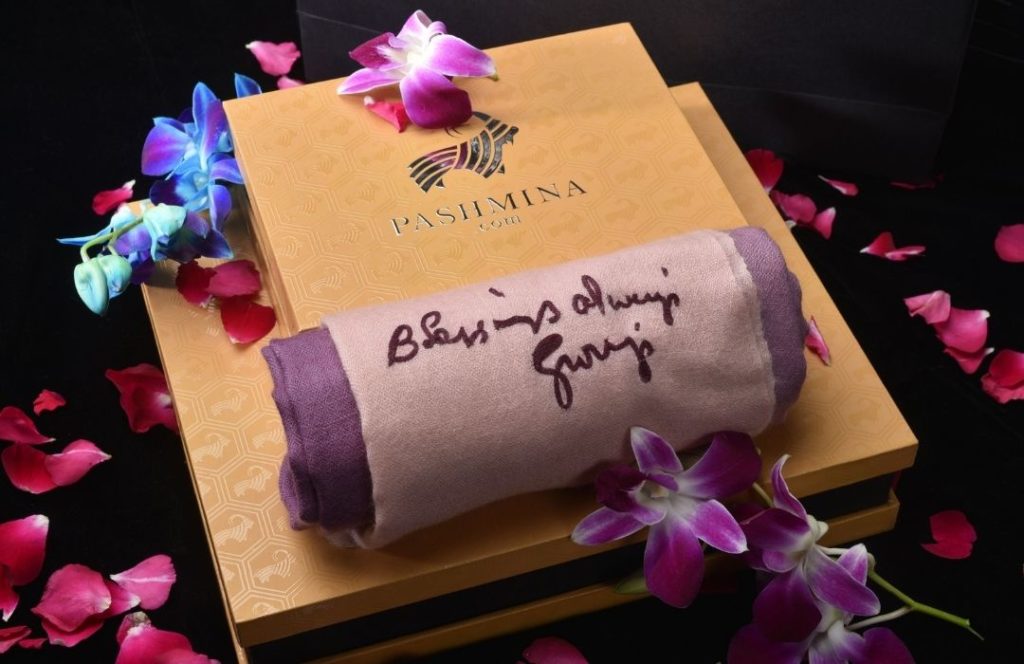
Your big day is just days away. You are getting married to the love of your life, and it is something to celebrate with the people who mean so much to you. Giving away wedding favors is no more an option, but a humble gesture from your side towards the guests to welcome them and thank them to be a part of your big day. And since all arrangements are in process, make sure you add our richly crafted Cashmere wraps to the list of wedding favors for making your guests special and this day, more memorable.
Why choose Cashmere wraps as wedding favors?
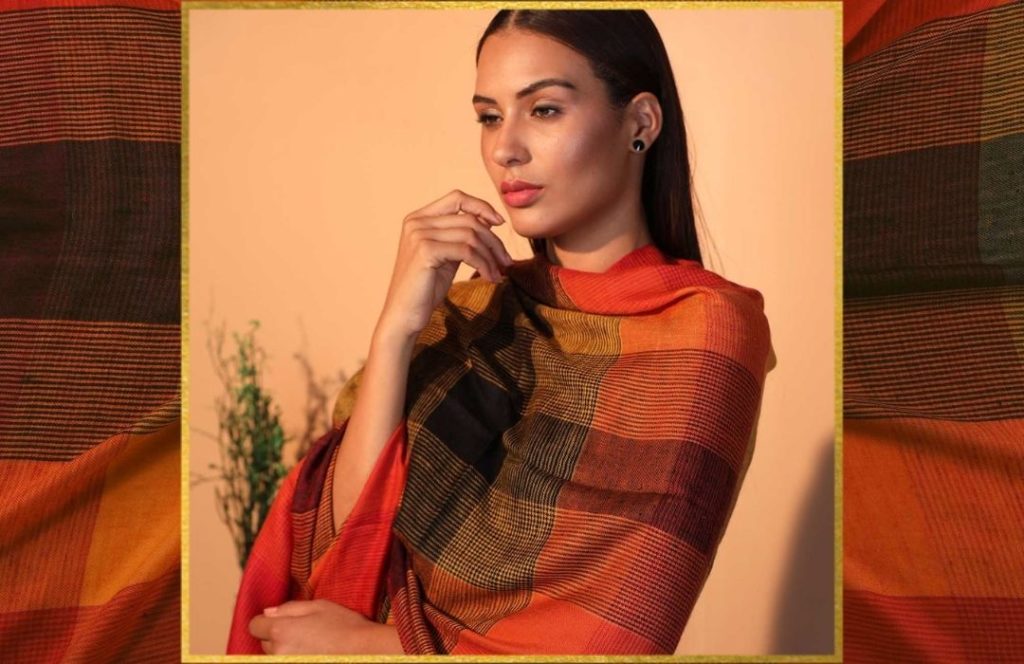
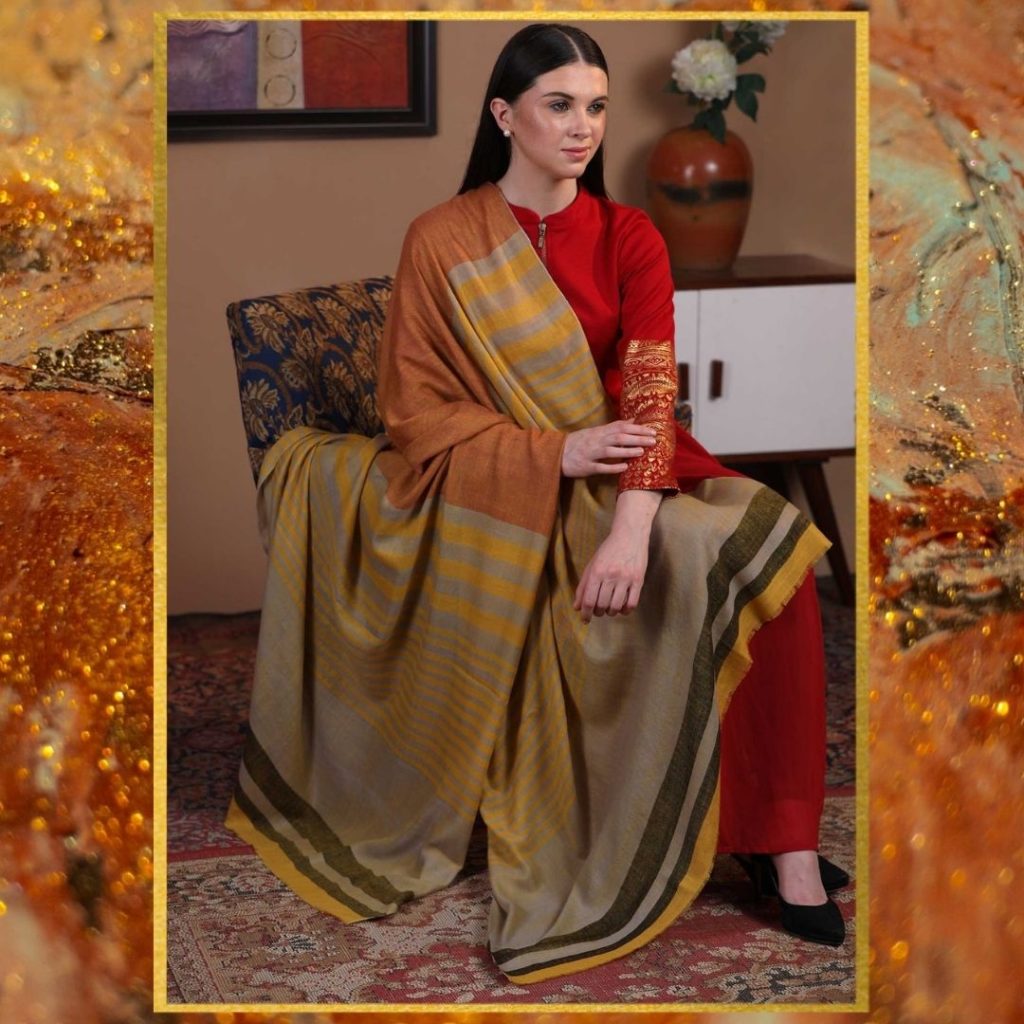
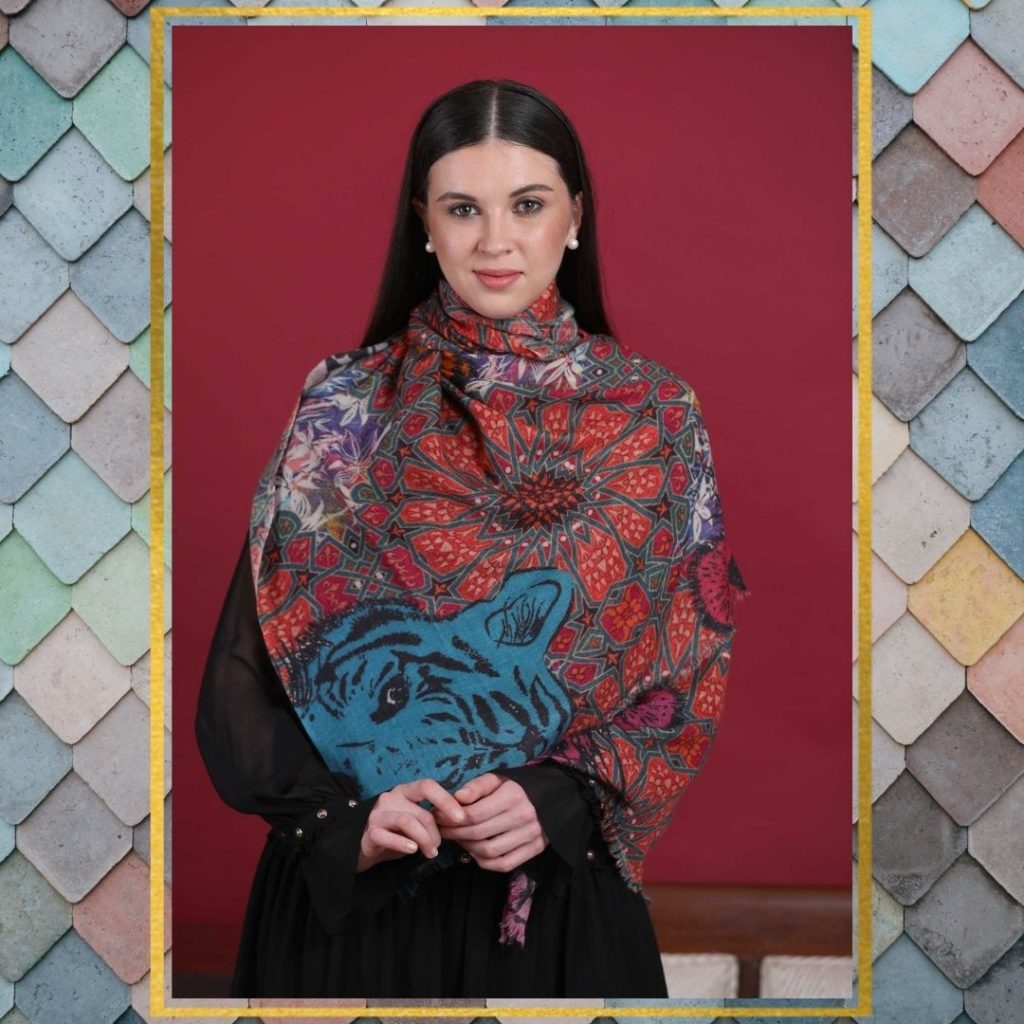
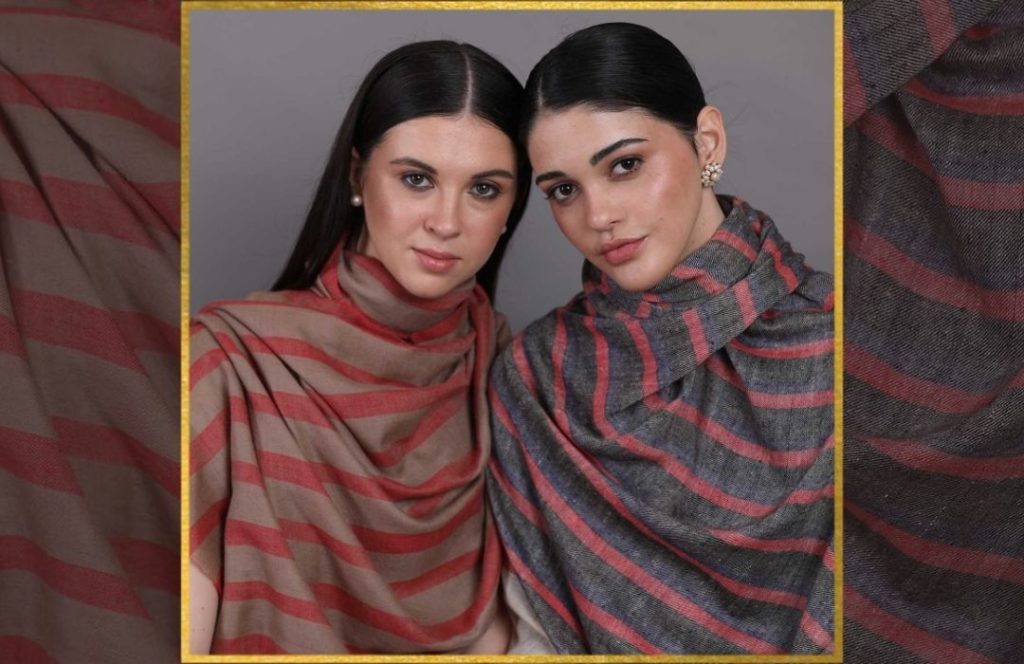
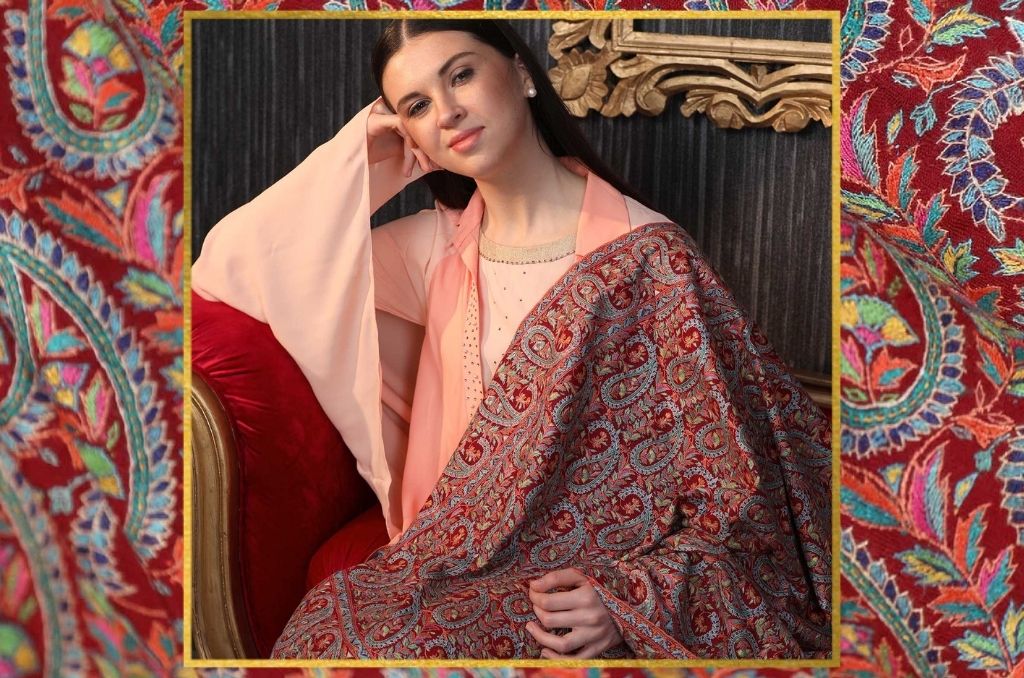
Delight both with a handwoven traditional Kashmiri Cashmere Wrap which hosts chic block pattern in sunny shades of oranges and reds
Wedding favors can be just anything. So why should you go for Cashmere wraps?
A Cashmere wrap is one such accessory which all your bridesmaids can wear, in the same colours and design - hence giving a theme to your wedding
Being versatile, the wrap can be easily taken off and wrapped around your bag, if it gets hot.
Since Cashmere is timeless, it will make your guests remember your big day for decades together.
Cashmere can be reused for more events in winters or fall.
Most people choose solid Cashmere as wedding favors, because of the amazing shades that erupt in a plain weave. But a minimal design hasn't hurt anybody ever. So this wedding season, we chose to go for patterns, prints, and reversible Cashmere wraps. Mix and match them with your outfits, and look graceful as ever.
For the elderly women
The world witnesses the unseen expertise of Kashmiri artisans behind the tireless fingers and wrinkled eyes, who bring their own vivid imagination to life
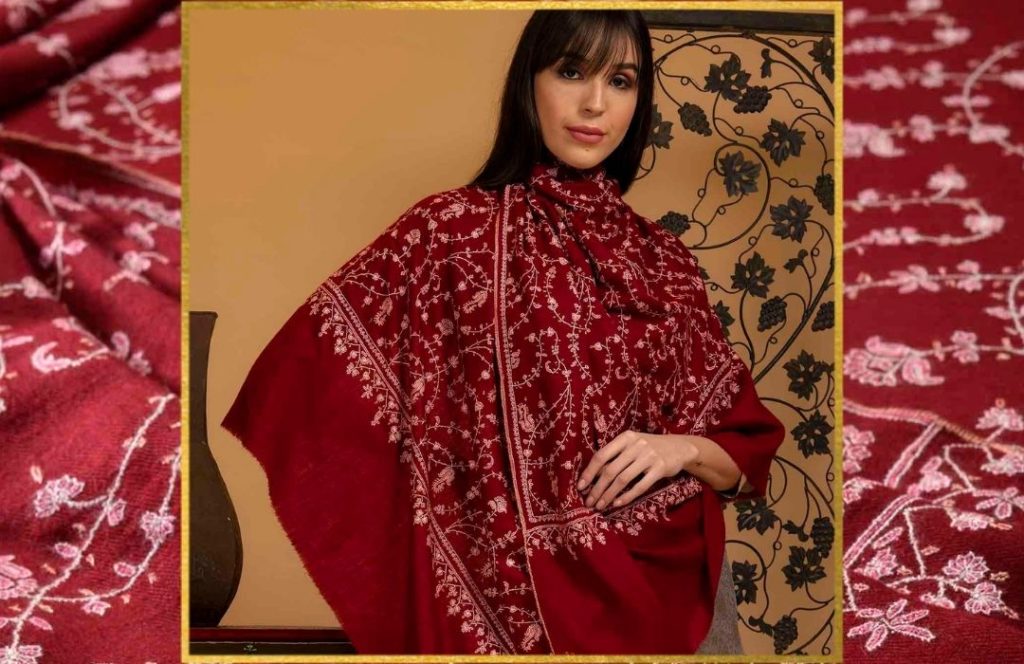
Our hand embroidered and Kani shawl collection would be ideal for the elderly as wedding favors. These look absolutely amazing for formal and semi-formal apparel. Choose light embroidery shawls with jaali pattern or Kani handcrafted shawls for these special guests.
For office going ladies
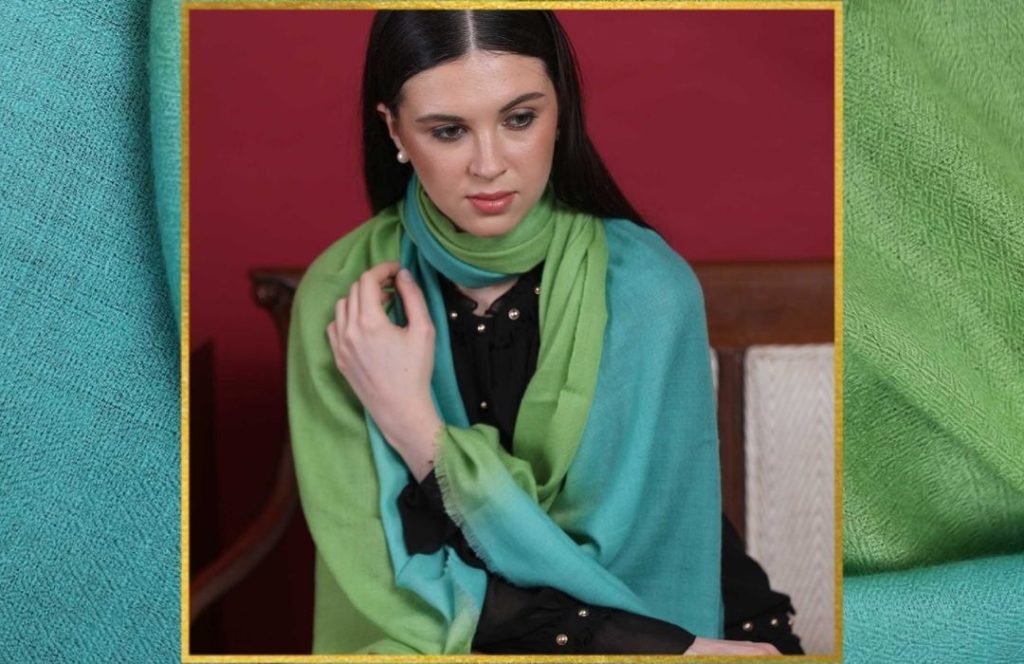
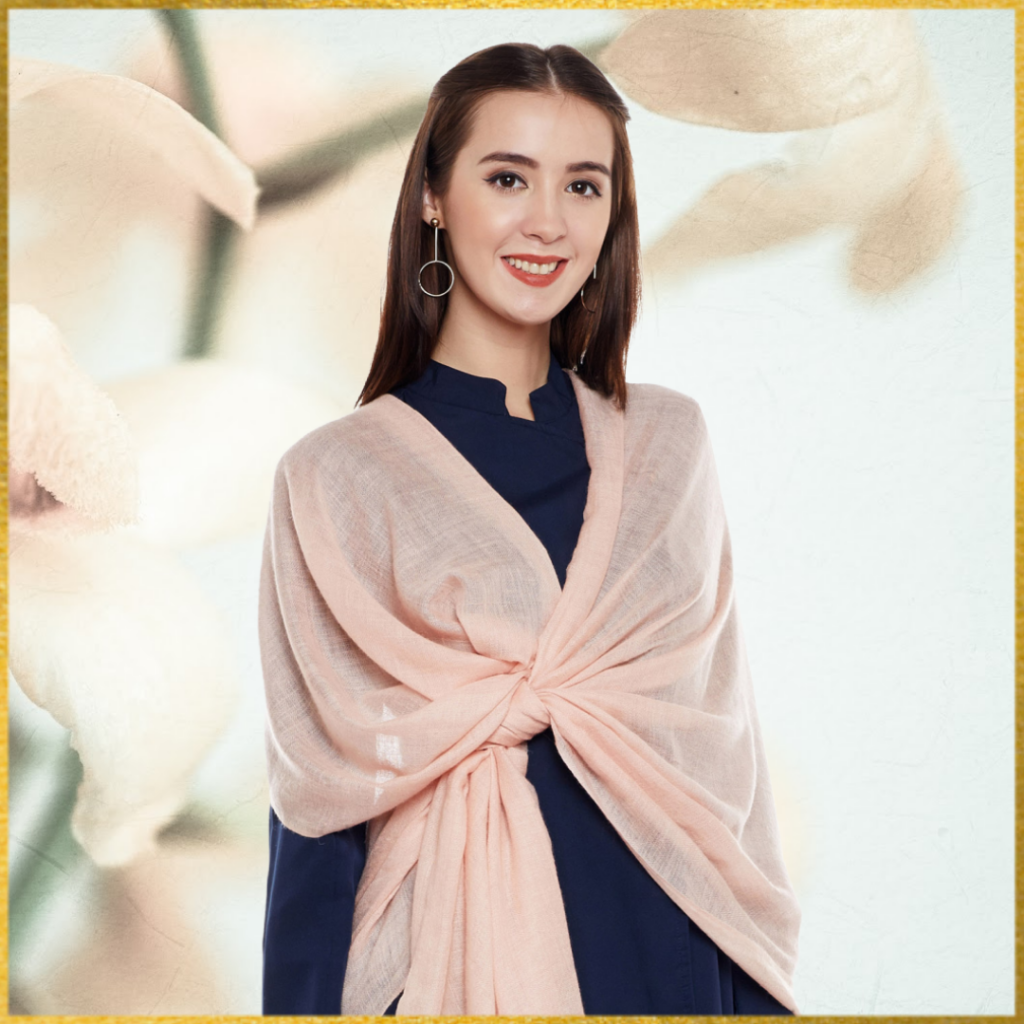
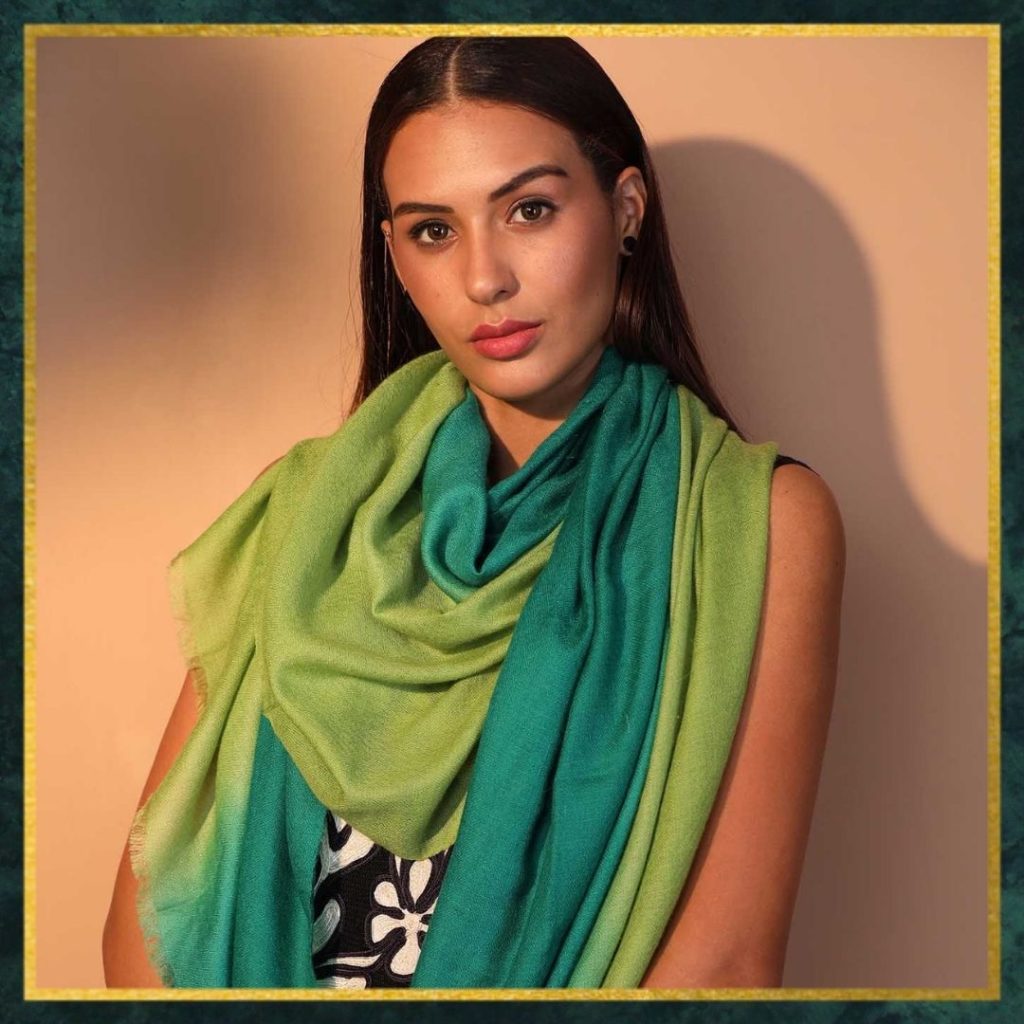
Handpicked from the traditional treasures of Kashmir is a Cashmere Wrap, soaked in shades of fresh green
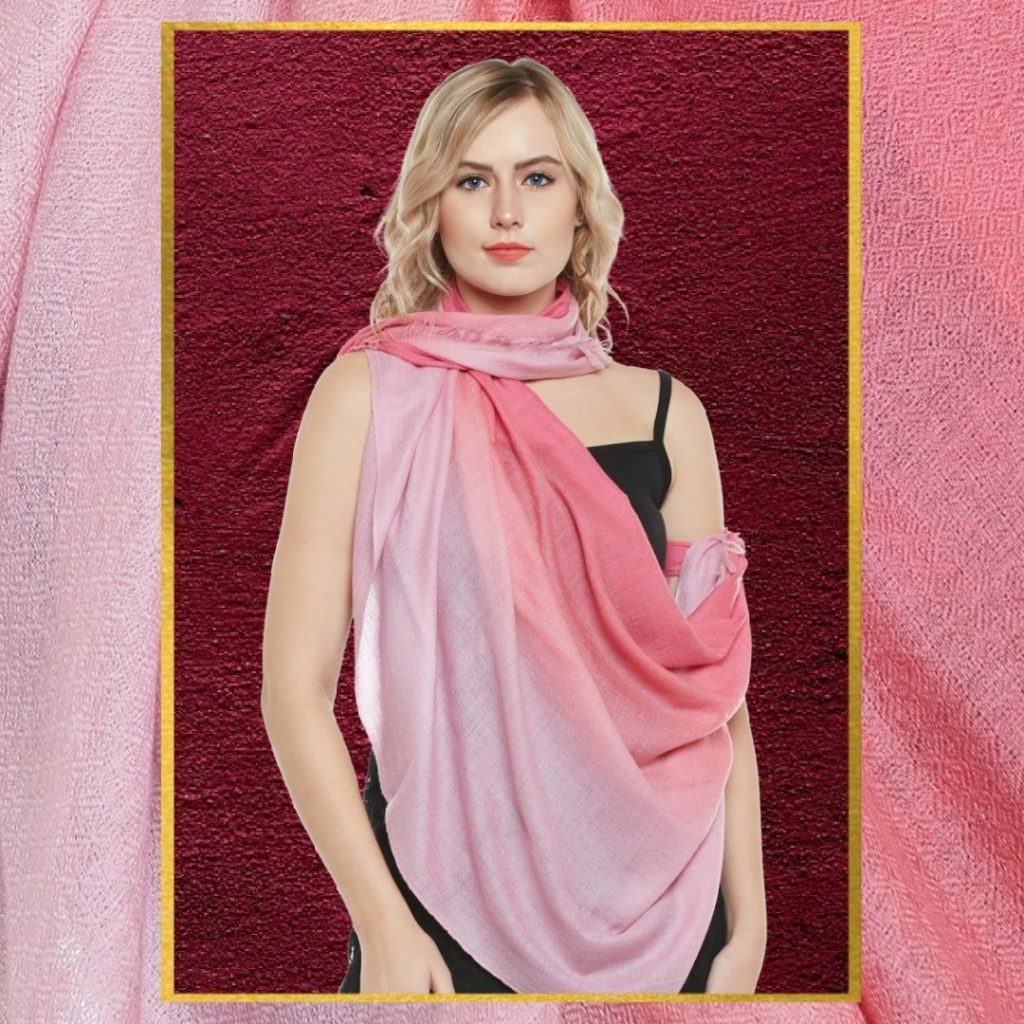
Solids, ombre, or patterned scarves would be the best option for working women. This would serve as a wedding favor as well as a part of their daily winter routine for the office. From over 50 shades of Cashmere wraps that we have to offer, we are sure they will love each one of them.
For teenagers/millennial generation
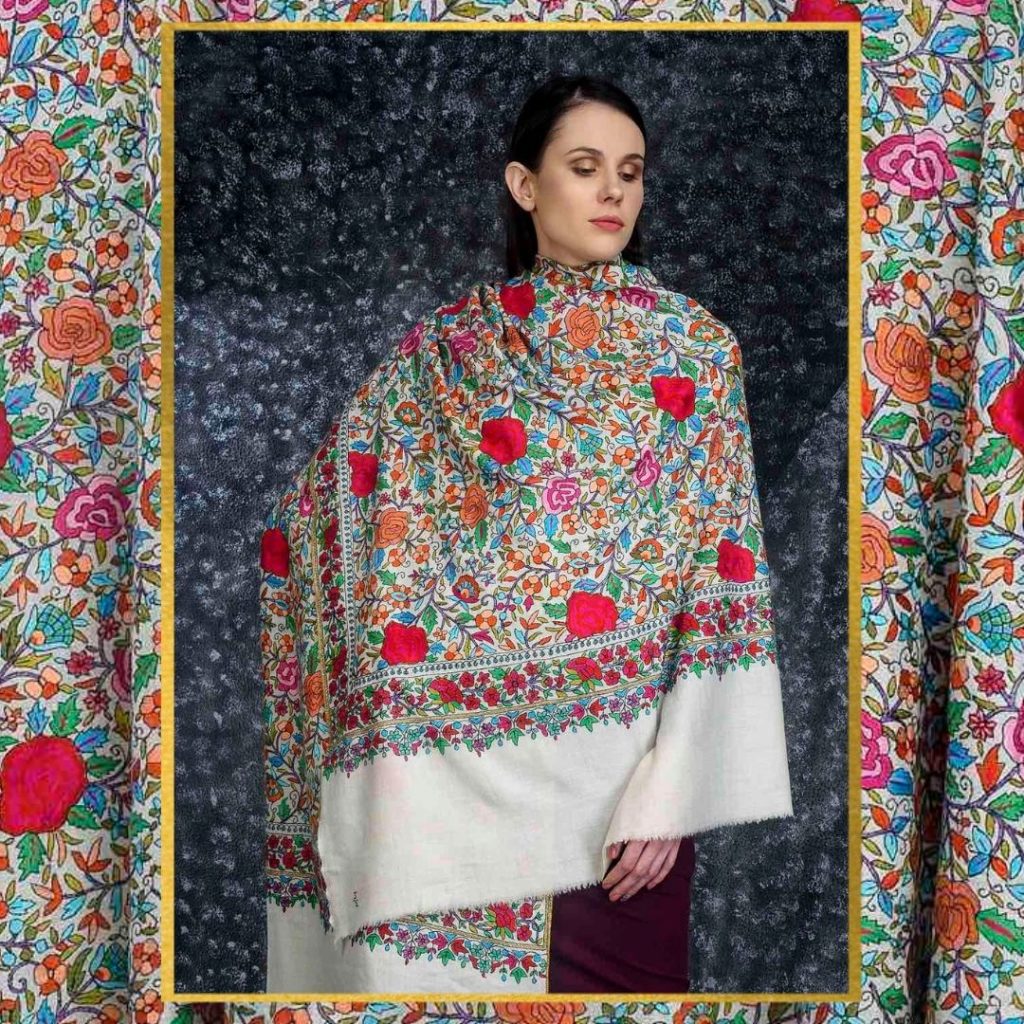
Coordinate with nature with a floral winter wrap that features the fragrance and blossom of a Spring garden
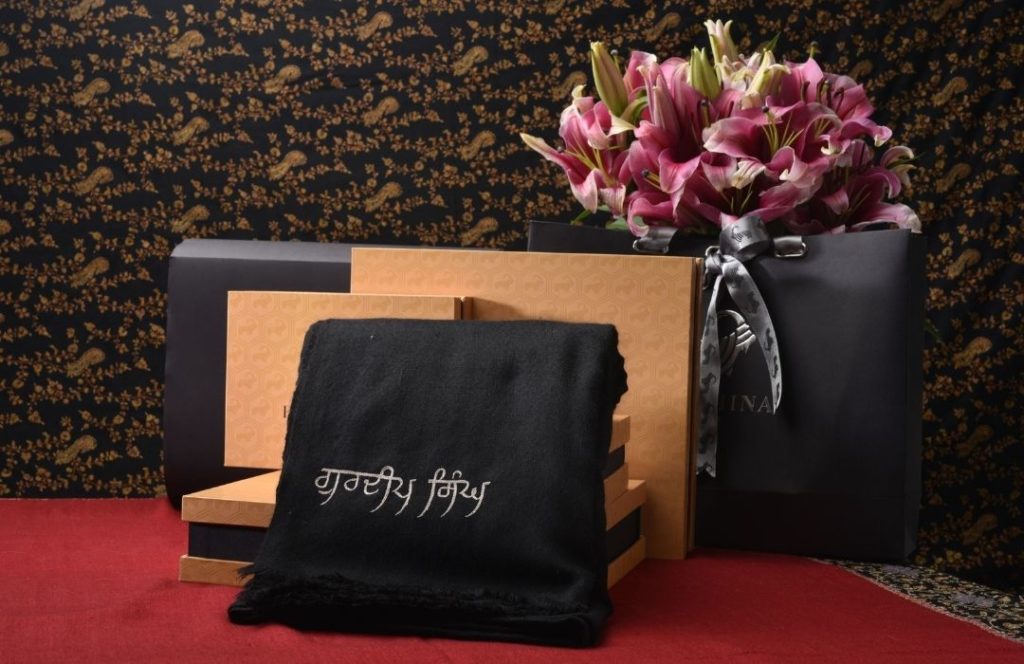
Add a personal touch to luxury Cashmere wraps and scarves and make it a memory to remember. From their name initials to logos, monograms to specific dates, we add personalized embroidery motifs to your precious pieces and conform to your inclination towards aesthetic gifting.
At PASHM, we have covered all types of Cashmere wraps that would match your wedding theme, the season, or the outfits. From colourful solid Cashmere wraps to pretty lace embellished pieces to original Swarovski studded ones, our handwoven swoon-worthy wraps are versatile enough to spruce up your big day and make guests nostalgic about it even after years passed by.
For all these years now, this relationship has been warm and comforting. It's appropriate, then to show them the love and care you have for each other, this Valentine's day. Cozy, comforting, and snuggly warm, Cashmere is definitely the perfect Valentine Gift, being symbolic of the relationship you have built together. A relation as enduring and beautiful as yours deserves a present to pair.
To make this 14th Feb more special and cherished for a lifetime, we've taken it upon ourselves to curate a luxury assortment of Cashmere wraps to let your partner be the best version of themselves. Indulge in their resplendent Valentine gifts from our luxury assortment of pure shawls, wraps, and scarves.
Over a handloom, delicate warps and wefts of the fine Pashm result in a luxuriously smooth and soft Pashmina shawl
Is she a travel lover? Gift her a patterned Cashmere wrap handwoven perfectly to cuddle her up in warmth during long flights and stays.
Weekend warriors
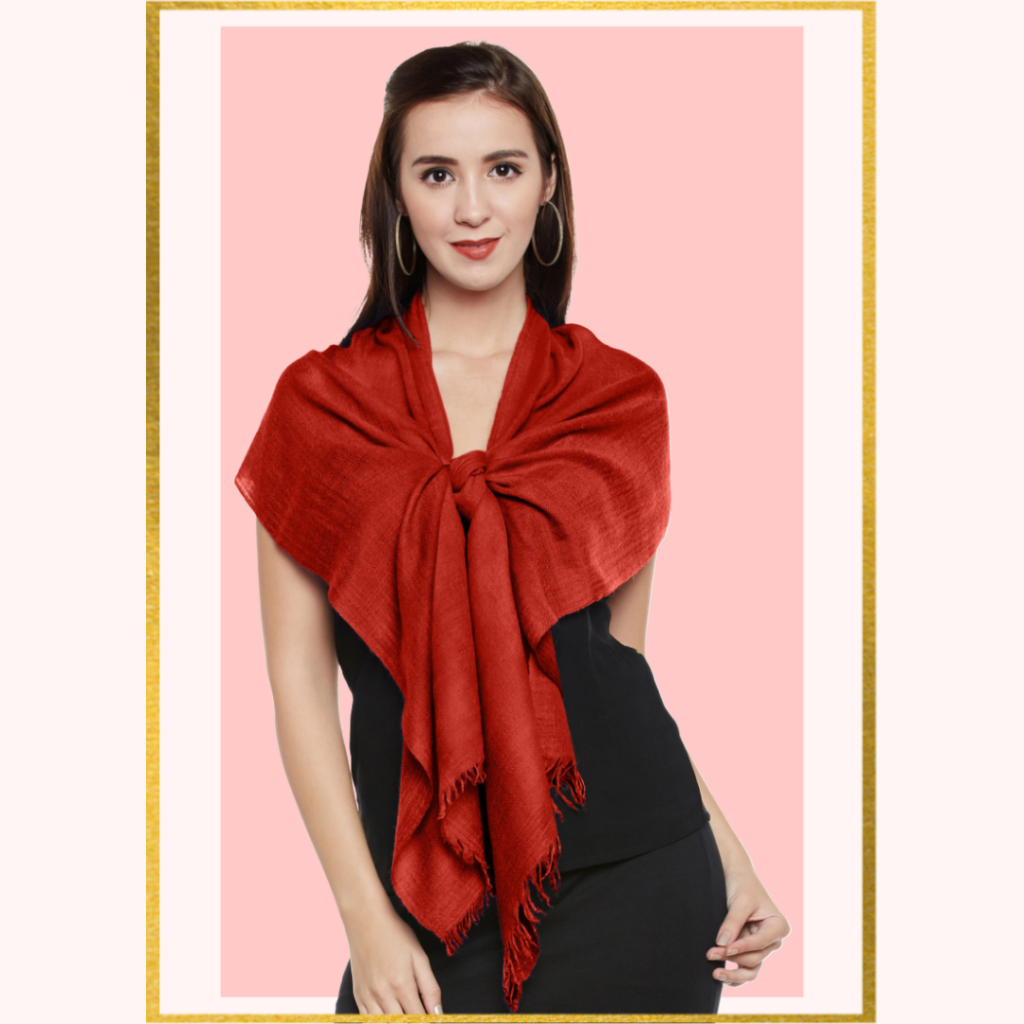
A glistening red Kashmiri Pashmina scarf, handwoven over traditional looms
Does she love to hang out with friends on weekends? Then your Valentine's gift has to be a solid Cashmere which styles her up in breathtaking shades. Be it a beach, a restaurant, a friend's place, or a frosty night out at parents', we have got her covered.
The Fashion Queen
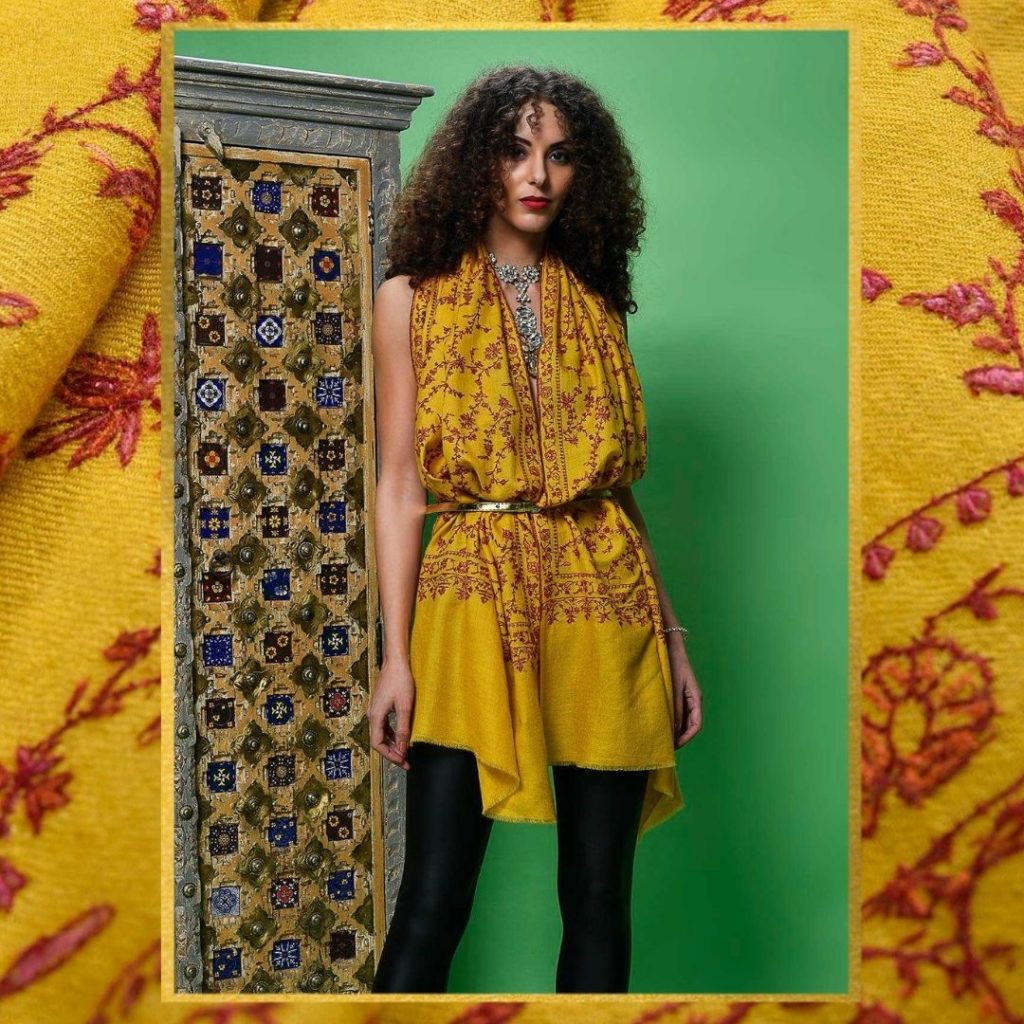
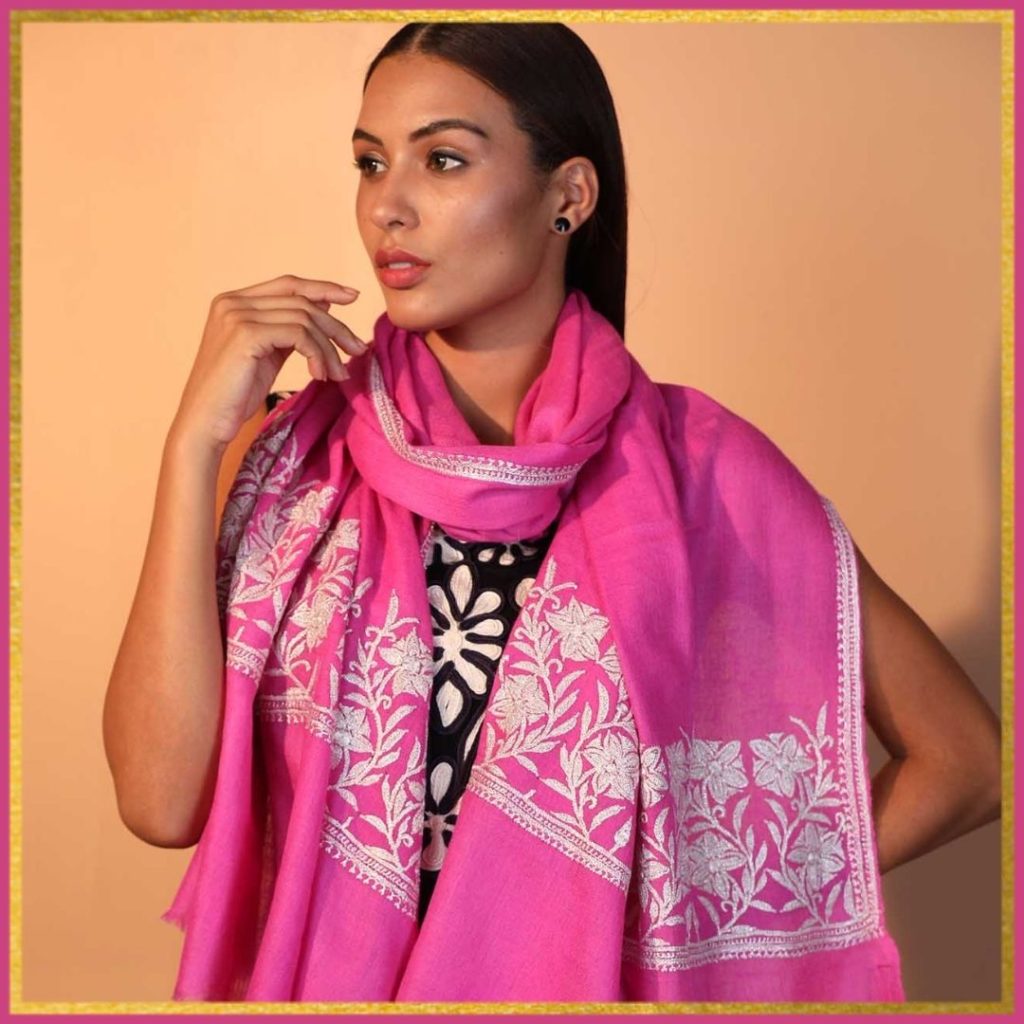
The Cashmere wrap features Sozni Kari - a delicate thread and needle work by local Kashmiri artisans - which spans all over the fine base in a netted pattern
Does she love to be the show stopper on special alfresco occasions? Choose a mesmerizing Cashmere wrap as your Valentine gift, which is hand embroidered in laboursome processes, so that she steals the night.
The Office Girl
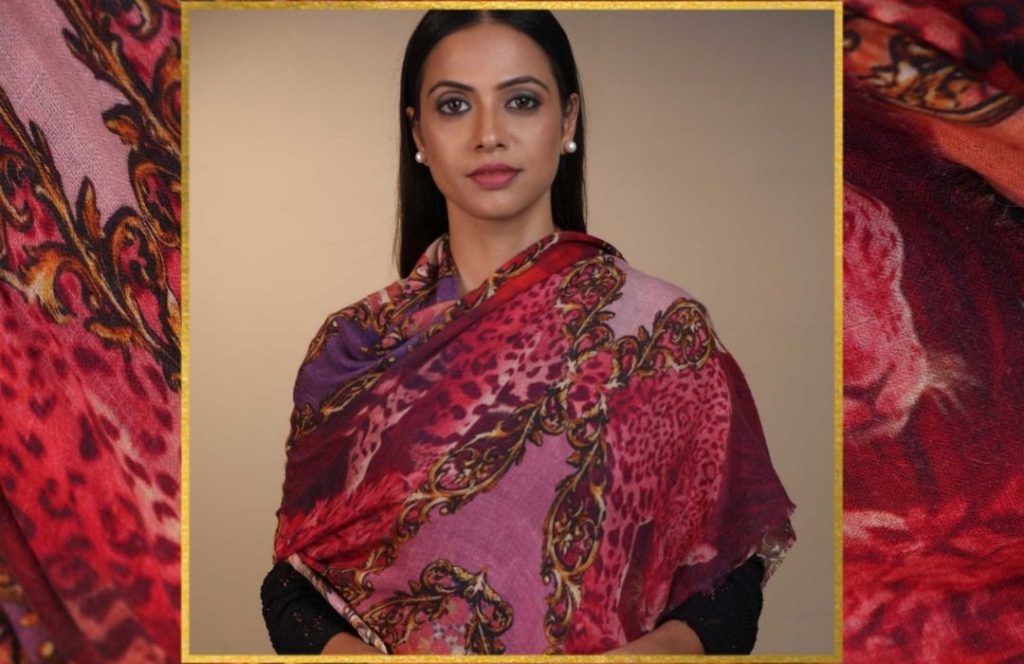
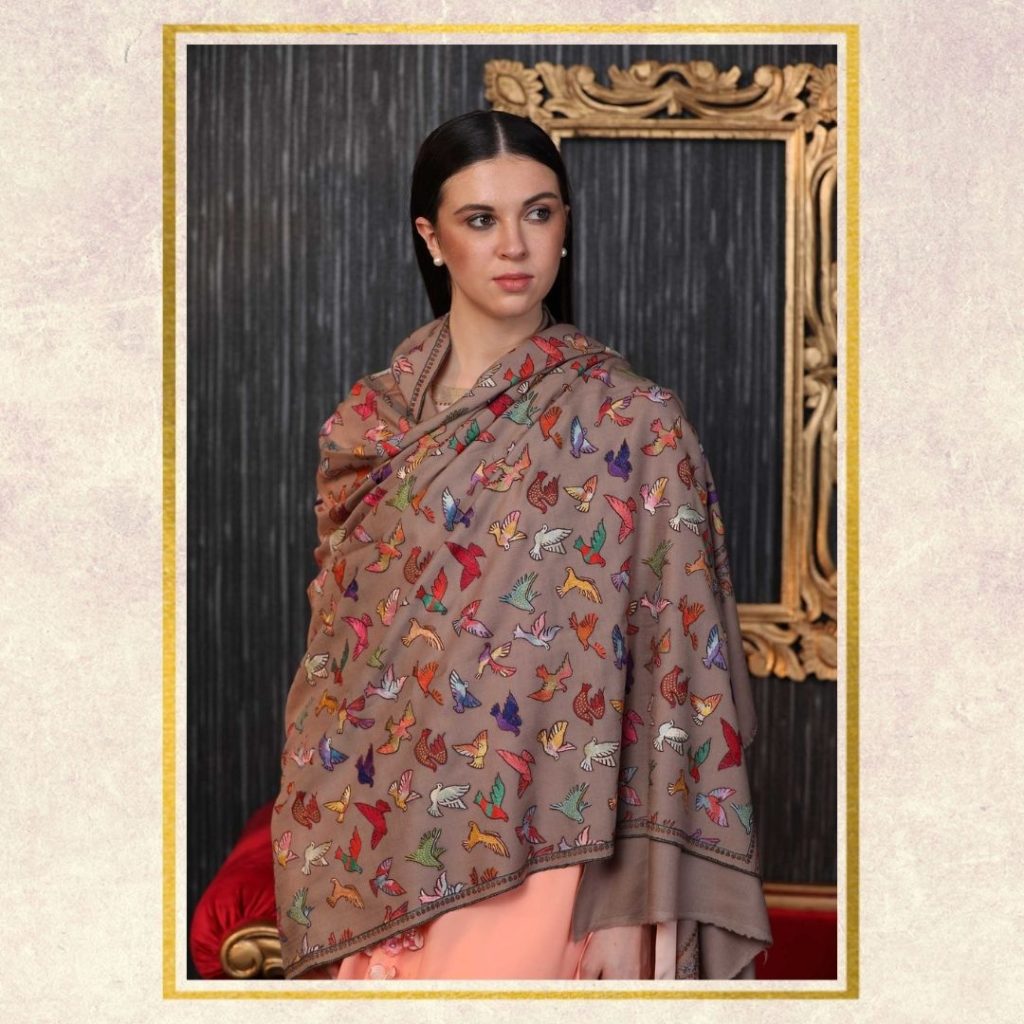
The wrap accentuates multicoloured patterns of Indian flora and fauna amongst a warm hued base
Is she a workaholic who takes office too seriously, even in her dressing and accessorizing? Meet our contemporarily printed and patterned wraps in solid colours and sophisticated designs to give her a warm company to everyday work.
Tradition Lover?
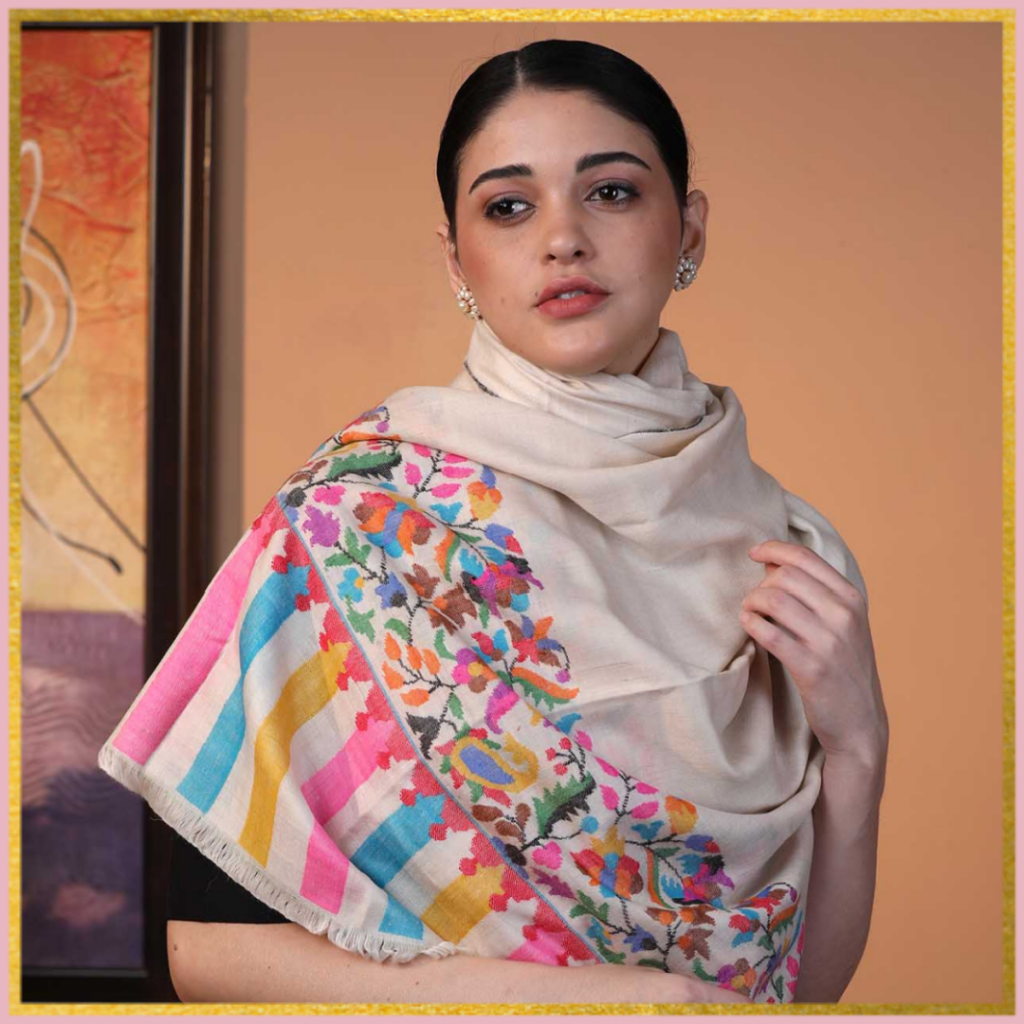
Art mixes with nature and hence is born a luxury winter accessory where the artisan paints the colours of nature onto his freshly made masterpiece
Is your valentine old school, rooted in traditions and culture? A Zari embroidered Cashmere or a Kani shawl will be the best thing you gift her this 14th February. The pieces have a history in the royal courts of Mughal kings in Kashmir and India, where the noble queens would love to drape them. And we bring it to you, on a day which brims with love itself.
While we have Cashmeres for all moods and occasion for her, there is an underlying theme for all - they are exceptionally luxurious.
There isn't just one reason to gift your loved ones Cashmere wraps. We just gathered a number of beautiful reasons why Cashmere is a sign of love, and why you should fall in love with it, this Valentine's day.
When a pure handmade Cashmere Wrap is chosen to come under the shimmers of Tilla Dozi, even the artisan is not in a position to imagine how breath-taking the complete piece would look
Cashmere is planet-friendly. It is a natural fibre and it is renewable and biodegradable. This makes cashmere wraps the most sustainable investment in the market.
Cashmere comes under a slow fashion. As such your Cashmere gift will last for so many years and make an unforgettable memory.
The luxury Cashmere fibre absorbs and releases moisture from the air as and when there is a change in humidity. It thus retains heat hence making itself an ideal gift for the cooler seasons. Cashmere is insulating, as well as highly breathable
Cashmere defines comfort in a new way. The fibre is exceptionally soft and comfortable and feels feathery against the skin. The soft silky finish and grandeur of a Cashmere wrap will definitely impress her for life
Cashmere just gets better with age. Your 20-year-old Cashmere wrap will not look withered but heritage. Cashmere, in history, would be passed from mothers to daughters, and it would look as exquisite as when it was new.
Cashmere care is easy. You can wash Cashmere at home with Cashmere shampoos and lukewarm water. There is no need to spend thousands on laundry and dry clean.
Your Valentine Gift needs to be as special as they are in your life. Unbox the treasure of timeless Cashmere shawls, stoles, and scarves with our extravagant edition of Pure Cashmere wraps.
A Pashmina wrap is unprecedentedly the most loved gift you can ever give. But you know what's more loved and special? A personalized Cashmere. Add that special touch of personalization to your Cashmere gifts with this collection of monogrammed wraps, shawls, and scarves. Because Personalized Gifts are always heartfelt.
Ethereal, gossamer and splendid, Kashmiri Pashmina has from times immemorial been considered an epitome of class
From solid Cashmeres to prints and patterns, to heavy embroidered ones, make your gifts more thoughtful. Choose from this handpicked collection of pure 100% Cashmere scarves and wraps which will never go out of style. Each piece from the collection has been handwoven from pure Pashm fibres of the exotic Changpa goat, manually acquired from the picturesque valley of Kashmir. It is this labor-intensive making of these pieces which makes them warm, cozy, and timeless.
It's your special one's birthday. how about letting go of the monotonous gifts and instead inscribing this date or their picture over a pure Pashmina wrap? Wouldn't it do wonders?
Personalized Gifts for Christening
It's the christening of your little prince. Wrap him in a cozy and cuddly Pashmina wrap from our luxury store with the initials of his and his parents' names over the edge. Something he can flaunt when he grows up!
Personalized gifts are the most special gifts of all
Personalized Pashmina wraps for other Special occasions
Inscribe symbols of love over a scarf for your Valentine, or your zodiac signs to gift them on your anniversary day, or have a picture of your lost pet all over a wrap, these all-embracing ethereal Pashmina accessories will forever turn it into a personalized souvenir.
When the world is overwhelmed by thousands of marketers claiming that their product is the best gift you can give, customizing something for them seems so special. A personalized gift shouts to the receiver "I have been made only for you". General gifts can never reveal your actual feelings. The love and thought you put into personalized gifts are purely unparalleled. We can say it is a heart-to-heart connection that truly delights the receiver.
A perfect choice of the lovers of art, here is a Kashmiri Pashmina wrap handmade in the loveliest of colours for a graceful winter
Personalized Gifts made out of Cashmere are no wonder one of the best gifts you can give. The fine wool will cover your beloved in warmth, comfort, and a luxurious feeling. The personalized mark will add to their happiness, and prove to them that you actually spent time to give them something thoughtful.
How many times has gifting been stressful for you? It wouldn't have been if you had thought of something really special. We blended the timelessness of Pashmina wraps with a personalized touch for your loved ones.
It is the most wonderful time of the year. As you get ready for Christmas, you have to invest in so many gifts for everyone around, and that might have put you in a dilemma, with no idea where to begin.
The Choice
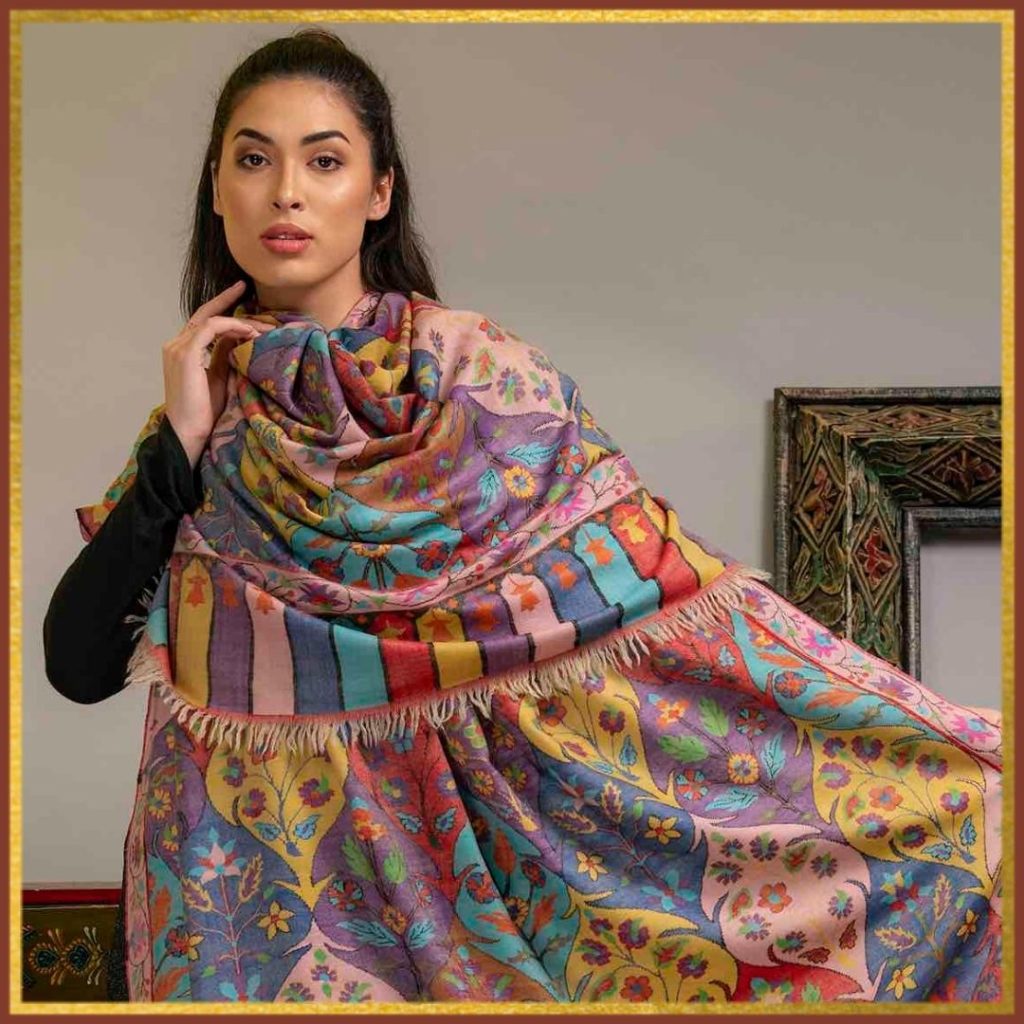
The conventional Cashmere Wrap has been transformed into contemporary by weaving it in in-vogue patterns
Whether they require to warm up for casual events, an office party, or the blithesome occasion of Christmas itself, we have a Cashmere for all wintry affairs. Christmas gifts like plain solid cashmere for night outs, Embroidered pashmina to gift your family members, patterned and printed Cashmere for your family and loved ones and so much more.
The Making
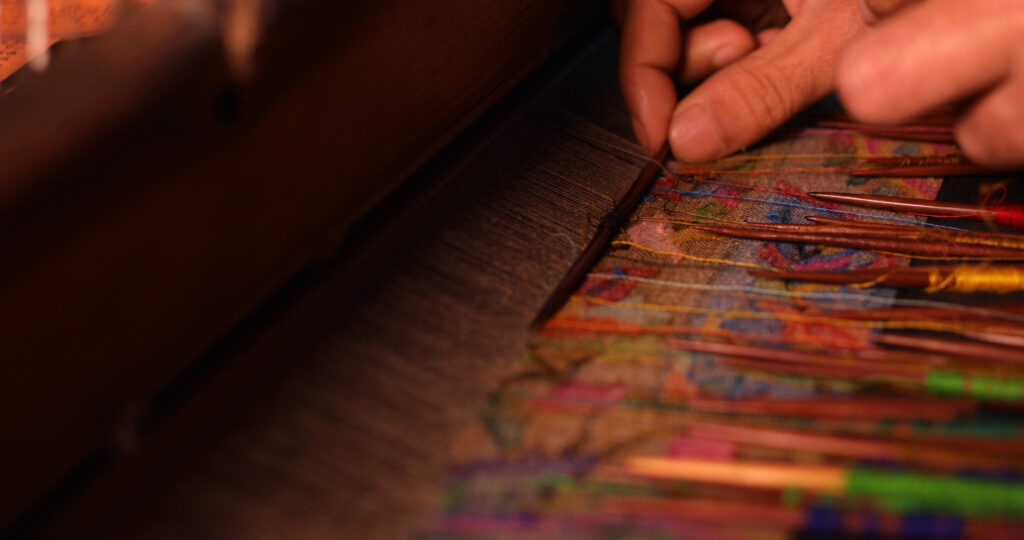
It is these sticks around which colourful threads are wound and woven together with the delicate fibres of pure Pashm
The delicate Pashm fibre of these swoon-worthy Christmas gifts comes from Ladakh in its purest form. Later, workers hand weave it over a handloom in the paradisiacal valley of Kashmir and pattern it according to different moods, tastes and events to match your special days impeccably. Indulgently soft and comfy, these Cashmere wraps, scarves, and shawls are versatile enough to go with all your newly shopped winter apparel.
The Happiness
Guarantee smiles and pleasant surprises on Christmas morning with these handpicked opulent Christmas gifts. Because since it is wintertime, your best gift has to be something to guard them against the chilly winds outdoors. And who can deny the practicality of layering in a snuggly Cashmere, when temperatures drop?
Lifetime Companion
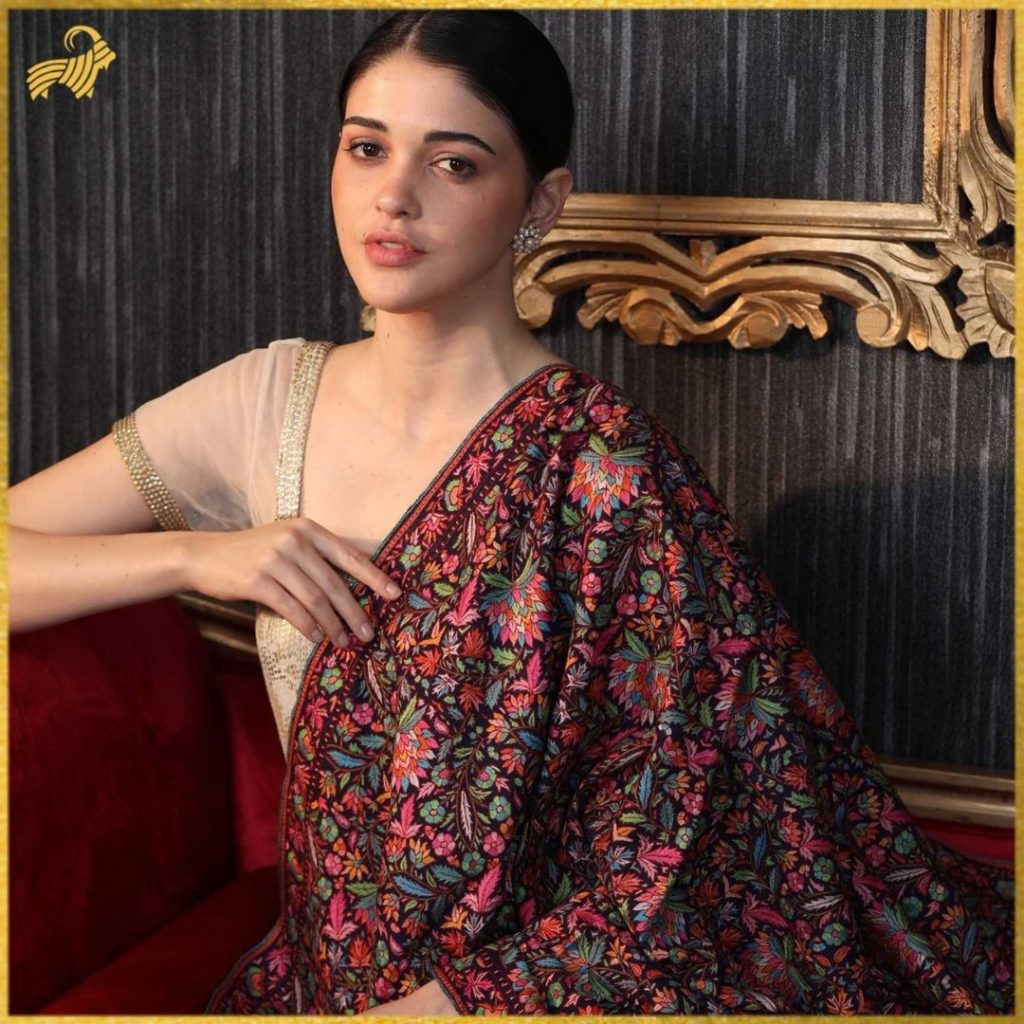
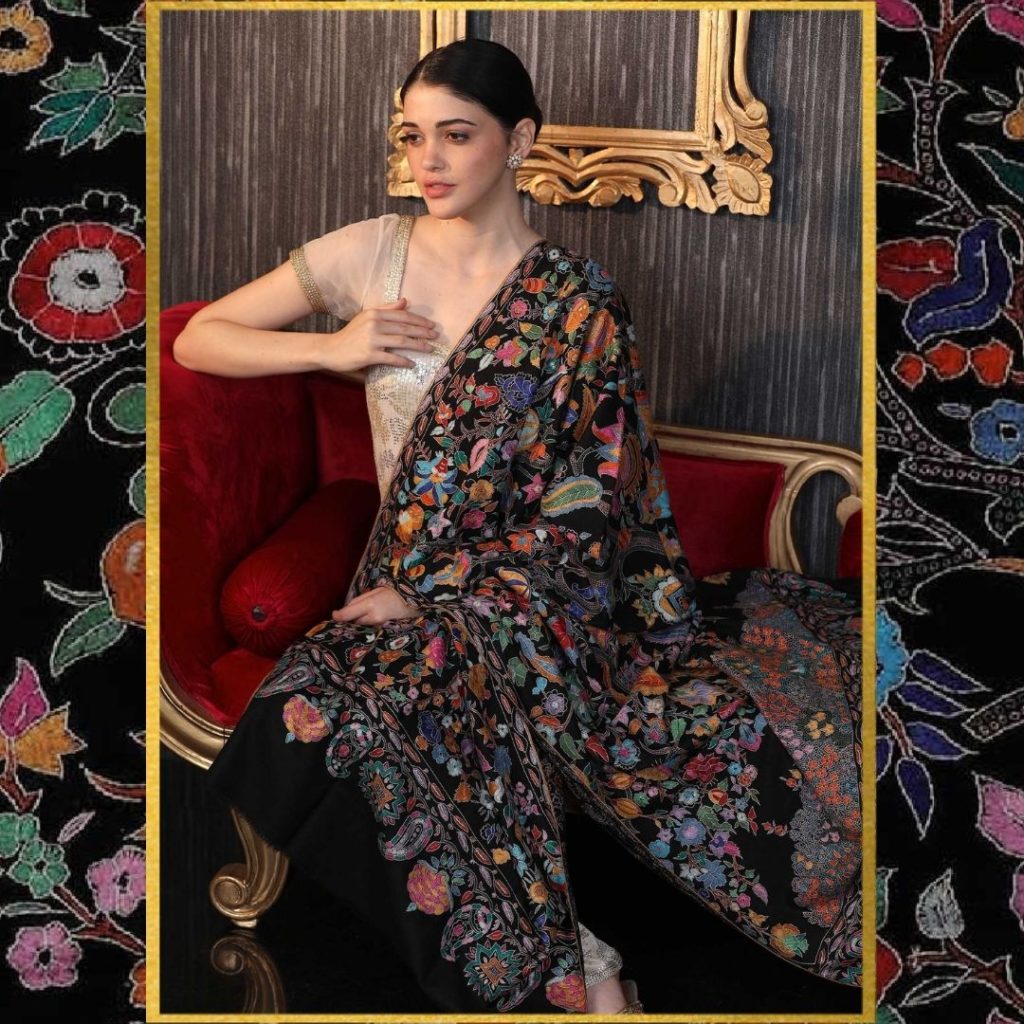
Wrapped in the warmth of native emotions, a Kashmiri Pashmina shawl gathers every single blooming flower from the Mughal garden of Kashmir
Our time-tested Cashmere is your lifetime companion which stays with you for a lifetime. A Pashmina shawl in Kashmir is passed through generations together, when a mother gifts her Pashmina shawl to her daughter at her wedding, making these pieces traditional keepsakes and classic treasures.
Cashmere wraps have adapted to modern designs, which makes them versatile, and suitable for every member of your family. Hence you can delight everyone with the warmth and sophistication of these mesmerizing winter accessories. Let's find out which design goes for who
One for Grandma
Evocative of several stories, several memories, a few places, a few colours, and a bundle of emotions - that is what the shawl is made of
For all these years, Grandma has showered you generously with gifts. What better way to pamper her with the softest fibre of the world. As the season comes closer, we handcraft solid, printed, and patterned wraps for her, which can make her feel cozy, comfortable, and elegant all at once. Let go of the stereotype that grandmas would wear nudes and pastels only. Glam her up with myriads of colors we offer in our categories of solids, embroidered, Kani, and lace shawls.
One for Mom
Delicate, velvety soft and gossamer Cashmere has been handwoven in the realms of Pashmina to create a shawl whose exquisiteness is unparalleled
It's Christmas, and what better day to celebrate the most wonderful woman in your life! Spoil the most amazing mom with our handmade masterpieces which make an ideal gift for her. Gift her Solids for casual use, hand-embroidered for special events, and Kani shawls for weddings and other formal occasions. She is going to love every bit of it.
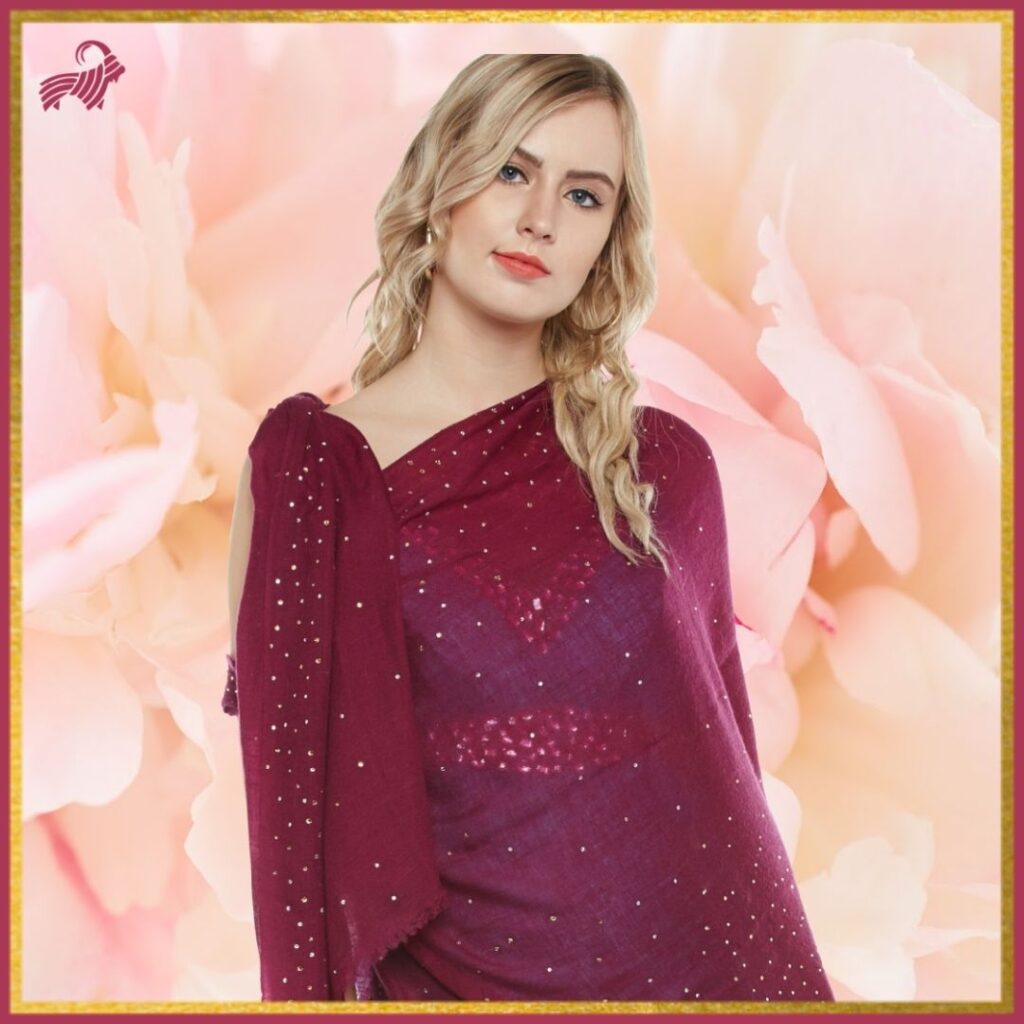
The wrap is embellished with Swarovski crystals which make one nostalgic about the clear summer night skies
The newest additions in our luxury Cashmere collection were that of Swarovski crystal scarves and the ones with Chantilly laces. And what a wonderful gift they would make for your sister. Hasn't she always been your partner in crime, your biggest support, and your first best friend? Delight her with these fresh pieces from our luxury collection which definitely make her day.
One for daughters
A Kashmiri Cashmere Wrap, handwoven with an unmatched fashion, is bated in shades of green
If you aren't well versed with the latest trends that the millennial generation follows today, then you will be having the hardest time finding gifts for them. Why not go with the timeless grace of Cashmere. Find out their favorite color and indulge in the opulent plethora of handcrafted shawls, scarves, and stoles for them. Besides keeping them warm and comfortable, these beauties will make sure to up their style quotient a few notches.
Choosing gifts for different temperaments is always tricky. Why not choose something timeless. Cashmere has been in style for over centuries now, with even royalty admiring it, and owning it. Our versatile pieces make the perfect Cashmere gifts for every generation, and we are sure you will have the happiest of reactions from them, as you unbox your token of love for them.
A Cashmere scarf is priceless in every way–it’s warm, feather-light, and incredibly chic. Conventional wisdom says the fibre procured from the underbelly of the extraordinary Changpa goats can last a lifetime, albeit you give it all the TLC (Tender Love Care). What’s more? Your Cashmere scarf gets softer with every wash, bringing you joy and warmth for years to come. Cashmere care is as important as investing in a pure Cashmere scarf itself!
Keeping your Cashmere scarf luxe and in high condition is not tough. But it does require a little patience and effort. Though it is less prone to pilling, there are still a few tips to keep in mind so you dazzle every time you wear it.
Why Cashmere needs gentle care
Cashmere, known for its luxurious softness and warmth, is a delicate material that requires careful handling. Unlike other types of wool, cashmere fibers are much finer, making them more susceptible to damage if not treated properly. This fragility is why gentle care is so crucial. Harsh detergents, high temperatures, and vigorous washing can all lead to pilling, shrinkage, and a loss of the cashmere's natural luster.
Understanding the delicate nature of cashmere helps in preserving its quality over time. When you handle cashmere with care, you maintain its softness and extend the life of your garments. Whether it's washing, drying, or storing, every step should be taken with the utmost gentleness to ensure that your cashmere scarf remains a treasured accessory for years to come
Choosing the Right Detergent for Cashmere
How to wash Cashmere scarf starts with choosing the right detergent. Cashmere is made from fine, delicate fibers that require a gentle touch, and using the wrong detergent can cause irreparable damage. To keep your cashmere scarf looking and feeling luxurious, opt for a detergent that is specifically designed for delicate fabrics.
Mild, pH-neutral detergents are the best choice for cashmere. These detergents are free from harsh chemicals like bleach, enzymes, and optical brighteners that can weaken the fibers and cause them to break down over time. Baby shampoo is also a popular alternative due to its gentle formula, which is kind to cashmere’s delicate structure.
When selecting a detergent, avoid anything with strong fragrances or additives, as these can leave residues that irritate the skin or cause the fabric to stiffen. Always check the label to ensure that the detergent is suitable for wool or cashmere, as this will give you the best results. Remember, a little goes a long way; using too much detergent can leave a soapy residue that is difficult to rinse out, leading to stiffness and dullness in the fabric.
By choosing the right detergent, you protect the softness, warmth, and beauty of your cashmere scarf, ensuring it remains a timeless accessory in your wardrobe.
How to Wash Cashmere scarf
Here’s a lowdown on the five essential tips to keep your Cashmere scarf luxe and loved.
Cashmere Care | Step 1: How to wash a Cashmere scarf?
Some believe spot-cleaning is enough to make your Cashmere scarf clean. But if this product has been lying in your chest of drawers for a while, it requires thorough cleaning. You might think it looks clean enough. But believe us, the smallest particles of food, hair strands, or even sweat can attract moths.
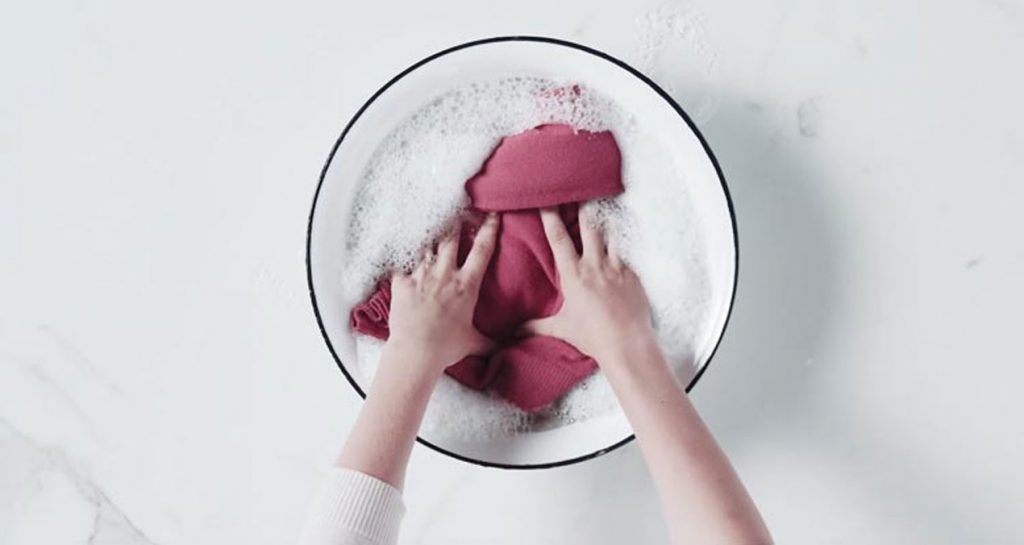
Hand washing of Cashmere
How to clean Cashmere (Hand Washing)
Undoubtedly the best way to wash the super delicate Cashmere is hand washing it. Although some believe that Cashmere scarves should be handed over to professional cleaners who know their job well. But what if they aren't available at the time we need cleaning Cashmere? Hence, we have found the safest way to clean Cashmere at home. And the best part of this is that you can do it yourself, without any external help.
Here are the steps to follow when you choose to wash your Cashmere scarf at home
Hand washing at home
Step 1: Invest in a high quality Cashmere shampoo. These are easily available in the market. If you can not find one, or are in a hurry to wash your scarf, you can skip it and use a delicate soap for wools instead.
Step 2: Fill a tub with lukewarm water. Make sure the water isn't very hot, as this can reshape your scarf forever.
Step 3: Pour the Cashmere shampoo in this tub and give this concoction a gentle mix till the shampoo is fully dissolved in the water
Step 4: Soak your Cashmere scarf in mixture now, and make sure not to take it out for 30 minutes. 30 minutes is an ideal time to remove stains and the overall cleaning of the scarf.
Step 5: Post this time, take the scarf out and gently squeeze the soapy water out. Do not be harsh when squeezing Cashmere, Instead roll it into a ball and compress it in between.
Step 6: Now throw the soapy water down the drain and fill the tub with clear water. Again place the scarf in the tub and keep squeezing it until the water is clear. You can ditch the tub at this step and simply rinse the scarf under running tap water. Make sure all the soapy water is out of the scarf after rinsing.
Step 7: Now squeeze and clear water out of the scarf and check if any stain is still on the scarf. You can spot wash the same again.
Step 8: Hand washing is considered the best washing alternative by a few experts who even prefer it to professional washing.
How to wash Cashmere - Machine Wash
Before starting, it is important to answer this question, "Can you wash Cashmere scarf?". And the answer is, Yes. Let's know how.
Make sure you wash Cashmere by hand unless you have a hand-wash setting on your washing machine. Use lukewarm water and a small amount of mild detergent or baby shampoo to clean it. There are some who say even hair conditioner works wonders to make a Cashmere scarf super soft!
Machine Washing Tips
Washing a Cashmere scarf in washing machines is the next alternative to hand washing the scarf at home. But if you can take proper precautions and be really careful, your job can be safely done. Here is how to wash Cashmere scarf in washing machine:
1. Place the scarf in a washing bag. (Invest in good quality washing bags. These are easily available in markets or online)
2. Select the hand wash option and make sure the water temperature is cold. Set the spin to "low"
3. Add the appropriate amount of washing shampoo. Remove your scarf quickly when it completes washing
4. Never rub, wring or twist the fabric while washing. Instead, gently squeeze the water through the fibre.
5. Always use wool and cashmere shampoo to wash your scarf at home. If it is not available, then a conditioner can be used.
Cashmere Care | Step 2: How to dry a Cashmere scarf?
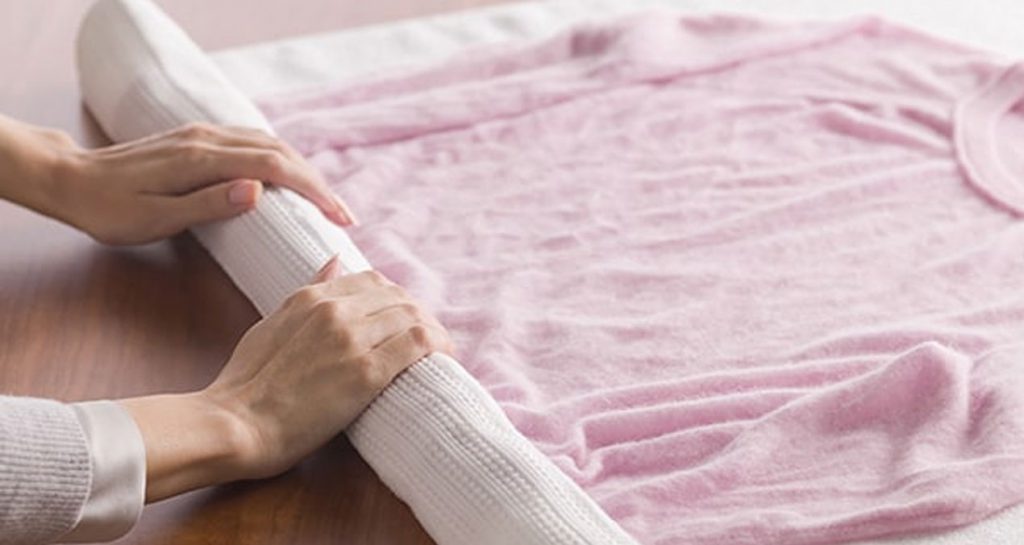
How to dry the Cashmere scarf is crucial. You need to be gentle and tumble drying is a big no-no. Make sure there’s no wringing or twisting of the Cashmere scarf to remove excess water. Instead, it’s best to lay out your product on a towel, gently roll it up, and lightly press. Later, you can un-roll and re-shape it.
Here is how to do it in a detailed way:
Step 1: Layer your Cashmere scarf between two clean and dry towels. Make sure the towels or clean lest the scarf catches stains from the towels.
Step 2: Roll all the three (2 towels and the scarf) together so as to let the towels absorb the extra amount of water from the scarf. Now that the scarf is semi dry, it will take less time to dry fully
Step 3: To dry your Cashmere scarf fully, lay it on a flat surface, post step 2, and let it air dry for a few days till it is completely dry, ready to wear.
Drying Cashmere by rolling up in a towel
Your Cashmere scarf must be left to dry in a flat manner. If you hang it, the weight of the water will stretch it out of shape. Lastly, you must keep it away from heat sources like radiators, hairdryers, or even sunlight. Cashmere needs to air-dry naturally.
Cashmere Care | Step 3: How to store a Cashmere scarf?
A frequently asked question by customers is that "How should I store my Cashmere scarf when I am not wearing it?
The question is pretty valid, as well as important to ask. That is because storing Cashmere scarves properly has the most vital effects on its life. If your Cashmere scarf is not properly stored, there are chances that it won't survive for long. Moisture gives birth to moths and moths destroy the fine base of Cashmere within seconds of contact. Hence, if one wants their Cashmere scarves to last long, the storage is immensely essential.
"How to wash Cashmere scarf" might be easier to answer than "How to store a Cashmere scarf". Here is how to carefully store Cashmere wraps when one is not wearing them:
How to store a Cashmere scarf
Firstly, the most basic tip of all–clean, dust, wipe the shelf where you store your Cashmere. It must be squeaky clean and damp-free. After the cleaning is done, you’ve to be on guard against moths, since it won’t take for them to attack your luxurious shawl or scarf.
Lay down some anti-moth paper on the storage shelf and put out some scented naphthalene balls to keep these pests at bay. And if these are old, make sure to replace them, since they lose their strength after a season.
If there’s not much space in your wardrobe, do not commit the mistake of storing these in cardboard boxes, since they are not pH neutral, and these could react with the chemicals in your fabric. In addition, do not even leave these products in plastic bags for more than a few months, since the change in temperature is also likely to affect its condition. It can also alter the colour of your Cashmere scarf
Lastly, try to wrap your product securely in acid-free tissue paper to preserve its original state and ensure greater protection against dust and dampness.
We all know prevention is better than cure, but what if your Cashmere product is already infested with moths? There definitely needs to be some damage control. Invest in a good moth trap to drive away these creepies; it’s a sure-shot solution.
There’s another tip that might baffle you; it does sound a little strange though. Freeze your Cashmere product. Yes, you heard it right. Put your product in a plastic bag and freeze overnight or for a day. Later, defrost it and this will prove effective in the removal of any moths that are present.
How can I prevent pilling in Cashmere scarves?
This is not uncommon, because some amount of pilling does occur in every Cashmere product, primarily due to the friction of everyday wear against loose fibres on the surface. It’s not that this determines the quality, but it is distinctive to Cashmere itself. You can certainly reduce the pilling of your garment by gently washing it to remove these fibres.
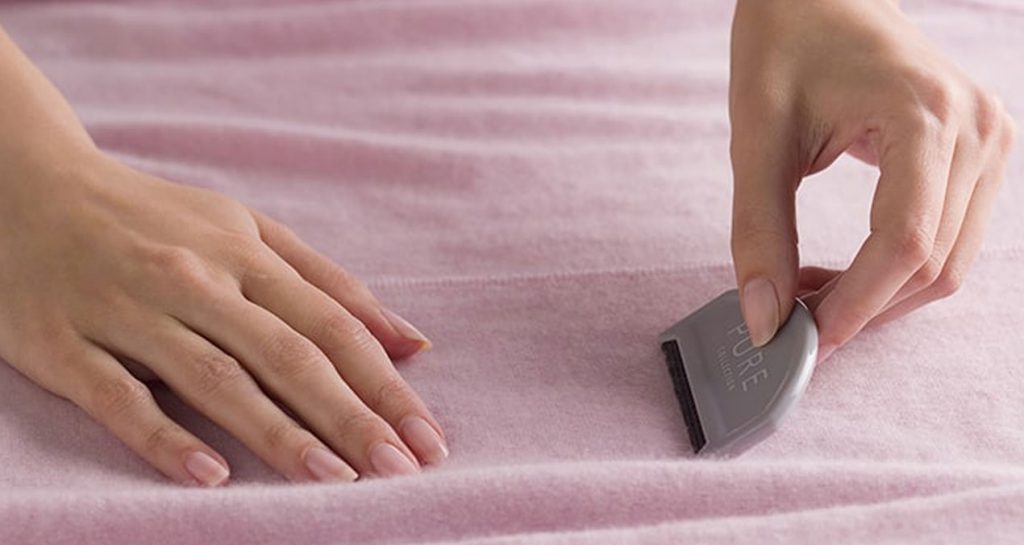
In case you still experience pilling, you can comb it out with a brush or rather a special kind of brush used for cashmere wraps. To comb your product, put it out in a flat manner and with very gentle hands, brush the comb over its surface wherever you see pills. Pay a little more attention to areas that are more prone to friction, including elbows, underarms, and even shoulders.
In case there’s not much pilling, you can still comb it on a regular basis to rid wobbly fibres. Besides this, try not to wear your cashmere against clothing with a harsh texture, such as pointed neckpieces, bracelets, or even rough bags.
Preventing Cashmere scarf everyday
Now that you know how to wash Cashmere scarf, make sure you give it all the love it deserves. After all, if you shower it with all your attention, care, and patience, it will consistently reward you with its finest luxury, softness, and warmth!
If your Cashmere scarf is pure, you have to care for it even when you wear it. Do not wear a scarf made of pure Cashmere everyday. If you do so, the friction will cause it to pill and grow small wool balls over its surface. This way the scarf looks shabby, and the Cashmere base, too, gets withered. Cashmere should be worn once a week, and then stored properly as it needs rest from everyday agitation and chaffing. If one lives in a country where temperatures are low, it is better to buy more scarves if they want to wear Cashmere everyday.
Dealing with Stains: Spot Cleaning Tips
When it comes to dealing with stains on your cashmere scarf, a gentle approach is key. Cashmere is a delicate fabric, and harsh cleaning methods can easily damage its fine fibers. Knowing how to effectively spot clean stains will help maintain your scarf's luxurious feel and appearance, ensuring it stays beautiful for years to come.
First, it's essential to act quickly when a stain occurs. The longer a stain sits, the harder it becomes to remove. Begin by gently blotting the stained area with a clean, dry cloth to absorb as much of the stain as possible. Avoid rubbing the stain, as this can push it deeper into the fibers and cause the cashmere to pill or fray.
Once you've blotted the excess, prepare a mild cleaning solution. A few drops of pH-neutral detergent or baby shampoo mixed with cold water works well. Dip a clean, white cloth into the solution and gently dab the stained area. Remember, less is more when applying the cleaning solution; too much liquid can saturate the fibers and lead to further damage.
After treating the stain, rinse the area with cold water by dabbing it with another clean cloth to remove any soap residue. Be sure not to soak the fabric. Once the stain is lifted, lay the scarf flat on a towel and gently press to remove excess water. Allow it to air dry naturally, away from direct sunlight or heat sources.
Understanding how to wash a cashmere scarf and spot clean it properly can save you from the frustration of dealing with stubborn stains while preserving the integrity of this luxurious fabric. With the right care, your cashmere scarf will remain a cherished piece in your wardrobe, free from unsightly marks and blemishes.
Why should we take care of Cashmere?
Maintaining cashmere's softness, form, and lifespan requires proper care. Cashmere needs special care because it is a delicate and expensive fibre. The following are some justifications for caring for cashmere:
Maintain Softness: Cashmere is prized for its incredibly soft and comfortable texture. The soft and supple feel of cashmere clothing can be preserved with proper care. The fibres are kept supple and avoid stiffening or losing their natural pliability with routine cleaning and mild handling.
Keep Your Shape: Cashmere clothing is high quality and lasts for a lifetime. Cashmere clothing will retain its original shape and structure if you accord to care guidelines, such as those regarding correct washing and storage. By avoiding rigorous treatment and stretching, you can maintain the fiber's original fit and drape.
Prolonged Lifespan: Cashmere is a superior, durable material. Your cashmere clothing can last longer if it is properly cared for. The fibres are protected and kept intact by gentle washing, good storage, and avoiding contact with strong chemicals or substances. You will benefit from the softness and warmth of cashmere for many years to come by taking good care of it.
Less Piling: Preventing pilling is important because this can happen with any natural fibre. Pilling is the production of tiny fibre balls on the fabric's surface. Cashmere pilling can be reduced, though, with the right care. Avoid rubbing or friction with rough surfaces, and use a fabric shaver or your hands to carefully remove any pills that may emerge. Preventing pilling can also be accomplished by routinely brushing the clothing with a soft brush.
Contribution to Sustainability: Taking care of your cashmere properly supports sustainable fashion practises. Your environmental effect is reduced by reducing the frequency of replacements, which takes place by extending the lifespan of your existing essentials. By taking care of your cashmere properly, you can also use less energy, water, and other resources to wash and maintain it.
Shop a Pure Cashmere
Pure Cashmere scarves have the longest life, and hence need the best care. If your Cashmere scarf isn't pure; if your scarf has a certain percentage of Cashmere and the rest of it of sheep wool or nylon, then it does not need the highest care and concern. But if, fortunately, you have invested in pure Cashmere, then you have to take the highest possible care of this gentle baby.
It is hard to find pure Cashmere scarves these days, as the market is flooded with machine woven pieces, or mixed fibre scarves. Pure Cashmere is the best when handwoven with pure Cashmere threads acquired from the Cashmere goat of the Himalayas
Conclusion
Cashmere scarves have long been a symbol of elegance, warmth, and sophistication. Their timeless appeal lies not only in their luxurious softness but also in their ability to elevate any outfit with a touch of understated class. Whether draped casually over the shoulders or wrapped snugly around the neck, a cashmere scarf is a statement of style and quality that transcends fleeting fashion trends.
Understanding how to care for such a precious item is essential to maintaining its beauty and longevity. Knowing how to wash a cashmere scarf correctly is crucial, as improper care can lead to damage, diminishing the scarf's softness and shape. By using gentle cleaning methods, choosing the right detergent, and handling stains with care, you can ensure that your cashmere scarf remains as luxurious as the day you first wore it.
The enduring charm of cashmere scarves is not just about their appearance but also about the comfort and warmth they provide. As a natural fiber, cashmere offers an unparalleled softness that feels wonderful against the skin, making it a beloved choice for those who appreciate the finer things in life. This combination of style, comfort, and quality is why cashmere scarves continue to be a favorite among discerning individuals worldwide.
Cashmere scarves represent a perfect blend of tradition, luxury, and functionality. By learning how to wash a cashmere scarf properly and taking the time to care for it, you are preserving more than just a piece of fabric—you are upholding a legacy of craftsmanship and elegance that has stood the test of time. Embrace the timeless appeal of cashmere scarves, and let them be a cherished part of your wardrobe for years to come.
The extraordinarily soft and plush fabric that is used in luxury garments today is none other than Cashmere. It is luxury wool that comes from a rare species of goats, which grow this fine wool as a downfibre. The finished products made out of this downy wool type are luxurious and expensive. Hence one needs to take care of it and follow a lot of precautions while wearing, washing, and storing it.
A lot of questions regarding the maintenance of this opulent fabric have surfaced. Many of these are related to piling. But does Cashmere pill? With so many fake and blended varieties of Cashmere in the market, we had to uncover a lot of sources and find for ourselves if it is Pure Cashmere that is prone to pilling or an imitation of the same.
Colloquially known as bobbling, pilling refers to the formation of small fuzzy balls on the surface of a fabric and gives it a rugged, worn-out appearance. These are also known as lint balls, and their formation is quite annoying for the wearer. Pilling is usually caused due to rubbing the material with itself or other surfaces. Usually apparel pills at armpits, elbows, and the areas where there is regular friction. When short fibers on the surface twist around themselves, it creates lint. This phenomenon is considered inevitable as the presence of short fibres is always found on wool and its variants. Hence, when customers ask "Does Cashmere pill", it is quite valid.
Does Cashmere Pill?
Sadly Yes. Cashmere does pill, no matter how much you try it shouldn't. Even if there are blended fabrics that contain a small percentage of Cashmere, will pill. It is a myth that designer Cashmere or too expensive ones will not pill. Unfortunately, every type of Cashmere will pill.
There is however a difference between other Cashmere weaves and a tighter weave. Tightly woven products pill less as compared to loose weave products. But again, it is almost impossible to differentiate between the two.
A number of reason which cause Cashmere to pill are stated below.
Does Cashmere Pill if you wear it wrong?
Knowing how this sweater or Cashmere wrap got huge pilling can be solved by knowing how it was worn. If you wear your Cashmere roughly, even the most high-quality and expensive ones will pill. Even if you wear your Cashmere garments carefully, pilling will still take place. In case it's a sweater your cuffs, neckline, beneath the arms are sure to pill. If it's a wrap, it will pill on the areas where the surface rubs with its own self.
Does Cashmere Pill due to environmental factors
We would wear Cashmere sweaters and wrap to the areas where rain and snow occur. But it's heavenly warmth makes us do so. As such it might be a victim to pilling. Cashmere the weakest when it is wet. If any form of precipitation touches this precious fabric, or you spill a drink over its surface, the area would lose its shape. This causes breakage which in turn causes pilling.
It's not only the outdoor factors that cause Cashmere to pill. Even at home, the way you store your it always plays a huge role in it pilling or not. It is friction that causes Cashmere to pill. And even during storage, your Cashmere is not immune to pilling. Proper Storage is essential for fine and pure fabric. Each layer has to be prevented to touch the other when you fold Cashmere for storage. Using tissue papers between folds is a good idea. Tissue paper can even soak the body oils which might be attached to the product, and prevent it from touching the other layer, thus saving our hugely invested garment or accessory.
Again, you should never pile Cashmere products over each other, This causes stress in the fibre, and the result is piling which shows up when you wear it the next season.
Now that we know how to be careful in the future about Cashmere care, it is time to know what to do if your Cashmere has already been a victim to these tiny balls of fibre.
Using sweater combs
The most common and easy form of de-pilling Cashmere is the use of tiny toothed combs. Simply lay the product flat on the ground and use downward strokes to comb off the fuzzy balls from the surface
Using Fabric Shavers
Electric shavers which have been designed to remove tiny knobs from wool and other kinds of fabrics prone to pilling are the best to use for de-pilling Cashmere. Do not use the common shaver which you use in the shower. It might prove harmful to the base.
Lint Roller
Lint rollers are yet another invention to pull out fuzzy lint caused due to friction of the fabric. Electric lint rollers gently remove pilling and make the surface smoother.
Brushes or lint stone
Be it brushes or a lint stone, both perform similarly. Lint stone has a pock-marked surface which when rubbed against the Cashmere base tends to pull out fuzzballs. Similarly, Cashmere garment brushed work in the same way. Just lay your garment flat, and brush it downwards. Be gentle though.
Scissors
If the pilling area is less, then using scissors is the most convenient and easy method. Simply hold the surface tight, and clip off the fuzzballs one by one. This method doesn't work if the area to be de-pilled is large.
Tips to prevent fuzz balls from forming over Cashmere in the future
Do not wash Cashmere with every single use. Wash it once every year. However, if you wear it quite often, still wash it after 2 to 4 wears. Everyday washing will cause more friction between the layers and cause pilling as a result.
Never wring or scrub the fabric. If your wrap is stained and you need spot cleaning, just pour some Cashmere shampoo on the stain and gently rub it with your finger. Do not be harsh with Cashmere. Remember the fibre diameter is just 12 -16 microns.
Do not stack Cashmere garments one over the other. But do not reserve one whole shelf for them either. Instead, be careful with its storage. Instead, fold acid-free tissue paper between the layers if you plan to store it for longer seasons. Even for regular users, use tissue paper between the layers. This paper needs not be replaced every season and can be repeated a few times.
In the 16th century, the great Saint Mir Syed Ali Hamdani visited Kashmir, along with a team of skillful craftsmen. He trained the locals in many crafts such as Paper Mache, carpet weaving, wood carving, and more. But the one thing that most people chose was indeed remarkable. This craft was the one that swaggered in the world of art. It was the making of Pashmina shawls. Pashmina was and is the art of handcrafting luxury shawls from Cashmere wool. What is Cashmere? And how was it discovered? We demystify.
The word Cashmere is an anglicization of the word Kashmir. When Europeans heard about a super soft, fine, and exceptionally warm variety of wool, which had been discovered in Kashmir, they visited the valley to see it for themselves. The heavenly soft and fine wool caught their attention at once, and they called it Cashmere (since they couldn't pronounce Kashmir in the local accent).
Cashmere is a variety of wool that is obtained from Pashmina goats found in Ladakh. This fine, delicate, and lightweight wool type is used to make luxury textiles for centuries now. The best and the most famous use of Cashmere is the making of Kashmiri Pashmina shawl which crossed all boundaries of the world to be owned by royal families in Europe, Asia, Australia, and America. The reason was the softness, smoothness, and finesse of this fiber which was one-fourth of the human hair in diameter. It began to be used as shawls, apparel, and upholstery items for the royals and their courts.
90% of the total produce of Cashmere comes from China and Mongolia. Iran, Afghanistan, Kazakhstan, Kyrgyzstan, Pakistan, Turkey and Kashmir produce the rest of the 10%. The best quality and the finest Cashmere comes from Ladakh, Jammu and Kashmir. It is used to make the world famous Kashmiri Pashmina shawls
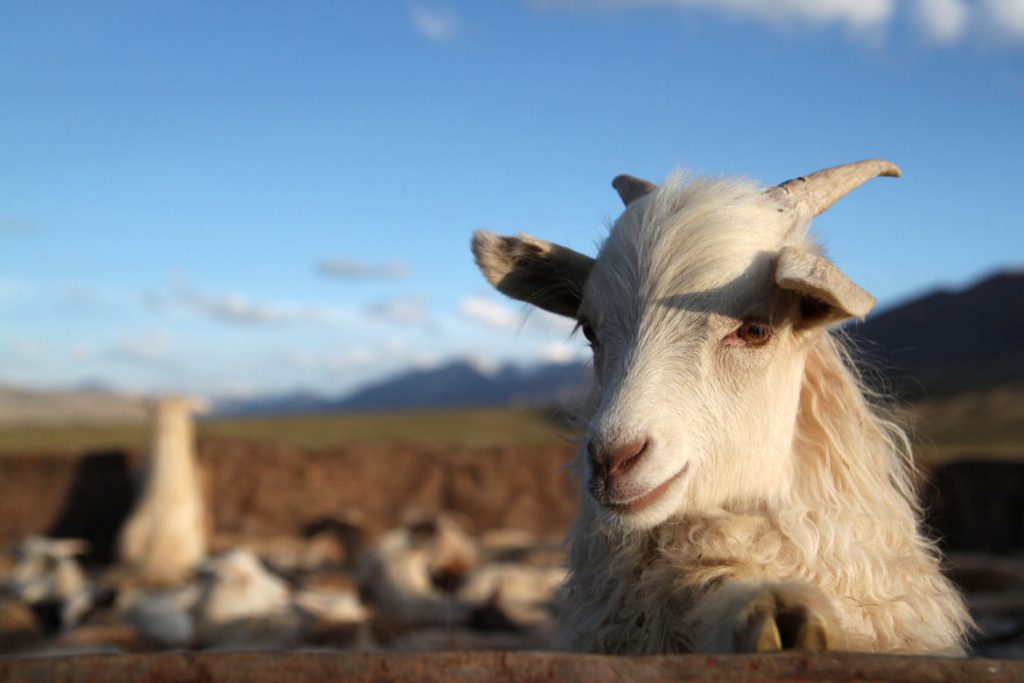
The nomadic tribal population which resides in the Ladakh, in the Changthang region rears a special rare goat species. The Capra Hircus also knows as Pashmina/Cashmere goat grows a fine fleece over its body over its underbelly, behind its ears, and over its neck. This wool is Cashmere. It keeps the goat warm and comfortable during the harsh winter that the region experiences. Raw wool is combed off the body of the Pashmina goat and is thoroughly processed to get rid of impurities and the guard hair. Guard hair needs to be separated for 100% pure Cashmere fibre. Dehaired Cashmere is later processed again, converted to yarn, and later to textile, apparel, or wrap accessories
How is Cashmere collected?
Cashmere wool is collected during mid-spring when goats tend to shed it naturally. It starts from March end to May. During this time, hormonal changes in the animal as well as the intense heat of the altitudes force it to shed the wool. Now the goat rubs itself with rough surfaces to get rid of some portion of this warm fleece. Besides, it is the summer season now, and warm fleece has started to make the animal uneasy.
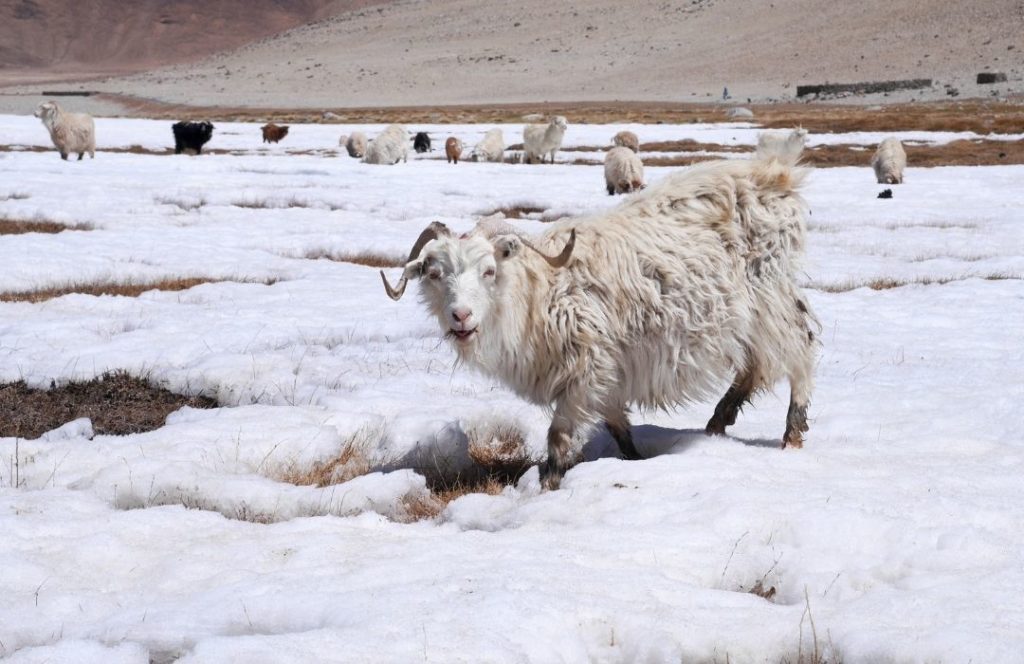
The Chandthang goats in the snow-capped Ladakh
This is noted by its herders who call for professional help. The animal is ethically treated and wool is combed off its body with specialized tools and combs by these professionals. Note that the wool is not sheared off its body, but gently combed off. When the entire wool is collected, it is sorted as per finesse. The goats now roam free. Pure Cashmere is later separated from guard hair and processed further.
Processing of the fine wool
Raw Cashmere wool is sent to Kashmir for further processing where women again clean it. They check for any foreign material or guard hair and send it for spinning only when they are sure about the purity of the wool. Pure wool is placed in a container filled with powdered rice for a few days. This makes the raw fibre more strong and more smooth. After the cleaning process, the wool is sent for spinning. Women spin the raw fibre on a wooden spinning wheel called 'yinder'. The spinning wheel helps to create long threads of Cashmere yarn out of the lump of cleaned wool. The threads are strung together and sent to the factory where large wooden handlooms await
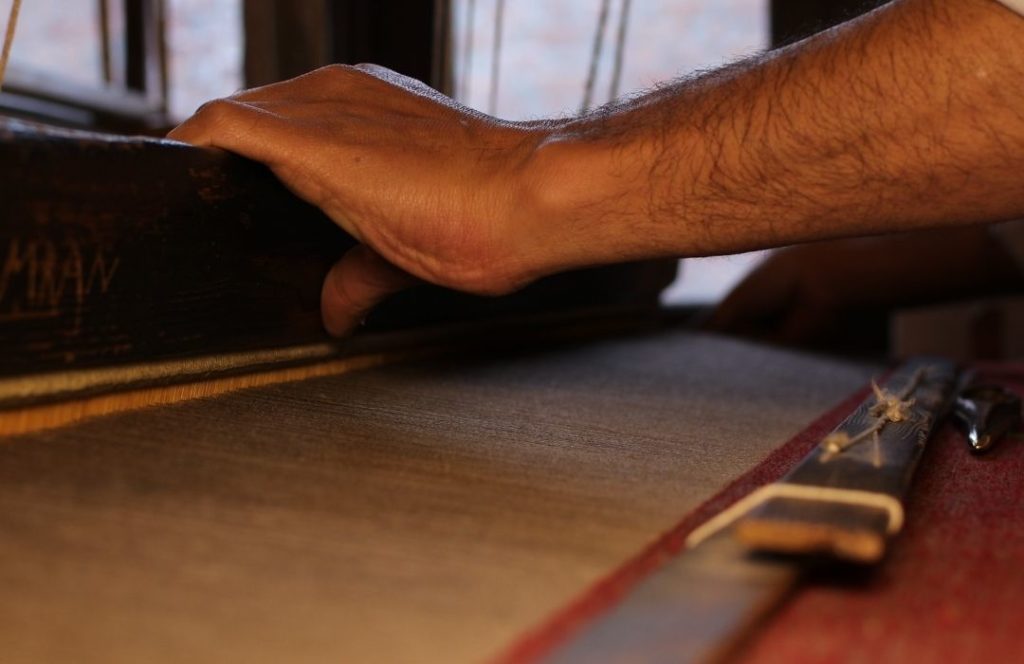
Weaving of Cashmere into a Pashmina shawl over a traditional handloom
Handloom is used to weave Cashmere yarn and produce fabric. The handloom too is made of wood and is more traditional, than modern, and more manual than mechanical. Manual work is done by 2 to 3 men. As soon as threads of raw wool arrive, they are mounted on the loom heddles and two or more workers start with weaving it. One wrap of 100 cm breadth and 200 cm length is done in three to four days, and this is the world-famous Pashmina shawl. It is sent for finishing, embroidery, washing, and ironing, and hence the entire shawl gets ready from early summer to starting winter. It is late September when the sale of these Pashmina starts.
Embroidering a Pashmina shawl
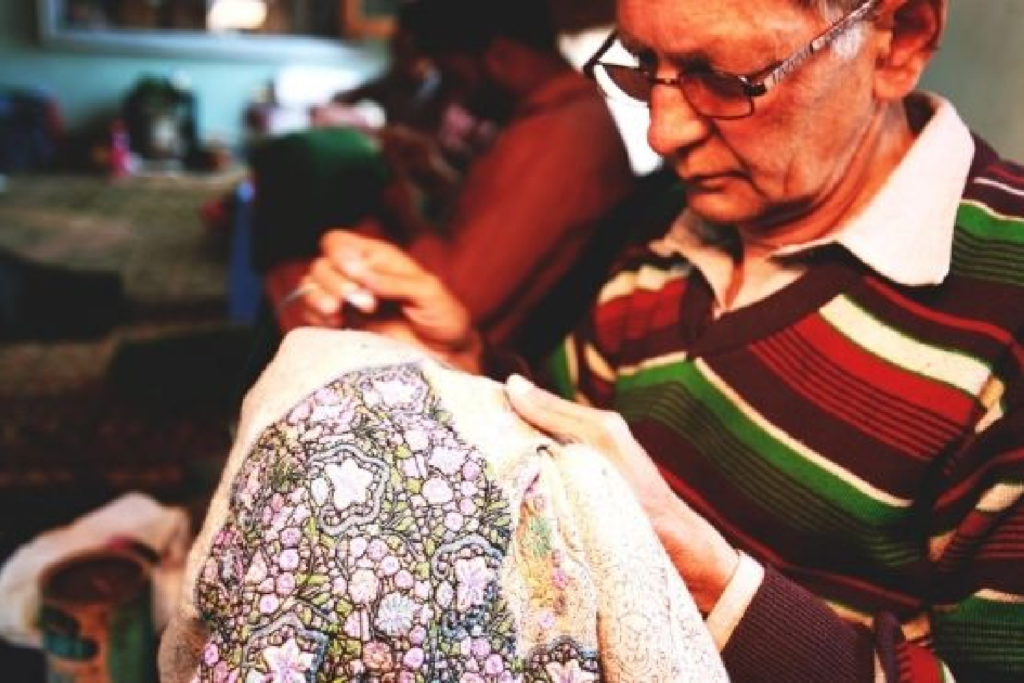
A Kashmiri Artisan hand embroidering a Jamawar Pashmina Shawl
Embroidery artisans are a different group of craftsmen, who work in an exceptionally meticulous fashion. Embroidery to be done on a Pashmina shawl takes a few months to years together, depending upon the design and quantity. Jamawar shawls usually take 3 to 4 years, while a Kani Jamawar might even take 5 years to complete. For this reason, Kashmiri Pashmina shawls are considered the best, and higher on the price scale. It is pure manual labour, which goes into making every single piece. From start to end, there is no mechanical help from any sort of machine, and hence the end result is pure and magical.
When the popularity of Cashmere rose to its zenith in the 19th century, many fraudulent traders started making cheap copies. This led to a downfall in the making of pure Cashmere wraps as cheap copies were sold for less. Hence customers got lured to them. No foreign strengthening material would be used in it. After the advent of power looms, Cashmere wool would be mixed with strengthening nylon or silk to make it eligible for the wear and tear of the machine. The scarves, hence, would be an amalgam of a number of materials and not pure. 100% Cashmere scarf is 100% pure scarf, which is handmade and there is no interference of machine.
Is this luxury wool from Kashmir?
Cashmere production is the largest in China, which is followed by Mongolia. But the quality of Cashmere coming from these areas is nowhere close to the Cashmere from Kashmir. Kashmiri Cashmere is rare, finest, and hence expensive than the others. One Pashmina goat of Ladakh produced around 150 grams of this wool per year, and hence it takes 3 to 4 goats to make a Pashmina shawl. The Changthang area and its atmospheric conditions are ideal for Cashmere growth. It is said that if the goat is shifted to an area just some kilometres away from Changthang, it wouldn't grow Cashmere as fine as it grows the same in Changthang. The perfect conditions for the growth of exceptionally smooth, fine, and warm wool is the area itself.
The History of Cashmere
Cashmere has a long history when it comes to its discovery and usage. It is today is produced in a number of parts of the world, especially those where the mighty Himalayas lie. But this hasn't always been the case. Pashm, the term used for Cashmere wool which literally means soft gold, has been in use since the 15th century in Kashmir. It was the then King Zain ul Abideen, who ordered starting a number of manufacturing units for Cashmere, and assisted these by bringing craftsmen from Persia.
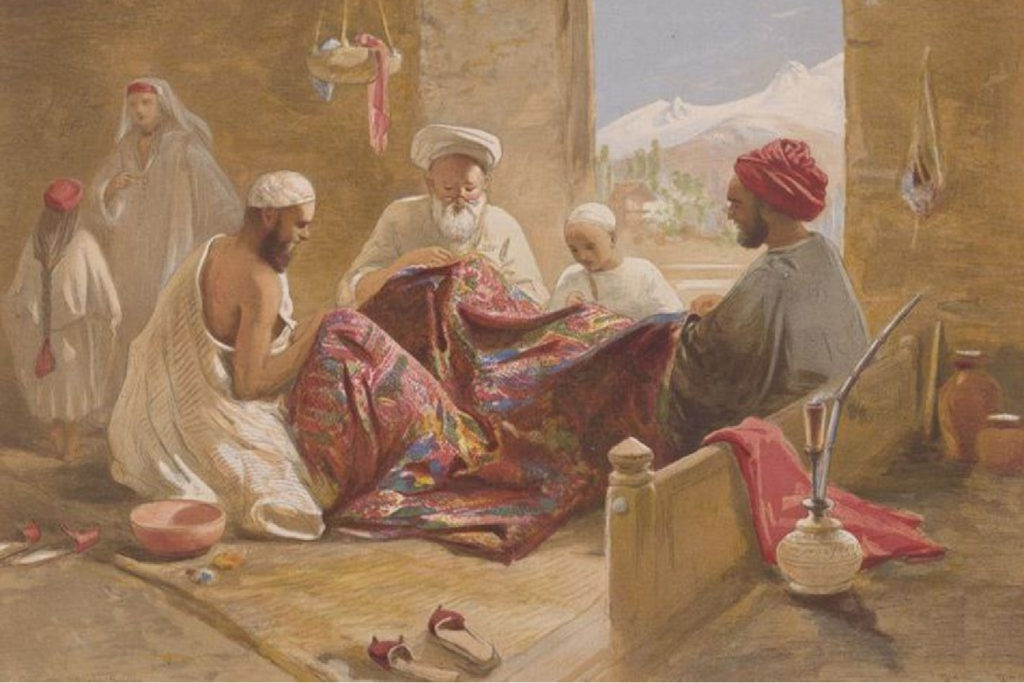
A Muslim shawl-making family shown in Cashmere shawl manufactory, 1867, chromolith., William Simpson.
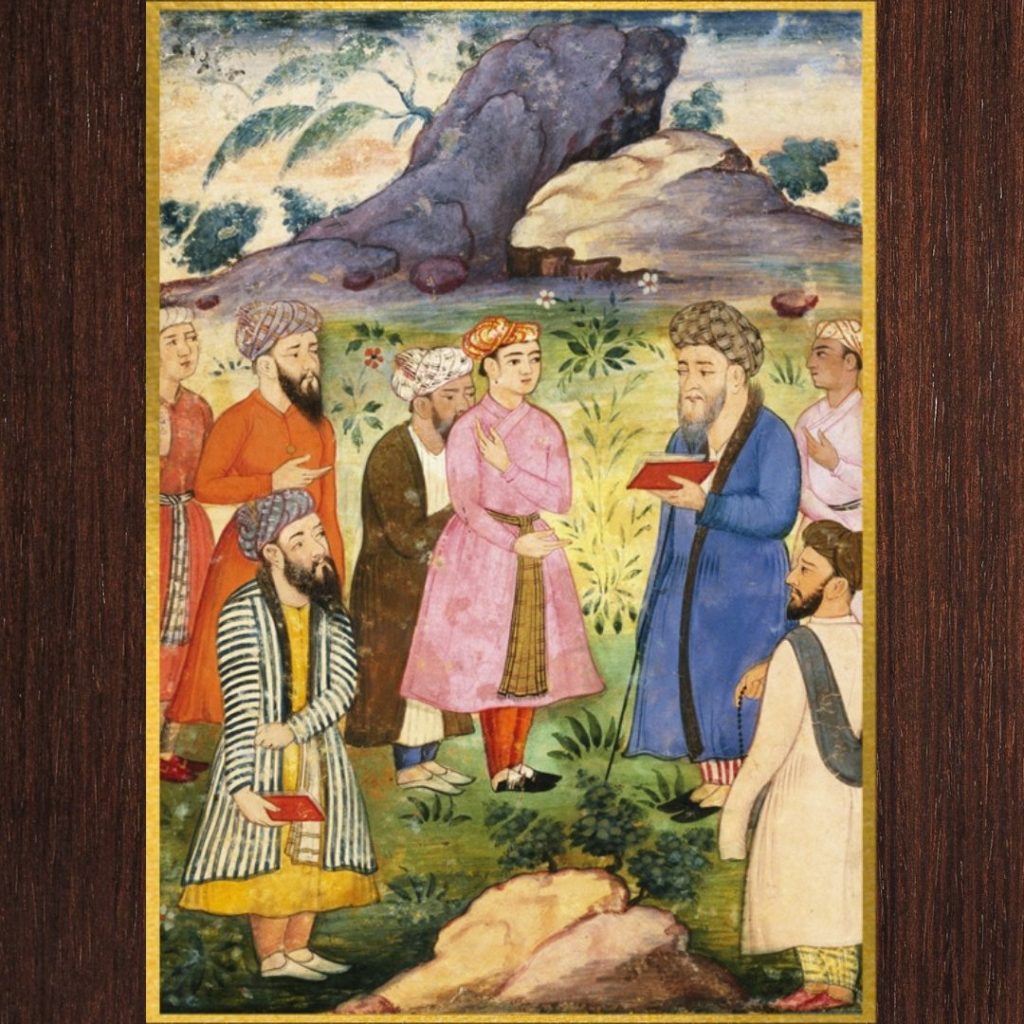
What actually happened is that the famous 14th century Sufi Saint by the name of Mir Syed Ali Hamdani discovered this supremely soft and luxurious wool in Ladakh. As he found it to be perfect, he ordered socks to be made out of it. When the socks were complete, he gave them as a gift to Zain ul Abideen, who ruled Kashmir back then. The king was so delighted and impressed with the high quality and softness of the socks that he immediately ordered its processing to be done in Kashmir. Around 700 craftsmen came from Persia and trained local Kashmiris in processing Cashmere. Spinning, weaving, and embroidering were taught to locals, and ever since, families depended on these crafts for a living. This was the start of Cashmere manufacturing in Kashmir, which later spread all over the world.
Trading Cashmere
When Europeans came to know about Cashmere, they at once ordered some pieces to be traded between the nations. Raw Cashmere would be imported from Kashmir, and was first used by France to create copies of Pashmina shawls. French Cashmere shawls were differently patterned as compared to Kashmiri shawls. Pashmina shawls arrived first in Paris, and instantly became the most sought after, and expensive, status symbol of the time. Cashmere was purchased by women from the wealthy upper classes, who would keep themselves comfortable pairing war Cashmere shawls with short-sleeved, high-waist dresses. But the highlight in the history was the obsession of Empress Josephine, first wife of Napoleon of France, who supposedly owned hundreds of Cashmere shawls
Cashmere produced in Scotland
In the 1800s, after Cashmere took over the fashion world in France, it started moving towards Scotland. In fact, the art industry in Scotland put prize money for the first person to produce Cashmere yarn in the country. Later, large production of Cashmere began in the country, especially in the town of Paisley. The town became a huge success in manufacturing Cashmere and a motif was named after it. Some believe that the motif was even invented by the Scottish craftsmen.
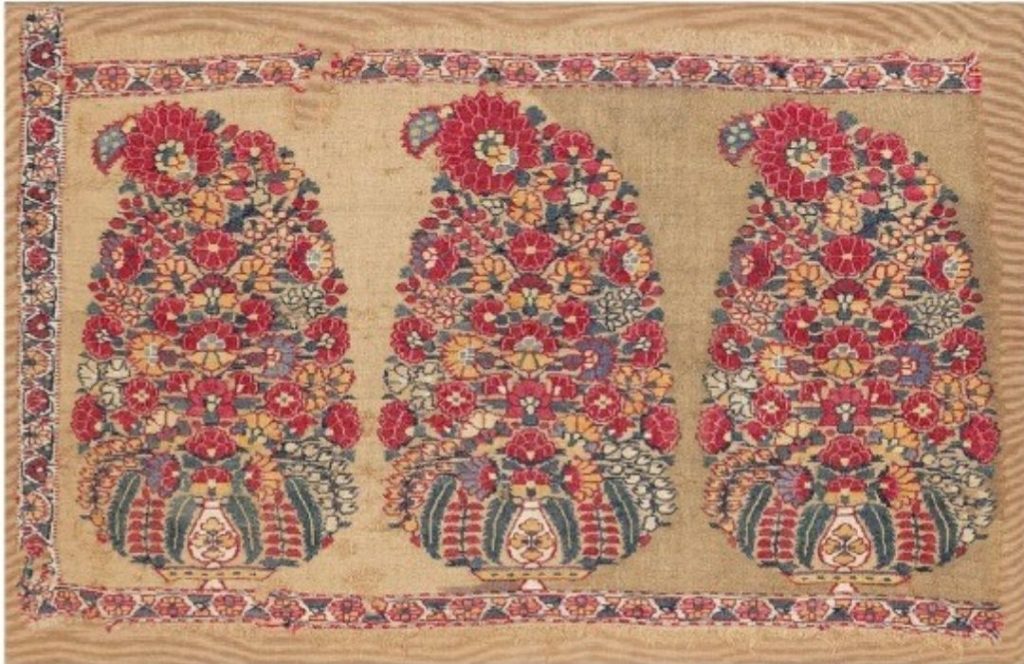
A shawl stands tall in the Metropolitan Museum. It is a European Cashmere shawl, which is an imitation of Kashmiri style. It has the Buta motif covering its borders, which some consider is the Paisley motif from Scotland.
Fragment of a Kashmiri Shawl from the late 18th century on display at Ashmolean Museum, University of Oxford
After some years, Europeans started manufacturing Cashmere blends. Manufacturers mixed pure Cashmere yarn with cotton, silk, or sheep's wool, and sold these at cheaper prices to be afforded by the common man. This was basically to cut Kashmiri Shawls from the market and promote their own product. While the actual patrons of pure still purchased shawls from India, due to them being authentic and of superior quality.
Reply to European Copies by Kashmir
When Europeans copied almost all styles manufactured in Kashmir, the local artisans replied by creating new and unique styles in the industry. They invented a new shawl which was made of patches sewn together. Another type of shawl was the AMLI shawl, which wasn't Pashmina but a simple cotton shawl. It had a cotton base, which was fully embroidered in colourful threads.
French craftsmen used a new kind of loom, called the Jacquard loom which automated the weaving process much. With the Jacquard loom, it was possible to weave complex patterns of flora, fauna, architecture more quickly and efficiently. Soon Scottish craftsmen used Jacquard loom and manufactured their own production. The introduction of new patterns of shawls in Kashmir, as well as Europe, made the shawl industry flourish like never before.
Decline of the shawl industry
Fashion doesn't remain for long. And that is what happened to all these Cashmere shawls. Women's preferences changed, and soon this mass production of shawls attained a low. Something similar happened to the Kashmiri Cashmere industry. Their first door closed when Europeans changed their preferences. Soon demand declined, and artisans went jobless. Locals, too, weren't interested in wearing Cashmere due to its high prices, and declining quality. Hence Cashmere began to be seen lesser and lesser, and the trend perished soon.
Revival of Cashmere in Kashmir
When some manufacturers gauged the flourishing of the Pashmina trade amongst Europeans, they started to malign it. The power loom was introduced, and now shawls were being woven over the power loom. To bear the strain of the machine, Cashmere was mixed with nylon, silk, or sheep wool, and the end product would thus be a blended Pashmina and not the pure one. But the sellers would sell it as pure Pashmina and take home the prices that one would pay for the purest shawls. Soon audiences realized they had been cheated when shawls weathered within a few years (pure Pashmina lasts for over 20 years) and stopped buying Cashmere shawls. They were of the opinion that the quality of Cashmere has diminished.
So many pairs of connoisseur hands come together in the making of a Pashmina shawl which looks nothing less than a marvel in itself
But soon, the real admirers of classic fashion came to rescue Pashmina as well as its makers. Pashmina.com is one of them. They gave people the knowledge, as well as offered purest Cashmere, made Pashmina shawls in their collections. Now audiences know the difference between machine-made shawls and handmade shawls. Pure Cashmere can only be processed manually, as it is delicate, and cannot bear the wear and tear of the power looms.
We being ardent admirers of Pure Cashmere shawls feel that such questions are really important to be asked. Because when you fully know what a treasure Cashmere is, you will definitely invest in one piece at least. Here are a few reasons to buy Cashmere Wraps:
Cashmere is one of the warmest fibers in the world. It has amazing insulating properties, and it is eight times warmer than sheep wool.
Cashmere shawls are versatile and have adapted to modern styles. You can have plain solid Cashmere shawls, striped and printed ones, and embroidered heavy keepsakes too. These are perfect for every occasion.
Cashmere is sustainable. It is a natural fiber, doesn't use any machines in its making, isn't cruel in its acquisition, and many other reasons that make it a responsible buy.
Cashmere is warm, yet lightweight. It is so light that one full shawl is around 300 grams (solid). This makes it an ideal accessory for working women, as they would never want to wear an uncomfortably heavy wrap at the workplace
Cashmere shawls make ideal gifts for even those who have everything. These are souvenirs from the past, and hence make a beautiful gift for those who mean a lot to you.
Cashmere shawls are unisex. These can be worn by men too and carry a dapper look. Men's shawls are just a bit longer and wider, but stoles are almost the same measurement as women's are
Cashmere shawls bind you to your traditions. You are connected to your roots, and gradually discover how beautiful traditions are
We love Cashmere
For the solid pieces worn to offices, to animal prints for casual days off, from striped scarves for client meetings, to reversibles for semi-formal functions, from embroidered shawls for a best friend's wedding, to a Kani Jamawar when you are the bride, Cashmere is the ultimate luxury you can have. From the mighty Himalayas to your wardrobes, this treasure goes through hundreds of hands, who pour their love and best wishes into each fibre that encompasses a luxury shawl. About 10 to 12 households survive because of one shawl you wear, that's how treasured it is. Not only its warmth and softness make it special, but how it contributes to society makes it irresistible.
We are totally in love with Cashmere. Are you yet?
If there is any product in the world that makes one nostalgic about Kashmir valley, it is pure Cashmere. Cashmere comes from the mighty ranges of Kashmir. Changthang, a region in Ladakh, is an all-natural ecosystem. Here, perhaps nothing man-made is seen on the first looks of it. Snow-clad mountains, fresh air, arid regions, and plains dry and dirty. Yet nature has blessed this concealed part of the world with a treasure that no developed region in the world can produce; artificially or naturally. It is the gift of Cashmere.
What is Cashmere?
Cashmere is a variety of wool that is obtained from Pashmina goats found in Ladakh. Pashmina goats, also known as Changthangi goats, grow fine, soft, and extremely warm fleece on their bodies. This helps to survive the exceptionally harsh temperature that the region experiences. The fine wool is ethically acquired from the goats and used to make luxury textiles for centuries now. The best and the most famous use of Cashmere is the making of the Kashmiri Pashmina shawl. It is the same shawl that crossed all boundaries of the world to be owned by royal families in Europe, Asia, Australia, and America. The reason was the softness, smoothness, and finesse of the Cashmere fiber which was 1/4th of the human hair in diameter. It began to be used as shawls, apparel, and upholstery items for the royals and their courts.
The most famous use of a Pashmina shawl is its ownership.
by Empress Josephine. When her husband Napoleon came back from a war, he discovered the royal wraps on his way back. He decided to give one to his wife (a Kani Pashmina shawl) as a gift, and she was absolutely fascinated by it. Later it is believed that she ordered a few hundred Kani shawls for herself and her royal acquaintances. All of them were equally pleased and delighted with its utmost finesse, grace, and comfortable feel.
Cashmere wool is obtained from Ladakh. The nomadic tribal population which resides here in the Changthang region rears a special and rare goat species. The Capra Hircus, also known as Pashmina/Cashmere goat, grows a fine fleece over the sensitive parts of its body. It includes the goat's underbelly, neck and the back of its ears, etc. This wool is Cashmere, but it is still to be processed and sorted as it is right now mingled with thick guard hair. Guard hair needs to be separated for 100% pure Cashmere fibre. Dehaired Cashmere is ready to be further processed, converted to yarn, and later to textile, apparel, or wrap accessories.
The Ladakhi Cashmere Goat
Cashmere is special, to us as well as the goats. The Changthang region witnesses temperatures as low as -40 degrees. The area is isolated and harsh enough to not provide any kind of relief from such cold. Humans live together in small tent-like structures, leaving the goats all alone in the freezing cold. But as they say, nature has its own way to balance things. Cashmere wool growing on the goats is so warm, and they hardly require any other shelter from the cold. It keeps them warm all winter long until their moulting season arrives and they decide to shed this coat naturally.
How is Cashmere obtained?
Cashmere wool is collected during mid-spring when goats tend to shed it naturally. It starts from March end to May. During this time, hormonal changes in the animal force it to shed the wool, and the goat rubs its body with rough surfaces to get rid of some portion of this warm fleece. As such Cashmere remains are found on rough stones, thorny bushes, the floor of their sheds, rough walls, and other nearby areas where the goat has rubbed itself. Herders call for professional help, and specialists arrive with tools, and combs, and other required equipment.
The goat being domestic and well acquainted with the procedure surrenders peacefully to the specialists, and the combing process starts. First, the larger parts like the belly and back are covered and then the smaller areas are combed. The hair, still full of dirt, dust, and foreign material is packed in small pouches which the professionals carry along. It is sent for cleaning.
Raw Cashmere wool is sent to Kashmir for further processing where women again clean it. They check for any waste material like vegetable waste, grass, dirt particles, or guard hair and send it for spinning only when they are sure about the purity of the wool. This process takes a few days as perfection is required.
After the cleaning process, Cashmere wool is sent for spinning. This is done by underprivileged womenfolk of the valley who come together from remote areas and work together. Women also have the option to work from their homes and bring their finished material to the required places. For this reason, the art of Cashmere making (Pashmina) has been nearly worshipped by locals, as it has been the source of income for women many centuries ago.
Spinning and Weaving
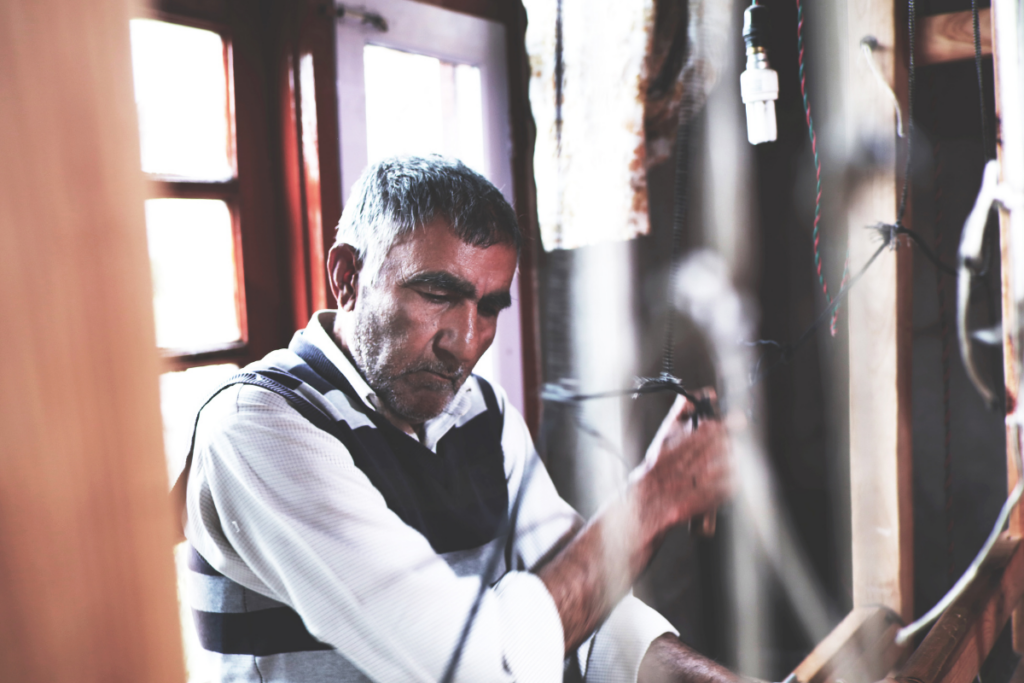
Women spin Cashmere on a wooden spinning wheel called 'yinder'. The spinning wheel helps to create long threads of Cashmere yarn out of the lump of cleaned wool. The threads are so fine that one can barely see them from a distance. The diameter of these threads is 12 to 16 microns, and are so gentle that they can be broken by a slight moment of the hand. Pashmina threads are now strung together and sent to the factory where large wooden handlooms await. Handlooms are maintained and worked upon by men, as these need extra strength as well as a large space which isn’t possible to create at home
A Kashmiri artisan at work
Handloom is used to weave Cashmere yarn and produce fabric. The handloom too is made of wood and is more traditional, than modern. Hence more work is done manually on it. As soon as threads of Cashmere arrive, they are mounted on the loom heddles and two or more workers start with weaving it. One wrap of 100 cm breadth and 200 cm length is done in three to four days, and this is the world-famous Pashmina shawl. It is sent for finishing, embroidery, washing, and ironing, and hence the entire shawl gets ready from early summer to starting winter. It is late September when the sale of these Pashmina starts.
The demand for these luxury pieces is always the same. Not just locally, but international sales, too, surge when the season of Pashmina shawls starts. Orders start coming from as far as Europe, and sellers make sure to spread the love of local artisans to the entire world.
Embroidery and Finishing
Solid pieces are ready yet unfinished. These are taken to another group of artisans who give finishing touches to it. These processes include removing extra fibres from the shawl which get attached to it during the weaving process. Cutting of fringes, washing, and ironing the shawl are other practices that are carried out for a better look of the entire shawl.
Handwoven over traditional wooden handloom, the shawl features the unique Kashmiri Paper Mache embroidery which bequeaths a shower of paisleys over the lavish Cashmere base
After the solid shawl is ready it is sent for embroidery. A set of artisans, specialists in their work, start embroidering the shawl in a number of patterns and types. A Cashmere shawl takes three main types of embroidery.
Sozni Kari
A fine thread and needle work, which is done all over the shawl, or just its borders. Sozni Kari is the most used embroidery style for Cashmere shawls and scarves. The reason behind the popularity of Sozni is its lightweight and fineness that the delicate Cashmere base can hold. Sozni embroidery artisans make sure to embroider such patterns that do not feel heavy for the fine base underneath. As such Jaalidaar, Jamawar. Botadaar, and Dordaar patterns are the most widely used patterns.
Papier Mache embroidery
A thicker version of Sozni Kari which can be done anywhere in the shawl, including covering the entire base. Shawls, covered in this embroidery, look magically beautiful as the thick and colourful embroidery threads look dazzling over pastel bases of the Cashmere fabric. Papier Mache Shawls are the ones which are at times used as a last piece of wrap for a bride, which she wraps over her head before stepping out of her maternal home.
Tilla Dozi
Tilla Dozi is the royal embroidery pattern which uses metallic threads dipped in real gold or silver to create exquisite patterns over a Cashmere base. It is usually done on the borders of the shawl as the metal thread might pierce through the fine base. Tilla Dozi has been Mughal favourite ever since its inception. Mughal rulers in India used to embellish their furnishings too with Tilla to make it look regal and posh.
After embroidery, the shawl is washed again, sun dried, and ironed. This a final masterpiece is ready to adorn the shoulders of those who have a royal taste of accessorizing.
When the popularity of Cashmere rose to its zenith in the 19th century, many fraudulent traders started making cheap copies. This led to a downfall in the making of pure Cashmere wraps as cheap copies were sold for less. Hence customers got lured toward them.
An earthy aroma of the picturesque winter landscapes of the Paradisaical Kashmir valley is caught in the fine weaves of this luxurious Cashmere wrap
After the advent of power looms, Cashmere wool would be mixed with strengthening nylon or silk to make it eligible for the wear and tear of the machine. The scarves, hence, would be an amalgam of a number of materials and not pure. 100 Cashmere scarf is a 100% pure Cashmere scarf, which is handmade and there is no interference from the machine.
Is Cashmere worth buying?
With a heavy price tag and a single season use mostly, people often ask “Is it worth buying Cashmere, or are we just wasting hard-earned money”? Well, we would suggest buying a Cashmere wrap, because you will be shopping for winter anyway. There are a lot of reasons for that.
Cashmere is rare
Cashmere comes from the Changthangi goat which is a rare species. Some goats producing Cashmere are found in other parts of India and China as well, but Cashmere sourced from this particular goat is the best in finesse and warmth. Again, it takes a wool of 3 to 4 goats to prepare one pashmina shawl, hence adding more its rarity and exclusivity factor.
The highest quality Cashmere is found in Ladakh. This makes Ladakhi Cashmere rare and worth buying.
Just a few goats, which are the healthiest, are chosen for Cashmere production, adding more to the rarity factor. Rarity and exclusivity makes Cashmere a luxury product that everyone deserves to experience at least one in their life.
One goat produces just 150 grams of wool as an average. This makes it even more exclusive.
The demand for Cashmere is always higher than its supply. This creates a sense of competition amongst buyers making Cashmere one of the most exceptional and unique.
Versatility and Luxury
Cashmere is versatile enough to be worn to your office, a formal lunch with a client, a night out with friends, and attending your child’s school functions. That is because it is lightweight, elegant, and comfortably warm. It has insulating properties, which makes it 8 times warmer than sheep wool, yet extremely breathable and fine. Being unsurpassable soft, and beautiful, this piece well deserves a higher price than its counterparts.
Cashmere is considered synonymous to luxury. When it comes to Kani Cashmere scarves or Kashmiri Do Rukha Pashmina Shawls, one feels like wearing a piece of art.
The best quality, handmade Cashmere shawls take years to complete. The final product is just marvellous. This makes it a luxury to own, and a number of women claim to save for months together to own this luxury for once in their lifetime.
The versatility of Cashmere shawls is unbelievable. These can be used as shawls, as usual, to keep one warm. Other than that Cashmere scarves have been worn as capes, tied to the wearer’s handbag as a bag accessory, used as throws if large in size and even used as baby blankets when temperature dips.
One can wear Cashmere scarves with ethnic as well as western apparel, given the myriads of patterns it has introduced. Usually, embroidered and Kani wraps are preferred for ethnic outfits while as prints, patterns, swarovski embellished and the like patterns are chosen for western outfits.
Cashmere is timeless
Pure Cashmere, when taken proper care of, lasts for an entire lifetime. For this reason, mothers in Kashmir, give their own Pashmina shawls as gifts to their newlywed daughters as tokens of good luck. And the pieces are sometimes 30 years old. This definitely contributes to the slow fashion drive, which in turn leads to sustainability and betterment of th environment.
The timelessness of Cashmere is evident from the fact that since its inception in the 15th century, its demand hasn't dropped a bit. Empress Josephine wore it with the same vigour as will a woman today.
It is absolutely worth buying Cashmere, and we can make it out from the fact that since the 15th century, there has been no changes to the patterns or designs when it comes to embroideries, but still women adore it as much as they did back then
As many patterns as several dynasties introduced in the making of Cashmere wraps or apparel, none has been lost. Every embroidery pattern, every modern tryst, every new design has been saved. For this reason, the realm of Cashmere making kept expanding, and everyone could find a piece for himself, as if customised. This kept Cashmere in demand continuously
Manual Labour
No stage in processing Pure Cashmere includes mechanical processes. The sourcing is manual, as combing is done to acquire Cashmere from the goat. Then cleaning as well as spinning is manually done by womenfolk. Later weaving, as well as embroidery, is done by men and women without the use of machines. Hence the final result is a product of hard work, meticulous efforts, and the immensely skillful tact that Kashmiri artisans are known to have. Cleaning and spinning take weeks, then weaving another 3 to 4 days, and embroidery takes a few months to a few years depending upon the type and amount of the same to be done.
It's an uphill climb to prepare large yet fine fabric from lumps of wool that are mixed with immense amounts of dirt and waste when it comes from Ladakh (or any other Cashmere producing region. Transforming those dirt filled sacks to luxury fabric is an art in itself. And Kashmiri artisans are masters of this art
At times, it takes 4 to 5 years to complete one Cashmere wrap. But never has an artisan complained about the long hauls they spend working on luxury Cashmere shawls. The makers love their work as much as the takers love to wear it.
If a Cashmere is not made from manual labour, but mechanically, it's truly a waste of an art form. Machines tend to ruin the delicate fibre of Cashmere and in order to retain the same, harsh chemicals are used. These chemicals shorten the life of Cashmere, which otherwise stays for a lifetime.
Sustainable
Cashmere from its acquisition to processing is all sustainable. There is no wastage of the fibre as it is long-lasting, there is no pollution caused because of zero involvement of machines. Besides, Pashmina shawl making is usually done by underprivileged artisans of the valley, and hence this is their only source of income. Therefore if we invest in Cashmere, we will indirectly be helping a household survive. Also, with regards to the sourcing of Cashmere, the process is completely ethical and no animal is harmed during the entire combing process.
The world of today craves for sustainability. With machines all around causing more harm than good to the planet, something natural is considered out of the ordinary. In these times, Cashmere is something that has a sustainable base. It comes from manual labour and ethical acquisition.
Sustainability adds to the versatility of Cashmere wraps and shawls. On one hand, it is adored by women who do not care about ethical shopping or responsible buying, and buy Cashmere just for its grace and warmth. On the other hand, careful shoppers and responsible individuals, too, opt for ethically sourced Cashmere, where animal cruelty is nil, labour is manual and employees are treated and paid well.
A gift for those who have everything
We all have a certain friend, colleague, or relative who has almost everything in life. From designer clothes to accessories, they own it all. The problem is when it is their wedding day, or birthday, it is really hard to give them a gift. This is again when Cashmere will help. Kani Pashmina shawl of Kashmir, which takes around 3 to 4 years to complete can be a good gift choice for these extravagance lovers. You can even give them a plain solid black scarf, or a lightly embroidered stole, and delight them with its traditional grace.
Wool from the goat is collected in late Spring to the start of the summer season, as the sale has to start in winter when Pashmina is required. Moulting is season-specific, and processing mills have to wait for an entire year to receive the raw material. Hence the limited production of Cashmere makes it more valuable.
A Pashmina shawl covered in large motifs with wide spaces to be filled with embroidery
This delay is in turn forwarded to customers, as they too have to wait for a few custom-made shawls to complete. Sometimes elaborate embroidery shawls take 4 to 5 years to complete. As soon as such pieces reach the market, they sell at a quick pace. Hence customers have to keep in mind this demand and be quick in their Cashmere wrap shopping
Rarity, exclusivity, finesse, beauty, and exceptional warmth make Pashmina shawls, and Cashmere wraps, scarves worth every penny spent for them. But the question remains of purity. Always buy pure Pashmina shawls. Ask the vendor for a certificate of purity or look for the GI tag. Make sure your investment is going for the right thing.
The grand display of draperies was already common in the Mughal courts. But it was travelers who gave it the current status. The making of Pashmina Shawl flourished under the patronage of the nobility. However, its reputation abroad too substantiated its importance all over India and the globe.
Sometime around 596-664 AD, the famous traveler Hiuen Tsang visited India. During this expedition, he wrote extensively on Indian costumes, mostly on the ones produced with goat hair. He spoke so richly of the shawl that the word spread like wildfire and gained momentum thereafter. Subsequently, during the fourteenth century, Ibn Batuta made his way to India from Arabia. For him, the Kashmir shawl served as a symbol of gift exchange. Especially between Emperor Shun of the Yuan dynasty and Mohammad Bin Tughlaq, the then Sultanate of Delhi. The Chinese ruler had sent across some expensive and embellished garments. But the Indian ruler sent cotton garments and a costume made of fine goat fleece. This sparked interest among others who came all the way to India in search of this ‘diamond fibre’.
A 1605 painting of Ibn Battuta
The coveted gift
The next important visitor was Francois Bernier, who was also Aurangzeb’s physician. He came to Kashmir sometime in 1655 and wrote a detailed account of shawl manufacturing. He spoke of two types of wool. Firstly the one procured from Tibetan goats and secondly from goats in Kashmir. Bernier also added about the presence of over a thousand looms that produce fine, soft shawls - Kashmir’s prized possession. The mass production of shawls was prevalent, but it also indicated its popularity. In fact, some believe that the Mughals were so much in awe of it that they formed the khi’lat, the robe of honour, which would be a gift for the ambassadors or royal people.
Love of Pashmina Shawls: From the Mughals to other nobility
During a royal ceremony in 1831, Mughal presented a young man with at least four or five dresses of honour. These were Pashmina robes. Obviously, the shawls allured him by the beauty and sheer opulence that the news of its quality spread all across. Apart from Kashmir, there were also other centres, including Patna, Agra, and Lahore. But everyone considered Kashmir the hub, especially for its fine quality of Pashmina shawls.
In 1783, a French traveler, Forster came to India. He believed that the wool came from Tibet and artisans from Tibet wove it with rich patterns. The floral shawl was undoubtedly way steeper than the regular ones. He considered it an important export item; so much so that he spoke in detail about its packaging and how it felt like. Following this, towards the end of the 18th century, artisans crafted Kashmir shawls in many sizes such as long, narrow, and square. Square shawls were more popular in the Indian market. Long and narrow shawls were mainly worn in the Northern Asiatic market.
Tales by Moorcroft
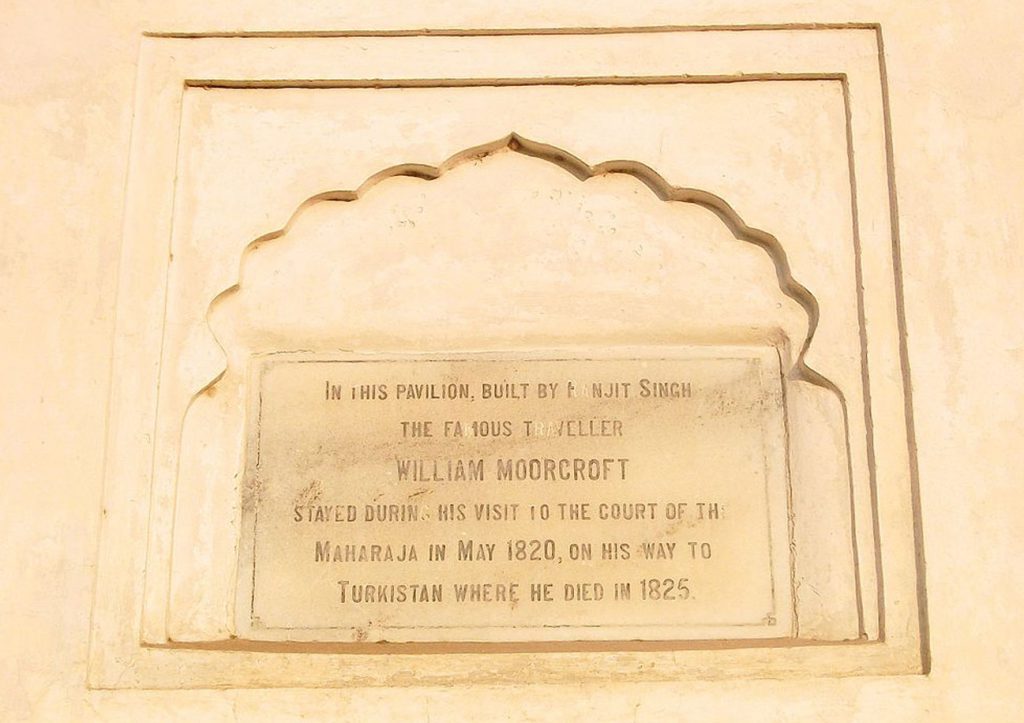
Moorcroft, one of the most popular travelers, came to India in the early 19th century. He spoke in detail about the shawl, both in Kashmir and Amritsar. He also observed that the red shawl yarn found in Amritsar came from Kashmir and this impressed him. However, Moorcroft was a little disappointed, since its export was banned to discourage the foreign manufacture of shawls. Moorcroft gives a full account of cleaning, spinning, dyeing, weaving as well as the techniques used. Note that this traveller well understood the labour that artisans give to create a single piece of Pashmina shawl.
William Moorcroft's plauqe in Shalimar Gardens, Lahore, where Moorcorft stayed in May 1820
Around the same time, even nobility from England and France visited the court of Maharaja Ranjeet Singh. There, they highly appreciated the Kashmir shawl. At this time, a British visitor, whom the courtsmen invited to the court, said the following:
“The floor was covered with rich shawl carpets and a gorgeous shawl canopy, embroidered with gold and precious stones and supported on golden pillars, covered three parts of the hall.”
In awe of the Pashmina
Madam Emily, sister of Governor-General Lord Auckland
Sir Henry Fane, who was the British Commander-in-Chief, was completely besotted with the dresses and jewels. He found these in one of the camps he stayed at in Kashmir. The camp was furnished and had shawls all around. Madam Emily, sister of Governor-General Lord Auckland, wrote beautifully of the court: “It reduces European magnificence to a very low pitch.”
Later, when Kashmir was handed over to Gulab Singh of Jammu in 1846, embroidery flourished at this point. Woven and embroidered shawls were in particular doing the rounds and being marketed for both the European and the far-East market. As a result, the English and French weavers started to imitate these designs.
The Value of Antiquity
It becomes important to understand the glorious history of the Kashmir shawl through archaeological and literary evidence. It was since those days a highly-valued item. The rulers and travelers who spoke richly of this shawl have largely contributed to the development of shawl making as well.
Till today, it whispers secrets of its antiquity that the world is fascinated with! In today’s contemporary world, the Kashmir shawls are reputed for their timeless nature and the classiness they possess. With a rich tradition that spans centuries, this fascinating textile art has captured the minds and hearts of people across the world. These are mostly patrons, who have an interest in art and antiquity.
While its value may be high, it is also lost in the market of imitation shawls. Fake shawls are doing the rounds everywhere, more than the original ones. Due to lack of knowledge and sometimes the affordability aspect, many buyers get sucked into this trap without realizing it.
In the last few decades, there has been a special interest triggered across classes in the antique Kashmiri shawls. These are considered a symbol of royalty & have shaken research scholars and art collectors in India as well as abroad. This is primarily due to its exotic nature that created a stir in the 18th and 19th centuries.
Though the term ‘shawl’ is commonly used, it is essential to understand its etymology. The word is derived from the Persian word shal, which translates into a fine woolen fabric, alternately called a drape. The Italian traveler Pietro Della Valle, in 1623, drew a comparison. The shal was worn as a girdle in Persia, while it was generally carried across the shoulders in India.
The shawl has a long history. Its existence can be traced to the medieval period. But there are archaeological findings & literary pieces of evidence that point towards its presence right from the Indus Valley Civilization.
It is believed that unstitched woolen wraps on the shoulders were already being used for warmth some 3500 years ago
Kashmiri Shawls - From the coffers of archaeology
We know goats & sheep are the sources of obtaining wool or fleece for making the most coveted products in the world. Although, there has been no woolen yarn that has been traced from excavations conducted in the sites of the Indus Valley Civilization. Yet there are some references that point toward Harappan culture. They show how Harappas were familiar with the use of wool in the same way as they were with cotton and silk yarn.
Little terracotta figurines of goat and sheep have been found from different Indus sites. These clearly indicate that these animals were reared and used for essentials such as meat, dairy products, and wool.
Interestingly, the excavation of dyeing areas in Harappa and Rakhigarhi points toward the intricacy of patterns on textiles. These motifs on utensils, pottery, and potsherds reflect Harappans' love for ornamentation and embellishment. Proof enough that a rich tradition of textiles existed during the Harappan period!
Apart from evidence in India, there have been traces found outside the country as well. These findings point toward the fact that Indian wool was much popular for its high quality between 300 and 400 A.D. It was in fact exported to other countries. The most significant specimens were found in parts of Syria and Egypt.
Palmyra in Syria was a major Roman outpost on the Silk Route and Antinoe was close to the great urban center of Alexandria. These fragments were all found to be made out of Indian wool. After doing in-depth research, it was found that they were crafted from a type of four-ended twills. The same was used to produce the famed shawls of Kashmir.
The specimen found at Antinoe replicated the three-end twills. Whilst the Palmyra one was even finer and denser with four-end twills. There is a Swedish textile authority that goes by the name of Ages Geijer. It pointed out that the woolen specimens from Palmyra appear to be of Syrian origin, while the wool seems to be sourced from Kashmir.
At the excavated site in Egypt, there were riding coats of oriental cut with patterned silk fabrics of Sassanian manufacture. This is said to be a significant discovery in the textile world in India. Looking at the fine material and pattern, it was assumed that these were imported readymade from the Sassanian Empire. The time period would be between 300 and 500 A.D. The primary material of these coats was a thin warp and a thick weft of soft and loosely spun Kashmir wool.
Apart from this, there are also references that hint towards these Kashmiri shawls being valued as gift items among the nobility. The Sassanian King Bahram I gifted one to the Roman Emperor Aurelian after the fall of Palmyra. This shows that high-quality Indian textiles were much in demand. And surprisingly the weaving pattern was in sync with the Kashmiri tradition.
During this period, the Sassanians had a great rapport with the Kushans. Kushans ruled the present-day Kashmir from the late 1st century BC to the 3rd century AD. This period was when trade flourished on the Silk Route between China and Rome. Some sources indicate that Kashmir wool, perhaps Pashmina, was among the Indian luxury goods that arrived in the Roman Empire.
Turning the pages of literature
As much as archaeological evidence exists about the Kashmiri shawl, there are Vedic texts as well as Buddhist, Jain, and other literature. All of them reflect a tradition of woolen textiles in India. Vedic literature speaks of the source of wool, its quality, quantity, and terminology used for wool or woolen fabrics. The Rig Veda and the Atharva Veda, often mention Avika or Avi, terms used for sheep during this period. The Atharva Veda also talks of Kambal, the generic term used for blankets and shawls.
Some interesting references are also found in the epics of Ramayana and Mahabharata. According to the Sabha Parva chapter in the Mahabharata, the Pandava King, Yudhishtir received several gifts from contemporary rulers. Out of the many items, the most valued were rankava woolen fabrics from the Sakas, who ruled Kashmir during that period. The Mahabharata also indicates that during this period, felts were made out of goat hair.
More Literature
Besides, the Jataka tales also speak of the kambal and rankavas and how they became more popular for dushala, chadar and other woollen fabrics. The literature of the Buddhist period also tells that these shawls were expensive. Sanskrit and Pali literature speak about rankavai as a term used for woolen goods, which was derived from ranku. Some identified it as the Himalayan ibex, while others believed it was the pashm goat, Capra hircus.
Jain literature, Nisithacurni, reiterates that shawls made of goat hair were used between the fifth and sixth century BC.
It becomes important to understand the glorious history of the Kashmiri shawl through archaeological and literary evidence since it was a highly valued item. The rulers and travelers who spoke richly of Kashmiri shawl have largely contributed to the development of shawl making as well. Till today, it whispers secrets of its antiquity that the world is fascinated with!