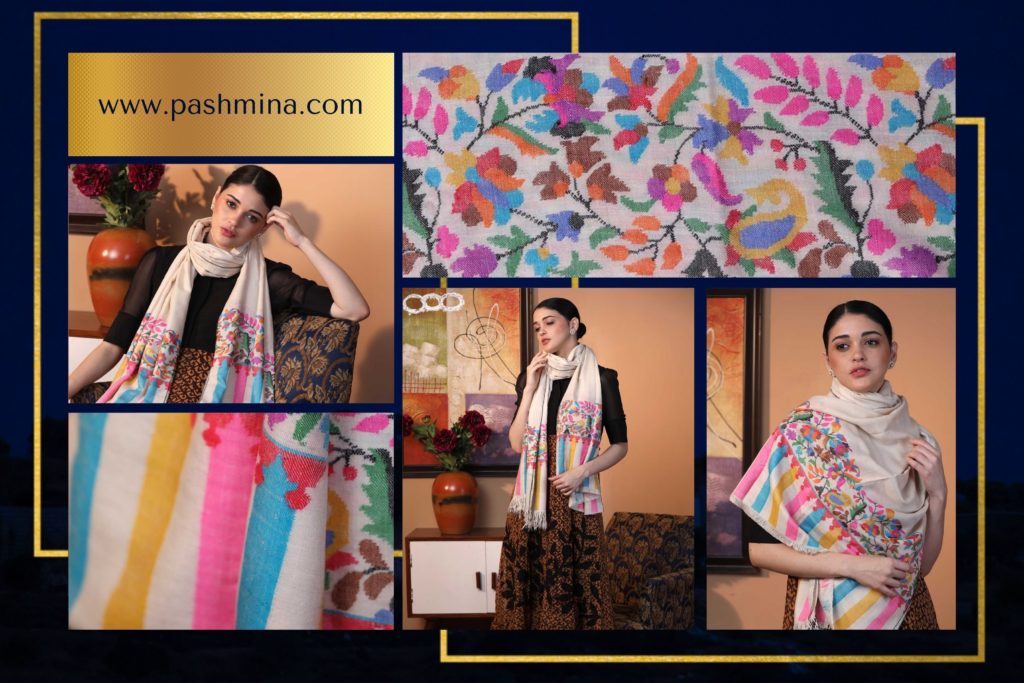
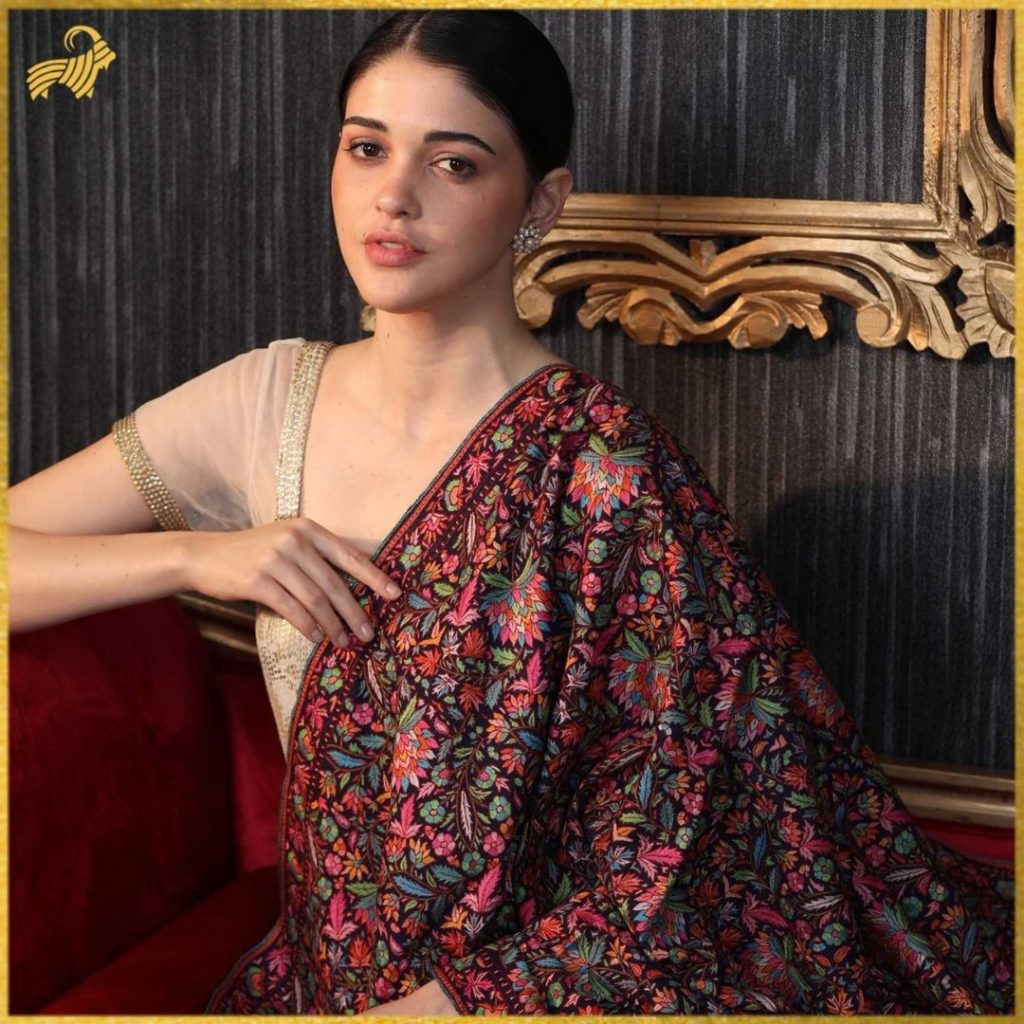
For centuries Pashmina shawls have been an essential fashion accessory for women worldwide. From French Queen Marie Antonette to British Queen Victoria, Pashmina shawls were seen as an essential accessory for those who were fashionable and wealthy. Pashmina products made for a treasured possession. Over the years Cashmere shawls continue to hold allure and charm for young people. The glorious years of Pashmina have given some serious fashion goals. Though the designs have undergone a change to adapt to modern sensibilities, you can still nail the retro look with a Pashmina shawl.
Here’s how you can get the retro look with pomp and show
Be red carpet ready: Pashmina fashioned with evening gowns
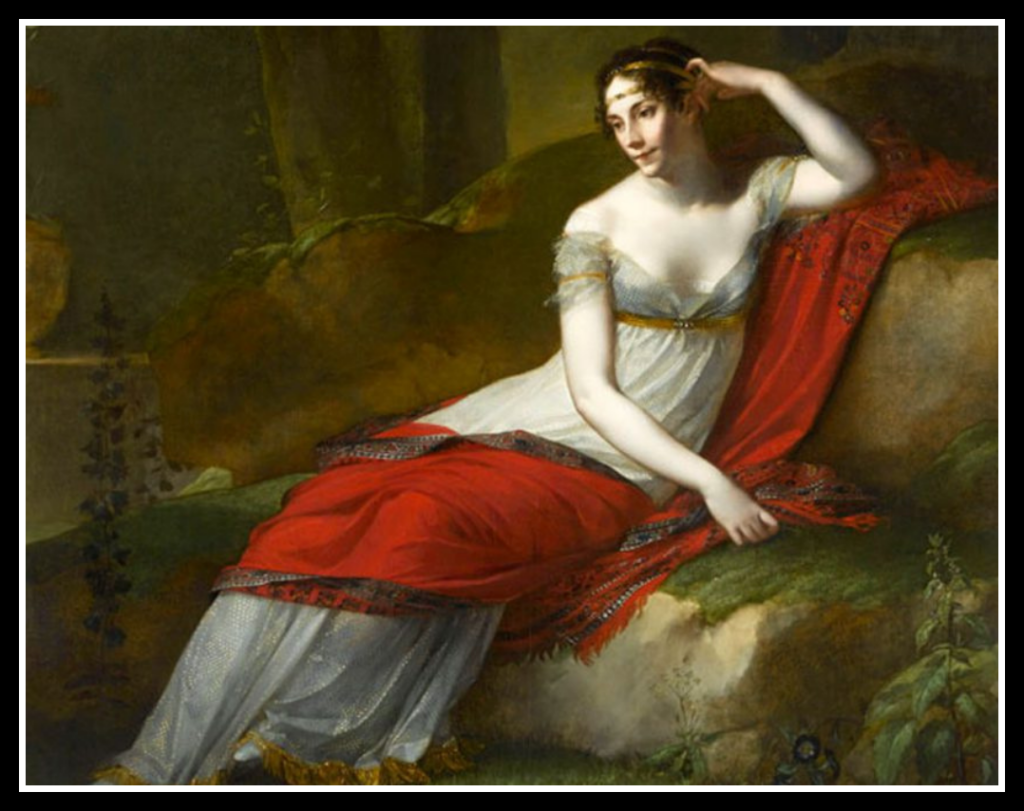
Empress Josephine in Kani Shawl
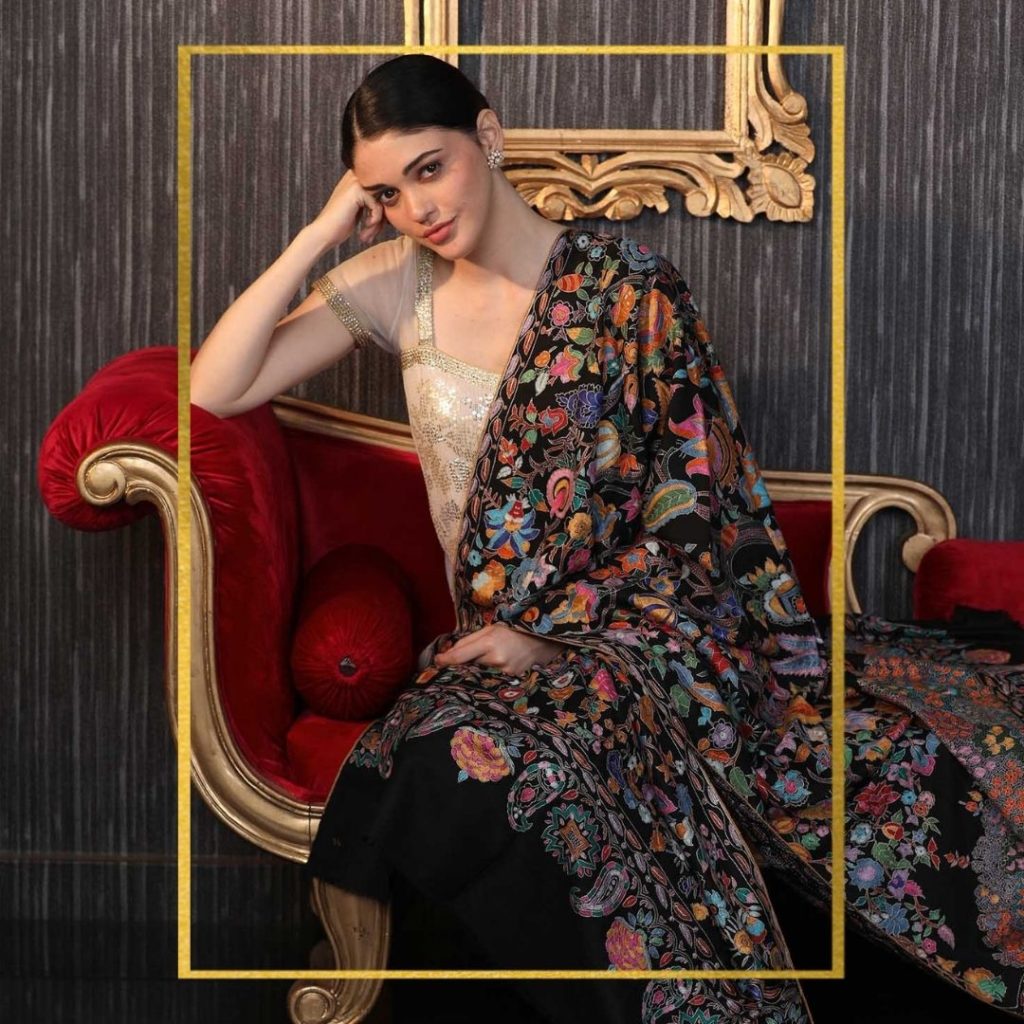
Over the centuries, the French Empresses and British aristocrats wore Pashmina shawls with their elaborate evening gowns. Known for their exceptionally lightweight and uniquely delicate texture, Cashmere shawls became a symbol of tasteful life. Pick an elegant evening gown and flaunt the retro style with a luxury Pashmina shawl on the shoulders. A Cashmere shawl will add visual interest to your evening wear. If you are going somewhere formal like a friend’s wedding reception or an office party, a decorative brooch will add the perfect panache to your look. A vintage hairdo like a bouffant will add glamour to your look
Style your hair with a Kashmiri wrap
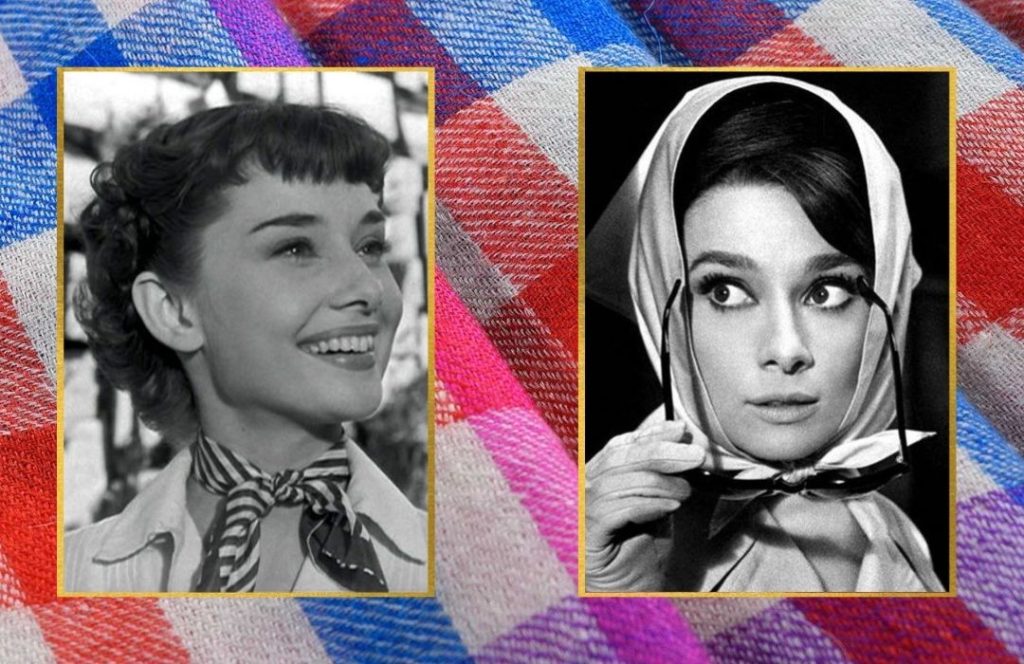
Audrey Hepburn’s scarf-around-the-neck look is just unforgettable
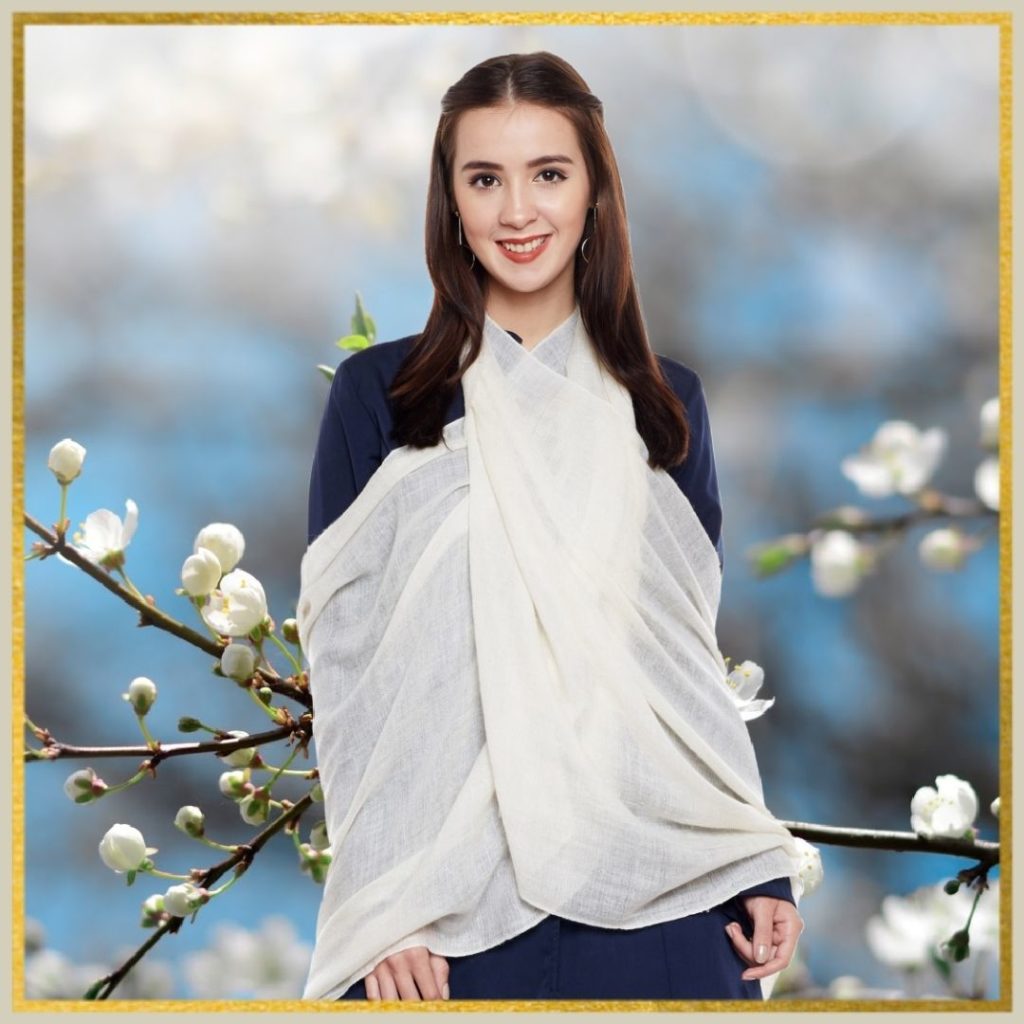
Hollywood icon Audrey Hepburn’s scarf-around-the-neck look is just unforgettable. You too can recreate the classic vintage feel with a Pashmina scarf. There are endless ways to sport a scarf stylishly on your hair. To get the Hepburn look, just drape a Cashmere scarf circling your neck and pair it with large sunglasses. For a bohemian look, just make an intricate headwrap with a generous amount of fabric hanging down your back.
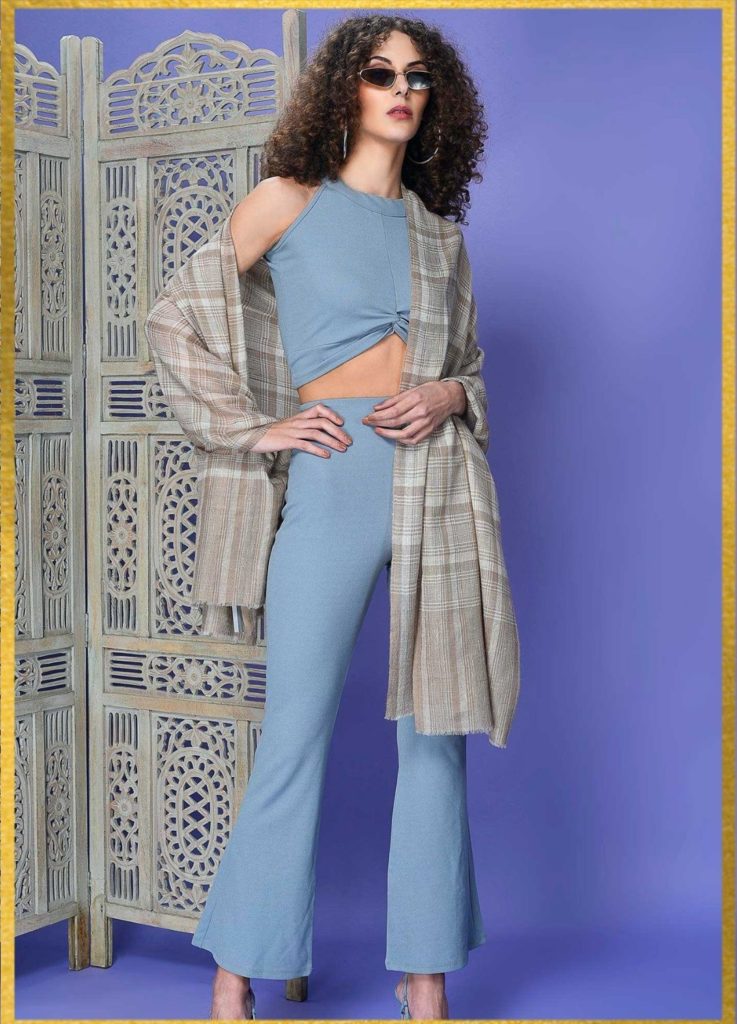
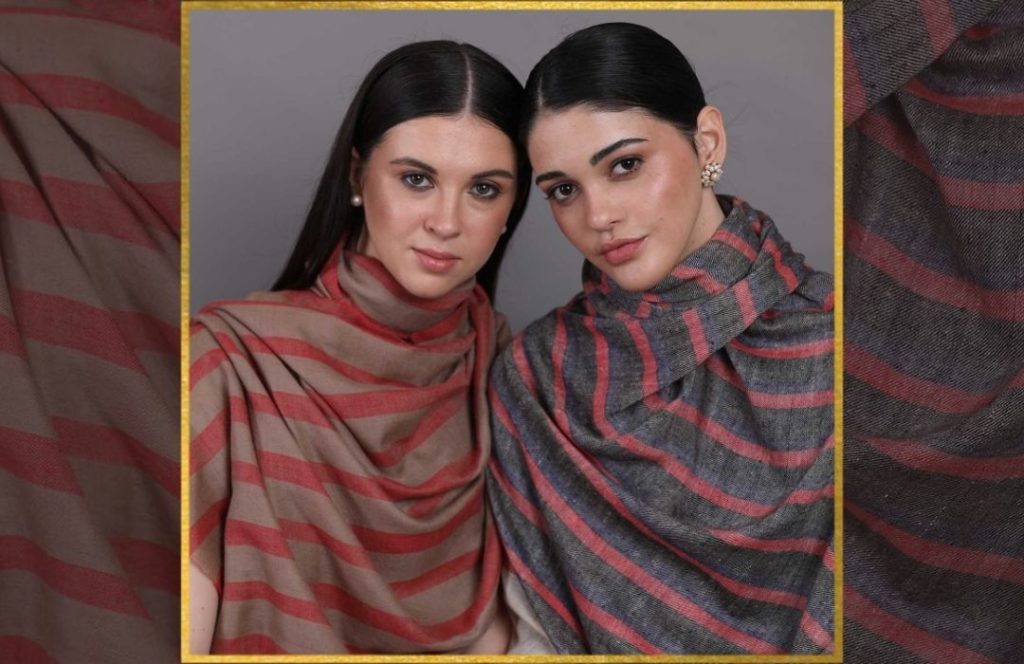
A luxury plaided Pashmina stole is inspired by the picturesque valley of Kashmir
There’s nothing like a pair of bell-bottoms that screams retro style. Nice bell-bottoms accentuate the curves and make you stand apart from the crowd. Pair a Cashmere shawl with a flared pants and a classy top. To complete the look wrap a Cashmere scarf in a knot around your neck. Don’t forget to carry a pair of big sunglasses and a tote bag.
Fashion your Pashmina scarf like a poncho
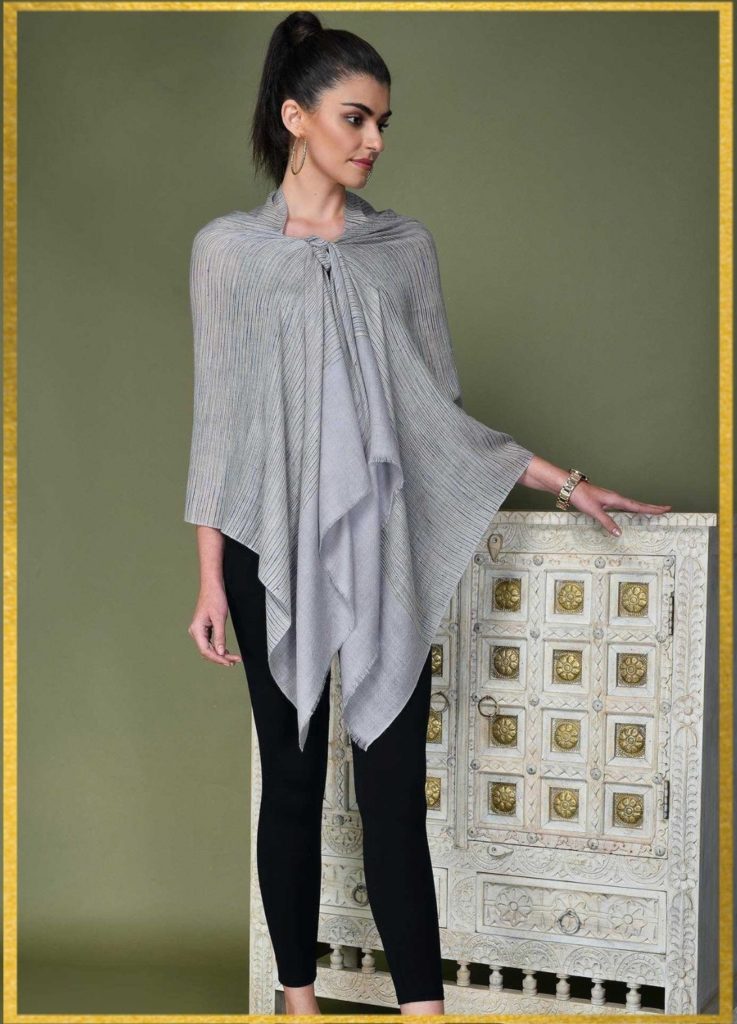
The luxury Pashmina stole is inspired by the picturesque valley of Kashmir when covered in snow
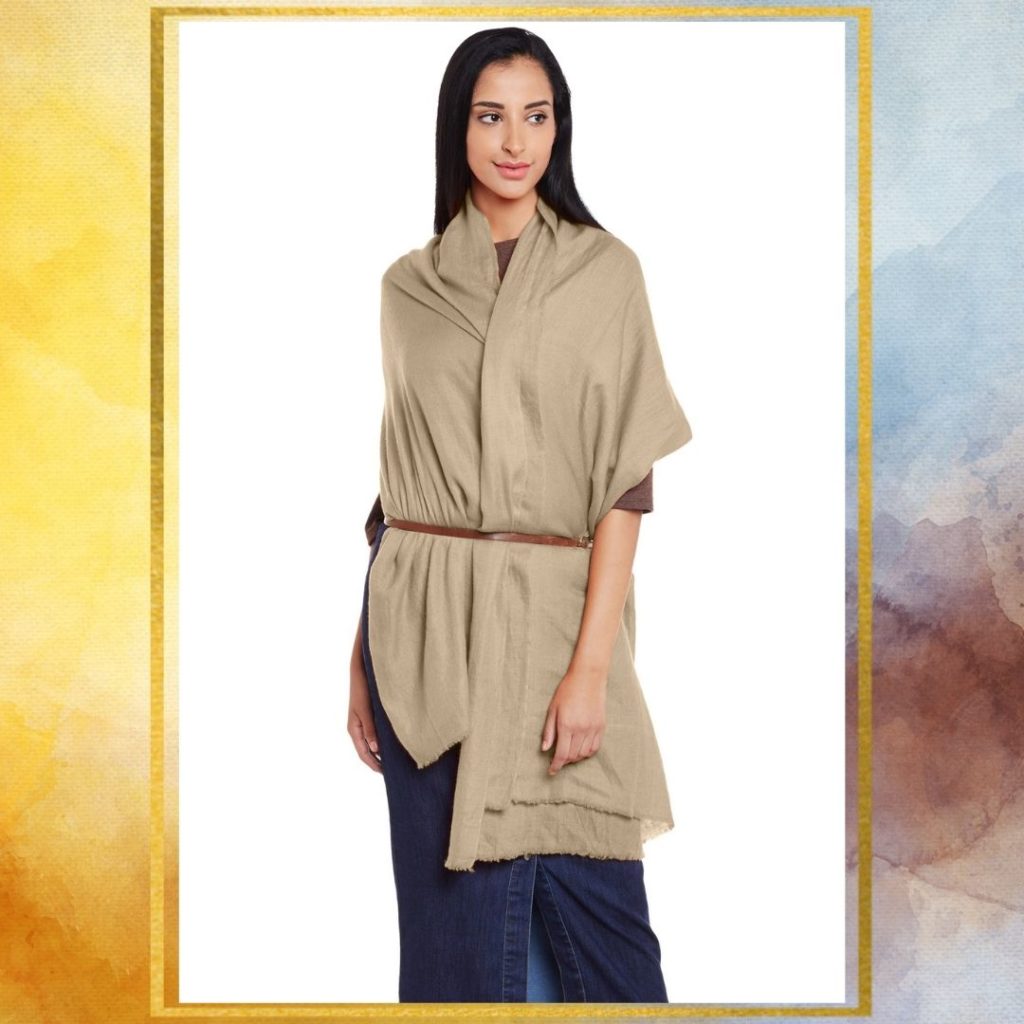
Poncho is one apparel that is reminiscent of the '60s and '70s style culture. The loose silhouette of the poncho makes it ideal for pair it with denim or a skirt. All you have to do is take your favorite piece of Pashmina scarf and throw it around your shoulders in such a way that the scarf is till elbows. Hold the with a brooch or decorative pin at the front. Nail retro look with pure Pashmina scarves and wraps
Pashmina has evolved more gracefully than we thought it would. From traditional embroidery motifs to modish patterns, prints and designs, Pashmina shawls have become quintessential in every wardrobe. From being a need, Pashmina is a style accessory now and is a must-have for your winter looks too. Start shopping!
In the world of fast fashion, there are just a few who prefer slow fashion and those products which are handmade. Cashmere is one such fabric that takes a long time to get materialised. From raw Cashmere lumps to finished products, Cashmere wraps, scarves, and sweaters take years to complete. Cashmere is a fabric that has to be manually acquired from the Himalayan ranges and brought to factories for processing. These products are handmade, and hence one has to take proper care and precaution when wearing, washing and storing these luxury gentle products.
What is Cashmere
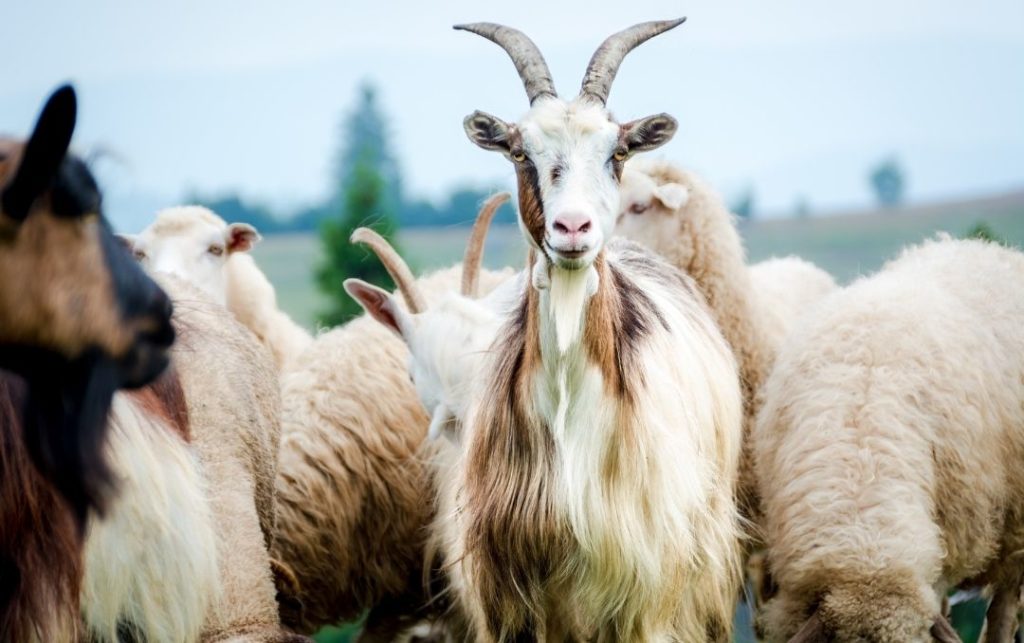
Cashmere is a luxury fine wool that is found growing on the Himalayan goat’s underbelly. The wool is fine, warm and exceptionally soft. This fine wool grows on the underbelly, neck and other few areas of the Cashmere goat in the winter season. The wool is the best source of heat for the animal as the areas where it is found experience harsh cold. As soon as summer arrives, the goat starts losing its hair which is collected by its herders. The wool is cleaned and sent for processing.
Processing of Cashmere is a challenging task. Raw wool from the goat is cleaned thoroughly and sent for spinning. Spinning the wool transforms the wool lumps to long threads. These threads are super fine and almost invisible to the human eye (when seen from a distance). The threads are just 12 to 16 microns in diameter which makes them one fourth of a human hair. These threads are sent for further processing, which includes their weaving together to form fabric. This fabric is either used to make accessories or apparel. These can be later embroidered or printed and even dyed in a large assortment of colours, pastel and bright.
How to care for Cashmere
Since Cashmere is a delicate fabric, it is to be cared for as much as one can. A small forcible action can tear the fabric up easily. Hence washing, drying, storing and even ironing these luxury products can be a challenge. If Cashmere is washed in warm water, dried roughly or ironed the wrong way, there are chances of destroying the gentle fabric forever.
One of the most problems that occurs while handling a Cashmere product is shrinking. Often Cashmere users complain that their Cashmere products, especially Cashmere wraps shrink post wash. Being expensive and getting damaged after just one wash is simply devastating for a user. Hence we today collected some useful information that will act as a guide to Cashmere care.
Washing Cashmere gently, drying it naturally in air and ironing it with steam iron are some tips to make your Cashmere product live a long life. But what about shrinking?
Shrinking of Cashmere
Does Cashmere shrink? How do you shrink it and how do you reverse its shrinkage? Here’s a handy guide to Cashmere care that addresses all of these.
Cashmere buyers are luxury enthusiasts. They are those who hunt down the market for the best fabrics in the market and choose the most exquisite pieces for themselves. They are ardent lovers of handicrafts and supporters of handmade, who make it a point that their purchase affects society positively.
And most importantly, they want their Cashmere to last a lifetime. They are concerned about its care because they understand how precious it is. Cashmere care determines the life and appearance of the fabric. Maintain it well, and it will look as good as new even after a decade. Lax in caring and it could begin appearing shabby. It's part of the reason why people often ask us about cashmere shrinkage- Does Cashmere shrink upon washing or dry cleaning? How to shrink a cashmere and if it has shrunk accidentally, how does one restore it? How to shrink a cashmere sweater, in particular, does cashmere shrink when dry cleaned, how to shrink a cashmere without damaging it?
We are here to address these common questions for you
Does Cashmere Shrink?
We are often asked this one question- Does Cashmere shrink?
Its lovers might hate this answer, but unfortunately, Cashmere does shrink if not washed with care.
While handwashing is the best bet for a genuine Cashmere, if you use hot water in the process, you will see your Cashmere will have shrunk in size when it dries up (an ideal trick for those who are looking for tips on how to shrink a cashmere).
Washing cashmere at home
So here’s the trick-use cold water to clean this gentle fabric. If you’ve got too much dirt, dust, or harsh stains on your Cashmere, use mildly lukewarm water but never hot. In fact, the maximum temperature of the water should be 20 degrees and you should soak your Cashmere in it for a maximum of 15 minutes.
This doesn’t just apply to washing. Any type of heat will shrink it. That is why Cashmere is never made to come in direct contact with heat. This might sound like a big con. But guess what there are people who actually want to shrink their Cashmere (and often ask how to shrink a cashmere). It might be good news for them after all
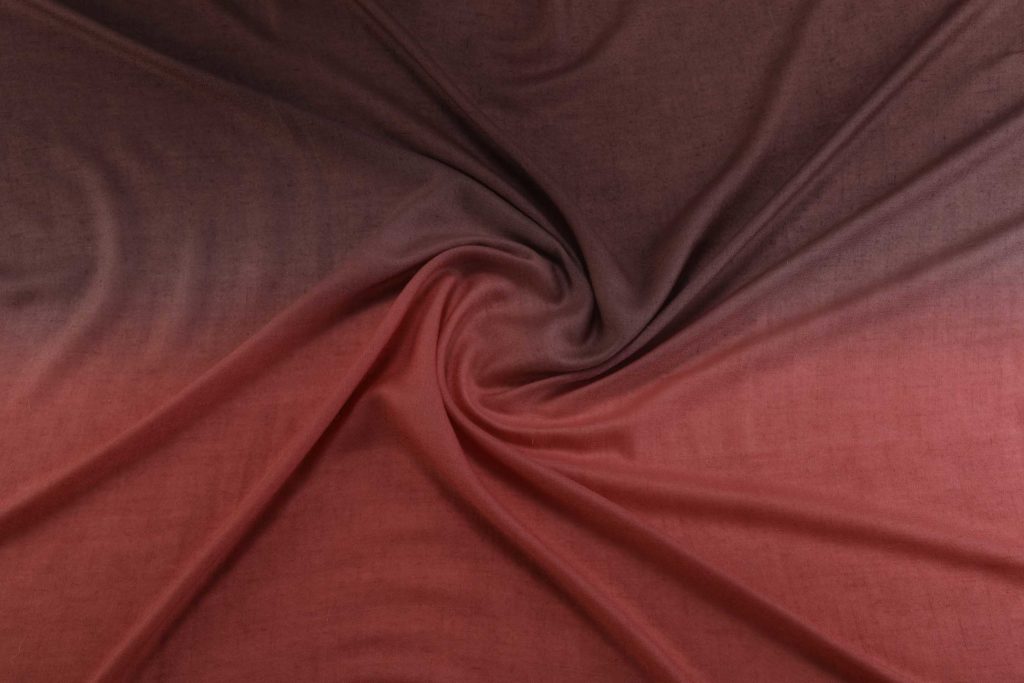
Pashmina shawl handwoven traditionally over a wooden loom and patterned in a modish fashion in an ombre style
Most of the labels which you see stitched on your Cashmere read “dry clean only”. Dry Cleaning is the second-best option for cleaning a Cashmere fabric, next to hand washing. But does Cashmere shrink when dry cleaned? No.
Dry cleaning does not cause any immediate harm to the fabric like shrinkage but yes, in the long run, it may cause some damage in the form of early pilling. Dry cleaning involves soaking the fabric in chemicals. The damage caused by these chemicals is slow but sure.
The best way hence is to hand wash your Cashmere in lukewarm or cold water. The process is time-consuming. But it is worth the effort.
How to Shrink a Cashmere?
It might seem weird but we are often asked this-how to shrink cashmere-sweaters, shawls, etc. Here’s a quick two-step process that exactly tells you how to shrink a cashmere carefully.
Shrinking cashmere by hand wash
Hand wash your Cashmere like you normally would but change the temperature of the wash water. For shrinkage, you’ll need HOT water (as hot as you can stand). Once you are done, rinse the fabric with cold water
Leave it to dry after patting the excess water out and do not stretch it back to its normal size.
Ta da! Your Cashmere has shrunk the way you wanted it to!
Now that you are well versed with how to shrink a cashmere, let’s proceed to a process that is just the opposite-unshrinking it.
Can you fix shrunken cashmere? The answer is a resounding YES. Shrinkage isn’t liked by everyone. So just like there’s a small group of people who ask us how to shrink a cashmere, there is a larger one that asks us how to unshrink it. If you are among the latter and weren’t aware of the tips and hacks of impeccable Cashmere care, don’t panic. Like there's a solution for “How to shrink a cashmere”, there’s one for the opposite too. Here’s how
Method 1
Use mild detergent to hand wash cashmere
Hand wash your Cashmere with mild detergent and cold water for 10 minutes. Avoid hot water because it may cause further shrinkage.
Remove excess water from the fabric by pressing it gently with your hands. Next, lay out your Cashmere on a flat surface
Slowly and gently, pull in opposite directions and stretch the fabric in small little bits at a time. In a nutshell, you need to pulse the fabric a bit so the fibres can relax and then be stretched properly again. (This step can make or mar your Cashmere. If you are not patient enough or your fabric is of poor quality, you run the risk of stretching a hole in your sweater. Understand that your fabric is delicate and be gentle)
Maintain uniformity while you are stretching the fabric.
Try to stretch large sections in one go. If you work on smaller sections with a couple of fingers, your Cashmere could end up wonky looking.
Once it's all stretched out to the desired shape or dimension, leave it to dry (for a couple of days)
Voila!
Method 2
Find a garment or wrap which is similar in size and shape to the shrunken piece of clothing. Trace an outline of this garment/cloth on a piece of parchment paper.
Follow the regular hand washing process by sinking in your Cashmere in tepid soap water so that the fibres loosen up a bit.
Carefully remove the excess water without stretching or wringing.
Place your Cashmere on the parchment paper and place this paper on a flat surface. Gently stretch the fabric in such a way that it matches the measurements of the outline. If the Cashmere resists stretching, use steam to loosen the fabric and then stretch it.
Place heavy and clean objects over the stretched garment till it is completely dried.
Once dried, your fabric looks like it was never shrunk before.
Frequently Asked Questions About Cashmere Care
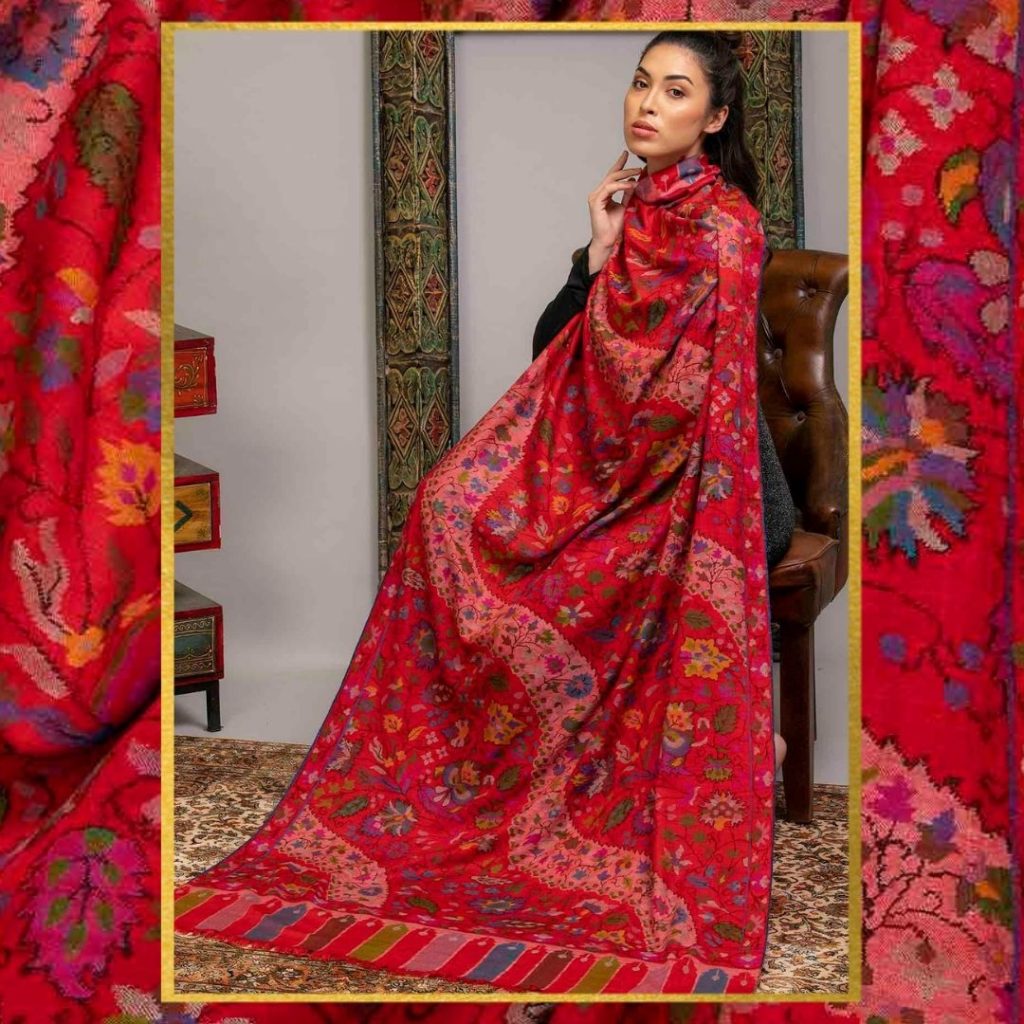
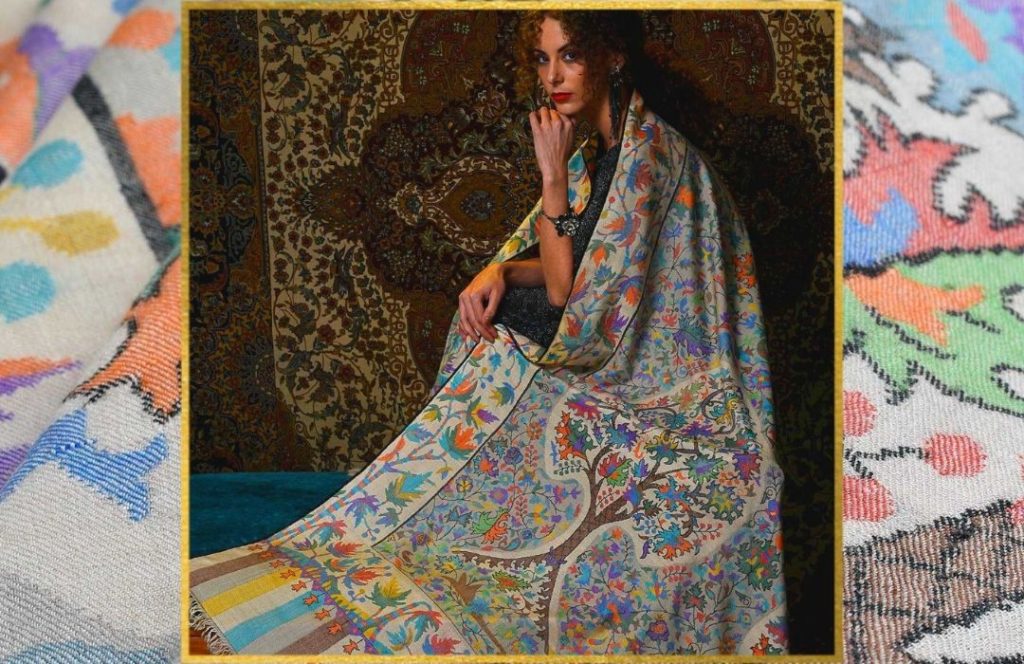
Made in uncountable weaves, a Kani shawl soaked in red is that is as comfortable as it is beautiful
1. How do you shrink Cashmere Without Damaging It?
Well, hot water is the key to shrink a Cashmere without harming it. Hand wash your Cashmere fabric in hot water and then rinse with cold water. Pat the excess water and let it dry without pulling it back to its original shape
2. Can I put Cashmere in the dryer?
No. Cashmere is an extremely delicate fabric and putting your Cashmere in the dryer will ruin its appearance, fibre and texture. Let it dry naturally. It may take a few days but it is worth the effort.
3. Does Cashmere Shrink when Dry Cleaned?
No, dry cleaning does not shrink the Cashmere. In fact, it is a recommended method of Cashmere care if you don’t want to undertake the hassles of washing it by hand.
4. Can you fix shrunken Cashmere?
Yes. You can unshrink your Cashmere by hand washing it with cold or lukewarm water and pulling it symmetrically while it dries naturally on a flat surface. Now that you have mastered how to shrink a Cashmere and how to unshrink it, you are ready to add this plush fabric to your everyday.
For your Cashmere wraps and apparel to last long, even after years of use, here are some pro tips from our fabric experts.
Always hand wash your Cashmere in lukewarm water. Do not use very cold or very hot water. Both temperatures will ruin your Cashmere of its natural texture.
Do not wring the product when you want to squeeze water out of it post washing. Instead squeeze it gently between your hands.
Never hang your Cashmere product for drying. This will de-shape it. Instead lay it down flat and let it air dry.
Can you put Cashmere in the dryer? No! Never tumble dry your Cashmere. Questions about if one can put Cashmere in the dryer are asked frequently. Please note that if you do so, there are high chances of it shrinking. Instead lay it on a clean, flat surface and let it dry in open hair
Do not dry your Cashmere in direct sunlight.
Do not store your Cashmere in the places where other fabric is stored. Instead wrap it in a muslin cloth and store it in a cool dry place. If possible, place naphthalene balls or other moisture absorbents in the same shelf but away from the product.
While storing Cashmere, do not pile these over each other. Instead, keep a layer of tissue paper or any moisture absorbing paper in between consecutive layers. This way, it won't cause friction.
Do not iron the Cashmere product directly with an iron. If you do not have a garment steamer, place a cotton or any fine layer between the iron and the Cashmere product you are ironing.
The above guide is useful for any type of Cashmere you own. We aim to empower Cashmere lovers with all the knowledge they need to make their cherished pieces last a lifetime. Your Cashmere will be your companion forever, if you care for it the best way possible.
Fashion is fickle but black is permanent. Black is one color that will always rule the runway as well as the streets. Black will always remain in vogue. The timeless character of the color helps you maintain relevance with your style throughout the year, come changing trends and seasons. Such timeless piece of fashion is a Black Pashmina.
When it comes to incorporating black into your wardrobe, there are endless approaches you can take. A Black Pashmina is highly versatile and works well with all styles and colors. Whether you want to pull off a sophisticated contemporary look or don an elegant ethnic style, black Pashmina fits in effortlessly.
Here are a few of the fashion connoisseur-approved ways to introduce black in your style
Layer your Black Pashmina
When dressing up for chilly days, layering the right way is the key to add visual interest to your ensemble. One of the easiest ways to get your layering game right is to drape a black Pashmina shawl over your shirt. This black Pashmina shawl, available with us, is made from pure Pashmina; its feather-light design helps you layer your warm evening ensemble with utmost comfort. The beautifully hand embroidered patterns in this shawl work wonder in adding an intriguing texture to your overall look.
Accessorize your style with Black
Pashmina wrap submerged into floral embroidery motifs that span in a Jaali pattern
Many people view black as a base or a supporting color. However, black doesn’t let you down when using it as a highlight color. Black makes a good choice for fashion accessories that elevate the overall charm of your look while maintaining the sophistication quotient. Wear a black Pashmina shawl with a lace design to accessorize your get-up in a tasteful way. To recreate this look, drape this black lace shawl like a cloak. Then tie the two upper ends at the breastbone area; make sure to tuck the ends at the knot.
Covered with hues of Kashmiri Paper Mache which transforms the downy base into something extraordinary
The essential shade of black is used by almost all luxury brands as the basis of any winter collection. It is because one cannot overlook its minimalist aura and timeless allure. Black goes with any type of apparel you wear, any occasion, and for any preference. In addition, one can easily mix and match a black Pashmina wrap with livelier or brighter outfits to tone down their vivacious essence and bring a dose of luxury to an overall look.
How is a Black Pashmina shawl from Pashmina.com a worthwhile purchase?
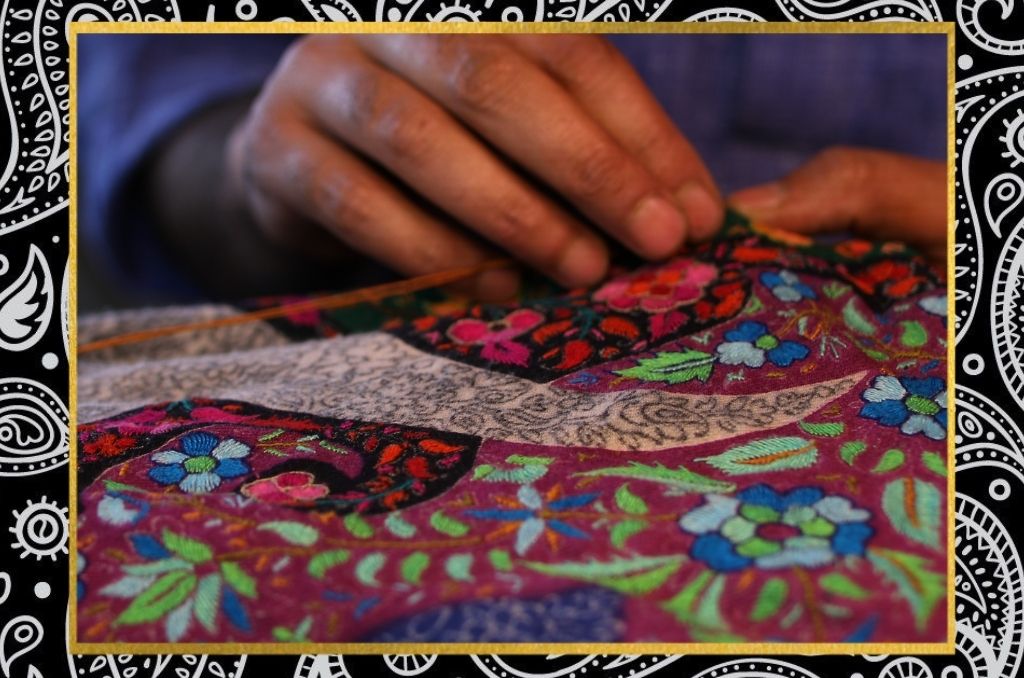
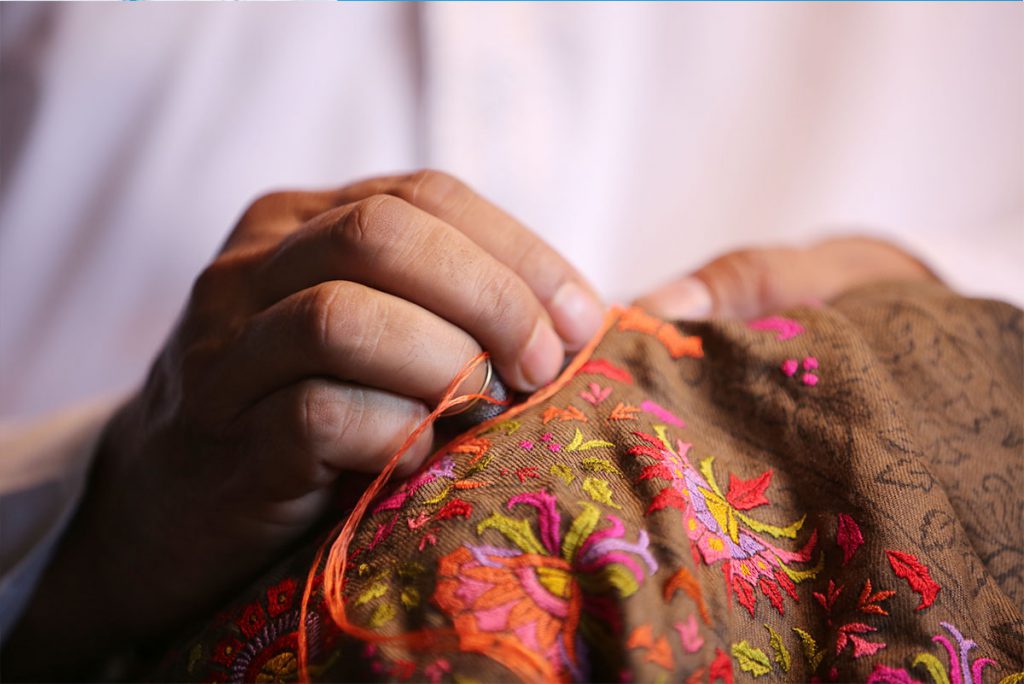
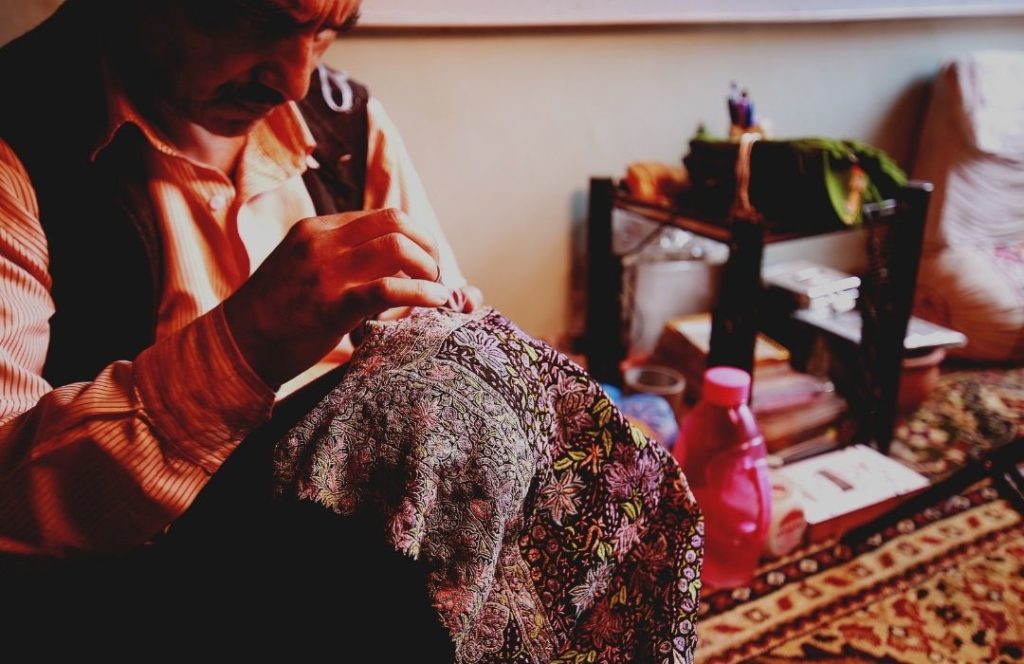
Handmade wrap being carefully embroidered by the artisan
Every Pashmina shawl and other handmade wraps we offer are made from pure Pashmina obtained from the Changthangi goats, found on the highlands of Ladakh. Our cashmere artisans in Kashmir put in a great deal of care during different stages of making Pashmina handmade wraps right from combing the undercoat fleece to working on the designs.
Pashmina shawls available in our collection feel impeccably soft on the skin as our artisans ensure that the Pashm wool doesn’t lose its unmatched softness during the crafting stages. Just like we value the admiration you have for Pashmina, we focus on giving back to the cashmere artisan community in Kashmir. We give back 5% of our proceeds for the welfare of the artisans. By choosing Pashmina handmade wraps from us, you help us contribute towards the betterment of the cashmere artisans
Cashmere - the king of specialty fibres - possesses heavenly softness and fineness. It is one of the most sought-after fabrics in the world, with a well-deserving expensive price tag. And even after such immense popularity all over the world, there are still questions about it. These often come to mind while buying a new one. Questions like How is Cashmere made, What animal does Cashmere come from, and why is it so expensive and more like these are still in customers’ minds. Hence we decided to answer this one by one; hence make customers understand why they should invest in at least one Cashmere wrap in their lifetime.
What is Cashmere?
Cashmere is the down fibre or undercoat derived from the domestic Changthangi or Pashmina goat which is a special breed of goats (Capra Hircus). The goat is found in the high altitudes of the Himalayas in Northern India. The hair is soft and fine with a diameter of just 12-16 microns. Fabric, mostly Pashmina shawls, made from Cashmere are known all over the world for their warmth, aesthetic value, and timelessness. Cashmere is the most luxurious fibre, and has three times more insulating power than sheep’s wool.
How is Cashmere made (What does Cashmere come from)?
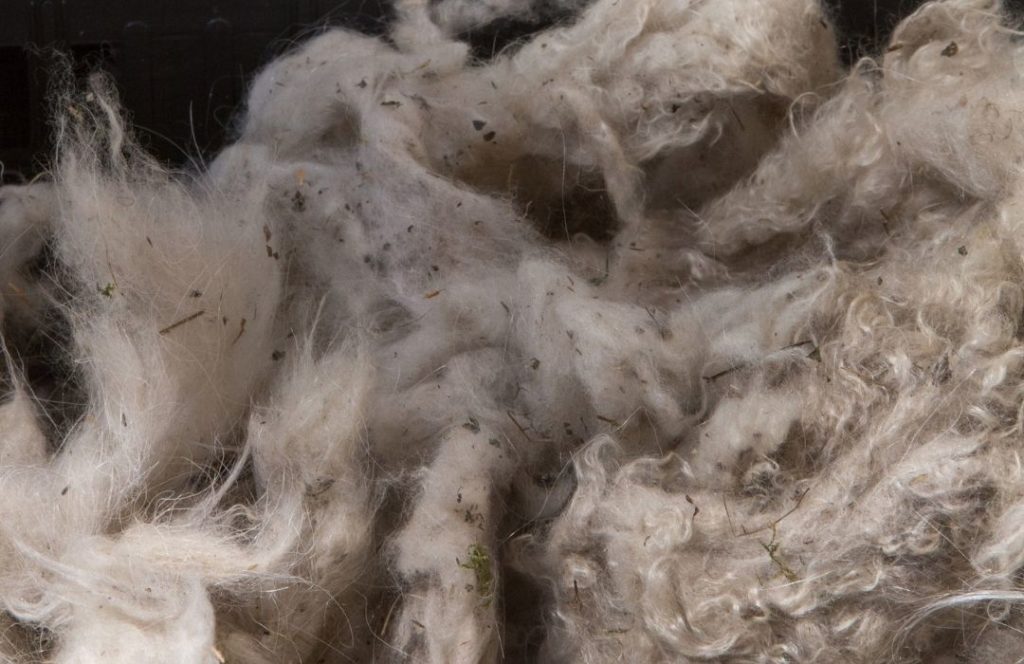
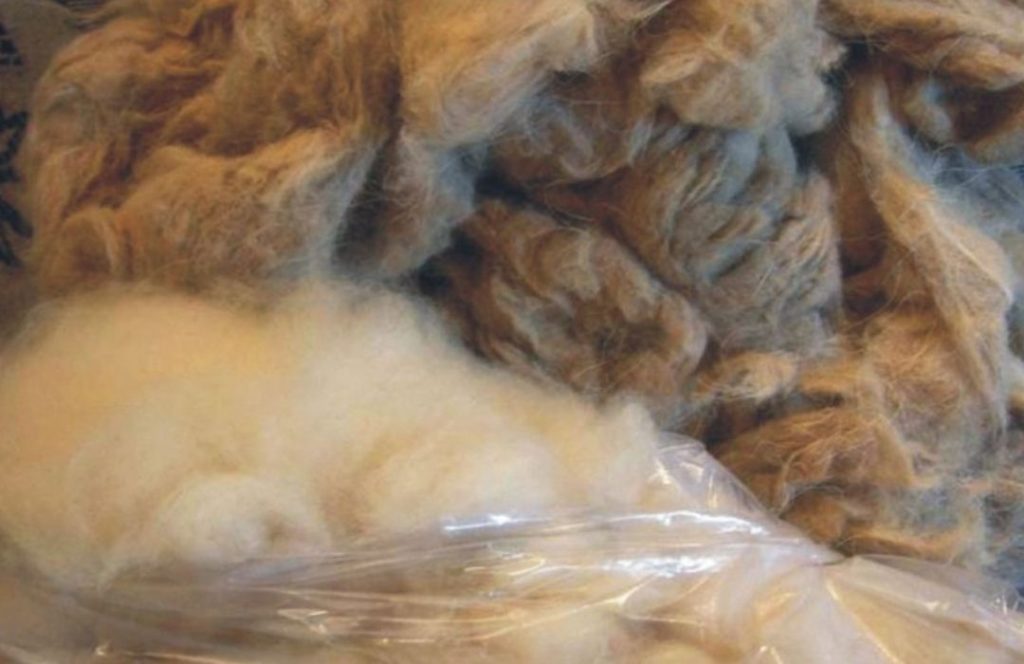
Raw Cashmere acquired from the Changthangi goat’s body
Cashmere comes from from the Changthangi goat’s body during the moulting period. This is the Spring season when the goat naturally sheds a portion of it. This fibre is to be collected, cleaned, and sent for processing.
What actually happens is that the Changthangi goat grows the Cashmere wool in winters, when it is freezing cold in this region of Ladakh. The wool protects the goat in winters, yet makes it uncomfortable in summers. This is the time when the goat can be seen rubbing itself with rough stones, walls, thorny bushes, and all over the place it inhabits. Seeing this, its nomadic herders call for professional help. Professionals bring along with themselves some specialized tools and gently comb the goat's body. The wool is stored in small ziplock pouches and later cleaned in batches by the locals.
What animal does Cashmere come from?
The Capra Hircus goat
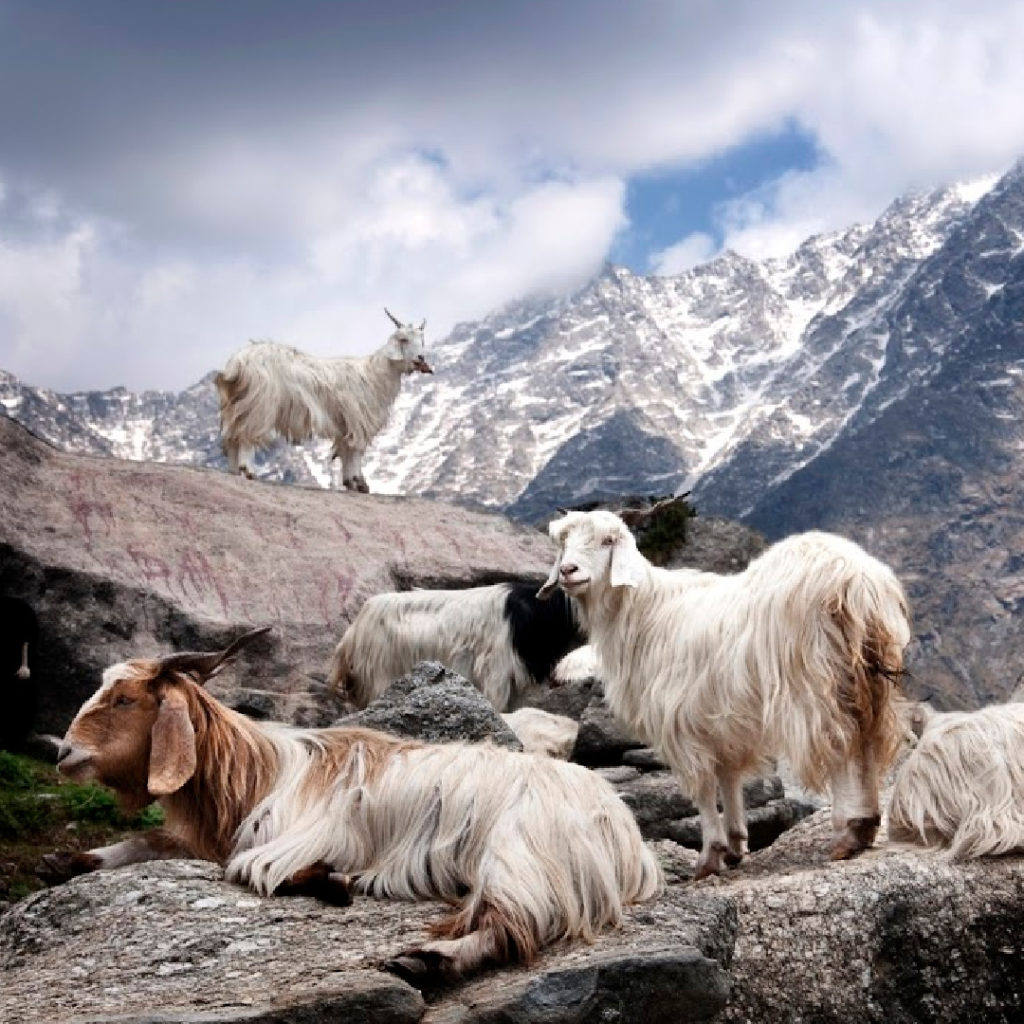
As already mentioned, Cashmere comes from the Capra Hircus goat, locally known as Changthangi goat. It is also called Cashmere/Pashmina goat due to the raw wool that comes from it.
The Changthangi Goat
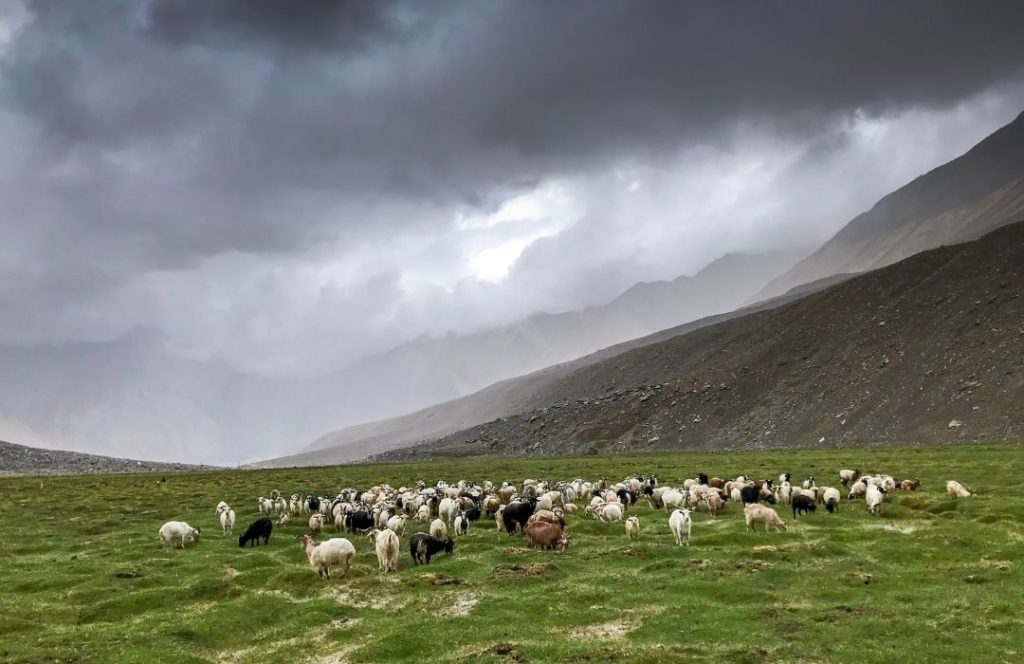
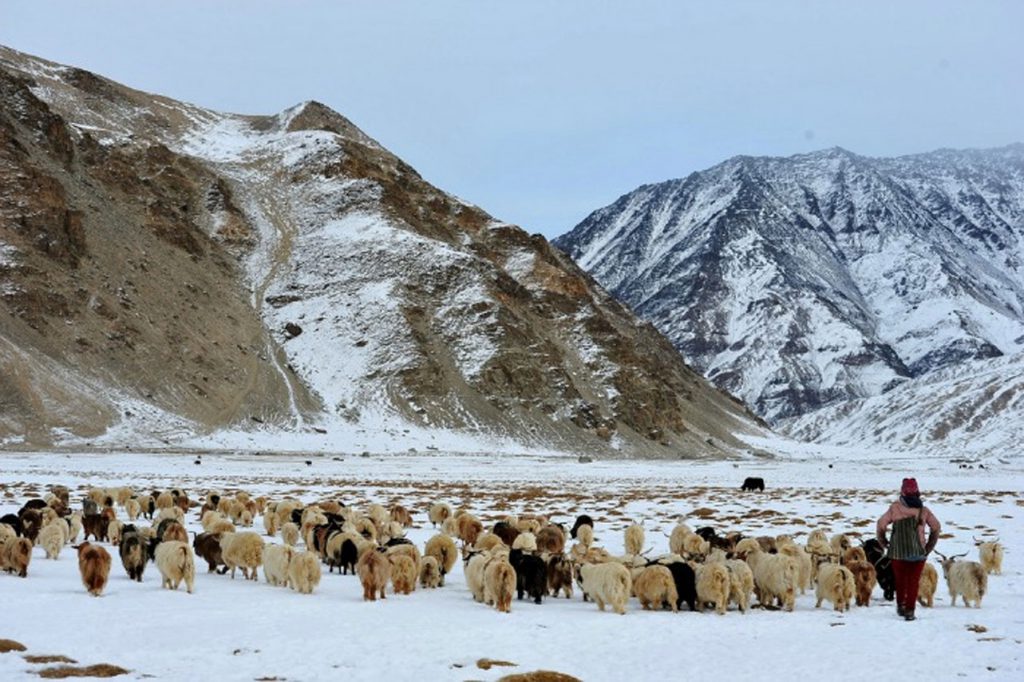
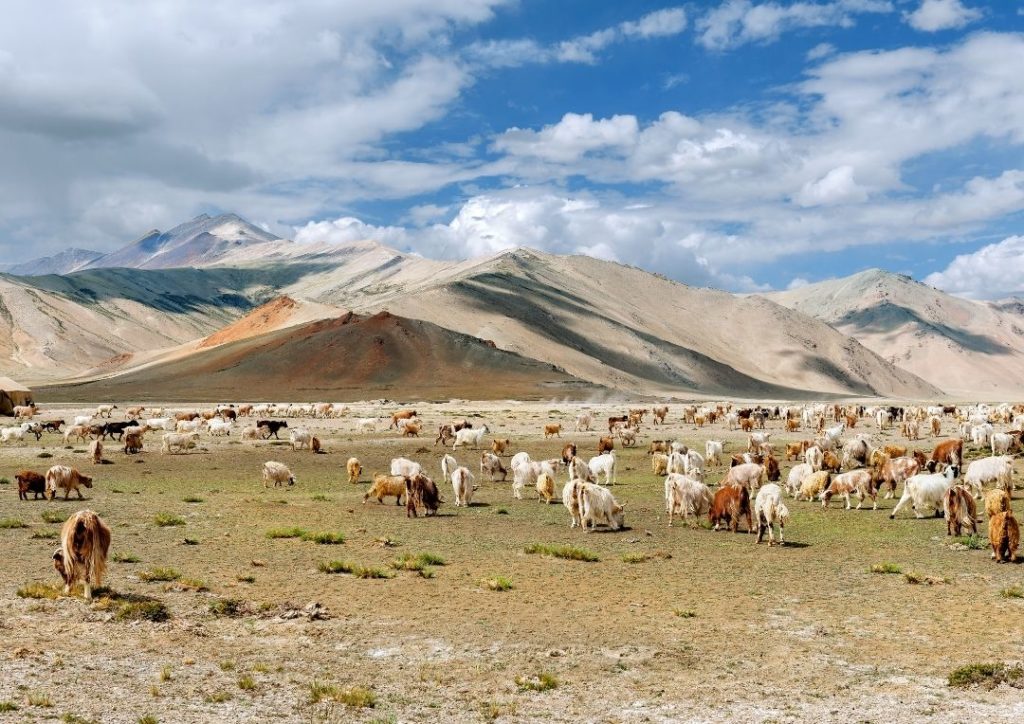
Changthangi goats are found at high altitudes in the trans Himalayan mountain ranges bordering Tibet. They are localised in the Changthang, a sub division of Ladakh region of Jammu and Kashmir. The region has extreme temperature and weather changes. As such, high intensity storms, dry atmosphere, hypoxia and other factors are common. These factors make the life of animals as well as their owners extremely challenging and tough.
Changthangi goats are sturdy, medium sized with long hair coats. An adult male goat has a body length of 50 to 53 cm and is almost the same as the female one's dimensions. The goats have a large heart girth (60 to 65 cm adult) which helps them survive the low oxygen conditions. Changthangi goats have a long coat of silky and shiny hair which guards the animal against low temperatures. Usually the goats are horned (both male and female), but a few animals can be seen without horns as well. Horns are long and twisted, and directed upwards or backwards. The body colour of the Changthangi goats is generally white, but light brown, black, grey or a mixture of all these can be easily found on the way.The whole body is covered with the fine coat of Cashmere wool. These animals look stout and can walk long distances in search of green pastures and herbs.
The Changthangi goat is a strong animal that has very well adapted to the scarcity of grazing possibilities in the changtang region. Their weights as reported by authentic sources is 2 kgs at birth and over 25 kgs as adults for both males and females.
Cashmere produced by Changthangi goats
The wool produced by Changthangi goats is the finest in the world. When the wool is combed off from their bodies, it is just lumps of wool. But as the wool is hand spun by artisans, it transforms to thin fibre whose diameter is just 12 to 16 microns. These fine threads are at times barely visible to the naked eye, but the specialist hands of artisans even weave these thin threads into complete accessories.
One single goat produces 76 to 500 grams of Cashmere which is not even enough to prepare one shawl. Hence, wool from 2 to 3 goats is collected, cleaned and processed to produce a shawl of 100 * 200 cm measurements.
It was the Kashmiri Pashmina shawl, crafted from Ladakhi Cashmere, which was worn by Empress Josephine (wife of Emperor Napoleon), and set to a timeless fashion henceforth. Since then, Cashmere wraps and scarves have been world famous, and irrespective of their high prices, are sold all over the world.
Conditions in Changthang
Ladakh is a region characterised by sandy soil and brown rocks in between snow covered Himalayan mountain ranges. The temperature in the summer reaches 35 degrees C and in winter dips to as low as -50 degrees C. This large variation in summer and winter as well as day and night temperature causes life to be pretty difficult in these areas. Changthang region is a native breeding region for the Cashmere goats. This area is comparatively rich in water supply, and hence cultivation, even though meagre, is done here. Since less water supply can't help crops grow, it is animal farming that survives herders in Changthang.
The unmatched beauty of Ladakhi Pashmina
The Cashmere from Changthangi goats is used to make Kashmiri Pashmina shawls. These are famous all over the world, and have been so since the 18th century. As such, these are the Cashmere wraps which the world always keeps an eye on. Even though Cashmere is found in many areas, the wraps made from Changthangi Cashmere and processed in Kashmir valley are considered the best.
Ladakhi Cashmere does not have a stable colour. The colour ranges from a complete white to grey depending upon the colour of the goats. A few goats are of more than a single colour. White and off white goats produce white Cashmere and dark grey goats produce light grey shaded Cashmere. White Cashmere has the highest demand and hence fetches the highest price, while grey Cashmere stands the second best. Some, however, prefer brown to grey.
The production from an individual goat ranges from a meagre 75 grams to 500 grams. Over 500 grams is considered the highest production. Males produce more Cashmere than the females, but their fibre is comparatively coarser. Castrated males produce more Cashmere than those who are not. After 5 combing sessions, the Cashmere production decreases.
The quality of Cashmere from the goats depends on a number of factors like gender, age, body weight, availability of nutrition and the colour of Cashmere grown.
Where do Cashmere goats live?
Cashmere comes from a goat. Cashmere goat is commonly found in Mongolia, China, Iran, Tibet, and Northern India. The Cashmere which is processed in Kashmir is the best of all and has the finest quality amongst all its counterparts. It comes from Ladakh and grown on the underbellies of the indigenous Cashmere goat, which grows it in place of fat that it would need to protect itself from winter on the freezing cold plains of its homeland.
Where does Cashmere come from?
There is a misconception that Cashmere is a relatively new fabric. But it is not so. The fine wool was first discovered by a Sufi saint in Ladakh, who had visited the valley in the 14th century. But it wasn't until the 16th century that Cashmere manufacturing units started in the valley, and gradually spread all over the world.
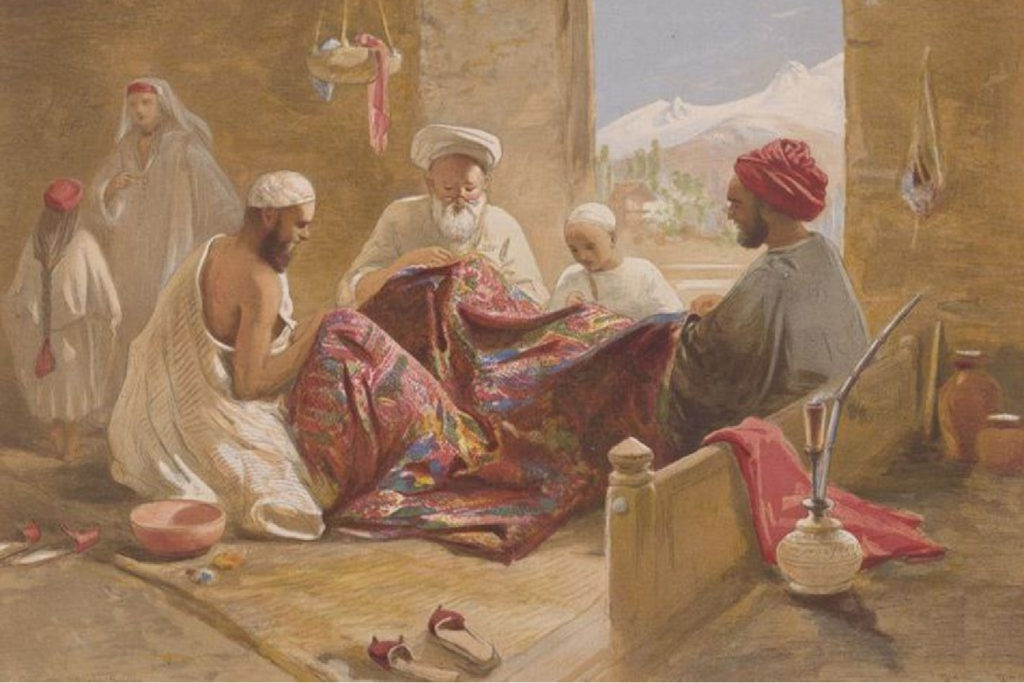
A Muslim shawl-making family shown in Cashmere shawl manufactory, 1867, chromolith., William Simpson.
In the 18th century, Cashmere reached the west. Europeans discovered this luxury fabric and got pretty much fascinated by its regal mien. Soon they imported it into Scotland and France mainly, despite the high prices for importing. Now, this luxury wool did not remain restricted to Indian rulers only, but royals in the west too adorned themselves with its royal demeanor. In fact, it is still imported by Europeans, although it is much refined before its sale locally.
After its thorough processing, Cashmere is sent to Europe and sold to a number of merchants, who transform it into luxury wraps, cardigans, sweaters, or even dresses.
Is this luxury wool Ethical?
While there have been rumors of the Cashmere collection being cruel to the goats, that is not the case. Many believe that during the moulting period, goats are forcibly dealt with and even killed to get Cashmere. However, that is not the case. The Changthangi goat is a domestic animal, and its herders do not need to use force upon it, and that too for a process that isn't painful at all.
Professionals who acquire Cashmere from the goats do not shear, but comb the fibre off the body of the goat gently. This process is carried out when the goat anyway wants to get rid of the wool, i.e, Spring. Later, when Winter arrives, the goats again naturally grow the wool back and survive one of the harvest winters in the world.
On the contrary, Cashmere processing and acquisition can be regarded as sustainable. The reason being its minimum contribution to environmental hazards. Here is how the production is sustainable
Its acquisition is ethical. No animal is harmed or killed in the process.
Its processing is manual. There is no use of pollution-causing machines, and every process is done manually by the womenfolk and men from the valley. Spinning, Weaving, embroidering, and washing, every activity with regards to the production of Cashmere wraps and apparel are safe for the planet
Cashmere production is the only source of income for some families. Hence every Cashmere we buy encourages the survival of an artisan and his family.
Cashmere contributes to slow fashion. A purely handcrafted wrap or apparel can last up to 25 or 30 years, and not even lose its grace a bit. Kashmiri women used to give their 30-year-old shawls to their newlywed daughters as gifts, and these would look as fresh as new. Hence, again, Cashmere production is environmentally conscious.
A handcrafted Pashmina Shawl profusely embellished with Papier Mache embroidery features master craftsmanship at its epitome
When buying Cashmere, one has to pay special attention to its purity. Always shop from authentic vendors or online shops. Ask your dealer to present to you the certificate of authentication provided by the CDI (Craft Development Institute, Srinagar). If he is not able to do so, refrain from buying. Look for the Geographical Indication - the GI mark - which is a mark of authentication over the base of the shawl.
Do not fall for blended, or machine-made products especially wrap. These won't last long. Always choose pure, certified Cashmere from authentic vendors.
Pashmina.com is a recent player in the Cashmere industry, but fortunately an authentic one. The organisation directly contacts the makers of the purest Cashmere products and sells them online to customers all across the globe. The shawls have a certificate attached to them, which speak of their originality and purity. The assortment of the breathtakingly beautiful handcrafted wraps consists of GI Pashmina shawls as well.
Apart from being in their purest form, Cashmere wraps at Pashmina.com are patterned in conventional as well as contemporary designs. Be it hand embroidery which is done on the wraps by immense skillful artisans, or Kani weave, that takes years to complete, artisans put their heart and soul in the process.
The Artistic Art of Pashmina
The processing of Cashmere into luxury shawls is an art called Pashmina. Pashmina shawls are nothing less than art pieces that upgrade one’s looks in an instant. But as we see the source of these shawls, i.e, the Changthangi goat, and the region it survives in, makes them even more beautiful. The harshest conditions of Ladakh, and the ability of the goat to survive in them makes Pashmina shawls the most sought out accessory in the entire world.
Owning a pure Kashmiri Pashmina shawl is the dream of many art patrons who understand the nitty-gritty of art and culture. From the 16th century till now, this art has been the first choice of Mughal kings, European queens, and many more royalties all around the world. It is them who set Pashmina to timeless fashion long ago and it is still revered by the true admirers of classic fashion
In the world of fast fashion, it is really important to know what a Pashmina looks like. Well, a pure piece will be exceptionally soft, smooth, and warm. It will pass through a finger ring and will be as light as a feather. But did you know that these qualities can be easily copied now? Yes, some deceptive traders dip their sheep wool shawls in fabric softeners and get almost a shawl like the original one. So it is important to know what an original shawls or scarf looks like.
Characteristics of Pure Pashmina
Since the Pashmina shawl is made out of natural fibre, it will have a matte look. If your shawl or scarf glows too much or has an artificial shine like that of silk, know that your shawl isn't pure, but a mixture of cashmere and silk and hence a water pashmina
The weave of the Pashmina shawl is never symmetrical. That is because it is handwoven and hands do not weave as regularly as a machine can. Hence water Pashmina will have regular weaves.
Pilling in a pure Pashmina
Pilling can happen to a pure Pashmina. Since it is a natural animal fibre, pilling is a must. If your shawl guarantees no pilling, it is a water pashmina
The Geographical Indication
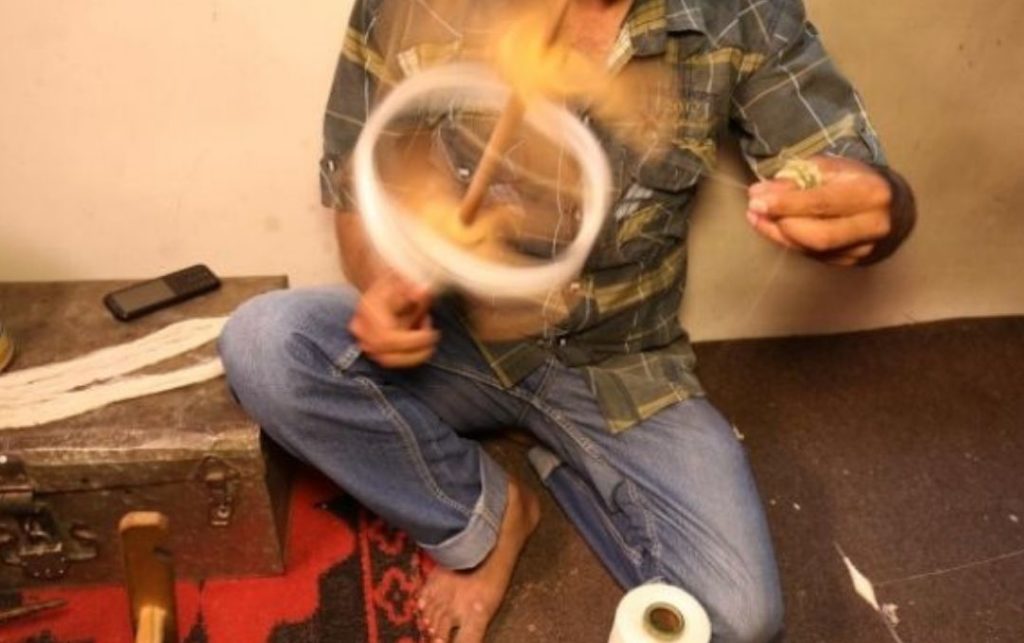
Hand spinning cashmere
On 5 August 2013, Kashmiri Pashmina was given the GI (Geographical Indication) certification. It is a sign which corresponds to a specific geographical location or a specific origin. Since Kashmir Pashmina is the only Pashmina in the world that is spun over a traditional Charkha (locally known as the yinder), and traditional wooden handloom to weave, it is hence the most original. Hence, if you find the mark of GI (Geographical Indication) over your Kashmiri wrap, it would mean that the shawl is
Hand Spun
Hand woven
Fibre diameter 12-16 microns
And if your shawl has a GI tag attached to its base, rest assured. You are owning the purest form of Kashmiri Pashmina
Identifying a pure piece is a must. If customers do not have the true knowledge of how a Pashmina looks like, they will fall for water pashmina that is fake pashmina
Mixing of Pashmina
Some years back, a few traders noticed that the Pashmina trade was booming. The only thing that stopped its sale from touching the sky was its less production and higher demand. Hence to increase production, these traders introduced power looms into this trade. Power looms could manufacture the same shawl in five minutes which is handloom made in four long days. Hence the production of these “fake” shawls met the demands, and customers ran to their units.
The gossamer Cashmere threads have been handwoven over a handloom to make the process a magic spell
To bear the wear and tear and strain of the power loom, the fine and gentle Cashmere was altered in its weave. Some strengthening fibre like silk or nylon was mixed with pure Cashmere, and the resultant shawl was then treated with chemicals. These shawls did not last long, due to the destructive effects of chemical treatment. Moreover, the nylon threads were not always dissolved in the chemicals, and as such, the shawl would remain impure.
What is a Water Pashmina Shawl?
Such a variant of Pashmina, where Cashmere is mixed with silk is called water Pashmina. Water Pashmina is 30 percent silk and 70 percent Cashmere. This variant is well known as it is deliberately made so for durability and shine. These scarves are lightweight, but not as warm as a pure Pashmina is. Nevertheless, they aren't even worn for the purpose of warmth, and usually, women love these for the beautiful flowy texture and a shimmery base.
Manufacturers of water Pashmina claim that these can be worn all year round. This makes it obvious that this variety has nothing to do with pure Pashmina, which is uncomfortable to wear in hot summers. Water Pashminas are full of shine and are even reversible, but definitely, they aren't a type of pure and original Kashmiri Pashminas
Pashmina is the regal art of transforming raw Cashmere wool into exquisite wraps, shawls, stoles, and other accessories. Pashmina originated in Kashmir and till now its processing takes place here in the valley. Here skillful artisans spend months and years together to conjure one single masterpiece called Pashmina shawl.
Where does Pashmina come from?
Pashmina comes from Ladakh where an exotic species of goats grows Cashmere over its body. Later, Cashmere is ethically combed over the body of this goat, collected, cleaned, spun, woven into the fabric, and later converted to the ever famous Kashmiri Pashmina shawls.
The Hometown - Changthang, Ladakh
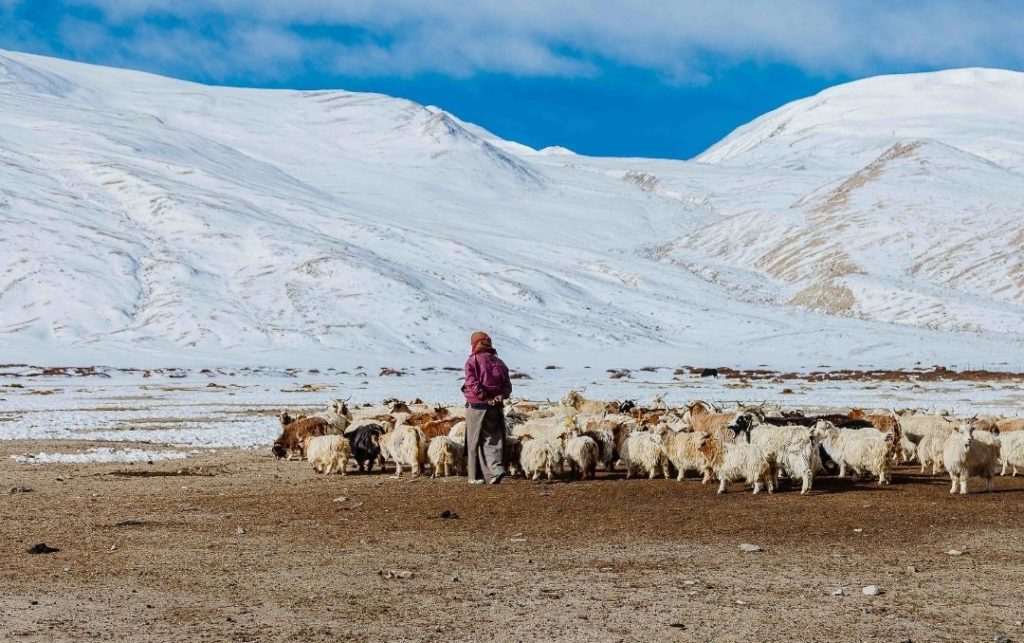
Changthangi goats survive and provide for the tribal locality Ladakh
Changthang is a region in Ladakh which lies over 14000 feet above sea level. This area is inhabited by tribal herders mostly, whose primary activity is to rear a special type of goats which give them wool, milk, and meat. This goat is the Capra Hircus, also known as Changthangi goat/Cashmere goat/Pashmina goat. The goats are bestowed upon the people for a reason. The area of Changthang experiences a harsh winter and temperatures go below -40 degrees. In such a climate, it is just these goats that survive and provide for the tribal locality. But how?
The answer is Pashmina.
In winter, Pashmina goats grow a soft and exceptionally warm fleece over some parts of their body. Goats grow Cashmere wool over their underbelly, backbone area, behind the ears, at the neck, etc. It is just because of this warm fleece that the goat survives a -40 degrees temperature. This is the raw wool, called Cashmere. It is this Cashmere that is later processed to make Pashmina
As winter leaves and spring arrives, the warm fleece makes the goat extremely hot. Simultaneously, it rubs its body all over the place against rough surfaces like hard rocks, bushes, and trees to get rid of some portion of the wool. This is collected and the rest of the wool is combed off its body to get it rid of the discomfort.
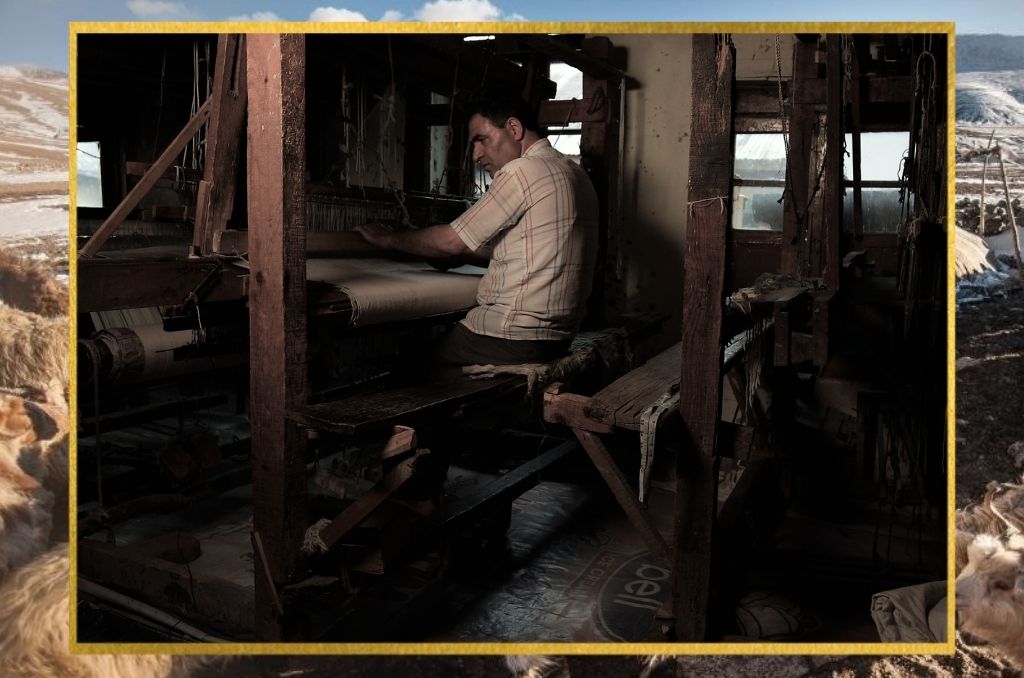
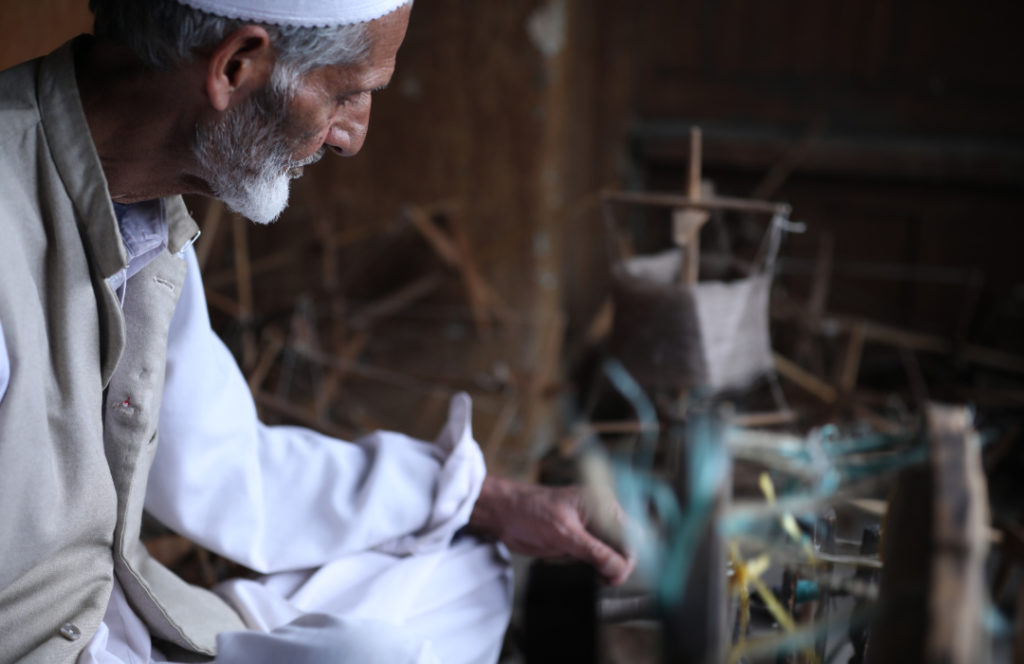
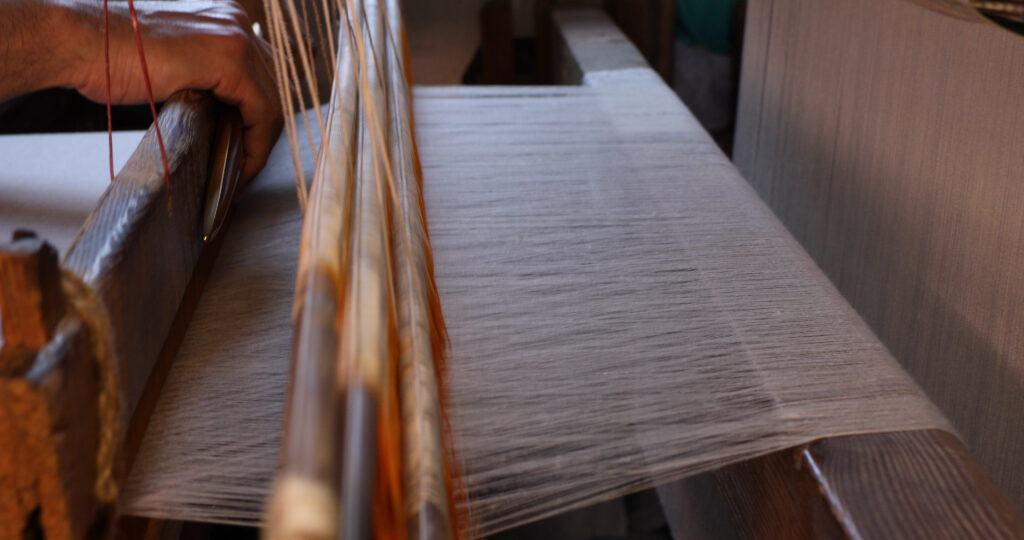
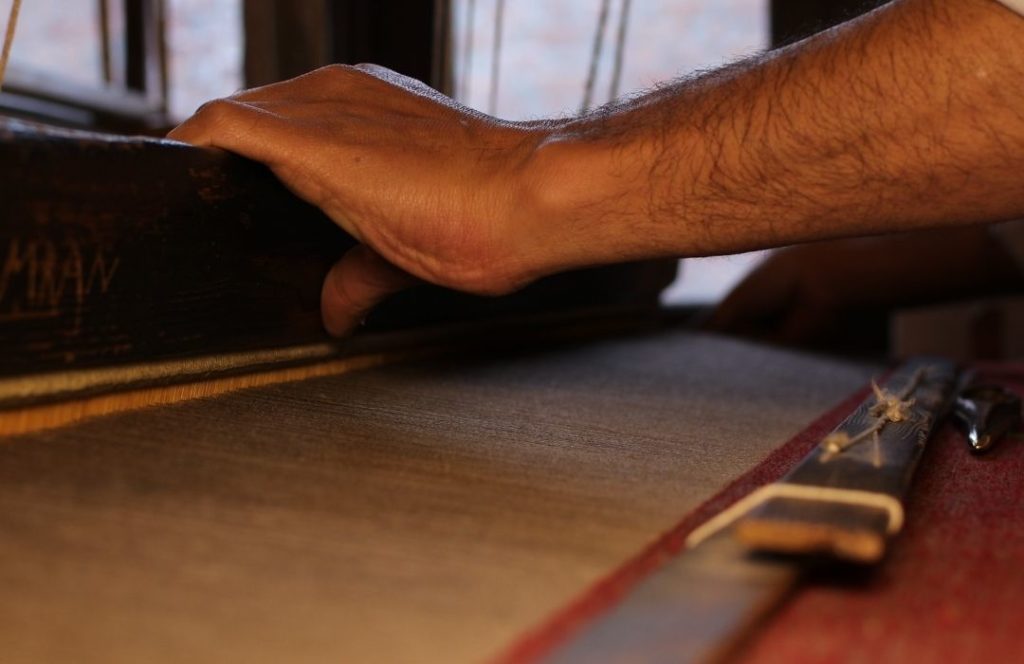
This raw wool is sent to Kashmir where upon arrival it is firstly cleaned properly. There are skin flakes, dirt, and other contamination that need to be removed in order to get pure wool. After this stage is completed, spinning begins. A wooden spinning wheel locally known as Yinder, is used for spinning raw wool and converting it into long yarn. The yarn is extremely delicate and fine. Its diameter is just 12-16 microns. Hence, it needs careful handling and masterly skill. This yarn after properly spun is handed over to weavers. Weavers are usually men, who have over 30 years of experience. They sit, two at a time, and start weaving the yarn over a traditional wooden handloom. A fabric is prepared and this fabric is later converted to Pashmina shawls, stoles, scarves, and other accessories and apparel.
Artisan weaving a Pashmina
Pashmina is often associated with Kashmir, and not with Ladakh. It is because the entire processing, from raw wool to complete shawl, is done in Kashmir. Kashmiri artisans have mastered the skills since the 16th century and passed on this art through generations together. It is because of the meticulous skills of these artisans that Pashmina is often called Kashmiri Pashmina and the maximum number of luxury shops dealing with Pashmina shawls are found in Kashmir.
How to pronounce Pashmina?
People around the world are well acquainted with Pashmina. Everyone wants to have at least one Pashmina shawl in their wardrobe. As such, foreigners want to know how to pronounce Pashmina. Europeans call it Cashmere, and they hardly pronounce Pashmina to address the shawls and wraps. But others ask about how to pronounce Pashmina. So here it is.
'Pash' as in 'Hush'
'MI' as in 'SEE'
'NA' as in 'LAA'
This is as per the dialect of Kashmiris. If you can't pronounce Pashmina properly, that isn't a big deal
But what is a big deal is that you buy a pure piece.
Handwoven on traditional wooden looms in a tedious three days long process, the Pashmina shawls are truly a work of art
Always look for authentic vendors, ask them for certificates of the shawls they are selling you, look for the GI mark on the base. Do not leave yourself vulnerable to cheating. Moreover, attain more and more knowledge about Pashmina and its purity detectors.
There are several tests which can be done at home to test the purity of Pashmina.
Ladakh - Northern India - in the state of Jammu and Kashmir is world-renowned for its high mountain ranges, untouched natural beauty, and the remote cultural practices that the locals follow. It is a land of high passes, and as such is sparsely populated. The people - who are mostly Buddhist nomads - follow a simple lifestyle, and aren't affected by fashion fads and the changing world beyond the borders of their basic ecosystem. It is only the people and their animals who are the company to each other. Rearing animals is the most common occupation of the people, as the environment-induced rugged terrains do not allow farming. Amongst the animals, sheep, yaks, ibex, and goats are most popular and apparent. But the most famous animal living in this area is the Changthangi goat or the Cashmere goat.
The Cashmere Goat
The 'Changthangi goat', also known as the Changpa, pashmina, or Cashmere goat is found in the Changthang area of Ladakh in Kashmir, North India. However, it also inhibits the regions around Tibet, Nepal, and Burma. This breed of goats is mainly raised for its ultra-soft cashmere wool production. Once this Cashmere wool is handwoven, it turns into the world-famous Pashmina shawls. Changthangi goat grows a thick, warm undercoat that naturally grows over its body as a defense against freezing temperatures that Ladakh experiences in winters.
This fleece is exceptionally warm, and comfortable, and it keeps the goat warm all winter long. The fibre is extremely lightweight and fine too. A full Cashmere wrap weighs just around 300 grams, with its spun yarn measuring between 12-15 microns. Wraps or sweaters made from Cashmere are cherished worldwide and sell at a very high price as it is considered as the finest of its kind.
Changthangi goat is a medium-sized animal and a domestic breed of goats. They are usually white in colour, but can be also seen in black, grey, ash, and brown. Both males (called Buck) and females (called Doe) have long twisted horns. The average bodyweight of the buck is around 30 kg, and the Doe weighs around 26 kg. Changthangi goats are quite active, cautious, and not lazy or placid. These are physically hardy and strong animals. They are raised by nomads, by moving from one place to the other looking for grasslands for them to feed upon.
Cashmere wool protects these animals from the cold
The temperature in this area plunges to as low as minus 40° C. As such it is just the Cashmere wool that protects these animals from the cold that can otherwise freeze them to death. The production varies from goat to goat, ranging from 70 to 500 grams per animal. This fleece is procured by combing the same of its body using specialized tools and techniques.
The goats give birth to younger ones once a year and produce just one calf each time they deliver. A mature doe yields 200 to 300 ml milk per day once its calves are weaned. It is this milk that survives the Nomadic tribe of Changpa, besides other things that they consume.
Processing of the fine wool
Even though Ladakh is blessed with Cashmere, the processing of the same is done in Kashmir. Kashmir is a place that brims with art and its artisans. Cashmere processing artisans are the most skilled and experienced craftsmen here in the valley. As soon as Cashmere comes from Ladakh, its cleaning starts.
The process is done over a spinning wheel made of wood
Clean Cashmere wool is handed over to womenfolk, who come from remote, underprivileged areas of the valley. They sit in groups and start spinning the clean lumps of wool. This process is done over a spinning wheel made of wood. This produces yarn, which has a diameter of 12-15 microns only. Note that the average human hair has a diameter of 50 microns.
Spun yarn is collected together, and sent to get hand woven. Men await at handloom units and mount the fine, delicate yarn over the heddles of the handloom with exceptional perfection. Hand weaving Cashmere yarn takes about 3 to 4 days, and a Pashmina shawl is prepared after meticulous, painstaking efforts and high skill. What colour is Cashmere going to be will be decided at this step. The shawl will be dyed according to requirement.
These shawls are later embroidered with hand, into breathtaking patterns, and the world watches these mesmerizing pieces of art unfold.
Handmade in the warmest fibres of Himalayan Cashmere
What is Cashmere colour originally will depend on the colour of the goat. Natural Cashmere is found in just a few shades. White, black, Ask, brown, or tanned shades are naturally acquired from the goat itself. However, what is Cashmere coloured in depends on whatever the requirement is. We have seen Cashmere wraps in pastel blues, greens, and browns, to bright yellows, pinks, and reds. Nude shades, as well as bright shades, are available in Cashmere. If a fabric has a darker colour naturally, and the customer needs a lighter one, it is treated with bleach to make it conform to the choice. Nevertheless, women’s preferences keep changing and they would never like solid pieces to be worn forever. Luckily Cashmere takes in prints, patterns, and ombre styles, which have to be dyed more than once. But since wool is versatile, it can be moulded into any trending style.
Purity of Cashmere
Handmade Pashmina on a Yinder
More than anything, purity has to be the number one factor you check when buying a Cashmere. Many dealers offer machine-made or blended Cashmere products, which do not serve the purpose of buying Cashmere in the first place. Many of them sell sheep wool products and claim those to be pure Cashmere products. As such it becomes really difficult for a customer to differentiate between false and pure pieces.
Save yourself from buying a fake piece. Always buy from an authentic vendor. Make sure your vendor presents to you a certificate of purity for every product you take. Or else check for the geographical indication (GI) mark somewhere over the base which proves the product’s authenticity and purity.
Cashmere is a lifetime investment. If cared about properly, it lasts even up to 30 years. But that is the case for only pure Cashmere. Fake Cashmere products will wither within a few years of use. Be careful while shopping, and get your already bought pieces checked too.
Kashmir (or Cashmere as pronounced by Europeans) is very well known as “The Paradise on Earth”. And that is owed to its abundant scenic beauty which each and every visitor cherishes. Kashmir is a treasure trove of natural splendors, and one cannot stop one from visiting the valley again and again. Majestic mountain peaks, pristine rivers, untouched valleys, and people filled with love and compassion for you; that is what you get to see on your every visit to Kashmir.
Kashmir is the perfect combination of natural spectacles and man-made treasures. Art and craft are a part and parcel of this beautiful valley. Artisans of Kashmir have excelled in hand-making art marvels and sharing them with the entire world. The grandeur of their handmade articles and their artful bent of mind has always been appreciated by patrons around the globe. Be it their creativity in making Papier Mache items, their immense skill in wood carving, their meticulousness when it comes to carpet weaving, or their crafty imagination in any craft that the valley accommodates, these craftsmen are the true masters. But there has been one single winner in the handicraft industry of Kashmir, which crossed all borders since it was discovered for the first time. And that is Pashmina shawl making.
Where does Cashmere come from?
Cashmere comes from Ladakh, where a rare species of goats grows it over its body. It is Cashmere wool that is the actual hero. Let’s go through the origin, processing, and finishing of Cashmere. Let's see how this lump of wool helps to create magic in the form of warm winter wraps and accessories
What is Cashmere made of? Origin of Cashmere Wraps
Changthangi goats in Ladakh
Cashmere fleece is found in Ladakh, where the Changthangi goat resides. The area has harsh climatic conditions and the temperature in winter dips as low as -40 degrees. To protect the Changthangi goat from such conditions, nature has bestowed it with Cashmere wool. Cashmere grows on its underbelly and keeps it warm in the harshest of weather. In fact, the only reason that the goat is able to roam about freely even in the peak winter season is the protection provided to it by Cashmere.
However, as soon as summer arrives, the goat becomes uncomfortable. That is because the wool is exceptionally warm, and now unbearable for it. This makes the goat rub itself against rough surfaces like shrubs, rocks, and walls to get rid of this wool. Herders take note of the situation and immediately call for professional help. Professionals bring along specialized tools like large toothed combs, fine-toothed combs, and other tools to gently comb the wool off the goat’s body. This raw wool is Cashmere (locally called Pashm). It is collected and put into small zip-lock packets. Later it is cleaned by local men and women, and a partially cleaned batch of wool is sent to Kashmir for further processing.
When the raw wool arrives in Kashmir, it is handed over to womenfolk. They sit in groups and start with the cleaning of raw fibre. Raw fibre is full of dirt, dust, and foreign material which gets attached to the animal as it moves around. Impurities like vegetable wastes, grass, dirt, thorns of bushes are found to be mixed with this fibre. Besides guard hair is still mixed with pure threads. The wool is cleaned thoroughly and placed in a container, filled with rice powder, for 3 to 4 days.
Womenfolk from all parts of the valley come together and begin the process of spinning. This is done by fitting the raw wool in a wooden spinning wheel locally known as "Yinder". Spinning the wool transforms the raw wool into long threads or yarn. The yarn is so fine; its diameter is 12-16 microns only.
The yarn is then handed over to weavers. Weavers are usually men, who sit two at a time on a wooden handloom that is native to Kashmir. Men mount the fine yarn on the handloom and begin weaving into fabric. This fabric can be made into a shawl, wrap, scarf or handkerchief even. This is how Cashmere shawls are made from Cashmere wool
Embroidering Cashmere Wraps
Pashmina makers
Since Cashmere is fine and delicate, it stands only for hand embroidery. There are several types of hand embroidery that are done over Cashmere wraps. This makes them more beautiful, and resplendent to look at.
Sozni Kari: Sozni is a fine thread and needlework which is done over the wrap manually inch by inch. Sozni can be done all over the wrap, or just the borders.
Paper Mache Embroidery: A thicker thread and needle are used to make opulent, colourful patterns on a shawl in this type. The end product simply looks like a painting.
Tilla Embroidery: Tilla used metal threads dipped in gold or silver. This embroidery becomes heavy for a Cashmere wrap and is hence done over borders or as booties running all over the base.
With times changing and younger generations finding embroidered shawls overdone for them, Cashmere adapted to modish patterns and introduced some casual designs.
Modern Design Wraps
Handwoven in the realms of Kashmiri Pashmina is a Cashmere Wrap crafted with love and warmth
Solids: Plain Cashmere wraps are loved by women of all generations, ages, and temperaments. Solid wraps have beautiful colours, pastels, and brights, making them perfect for almost all occasions. Be it office, casual get-together, nights out with friends or family, or visiting your grandparents, solid Cashmere wraps are the first choice in Winters, spring, and fall.
Printed and Patterned Cashmere wraps: If you aren't a fan of plains, Cashmere has chic stripes, checks, plaids, and abstract patterns for you. Besides these, Cashmere wraps now host animal prints, floral prints, and even customizable prints and patterns. These are perfect for dates, meetings with clients, or as birthday gifts.
Laced Cashmere wraps: This category of Cashmere wraps is something perhaps the bridesmaids were looking for. Dainty French Laces have been hand-stitched onto the base of a wrap which makes it look pretty and feminine enough to be worn as a bridesmaid, or gifting it to one.
In addition to being useful accessories, cashmere scarves are opulent items that provide warmth and coziness to any ensemble. The smooth and delicate texture of these scarves, which are made from the finest Cashmere fibers, makes them ideal for wrapping around the shoulders or neck. They are adaptable, going from comfortable daily wear to sophisticated evening wear with ease thanks to their rich texture and lightweight nature. A cashmere scarf instantly boosts style and sophistication, whether it's worn with a basic sweater or a fitted coat.
Cashmere scarves are a great medium for artistic expression because they are available in a wide range of hues, designs, and weaves. Every personality and situation can be suited by a Cashmere scarf, which comes in vivid flower motifs, intricate paisley designs, and classic solid tones. Because of the elaborate artistry that goes into its manufacture, each piece is unique and frequently incorporates artisanal skills like hand-looming or delicate stitching. Because of their adaptability, fashionistas may combine scarves with various ensembles to create fresh styles and highlight their own style.
Cashmere scarves are not only beautiful and functional, but they also have a timeless appeal that goes beyond fads. Purchasing a premium cashmere scarf entails accepting an item that will represent style and sophistication for many years to come in addition to offering warmth. A Cashmere scarf, whether given as a considerate present or as a personal treat, is a treasured piece that elevates regular clothing into something genuinely unique, beckoning wearers to enjoy in the opulent comfort and style that only Cashmere can offer.
Pashmina Shawls crafted from finest Cashmere
The finest Cashmere fibers are used to create Pashmina shawls, which are the pinnacle of luxury and beauty in textile design. These shawls are manufactured from the silky undercoat of Pashmina goats, who are known to produce some of the most exquisite and delicate fibers available, and have their origins in the high-altitude regions of the Himalayas. The artists who weave each shawl, who frequently use age-old techniques that have been handed down through the years, are a monument to their talent and creativity. The end product is a fabric that is lightweight, extremely soft, and warm, making Pashmina shawls ideal for layering throughout the year.
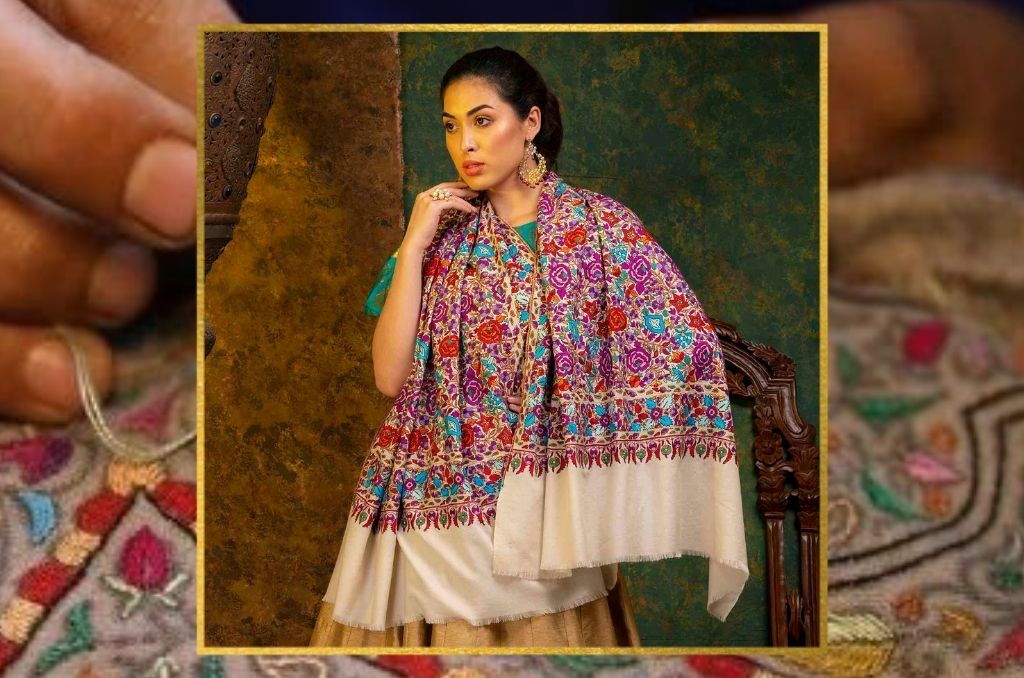
Pashmina shawls are beautiful not just because of their material but also because of their elaborate details and gorgeous designs. These shawls, which are frequently embellished with exquisite designs like paisleys, flowers, or delicate stitching, highlight the rich cultural legacy of their place of origin. The painstaking weaving and hand-embroidery procedures that give each piece life demonstrate the artistry required to create a Pashmina shawl. These shawls are adaptable accessories that can enhance any ensemble, from casual to formal wear, thanks to their vivid colors and detailed patterns, which offer countless style options.
Beyond their visual appeal, Pashmina shawls are a sustainable option, particularly if they come from ethical producers who place a high value on animal welfare and ethical husbandry. In order to produce this opulent material, the goats are treated humanely during the meticulous collection procedure of Pashmina fibers. Purchasing a Pashmina shawl not only allows you to enjoy a work of beautiful craftsmanship, but it also supports environmentally friendly and sustainable techniques that honor the craftspeople who spend their lives upholding this ancient custom. More than just an accessory, a Pashmina shawl is a classic item that perfectly captures the elegance, culture, and beauty of premium cashmere.
History
The history of Cashmere is interesting enough to be made into a movie. It has watched ups and downs and then finally perished, only to be revived again. The world, especially Europeans, have a special relation with Cashmere because they are the ones who invented the term “Cashmere” as an anglicisation of the word Kashmir. And their countries were the first ones who manufactured their own Cashmere wraps, with their own unique designs. However, even then, the wealthier ones among them still preferred Cashmere from Kashmir, as it was the best in terms of quality, warmth, and grace.
It was around the 16th century when Cashmere was discovered for the first time in Kashmir. A Sufi saint by the name of Mir Syed Ali Hamdani discovered fine wool in Ladakh and ordered craftsmen to handcraft a pair of socks from it. When the order was complete, the saint was mesmerized by it. He gave it as a gift to the then ruler of Kashmir Zain ul Abideen. The king was impressed, so much so, that he ordered manufacturing units to be set in the valley for processing Cashmere. As a matter of fact, he invited hundreds of craftsmen from Iran and ordered them to train the locals in Cashmere shawl making.
Prominence in Europe
Not only in Kashmir, Cashmere wool gained prominence all over the world when the news of its grandeur spread. Europeans visited the valley, and later started trade between the two nations. France was the first country to order Cashmere shawls from Kashmir, which in turn increased foreign demand of the shawls, making Kashmir economically strong, and artisans one of the most wealthy communities.
Empress Josephine in Kani Pashmina
Later Scotland too traded Cashmere, and started their own units to process Cashmere. Cashmere shawls were set in a timeless fashion by Empress Josephine who owned hundreds of Kani Pashmina shawls after she was gifted one by her husband Napoleon. Kings in Persia too considered Cashmere wraps as holy and used to give Pashmina shawl to rulers of other countries as gifts. They called it ‘Khilat’. Hence Cashmere wraps traveled all over the world, and visitors from Australia, Central Asia, the Middle East, Europe used to visit the valley just to buy Pashmina shawls.
Cashmere vs. Pashmina | What is the difference between Cashmere and Pashmina?
For so many years now, there has been this confusion about Cashmere and how it is different from Pashmina. We have been asked this question multiple times, “What is the difference between Cashmere and Pashmina?”. So today we answer all questions regarding the differences and similarities between the two terms.
While Cashmere is the wool that is used to make Pashmina shawls, Pashmina is the name given to the art of handcrafting luxury wraps from Cashmere fibre. The art of Pashmina includes spinning and weaving cashmere, the downy undercoat of the Changthangi goat to make luxury shawls, scarves, stoles, and more. Hence Cashmere is the raw material, and the complete shawl is called Pashmina shawl, albeit locally. Globally even Pashmina shawl is called Cashmere wrap.
The gossamer Cashmere threads have been handwoven over a handloom and colourful threads are entered into the weave of Kani Pashmina
Pashmina is a local term. It comes from the Persian word ‘Pashm” which means ‘Soft Gold’. Just because a Persian Saint discovered it, he began calling it Pashm, as it was soft wool and exceptionally treasured and precious. Hence the term Pashmina can be understood in Kashmir or India.
Cashmere is the term Europeans coined when they could pronounce Kashmir as locals would. They used the term to describe the wool which comes from Ladakh.
The alleged cruelty factor
Are goats killed for Cashmere?
Is Cashmere banned?
Should we buy Cashmere?
Is Cashmere worth it?
These are some common questions that are continuously asked by customers, mostly those who are responsible citizens of the planet and abhor animal cruelty and that done towards the planet. People want to know if they are investing hundreds or sometimes thousands of dollars for buying a Cashmere wrap, which is worth the money. Or are they contributing towards the destruction of the planet?
However, the answer to all these questions is NO. Cashmere is cruelty-free, and goats are not killed for Pashmina shawl production, and hence Cashmere is not banned. To know the reason for the ban on this kind of wool, we today dig deep into the making of Pashmina shawls and see for ourselves why it is cruelty-free and ethical to have.
Cashmere is acquired from Ladakh where it is grown as an undercoat over the body of the Ladakhi Changthangi goat. The goat naturally grows the wool over its body in winters and it protects the goat from the freezing cold outside. (the temperature goes down to -50 degrees). But as soon as summer arrives, the goat becomes too uneasy and itself rubs its body with rough surfaces to get rid of it, which is not possible completely. Herders come to its rescue and professionals gently comb off the wool from its body. This is early summer, and not the winter season. Moulting season is Spring to Summer. This wool is fine Cashmere, and upon processing it is converted to Pashmina shawls, stoles, scarves, and even apparel.
Reasons for Pashmina being ethical and cruelty-free
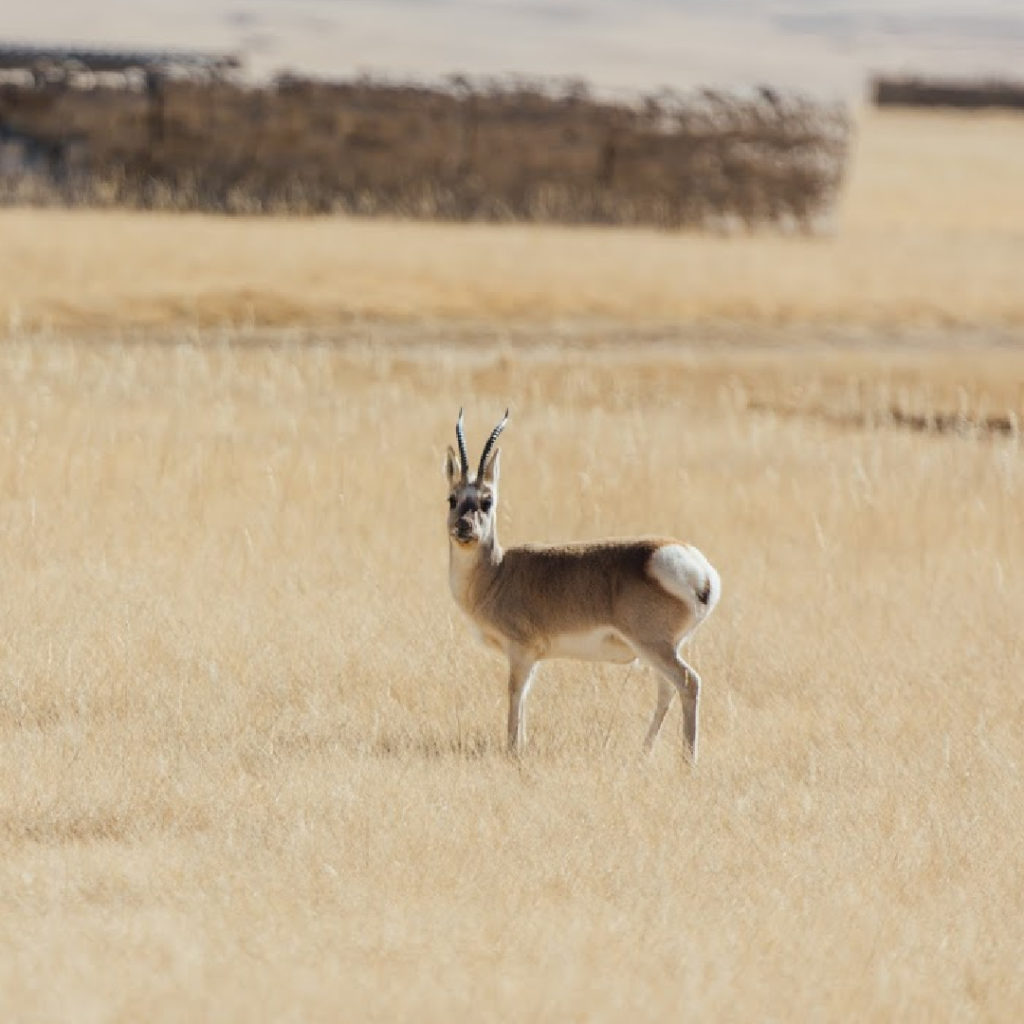
First and foremost, Cashmere goats are domestic. It is Shahtoosh which is unethically obtained because Chiru goat is a wild animal and it has to be killed in order to obtain its wool i,e, Shahtoosh.
Pashmina goats themselves need to get rid of the wool. It is necessary to remove the wool from their bodies as it might be dangerous to carry this burden in the hot summer season.
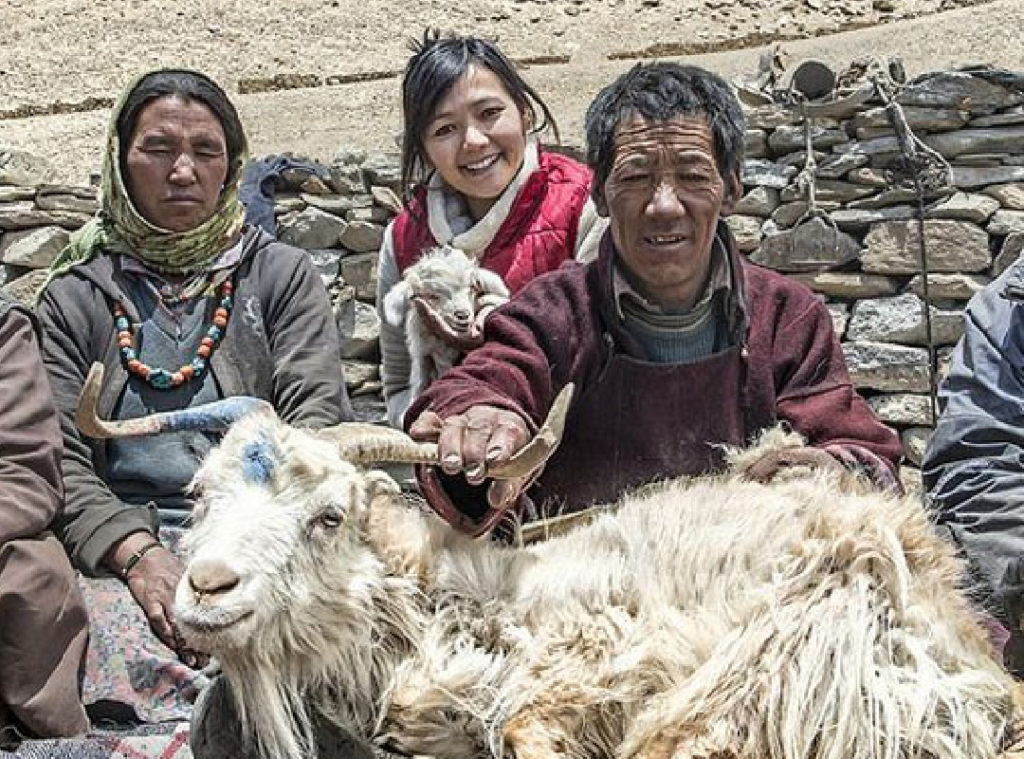
A Pashmina Goat Capra hircus sits placidly in the lap of a Changpa nomad at Tsokar in Changathang
Pashmina is not cruel. Pashmina goats are not killed for the wool. They aren't even slightly harmed, as the wool is combed off and not sheared. Besides, they are domestic animals, and very well know about the process of combing off their wool.
The ban on Shahtoosh shows that it is Shahtoosh that is unethical. Pashmina has never been banned. In fact, it is traded all over the world.
The practice of using traditional methods and processes makes Cashmere wraps highly durable, and pure pieces can last for even 30 years. It is a tradition in Kashmir, that when a bride is about to leave her place, her mother enshrouds her in a classic Pashmina from her own treasure trove. The shawl doesn't look old, but heritage
The goal of sustainability in cashmere manufacturing is to strike a balance between the luxury of this prized material and ethical and ecologically conscious methods. The environmental effects of Cashmere goats' excessive grazing, especially in areas like Mongolia, are one of the main issues facing the cashmere industry. Due to their heavy grazing, these goats—known for creating the silky undercoat that eventually becomes cashmere—can cause soil erosion and land damage. To combat this, sustainable Cashmere projects prioritize rotational farming and managed grazing methods, which enable the land to recover and shield ecosystems from long-term harm. Producers of cashmere contribute to environmental preservation and the long-term availability of the fiber by encouraging sustainable herding methods.
Another crucial component of sustainable cashmere is animal welfare. Humane treatment of Cashmere goats is the main emphasis of ethical companies, which make sure that the animals are not hurt during the combing or shearing procedures required to gather the delicate undercoat. Furthermore, a lot of sustainable Cashmere initiatives choose smaller, locally owned farms over massive industrial production, guaranteeing that the goats are nurtured in more natural and healthful environments. In addition to enhancing the fiber's quality, this helps local herders and maintains the traditional ways of producing cashmere.
Winter season is almost here, and it's time to layer up in cozy sweaters and accessories. But isn't it really necessary to know what wool you need before plunging into the depth of this downy fibre. So we planned to demystify wool, to help you make a better choice, next time you go out to shop. Also, we give you a number of strong reasons as to why choose Cashmere amongst all wool types and if it's warm.
History of wool
Wool in garments has been used since 6000 BC. It was the Iranians who started to rear sheep to take advantage of their wool. Hence wool started as a basic need, and today it is a fashion industry in which many people have the luxury to choose from hundreds of options in front of them.
Apart from stopping chilly winds to get to you, wool often gives a luxurious feeling especially those varieties which are acquired from rare and exotic animals. But you might be surprised to know that wool is different from hair, and the sweater, apparel, or wrap you are wearing might be made of either wool or hair!
Wool is sourced from sheep whereas hair is sourced from other animals like goats, alpaca, rabbits, etc. Wool is the outer fleece over the sheep's body, while hair can be the top fleece (guard hair) which protects the animal from rain etc, or the undercoat, which protects it from cold. Guard hair is coarser than the down hair. It is the undercoat that is soft, fine, smooth, warm, and highly prized. Wool fibres are short whereas hair fibres are longer.
Ladakh is home to a tribal group of nomads, who rear these goats for their wool, milk, and meat
Cashmere is one such down fibre of the rare and exotic Ladakhi Capra Hircus goat. The goat is found 15000 feet above sea level in Ladakh's Changthang area. The region is cold, dry, and home to a tribal group of nomads, who rear these goats for their wool, milk, and meat.
The goat grows a special kind of down coat in winters which protects it from one of the harshest winters ever (-40 degrees). But as summer arrives, the fleece makes it too hot and uneasy, which results in the goat rubbing itself against coarse surfaces to get rid of it. The rest of the wool is professionally combed off its body. It is collected and sent to Kashmir
Processing the fine wool
The Kashmiri Artisan hand embroidering an exquisite Pashmina Shawl
Processing of raw Cashmere takes place in Kashmir. Wool is cleaned for several days, then spun and woven manually using basic spinning wheels and handlooms. What comes out as a result of weaving fine Cashmere wool is the world-famous Pashmina shawl.
Hence Pashmina is the royal art of handcrafting luxury shawls out of fine Cashmere wool. Cashmere is different and superior in quality from other kinds of wool/hair as it originates from a rare species of goats. The yarn is so fine that the diameter is between 12-16 microns only. The process of spinning and weaving is quite labour intensive and it takes as many as 50 different artisans to complete one Cashmere wrap. If the wrap is to be embroidered, it takes 4-5 years to complete each piece. Cashmere wraps were once only afforded by the royals, rich and influential personalities, and even today, Pashmina shawls are a major yes for celebrities around the world. It is the natural elegance, exquisite craftsmanship which goes into making it, sumptuous warmth, and coziness that makes Cashmere the king compared to all its counterparts
Surprising properties of this luxury fibre
A few amazing properties of Cashmere are listed below. This makes one wonder why do they not own even a single piece of the same.
Cashmere fibre is combed from the bodies of a rare goat called Changthangi goat, which is found in Ladakh.
Even though the fibre is gauzy thin, yet manages to protect the animal from freezing temperatures outside.
To make a single sweater of wrap from Cashmere, wool is required from 3-5 goats.
One goat produces just 4-6 ounces of fleece per year
Cashmere naturally comes in a few colours. These are white, grey, ash, brown, and black. However, the finished product can be dyed in any shade, as the fibre holds any dye.
Cashmere yarn is just 12-16 microns in diameter. This makes it 4 times finer than human hair which is believed to be 50 microns
A Cashmere Wrap handwoven along with brilliant Kani threads.
What else would a person want when winter unrolls. A cup of hot chocolate, their favourite book, and something warm to cuddle in. Cashmere can be your ideal cuddle partner on chilly days. Whether you are looking for something, warm, comfortable, lightweight, or beautiful, Cashmere is your answer to everything.
It is really hard to maneuver on the days when the sun isn't shining at all. Therefore wearing the right fabric is quintessential. We found the ultimate solution in Cashmere for a number of reasons.
Cashmere wraps or sweaters come from Cashmere goats. These goats grow this fine wool as a down coat which protects them from the most freezing temperatures (minus 40 degrees). And if Cashmere can make the animal warm in such harsh winter, it should be really really warm.
Cashmere is 8 times warmer than sheep wool. And surprisingly it is much lighter than the same. A full Cashmere wrap is under 400 grams.
Cashmere has insulating properties. It very well knows how much warmth to produce. Cashmere wraps do not make one uncomfortable. These work in winters, as well as Spring and Fall.
Cashmere layers really well. You can be stylish as well as comfortable while wearing Cashmere. Other wool types tend to be itchy, and might not provide you with the heavenly comfort that Cashmere does.
Cashmere is super soft. Its feel against the skin is extremely luxurious and pleasant.
Cashmere vs Sheep Wool
Cashmere and sheep wool are both popular choices for warm clothing, but they have distinct differences that set them apart. Here's a comparison to help you understand how cashmere stacks up against sheep wool:
Softness and Texture
Cashmere: Known for its incredible softness, cashmere fibers are finer and smoother than those of sheep wool. This results in a luxurious, silky feel that is gentle on the skin and less likely to cause irritation or itchiness.
Sheep Wool: While sheep wool can be soft, it often has a coarser texture compared to cashmere. Some types of sheep wool, like merino, are quite soft, but they still don't match the silky smoothness of cashmere.
Warmth and Insulation
Cashmere: Is Cashmere warm? Yes. Cashmere is exceptionally warm, providing excellent insulation without the bulk. Its fine fibers create a natural loft that traps heat, making it ideal for cold weather.
Sheep Wool: Sheep wool is also known for its warmth, and it has the added benefit of being naturally water-resistant. However, it can be bulkier and heavier than cashmere, which might not be as comfortable for layering.
Weight and Lightness
Cashmere: One of the key advantages of Cashmere is its lightweight nature. Despite its warmth, cashmere garments are light and easy to wear, providing comfort without weighing you down.
Sheep Wool: Sheep wool tends to be heavier, especially when it gets wet. While it offers warmth, its weight can be a disadvantage for those seeking lightweight clothing options.
Durability
Cashmere: Cashmere is delicate and requires careful handling. With proper care, it can last for years, but it is more susceptible to pilling and damage than sheep wool.
Sheep Wool: Sheep wool is generally more durable and resilient. It can withstand rougher handling and is less prone to pilling, making it a practical choice for everyday wear.
Cost
Cashmere: Due to its luxurious qualities and the labor-intensive process of harvesting and producing it, cashmere is often more expensive than sheep wool. Its high cost reflects its rarity and superior properties. Sheep Wool: Sheep wool is more affordable and widely available. While premium types like merino wool can be pricier, they are still generally less expensive than cashmere.
Sustainability
Cashmere: The production of cashmere can have significant environmental impacts, particularly due to overgrazing by cashmere goats. Sustainable cashmere practices are becoming more prevalent, but they require careful sourcing.
Sheep Wool: Sheep wool is considered a more sustainable option. Sheep can be shorn annually without harm, and wool production has a lower environmental impact compared to cashmere
Benefits of Cashmere Beyond Warmth
When people ask "Is Cashmere warm" We say " Of course, and there is more to it". Its not just warmth, but many other characteristics that make Cashmere the luxury that it is. Here are some of them:
Luxurious Softness
Cashmere is renowned for its unparalleled softness, offering a luxurious feel that is gentle against the skin. Unlike regular wool, cashmere fibers are finer and smoother, providing an exquisite texture that is both comfortable and indulgent. This exceptional softness makes cashmere garments a pleasure to wear, adding a touch of elegance and refinement to any wardrobe.
Lightweight Comfort
Despite its ability to provide substantial warmth, cashmere is incredibly lightweight. This unique combination of warmth and lightness ensures that cashmere garments are not bulky, making them perfect for layering without feeling heavy or restrictive. The lightweight nature of cashmere also makes it an ideal choice for travel, allowing you to stay warm and stylish without adding extra weight to your luggage.
Hypoallergenic Properties
Cashmere is naturally hypoallergenic, making it an excellent option for individuals with sensitive skin or allergies. The absence of lanolin, which is found in other types of wool, reduces the likelihood of irritation or allergic reactions. This hypoallergenic quality ensures that cashmere can be comfortably worn close to the skin, providing both luxury and peace of mind.
Durability and Longevity
High-quality cashmere is known for its durability and longevity. When properly cared for, cashmere garments can last for many years, maintaining their softness and shape. This durability makes cashmere a worthwhile investment, as it not only provides immediate comfort and style but also stands the test of time, retaining its beauty and functionality for years to come.
Versatility in Fashion
Cashmere’s versatile nature allows it to be styled in various ways, complementing both casual and formal outfits. Whether it's a cozy cashmere sweater for a relaxed day out, a sophisticated cashmere scarf for a touch of elegance, or a chic cashmere wrap for a formal event, this fabric seamlessly integrates into any wardrobe, enhancing your style in numerous ways.
Caring for Your Cashmere: Maintenance Tips for Longevity
Cashmere is a luxurious and delicate fabric that requires special care to maintain its softness, appearance, and longevity. Proper maintenance ensures that your cashmere garments remain a cherished part of your wardrobe for years. Here are some essential tips to help you care for your cashmere:
Washing Cashmere
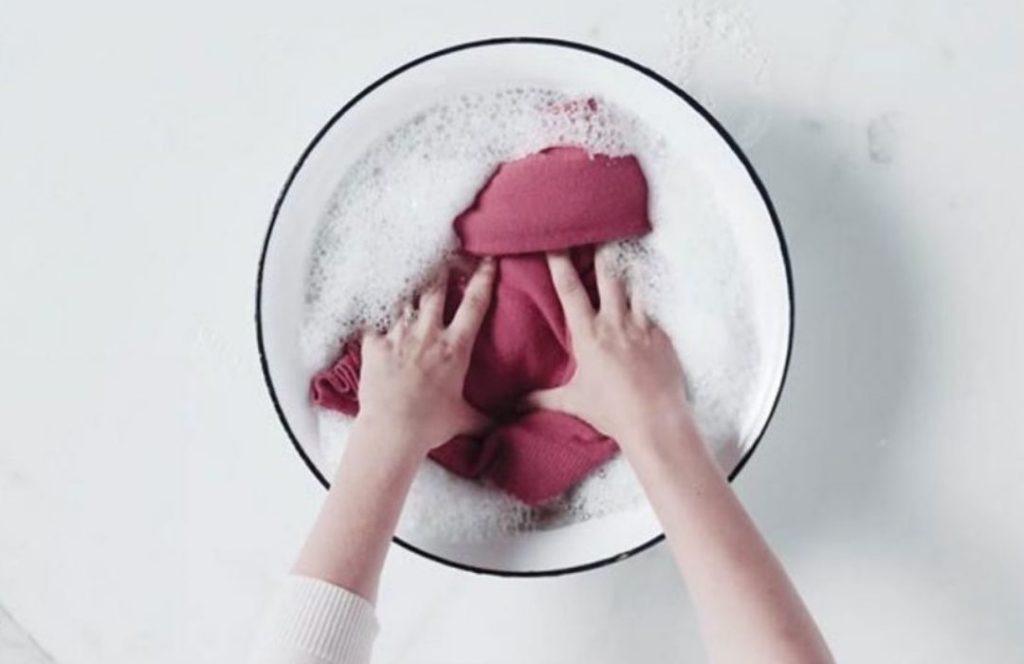
While some believe its better to hand over Cashmere to professionals, others consider hand washing the best option. Here is how to wash Cashmere to maintain its delicate nature and fine demeanor:
Hand Wash Only
While some Cashmere items may be labeled as machine washable, hand washing is generally the safest method to preserve the fabric’s quality. Use cold or lukewarm water and a gentle detergent specifically designed for delicate fabrics. Avoid regular laundry detergents as they can be too harsh.
Soaking and Gentle Cleaning
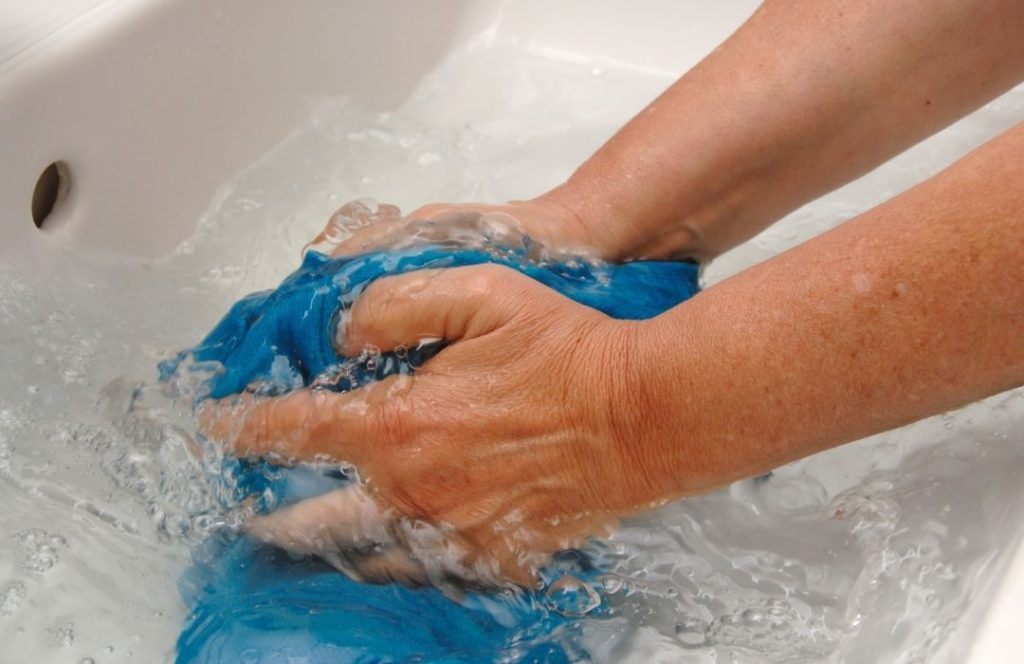
Fill a basin with cold or lukewarm water and add a small amount of gentle detergent. Submerge the Cashmere item and gently agitate the water with your hands. Allow the garment to soak for about 10-15 minutes, then gently squeeze (do not wring) the fabric to clean it. Avoid scrubbing or twisting, as this can damage the fibers.
Rinsing Thoroughly
After soaking, drain the soapy water and refill the basin with clean, cold water. Rinse the cashmere item thoroughly to remove all detergent residues. Repeat this process until the water runs clear and free of suds.
Drying Cashmere
While some air dry their Cashmere pieces in open air, others believe there is more to it. Here is how to dry Cashmere at home:
Squeeze Gently
After rinsing, gently squeeze out excess water without wringing the garment. Lay it flat on a clean, dry towel, then roll the towel with the cashmere inside to absorb more moisture. Unroll the towel and reshape the garment if necessary.
Air Dry Flat
Lay the cashmere item flat on a dry towel in its natural shape to air dry. Avoid hanging the garment, as this can cause stretching and distortion. Place it in a well-ventilated area away from direct sunlight or heat sources, which can cause fading and damage.
Storing Cashmere
The most careful step when it comes to maintaining Cashmere is its storage. The way you're storing Cashmere will dictate its condition in the next season.
Fold Carefully
When not in use, fold your cashmere garments neatly to avoid stretching and maintain their shape. Do not hang cashmere items, as this can cause the fabric to stretch and lose its shape over time.
Use Storage Bags
Store cashmere items in breathable storage bags to protect them from dust, moisture, and pests. Avoid plastic bags, as they can trap moisture and cause mildew. Instead, use cotton or linen bags that allow the fabric to breathe.
Moth Protection
Cashmere is susceptible to moth damage, so it’s essential to take preventive measures. Store cashmere items with natural moth repellents such as cedar balls, lavender sachets, or moth-proof storage bags. Regularly check your stored garments for signs of moth activity and clean them as needed.
Dealing with Pilling
Even though it is quite irritating to find your precious Cashmere experience pilling, the process is an indication of purity. Here is how to de-pill Cashmere:
Gentle De-pilling
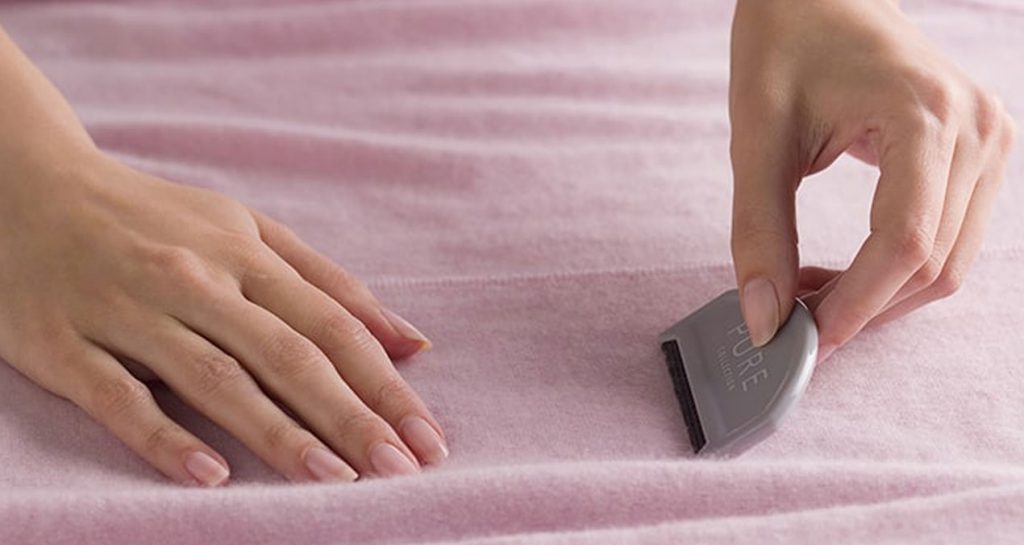
Pilling is a natural occurrence with cashmere and can be addressed with a cashmere comb or a fabric shaver. Gently remove pills without applying too much pressure to avoid damaging the fabric. Regularly de-pill your garments to keep them looking fresh and smooth.
Avoiding Excessive Wear
As gentle as it is, Cashmere needs precautions with wearing.
Rotate Your Garments
To extend the life of your cashmere items, avoid wearing them consecutively for multiple days. Allowing garments to rest between wears helps maintain their shape and reduces wear and tear.
Layering and Protection
When wearing cashmere, consider layering it over a lightweight top to minimize direct contact with the skin. This can reduce the need for frequent washing and protect the fabric from body oils and sweat.
By following these maintenance tips, you can ensure that your cashmere garments retain their luxurious feel and appearance for years to come. Proper care and storage will preserve the delicate fibers, allowing you to enjoy the elegance and comfort of cashmere season after season.
Real vs. Fake: Ensuring Your Cashmere is Authentic
Cashmere is a luxurious and sought-after fabric known for its exceptional softness, warmth, and lightweight feel. However, the high demand for cashmere has led to a surge in counterfeit products. Ensuring that your cashmere is authentic requires attention to detail and knowledge of key indicators.
1. Material Quality
Authentic cashmere comes from the undercoat of goats, specifically the Changthangi or Kashmir goat. Real cashmere is incredibly soft to the touch and feels warm and cozy against the skin. When examining cashmere, feel the fabric. It should be smooth and luxurious, without any rough or scratchy texture. Fake cashmere, often made from synthetic blends or lower-quality wool, lacks this characteristic softness.
2. Price Point
Genuine cashmere is expensive due to its labor-intensive production process and the limited supply of raw materials. If you come across cashmere products at unusually low prices, they are likely counterfeit or made from inferior materials. Be cautious of deals that seem too good to be true, as high-quality cashmere comes at a premium price.
3. Label and Origin
Check the label for clear information about the material content. Authentic cashmere products will carry a GI Tag, or the provider will provide you a certificate of purity. Additionally, consider the origin. High-quality cashmere often comes from reputable regions known for their cashmere production. The best quality Cashmere comes from Kashmir, originating in Ladakh.
4. Testing for Authenticity
There are a few simple tests you can perform to check for authenticity. One method is the burn test: carefully take a small, hidden piece of the fabric and burn it. Real cashmere will smell like burnt hair and leave a fine ash, while synthetic fibers will melt and emit a chemical odor. However, this test can damage the garment, so it’s best used as a last resort.
5. Pilling and Fiber Length
Examine the fibers closely. Authentic cashmere fibers are long and thin, contributing to the fabric’s softness and durability. Short, stubby fibers are often a sign of lower quality or fake cashmere.
Invest in Purity
Hence, Cashmere makes the ultimate luxurious companion as soon as winter kicks in. But one has to be careful that they aren't buying fake or blended pieces. In the past few decades, some fraudsters have started blending pure Cashmere yarn with nylon or silk, but sell it as pure Cashmere. Others use machines to spin and weave the fibre, and hence come up with artificially made Cashmere. If you wish to spend a comfortable, and cozy winter season, you definitely need to check the purity of Cashmere used in the product.
Cashmere's enduring appeal lies in its unmatched combination of softness, elegance, and warmth. For centuries, this luxurious fabric has been a symbol of sophistication and comfort, cherished by those who appreciate the finer things in life. One of the most common questions people ask is, "Is cashmere warm?" The answer is a resounding yes. Cashmere's natural insulating properties provide exceptional warmth while remaining lightweight, making it ideal for both chilly winters and cool evenings.
In addition to its warmth, cashmere offers a timeless style that transcends trends. Its versatility allows it to be fashioned into a variety of garments and accessories, from classic sweaters and scarves to contemporary wraps and shawls. The question, "Is cashmere warm?" goes beyond mere temperature; it speaks to the cozy, comforting embrace that cashmere provides, a feeling that no other fabric can replicate.
Caring for your cashmere ensures its longevity, allowing you to enjoy its luxurious qualities for years to come. By understanding how to maintain and store cashmere properly, you preserve not only the material but also the craftsmanship and tradition behind each piece.
In conclusion, Cashmere remains a beloved fabric for its timeless elegance, incredible warmth, and enduring quality. Investing in authentic cashmere is more than a purchase; it's an appreciation of a rich heritage and an embrace of unparalleled comfort. Whether you’re looking to stay warm in style or add a touch of luxury to your wardrobe, cashmere continues to be a wise and cherished choice.
Cashmere apparel and wraps are the solutions to almost all the winter woes that are related to cold. These are revered all over the world for their softness, fine texture, and exceptional warmth. Products made from Cashmere both look and feel beautiful. These are nature friendly due to being processed from natural fibre. These are considered the best buy in Fall and Winter seasons. But the question is - What is Cashmere, and where does it come from. Also, is cashmere cruel?
What is Cashmere?
Cashmere is the downy undercoat of the rare Changthangi goat, which is found in Ladakh, Northern India. Apparel, wraps, and accessories made from it are extraordinarily warm, lightweight, and feathery soft to the touch. Cashmere is manually sourced from Ladakh. The goat's hair is ethically acquired and processed to get opulent assortments of warm winter apparel and accessories. The most popular use of Cashmere wool is in the making of Kashmiri Pashmina shawls. The word Pashmina is derived from "Pashm" which translates to "soft gold" in the same language. How apt is the term!
Cashmere is acquired from Ladakh, where a high altitude, cold desert of Changthang is situated over 14,000 feet above sea level. This region experiences an extremely harsh and cold temperature (minus 50 degrees at times). Because of these conditions, vegetation is difficult to grow naturally. Hence to survive the condition, the locals herd goats for milk, meat, and skin. These goats, called the Changthangi goats, are the ones that grow fine wool over their bodies. This protects them too from the bitter temperatures outside.
As soon as winter ends and warmth engulfs the region of Changthang, the same protecting wool feels uneasy and discomforting for the goat. It ends up rubbing its body against hard bushes and rocky surfaces till a portion of the wool is lost.
Changthangi goats are the ones that grow fine wool over their bodies
Being watchful of the agony of the goat, its herders call for professional help. These specialists manage to gently comb off the remaining wool from its body. Specialized tools and combs of various sizes are utilized here. Now the goat freely roams around as summer arrives. It is important to know that the goat gradually grows this wool back as soon as winter is about to begin. Therefore, it wouldn't be right to say that cashmere is cruel as it is extracted to free the goats and help them survive summer.
The Actual Processing
A Kashmiri artisan weaving cashmere on a traditional wooden loom
The wool in its raw form is contaminated, full of foreign material. This might include, guard hair, dirt, and dust. Hence it is handed over to the womenfolk of Kashmir, who begin with cleaning the wool and make it eligible for processing. Later the same group of women spins it manually over a wooden spinning wheel which transforms the wool into fine yarn. This yarn is sent to handloom units, where the same is mount over handlooms, to produce luxury shawls, scarves, or simply plain fabric. It is a matter of 3-4 days in which weavers spend 8-10 hours per day weaving it. The result is the production of mesmerizing pieces, which are further embellished by embroidery artisans (if required) in a number of embroideries, native to the Kashmir valley.
Ethical Produce or Cruelty to Animals
As the demand for Pashmina rose and Europeans and natives alike were swooned by its magical demeanor, Cashmere came under the lens of the general public as well as animal activists, who argued that its production is cruel, and animals are harshly treated during the process. Some claimed that animals are stripped of the wool in chilly winters, and they die of cold thereafter. Fortunately, none of this is true.
The animals grow the wool in winter and naturally shed it in Spring. And why would herders let the animal die when they have no other alternative to survival in Changthang's cold and arid atmosphere. Cashmere goats are domestic and are taken thorough care of. They have proper sheds, food, water, and warmth when they require it. In fact, Cashmere processing is ethical, as well as sustainable. Neither are animals hurt nor is the environment polluted during the process. Each step into the making of products is manual, and there is no inclusion of machines anywhere.
The commotion occurred when Cashmere was confused with Shahtoosh. Shahtoosh is acquired from the Tibetan Antelope, but the antelope has to be killed before acquiring the fibre from it. That is because Tibetan Antelope is a wild animal, and it has to be forcefully caught. Hence herders wait for the group of antelopes to come together at a certain place, where they kill them and collect the wool to make high-end luxury shawls called Shahtoosh shawls. These are really high priced, and since they are banned, they sold secretly and stealthily amongst irresponsible traders and customers.
Is Cashmere Cruel?
Because of Shahtoosh, and the cruelty associated with shahtoosh shawls, Cashmere, too, was considered cruel. But the same was not true. Cashmere is ethically acquired, with it being a natural fibre. It is processed without the use of machines, hence adding to being responsible produce. Cashmere products, when pure, remain intact for over 25 years, which makes it a sustainable product, denying the claims of fast fashion patrons.
Wrapped in the warmth of native emotions, a Kashmiri Pashmina shawl gathers every single blooming flower from the Mughal garden of Kashmir
Is Cashmere cruel? Absolutely not. Kashmiri Pashmina shawl or cashmere shawl making is an honorable traditional art. It has received accolades from the day it was first discovered in the 15th century. Hence every piece crafted even today is an emotional tribute to its makers, who would make shawls in the 15th or 16th centuries. Such impassioned craft pieces are least imaginable to be cruel to animals or the environment alike.