Pashmina is an indigenous craft of the Kashmir Valley. It is a traditional craft that depicts heritage in the form of intricacy and beauty. The craftsmanship in Pashmina Craft is the epitome of sophistication and high skill. Pashmina shawls are crafted from the finest Cashmere procured from a rare species of Goats called Changra Goats. The beauty of Pashmina Shawls in the crafting process is a forte of Kashmir Valley. Artisans inspire themselves from nature and craft with high intricacy and diligence to unravel the premium Pashmina Shawls.
The Basic Procurement of fine Cashmere
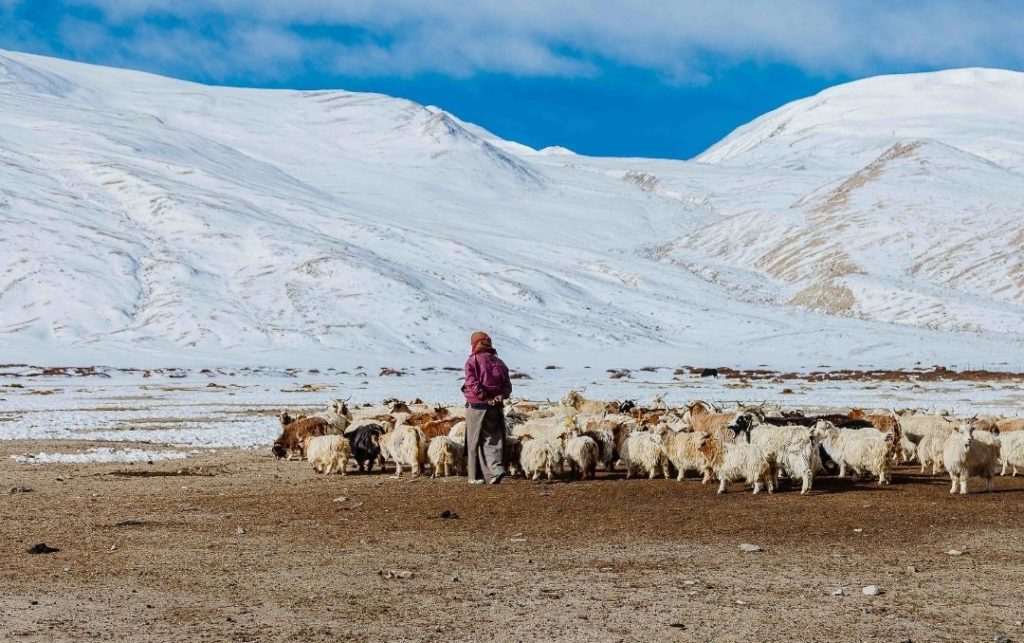
The Changhthanghi Mountain in the region of Ladakh is at a high altitude. At high altitudes, the temperature goes to the lowest. The winters are the harshest. A rare breed of Goats dwells in the feet of the Changthanghi. They are called the Changra goats. These goats are raised for Cashmere production as well as meat production. The goats are medium-sized, fluffy with two big twisted horns. Also, the goats develop thick wool in the season of winter to combat the cold.
Eventually, when summer arrives, the goats shed off the pelage to get air in the sunshine. Moreover, the wool is also manually combed out by the herders who raise the Changra Goats. The herders are from the Changpa tribe of Changhthanghi. They pack the tufts of wool in small packets and send them to the valley of Kashmir for the Pashmina Art. The wool is called the finest Cashmere wool.
Crafting Pashmina Shawls
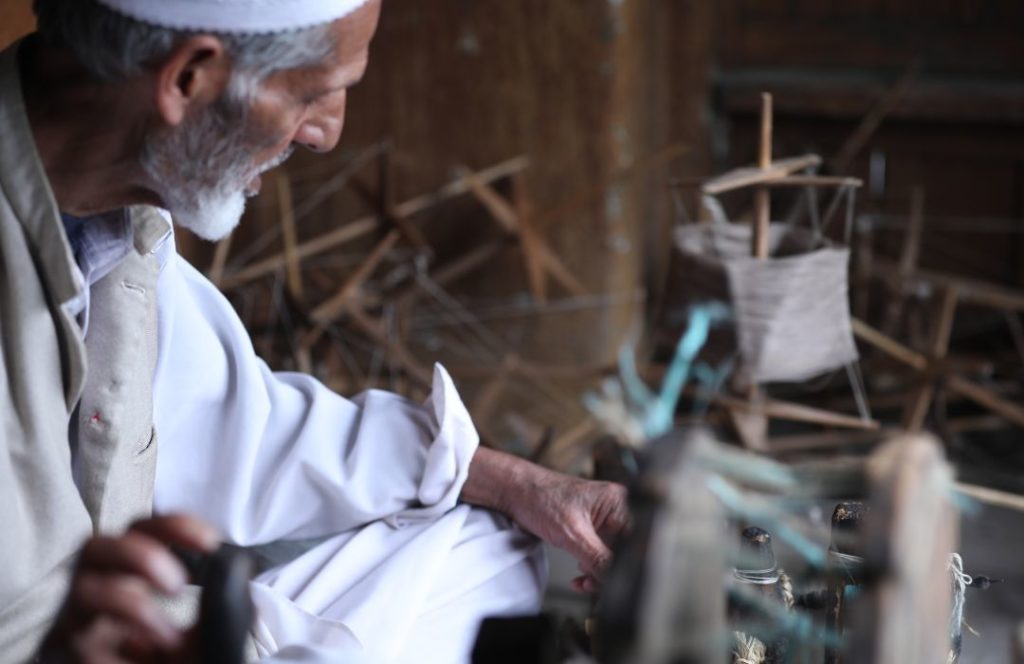
The tufts of Cashmere wool reach the valley of Kashmir. Therefore, the Cashmere wool is cleaned, soaked, and dried to get all the grime and dirt out. Afterward, the Cashmere wool moves forward to the next meticulous process. Spinning is the process of transforming Cashmere wool into the finest cashmere yarn. The Art of spinning is mainly done by the women of the Kashmir valley. They have a wheel called yinder onto which they spin the Cashmere wool to Cashmere yarn. After the Spinning process, the fine Cashmere yarn is transferred to the local workshops/karkhanas for Weaving.
Weaving is the process of looming the Cashmere yarn into suitable accessories In the valley of Kashmir, the weaving is done in small workshops where handlooms are set up. The highly skilled artisans weave the magical yarn to significant warps and wefts to give a ravishingly fine Cashmere Fabric. Thereupon, several processes of designing are done by world-class artisans. Also, the artisans work with precision on each and every masterpiece of Pashmina Art. Hence, Pashmina Art blooms the fashion sphere with the finest Cashmere luxuries like Pashmina shawls.
How are Pashmina Shawls crafted?
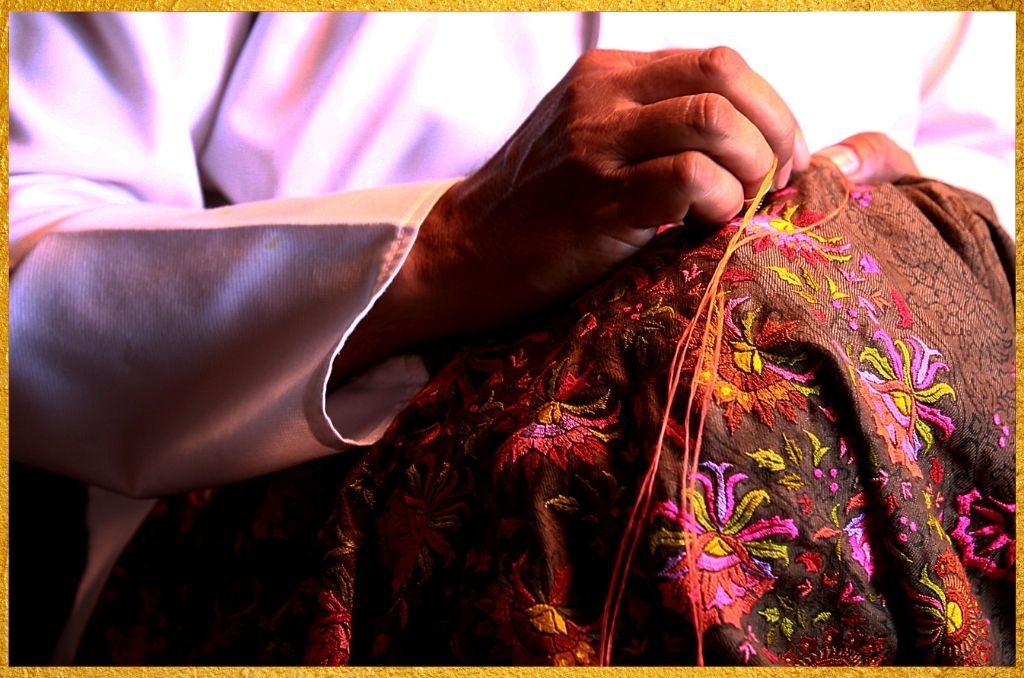
After weaving a Pashmina Shawl, the journey of different fashions takes place on the unique path of Luxurious Pashmina. Diversified ways of creating these have made fashion visible over so many eras. The various types of Pashmina Shawls are on their way toward being Luxury. Also, the different processes they go through with the skilled hand of artisans from the valley illuminate the luxury over the face of Pashmina.
Pashmina Shawls are versatile in their being. The diverse styles in the horizons of Pashmina Art are exuberant in their designs, patterns, weaves, and embroideries. Also, the integrity and sustainability of the creation confer the unique and meticulous style of processes. Pashmina Shawls are of several designs like Solid, Ombre, Reversible, Patterned, Printed, Hand-Embroidered, Kani, Shibori, Laced, and Swarovski Crystals Pashmina Shawls.
Origin of Pashmina Craft
The journey of the Pashmina dates back to the 13th century in the Kashmir Valley of India. The footprints of a saint from the middle east came to Kashmir with 700 craftsmen to adorn the beauty of the valley and to spread the holy message. The saint landed its appearance on Changthangi Mountain in Ladakh. While perceiving nature, he locked his eyes on the Goat of marvelous wool. Enthralled with the softness and fineness of the wool, he made socks out of it and gifted them to the Sultan of Kashmir Valley. Thus, by the beauty of Cashmere wool, he suggested making an industry that cultivates Cashmere wool in desirable styles and designs.
Also read: MEN'S PASHMINA SHAWLS | THE EPITOME OF SOPHISTICATION
Pashmina shawls are Crafted in the regime of Pashmina Craft
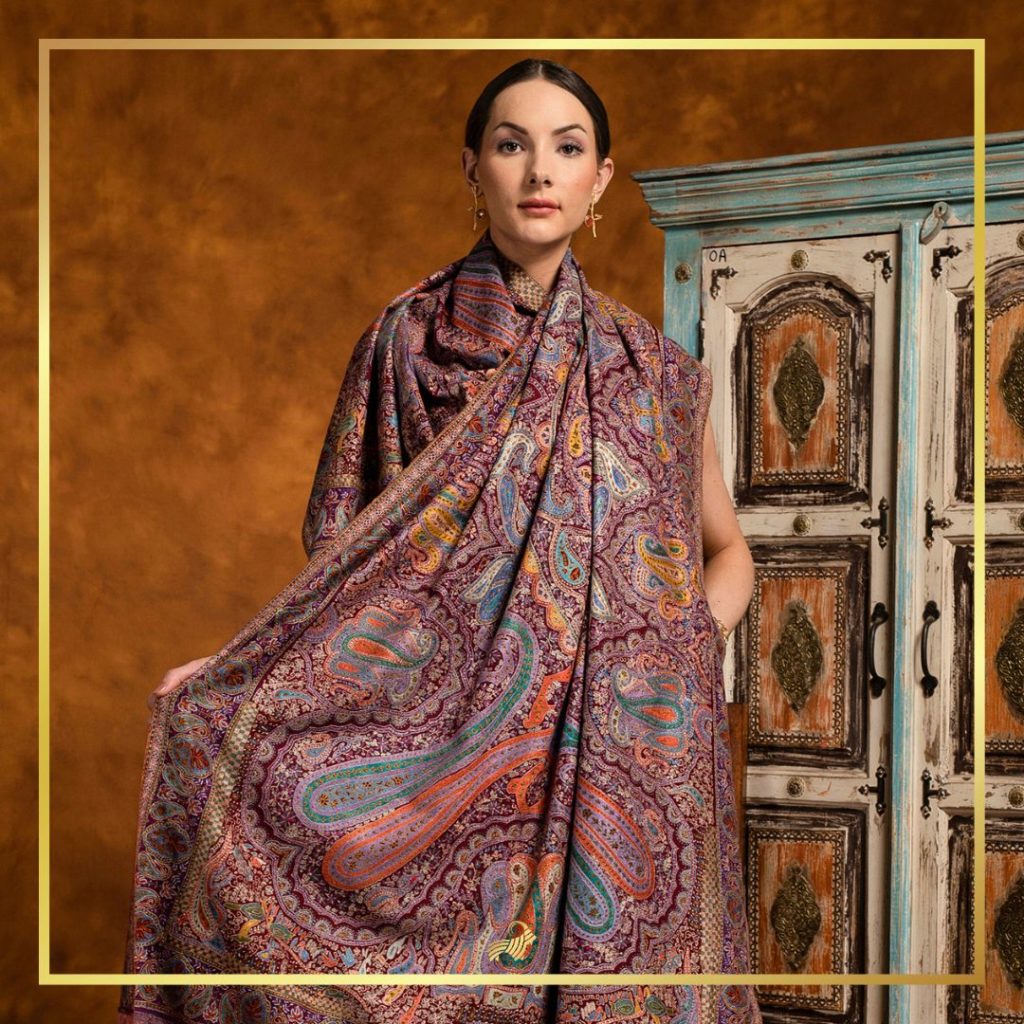
Pashmina Shawls are crafted in the sphere of Kashmir. The saga begins with the herding of Changra Goats in Changhthanghi, Ladakh. The Changpa tribe herders manually comb out the fine wool from the Goats that they have developed during the harsh winters. The wool is called Cashmere. It is the finest Cashmere in the world with 12 to 16 microns. The beauty of fine wool is its softness and warmth in each fibre. Afterward, the fine wool is taken to the Valley of Kashmir to make the bounty of accessories. Fine Cashmere is explicitly crafted through the serene steps of Spinning, Weaving, and Designing. Therefore, the premium and Luxurious Pashmina shawls are crafted with utmost diligence by the artisans of Kashmir Valley.
Also read: 6 WAYS TO WEAR AN EMBROIDERED PASHMINA SHAWL