The magnificent Pashmina handicraft is one of Kashmir's handicrafts that best represents the region's artistic sophistication and cultural diversity. The delicate fleece of the native Changthangi goat all used to make pashmina craft. The dexterous craftspeople meticulously craft exquisite Pashmina shawls with elaborate patterns. Thus, capturing the natural beauty and traditional themes of the Kashmir Valley, frequently adhering to age-old traditions. These handicrafts are more than just goods; they are a generation-by-generation preservation of Kashmir's culture and identity. With their classic style and unmatched workmanship, Kani Pashmina handicrafts demonstrate the area's dedication to conserving its cultural heritage. And make a substantial contribution to the admiration of Kashmiri artwork around the world.
Renowned for its excellent craftsmanship and sumptuous texture, Kani Pashmina, a sort of fine wool made from the Changthangi goat's fleece. This goat is indigenous to the high Himalayan Ladakhi regions. The word "Kani" comes from the old-fashioned weaving method utilized to make these shawls. Using wooden needles, artisans meticulously weave complex designs into the fabric—a process that demands extreme dexterity and accuracy.
Fine Cashmere wool procured?
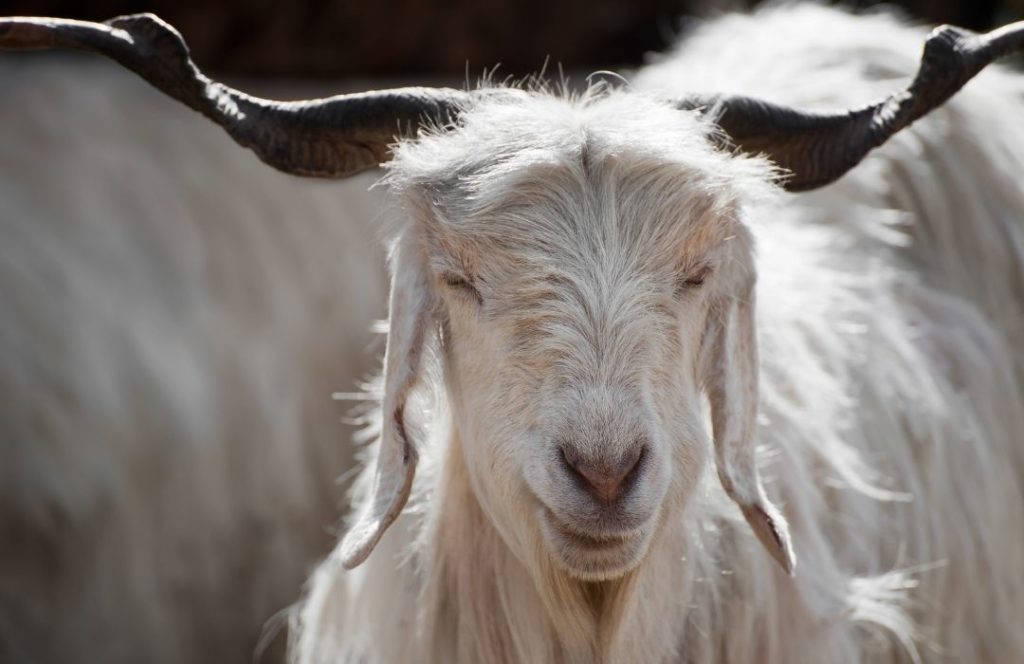
Ladakh's native Changthangi goat is famous for generating incredibly warm and soft Cashmere wool. Another source of opulent fibers is the Tibetan cashmere goat, found only in the Tibetan Plateau. Outside of the Himalayas, China, Iran, Mongolia, and other countries have large populations of Hircus goats, more especially the Capra hircus laniger species. The fibers it yields, known for their exceptional quality and capacity to provide insulation, making cashmere highly prized. A variety of Cashmere goods, each with a distinctive appearance, all created by combining the fibers from these various breeds. But the best cashmere is Ladakhi Cashmere.
The Changthangi Mountain is where the journey starts. That is home to a special kind of goat also called Changra Goats. Medium size in size with two twisted horns. These are mostly the responsibility of the Changpa tribe. The Changhthanghi region has -40°C wintertime temperatures. The Changra goats' bodies subsequently develop a thick undercoat of wool to shield them from the harsh weather. It is a thick, silky wool. Cashmere wool from Ladakh, the best cashmere wool produced anywhere in the world. Goat breeds of several varieties generate cashmere wool. But the greatest of all is the Ladakhi Cashmere wool.
Further Cleaning and Spinning
To achieve the exceptional quality of the final product, fine cashmere must undergo a labor-intensive and rigorous washing and spinning procedure. First, the raw Cashmere fibers all carefully cleansed to remove impurities such as oils, dirt, and vegetation to guarantee a pure and delicate finished product. The purpose of this cleaning process is to preserve the natural sheen and softness of the Cashmere wool.
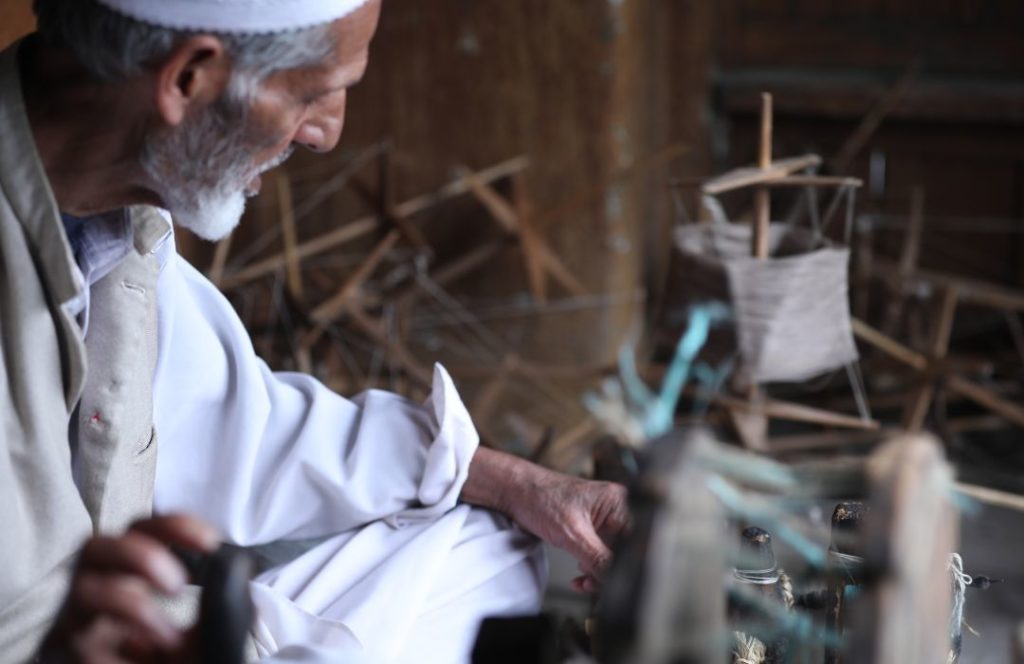
After the cleaning step, the prepared fibers proceed through the spinning process. Using traditional spinning wheels, highly experienced craftspeople make yarn by hand. Fine Cashmere needs to be spun carefully to preserve its luxurious texture. Hand spinning allows for exact control over the yarn's thickness and tension. Thus, resulting in a superior and dependable thread on a conventional wheel called Yinder. Because the hand-spun yarn keeps the craftsman's individual touch, this artisanal approach improves the overall quality of the Cashmere while also adding to each piece's uniqueness. Careful washing and hand-spinning are essential to transforming raw cashmere into the exquisite. It is a sought-after fabric that defines the world of premium pashmina and Cashmere fabrics.
Kani Weaving in Pashmina Craft
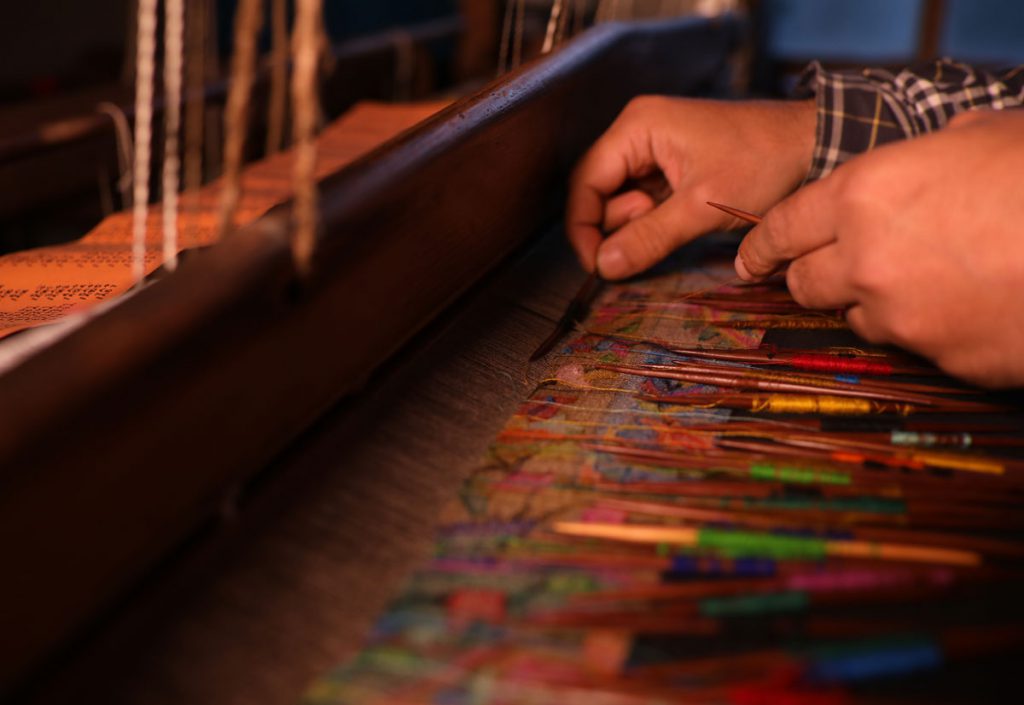
The unique and complex process of kani weaving is essential to the artistic quality of Pashmina crafts in Kashmir. This weaving technique, takes its name from the wooden bobbins called "kanis" , used in the procedure, entails painstakingly constructing intricate designs on Pashmina fabric. Because each thread eventually hand woven with wooden needles by expert artisans, the technique is extremely labor-intensive. The elaborate patterns frequently feature traditional themes drawn from Kashmiri mythology, the natural world, and culture. Shawls with reversible patterns, characteristic of the Pashmina technique, are a product of Kani weaving's skillful attention to detail and exquisite craftsmanship.
The Kani weaving tradition has a long history, having its roots in antiquity. This historic craft wholely kept and refined by artisans in Kashmir. Particularly in villages like Kanihama, which have been passing down complex techniques over the years. Pashmina shawls, enhanced visually by kani weaving, all contributes to Kashmir's cultural tradition. As a result, these handwoven items are more than just stylish accessories; representations of the area's skilled workmanship and artistic culture, linking the past and present.
Kani Pashmina
The weavers possess both the will and the ability to continue living and to develop the Kani Shawl style. The Kanis, or hand-sized wooden sticks made of forest wood known as "poss tul," come before the weaving. As a result, the Kanis have a vibrant thread to display their wefts in a shawl already twisted. Using the spindles of the vibrant threads surrounding the Kanis, the weaving process begins. As a result, the exquisite Kani weave, seen in the context of luxury in Pashmina art.
Kani Pashmina weaving differs from the straightforward weaving found in Pashmina art. Furthermore, it is the most complex weaving using kanis or tiny twigs to create a beautiful design on the finest Cashmere foundation. Unlike other types of shawls where the patterns are etched in the base of the shawl itself. The Pashmina Shawls all given a specific pattern on graph paper before the weaving process begins. Locals provide the codes for each pattern, referred to as "Taleem," inscribed on the graph paper. The weavers begin the operation precisely after carefully reading and comprehending the codes.
Local workshops/karkhanas are where the handlooms receive the exquisite Cashmere fabric. The process of weaving starts with the colorful threads being twisted around the Kanis to create tiny spindles. In addition, the artists use their hands to weave with skill. They manipulate the thread spindles on the handloom with their hands to produce the desired results. Furthermore, one Kani shawl is woven using a specific quantity of Kanis. A single Kani Pashmina Shawl design uses between 70 and 100 Kanis.
Kanihama and Kani Pashmina
Situated in the scenic Kashmir Valley, close to Srinagar, Kanihama is well-known for its contribution to the traditional craftsmanship of Kani Pashmina shawls. The term "Kani" describes the special weaving method used by these village's talented craftspeople. The elaborate patterns are woven into the fabric using wooden needles. Further, a laborious technique requiring accuracy and skill set Kani Pashmina shawls apart. With generations of skilled craftsmen passing down their knowledge through family apprenticeships, Kanihama has emerged as a center for the preservation and continuation of this age-old craft.
With its origins in Kanihama, the Kani Pashmina is more than just an opulent accessory—it's a piece of cultural history. The shawls made here are an excellent example of the blending of traditional craftsmanship and creative expression; they frequently include intricate flower and paisley designs that draw inspiration from the surrounding area. The identity of Kashmiri handicrafts is inextricably linked to Kanihama's contribution to the world of Kani Pashmina. The village stands as a tribute to the tenacity of these ancient weaving methods. Thus, guaranteeing that the artistry is treasured and preserved for future generations.
Geographic Identification
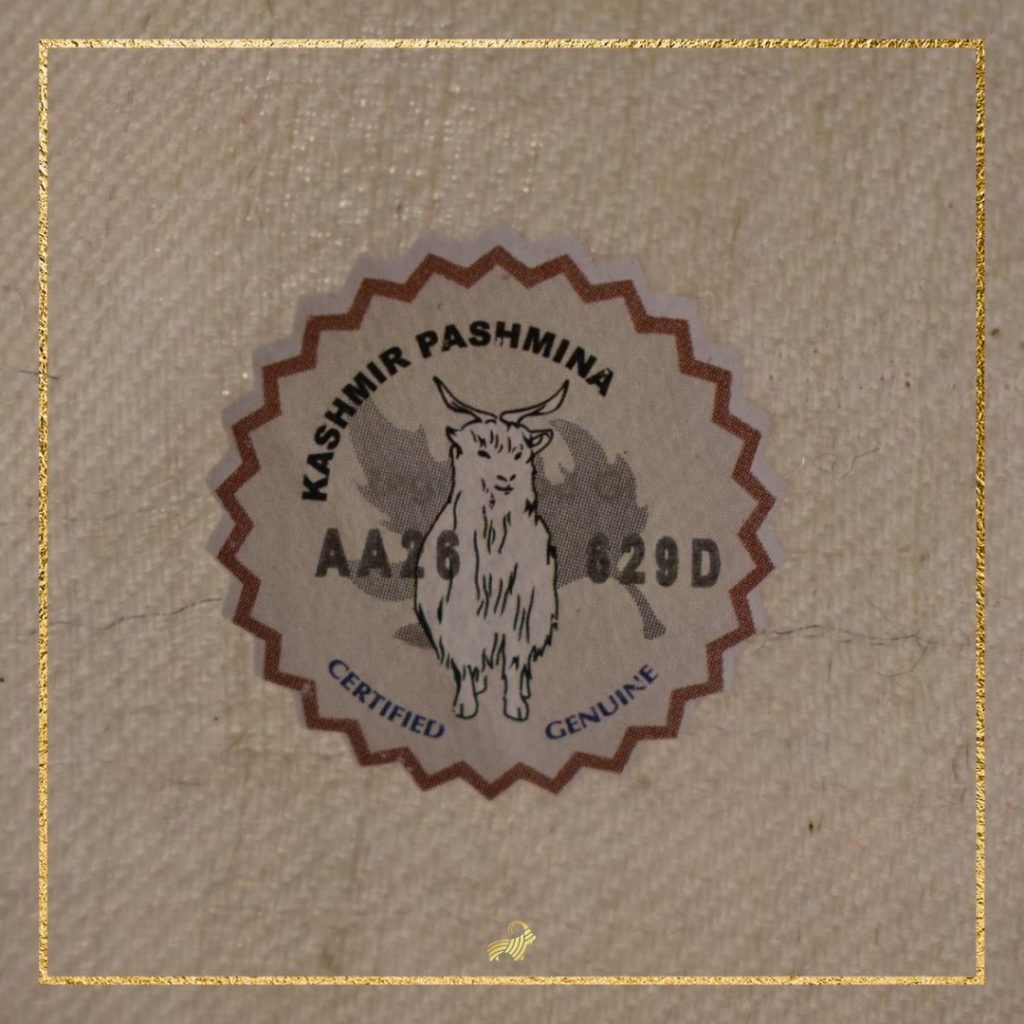
Pashmina's opulence is the height of sophistication. Pashmina.com is the only website providing luxury pashminas with GI (Geographic Identification) validation from the Ministry of Textiles. Thus, ensuring the excellent qualities of hand-spun and hand-woven yarns. Various procedures are used to confirm the quality of every pashmina. The accessories created from pashminas are tested in the lab specifically set aside for that purpose. Through inspection, they confirm that the Pashmina is hand-spun and hand-woven in Kashmir. In addition, they solely use technical means to examine the Pashmina to provide the GI, or authenticity certificate.
A geographical indication (GI) is a mark placed on products that come from a specific area. To receive a GI, a product must bear a certain symbol designating that it is made in a designated region. Additionally, the handicraft unique to that location is granted the exclusive right to manufacture by geographic designation; this implies that no other party may be qualified to produce the good. Consequently, the GI authentication of Pashmina is handled by the Craft Development Institute (CDI) at the Pashmina Testing & Quality Certification Center in Srinagar. This lab is under Indian government supervision. Certification is given after each Pashmina accessory has undergone the necessary testing and inspection.
Legacy and Heritage of Kani Pashmina
The legacy and traditions of Kani Pashmina are intricately woven into Kashmir's rich cultural fabric representing decades of skill and creative addition. With their elaborate patterns and plush texture, Kani Pashmina shawls are more than just stylish accessories—they embody the spirit of a place renowned for its unmatched weaving legacy. The Changthangi goats, who graze in the Himalayan mountains and provide the fine wool that is the basis for these stunning shawls, are the source of the legacy. Generation after generation of professional weavers have been producing timeless items that capture the spirit of Kashmiri culture via the painstaking technique of Kani weaving.
The designs on these shawls, which are frequently influenced by the area's natural beauty, historical themes, and indigenous art, clearly reflect the Kani Pashmina tradition. The art form has endured political and social upheavals while maintaining its creative integrity, and it has come to represent Kashmir's uniqueness and tenacity. The legacy is found in the hands that painstakingly create each shawl, the tales woven into each strand, and the generational passing down of skills that guarantee the survival of this treasured custom in addition to the finished item.
It is imperative to preserve the tradition of Kani Pashmina to protect Kashmir's cultural heritage. The survival of traditional weaving processes, support for craftspeople, and awareness-raising all play a part in the art form's longevity. The ageless appeal of Kani Pashmina has captured the attention of people all around the world, and it is a monument to the lasting tradition of Kashmiri workmanship and the strong bond that exists between art and heritage.
Kani Pashmina Shawls
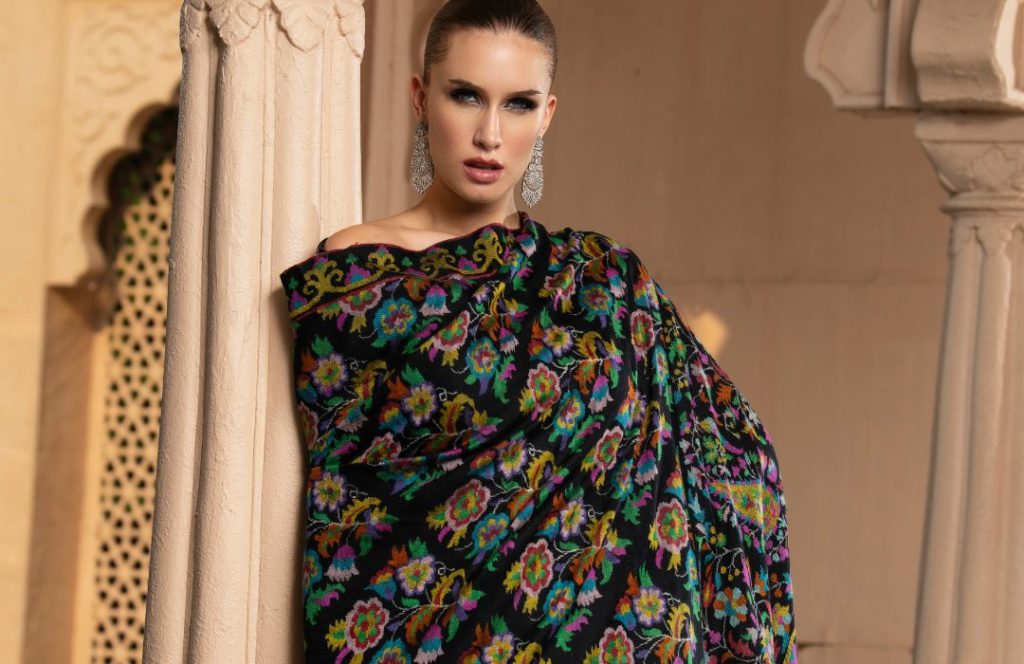
Kani Pashmina shawls are the perfect representation of Kashmir's exquisite artistic legacy and masterful workmanship. These shawls are painstakingly handwoven by artists using the complex Kani weaving technique; each piece is a testament to the labor-intensive process that can take weeks or even months to finish. The exquisite wool of the Changthangi goat, which is native to the Himalayan region, is the source of the opulent texture of Kani Pashmina. During the weaving process, intricate designs are woven onto the fabric using wooden needles, or "kanis," which demonstrate the artisan's accuracy and commitment to their skill.
The classic patterns that cover Kani Pashmina shawls, in addition to their superb craftsmanship, are what distinguish them. The rich cultural tapestry of Kashmir serves as inspiration for the shawls, which frequently have elaborate paisley and floral themes. These patterns capture the spirit of Kashmiri art and narrative in addition to showcasing the artist's talent. More than just clothing, Kani Pashmina shawls are wearable works of art that preserve the legacy of centuries of master craftsmen who have refined the skill of Kani weaving.
Kani Pashmina shawls are highly valued on the international market due to their exceptional quality and cultural significance. They are now sought after by fine textile aficionados worldwide, serving as symbols of luxury and sophistication. Kani Pashmina shawls embrace modern styles but still have a classic appeal that connects the two eras. These shawls are essential to maintaining and advancing Kashmir's creative legacy because they skillfully combine the strands of innovation and tradition.
Kani Wraps
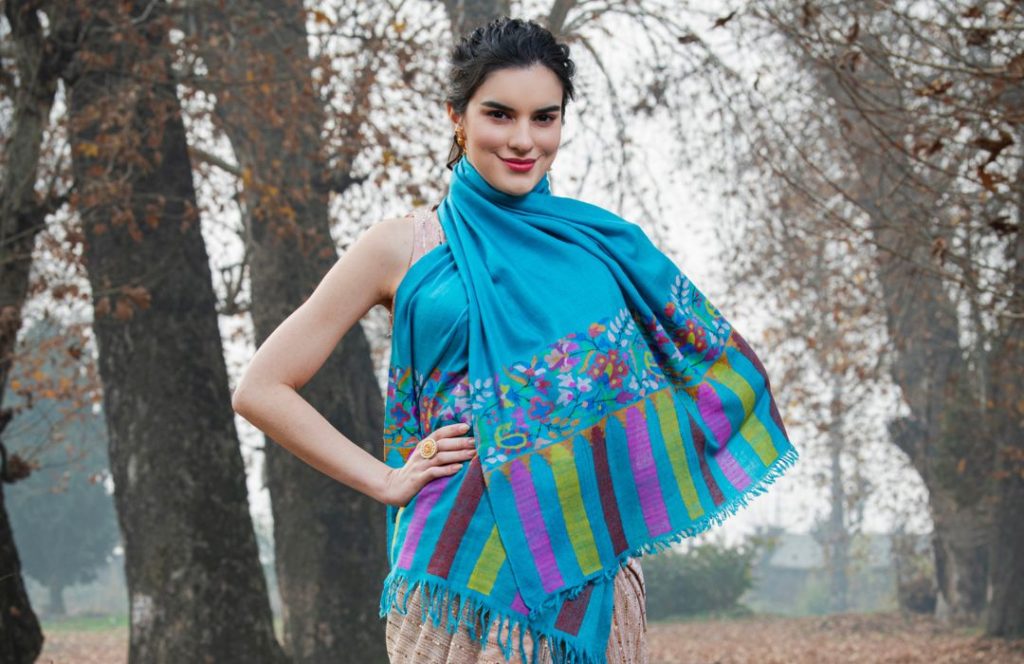
In the realm of fine textiles, Kani Cashmere wraps are the epitome of elegance and artistry. These wraps have their origins in Kashmir and are woven with exquisite detail using the ancient Kani technique, which entails handweaving small designs using wooden needles, or "kanis." High-quality fibers from Changthangi goats, native to the Himalayan region, are responsible for the sumptuous feel and remarkable warmth of Kani Cashmere wraps. Each wrap is evidence of the artisan's commitment and skill; the craft of Kani weaving has been passed down through the generations.
The intricate motifs that decorate Kani Cashmere wraps are just as beautiful as their luxurious material. These wraps frequently display the artist's talent and attention to detail with their elaborate paisleys, flowers, and geometric designs. The designs have a strong cultural foundation in Kashmir. Thus, influenced by the natural scenery, customs, and art of the area. Putting on a Kani Cashmere wrap connects you to Kashmir's rich history. The long-standing practice of fine craftsmanship makes it more than just a stylish statement.
Kani Cashmere wraps all highly sought-after in the world of luxury fashion because of their classic elegance and adaptability. These wraps give an elegant touch to any attire. Whether worn as an accent, shawl, or thrown over the shoulders. Beyond just being fashionable, Kani Cashmere wraps stand for a dedication to upholding artisanal customs and cultural legacy. These wraps are a testament to the remarkable artistry of Kashmir and the enduring history of Kani weaving, as they skillfully intertwine the strands of tradition with modernity.
Men's Kani Pashmina Shawls
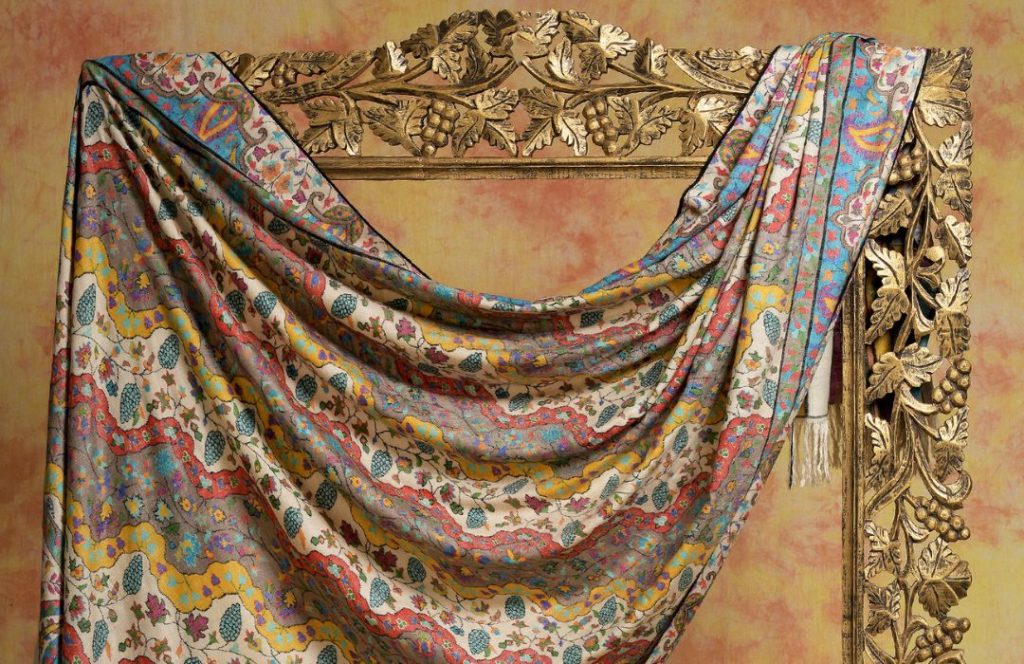
Men's Kani Pashmina shawls are a perfect fusion of traditional cultural significance and classic beauty. These shawls, traditionally linked with Kashmir's royal clothing, painstakingly made utilizing the complex Kani weaving method. The Changthangi goat's fine wool all used to create a luxury fabric that is exceptionally soft and wonderfully warm. The subtle yet elegant designs seen in men's Kani Pashmina shawls are a reflection of the historical patterns and cultural elements that are intrinsic to Kashmiri handicrafts. The shawls are more than just useful accessories; they are markers of sophisticated taste and a link to the area's artisanal past.
Beyond only being stylish, men's Kani Pashmina shawls are very functional. These shawls give a sense of sophistication to men's clothing, whether draped ceremoniously during formal occasions or worn casually over suits. For individuals who value both style and substance, these accessories are a great choice due to their understated elegance and excellent craftsmanship. Men's Kani Pashmina shawls are still a classic investment in fashion, perpetuating the heritage of Kashmiri workmanship and offering a distinctive and elegant statement piece for individuals looking for the height of luxury in their closets.
Men's Kani Scarves
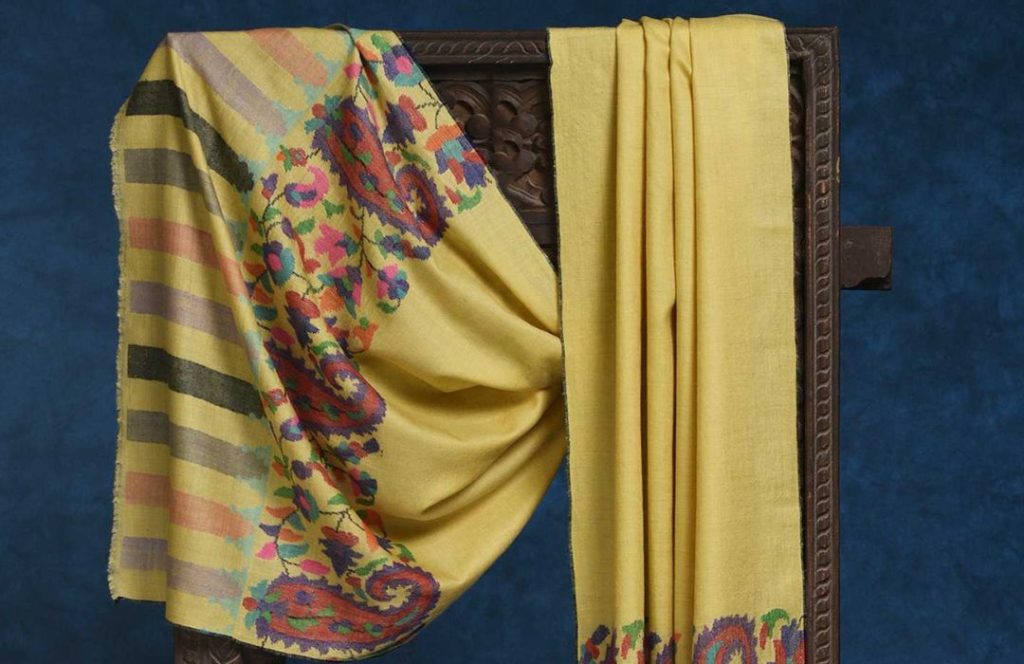
The men's Kani scarves, rooted in the rich tapestry of Kashmiri craftsmanship, bring together artistry and functionality in a single accessory. Crafted using the traditional Kani weaving technique, these scarves showcase the meticulous work of skilled artisans who use wooden needles to create intricate patterns on fine Pashmina wool. The result is a luxurious accessory that not only exudes sophistication but also reflects the cultural heritage of Kashmir. The subtle yet detailed designs on men's Kani scarves often draw inspiration from traditional motifs, seamlessly blending the historical significance of the craft with contemporary style.
Men's Kani scarves, highly valued for their functionality and versatility, in addition to their aesthetic appeal. These scarves are perfect for staying warm in colder locations without losing style because Pashmina wool is lightweight and insulating. Kani scarves for men add a sense of sophistication to every outfit, whether worn elegantly with formal wear or casually draped over a coat. Each scarf is a reflection of classic elegance and an homage to the continuing tradition of Kani weaving in Kashmiri culture, thanks to the skill and attention to detail that go into each one.
Kani Pashmina and Modern fashion
With its roots in Kashmir's rich cultural legacy, Kani Pashmina has effortlessly crossed cultural barriers to become a sought-after component of contemporary fashion. Kani Pashmina shawls and accessories crafted a special place for themselves in modern couture, with exquisite craftsmanship, ageless beauty, and opulent feel highly valued. The global trend toward sustainability and the desire for one-of-a-kind, handcrafted items are in line with the rebirth of interest in artisanal craftsmanship, which positions Kani Pashmina as a symbol of both richness and responsible consumption.
Kani Pashmina is becoming more and more popular among contemporary fashion designers, who use it to highlight its adaptability and style it to fit a variety of looks. Kani Pashmina elegantly completes a variety of ensembles, from daily streetwear to upscale fashion runways. Featuring elaborate Kani patterns, the wraps, scarves, and shawls enhance modern ensembles with a dash of cultural depth while simultaneously acting as statement pieces. The Kani Pashmina's timeless appeal in the constantly changing world of fashion thus emphasized by its blend of traditional workmanship with contemporary elegance.
Beyond just its aesthetic value, Kani Pashmina appreciated for its contribution to the fashion industry's sustainability narrative. The focus on locally produced, handcrafted materials is in line with the growing consumer desire for ethical and environmentally friendly fashion techniques. Kani Pashmina is a premium option that connects users to the skilled artisans and cultural traditions behind each piece, making it an appealing choice for consumers looking to make conscientious decisions. In this sense, the Kani Pashmina not only continues to be a representation of classic beauty but also fits in with the changing ideals of contemporary style.
Empowerment of artisans through Kani Pashmina
The creation and marketing of Kani Pashmina are essential to the empowerment of Kashmiri artists, enhancing their standard of living and maintaining their skill. Many talented artists in the region rely heavily on the elaborate art of Kani weaving as their primary source of income. The craft passed down through the years, frequently within families. These craftspeople show off their abilities and provide a steady source of income by making Kani Pashmina shawls and accessories.
The acknowledgment and just recompense of the artisan's abilities constitute one facet of empowerment. The labor-intensive and highly skilled technique of Kani weaving takes a lot of time. Fairtrade policies and measures guaranteeing craftsmen a fair wage for their work all intimately linked to their economic empowerment. This improves the socioeconomic fabric of the entire community in addition to helping individual artists and their families.
The conservation and promotion of Kani Pashmina has both economic and cultural advantages for craftspeople. By maintaining this age-old trade, craftspeople strengthen their feeling of self and pride in their creations. Thus, strengthening their ties to their cultural past. This artistic legacy, ensured by efforts to record and transmit these skills to the next generation. In general, Kani Pashmina empowers artists by preserving cultural legacy in addition to offering financial benefits. Thus, offering a comprehensive strategy for these talented craftsmen and women's well-being.
Kani Pashmina and Women Empowerment
The Kashmir region's women, greatly empowered by the manufacture and marketing of Kani Pashmina. It gives them the chance to become economically independent and enhance their skills. Kashmiri women are integral to the complex craft of Kani weaving. Thus, demonstrating their proficiency with the delicate procedure involved in making these opulent shawls. Kani weaving, a trade frequently passed on from moms to daughters. Further, women are frequently important contributors to household wages as skilled artisans. Thus, leaving a heritage of workmanship that spans generations.
Because Kani Pashmina allows women to work from home and earn a living, it offers a platform for economic empowerment. The profession provides for flexible work schedules, which helps women who frequently balance household duties. Programs help female artisans by giving them access to markets, and safe working conditions. Also, fair compensation increases their economic empowerment and enables financial independence. Thus, enhancing the socioeconomic standing of women in the area as a whole.
Moreover, women's sense of autonomy and self-worth all increased when they work on the Kani Pashmina project. Women artists constitute an essential part of Kashmir's cultural legacy by helping to preserve a traditional art style. In addition to bringing them financial benefits, having their abilities acknowledged and valued raises their standing in their communities, empowers them. The art of Kani weaving becomes a catalyst for women's overall empowerment. Thus, entwining economic independence, skill development, and cultural preservation when an atmosphere created recognizing and supporting the responsibilities women play in the craft.
Also read: 8 BEST BRIDAL PASHMINA SHAWLS FOR 2024
Sustainability and authenticity of Kani Pashmina
The use of premium fabrics and attention to traditional methods are what define authenticity in Kani Pashmina. Hand-harvested wool from Changthangi goats, indigenous to the Himalayan region, all used to make Kani Pashmina. A real Kani weaver painstakingly creates complex patterns on the cloth with wooden needles, or "kanis". Local nature and culture serve as frequent sources of inspiration for artisans, adding to the unique originality of each creation. To preserve the authentic legacy of Kani Pashmina, these traditional practices all ever preserved.
Several facets of Kani Pashmina's production process are sustainable. Natural fibers and conventional low-impact dyeing methods are environmentally beneficial. Furthermore, the skillful work of Kani weavers supports long-term employment opportunities for regional craftspeople, enhancing the financial stability of communities. The sustainability of Kani Pashmina, further enhanced by efforts to guarantee fair salaries. Thus, secure working conditions, and responsible material sourcing, making it a desirable option for anyone looking for genuine luxury fabrics made responsibly.
Promoting genuine and sustainable methods in the fashion and textile industries has received more attention in recent years. The transparency and dedication to traditional workmanship in Kani Pashmina connect with the principles of individuals seeking both luxury and ethical production, particularly as customers grow more conscious of their purchasing decisions. Thus, Kani Pashmina's sustainability and authenticity not only aid in the preservation of cultural history but also appeal to a worldwide market that values genuine, eco-conscious products more and more.
Also read: PASHMINA SHAWLS AS WEDDING FAVORS
Pashmina.com redefines the legacy of Kani Pashmina
Redefining the legacy of Kani Pashmina is a crucial aspect of bringing this age-old craft back into the modern era. Kani Pashmina may attract a bigger audience and adjust to changing fashion trends. Further, by adopting current channels like social media, internet marketplaces, and partnerships with modern designers. This platform breathes fresh life into the legacy of this opulent cloth by acting as a bridge between the rich heritage of Kani weaving and the changing desires of modern consumers.
Pashmina.com raises awareness of the workmanship and cultural value of Kani Pashmina through creative marketing techniques. Also through narrative, and partnerships with fashion influencers. It presents the Kani Pashmina as a timeless. Thus, an adaptable accessory that works well with modern outfits rather than solely as a piece of cultural heritage. By extending market access, this calculated reinterpretation not only guarantees the recognition of Kani Pashmina but also gives the artists more influence. Thus, preserving the history for the next generations.
Our dedication to recreating the Kani Pashmina tradition, understood as a dynamic reaction to the shifting global fashion scene and consumer tastes. Through the preservation of the genuineness and artistry of this age-old art form, Kani Pashmina manages to withstand the test of time and cultural divides while preserving its inherent beauty and cultural value.
Also read: PEACH PERFECTION: EMBRACING PANTONE'S COLOR OF THE YEAR WITH CASHMERE WRAPS