Papier mache craft took on a very distinctive channel through the textile heritage of Kashmir. Expert artisans got the idea of using the elaborate patterning of papier mache paintings as a muse for the Pashmina designs.
Traditional papier mache designs generally showcased laden floral vines, birds, and chinar leaves. The designers started depicting these painted patterns on the delicate shawls. Such a creative mix brought together decorative arts and luxury textiles. With this breakthrough, Pashmina artistry went through a revitalization in terms of style.
Craftsmen looked back at the heritage of the local, age-old papier mache workshops for their source of inspiration. Through needlework and printing, pictorial Papier Mache detailing was given the closest possible approximation.
The coupling kept the cultural narrative alive and at the same time provided the artists with more freedom to create. Customers greatly appreciated the rich color schemes and the variance in detail. This new combination of elements gave Pashmina a deeper cultural ancestry and a polished art appeal. Papier Mache infused the shawls with such a unique style, and thus, the concept widely embraced .
Origin of Papier Mache in Kashmir
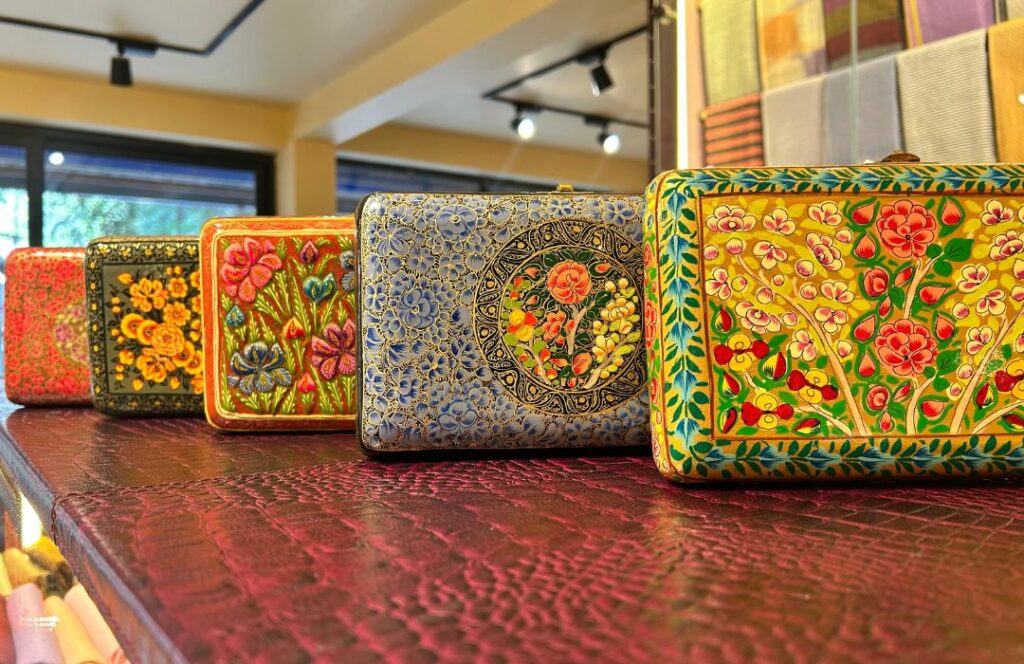
Papier mache was one of the things that entered Kashmir in the 14th century along with Persian and Central Asian influence. Local workers got the secret of making strong things out of paper pulp, glue and natural color. The manufacturer was able to get royal support and thus the products were boxes, trays, and other decorative pieces. The first pictures used to be of flower patterns, paisleys, and the geometry of shapes. The makers harmonized the traditions of the place with the new tools and methods. This has led to a very long and great tradition of highly skilled, hand-painted works of art in the area.
Eventually, papier mache considered to be a hallmark of Kashmiri refinement and grandeur. Srinagar and its nearest villages became the seats of workshops. The artists not only layered and lacquered but also deeply engrossed in attaining perfection in their paintings. The patterns were mainly the reflection of nature, architecture, and Persian art. Generations continue to see their survival and refinement through the support of the royal family. It is thus that papier mache ushered in the spirit of creativity in Pashmina shawls that went beyond ordinary changes.
Inscribing Papier Mache Motifs onto Pashmina
Kashmiri Cashmere fabric painters brilliantly reinvented the Papier mache designs. To embellish the fibers of such delicate fabric, the craftsmen first drew the designs of intricate flowers, paisleys, and Chinar leaves. Emphasized with fine lines and curves, the traditional pierced patterns painted by hand on the fabric depict the patterns beautifully. Artists ensured the symmetrical features of the patterns so as not to lose their beauty or need for artistic aesthetics. The artists preserved perfectly the lively nature of the Kashmiri fine arts in each of the patterns.
The shift was a real challenge, both in terms of accuracy and artistic freedom. Meanwhile, the colors harmonized well with those of the papier mache art produced using natural dyes. When fabric artists resorted to mixing and shading, it gave the surface of the cloth a three-dimensional look. The resulting intermingling here basically gave the luxurious woolen shawls of Pashmina the ornamental allure of papier mache. This was the hallmark of innovation in Kashmiri textile.
Adaptation from Painting to Papier Mache Embroidery
Craftsmen skillfully transformed papier mache painting into embroidery on Kashmir Pashmina. They changed brushstrokes to patterns of very thin silk threads. Every leaf, vine, and flower motif demanded the utmost workmanship, exact copy. The embroiderers looked at the design through the eyes of a painter and picturized it on the fabric. The outcome kept the painted motif's brightness on the plush textile.
By Papier Mache, the artists were able to emphasize the relief and surface characteristics. Stitch placement was regulated to produce gradation shading as if they were painting with light on papier mache. Colors were made corresponding to natural colors used in traditional hand-painted pieces. The method not only improved the product's lifespan but also retained the high level of detail. This clever move combined two art forms into a beautiful, elegant textile statement.
The Traditional Motifs
Papier mache, inspired Pashmina traditional motifs showcase Kashmir's immense natural and cultural heritage. The artists most often choose foliage, paisley, and leaf patterns. They also prominently feature birds, vines, and geometric shapes. Every pattern seizes symbolicism and local identity. To great extent, the artists achieve harmony, symmetry, and intricate detailing in all the patterns. The artists not only accurately follow the traditional stories but also bring their creativity to embroidery. Such patterns keep the tradition alive, at the same time they add to the charm of the high-quality Pashmina shawls.
Role of Artisans in Preserving Craftsmanship
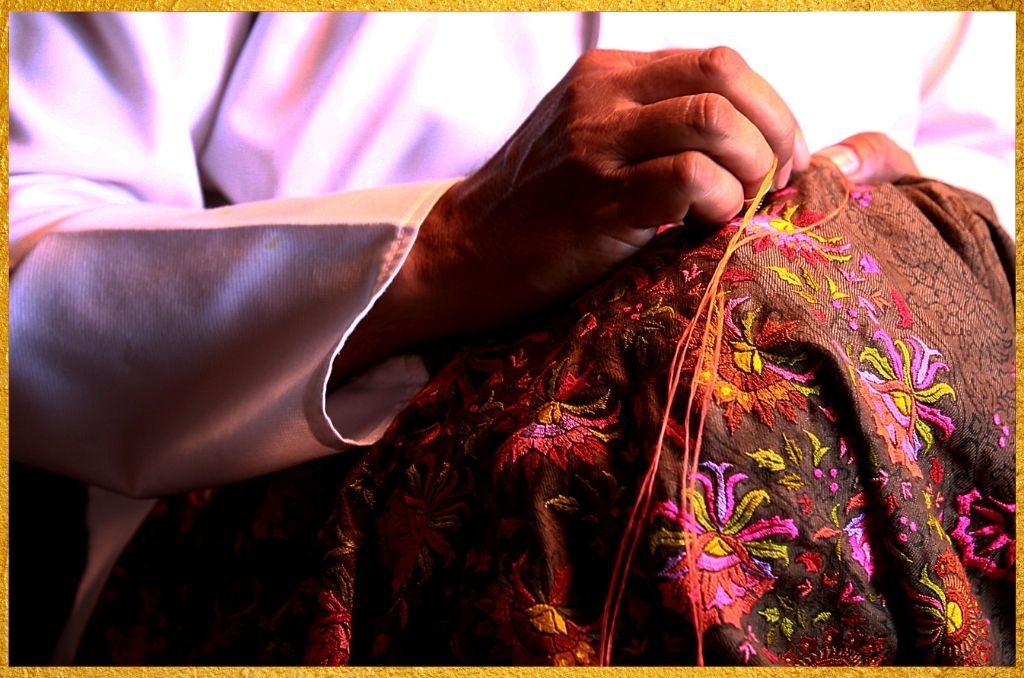
Artisans form the core of the papier mache, inspired Pashmina traditions in Kashmir. They are the ones who teach the skills one generation after another. Each one of them diligently and carefully repeats the patterns that are very elaborate on the Cashmere fabric. Accuracy, patience, and conscientiousness in work are the main factors in ensuring the genuineness of the local product.
Furthermore, their handiwork defines a great weapon against the disappearance of the old-fashioned ways when the modern people are tempted by the easy, use ways.
However, it is not only skill that the weavers kept alive by this type of labor. They are also the means of providing cultural narrative through embroidery. They manage to keep the symbolism intact in each barely visible leaf, flower, and vine pattern. The studios serve as a means of stimulating teamwork, training, and creativity within the frames of tradition.
Artisans not only change the papier mache designs, but they also keep the look of the heritage. Their hard work guarantees making Pashmina shawls that are still considered a luxury, authentic, and carrying deep cultural roots.
Legacy of Papier Mache
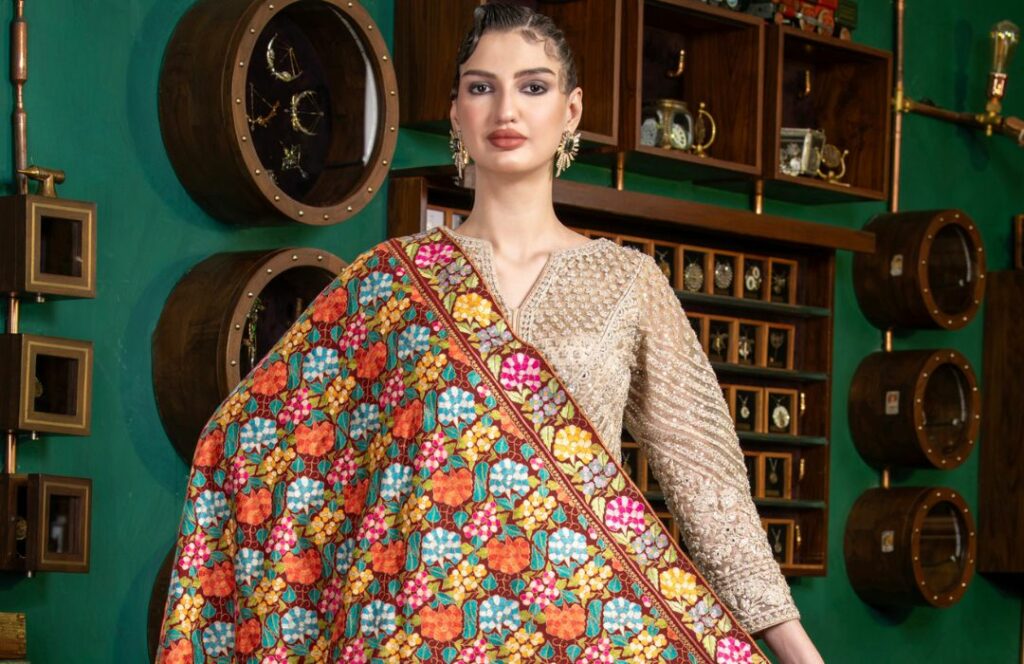
The art pieces combined painting methods with needlework to craft one-of-a-kind designs. The mixture of these two arts not only beautified the interiors but also brought a new level of luxury fashion. Nowadays, the Pashmina with motifs from papier mache stands for a spirit of culture and art that borderlessly innovates. Purchasers are fond of every shawl that offers the perfect blend of tradition and invention. The artisan ateliers all still engaged in providing the new generation of craftspeople with training in these skills. The patterned designs are a way of keeping the past alive while being attractive to people's tastes of fashion today. Papier mache's gift to the world of Kashmiri Pashmina remains that the latter has stayed in fashion and is admired worldwide.